
IMPACT OF OUTSIDERS ON FILIPINO IDENTITY
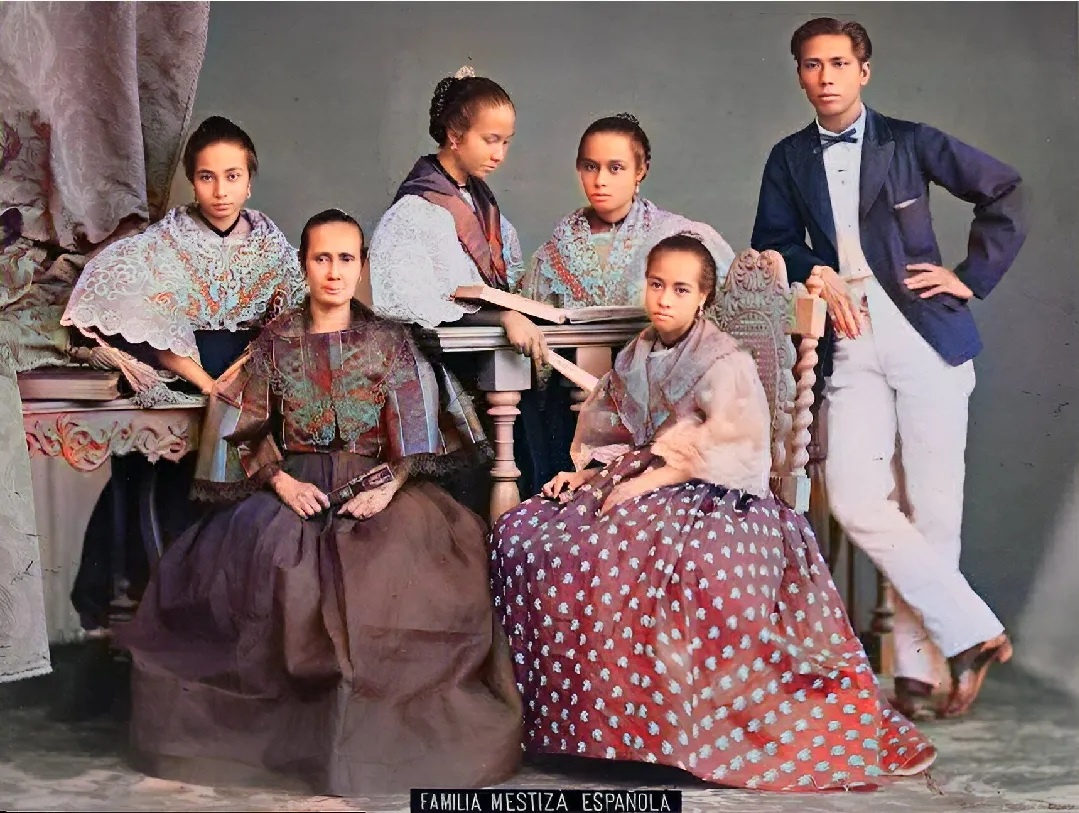
The modern Philippines has been shaped very much by its colonial experience, which some Filipinos describe as “400 years in a convent under Spain followed by 50 years in Hollywood.” The archipelago endured 381 years of Spanish and American rule. However, some places like Mindanao and even the interior of Luzon were never controlled. Some observers have linked independence with lingering self-doubt about national identity. Even Imelda Marcos once reflected that she learned American symbols before Filipino ones—an anecdote that illustrates the powerful cultural imprint left by colonial history.
Barbara Crossette wrote in the New York Times: The Philippine Islands were conquered (and named) by Spain in the 16th century, ushering in an age of friars and cloistered churches. American missionaries, many of them Protestants, followed at the turn of this century, when the United States took over as the colonial power. This history — described by wags as ''four centuries in a convent and 40 years in Hollywood'' — has left a celebration of mixed legacies. [Source:Barbara Crossette, New York Times, December 21, 1986]
Spain's colonization brought about the construction of Intramuros in 1571, a "Walled City" comprised of European buildings and churches, replicated in different parts of the archipelago. In 1898, after 350 years and 300 rebellions, the Filipinos, with leaders like Jose Rizal and Emilio Aguinaldo, succeeded in winning their independence. [Source: Philippines Department of Tourism]
In 1898, the Philippines became the first and only colony of the United States. Following the Philippine-American War, the United States brought widespread education to the islands. Filipinos fought alongside Americans during World War II, particularly at the famous battle of Bataan and Corregidor which delayed Japanese advance and saved Australia. They then waged a guerilla war against the Japanese from 1941 to 1945. The Philippines regained its independence in 1946.
RELATED ARTICLES:
FILIPINO CHARACTER AND PERSONALITY: VALUES, EMOTIONS, FRIENDLINESS factsanddetails.com
FILIPINO HIYA (SHAME), AMOR PROPIO (SELF-ESTEEM) AND GO BETWEENS factsanddetails.com
SOCIAL RELATIONS IN THE PHILIPPINES: UTANG NA LOOB, BAYANIHAN AND PAKIKISAMA factsanddetails.com
FILIPINO SOCIETY factsanddetails.com
RICH AND POWERFUL FAMILIES IN THE PHILIPPINES factsanddetails.com
ETIQUETTE AND MANNERS IN THE PHILIPPINES: CUSTOMS, PUBLIC ACTIONS, RESPECT factsanddetails.com
FILIPINO COMMUNICATION STYLES: GESTURES, BODY LANGUAGE, EYEBROWS, SPACE factsanddetails.com
PEOPLE OF THE PHILIPPINES: FILIPINOS, IDENTITY, CHARACTERISTICS factsanddetails.com
AUSTRONESIAN PEOPLE OF THE PACIFIC, INDONESIA, MALAYSIA, TAIWAN AND THE PHILIPPINES: ORIGIN, HISTORY, EXPANSION factsanddetails.com
MALAYS AND MALAY-RELATED PEOPLE: HISTORY, DEFINITIONS, ORIGINS, LIFE, CULTURE factsanddetails.com
ETHNIC GROUPS AND MINORITIES IN THE PHILIPPINES factsanddetails.com
MAIN ETHNIC GROUPS OF LUZON: TAGALOGS, ILOCANO AND BICOL factsanddetails.com
ETHNIC GROUPS OF THE CENTRAL PHILIPPINES ISLANDS: VISAYANS, CEBUANO, WARAY factsanddetails.com
LANGUAGES IN THE PHILIPPINES factsanddetails.com
Influence of Spain and America on Filipino Culture
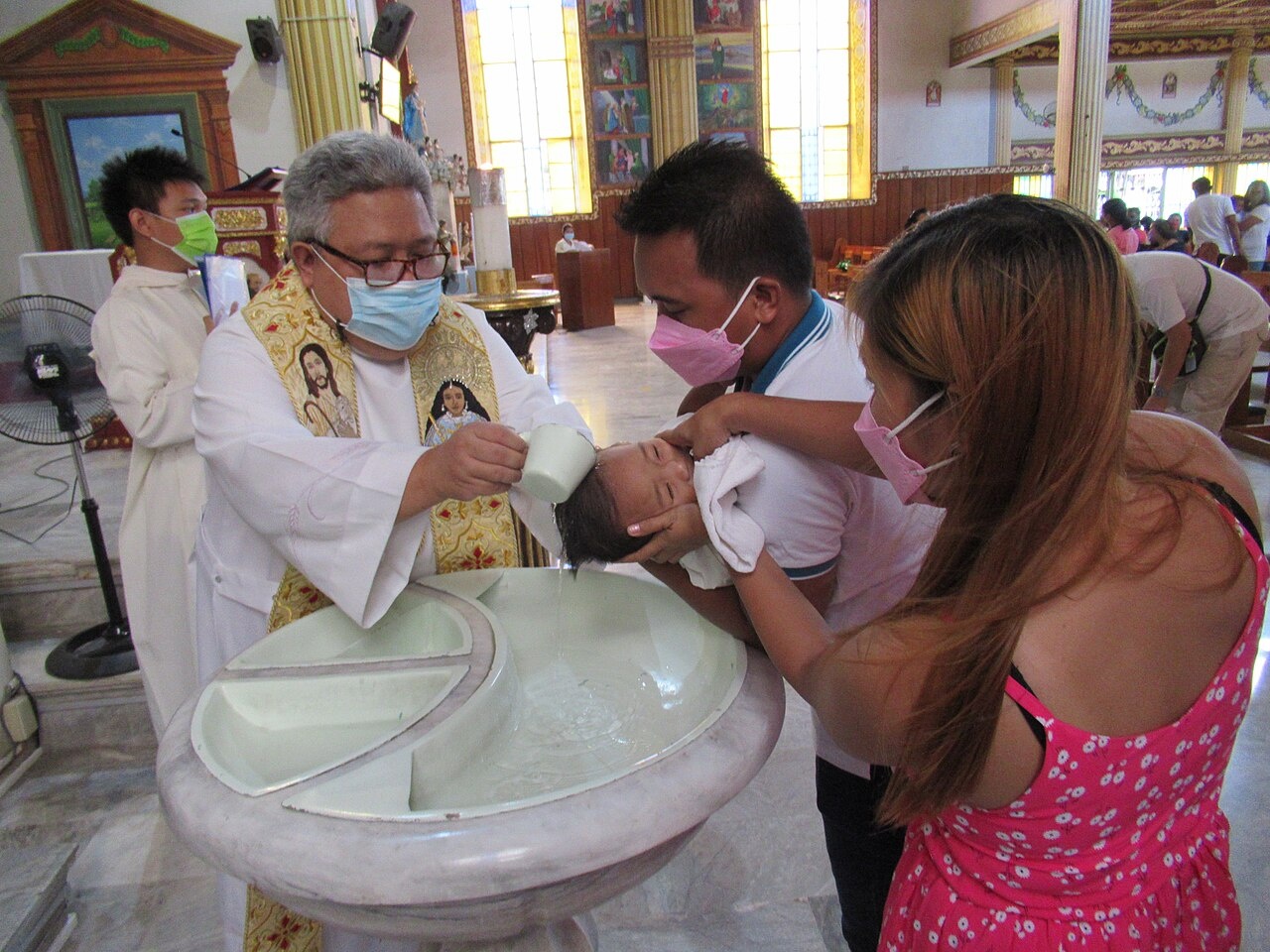
According to the Philippines Department of Tourism: More than three centuries of Spanish rule and five decades of American influence have made the Philippines culturally distinct within Asia. Beneath these strong foreign layers, however, the Filipino spirit continues to seek and express its own unique identity. [Source: Philippines Department of Tourism]
This identity is vividly expressed through music and dance. Filipinos love social gatherings, celebration, and performance, best seen in the fiesta, the province-wide festival that blends street dancing, talent shows, religious devotion, and communal feasting. Often celebrating harvests or patron saints, fiestas feature drum rhythms with Latin influences, colorful floats, and creative costumes. From pilgrim processions to lively street parties, these celebrations are inclusive and community-centered.
The Spanish introduced ideas such as strong concern for personal honor, social status, and formal manners. The Spanish term amor propio, referring to personal pride or self-esteem, entered Filipino usage and became associated with the cultural importance placed on dignity and respect. A related Filipino idea is pagpapakatao, which emphasizes behaving with human dignity and self-respect. Spanish ideas of urbanidad, meaning civility and refined manners associated with city living, became part of this cultural shift.
Artistic expression is also woven into daily life. Filipinos show a natural flair for color, design, and craftsmanship, visible not only in galleries but in handicrafts, fashion, churches, parks, jeepneys, embroidery, tribal tattoos, and traditional weaving such as that of Lang Dulay. Creativity becomes a way of asserting cultural identity.
Filipino cuisine likewise reflects layered cultural influences and a deep connection to family and home. Dishes vary from region to region, yet many are widely shared, such as adobo, often considered the national dish, prepared in countless local variations. With its diverse islands and traditions, Philippine culture resembles a festive buffet of flavors and experiences.
Religion and Filipino Character
The Philippines is the only Christian nation in Asia and Filipinos have high spiritual fervour. They observe holy days (business establishments are normally closed on Maundy Thursday, Good Friday, Easter, All Saints’-All Souls’ Days and Christmas). Sunday is considered both a religious and a family day. As much as possible, avoid working on that day because most Filipinos go to church and do things together as a family. [Source: Canadian Center for Intercultural Learning+++]
Most Filipinos are Roman Catholics, but there are other large Christian groups throughout the country especially among the Indigenous ethnic groups in the Autonomous Mountain Region of Northern Luzon. Most traditional elites are Catholic. In southern and western Mindanao and the islands of Jolo and Sulu Sea that constitute the Autonomous Region of Muslim Mindanao, there is a substantial Muslim community, which has been aggressively pushing for independence through such organizations as the Moro national Liberation Front and Moro Islamic Liberation Front. +++
Religion is openly and overtly practised throughout all aspects of life in the Philippines, including the work place. Strong beliefs and religious practices and events are not always matched by social norms and practices. While the Catholic Church makes divorce very difficult, if not impossible, it is not uncommon for married couples to either drift apart and enter into common law relationships with new spouses. In business and when exploring informal personal relationships with colleagues, it is prudent not to try to nail the formal relationships down if they do not seem to "add-up". +++
There is widespread misunderstanding and uneasiness regarding the Muslim religious minority and its demands for independence amongst the majority of Filipinos, especially in Mindanao. It is therefore wise for expatriates to avoid debate of the Muslim claims for independence and to check out the current safety of specific itineraries and proposed meetings when planning business trips and holidays to predominantly Moslem areas of Mindanao. +++
RELATED ARTICLES:
RELIGION IN THE PHILIPPINES factsanddetails.com
CHRISTIANIZATION OF THE PHILIPPINES: MISSIONARIES, SUCCESS, FRIAROCRACY factsanddetails.com
HOMEGROWN RELIGIONS IN THE PHILIPPINES: IGLESIA NI KRISTO, AGLIPAYAN CHURCH, KINGDOM OF JESUS CHRIST factsanddetails.com
MOROS: MUSLIMS IN MINDANAO AND THE SOUTHERN PHILIPPINES factsanddetails.com
HISTORY OF MUSLIMS IN THE SOUTHERN PHILIPPINES factsanddetails.com
FOLK RELIGIONS IN THE PHILIPPINES: GHOSTS, WITCHES. DEMONS, HOLY MOUNTAINS factsanddetails.com
MYTHS, LEGENDS AND CREATION STORIES IN THE PHILIPPINES factsanddetails.com
SUPERSTITIONS IN THE PHILIPPINES factsanddetails.com
Influence of Catholicism on Filipinos
Catholicism has a strong influence of the Filipino character. According to Thank God I'm Filipino: “ The Philippines is one the most religious countries in world, particularly in Catholicism and Islam. Families would encourage and strengthen the values of their children and would at least have one day a week for worship and at the same time strengthening family ties. Religion is the foundation of most of the country’s morals and values and sometimes, the church greatly affects the minds and opinions of the general populace, affecting its decisions. Sadly, this also applies to the government as they are troubled by whatever the Church’s stand is in every matter, as people see their opinion to be the “right” one. Thus, many of our politicians go with whatever the Church says, fearing that they would lose vote if they go against it. [Source: Thank God I'm Filipino - TGIF, Facebook, October 8, 2010]
Filipino Catholicism is a fusion of Catholicism brought by the Spanish and local animist and traditional beliefs, particularly a belief that deceased ancestors and land spirts influence the lives of the living. The character of Filipino Catholicism and religious practices vary a great deal from region to region. Among the local animist practices incorporated into Filipino Catholicism are offerings made to volcano spirits and the goddess of the seas. Catholics living in urban areas tend to be more liberal and Westernized than those living in the countryside. Philippines is the one Asian country where Confucianism and Buddhism have had little influence. The history of religion is mainly a leap from animism to Catholic Christianity. Confucianism and Buddhism have been practiced almost exclusively by the small ethnic Chinese community, most of whom are Christians.
RELATED ARTICLES:
CATHOLICISM IN THE PHILIPPINES: LIFE. INFLUENCE, SAINTS, POPE VISITS factsanddetails.com
CATHOLIC PRACTICES IN THE PHILIPPINES: PRAYER LADIES, SANTOS, BAPTISMS factsanddetails.com
For article on the Catholic Church in general see CATHOLICS factsanddetails.com
CATHOLIC CHURCH AND PHILIPPINES POLITICS: CARDINAL SIN, DUTERTE, CORRUPTION FIGHTERS factsanddetails.com
Island Influence and the Philippines Multi-Cultural Stew
It is said that Filipino culture is derived from all the cultures that have resided on the islands. The bayanihan or spirit of kinship and camaraderie is thought to have taken from their Malay ancestors. Close family ties are said to have been inherited from the Chinese.
The Tagalog word “tsismis”, wrote journalist Alan Berlow describes "stories, intrigue, lies, gossip, speculation, gathered like rice in a basket and tossed up in the air, sending husks to the wind, leaving behind kernels of truth. Truth and half truths, anyway." It is a "missing link, a smoking gun, the connective tissue of random events, the effort to explain things that resist explanation.
Philippine Pinoy culture has been described as "a buoyant chaos of Asian and Spanish influence." The Philippines has been a crossroads between east and west and meeting point for cultures from all over Asia and the Pacific, and the country's culture and people reflect this merging of cultures.
Filipino's are racially similar to Malays but culturally they are more like the Spanish. It could be argued they are the most hot bloodied and macho of the tropical Asian cultures. Prostitution and murder rates are high. It has many of the same problems as Latin American countries—and for that matter developing countries: social inequality, large disparities of wealth and income between rich and poor and small percentage of rich landowners and lots of poor. [Source: "The Villagers" by Richard Critchfield, Anchor Books]
Latin Influence on Filipinos
The Filipinos character has been described as a mix of Hispanic and Asian cultures. Many say Filipinos have more in common with Latin Americans than they do with Asians. Life in the Philippines often has a slow pace. Big gatherings and fiestas are common. There is a “manana” attitude about time. Being punctual is called “American time.
Machismo culture is prevalent on television, in the workplace and in everyday life. One Filipino woman told Newsweek, "our culture teaches that men are to be strong." The roots of the macho lie both in Spanish colonial and traditional familial hierarchical structures. Delicadeza is a Spanish loanword popular among upper class Filipinos. It is a self-imposed sense of proper decorum, similar to the European concept of noblesse oblige. It is no longer in vogue.
Latin America is often described as violent, passionate and intense. Crime rates and often murder rates are high. Large numbers of people party regularly all night. Many non-Latin Americans consider Latin Americans to be noisy and affectionate. Madonna described Latin culture as "very embracing, warm, passionate." The same could be said about Filipinos. Latin American are very hospitable and generous and it often seems the poorer people are the more they are willing to give. Guests are honored with special dishes and treats. Honor is important and defended vigorously, sometimes even physically. Personal criticism is taken very seriously and should be avoided. Because individuals are considered far more important than schedules, punctuality at meetings may be admired but not strictly observed. A casual stop over can sometimes turn into a visit that lasts a few days or a week. These guests often disappear, however, if work need to be done. Children like house guest because they spoil the children and give them lots of attention. These ideas and values also exist in the Philippines.
Cleanliness is a virtue despite how dirty things seem on the street level. Much time is spent making sure that the house is tidy and clean. Floors are mopped on daily basis and walls are scrubbed weekly. The condition of a house is a reflection on the family and especially the mother. The streets are beat up and full of trash but homes are clean. People keep their homes clean but often litter in public.
Latin Americans sometimes seem to have difficulty distinguishing between realty and myth. People believe in miracles and the power of divine intervention. Charismatic leaders and sports heroes are worshiped as gods and their faults are glossed over. It is no surprise that the literary movement of "magical realism,” championed Columbian writer Gabriel Garcia Marquez, sprung up in Latin America. These ideas are very much alive in the Philippines.
Asian Influence on Filipinos
National Geographic photographer Karen Kasmauski said, Filipinos “are more expressive and emotional than other Asians, yet they still have a polite Eastern restraint and civility about them and a strong aesthetic sense, an appreciation of beauty—particularly beautiful women.” Despite have a reputation for being emotional, Filipinos are surprised by overt expressions of emotion and don’t like when people raise their voice.
An emphasis is placed on skills to smooth interpersonal relations and minimize interpersonal conflict. When a difference of opinion arises, an effort is made to settle the matter with euphemisms and go-betweens rather than open criticism. “Pakikisama”—the art of smooth interpersonal relations—is of utmost importance to Filipinos. Social control is exerted through customs similar to “adat” found elsewhere in Southeast Asia.
"Face" is important in the Philippines as it is elsewhere in Asia, where it has been said that "face is more important than truth or justice" and losing face is often an individual’s greatest fear. Face is essentially respect in a community and is a crucial underpinning of society. Loss of that respect threatens the relations of individuals with almost everyone in his or her world and is hard to get back once lost and thus is avoided at all costs.
”Face” is equated with honor and “losing face” is equated with shame, disrespect and humiliation. Maintaining dignity and avoiding embarrassment is at the heart of maintaining face. Some people describe the West as a guilt-based society where people's behavior is dictated by their personal hang-ups. Asian societies, on the other hand, are often described as shame-based societies, in which behavior is often defined by fear of losing face. It is considered very bad taste to publically criticize a person since it results in a loss of face within the community. Necessary criticisms and suggestions should be made in way the that no one is blamed and shame is not cast upon any individual.
Filipinos and Southeast Asians consider it rude to say "no" directly. They often say something like "maybe," "I am busy," or even "yes" when they really mean "no," or convey a no answer in a way that foreigners don't understand. This behavior sometimes causes confusion with Westerners who like a "yes" or "no" answer, and who tend to believe there is a possibility of a "yes" unless they are told "no" straight out.
Image Sources: Wikimedia Commons
Text Sources: “Encyclopedia of World Cultures Volume 5: East/Southeast Asia:” edited by Paul Hockings, 1993; “Culture Shock!: Philippines” by Alfredo Roces and Grace Roces, Marshall Cavendish International, 2010; National Geographic, Live Science, Philippines Department of Tourism, New York Times, Washington Post, Los Angeles Times, Smithsonian magazine, Encyclopedia.com, Library of Congress, The Conversation, The New Yorker, Time, BBC, CNN, Reuters, Associated Press, AFP, Lonely Planet Guides, Google AI, Wikipedia, The Guardian and various websites, books and other publications.
Last updated March 2026