
CATHOLIC CHURCH AND POLITICS IN THE PHILIPPINES

The Philippines has never fully implemented the separation of church and state. For instance, the Catholic Church exerts significant influence over certain state legislation. In 1987, the church lobbied against the divorce law, which the Congress and Senate did not approve. Catholic and Protestant churches have influenced grassroots democratization movements. They organized people to resist Ferdinand Marcos's dictatorship (1972–1986) and advocated for human rights. [Source: Kathleen M. Nadeau, Worldmark Encyclopedia of Religious Practices, Thomson Gale, 2006]
During the Spanish colonial period, the Catholic Church was extensively involved in colonial administration, especially in rural areas. With the advent of United States control, the Catholic Church relinquished its great estates. Church and state officially were separated, although the church, counting more than 80 percent of the population as members, continued to have influence when it wanted to exert it. For much of the Marcos administration, the official church, led by archbishop of Manila, Cardinal Jaime Sin, adopted a stance of "critical collaboration." This meant that although Sin did not flatly condemn Marcos, he reserved the right to criticize. Below the cardinal, the church was split between conservative and progressive elements, and some priests joined the communist-dominated National Democratic Front through a group named Christians for National Liberation. Cardinal Sin was instrumental in the downfall of Marcos. He brokered the critical, if temporary, reconciliation between Aquino and Laurel and warned the Marcoses that vote fraud was "unforgivable." In radio broadcasts, he urged Manileños to come into the streets to help the forces led by Enrile and Ramos when they mutinied in February 1986. The church, therefore, could legitimately claim to be part of the revolutionary coalition. [Source: Library of Congress *]
Catholics fall into three general groups: conservatives who are suspicious of social action and hold that Christian love could best be expressed through existing structures; moderates, probably the largest group, in favor of social action but inclined to cooperate with government programs; and progressives, who do not trust the government programs, are critical both of Philippine business and of American influence, and feel that drastic change is needed. In the past, progressives were especially disturbed at atrocities accompanying the use of vigilantes. They denied that they were communists, but some of their leaders supported communist fronts, and a few priests actually joined armed guerrilla bands. There appeared to be more progressives among religious-order priests than among diocesan priests. *
RELATED ARTICLES:
CATHOLICISM IN THE PHILIPPINES: LIFE. INFLUENCE, SAINTS, POPE VISITS factsanddetails.com
CATHOLIC PRACTICES IN THE PHILIPPINES: PRAYER LADIES, SANTOS, BAPTISMS factsanddetails.com
For article on the Catholic Church in general see CATHOLICS factsanddetails.com
RELIGION IN THE PHILIPPINES factsanddetails.com
CHRISTIANIZATION OF THE PHILIPPINES: MISSIONARIES, SUCCESS, FRIAROCRACY factsanddetails.com
HOMEGROWN RELIGIONS IN THE PHILIPPINES: IGLESIA NI KRISTO, AGLIPAYAN CHURCH, KINGDOM OF JESUS CHRIST factsanddetails.com
MOROS: MUSLIMS IN MINDANAO AND THE SOUTHERN PHILIPPINES factsanddetails.com
HISTORY OF MUSLIMS IN THE SOUTHERN PHILIPPINES factsanddetails.com
FOLK RELIGIONS IN THE PHILIPPINES: GHOSTS, WITCHES. DEMONS, HOLY MOUNTAINS factsanddetails.com
MYTHS, LEGENDS AND CREATION STORIES IN THE PHILIPPINES factsanddetails.com
SUPERSTITIONS IN THE PHILIPPINES factsanddetails.com
IFUGAO RELIGION: GODS, RITUALS, FUNERALS factsanddetails.com
BONTOC RELIGION: GODS, ANITOS, FUNERALS factsanddetails.com
FUNERALS IN THE PHILIPPINES factsanddetails.com
HOLIDAYS, FIESTAS, NEW YEAR GUNFIRE AND CHRISTMAS IN THE PHILIPPINES factsanddetails.com
FAMOUS FESTIVALS IN THE PHILIPPINES: HOLY WEEK, BLACK NAZARENE AND GETTING NAILED TO A CROSS factsanddetails.com
Catholic Leaders and Politics in the Philippines
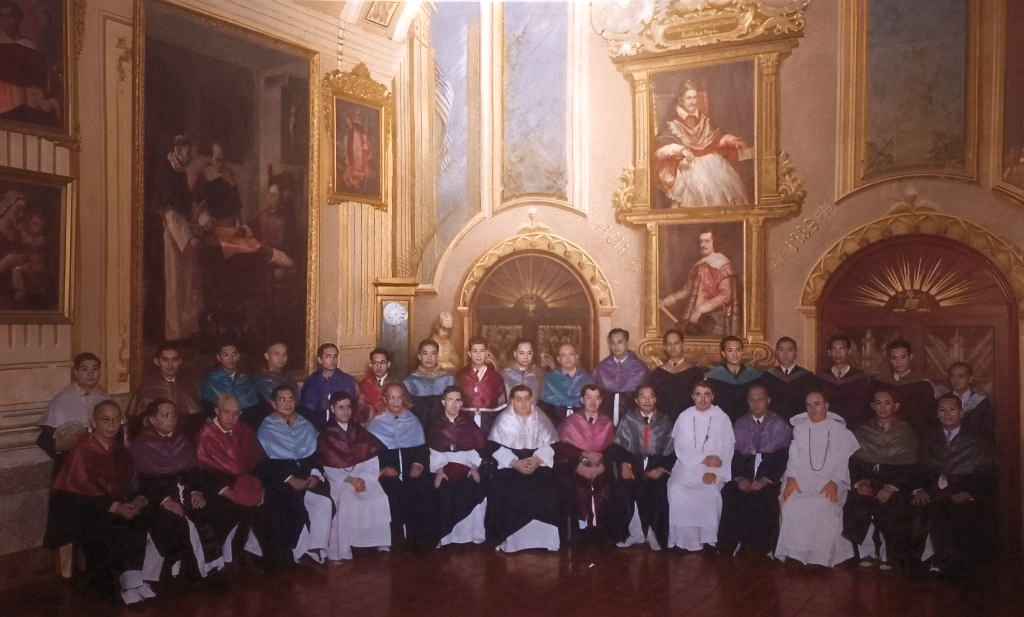
Corazon Aquino was a deeply religious woman who often opened cabinet meetings with prayers and sought spiritual guidance during difficult times. Although there were reports that the Vatican in late 1986 had instructed Jaime Sin to reduce his involvement in politics, Aquino continued to rely on him for counsel. The Catholic Bishops' Conference of the Philippines issued a pastoral letter urging citizens to vote “yes” in the 1987 constitutional plebiscite.
In March 1987, Sin announced that he was withdrawing from politics, but two months later he publicly expressed support for ten Aquino-backed candidates for the Senate and recommended that voters avoid candidates associated with the political left. In 1990, Sin described his relationship with the government as one of “critical solidarity.”
The Catholic church is one of the strongest institutions in the Philippines and major player in Philippine politics. Support of the Catholic church, and the military, are key to political survival and success in the Philippines. The Catholic is very involved in fighting poverty and in some cases some of its members have been involved in supporting poor tenant farmers in their battles against their rich landlords.
Priests and bishops and other religious leaders are powerful figures in the Philippines. Local priest and ministers are so highly respected that requests from them take on the power of mandates. A family considers having a son or daughter with a religious career as a high honor. Personal friendships with priests, ministers, and nuns are prized. Clerics take an active role in the secular world. An example is Brother Andrew Gonzales, the current secretary of DECS. [Source: everyculture.com]
The good feeling that initially existed between the church and the government of President Aquino lasted only a short time after her inauguration. Deep-seated divisions over the need for revolutionary changes again led to tension between the government and some elements in the churches. *
Catholic Church Social Welfare Activities Leaders and Politics in the Philippines
The Catholic Church and, to a lesser extent, the Protestant churches engaged in a variety of community welfare efforts. These efforts went beyond giving relief and involved attempts to alter the economic position of the poor. Increasingly in the 1970s, these attempts led the armed forces of President Marcos to suspect that church agencies were aiding the communist guerrillas. In spite of reconciliation efforts, the estrangement between the churches and Marcos grew; it culminated in the call by Cardinal Jaime Sin for the people to go to the streets to block efforts of Marcos to remain in office after the questionable election of 1986. The resulting nonviolent uprising was known variously as People's Power and as the EDSA Revolution. [Source: Library of Congress, 1991 *]
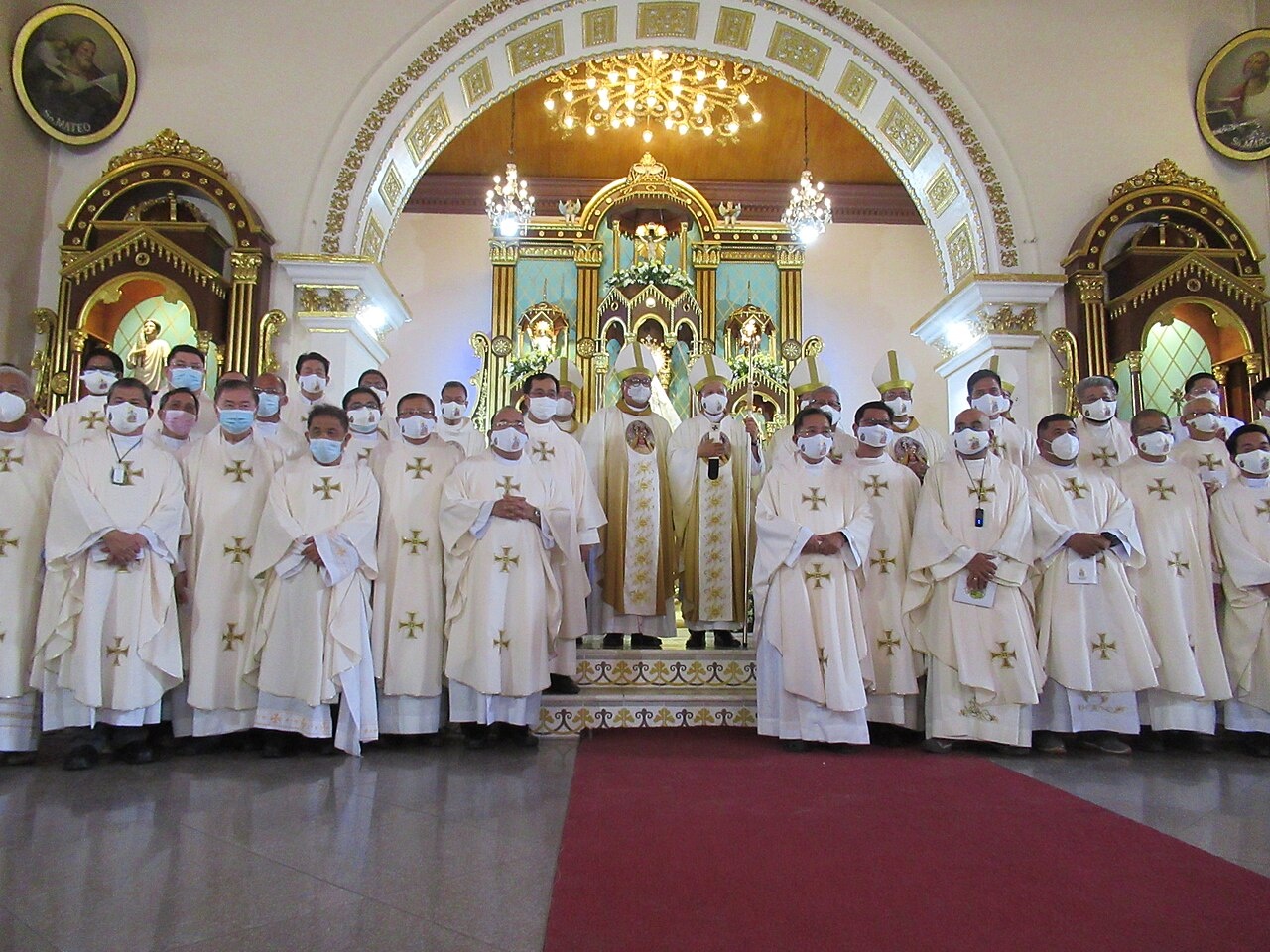
The reformist ideas of Vatican II and other international Catholic and ecumenical gatherings have had a profound effect on Philippine churches. Progressive church leaders, both Catholic and Protestant, have emphasized the importance of improving the political and socioeconomic conditions of the poor while striving for a society that is more just and environmentally conscious. In the context of the Catholic Church's commitment to fostering human development in social, cultural, economic, educational, aesthetic, and political aspects, progressive church members and clergy have acted as protectors of democratic ideals, defending human rights, social justice, and freedom in the name of the Gospel. [Source: Kathleen M. Nadeau, Worldmark Encyclopedia of Religious Practices, Thomson Gale, 2006]
The church was very pleased with provisions of the 1987 Constitution that ban abortion and restore a limited role for religion in public education. The Constitution is essentially silent on the matter of family planning. The church used its very substantial influence to hinder government family-planning programs. Despite the fact that the population grew by 100,000 people per month in the late 1980s, Cardinal Sin believed that the Marcos government had gone too far in promoting contraception. He urged Aquino to "repeal, or at least revise" government family-planning programs. In August 1988, the bishops conference denounced contraception as "dehumanizing and ethically objectionable." For churchmen, this was an issue not to be taken lightly. One bishop called for the church to "protect our people from the contraceptive onslaught" and the bishops conference labelled rapid population growth a "nonproblem." In 1989 the United States Department of Commerce projected the Philippine population at 130 million by the year 2020 — in a country the size of California. *
Cardinal Sin
Cardinal Jaime L. Sin was the top Catholic figure in the Philippines for decades until his death in 2005. Arguably one of the most powerful men in the Philippines and one of the most powerful Catholic clerics in the world, he was mentioned as a possible successor to Pope John Paul II. The son of Chinese immigrants, Cardinal Sin is well-known for his sense of humor, his name and his jokes about his name. When asked what his chances are of becoming the Pope, he says, "First of all, my name is bad." He often greets guest to his residence with "Welcome to the House of Sin" and is notorious for his bawdy comments.
Hrvoje Hranjski of Associated Press wrote: Cardinal Sin “shaped the role of the church during the country's darkest hours after dictator Ferdinand Marcos imposed martial law starting in 1972 by championing the cause of civil advocacy, human rights and freedoms. Sin's action mirrored that of his strong backer, Pope John Paul II, who himself challenged communist rulers in Eastern Europe. Three years after Benigno Aquino Sr., a senator opposing Marcos, was gunned down on the Manila airport tarmac in 1983, Sin persuaded Aquino's widow, Corazon, to run for president. When massive election cheating by Marcos was exposed, Sin went on Catholic-run Radio Veritas in February 1986 to summon millions of people to support military defectors and the Aquino-led opposition. Marcos fled and Aquino, a deeply religious woman, was sworn in as president. Democracy was restored, but the country remained chaotic. [Source: Hrvoje Hranjski, Associated Press, January 3, 2013 ]
Cardinal Sin influence goes back to the Marcos era. Once when he sitting between Marcos and his wife Imelda in the back seat of the presidential limousine, Marcos asked him why he was so quiet. "Because," he said, "I feel like I am being crucified between two thieves." Marcos reportedly thought comment was funny but Imelda wouldn't speak to the cardinal for three months after that.
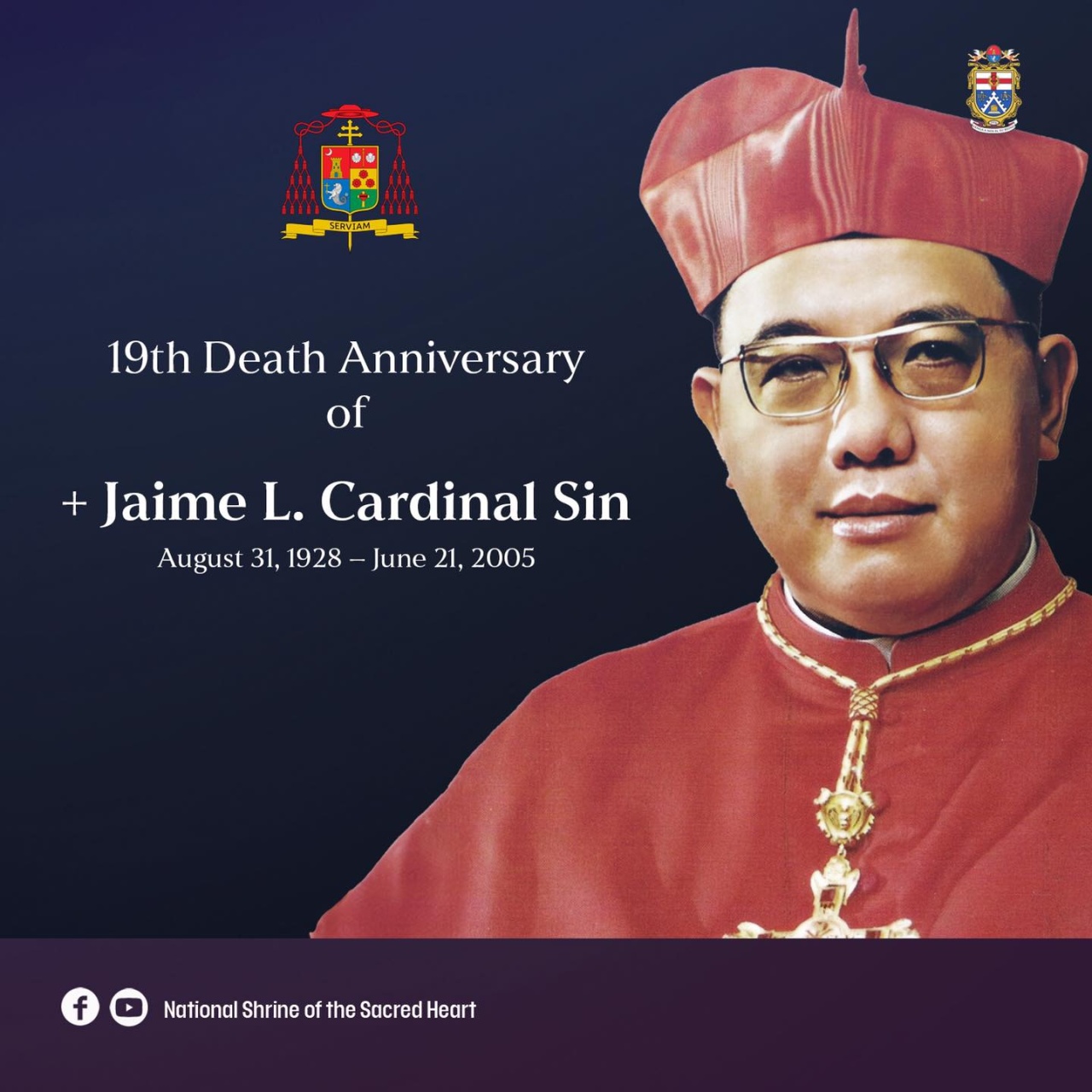
Michelle O'Donnell wrote in the New York Times, “Cardinal Jaime L. Sin, the powerful Roman Catholic archbishop of Manila, used his influence to champion the rights of the poor and rally the widespread popular resistance that brought down the presidencies of Ferdinand E. Marcos and Joseph Estrada Cardinal Sin led the nearly 40 million Catholics in the Philippines for almost three decades, through political upheaval that brought martial law, repressive dictatorship and democratic rule. A round-faced, bespectacled man, he was known for his sense of humor that included poking fun of his own name. But it was through his withering and unwavering public criticism of the Marcos regime in the 1980's that Cardinal Sin became an international figure. [Source: Michelle O'Donnell, New York Times, June 21, 2005 +++]
“At a time when reform-minded clergy in other developing countries were targets of assassination, Cardinal Sin tirelessly used his pulpit first as bishop, then archbishop, to attack Mr. Marcos' martial law, corruption and policies that oppressed the poor. Yet unlike Archbishop Oscar Romero of El Salvador, a contemporary who also worked to empower the poor and was fatally shot as he delivered a homily in 1980, Cardinal Sin seemed insulated from personal harm. "If you compare him to Romero, he spoke out as much as Romero did," said the Rev. Paul L. Locatelli, the president of Santa Clara University. "He saw justice as making sure that the poor had a voice." But he was not witho Under the cardinal's tenure, the church was shaken by accusations of sexual misconduct by some of its priests, according to The Associated Press. Two years ago, Catholic bishops apologized for grave cases of sexual misconduct by priests and pledged to act on complaints. +++
During his long career, the cardinal was not without his critics. He staunchly opposed artificial means of birth control, which some critics said left the country overpopulated and mired in poverty. Under the cardinal's tenure, the church was shaken by accusations of sexual misconduct by some of its priests, according to The Associated Press. Two years ago, Catholic bishops apologized for grave cases of sexual misconduct by priests and pledged to act on complaints. +++
Cardinal Sin’s Political Life
Jaime Lachica Sin was born on August 31, 1928 on the Philippine island of Panay to Chinese parents. The 14th of 16 children, he was sent away at a young age to become a priest. Martin Weil wrote in the Washington Post, “The cardinal was born into a religious family, of Filipino and Chinese descent, in Aklan province. Jaime Sin was ordained as a priest in his mid-twenties and rose through the hierarchy to become bishop, archbishop and, in 1976, cardinal. [Source: Martin Weil, Washington Post, June 21, 2005 ||||]
“Although he had showed considerable ability early in his church career, some accounts indicated that in his early days in Manila, he showed little sign of his later opposition to the regime. But he was credited with vigorously resisting government attempts to raid a seminary in search of reputed political dissidents. For years, his formal policy toward Marcos was described as one of "critical collaboration." While he refrained from condemnation of the regime, it was said, the cardinal nevertheless accorded himself the right to criticize, and he used it. Objecting to inequality and opposing corruption, he was known as a voice of morality to Catholic communities throughout Southeast Asia. ||||
“Sometime after the revolt that brought Aquino to power, the cardinal redefined his position on the government. While he still could be critical, his policy had become "critical solidarity." The installation of Aquino did not bring to an end the cardinal's willingness to involve himself in political issues, especially those with a moral component. He took issue at vital junctures with Aquino's successor, Fidel Ramos, and he later was influential in expelling the man who followed Ramos, Joseph Estrada. Estrada, who was the target of corruption charges, was ousted in 2001 after being impeached by the Congress. "May God show him the heroic value of relinquishing his post for the sake of our people," the cardinal said. ||||
Michelle O'Donnell wrote in the New York Times, “The cardinal was a popular figure at protests throughout his career. He directed street protests that led to Mr. Estrada's ouster in January 2001, and spoke forcefully at them. "Mr. President, how could have done this to us?" he asked. "The poor trusted you and you betrayed them, the businessmen trusted you and you lied to them. The first lady married you and you have betrayed that vow and used many women." After Mr. Estrada's ousters, his followers, many of them impoverished, denounced the cardinal and other politicians who forced Mr. Estrada from power, and stormed the presidential palace in May 2001 in riots that killed six people . Cardinal Sin apologized to the poor shortly thereafter, A.P. reported. He said that the church had neglected them and made them easy prey for selfish and powerful politicians. "You and I lived dangerously together through five presidents now," he told Filipinos when he resigned in 2003, according to Japanese news agency. "Honestly, I was always a reluctant political archbishop." [Source: Michelle O'Donnell, New York Times, June 21, 2005]
Looking back on his long career, Cardinal Sin said his public actions were not prompted by politics, but rather by "a moral dimension." “In explaining his willingness to intervene in politics, he said the church "cannot proclaim eternal salvation to our flock when we are blind to the physical realities which deny them that very salvation here on earth." In his resignation letter, Cardinal Sin he wrote: "I have given my very best to God and country. I beg pardon from those I might have led astray or hurt. Please remember me kindly." ||||
Cardinal Sin retired in 2003 and died of renal failure at the age of 76 in June 2005. He suffered from kidney and heart problems. His poor health prevented him from attending the gathering of cardinals in Rome that picked the successor to Pope John Paul II.
Cardinal Sin and the Marcos Regime
Michelle O'Donnell wrote in the New York Times, “Beginning in the 1970's, Cardinal Sin, a moderate, was among the leaders who publicly pressured Mr. Marcos to end the martial law that he had imposed in 1972 out of concern that leftist radicals would overthrow the government. For his part, Cardinal Sin had pledged to rein in Marxist priests and nuns in the ranks of the clergy. They had angered the government for, among other things, reporting to Amnesty International the military's systematic killing of villagers, and they concerned Cardinal Sin because they preached the gospel in Marxist terms. [Source: Michelle O'Donnell, New York Times, June 21, 2005 +++]
“At first, he was careful not to attack the First Family as he assailed the regime's policies. As the Marcos regime wore on, his opposition became more strident, despite the lifting of martial law in 1981. Often, he used his famous sense of humor to deliver thinly veiled jokes that devastated the Marcos's power and style. In a joke he told about the "mining industry," a wealthy and powerful woman - not unlike Imelda R. Marcos, the country's flamboyant first lady - pointed to things and proclaimed: "That's mine! And that's mine!" +++
“But after senator Benigno S. Aquino, Mr. Marcos's leading political opponent was assassinated in 1983, it was the cardinal's unwavering support of the senator's widow, Corazon Aquino, in her campaign to overthrow Mr. Marcos, that showed his power as a popular kingmaker. After Mrs. Aquino returned to the Philippines from self-imposed exile to mount her campaign, she was barred from equal access to the media. Cardinal Sin's regular radio addresses on the Catholic radio station calling for the people to support her became a critical tool to rally millions to her side. After her election in 1986, he became known in Manila as the "unseen general" who handed down on earth orders from above. +++
Cardinal Sin and the People Power Revolt in 1986
Cardinal Sin was a close friend and political ally of Cory Aquino. He played a significant roll in the ousters of Marcos in 1986 in the “People Power” revolt, and of President Joseph Estrada in 2001. Martin Weil wrote in the Washington Post, Cardinal Sin was “the curiously named archbishop of Manila whose crucial support for his country's "people power" revolution of the 1980s made him one of the most politically influential members of the Roman Catholic hierarchy. Amid the swirling political ferment that engulfed the Philippines in 1986, the cardinal won international renown for helping tip the scales against the authoritarian rule of Ferdinand Marcos and in favor of Corazon Aquino. [Source: Martin Weil, Washington Post, June 21, 2005 ||||]
“As events reached their climax in the Philippines and an election was suddenly called, he admonished both Ferdinand Marcos and his wife, Imelda, that holding on to power through fraudulent balloting schemes would be "unforgivable." At a key moment in February 1986, he called on Filipinos to surround the police and military headquarters in Manila to protect then-military Vice Chief of Staff Fidel Ramos, who had broken with Mr. Marcos, and they did. More than 1 million people took to the streets, clutching Bibles and uttering prayers, in an outpouring that shielded anti-government rebels from attack. That was one of the principal events in the revolution that forced the resignation of Marcos, whose regime, dating from the 1960s, had been accused of corruption, electoral fraud and violations of human rights. Later, the cardinal, while delivering a homily at a Mass of thanksgiving, demonstrated what was described as unprecedented personal support for a political leader, clearly endorsing Aquino as he led a chant of "Co-ry! Co-ry!" ||||
“Beyond its effects on the Philippines, the peaceful ouster of Marcos has been cited as a milestone in the movement toward popularly chosen governments throughout the world. The cardinal's actions did not necessarily make him a role model for political participation by the clergy, however. It was reported that he caused uneasiness at the Vatican and that he was summoned to Rome to explain himself.” ||||
Cardinal Sin on Birth Control
Cardinal Jaime Sin was staunch opponent of the Philippines family planning program. He called women "heroes" for providing for their families and accused the U.S. government of "implementing programs' that are actually Satan's" by pushing birth control in Third World countries, a view shared by a Filipino senator who said the U.S. government forged a coalition "bigger than the one assembled for Desert Storm" to promote abortion and "spearhead...global decadence, destruction and death."
In 1994, Cardinal Sin appeared with Aquino at a protest at the U.N. population conference in Cairo, where the two Filipinos criticized birth control and condoms as "being intrinsically evil" and burned a replica of the conference's draft program of action. One of Cardinal Sin’s chief critics, Health secretary Juan Flavier, once answered back to accusations by Sin that he promoted abortion with the quip, "It's a sin to tell a lie."
In one example of his humor, Cardinal Sin, who was one of the last of 15 children, told an interviewer that had his parents practiced birth control he never would have been born. On another occasion, the cardinal told a news conference that birth control pills cause premature aging. "I know of...a 26-year-old who looks 60 because she takes pills. So if you want to keep your clear complexion, do not take contraceptives." An editorial in a Manila newspaper responded to this remark by saying, "as the cardinal says, pop babies, not pills, if you want to keep the bridely glow on your cheeks.
See Separate Article:BIRTH CONTROL IN THE PHILIPPINES: CONTRACEPTIVES, CATHOLICS, REPRODUCTIVE HEALTH LAW factsanddetails.com
Cardinal Sin on Marriage and Homosexuality
Cardinal Sin also accused family planning leaders of marshaling "global forces” to “destroy the family by first destroying our children" by "brainwashing" them to accept such "unnatural" practices such as "homosexuality, lesbianism, incest, sodomy, oral sex, contraception, sterilization and abortion."
When asked about his opinion on the ordination of woman as priests, he said "woman have another mission in the world" and "should not become priests." Besides, he added, Who would want to have confession with a woman? "A woman will not keep the secret."
On gay marriages, Cardinal Sin said, "Just imagine. It will mean two men or two women can get married and adopt, maybe a cat or a dog, and they call that a family." One of Cardinal Sin's favorite jokes goes something like this: If marriage to three women is called polygamy and marriage to two women is bigamy, what do you call marriage to one woman. Answer: monotony.
Filipino Priest Fights Corruption Despite Death Threats
In 2007, Jason Gutierrez of AFP wrote: “The crowd of supporters parted like the Red Sea as former Roman Catholic priest Ed Panlilio stepped out of his campaign headquarters in downtown San Fernando. The building had just received a phoned-in bomb threat. Marked for assassination by gambling barons as well as political enemies, the soft-spoken 53-year-old has so far proved to be an elusive target in a country where life is cheap and an assassin can be hired for a few hundred dollars. [Source: Jason Gutierrez, Agence France-Presse, July 3, 2007 \=]
“The first priest ever to be elected governor in Philippines, he has changed the political landscape of this predominately Roman Catholic nation where the constitution clearly calls for the separation of church and state. Panlilio beat all the odds in May when he was elected governor of Pampanga, President Gloria Macapagal-Arroyo's bailiwick and the illegal gambling capital of the Philippines. Thousands of impoverished people had come to listen to his speeches in the grueling grassroots campaign while the local media portrayed him as a crusading David challenging the two Goliaths of local politics — Mark Lapid and Lilia Pineda — and backed by Arroyo's vast political machinery. \=\
“While his victory may have alienated him from his superiors in the Church who stripped him of his priestly duties analysts say it underscored the public's frustration with so-called traditional politicians who have failed to lift the living standards of their constituents. Panlilio is embarking on a Herculean crusade to clean up the bloated and corrupt provincial bureaucracy and introduce transparency in Pampanga, an agricultural province some 80 kilometers (49 miles) north of Manila. \=\
“Panlilio is the epitome of simplicity, and is most comfortable wearing a plain white shirt, jeans and sandals. Despite the death threats Panlilio refuses to wear a bullet-proof vest, saying: "They are too heavy and too cumbersome." Rubbing the simple crucifix necklace between his fingers, he says: "This is all the protection I need." Even so everywhere he goes there are armed bodyguards provided by the provincial police — just in case. "I am not afraid. When I ran for governor, I had already given myself up and was prepared for the consequences of my action," Panlilio told AFP. "Those who are threatening us are cowards who don't know how to stand on their own two feet. We cannot be cowed," he said. \=\
“The threats against him are real — already, three local officials who were key to his campaign have been attacked by unidentified gunmen. One of them, Mario Nulud, was killed while tending his garden in what was seen by many of Panlilio's supporters as a warning to the priest to stop his crusade. The attacks have forced Panlilio to limit public appearances until after his July 1 inauguration. Nevertheless, the death threats continued, including one sent via text message threatening to bomb his headquarters. Panlilio would not publicly say who he suspects are behind the attacks but relatives of those who have been targeted believe the hired guns worked for the family of losing candidate Lilia Pineda, wife of Pampanga's alleged jueteng kingpin Rodolfo Pineda. "We are in constant communication with police about these threats. We are taking adequate measures for our safety," said Panlilio. \=\
Panilio “ says he does not crave power and would gladly return to his ministry once he has fulfilled his official duties. "I am doing this not because of a personal ambition or a craving for power. I have always loved my priestly ministry and I have always found fulfillment in it," he said "A priest running for public office is not an easy thing to accept," he said, stressing that his decision had caused him sleepless nights and entailed giving up his Church duties. He says he has already crossed party lines and remains willing to have political opponents help him in his mission, while making it clear that his office would run on full transparency. "I already miss my church. But I also believe that public office is another way of serving God," he said in a soft voice. "With God at your side, well, how can you fail?" \=\
See Corruption Under Government
Passage of the Reproductive-Health Law Shows Declining Influence of the Church
In 2012, Twenty-six years after Catholic leaders helped mobilize millions in the uprising that toppled dictator Ferdinand Marcos, the Philippines Congress passed a law on reproductive rights that the Catholic Church vehemently opposed. The 2012, Responsible Parenthood and Reproductive Health Act provides state-funded contraceptives for the poor. The law marked a historic clash between the powerful Roman Catholic hierarchy and the Philippines government. and signaled that the bishops no longer commanded the same political influence over the public that had in the past. [Source: Hrvoje Hranjski, Associated Press, January 3, 2013 ]
Church leaders condemned the law as an assault on the sanctity of life, arguing that contraceptives encouraged promiscuity and undermined moral values. Aquino and his supporters, however, framed it as a practical response to poverty, high rates of unintended pregnancy, and the strain on poor families. With abortion illegal and social problems such as overcrowding and homelessness worsening, many Filipinos saw family planning as an economic necessity rather than a moral rebellion against the Church.
Ordinary citizens reflected this shift in attitudes. Some devout Catholics continued attending Mass while openly using contraceptives, separating personal faith from adherence to Church doctrine. For many struggling families, daily survival outweighed religious prohibitions, highlighting a growing gap between official Church teachings and the lived realities of the poor.
The Church’s waning authority had been building for years, particularly after the death of influential Cardinal Jaime Sin in 2003. Subsequent presidents, including Fidel V. Ramos and Gloria Macapagal Arroyo, also clashed with or courted the Church with mixed results. By the time Aquino took office, clerical scandals and shifting social attitudes had eroded the Church’s moral dominance. The reproductive health law’s passage underscored a new political era in which practical concerns increasingly outweighed ecclesiastical influence.
Duterte’s Criticism of the Catholic Church
In January 2017, then Philippines President Rodrigo Duterte sharply criticized the Catholic Church after priests and bishops spoke out against alleged extrajudicial killings linked to his anti-drug campaign. Despite receiving a blessing from Pope Francis through an adviser who visited the Vatican, Duterte publicly rebuked church leaders, accusing them of hypocrisy and misconduct. [Source: Neil Jerome Morales, Reuters, January 20, 2017]
During a speech to police officers, Duterte expressed anger that members of the clergy were condemning his drug war instead of helping persuade people to stop using illegal drugs. He accused priests and bishops of corruption, sexual abuse, and violating church teachings, and challenged them to a public “showdown,” threatening to reveal alleged wrongdoing within the Church.
The criticism came as the Catholic Church emerged as one of the few major institutions openly questioning the government’s anti-drug campaign, which had resulted in thousands of deaths according to police figures. Duterte argued that church leaders lacked moral authority to criticize the government because of scandals involving clergy.
After winning the 2016 Philippine presidential election, Duterte called the Catholic Church “the most hypocritical institution.” In a late-night press conference in Davao City, he accused several bishops of corruption and of asking politicians for favors such as vehicles and property assistance. Duterte questioned the influence of church leaders after they urged voters not to support him during the election campaign. Despite these warnings, he won by a large margin, which he described as proof that the bishops had failed to sway the public. The outspoken mayor argued that some church officials violated their vows of celibacy and misused public donations. [Source: Jim Gomez, Associated Press, May 22, 2016]
The confrontation reflected broader disagreements between Duterte and Catholic leaders. Church officials had previously criticized his harsh rhetoric, his promise to kill criminals as part of his anti-crime policies, and his controversial public statements, including an earlier insult directed at Pope Francis during the pope’s 2015 visit to the Philippines.
Church figures such as Socrates Villegas, then head of the Catholic Bishops' Conference of the Philippines, condemned Duterte’s remarks and behavior, criticizing his vulgar language, comments about violence, and support for contraception policies opposed by the Church. The dispute highlighted the continuing tensions between political leadership and religious authority in the Philippines.
In 2015, Duterte cursed Pope Francis, who had caused a huge traffic jam during a visit to Manila that trapped the mayor for hours. When stunned bishops reacted, Duterte apologized but then condemned the church, criticizing claims that priests can give absolution for sin. He promised to limit families to three children to go against Catholic doctrines, and declared, “The most hypocritical institution is the Catholic Church.” Despite his profanity, repeated calls to violence and the Philippines being 80 percent Catholic, Duterte was one the Philippines’s most popular leaders ever. [Source: Listverse, Jonathan Kaiman, Los Angeles Times, October 10, 2016]
Rodrigo Duterte has stated that he was sexually abused by a priest when he was 14. He told the press, “It was a case of fondling—you know what—he did during confession.” After being urged by the Catholic Bishops' Conference of the Philippines (CBCP) and officials of Ateneo de Davao University to identify the priest and pursue legal action, Duterte named him as Mark Falvey, who died in 1975.
Image Sources: Wikimedia Commons
Text Sources: “Encyclopedia of World Cultures Volume 5: East/Southeast Asia:” edited by Paul Hockings, 1993; “Culture Shock!: Philippines” by Alfredo Roces and Grace Roces, Marshall Cavendish International, 2010; National Geographic, Live Science, Philippines Department of Tourism, New York Times, Washington Post, Los Angeles Times, Smithsonian magazine, Encyclopedia.com, Library of Congress, The Conversation, The New Yorker, Time, BBC, CNN, Reuters, Associated Press, AFP, Lonely Planet Guides, Google AI, Wikipedia, The Guardian and various websites, books and other publications.
Last updated March 2026