
ANIMISM AND FOLK RELIGIONS IN THE PHILIPPINES
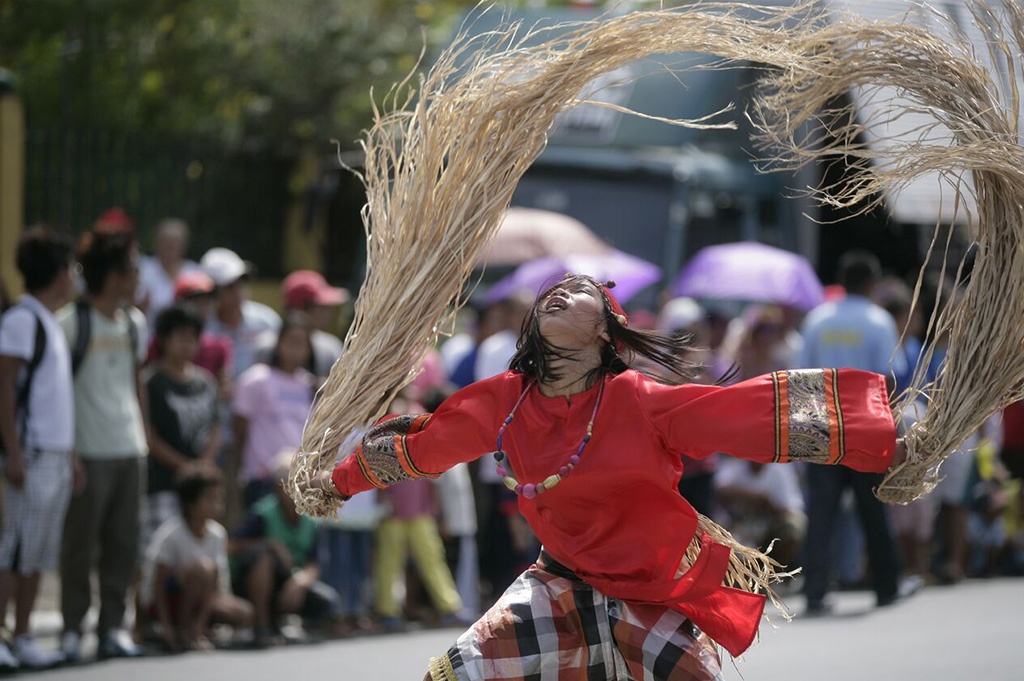
Animism, a belief that natural objects have souls, is the oldest religion in the Philippines. Practiced by indigenous peoples before the arrival of foreign religions, it held that elements of nature—such as rocks, trees, rivers, and animals—possessed spiritual beings known as anito or diwata. These spirits, along with ancestral souls believed to influence everyday life, were respected through rituals and offerings. Many of these beliefs continued to exist and later blended with introduced religions, particularly Christianity and Islam, shaping aspects of Filipino spiritual culture.
Animism is still practiced by some ethnic groups in the Philippines, particularly among Negrito communities and peoples in the Cordillera region of northern Luzon and also parts of Palawan, Mindoro, and Mindanao.. A central feature of Philippine animism is the belief that spirits inhabit the natural world and can influence human fortunes. To maintain harmony with these spirits, people perform ceremonies and present offerings to prevent illness, accidents, or other misfortunes. Spiritual practices are often led by ritual specialists known as babaylan or catalonan, who serve as healers and intermediaries between the physical and spiritual realms. They conduct healing rituals, communicate with spirits, and guide communities in religious ceremonies.
Although the Philippines is now predominantly Christian, especially Roman Catholic, many animistic traditions continue to persist. In rural areas in particular, these practices blend with Catholic rituals, forming a distinctive form of folk Catholicism that remains an important part of Filipino culture and belief. Animistic traditions also appear in everyday folk practices. Many Filipinos use protective charms or amulets called agimat, follow superstitions, and say expressions such as “tabi-tabi po” to respectfully ask permission from unseen spirits believed to dwell in nature. Folklore also includes supernatural beings such as the Aswang, often described as a vampire-like or shape-shifting entity.
Among some groups the universe has traditionally been understood to consist of five realms: the Earth, the Skyworld, the Underworld, the Upstream area, and the Downstream area. The Skyworld is believed to be inhabited by a creator deity and other high gods, and many mythological events are thought to occur there. The second group of supernatural beings consists of ancestral spirits, while a third group includes mythological creatures and culture heroes who were once human but whose origins are too ancient to trace. In addition, spirits are believed to inhabit natural places such as forests, rivers, swamps, pathways, and large trees, reflecting the deep connection between indigenous spirituality and the natural environment. [Source: Kathleen M. Nadeau, Worldmark Encyclopedia of Religious Practices, Thomson Gale, 2006]
RELATED ARTICLES:
MYTHS, LEGENDS AND CREATION STORIES IN THE PHILIPPINES factsanddetails.com
SUPERSTITIONS IN THE PHILIPPINES factsanddetails.com
IFUGAO RELIGION: GODS, RITUALS, FUNERALS factsanddetails.com
BONTOC RELIGION: GODS, ANITOS, FUNERALS factsanddetails.com
RELIGION IN THE PHILIPPINES factsanddetails.com
CHRISTIANIZATION OF THE PHILIPPINES: MISSIONARIES, SUCCESS, FRIAROCRACY factsanddetails.com
HOMEGROWN RELIGIONS IN THE PHILIPPINES: IGLESIA NI KRISTO, AGLIPAYAN CHURCH, KINGDOM OF JESUS CHRIST factsanddetails.com
MOROS: MUSLIMS IN MINDANAO AND THE SOUTHERN PHILIPPINES factsanddetails.com
HISTORY OF MUSLIMS IN THE SOUTHERN PHILIPPINES factsanddetails.com
CATHOLICISM IN THE PHILIPPINES: LIFE. INFLUENCE, SAINTS, POPE VISITS factsanddetails.com
CATHOLIC PRACTICES IN THE PHILIPPINES: PRAYER LADIES, SANTOS, BAPTISMS factsanddetails.com
For article on the Catholic Church in general see CATHOLICS factsanddetails.com
CATHOLIC CHURCH AND PHILIPPINES POLITICS: CARDINAL SIN, DUTERTE, CORRUPTION FIGHTERS factsanddetails.com
FUNERALS IN THE PHILIPPINES factsanddetails.com
HOLIDAYS, FIESTAS, NEW YEAR GUNFIRE AND CHRISTMAS IN THE PHILIPPINES factsanddetails.com
FAMOUS FESTIVALS IN THE PHILIPPINES: HOLY WEEK, BLACK NAZARENE AND GETTING NAILED TO A CROSS factsanddetails.com
Filipino Witches and Sorcery
Many unexplained illnesses in the Philippines are attributed to kulam, a form of sorcery or witchcraft. According to popular belief, a person known as a mangkukulam can cause harm or sickness through supernatural means, sometimes even through a powerful stare. Such acts are often believed to occur because of a perceived offense—whether real, imagined, or simply out of spite. [Source: “Culture Shock!: Philippines” by Alfredo Roces and Grace Roces, Marshall Cavendish International, 2010]
Female shamans in the Philippines still lick the blood from daggers they personally had thrust into a pig before telling the future. The Babaylan were wise women of the Philippines, healers and priestesses who were demonized and often killed as witches by Spanish invaders after 1521. Many rituals and potions in the Philippines involve the use of lighting teeth, tooth-shaped pieces of basalt that are said to appear at the base of trees struck by lightning. Wooden amulets often have sweet, earthy-smelling herbs mixed with lightning teeth. Gayuma love potions work if you apply it to the forehead of the person you are hoping to woo. Some concoction have more than a hundred herbs. The biggest events are cockfights. During Holy Week tang alap rituals are conducted.
Siquijor (15 miles from Demabguete on the island of Negros by ferry) is an island province famous for its witches and faith healers and nice deserted beaches. A number of shaman, mananambals (good and evil witches and warlocks) and sorcerers are said to live in Sant Antonio. The “bad side” sorcerers use voodoo potions, spider and poisonous snake agents and powerful plants to help people seeking revenge against others. The “good side” sorcerers are basically herbalists who use traditional medicine, oil massages, chants and prayers to help people feel better or overcome problems or diseases.
Mambabarang (summoner) is a witch who uses insects and spirits to enter the body of any person they hate. A Mambabarang is a kind of a mangkukulam. Mambabarangs are ordinary human beings with black magic who torture and later kill their victims by infesting their bodies with insects. They are different from Mangkukulams - the latter only inflict pain or illness. Mambabarangs use a strand of hair from their chosen victim and tie it to the bugs or worms which they will use as a medium. When they prick the bug, the victim immediately experiences the intended effect. [Source: budz-traditionalghostbeliefs.blogspot, Wikipedia]
Mangkukulam are witches, wizards, or sorcerers who cast evil spells to humans. This bewitcher is also called manggagaway. The Mangkukulam uses dark magic. Mangkukulam controls insects and uses them to harm people. These days she/he is also said to use dolls, influenced by the popularity of voodoo. The difference between a mambabarang and a mangkukulam is that the mambabarang uses magical insects to bring harm to his victims. These insects are released after incantations, when they will search for their supposed victim and burrow under the skin, impregnating her. After some time, matruculans return to the house to kill the pregnant mother, open her abdomen, and eat the growing fetus. A wakwak is a witch or night bird belonging to a witch. Also said to be a vampire like creature who can take the form of a night bird.
Witches of Philippines' Siquijor Province

Sorcery mingled with elements of Catholicism thrives on Siquijor. Reporting from there, Benjamin Haas wrote in the Los Angeles Times, “At the end of a dirt road deep in the mountains, Consolacion Acay hobbled onto her porch and picked up her tools of the trade: a glass cup, a bamboo straw, a stone the size of an apricot pit and a bottle of potion. Then she began casting spells to heal her client. "I found this stone while I was swimming near waterfalls in the middle of the island," the unassuming 86-year-old said later. "That night I had a dream that taught me how to use the stone to heal people, and I've been doing it ever since." Acay dabbed the potion on certain points of her client's body, then half-filled the cup with water, dropped the stone in and began blowing air into the water with the straw. The water became murky — a sign, she said, that she was removing the malaise. She repeated the process until the water was clear. [Source: Benjamin Haas, Los Angeles Times, October 30, 2011 ==]
“Acay's magic doesn't put her on the fringe of society here; sorcery, both for good and evil, is a fact of life in Siquijor. Throughout the Philippines, mention of this place instantly conjures images of healers, witches and demons. One gruesome tale features a vampire that splits in two, its upper torso flying from rooftop to rooftop, devouring fetuses out of pregnant women. Magic in Siquijor consists mainly of traditional beliefs that have existed in the Philippines for centuries. When the Spanish arrived in the 16th century and introduced Catholicism, locals began to blend ancient practices with their newfound religion. ==
“Many witches in Siquijor use Catholic imagery in their sorcery, and almost all regularly attend church. All their potions for the year are brewed in the week leading up to Easter. Father Larry Catubig, the senior Catholic priest on the island, said he realized the complicated nature of proselytizing to religiously devout witches. "It's good that the witches are going to church, and we try to steer them away from magic," he said. "But when they go back into the mountains, we have no control over what they do." ==
During Holy Week, vigilance is required at the religious processions because the witches steal parts of the relics on display for use in their potions, Catubig said. It's not unusual for gravestones in Siquijor to have pieces missing — stone angels without heads or perhaps a stump where a cross once stood. Often it's the work of "black witches" looking to enhance their brew. ==
“Although Acay works strictly in healing the sick, other witches here aren't so benevolent. Cayetano Umbalsa, 76, has been practicing witchcraft since his father began teaching him almost 60 years ago. Although he is well-versed in the healing spells, people come to him mainly for his proficiency in the dark arts. Jealous spouses and scorned lovers make up the bulk of such clients. The spells range from one to make your ex-lover constantly remember your face to those to cause sickness and even death. The black witches command steep fees: $345 to almost $700 in a region where the average annual income is about $2,500. The witches who limit their work to healing often ask for a small donation of a few dollars. ==
“Richard Quezon, the mayor of Siquijor town, the capital of the province, remembers being terrified by stories of evil witches in the mountains that rise from the middle of the island. "Before, everyone went to healers for things like liver problems or cancer," he said. "But now, with modern medicine, only those who can't afford to go to the hospital seek out healers." To some, that's a positive development. Evelyn C. Retana, a retired surgeon at the Siquijor town hospital, has seen sick people spend months hoping to be healed by witches only to eventually seek treatment at the hospital. But Quezon defends witchcraft. Last month he went to a witch because of a skin condition that wouldn't go away. "The medicine from the pharmacy didn't work, but the herbs and spells from the healer worked right away," he said. "Some things science can't explain."” ==
Aswangs and Filipino Ghosts

Among many legendary beings described in the Philippines, the most famous is the aswang, a vampire-like creature said to feed on blood and internal organs while disguising itself as an animal during the day. Stories of such creatures have endured for generations and remain deeply embedded in Filipino folklore.
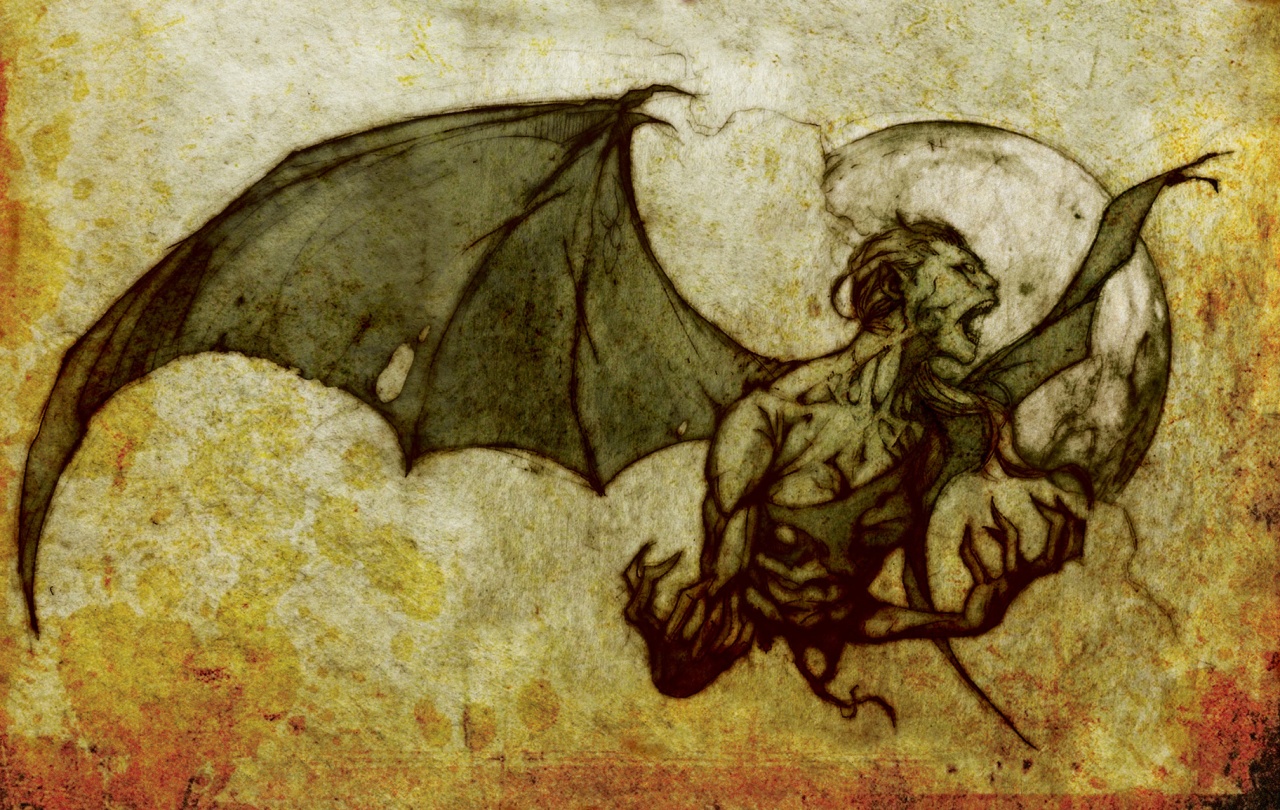
Aswangs are perhaps the most feared creatures in Philippine folklore. They are shapeshifters capable of harming anyone, but folklore often describes pregnant women as their preferred victims because it is said they feed on unborn children. By day aswangs appear human, but at night they transform into various monstrous forms and prey on unsuspecting people, especially pregnant women about to give birth. Aswangs can shift into animals such as bats, pigs, black dogs or nocturnal birds called tik-tiks. Some are believed to change form at will, while others use special oils prepared by evil magicians. They roam at night searching for travelers or sleeping victims and are said to have a strong craving for human liver. The legend of the aswang remains especially popular in the Visayas, particularly in provinces such as Capiz, Antique, and Iloilo. Folklore also claims that aswangs are attracted to unborn babies and can locate pregnant women by scent, which supposedly smells to them like ripe jackfruit. After finding the house, the aswang lands on the roof and stretches its long tongue—thin like a thread—through the roof to reach the womb and feed on the fetus. The term “aswang” can also serve as a general label for various supernatural beings, including ghouls, manananggals, and witches (mangkukulam). [Source: budz-traditionalghostbeliefs.blogspot, Wikipedia]
Pasatsats are ghosts associated with people who died during the Second World War. The name comes from the Pangasinense word satsat, meaning “to stab.” During the war, coffins were often too expensive, so families wrapped the bodies of the dead in reed mats called icamen. Because grave robbing was common in those years of extreme poverty, many bodies were buried outside cemeteries. According to folklore, the spirits of these individuals sometimes appear along lonely paths and block travelers. To get rid of a pasatsat, a person is said to stab the reed mat and unravel it. When this is done, however, no body is found inside, although the mat supposedly releases a foul odor resembling rotting flesh.
Tiyanak or impakto are believed to be the spirits of infants who died before receiving baptism. According to folklore, they go to a place called Limbo, a realm associated with unbaptized souls, where they transform into malevolent spirits. These spirits return to the human world in the form of goblin-like creatures that prey on the living. Some stories claim that a tiyanak may be the child of a demon and a woman, or even the spirit of an aborted fetus seeking revenge on its mother. Tiyanaks are often said to live in forests. When they encounter humans, they appear as ordinary crying babies. Once someone approaches to help the infant, the tiyanak reveals its true monstrous form and attacks the victim.
White Ladies are among the most widely known ghost stories in the Philippines, and many towns claim to have their own version. One of the most famous legends involves the White Lady of Balete Drive. The Tagalog word for ghost, multo, comes from the Spanish word muerto, meaning “dead.” In Filipino superstition, ghosts are often believed to be spirits of deceased relatives who return to complete unfinished tasks or because they were buried improperly. The term multo is sometimes used broadly to refer to many types of supernatural beings. Another creature in folklore is the Dila Dila, a spirit shaped like a long tongue that descends through bamboo floors and licks its victims to death.
Filipino Fairies and Mythical Creatures
Diwata (Anito) —also called Engkantada (female) or Engkanto (male)—are fairies, nymphs, goddesses, or enchanted beings believed to guard elements of nature such as forests, seas, mountains, land, and air. Diwatas are said to live in large trees, particularly acacia and balete trees. They act as guardian spirits of nature and may grant blessings or bring misfortune to those who protect or harm the natural environment. One of the most famous diwata is Maria Makiling, the legendary guardian of Mount Makiling in Laguna province. The term engkanto (sometimes spelled encanto) also serves as a broad label for many supernatural beings, often referring to fairy-like creatures that dwell in forests and seas. They may also be called encantado (male) or encantada (female). According to oral tradition, Mariang Makiling lives atop Mount Makiling, an inactive volcano in Laguna. Stories say the mountain was once a castle and that Mariang Makiling was a princess who fell in love with a mortal. [Source: budz-traditionalghostbeliefs.blogspot, Wikipedia]
Duwende are goblins, elves, or dwarf-like creatures (from the Spanish word duende, meaning “goblin” or “house spirit”). These small beings are believed to bring either good fortune or misfortune to humans. In the Philippines, duwendes are said to live in houses, trees, underground areas, termite mounds, and rural landscapes. They can be friendly or mischievous depending on how people treat them. They are believed to appear especially around noon and during the night. Filipinos often say phrases such as “tabi-tabi po” or “bari-bari apo” when passing through places where duwendes might live, politely asking permission so as not to disturb them. People sometimes leave food offerings on the floor to avoid angering the duwende that guards the house. According to folklore, duwendes may hide people’s belongings for fun and return them only when they choose or when politely asked.
Juan Tamad is a well-known figure in Philippine folklore, famous for his extreme laziness. In one story, monkeys bury him because they assume he is already dead due to his inactivity. He is commonly described as the laziest man alive. Another mythical creature is Bungisngis, a one-eyed giant that lives in forests and wooded areas. Unlike many giants in folklore, Bungisngis is often portrayed as cheerful and playful. In the northern part of Davao, this giant is also known as Mahentoy. Ekek are winged, bird-like human creatures that search for victims at night. They are said to feed on flesh and blood and are sometimes compared to vampires in Western folklore.
Kapre is a giant, dark, hairy creature known for smoking large cigars while sitting in tall trees, particularly balete, acacia, or mango trees. Often compared to a Filipino version of Bigfoot, the kapre is said to frighten children who wander outdoors at night. Folklore claims that when someone becomes lost and keeps walking in circles, a kapre may be confusing them. One traditional way to break the spell is to remove one’s shirt and wear it inside out.
Sarimanok is a mythical bird in Philippine folklore believed to bring good luck to anyone who captures it. One legendary sarimanok named Magaul appears in the creation story of Malakas and Maganda. According to the myth, Magaul pecks open a bamboo stalk from which Malakas (“the Strong One”) and Maganda (“the Beautiful One”) emerge, becoming the first man and woman in Philippine folklore, similar to Adam and Eve. Another mythical bird, the Manaul, is said to have been a powerful king transformed into a bird. In legend, Manaul causes the sea and the sky to battle each other, and the debris from their conflict forms the islands of the Philippines.
Sirena is a mermaid—a sea creature with the upper body of a woman and the tail of a fish. Stories say sirenas sometimes appear to fishermen or coastal villagers, particularly along towns facing the Pacific Ocean. The male counterpart is the Siyokoy, a sea creature with a human-like form and scaled body. Siyokoy may have a fish tail, scaled legs with webbed feet, or even long green tentacles. They are described as having gills, brown or green skin, and fish-like scales, and they are said to drown humans to feed on them.
Although modernization continues to influence Philippine culture, belief in these legends remains strong, especially in rural communities. Filipino mythology also appears widely in modern popular culture. Comic books such as Trese, Skyworld, and The Mythology Class draw heavily on these legends and are popular among young readers. Television programs like Marina and various video games also feature mythological creatures and stories. There are even groups known as “questers” who travel to remote areas to research and document traditional myths and supernatural folklore. [Source: Buzzle.com]
Filipino Demons
Tikbalang or tigbalang (demon horse) is a creature that is half human and half horse. It has the head of a horse, the body of a human, and the feet of a horse. In folklore, it roams at night and is sometimes said to prey upon female mortals, with stories claiming that victims may give birth to more tikbalang. The creature is also believed to mislead travelers, especially in mountainous or forested areas, causing them to lose their way. Tikbalangs are described as playful tricksters who make people see illusions or imagine things that are not real, and in some stories they drive their victims insane. According to legend, when rain falls while the sun is shining, it means that a pair of tikbalangs are getting married. Because horses only arrive in the Philippine archipelago during the period of Spanish colonization (hence the borrowed word kabayo), some scholars suggest that the image of a half-horse, half-man creature may have been introduced by Spanish colonizers to frighten natives and discourage nighttime travel. Other accounts claim that tikbalangs may originally have been imagined as half-bird, half-human creatures similar to the Japanese tengu. [Source: budz-traditionalghostbeliefs.blogspot, Wikipedia]
Nuno sa punso (literally “goblin of the mound”) are goblin- or elf-like spirits believed to live inside small mounds of soil, especially anthills or termite hills. These beings are thought to have the power to bring either good fortune or misfortune to people who disturb their homes. When passing by a mound, many superstitious Filipinos politely ask permission from the unseen resident by saying “tabi-tabi po,” meaning “please excuse me.” Sudden illnesses or unexplained misfortunes are sometimes attributed to angering a nuno sa punso by accidentally stepping on or disturbing its dwelling.
Manananggal
A Manananggal is a type of aswang in Philippine folklore that has the ability to fly after separating its upper body from its lower torso. The name comes from the Filipino word tanggal, meaning “to separate,” referring to the creature’s power to detach itself from the lower half of its body. The manananggal is feared for preying on unborn children. According to legend, it feeds by extending a long, thin tongue through a small opening in the roof of a house and using it to suck the blood of a fetus from a pregnant woman’s womb. [Source: budz-traditionalghostbeliefs.blogspot, Wikipedia]
In many stories, the manananggal is believed to be a woman or sorceress who lives among ordinary people in villages or rural communities. At night she travels to an isolated place where she leaves the lower half of her body hidden before her upper half grows wings and flies off in search of victims. The creature often targets houses where pregnant women live. After landing on the roof, it inserts its long, hollow, flexible tongue through the ceiling and into the sleeping victim’s womb to feed on the unborn child.
Folklore also describes the manananggal as capable of luring men by appearing as a beautiful woman. After gaining their trust and drawing them to a secluded place, the creature reveals its true nature and devours them, often consuming internal organs such as the heart, stomach, or liver. The creature is sometimes called tik-tik, a name based on the sound it supposedly makes while flying. According to legend, the fainter the sound, the closer the creature actually is—a trick meant to confuse its victims. Black cats or crows are sometimes believed to signal the presence of a tik-tik.
Sunlight is believed to be deadly to the manananggal while it is in its monstrous form. If dawn arrives before the upper and lower halves of the creature reunite, the monster is destroyed. In folklore, the best way to defeat a manananggal is to find the lower torso it leaves behind during its nightly hunt. Placing salt, ash, or garlic on the exposed flesh prevents the two halves from rejoining and leaves the creature helpless when the sun rises. People also keep salt, ash, or rice nearby, or burn rubber, believing these smells can drive the creature away.
Mount Banahaw: the Philippines’ 'Holy Mountain'
Paulo Ordoveza wrote in U.S. News and World Report, “Three volcanic mountains—Makiling, Banahaw, and San Cristóbal—dominate the otherwise flat landscape about 50 miles south of Manila in the Philippines. A mix of Spanish, precolonial, and contemporary myths holds that Makiling's native spirit is a fairylike creature whose silhouette can be seen at rest atop the volcano's rugged peak, while the muse of Banahaw is a gruff warrior who battles with the maid of Makiling for ownership of the clouds. The spirit of San Cristóbal is said to be a Bigfoot-like, mischief-making monster who once wrestled with Banahaw for ownership of water flowing through the mountain's streams and waterfalls. Today, Mount Banahaw is blessed with water; Mount San Cristóbal is dry. [Source: Paulo Ordoveza, U.S. News and World Report, November 16, 2007 /]
“Local religious folklore, strongly infused with Spanish colonial Roman Catholicism and the martyrdom mythos of nationalist revolutionaries, has latched on to Banahaw as the "holy mountain," a place that radiates ancient powers of healing and redemption. Although far less well known than more famous sites associated with healing miracles, such as Lourdes in France, it draws both pilgrims and trekkers, the faithful and the curious, the sick praying for a miracle and foreigners drawn by the mystical legends of this place. /
“Amid towns and villages on Banahaw's slopes, there are monasteries and churches of the "Rizalistas," one of many sects in the region venerating nationalist hero José Rizal, who was born in the nearby town of Calamba and executed in Manila by the Spanish in 1896 for writing insurgent literature. The Rizalistas themselves are divided into diverse subsects, worshiping Rizal as revolutionary, saint, or reincarnation of Jesus, with Banahaw as their "New Jerusalem." /
“Any of these churches gladly provides a guide, called a pator, who takes travelers on a tour of Banahaw's holy sites, called puwestos, to be visited in a sequence similar to the tradition of the Way of the Cross in Jerusalem. The puwestos are mainly natural features of the mountain: rocks, caves, waterfalls, even Banahaw's own peak. Some rock formations are noted for their resemblance to human features, such as those of the Virgin Mary or a saint. A spring in the shape of a giant footprint is called Bakas ni Kristo, literally Christ's Footprint. /
“Pilgrims can wiggle through a cave called Kalbaryos, or Calvary, a narrow tunnel in the rock through which one must slide sideways, each successful passage earning the traveler an indulgence worth seven years of forgiveness for all sins. In another nearby cave, pators take pilgrims down a ladder to a tiny but deep pit in the rock filled with cloudy spring water said to have miraculous healing powers for those who dip themselves in it seven times. /
“Many stories of Banahaw's powers hark back to pre-Christian animist stories handed down by oral tradition—stories that have survived and evolved to unite those in the area of different faiths around their spiritual mountain, drawing others from the Philippines and abroad to see if the power is truly there.” /
Where Religion and the Marketplace Meet in the Philippines
In 2010, Jofelle Tesorio wrote in Asia News Network, “Weekends, especially Sundays, are the busiest days in Quiapo, the nerve centre of faith in Manila. Filipinos come here for many reasons. Students praying to pass an exam, couples wanting to have a child, a young woman trying to get rid of an unwanted pregnancy, a mother praying for a sick child, a man hoping to go abroad, a forlorn lover wishing to let the pain away-they're just among the many who are lured by Quiapo, where miracles do happen for those who have faith. [Source: Jofelle Tesorio, Asia News Network, July 20, 2010 ~]
“Filipino religiosity is about faith and devotion to a supreme being represented by a mix of the orthodox and the surreal. Quiapo, which used to be the centre of commerce during the Spanish colonisation in the Philippines, is a juxtaposition of sorts. Here you see devotees overflowing from inside the old Quiapo Church. They kneel, hold hands and sing religious prayers. Men and women, young and old take turns in wiping the black Jesus Christ's statue (called the Black Nazarene) to ask for blessings. Around the church, the commerce of the masses prospers. Occult stalls line up the streets leading to the entrance of the church. Laminated pictures and images of Jesus Christ, Virgin Mary and other saints are displayed; rosaries, prayer books, crucifix and amulets for different purposes are, laid on stalls. ~
Old women sell 'herbal medicines' guaranteed to induce abortion or to cure all kinds of sickness. Others sell coloured candles-each represents a specific prayer. Red is for love, yellow is for good spirit, pink is for purity, green is for money, blue, purple and indigo are for health, self-expression, peace and tranquility. Middle-aged fortune tellers read tarot cards for people who want to know their destiny. The fortune tellers also accept prayer requests when asked by devotees. Many customers are women who often ask about their future husbands and the prospect of marriage. Love potions made from different herbs and animal concoctions are also popular among women. Beggars, young and old, some of them crippled, catch attention with their sad look, arms stretched waiting for alms. ~
Writer Godofredo Stuart described Quiapo as the commerce of religion and the commerce of the alternatives. Often, people who visit Quiapo are reminded of the Bible scene where Jesus Christ got furious upon seeing gambling stalls outside the House of God. But people don't only visit this old Manila town for their devotion. They come to hunt for bargain stuff. From pirated DVDs to DLSR cameras to car mugs to blasting stereos-everything is here. Hidalgo Street, is popular for cameras. Most professional photographers in the Philippines had, in one way or another, purchased a camera or a camera accessory here. They're not only cheap but cameras come with pieces of advice from sellers who know exactly what their clients need-whether they're professional or amateurs. There's always a camera for every person on this street. ~
“Right across Quiapo Church is the mecca of pirated DVDs. People scurry for good finds here-from Filipino slapstick comedies to American hardcore porn. A good DVD copy can be as cheap as 10 pesos (less than 25 US cents). The more you buy, the more discount you can get. Sellers here are honest to tell customers whether the DVD copies are from original ones or from movie houses. They also have an exchange and return policy. If your copy is bad, you can have it replaced or returned even without receipts. It is just a matter of finding the stall from a maze of thousands of DVD shops.” ~
Image Sources: Wikimedia Commons
Text Sources: “Encyclopedia of World Cultures Volume 5: East/Southeast Asia:” edited by Paul Hockings, 1993; “Culture Shock!: Philippines” by Alfredo Roces and Grace Roces, Marshall Cavendish International, 2010; National Geographic, Live Science, Philippines Department of Tourism, New York Times, Washington Post, Los Angeles Times, Smithsonian magazine, Encyclopedia.com, Library of Congress, The Conversation, The New Yorker, Time, BBC, CNN, Reuters, Associated Press, AFP, Lonely Planet Guides, Google AI, Wikipedia, The Guardian and various websites, books and other publications.
Last updated March 2026