
IFUGAO RELIGION
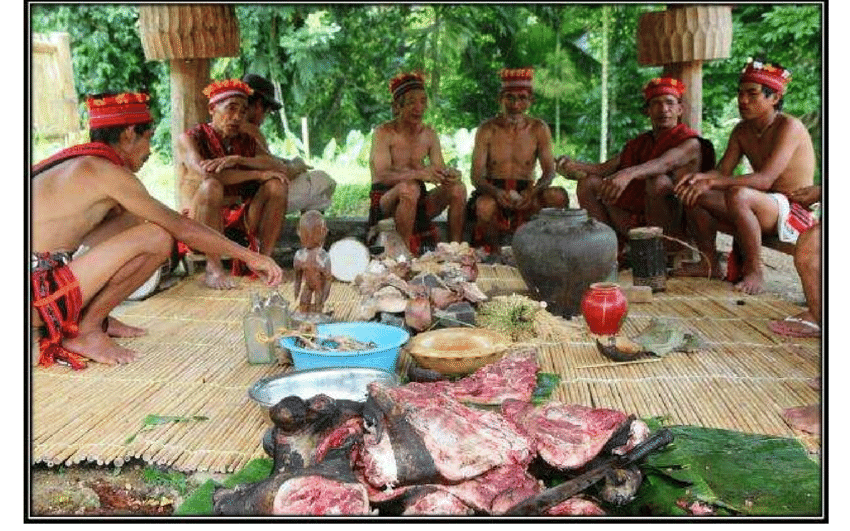
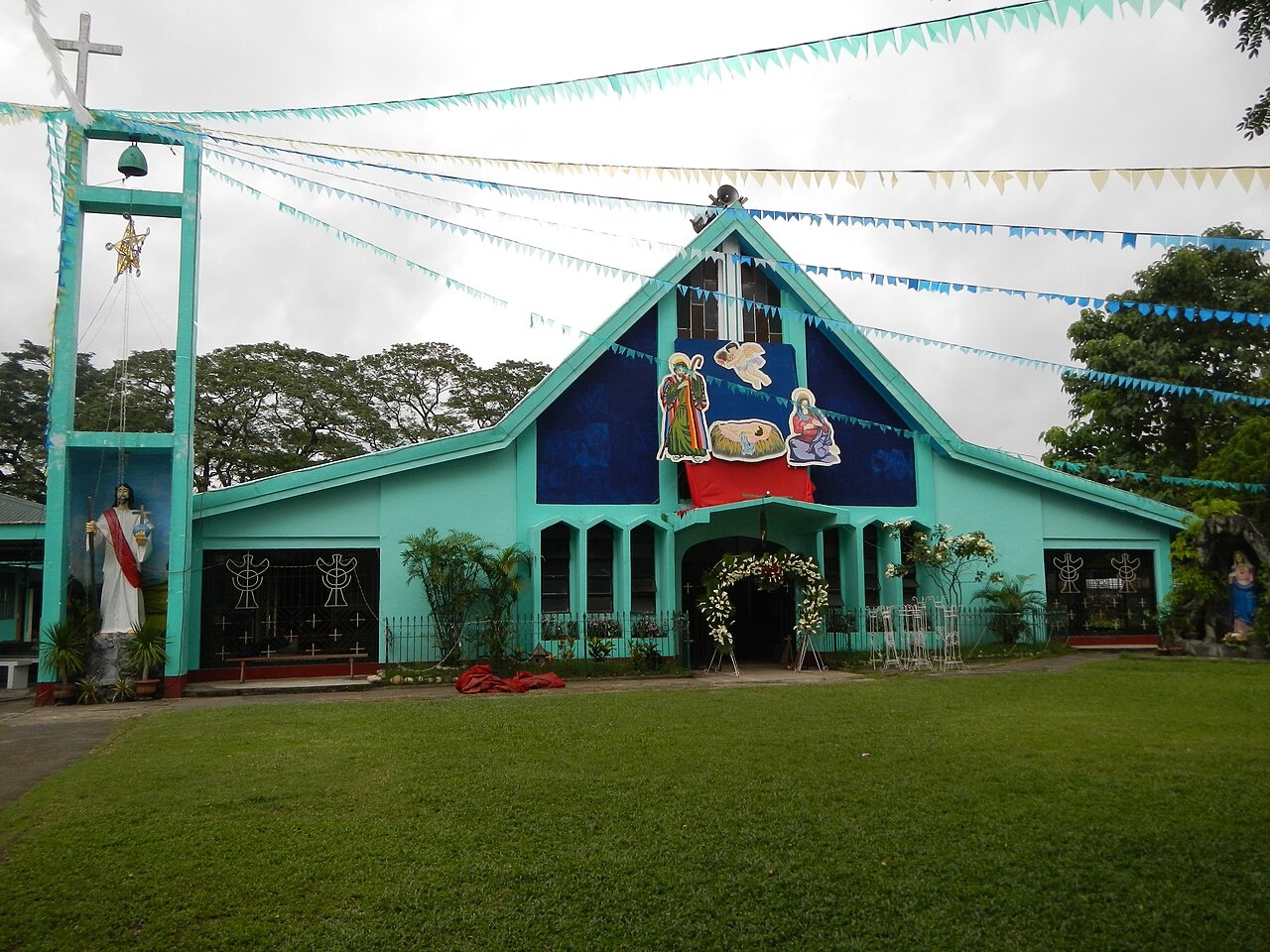
About half of all Ifugaos have embraced Christianity but their animist beliefs have been absorbed into their Christian beliefs. According to the Christian group Joshua Project most Batad Ifugao and Amganad Ifugao population was 38,000 in the early 2020s. Most practice traditional animist religions and 5 to 10 percent are Christians, with 2 to 5 percent of these being Protestant Evangelicals. [Source: Joshua Project]
According to the 2000 census, 17.6 percent of the population of the Cordillera Administrative Region, which includes Ifugao province, was classified under “Other” religious affiliation, a category referring to adherents of indigenous religions. The remainder of the population identified with various Christian denominations. Roman Catholics comprised 65.8 percent of the region’s population, a proportion significantly lower than the national figure of 83 percent. Evangelicals accounted for 8.9 percent, Iglesia ni Cristo for 2.9 percent, Jehovah’s Witnesses for 1.6 percent, and members of the Philippine Independent Church (Aglipayan) for 0.8 percent. In the early 1990s, slightly more than half—54 percent—of ethnic Ifugao identified themselves as Roman Catholic. [Source: A. Abalahin, “Worldmark Encyclopedia of Cultures and Daily Life,” Cengage Learning, 2009]
Christianity among the Ifugao was closely associated with modernity, largely because Christian churches established schools in the region. As a result, Christianity came to be linked with education, high social status, and, for some non-elite Ifugao, opportunities for upward mobility. It also symbolized equality with the nationally dominant lowland Filipino population. Educated and elite Ifugao generally identified themselves as Christian while continuing to perform or participate in traditional Ifugao rituals (baki or bfuni), ranging from healing ceremonies to rites aimed at achieving higher social standing. Although Christians were found at all levels of Ifugao society, those who adhered exclusively to traditional religion tended to belong to non-elite strata. Fundamentalist Protestant churches were generally more critical of traditional Ifugao practices than the Catholic Church. Protestant leaders strongly opposed traditional healing rites, whereas local Catholic authorities were often ambivalent, with some priests even encouraging households to sponsor such rites when modern medical treatments proved ineffective.
RELATED ARTICLES:
IFUGAO: HISTORY, HEADHUNTING, CULTURE factsanddetails.com
IFUGAO SOCIETY AND LIFE factsanddetails.com
RICE TERRACES OF NORTHERN LUZON factsanddetails.com
IFUGAO RICE TERRACES OF BANAUE AND BATAD factsanddetails.com
IFUGAO IN 1910 AND PARTYING WITH AND PACIFYING THEM factsanddetails.com
IGOROT — CORDILLERA PEOPLE OF NORTHERN LUZON — GROUPS AND HISTORY factsanddetails.com
IGOROT LIFE: CUSTOMS, FOOD, DRINKS, TRANSPORT factsanddetails.com
IGOROT GROUPS — KANKANAEY, ISNEG, IBALOI — AND THEIR LIFE, CUSTOMS AND CULTURE factsanddetails.com
HEAD HUNTING TRIBES OF LUZON: PRACTICES, REASONS, WARS factsanddetails.com
MAIN ETHNIC GROUPS OF LUZON: TAGALOGS, ILOCANO AND BICOL factsanddetails.com
BONTOC PEOPLE: LIFE. CULTURE, MARRIAGE factsanddetails.com
BONTOC RELIGION: GODS, ANITOS, FUNERALS factsanddetails.com
Traditional Ifugao Religion
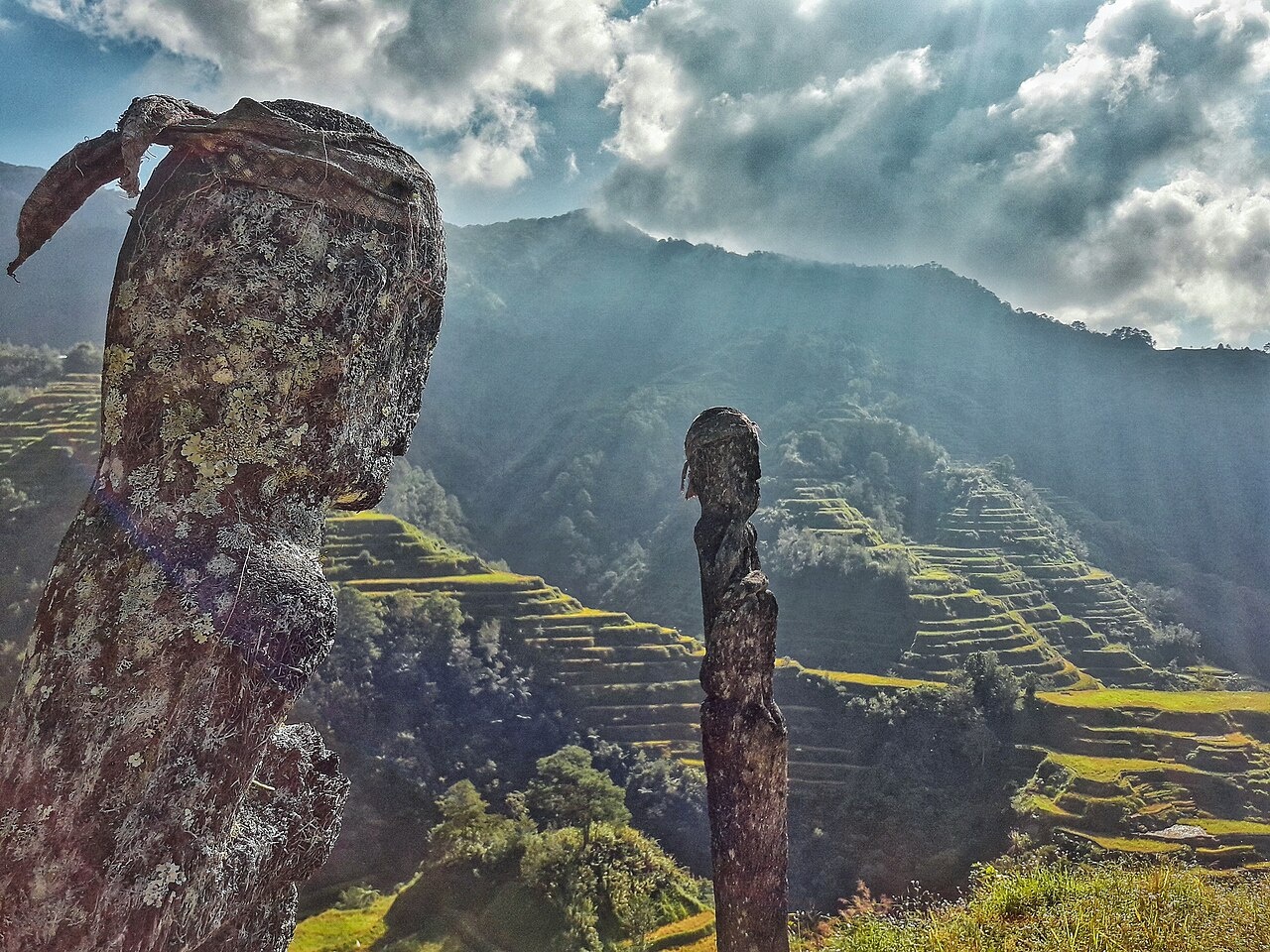
The Ifugao have traditionally believed their lives were ruled by spirits called “anitos”. Many Ifugao still believe the universe was divided into five levels. At the top is: 1) the heavens which itself has four "superimposed heavens." Beneath it is 2) Pugao, the known land. Below is 3) the underworld and there is also 4) the world upstream and 5) the world downstream. Each area has a large number of spirits, each of which has a name and belongs to one of 35 categories. Among them are ones associated with hero ancestors, diseases, omens, messengers, celestial bodies.
There are around 1,500 named Ifugao spirits and deities, which are divided into 35 categories. The most prominent of these categories are associated with hero ancestors, celestial bodies, natural phenomena, diseases, and agriculture. Each god possesses specific attributes and powers. They are all immortal and can change form, become invisible, and travel through space. Ifugao deities and spirits have precise locations in the Ifugao universe that carry with them specific roles and duties. They cover almost of every aspect of life including war, peace, fishing, weaving, rain and disease. There is no one supreme god which has made it easy for the Ifugao to accept Christianity and not have the Christian god in competition with the spirits of their traditional religion. [Source: "Vanishing Tribes" by Alain Cheneviére, Doubleday & Co, Garden City, New York, 1987; A. Abalahin, “Worldmark Encyclopedia of Cultures and Daily Life,” Cengage Learning, 2009]
Ifugao deities inhabit the five divisions of the Ifugao universe: Kabunian (the sky world), Dalum (the underworld), Pugao (the "known earth," the land of the Ifugao), Daiya (the upstream region), and Lagod (the downstream region). The sky world deity Lidum is particularly exalted. The uncle of Balitok, the Ifugao ancestor, Lidum is their great teacher and lawgiver. One example of a minor deity is the halupe class. A person may send a halupe to harass another by forcing a thought on their mind. For example, a creditor may send a halupe to a debtor in hopes that they will respond peacefully to a request for repayment. Similarly, a youth may commission a halupe to make a pretty girl more receptive to his romantic advances. [
F. Jagor wrote in “Travels in the Philippines” (1875): “The anito of the Philippines is essentially a protecting spirit.” The Spaniard Pardo de Tavera wrote in in 1906: “The religion of the islands, what may be called the true religion of Filipinos, consisted of the worship of the anitos. These were not gods, but the souls of departed ancestors, and each family worshipped its own, in order to obtain their favorable influence.” According to the De Morga the anito was a representation of the devil under horrible and frightful forms, to which fruits and fowl and perfumes were offered. Each house had and “made” (or performed) its anitos, there being no temples, without ceremony or any special solemnity. “This word is ordinarily interpreted ‘idol,’ although it has other meanings. There were anitos of the mountains, of the fields, of the sea. The soul of an ancestor, according to some, became embodied as a new anito, hence the expression, ‘to make anitos.’ Even living beings, notably the crocodile, were regarded as anitos and worshiped. The anito-figura, generally shortened to anito, ... was usually a figurine of wood, though sometimes of gold.”
Ifugao Creation Myth
According to to Ifugao creation myth, the Ifugao gods created the heavens and earth way before they created man. When men were finally created most for the Gods had no interest in them and the patient god Wigan-i-abunyan was told he watch of them. The first men were ill suited for their environment and Wigan-i-abunyan sent his son Kagibat down to earth to show man how to use fire and build houses. [Source: "Vanishing Tribes" by Alain Cheneviére, Doubleday & Co, Garden City, New York, 1987**]
When he returned he was so enthusiastic about what he saw that his sister Bugan descended to earth to teach men how to use the forces of air and water. Her report was equally glowing as that of Kagibat. Soon Kabunyan, the God of the Sun, Stars and Sky wanted to visit earth and see what all the fuss was about. But, from his vantage point in the sky he couldn't see anything so he moved in closer. With the sky so close to the earth, men had to hunch over and soon they couldn't even work. The nearness of the sun caused rivers to dry up and the crops to burn up.
At this time the world still part of heaven. Mankind was having such a hard time they tried to tell Kabunyan to go away, but he couldn't understand their language. Finally an old woman who was so short she could stand up without having to hunch over started to mash some rice with a mortar and pestle. The pestle hit Kabunyan on the upswing to which god replied if you do that again I'm going to leave. The woman was deaf and because she could hear him she did hit him again. Kabunyan was annoyed by this he returned to heaven. The people were happy the sun and sky had returned to their normal position and from then on the sky and the earth have always been separated.**
Ifugao Religious Practitioners
Ifugao priests preside over ceremonies and are believed have the power to influence the gods into performing earthly chores. There is no organized priesthood. It said that any tribe member with a good memory can perform the rituals. Priests attain their position voluntarily after a period of apprenticeship. They receive some compensation for their work but generally have other jobs. Their primary duty is to invoke spirits of deceased ancestors and deities. [Source: “Encyclopedia of World Cultures Volume 5: East/Southeast Asia:” edited by Paul Hockings, 1993]
Only males are allowed to become priests. During their apprenticeship, future priests must memorize the names and characteristics of the 1,500 gods. Since the American colonial period, priests have been able to practice beyond the circle of their kindred, from which they were formerly confined. In exchange for their services, priests receive meat, rice, and wine, but more importantly, they enjoy the reputation of having a "good voice." Since ritual chanting allows for masculine exhibitionism, as many as fifteen priests may participate in a ceremony, compared to one or two among the Bontok. [Source: A. Abalahin, “Worldmark Encyclopedia of Cultures and Daily Life,” Cengage Learning, 2009]
Priests perform curing rites. Disease it is believed can be caused by sorcery or the displeasure of ancestral spirits who may allow malevolent deities to inflict suffering on offending descendants. Priests gain power over particular deities by reciting a myth that mentions them. Priests treat illnesses through divination and curing rituals. in an effort to get the deity to return the souls. If the priests fails, the Ifugao believe, the person dies.
Ifugao Religious Ceremonies
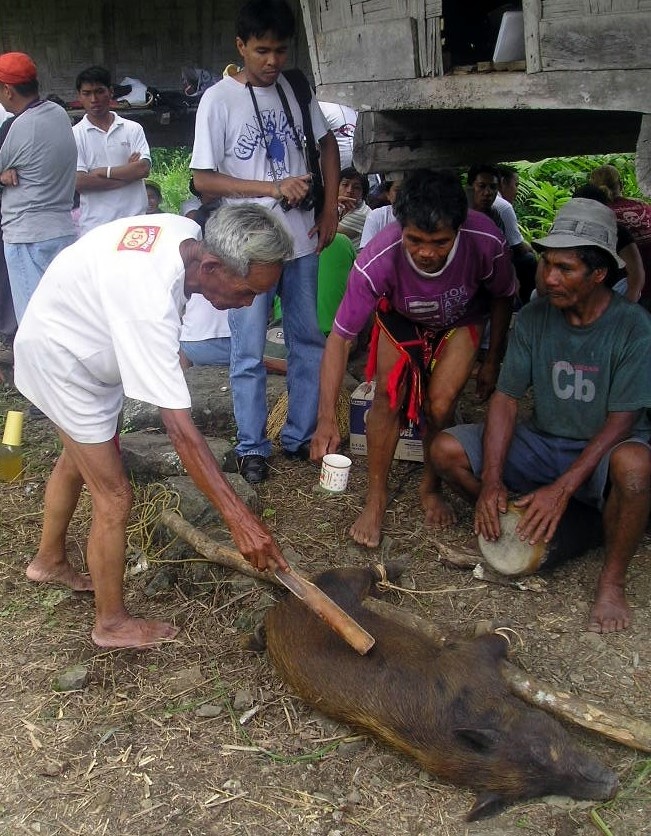
A great deal of Ifugao resources are devoted to religious ceremonies that are invoked for agriculture abundance, hunting success, augury and good omens. As many as 15 priests may be involved ins a single ceremony. Well versed in Ifugao myths, they perform the important rituals and tell the myths. During the myth dramas the priest often utter an unintelligible hum for as long as five hours. It is not usual for a half dozen pigs, one buffalo and scores of chickens to be scarified during a ceremony. [Source: “Encyclopedia of World Cultures Volume 5: East/Southeast Asia:” edited by Paul Hockings, 1993]
Rituals fulfill a wide range of functions. Omens are read by examining the bile sacs or livers of pigs or chickens, or by interpreting bird calls. Some rituals ensure the success of hunting, farming, headhunting, peacemaking, and debt collection. Rituals also accompany prestige feasts, divorce proceedings, and sorcery. Performed under a house or granary (less commonly in a field or forest), rituals involve several hours of chanting according to a fixed protocol. This protocol includes invoking, praying to, and inviting the deities to possess the priests, as well as having the deities possess the priests and exhorting them to action. [Source: A. Abalahin, “Worldmark Encyclopedia of Cultures and Daily Life,” Cengage Learning, 2009 ++]
The Ifugao believe that illnesses are caused by deities taking souls in cooperation with ancestors. During one curing ritual Ifugao priests offer rice beer in wooden spoons to the spirits believed to be causing the disease. In more elaborate curing ceremonies a shaman in a trances goes to the sky-world to try to retrieve the souls of the ill person. During important ceremonies the entranced priest calls ancestors from his clan and uses his body as a medium so they can speak to living relatives. The dead ancestors drink rice beer through the shamans mouth. When deities are invoked they too drink rice beer through the priest' mouth. Chants are made.
Invocations by priests entail "pushing" (tulud) deities from their homes in Kabonian, Dalum, Daiya, and Lagod to the village where the ritual is taking place. This process is time-consuming, as each locality (of which there can be as many as 40) through which the deities must pass is named in turn. Offerings range from small items, such as betel or chicken claws, to sacrifices of pigs or chickens. Throughout the ritual, the spirits consume rice wine through the priests. ++
Ifugao Funerals
Ifugao believe deities may take a person's soul, causing their body to fall ill. If the deities do not return the soul, the person dies. After a person dies the orifices of the body are plugged and the corpse is placed in a death chair. The body lies in this state by a fire and is “awakened” each night by a corpse tender. The more wealthy a person is the longer this ritual lasts to a maximum of 13 days. [Source: “Encyclopedia of World Cultures Volume 5: East/Southeast Asia:” edited by Paul Hockings, 1993]
Burial is in a hillside family sepulcher—a chamber at the end of a tunnel cut into soft rock—or in a sealed coffin beneath the house or in a granary-like mausoleum. Sometimes a second burial takes place, especially if illnesses and misfortunes are blamed on the deceased being restless and unhappy. Some Ifugao bury males and females separately and intern children in jars. In the case of a wrongful death, the corpse is seated and bound to a house post. It is then neglected so that its spirit will seek revenge. [Source: A. Abalahin, “Worldmark Encyclopedia of Cultures and Daily Life,” Cengage Learning, 2009]
As is true with the Bontocs, Ifugao funerals are not only sad events because of the loss of a loved one, but are celebrations that deceased has moved on to a better life after death. Six years after the body is buried, the bones are dug up, after which a second celebration takes place. This ritual is repeated one more time after another six years. Sometimes the Ifugao invite tourists to see the bones of their ancestor. A tourist named Jon wrote: "As we wandered further, a lady approached us and asked us if we would like to look at 'the bones'....and she produced a large bundle wrapped in a blanket that she unfolded to reveal the skeleton of her Grandfather Po Po. “ [Source: philippines.hvu.nl]
Ifugao Funeral in 1900
In 1912 Cornélis De Witt Willcox wrote in “The Head Hunters of Northern Luzon”: “Mr. Barton went out to see the funeral of the Constabulary private killed. He was strongly advised not to go, because these highlanders resent more or less the presence of strangers at their funeral ceremonies. Passing through Manila a month or two later, he very kindly dictated for me an account of what he saw, and I give it here, with his permission, in his own words: [Source:“The Head Hunters of Northern Luzon” by Cornélis De Witt Willcox, Lieutenant-Colonel U.S. Army, Professor United States Military Academy, 1912 ]
“On the third day after the soldier was killed, the principal funeral ceremonies took place. To these ceremonies came a great number of people from their various rancherías, the party from each ranchería being led by the relatives of the soldier, some of them very distant relatives. “Aliguyen, the dead soldier, lived in the ranchería of Nagukaran, a ranchería until quite recently very unfriendly to Kiangan, where I live. Aliguyen, however, had some kin in Kiangan, and this kin, together with their friends, went to the funeral. Their shields, as well as the shields of all who attended, were painted with white markings, taking some the form of men, some of lizards, some were zig-zags. All men who attended had a head-dress made of the leaf petiole of the betel tree and the red leaves of the dongola plant. To these leaves were attached pendant white feathers. Everybody was dressed in his best clout, and the women in their best loin-cloths and in all their finery of gold beads and agate necklaces.
“Nagukaran is one ranchería of several in a very large valley. When I reached a point in the trail commanding this valley, there could be seen from various rancherías in the valley a procession from each of them wending their way slowly toward Aliguyen’s home. From the time that they came within sight of the house, which was sometimes when they were a mile and a half or two miles from it, each procession danced its way, beating on the striped shields with their drum-sticks and on their bangibang. This last is a kind of wooden stick, made of resonant hard wood, coated over with chicken blood. It is extremely old. It is curved slightly and is about two feet long, and is held in one hand suspended by a bejuco string so that the vibrations are not interfered with. It is beaten with a drum-stick, as is also the shield. The gansa, or brass gong, the usual musical instrument of the Ifugaos, is never used in the funeral of a beheaded man.
The two men who headed each procession carried two spears each. Behind came a man carrying a spear and shield. The two in front faced the on-coming procession, stepping most of the time backward, making thrusts toward the two who bore the spears and shields. The bearers of spear and shield made thrusts at them, the whole being a dance which in some respects resembles one of the head-dances of the Bontoc Igorots. From the high place on the trail where I was, they looked, in the distance, like nothing so much as columns of centipedes or files of ants all creeping slowly along the dikes of the rice-paddies toward the central place. It usually takes an hour for such a procession to cover one mile. The beating of shield and stick could easily be heard across the wide valley on that still morning.
“Arriving at Aliguyen’s house, we found him sitting on a block facing the sun, lying against his shield, which was supported by the side of the house. The body was in a terrible state of decomposition. It was swollen to three times its living girth. Great blisters had collected under the epidermis, which broke from time to time, a brownish red fluid escaping. The spear wound in his neck was plugged by a wooden spear-head. In each hand Aliguyen held a wooden spear. No attempt whatever had been made to prevent decomposition of the body or the entrance to it of flies. From the mouth gas bubbled out continually. Two old women on each side with penholder-shaped loom-sticks about two feet long continually poked at Aliguyen’s face and the wound to wake him up. From time to time they caught the grewsome head by the hair and shook it violently, shouting, Who-oo-oo! Aliguyen, wake up! Open your eyes! Look down on Kurug. [Kurug being the ranchería from which came Aliguyen’s murderer.] Take his father and his mother, his wife and his children, and his first cousins and his second cousins, and his relatives by marriage. They wanted him to kill you. All your kin are women. [They say this in order to deceive Aliguyen into avenging himself.] They can’t avenge you. You will have to avenge yourself! There is ordén [law]; no one can kill them but you! Take them all!
“This calling on Aliguyen’s soul never ceased. When an old woman got hoarse, another took her place. As the procession came to the house it filed past Aliguyen and its leaders stopped and shouted words to the same effect. The key-note of the whole ceremony was vengeance. It is true that both persons who were involved in killing Aliguyen were themselves killed, but the people of a ranchería regard themselves as being about the only real people in the world and hold that three, four, or five men of another ranchería are not equal to one of theirs.
“Nagukaran being the ranchería that speared and nearly killed my predecessor, Mr.———, I explained my presence to the people there by saying that the soldier, being an agent of our Government, was in a way a relative of mine. The explanation was a perfectly natural one to the people, and they treated me with the greatest courtesy and helped me to see whatever was to be seen.
“The grave was a kind of sepulchre dug out of a bank. It was walled up with stones after Aliguyen was placed in it, and an egg thrown against the tomb, whereupon the people yelled: ’Batna kana okukulan di bujolmi ud Kurug! (‘So may it happen to our enemies at Kurug!’) The poles on which were strung the head-dresses were taken and hung over the door of Aliguyen’s house. After this the people dispersed to their homes. On the way home they stopped at a stream and washed themselves, praying somewhat as follows: ‘Wash, Water, but do not wash away our lives, our pigs, our chickens, our rice, our children. Wash away death by violence, death by the spear, death by sickness. Wash away pests, hunger, and crop-failure, and our enemies. Wash away the visits of the Spear-bearing Nightcomer, the Mountain Haunters, the Ghosts, the Westcomers. Wash away our enemies. Wash as vengeance for him who has gone before.’”
Vengeance Feast at Ifugao Funeral
Mr. Barton told Cornélis De Witt Willcox in “The Head Hunters of Northern Luzon”: ““Toward noon they told me that they were going to perform the feast which looked towards securing vengeance for Aliguyen’s death. They went to where the people had built a shed to protect them from the sun’s fierce rays on a little hillock some distance from any house. Two pigs were provided there, one being very small. Only the old [98] men were permitted to gather around the pigs and the rice-wine and the other appurtenances of the feast. The feast began by a prayer to the ancestors, followed by an invocation to the various deities. The most interesting and the principal part of the feast was the invocation to the celestial bodies, who are believed to be the deities of War and Justice, Mánaháut (The Deceiver), a companion of the Sun God, was first invoked. The people cried: Who-oo-oo! Mánaháut, look down! Come down and drink the rice-wine and take the pig! Don’t deceive us! Deceive our enemies! Take them into the remotest quarters of the sky-world; lock them up there forever so that they may not return! Vengeance for him who has gone before!’ Then an old man put his hands over his forehead and called: ‘Come down, Mánaháut.’ Mánaháut came and possessed him, causing him to call out: ‘Sa-ay! sa-ay! I come down Mánaháut; I drink the rice-wine; I will deceive your enemies, but I will not deceive you.” [Source:“The Head Hunters of Northern Luzon” by Cornélis De Witt Willcox, Lieutenant-Colonel U.S. Army, Professor United States Military Academy, 1912 ]
“The old man, possessed, jumps up and, with characteristic Ifugao dance step, dances about the rice-wine jar and about the pig. Quickly follows him a feaster who has called Umalgo, the Spirit of the Sun, and was possessed by him. Mánaháut dances ahead of Umalgo to show him the pig. Umalgo seizes a spear, dances about the pig two or three [99] times, when he steps over to it and with a thrust, seemingly without effort, pierces its heart. The blood spurts out of the pig’s side and there quickly follows a feaster who has been possessed by Umbulan, who throws himself on the pig and drinks its blood. He would remain there forever, say the people, drinking the pig’s blood, were it not that one of the Stars, his son, possesses a feaster, causing him to dance over to Umbulan, catch him by the hair and lead him from the pig. Following these ceremonies, there came feasters of various spirits of the Stars to cut the pig’s feet and his head off. Then comes the cutting up of the pig to cook in the pots. The blood that has settled in its chest is carefully caught; it is used to smear the bangibang and the jipag. The jipag are interesting. They are little images of two or three of the deities that help men to take heads. The images are of wood about six or eight inches high. Sometimes there are images of dogs also. When an Ifugao goes on a head-hunting expedition, he takes the images in his head-basket, together with a stone to make the enemy’s feet heavy so that he cannot run away, and a little wooden stick in representation of a spear, to the end of which is attached a stone—this to make the enemy’s spear strike the earth so that it might not strike him.
“As the pig was being put in the pot to be cooked for the old men who had performed the feast, some unmannerly young fellow started to make away with one piece of the flesh. Immediately there was a scramble which was joined by some three or four hundred Ifugaos of all the different rancherías. Then the feasters (I think there were about one thousand who attended the feast) leaped for their spears and shields. The people who had come from Kiangan rushed to where I was and took their stand in front of and around me, and told me to stay there and that they would protect me from any harm; all of which, as may well be supposed, produced no trifling amount of warmth in my feelings toward them. Fortunately nothing came of the scramble.
“I have no hesitancy in saying that two or three years ago, before Governor Gallman had performed his excellent and truly wonderful work among the Ifugaos, this scramble would have become a fight in which somebody would have lost his life. That such a thing could take place without danger was incomprehensible to the old women of Kiangan, who doubtless remembered sons or husbands, brothers or cousins, who had lost their lives in such an affair. With the memory of these old times in their minds they caught me by the arms and by the waist and said, ‘Barton, come home; we don’t know the mind of the people; they are likely to kill you.’ When I refused to miss seeing the rest of the feast, they told me to keep my revolver ready.
“Looking back on this incident, I am sure that I was in little, I believe no danger, but must give credit to my Ifugao boy who attended me in having the wisest head in the party. This boy immediately thought of my horse, which was picketed near, and ran to it, taking with him one or two responsible Kiangan men to help him watch and defend it. Had he not done so, some meat-hungry, hot-headed Ifugao might easily have stuck a bolo in his side during the scramble and its confusion; and immediately some five hundred or more Ifugaos would have been right on top of the carcase, hand-hacking at it with their long war-knives, and it would probably have been impossible ever to find out who gave the first thrust.
“The old men who had performed the feast, after things had quieted down somewhat, began scolding and cursing those who had run away with the meat. Finally they managed to prevail upon the meat-snatchers to bring back three small pieces, about the size of their hands, from which I concluded that Ifugao is a language which is admirably adapted to making people ashamed of themselves. For I knew how hungry for meat these Ifugao become.
“Three old men stuck their spears in a piece of meat and began a long story whose text was the confusion of enemies in some past time. At the conclusion of each story, they said: ‘Not there, but here; not then, but now.’ By a sort of simple witchcraft, the mere telling of these stories is believed to secure a like confusion and destruction of the enemies of the present. When this ceremony had been completed, each old man raised his spear quickly and so was enabled to secure for himself the meat impaled. In one case, one of the old men just missed ripping open the abdomen of the man who stood in front.
“The feast being finished, the people made an attempt to assemble by rancherías. Then they filed along the trail to bury Aliguyen. Nagukaran ranchería took the lead. As the procession came near the grave the men took off their head-dresses and strung them on a long pole, which was laid across the trail. A Nagukaran ranchero went to where Aliguyen was sitting and picked him up, carried him to the grave, and placed him in a sitting posture facing Kurug, the ranchería that killed him, Aliguyen was not wrapped in a death-blanket, as corpses usually are. His body was neglected in order to make him angry, so to incite him to vengeance.”
Image Sources: Wikimedia Commons
Text Sources: “Encyclopedia of World Cultures Volume 5: East/Southeast Asia:” edited by Paul Hockings, 1993; National Geographic, Live Science, Philippines Department of Tourism, Metropolitan Museum of Art, Natural History magazine, New York Times, Washington Post, Los Angeles Times, Smithsonian magazine, Encyclopedia.com, Times of London, Library of Congress, The Conversation, The New Yorker, Time, BBC, CNN, Reuters, Associated Press, AFP, Lonely Planet Guides, Google AI, Wikipedia, The Guardian and various websites, books and other publications.
Last updated February 2026