
IGOROT DAILY LIFE IN THE EARLY 1900s
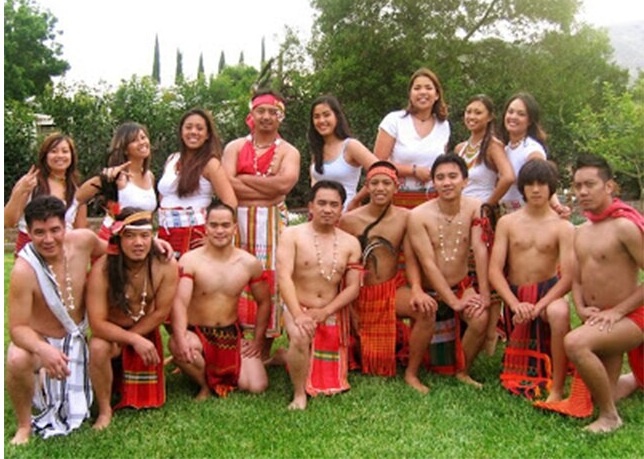
On the daily life of the Bontoc Igorot, Albert Ernest Jenks wrote: The man of the family arises about 3.30 or 4 o’clock in the morning. He builds the fires and prepares to cook the family breakfast and the food for the pigs. A labor generally performed each morning is the paring of sweet potatos. In about half an hour after the man arises the sweet potatos and rice are put over to cook. The daughters come home from the olag, and the boys from their sleeping quarters shortly before breakfast. Breakfast, called “mang-an,” meaning simply “to eat,” is taken by all members of the family together, usually between 5 and 6 o’clock. For this meal all the family, sitting on their haunches, gather around three or four wooden dishes filled with steaming hot food setting on the earth. They eat almost exclusively from their hands, and seldom drink anything at breakfast, but they usually drink water after the meal. [Source: “Bontoc Igorot” by Albert Ernest Jenks, 1905]
The members of the family who are to work away from the dwelling leave about 7 or 7.30 o’clock—but earlier, if there is a rush of work. If the times are busy in the fields, the laborers carry their dinner with them; if not, all members assemble at the dwelling and eat their dinner together about 1 o’clock. This midday meal is often a cold meal, even when partaken in the house.
Field laborers return home about 6.30, at which time it is too dark to work longer, but during the rush seasons of transplanting and harvesting unhusked rice the Igorot generally works until 7 or 7.30 during moonlight nights. All members of the family assemble for supper, and this meal is always a warm one. It is generally cooked by the man, unless there is a boy or girl in the family large enough to do it, and who is not at work in the fields. It is usually eaten about 7 or 7.30 o’clock, on the earth floor, as is the breakfast. A light is used, a bright, smoking blaze of the pitch pine. It burns on a flat stone kept ready in every house—it is certainly the first and crudest house lamp, being removed in development only one infinitesimal step from the Stationary fire. This light is also sometimes employed at breakfast time, if the morning meal is earlier than the sun. Usually by 8 o’clock the husband and wife retire for the night, and the children leave home immediately after supper.
RELATED ARTICLES:
IGOROT — CORDILLERA PEOPLE OF NORTHERN LUZON — GROUPS AND HISTORY factsanddetails.com
IGOROT GROUPS — KANKANAEY, ISNEG, IBALOI — AND THEIR LIFE, CUSTOMS AND CULTURE factsanddetails.com
HEAD HUNTING TRIBES OF LUZON: PRACTICES, REASONS, WARS factsanddetails.com
NEGRITOS OF THE PHILIPPINES: HISTORY, GROUPS, CULTURE factsanddetails.com
ETHNIC GROUPS AND MINORITIES IN THE PHILIPPINES factsanddetails.com
MAIN ETHNIC GROUPS OF LUZON: TAGALOGS, ILOCANO AND BICOL factsanddetails.com
IFUGAO: HISTORY, HEADHUNTING, CULTURE factsanddetails.com
IFUGAO RELIGION: GODS, RITUALS, FUNERALS factsanddetails.com
IFUGAO SOCIETY AND LIFE factsanddetails.com
RICE TERRACES OF NORTHERN LUZON factsanddetails.com
IFUGAO RICE TERRACES OF BANAUE AND BATAD factsanddetails.com
IFUGAO IN 1910 AND PARTYING WITH AND PACIFYING THEM factsanddetails.com
BUGKALOT (ILONGOT): LIFE, CULTURE, CUSTOMS, SOCIETY, HISTORY factsanddetails.com
ILONGOT IN THE 1910s factsanddetails.com
KALINGA: HISTORY, LIFE, SOCIETY, CULTURE factsanddetails.com
KALINGA IN 1910 factsanddetails.com
BONTOC PEOPLE: LIFE. CULTURE, MARRIAGE factsanddetails.com
BONTOC REGION IN THE EARLY 1900s: GEOGRAPHY, HISTORY, DISEASES, FOOD factsanddetails.com
BONTOC RELIGION: GODS, ANITOS, FUNERALS factsanddetails.com
BONTOC PEOPLE IN THE EARLY 1900s: LIFE, LOVE, HOUSING, WEALTH factsanddetails.com
BONTOC HEAD HUNTING factsanddetails.com
Igorot Religion, Deities and Spirits
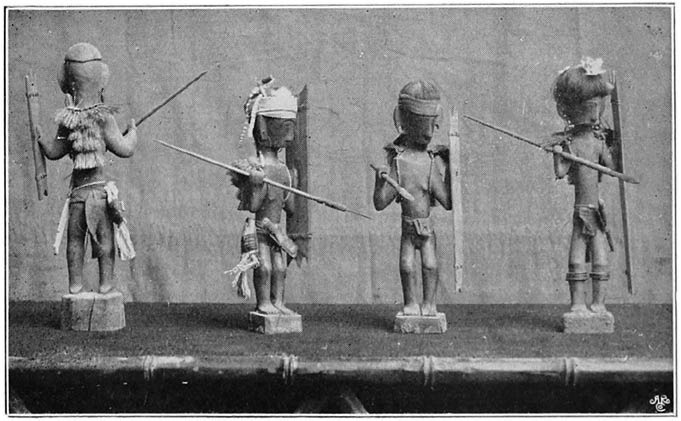
Albert Ernest Jenks wrote: The spirit of all dead persons is called “anito”—this is the general name for the soul of the dead. However, the spirits of certain dead have a specific name. Pin-teng is the name of the anito of a beheaded person; wul-wul is the name of the anito of deaf and dumb persons—it is evidently an onomatopoetic word. And wong-ong is the name of the anito of an insane person. Fu-ta-tu is a bad anito, or the name applied to the anito which is supposed to be ostracized from respectable anito society. [Source: “Bontoc Igorot” by Albert Ernest Jenks, 1905]
Besides these various forms of anito or spirits, the body itself is also sometimes supposed to have an existence after death. Li-mum is the name of the spiritual form of the human body. Li-mum is seen at times in the village and frequently enters habitations, but it is said never to cause death or accident. Li-mum may best be translated by the English term “ghost,” although he has a definite function ascribed to the rather fiendish “nightmare”—that of sitting heavily on the breast and stomach of a sleeper.
The tako, the soul of the living man, is a faithful servant of man, and, though accustomed to leave the body at times, it brings to the person the knowledge of the unseen spirit life in which the Igorot constantly lives. In other words, the people, especially the old men, dream dreams and see visions, and these form the meshes of the net which has caught here and there stray or apparently related facts from which the Igorot constructs much of his belief in spirit life.
The Itneg have a complex belief system centered on powerful supernatural beings, including spirits and deities. They believe in an afterlife known as maglawa, and funerary rites emphasize careful cleansing and adornment of the dead to prepare them for this journey. During the wake, the body is placed on a death chair (sangadel). At the head of their pantheon of gods is Kadaklan, a sky-dwelling creator associated with the formation of the earth, sun, moon, and stars, and with guiding religious knowledge and moral order. [Source: Wikipedia]
Itneg mythology features a hierarchy of immortals led by Bagatulayan, regarded as the supreme deity and “Great Anito,” who governs both earthly and celestial realms. Other prominent figures include Gomayen and her daughters Mabaca, Binongan, and Adasin, founders of the three ancient Tinguian clans; Kadaklan, a high-ranking deity who taught prayer, agriculture, healing, and protection from evil; and Apadel (Kalagang), guardian of sacred spirit-stones (pinaing). Celestial beings include Init-init, the sun god; Gaygayoma, the star goddess; and their divine and semi-divine kin. Nature is also guarded by deities such as Makaboteng, protector of deer and wild pigs.
Itneg oral tradition includes heroic mortals closely linked to the divine world, notably Aponibolinayen, spouse of the sun god Init-init, and Aponitolau, who was taken as husband by the star goddess Gaygayoma.
Igorot Sex and Circumcision
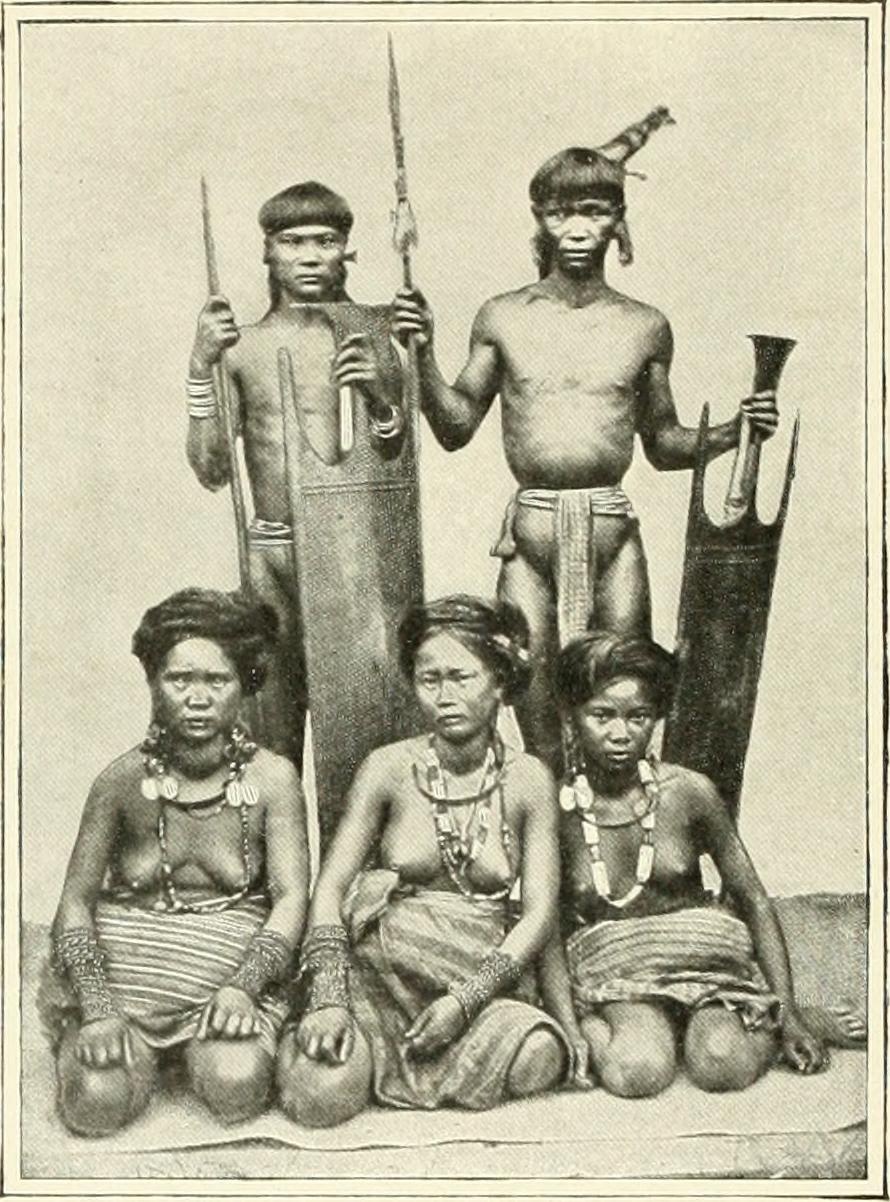
Blumentritt (Wilken, 1889) argued that “As soon as the children reach sexual maturity, a complete isolation of the boys and girls occurs. This restraint, and threat of severe physical punishment or even death, lasts until formal engagement, after which one was allowed “to test the bride’s fertility”. [Source: “Growing Up Sexually, Volume” I by D. F. Janssen, World Reference Atlas, 2004]
Among the Sagada Igorots, children began to sleep at the dap-ay (where courtship techniques are transmitted by older boys) or ebgan (where courtship takes place) at age six, or eight (Eggan, 1960) or thirteen (1965). According to one high school student, girls learn from elder girls how to perform massage (on boys, mainly). “The function of the ebgan was primarily to provide training in courtship and preparation for marriage” (Eggan, 1963). “Sleeping together” today may or may not involve sexual relations but probably did so more frequently in the past, when it was the major way in which marriages were arranged”. [Source: “Growing Up Sexually, Volume” I by D. F. Janssen, World Reference Atlas, 2004]
Most boys are circumcised at from 4 to 7 years of age. The act of circumcision, called “sigiat,” occurs privately without feasting or rite. The only formality is the payment of a few leaves of tobacco to the man who performs the operation. There are one or two old men in each ato who understand circumcision, but there is no cult for its performance or perpetuation.
The foreskin is cut lengthwise on the upper side for half an inch. Either a sharp, blade-like piece of bamboo is inserted in the foreskin which is cut from the inside, or the back point of a battle-ax is stuck firmly in the earth, and the foreskin is cut by being drawn over the sharp point of the blade.
The Igorot say that if the foreskin is not cut it will grow long, as does the unclipped camote vine. What the origin or purpose of circumcision was is not now known by the people of Bontoc. The practice is believed to have come with them from an earlier home; it is widespread in the Archipelago.
Igorot Naming of Children
Albert Ernest Jenks wrote: The Igorot has no definite system of naming. Parents may frequently change the name of a child, and an individual may change his during maturity. There are several reasons why names are changed, but there is no system, nor is it ever necessary to change them. A child usually receives its first personal name between the years of 2 and 5. This first name is always that of some dead ancestor, usually only two or three generations past. The reason for this is the belief that the anito of the ancestor cares for and protects its descendants when they are abroad. If the name a child bears is that of a dead ancestor it will receive the protection of the anito of the ancestor; if the child does not prosper or has accidents or ill health, the parents will seek a more careful or more benevolent protector in the anito of some other ancestor whose name is given the child. [Source: “Bontoc Igorot” by Albert Ernest Jenks, 1905]
To illustrate this changing of names: A boy in Tukukan, two hours from Bontoc, was first named Sapang when less than a year old. At the end of a year the paternal grandfather, Antiko, died in Tukukan, and the babe was named Antiko. In a few years the boy’s father died, and the mother married a man in Bontoc, the home of her childhood. She moved to Bontoc with her boy, and then changed his name to Falikao, her dead father’s name. The reason for this last change was because the anito of Antiko, always in or about Tukukan, could not care for the child in Bontoc, whereas the anito of Falikao in Bontoc could do so.
Strange Foods Eaten by Igorot in the Early 1900s
Albert Ernest Jenks wrote: Several small animals, crustaceans and mollusks, gathered in the river and picked up in the fields by the women, are cooked and eaten. All these are considered similar to fish and are eaten similarly. Among these is a bright-red crab called “agkama.” This is boiled and all eaten except part of the back shell and the hard “pinchers.” A shrimp-like crustacean obtained in the irrigated fields is also boiled and eaten entire. A few mollusks are eaten after being cooked. One, called kitan, I have seen eaten many times; it is a snail-like animal, and after being boiled it is sucked into the mouth after the apex of the shell has been bitten or broken off. Two other animals said to be somewhat similar are called finga and lischug. [Source: “Bontoc Igorot” by Albert Ernest Jenks, 1905]
The dog ranks last in the list of regular flesh foods of the Bontoc man. In the Benguet area it ranks second, pork receiving the first place. The Ibilao does not eat dog—his dog is a hunter and guard, giving alarm of the approaching enemy. In Bontoc the dog is eaten only on ceremonial occasions. Funerals and marriages are probably more often celebrated by a dog feast than are any other of their ceremonials. The animal’s mouth is held closed and his legs secured while he is killed by cutting the throat. Then his tail is cut off close to the body—why, I could not learn, but I once saw it, and am told it always is so. The animal is singed in the fire and the crisped hair rubbed off with sticks and hands, after which it is cut up and boiled, and then further cut up and eaten as is the carabao meat.
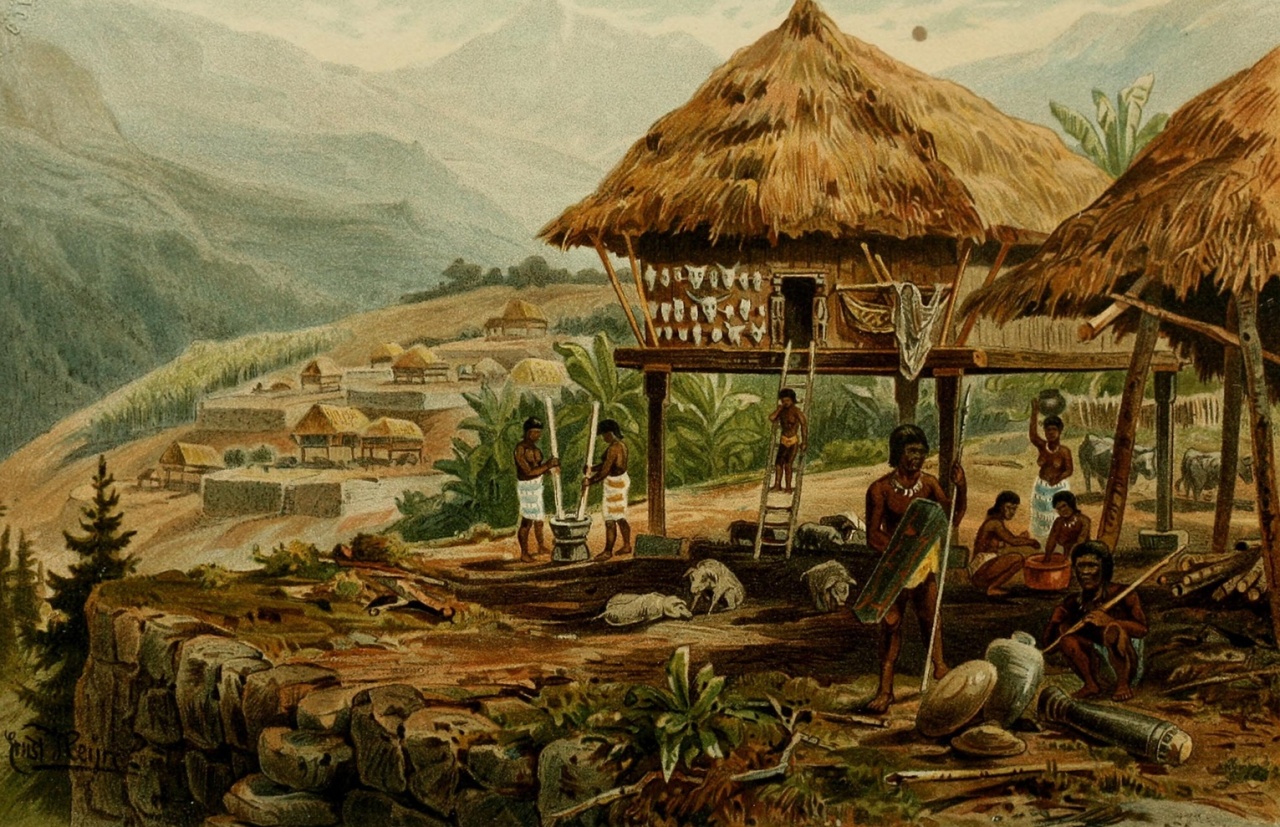
Young babies are sometimes fed hard-boiled fresh eggs, but the Igorot otherwise does not eat “fresh” eggs, though he does eat large numbers of stale ones. He prefers to wait, as one of them said, “until there is something in the egg to eat.” He invariably brings stale or developing eggs to the American until he is told to bring fresh ones. It is not alone the Igorot who has this peculiar preference—the same condition exists widespread in the Archipelago.
Locusts, or chochon, are gathered, cooked, and eaten by the Igorot, as by all other natives in the Islands. They are greatly relished, but may be had in Bontoc only irregularly—perhaps once or twice for a week or ten days each year, or once in two years. They are cooked in boiling water and later dried, whereupon they become crisp and sweet. By some Igorot they are stored away, but I can not say whether they are kept in Bontoc any considerable time after cooking.
The locusts come in storms, literally like a pelting, large-flaked snowstorm, driving across the country for hours and even days at a time. All Igorot have large scoop nets for catching them and immense bottle-like baskets in which to put them and transport them home. The locust catcher runs along in the storm, and, whirling around in it with his large net, scoops in the victims. Many families sometimes wander a week or more catching locusts when they come to their vicinity, and cease only when miles from home. The cry of “enemy” will scarcely set an Igorot community astir sooner than will the cry of “chochon.” The locust is looked upon by them as a very manna from heaven. Pi-na-lat? is a food of cooked locusts pounded and mixed with uncooked rice. All is salted down in an olla and tightly covered over with a vegetable leaf or a piece of cloth. When it is eaten the mixture is cooked, though this cooking does not kill the strong odor of decay.
Other insect foods are also eaten. I once saw a number of men industriously robbing the large white “eggs” from an ant nest in a tree. The nest was built of leaves attached by a web. Into the bottom of this closed pocket the men poked a hole with a long stick, letting a pint or more of the white pupae run out on a winnowing tray on the earth. From this tray the furious ants were at length driven, and the eggs taken home for cooking.
Igorot Fishing and Snail Catching
In 1905, Albert Ernest Jenks wrote: Three methods are employed in fishing in this river—the first, catching each fish in the hand; the second, driving the fish upstream by fright into a receptacle; a third, a combined process of driving the fish downstream by fright and by water pressure into a receptacle. [Source: “Bontoc Igorot” by Albert Ernest Jenks, 1905]
The Igorot seems not to have a general word for fish, but he has names for the three varieties found in the river. One, ka-cho, a very small, sluggish fish, is captured during the entire year. In February these fish were seldom more than 2 inches in length, and yet they were heavy with spawn. The ka-cho? is the fish most commonly captured with the hands. It is a sluggish swimmer and is provided with an exterior suction valve on its ventral surface immediately back of the gill opening. This valve seems to enable the fish to withstand the ordinary current of the river which, in the rainy season, becomes a torrent. This valve is also one of the causes of the Igorot’s success in capturing the fish, which is not readily frightened, but clings to the bed of the stream until almost brushed away, and then ordinarily swims only a few inches or feet. Small boys from 6 to 10 years old capture by hand a hundred or more ka-cho? during half a day, simply by following them in the shallow water.
Women and small children wade about the river and pick up quantities of small crabs, called “ag-kama,” and also a small spiral shell, called “koti.” It is safe to say that every hour of a rainless day one or more persons of Bontoc is gathering such food in the river. Immediately after the first rain of the season of 1903, coming April 5, there were twenty-four persons, women and small children, within ten rods of one another, searching the river for ag-kama and koti.
The women wear a small rump basket tied around the waist in which they carry their lunch to the rice sementeras, and once or twice each week they bring home from a few ounces to a pound of small crustaceans. One variety is named songan, another is kit-an, a third is fi(nga, and a fourth is lischûg. They are all collected in the mud of the sementeras.
Igorot Alcoholic Drinks
Cornélis De Witt Willcox wrote in “The Head Hunters of Northern Luzon”: After a ceremony “Bubud was then passed about—but this is going too fast! Bubud (called tapuy elsewhere) is an institution in the parts where we now were, and I had been hearing of it for days. It is the native (Ifugao) name of a drink produced by the fermentation of rice, a drink that varies in color and in flavor, according to the care taken in its make, but nearly always agreeable to the palate and refreshing. That offered us today was greenish yellow, slightly acid and somewhat bitter from the herbs added. [Source:“The Head Hunters of Northern Luzon” by Cornélis De Witt Willcox, Lieutenant-Colonel U.S. Army, Professor United States Military Academy, 1912 ]
Albert Ernest Jenks wrote: Tapuy is a fermented drink made from rice, the cha-yetit variety, they say, grown in Bontoc village. It is a very sweet and sticky rice when cooked. This beverage also is found practically everywhere in the Archipelago. Only a small amount of the cha-yetit is grown by Bontoc village. To manufacture tapuy the rice is cooked and then spread on a winnowing tray until it is cold. When cold a few ounces of a ferment called “fu-fud” are sprinkled over it and thoroughly stirred in; all is then put in an olla, which is tied over and set away. The ferment consists of cane sugar and dry raw rice pounded and pulverized together to a fine powder. This is then spread in the sun to dry and is later squeezed into small balls some 2 inches in diameter. This ferment will keep a year. When needed a ball is pulverized and sprinkled fine over the cooked rice. An olla of rice prepared for tapuy will be found in one day half filled with the beverage. [Source: “Bontoc Igorot” by Albert Ernest Jenks, 1905]
Tapuy will keep only about two months. It is never drunk by the women, though they do eat the sweet rice kernels from the jar, and they, as well as the men, manufacture it. It is claimed never to be manufactured in the Bontoc area for sale. A half glass of the beverage will intoxicate. At the end of a month the beverage is very intoxicating, and is then commonly weakened with water. Tapuy is much preferred to bási.
Bási is the Igorot name of the fermented beverage prepared from sugar cane. “Bási,” under various names, is found widespread throughout the Islands. The Bontoc man makes his bási in December. He boils the expressed juice of the sugar cane about six hours, at which time he puts into it a handful of vegetable ferment obtained from a tree called “tub-fig.” This vegetable ferment is gathered from the tree as a flower or young fruit; it is dried and stored in the dwelling for future use. The brewed liquid is poured into a large olla, the flat-bottom variety called “fu-o-foy?” manufactured expressly for bási, and then is tightly covered over and set away in the granary. In five days the ferment has worked sufficiently, and the beverage may be drunk. It remains good about four months, for during the fifth or sixth month it turns very acid.
Bási is manufactured by the men alone. Tukukan and Titipan manufacture it to sell to other villages; it is sold for about half a peso per gallon. It is drunk quite a good deal during the year, though mostly on ceremonial occasions. Men frequently carry a small amount of it with them to the fields when they guard them against the wild hogs during the long nights. They say it helps to keep them warm. One glass of bási will intoxicate a person not accustomed to drink it, though the Igorot who uses it habitually may drink two or three glasses before intoxication. Usually a man drinks only a few swallows of it at a time, and I never saw an Igorot intoxicated except during some ceremony and then not more than a dozen in several months. Women never drink bási.
The Bontoc man prepares another drink which is filthy, and, even they themselves say, vile smelling. It is called “safueng,” is drunk at meals, and is prepared as follows: Cold water is first put in a jar, and into it are thrown cooked rice, cooked sweet potatos, cooked locusts, and all sorts of cooked flesh and bones. The resulting liquid is drunk at the end of ten days, and is sour and vinegar-like. The preparation is perpetuated by adding more water and solid ingredients—it does not matter much what they are. The odor of safueng is the worst stench in Bontoc. I never closely investigated the beverage personally—but I have no reason to doubt what the Igorot says of it; but if all is true, why is it not fatal?
Igorot Tattoos
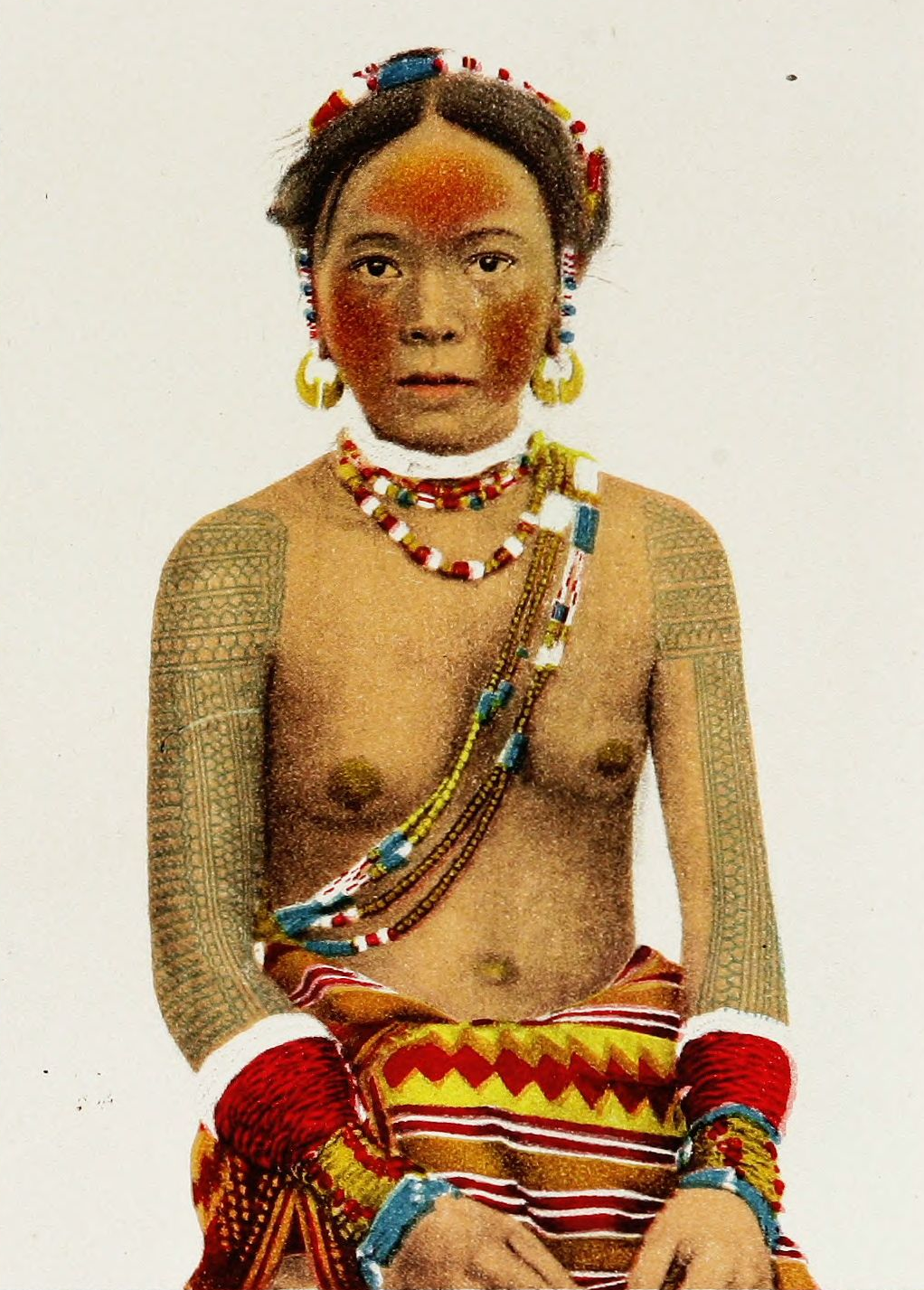
Several Igorot groups, including the Itneg, Kalinga and Ibaloi are well-known for their tattoos. In “The Inhabitants of the Philippines” (1900), the author Frederic Henry Read Sawyer describes two subgroups of the Banao people (a subgroup of the Itneg), the Busao and the Burik people, as having elaborate tattoos, though he also notes that the custom was in the process of disappearing by the time he described them: The Busao Igorrotes who live in the North of Lepanto, tattoo flowers on their arms, and in war-dress wear a cylindrical shako made of wood or plaited rattan, and large copper pendants on their ears. These people do not use the talibon, and prefer the spear. The Burik Igorrotes tattoo their body in a curious manner, giving them the appearance of wearing a coat of mail. But this custom is probably now becoming obsolete, for at least those of the Igorrotes who live near the Christian natives are gradually adopting their dress and customs."
The Itneg traditionally used hafted tattooing tools made of bundled plant thorns attached to a buffalo horn handle, with pigment derived from soot produced by burning resinous wood. By the 19th century, many Itneg groups in the Abra Valley were being assimilated into Christianized lowland society, and tattooing declined. Women typically wore modest blue line tattoos on the forearms, often concealed by jewelry, while some men had small utilitarian tattoos used for marking property. Warrior tattoos associated with headhunting had largely disappeared, and warriors were no longer visually distinguished from others in the community.
Albert Ernest Jenks wrote: All the members—men, women, and children—of an ato may be tattooed whenever a head is taken by any person of the ato. In every village, there are one or more men, called “bu-ma-fatek,” who understand the art of tattooing...The design is drawn on the skin with ink made of soot and water. Then the tattooer pricks the skin through the design. The instrument used for tattooing is called “cha-kayyum.” It consists of from four to ten commercial steel needles inserted in a straight line in the end of a wooden handle; “cha-kayyum” is also the word for needle. After the pattern is pricked in, the soot is powdered over it and pressed in the openings; the tattooer prefers the soot gathered from the bottom of ollas. The finished tattoo is a dull, blue black in color, sometimes having a greenish cast. A man in Tulubin has a tattoo across his throat which is distinctly green, while the remainder of his tattoo is the common blue black. The newly tattooed design stands out in whitish ridges, and these frequently fester and produce a mass of itching sores lasting about one month. [Source: “Bontoc Igorot” by Albert Ernest Jenks, 1905]
The Igorot distinguishes three classes of tattoos: The chak-lag, the breast tattoo of the head taker; pongo, the tattoo on the arms of men and women; and fate(k, under which name all other tattoos of both sexes are classed. Fate(k is the general word for tattoo, and pongo is the name of woman’s tattoo. It is general for boys under 10 years of age to be tattooed. Their first marks are usually a small, half-inch cross on either cheek or a line or small cross on the nose. One boy in Bontoc, just at the age of puberty, has a tattoo encircling the lower jaw and chin, a wavy line across the forehead, a straight line down the nose, and crosses on the cheeks; but he is the youngest person I have seen wearing the jaw tattoo—a mark quite commonly made in Bontoc when the chak-lag, or head-taker’s emblem, is put on.
The chak-lag is the most important tattoo of the Igorot, since it marks its wearer as a taker of at least one human head. It therefore stands for a successful issue in the most crucial test of the fitness of a person to contribute to the strength of the group of which he is a unit. It no doubt gives its wearer a certain advantage in combat—a confidence and conceit in his own ability, and, likely, it tends to unnerve a combatant who has not the same emblem and experience....The basis of the designs is apparently geometric. If the straight-line designs originated in animal forms, they have now become so conventional that I have not discovered their original form.
The Bontoc woman is tattooed only on the arms. This tattoo begins close back of the knuckles on the back of the hands, and, as soon as it reaches the wrist, entirely encircles the arms to above the elbows. Still above this there is frequently a separate design on the outside of the arm; it is often the figure of a man with extended arms and sprawled legs.
The chak-lag design on the man’s breast is almost invariably supplemented by two or three sets of horizontal lines on the biceps immediately beneath the outer end of the main design. If the tattoo on the arms of the woman were transferred to the arms of the man, there would seldom be an overlapping—each would supplement the other. On the men the lines are longer and the patterns simpler than those of the women, where the lines are more cross-hatched and the design partakes of the nature of patch-work.
Transport and Carrying Loads in Northern Luzon in the Early 1900s
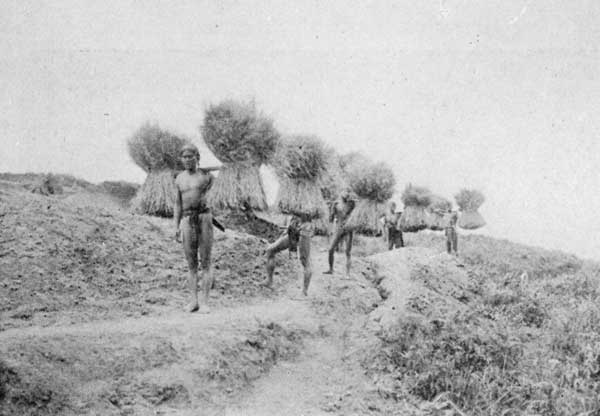
Albert Ernest Jenks wrote: The human is the only beast of burden in the Bontoc area. Elsewhere in northern Luzon the Christianized people employ horses, cattle, and carabaos as pack animals. Along the coastwise roads cattle and carabaos haul two-wheel carts, and in the unirrigated lowland rice tracts these same animals drag sleds surmounted by large basket-work receptacles for the unhusked rice. The Igorot has doubtless seen all of these methods of animal transportation, but the conditions of his home are such that he can not employ them. He has no roads for wheels; neither carabaos, cattle, nor horses could go among his irrigated fields; and he has relatively few loads of produce coming in and going out of his village. Such loads as he has can be transported by himself with greater safety and speed than by quadrupeds; and so, since he almost never moves his place of abode, he has little need of animal transportation. [Source: “Bontoc Igorot” by Albert Ernest Jenks, 1905]
To an extent the river is employed to transport boards, timbers, and firewood to both Bontoc and Samoki during the high water of the rainy season. Probably one-fourth of the firewood is borne by the river a part of its journey to the villages. But there is no effort at comprehensive water transportation; there are no boats or rafts, and the wood which does float down the river journeys in single pieces.
The characteristic of Bontoc transportation is that the men invariably carry all their heavy loads on their shoulders, and the women as uniformly transport theirs on their heads. In Benguet all people carry on their backs, as also do the women of the Quiangan area. In all heavy transportation the Bontoc men carry the spear, using the handle as a staff, or now and then as a support for the load; the women frequently carry a stick for a staff. Man’s common transportation vehicle is the ki-mata, and in it he carries unhusked rice, sweet potatos, and manure. He swings along at a pace faster than the walk, carrying from 75 to 100 pounds. He carries all firewood from the mountains, directly on his bare shoulders. Large timbers for dwellings are borne by two or more men directly on the shoulders; and timbers are now, season of 1903, coming in for a schoolhouse carried by as many as twenty-four men. Crosspieces, as yokes, are bound to the timbers with bark lashings, and two or four men shoulder each yoke.
When the man is to be away from home over night he usually carries his food and blanket, if he has one, in the waterproof fangao slung on his back and supported by a bejuco strap passing over each shoulder and under the arm. This is the so-called “head basket,” and, as a matter of fact, is carried on war expeditions by those villages that use it, though it is also employed in more peaceful occupations. As a cargador the man carries his burdens on the shoulder in three ways—either double, the cargo on a pole between two men; or singly, with the cargo divided and tied to both ends of the pole; or singly, with the cargo laid directly on the shoulder.
Women carry as large burdens as do the men. They have two commonly employed transportation baskets, neither of which have I seen a man even so much as pick up. These are the shallow, pan-shaped luwa and the deeper, larger tay-ya-an. In these two baskets, and also at times in the man’s ki-mata, the women carry the same things as are borne by the men. Not infrequently the woman uses her two baskets together at the same time—the tay-ya-an setting in the luwa. When she carries the ki-mata she places the middle of the connecting pole, the pal-tang on her head, with one basket before her and the other behind. At all times the woman wears on her head beneath her burden a small grass ring 5 or 6 inches in diameter, called a “kikan.” Its chief function is that of a cushion, though when her burden is a fanga of water the kikan becomes also a base—without which the round-bottomed olla could not be balanced on her head without the support of her hands.
Almost all of the water used in Bontoc is carried from the river to the village, a distance ranging from a quarter to half a mile. The women and girls of a dozen years or more probably transport three-fourths of the water used about the house. It is carried in 4 to 6 gallon ollas borne on the head of the woman or shoulder of the man. Women totally blind, and many others nearly blind, are seen alone at the river getting water.
About half the women and many of the men who go to the river daily for water carry babes. Children from 1 to 4 years old are frequently carried to and from the fields by their parents, and at all times of the day men, women, and children carry babes about the village. They are commonly carried on the back, sitting in a blanket which is slung over one shoulder, passing under the other, and tied across the breast. Frequently the babe is shifted forward, sitting astride the hip. At times, though rarely, it is carried in front of the person. A frequent sight is that of a woman with a babe in the blanket on her back and an older child astride her hip supported by her encircling arm.
Igorot Barter and Money in the Early 1900s
Most commerce is carried on by barter. Within a village naturally having neither stores nor a legalized currency people trade among themselves, but the word “barter” as here used means the systematic exchange of the products of one community for those of another. The Bontoc Igorot has a “medium of exchange” which gives a “measure of exchange value” for articles bought and sold, and which has a “standard of value.” In other words he has “good money” probably the best money that could have been devised by him for his society. It is his staple product—unhusked rice, the unthreshed rice.
Unhusked rice is at all times good money, and it is the thing commonly employed in exchange. It answers every purpose of a suitable medium of exchange. It is always in demand, since it is the staple food. It is kept eight or ten years without deterioration. Except when used to purchase clothing, it is seldom heavier or more difficult to transport than is the object for which it is exchanged. It is of very stable value, so much so that as a purchaser of Igorot labor and products its value is constant; and it can not be counterfeited.
Aside from this universal medium of exchange the characteristic production of each community, in a minor way, answers for the community the needs of a medium of exchange. Samoki buys many things with her pots, such as tobacco and salt from Mayinit; cloth from Igorot comerciantes, breechcloth and basi from the Igorot producers; chickens, pigs, unhusked rice, and sweet potatos from neighboring villages. Mayinit uses her salt in much the same way, only probably to a less extent. Salt is not consumed by all the people. Live pig and hog and pieces of pork and carabao meat are used a great deal in barter. As far back as the village memory extends pigs have been used to purchase a particularly good breechcloth called “balakes,” made in Balangao, three days east of Bontoc.
In all sales the medium of exchange is entirely in coin. Paper will not be received by the Igorot. The peso (the Spanish and Mexican silver dollar) passes in the area at the rate of two to one with American money. There is also the silver half peso, the peseta or one-fifth peso, and the half peseta. The latter two are not plentiful. The only other coin is the copper “sipen.”
No centavos (cents) reach the districts of Lepanto and Bontoc from Manila, and for years the Igorot of the copper region of Suyak and Mankayan, Lepanto, have manufactured a counterfeit copper coin called “sipen.” All the half-dozen copper coins current in the active commercial districts of the Islands are here counterfeited, and the “sipen” passes at the high rate of 80 per peso; it is common and indispensable. A crude die is made in clay, and has to be made anew for each “sipen” coined. The counterfeit passes throughout the area, but in Tinglayan, just beyond its eastern border, it is not known. Within two days farther east small coins are unknown, the peso being the only money value in common knowledge.
Image Sources: Wikimedia Commons
Text Sources: “Encyclopedia of World Cultures Volume 5: East/Southeast Asia:” edited by Paul Hockings, 1993; National Geographic, Live Science, Philippines Department of Tourism, Metropolitan Museum of Art, Natural History magazine, New York Times, Washington Post, Los Angeles Times, Smithsonian magazine, Encyclopedia.com, Times of London, Library of Congress, The Conversation, The New Yorker, Time, BBC, CNN, Reuters, Associated Press, AFP, Lonely Planet Guides, Google AI, Wikipedia, The Guardian and various websites, books and other publications.
Last updated February 2026