
KALINGA PEOPLE
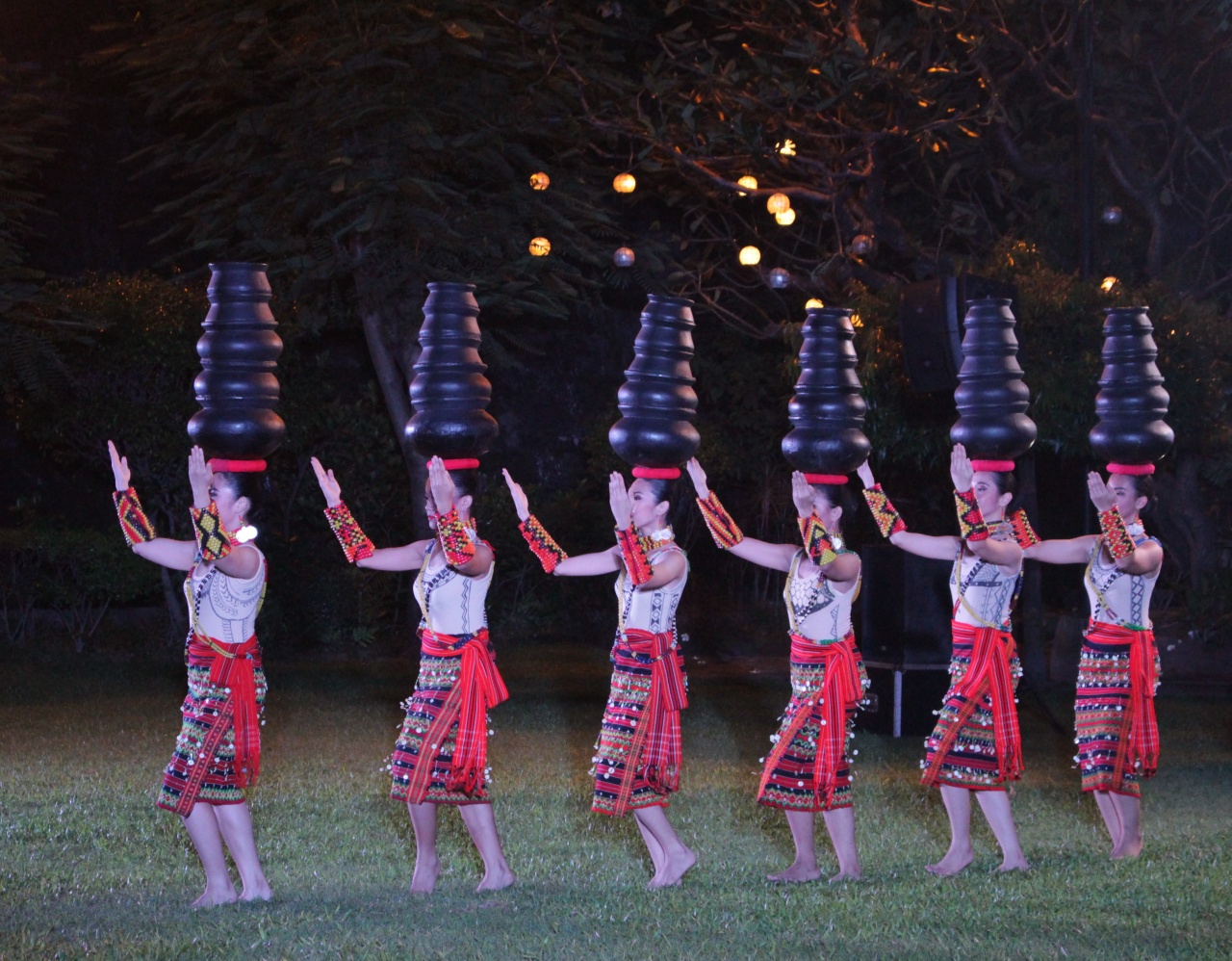
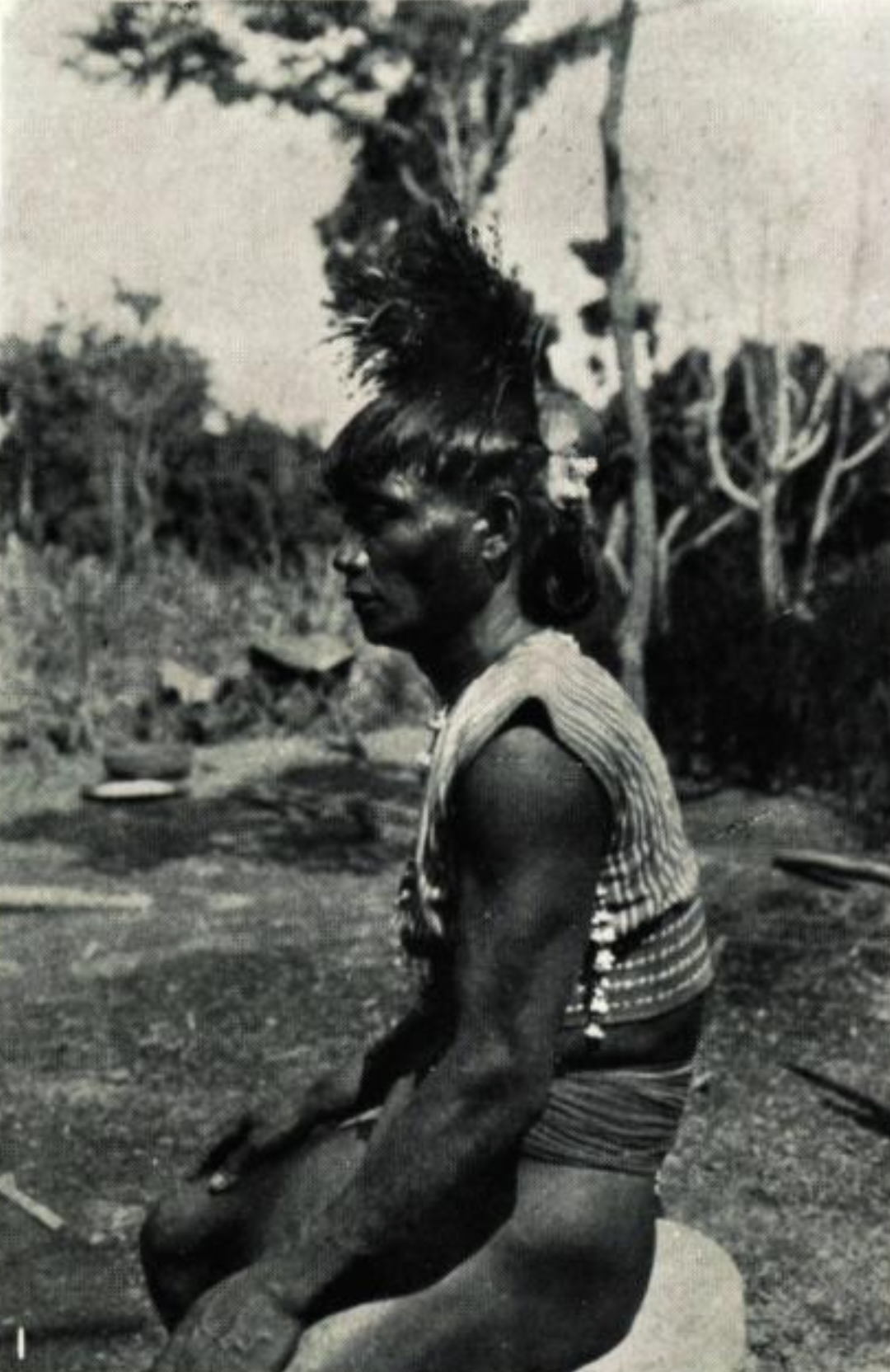
The Kalinga people are a famous group of headhunters that live in the Cordillera Central in northern Luzon. Also known as the Calinga, Kalingga, Kinalinga, the were described in 1914 by the American administrator Dean Worcester as “a fine lot of headhunting savages, physically, magnificently developed, mentally acute but naturally very wild.” [Source: Robert Lawless, “Encyclopedia of World Cultures Volume 5: East/Southeast Asia:” edited by Paul Hockings, 1993 ~]
The name Kalinga comes from the Ibanag and Gaddang word kalinga, meaning “headhunter.” Anthropologist Edward Dozier divided the Kalinga into three broad subcultures based on geography: Balbalan in the north; Pasil, Lubuagan, and Tinglayan in the south; and Tanudan in the east. Linguist Teodoro Llamzon, meanwhile, classified the Kalinga according to dialect groups, including Guinaang, Lubuagan, Punukpuk, Tabuk, Tinglayan, and Tanudan [Source: Wikipedia]
The expression "out in the boondocks" is related to the Kalinga people. It was said that the Kalingas lived so deep in the North Luzon bundok the word "boondocks" has come to mean extremely remote. The Kalinga people do not use the word Kalinga. The word Kalinga simply means “enemy” in the language of people who live around the Kalinga.
Kalinga Languages are Austronesian languages in the northern Luzon grouping. Ronald Himes (1997) divides Kalinga into three dialects: Masadiit (in Abra), Northern Kalinga, and South-Central Kalinga. Ethnologue identifies the eight Kalinga languages: 1) Butbut Kalinga, with 15,000 speakers, spoken in several communities in Kalinga Province, including Tinglayan, Butbut, Buscalan, Bugnay, Loccong, and Ngibat, as well as parts of Tabuk and the municipality of Rizal; 2) Limos Kalinga, also known as Northern Kalinga, with 12,700 speakers, spoken in northern Kalinga Province from Tabuk to the provincial border and in Conner municipality in Apayao Province; 3) Lubuagan Kalinga, with an estimated 30,000 speakers. spoken mainly in the municipalities of Lubuagan and Tabuk in Kalinga Province and includes the dialects Guinaang, Balbalasang, Ableg-Salegseg, Balatok-Kalinga, and Pasil Kalinga; 4) Mabaka Valley Kalinga, also known as Kal-Uwan or Mabaka Itneg, spoken in Conner municipality in Apayao Province as well as in western Abra and northern Kalinga Province; [Source: Wikipedia]
5) Majukayang Kalinga, or Madukayang, with 1,500 speakers as of 1990, spoken in Tabuk, Kalinga Province and in Paracelis municipality in Mountain Province; 6) Southern Kalinga, with 11,000 speakers as of 1980, is spoken in Lubuagan municipality and parts of Tabuk in Kalinga Province, as well as in several villages of Sadanga and Sagada in Mountain Province, includes the Mallango, Sumadel, Bangad, and Tinglayan dialects; 7) Tanudan Kalinga, also known as Lower Tanudan or Mangali Kalinga, with about 11,200 speakers speaking several dialects, spoken in the southern Tanudan Valley of Kalinga Province; and 8) Banao Itneg, with about 3,500 speakers and several distinct dialects, spoken in Balbalan and Pasil municipalities in Kalinga Province and in Daguioman and Malibcong municipalities in Abra Province,
RELATED ARTICLES:
KALINGA IN 1910 factsanddetails.com
BUGKALOT (ILONGOT): LIFE, CULTURE, CUSTOMS, SOCIETY, HISTORY factsanddetails.com
ILONGOT IN THE 1910s factsanddetails.com
IGOROT — CORDILLERA PEOPLE OF NORTHERN LUZON — GROUPS AND HISTORY factsanddetails.com
IGOROT LIFE: CUSTOMS, FOOD, DRINKS, TRANSPORT factsanddetails.com
IGOROT GROUPS — KANKANAEY, ISNEG, IBALOI — AND THEIR LIFE, CUSTOMS AND CULTURE factsanddetails.com
HEAD HUNTING TRIBES OF LUZON: PRACTICES, REASONS, WARS factsanddetails.com
MAIN ETHNIC GROUPS OF LUZON: TAGALOGS, ILOCANO AND BICOL factsanddetails.com
BONTOC PEOPLE: LIFE. CULTURE, MARRIAGE factsanddetails.com
BONTOC REGION IN THE EARLY 1900s: GEOGRAPHY, HISTORY, DISEASES, FOOD factsanddetails.com
MOUNTAIN PROVINCE IN CORDILLERA: MUMMIES, PINE FORESTS, BONTOC RICE TERRACES factsanddetails.com
IFUGAO: HISTORY, HEADHUNTING, CULTURE factsanddetails.com
IFUGAO RELIGION: GODS, RITUALS, FUNERALS factsanddetails.com
IFUGAO SOCIETY AND LIFE factsanddetails.com
Kalinga Population and Where They Live
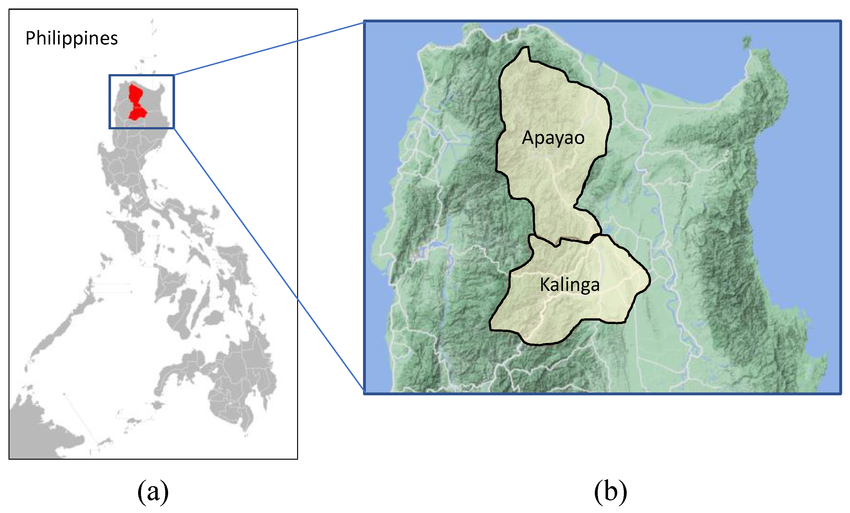
The Kalinga primarily inhabit Kalinga Province, which covers an area of 3,283 square kilometers (1,267 square miles). Over time, some have migrated to neighbouring Mountain Province, Apayao, Cagayan, and Abra. The Kalinga numbered 163,167 in 2010. As of 2020, the Kalinga population was recorded at 212,983, not including those who have moved outside the Cordillera region. According to the 2024 Philippines census the total population of Kalinga province was is 235,391 people. In the 2000 census, approximately 64.4 percent of households in Kalinga province identified themselves as Kalinga. Other groups in the province include Ilocanos (about 24 percent ) and Kankanaey (2.5 percent ). In 1972, it was wstimated that the ethnic Kalinga population was approximately 72,500, with their numbers reaching roughly 92,000 by 1990. The Kalinga are part of the broader Igorot ethnic group in the Cordillera region.
Kalinga Province is located in Cordillera region — a mountainous area in north-central Luzon. Kalinga territory encompasses the floodplains of Tabuk and Rizal as well as the Chico River. The region is rich in natural resources, with gold and copper deposits particularly common in Pasil and Balbalan. Tabuk was settled as early as the 12th century, and from there Kalinga communities spread throughout the area, practising both wet-rice cultivation (papayaw) and swidden farming (uwa).
The Cordillera Central where the Kalinga live is rugged and deeply dissected mountain mass extending roughly 320 kilometers northward from about 16° north latitude and averaging approximately 65 kilometers in width between 120° and 122° east longitude. This region, the largest mountainous area in the Philippine archipelago, includes several peaks exceeding 2,740 meters (8,990 feet) in its southern ranges. Kalinga territory lies in the north-central portion of these highlands, spanning roughly 30 kilometers from north to south and about 80 kilometers from east to west around 17° north latitude, where elevations reach approximately 2,470 meters (8.104 feet) The area encompasses the middle drainage basin of the northward-flowing Chico de Cagayan River and its tributaries, particularly the eastward-flowing Mabaca, Saltan, Bananid, and Pasil Rivers, as well as the northward-flowing Tanudan River. [Source: Robert Lawless, “Encyclopedia of World Cultures Volume 5: East/Southeast Asia:” edited by Paul Hockings, 1993]
Kalinga Groups
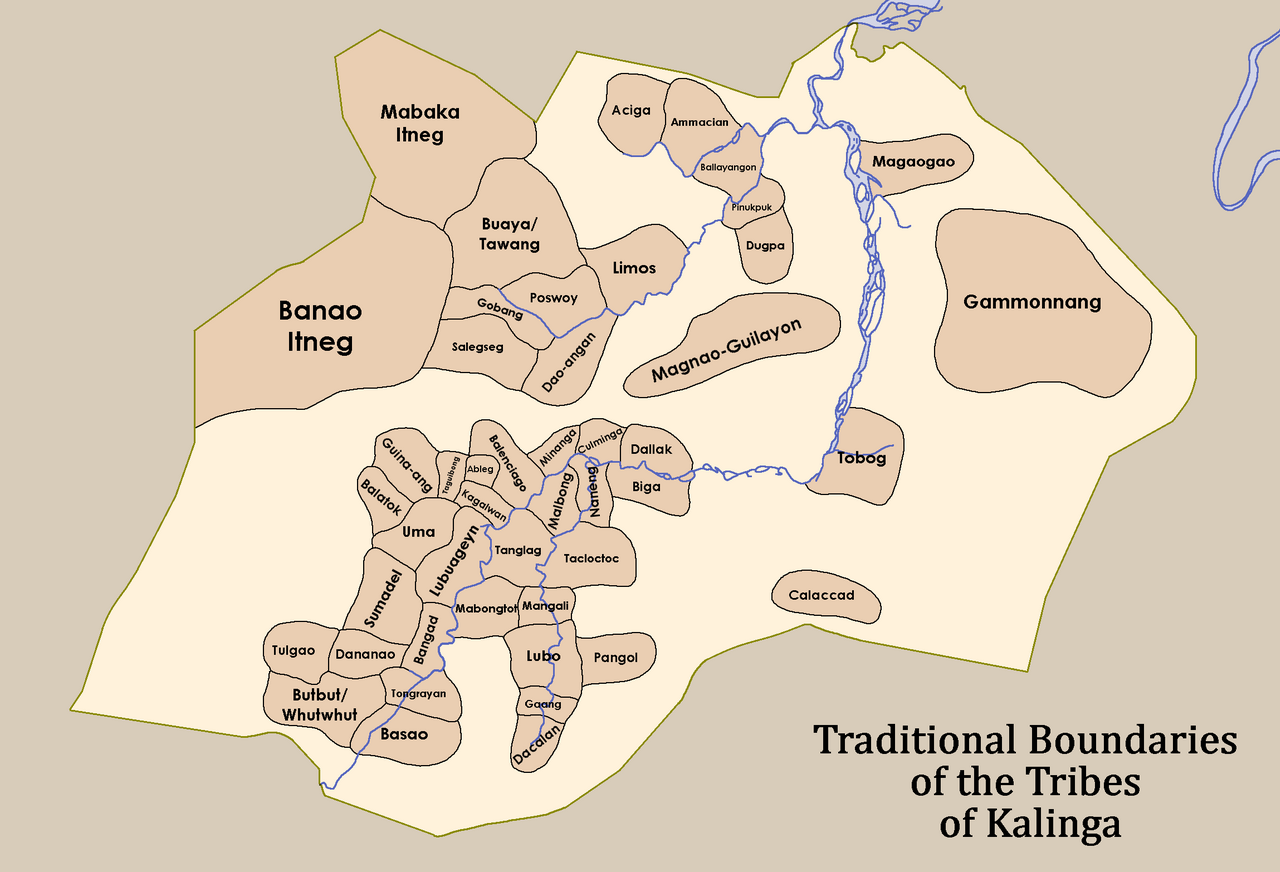
Various scholars have divided the Kalinga into sub-tribes in different ways using different criteria. Edward Dozier (1916-1971) divided the Kalinga into three broad subcultures based on geography: 1) Balbalan group in the north; 2) Pasil, 3) Lubuagan, and 4) Tinglayan groups in the south; and the 5) Tanudan group in the east. Rev. Teodoro Llamzon, S.J. (1926-), by contrast, classified the Kalinga according to dialect, identifying the Guinaang, Lubuagan, Punukpuk, Tabuk, Tinglayan, and Tanudan groups. [Source: Wikipedia]
In a linguistic study, Ronald Himes (1997) proposed a threefold division of the Kalinga language into Masadiit (spoken in Abra), Northern Kalinga, and South-Central Kalinga. More recently, Kalinga author John Donqui-is, writing for the National Commission for Culture and the Arts (NCCA), identified a total of 31 Kalinga subtribes, reflecting a more fine-grained understanding of local identities.
According to the NCCA article, the northern part of Kalinga Province includes several subtribes concentrated in specific municipalities. In Balbalan municipality are the Alingag (also known as the Salegseg), Buwaya, Dao-angan, Gobang, Mabaca, and Banao, while Pinukpuk municipality is home to the Ballayangon, Limos, and Gilayon (also called the Pinukpuk Tabuk). In the southern and southwestern areas of the province, the municipality of Lubuagan includes the Lubuagan, Mabongtot, and Tanglag; Pasil municipality includes the Ableg, Balatoc, Balinciagao, Guinaang, and Kagalwan; and Tinglayan municipality includes the Bangad, Basaso, Botbot (or Butbut), Dananao, Tinglayan, and Sumadel. To the east, Tanudan municipality is home to the Dacalam, Lubo, Mangali, and Taloctoc; Rizal municipality includes the Gammonnang; and the City of Tabuk includes the Biga, Nanong, and Calaccad, although the latter are also identified in the article as Gaddang.
Kalinga History and Dams
Most scholars believe that the peoples of the North Luzon Highlands originated in southern China or Taiwan and migrated from Taiwan to present-day Philippines and moved through northern Luzon via the Cagayan River Valley. The Spanish became interested in the region when gold was discovered in the southern portions of the mountain region, although these areas lay far from Kalinga territory. [Source: Robert Lawless, “Encyclopedia of World Cultures Volume 5: East/Southeast Asia:” edited by Paul Hockings, 1993]
Kalinga contact with the Spaniards came indirectly through Spanish outposts established in 1598 in the province of Abra, west of Kalinga lands. In 1614, the first missionary, Fr. Juan de Pareja, entered western Kalinga (Tinggian) territory, but missionary activity remained minimal until the nineteenth century, when the Augustinian Order established missions among the Apayao, the Kalingas’ northern neighbors, and among western Kalinga groups. Spanish attention, however, focused primarily on the gold and copper mines of the southern North Luzon Highlands, though by 1668 the Spanish abandoned hopes of direct occupation of the interior.
Thereafter, Spanish interest in the highlands centered largely on regulating trade between highlanders and lowlanders in order to protect the colonial tobacco monopoly. These efforts were largely unsuccessful. When the tobacco monopoly was abolished in 1882, Spanish involvement in the highlands declined sharply. Shortly afterward, the United States assumed colonial control of the Philippines and established a civil government in 1902. Most of the North Luzon Highlands were placed under an administrative unit known as Mountain Province, and in 1908 Kalinga Subprovince was created by act of the Philippine Commission as part of a broader administrative reorganization.
In 1967 the Philippine government divided the former Mountain Province into four new provinces, one of which was Kalinga-Apayao. Beginning in the mid-1970s, the Kalingas experienced abrupt, direct, and often violent engagement with the Philippine nation-state as a result of government plans to construct four large dams along the Chico River, two of them within Kalinga territory. The government said that it had the right to build the dams because the Igorots had no title to the land they lived on for centuries, because of this the government owned the land.
In April 1980, Macl-ing Dulag, an outspoken Kalinga critic of the dams, was gunned down in his home in the middle of the night by thugs hired by the Marcos government. Dulag had earlier protested the building of a dam in his homeland because it would have submerged dozens of villages and left 85,000 people homeless. The soldiers who shot Dulag were found, tried and convicted. Their sentence: a transfer to a different region. Armed resistance and harassment of dam workers has prevented the dam from being built, but the Igorot are worried that once they stop fighting the construction will start again.
Local people were afraid to work in their fields. They hid with hogs to escape attacks by soldiers. There was no communication to the outside world. In June 1984, more than 3,000 government troops launched a major military assault on the Kalinga. There was indiscriminate strafing of villages. People we raped and tortured. The World Bank withdrew from the project, which was “permanently postponed” by the Aquino government after Marcos was ousted in 1986.
Kalinga Religion
Christianity has made some in roads into Kalinga culture but for the most part the Kalinga cling to their traditional beliefs. Like the Ifugao, the Kalinga believe in the universe is divided into five levels, with 1) the heavens, presided over by the creator-god Kabunyan; 2) the earth; 3) an underworld; and 4) an upstream world; and 5) a downstream world. Each area has a large number of spirits and deities associated with it. [Source: Robert Lawless, “Encyclopedia of World Cultures Volume 5: East/Southeast Asia:” edited by Paul Hockings, 1993 ~]
The Kalinga people revere three orders of deities: 1) the high gods “pinain” and “alan”; 2) deities of dead ancestors and relatives; and 3) mythological creatures and heros that were once human. Pinpain are like traditional animist spirits. They inhabit rivers, forests, mountains, large trees and other objects. The alan are generally malevolent. The Kalinga regularly make offerings to “bulol” (rice-goddess statues).
Religious practitioners are generally shaman and they are usually female. They generally use chants and spiritual helpers to manipulate spirits involved with causing illness. Sometimes they preside over ceremonies in which pigs or chickens are sacrificed. Sometimes they sing and dance and act like entertainers.
The Kalinga believe that one’s behavior on earth does not affect one’s fate in the afterlife. Corpses are smoked to preserve them. A funeral may last for several days and often involves the sacrificing of various livestock animals depending on the wealth and status of the dead. In the old days bodies were buried in jars or mausoleums. Now they are buried mostly in the ground.
Kalinga Society
Kalinga society is patriarchal and organized around the household. The Kalinga have a saying, “Nothing happens that does not start from the hearth.” Men do most of heavy work such as clearing the forest, plowing, building fences while women do more time-consuming tasks such as weeding, harvesting and housework. Women however do hold political office and serve as shaman. [Source: Robert Lawless, “Encyclopedia of World Cultures Volume 5: East/Southeast Asia:” edited by Paul Hockings, 1993 ~]
Communities are led by respected elderly men. In the past respect was earned by headhunting feats. These days it is generally defined by oratory skill. Individuals and households are largely independent. Even children have a lot of freedom to do what they want. Decisions that effect the whole community are made through discussion and consensus. Disputes are usually resolved through discussions. In egregious cases elders may impose fines.
Kalinga society is divided into two economic classes, determined by the number of rice fields, work animals, and heirloom valuables owned: the kapos (poor) and the baknang (wealthy). Members of the wealthy class commonly employ servants known as poyong. Politically, the highest status was held by the mingol and the papangat. The mingol were men who achieved prestige through success in headhunting, while the papangat were former mingol who assumed leadership roles after the decline of headhunting. As respected community leaders and peacemakers, papangat are frequently consulted for advice, making wisdom, sound judgment, and moral authority essential qualities. [Source: Wikipedia]
The Kalinga developed an institution of peace pacts known as bodong, which helped reduce traditional warfare and headhunting and functioned as a formal system for initiating, maintaining, renewing, and strengthening kinship and social relationships. Eduardo Masferré observed that by the beginning of the American colonial period, neighboring Bontok and Gaddang communities had begun adopting peace-pact practices modeled on the Kalinga bodong.
Kalinga Family and Marriage

Marriage to relatives closer than a third cousin is forbidden. Polygyny is allowed but generally only practiced by a few wealthy men. The Kalinga rarely marry non-Kalinga. Occasionally they marry Bontoc women who have a reputation for being hard workers. Most couples live with the bride’s parents after they get married. Children usually live with their parents but grow up surrounded by many related adults within the deme. These relatives help guide, discipline, and teach them. Learning happens mostly through observing adults rather than through strict punishment, and physical discipline is rare.All married children receive an equal share of inheritance. Land and property are not thought of as personal possessions but as resources held in trust for the next generation. In everyday practice, the most productive land usually goes to the eldest son, while the family house is commonly inherited by the youngest daughter. [Source: Robert Lawless, “Encyclopedia of World Cultures Volume 5: East/Southeast Asia:” edited by Paul Hockings, 1993 ~]
Marriage among the Kalinga follows regional endogamy, meaning people are expected to marry within their own region. These marriages form local communities called demes, which are large, interrelated groups of families. In each deme, marriage between close relatives—anyone closer than a third cousin—is not allowed. Demes can range in size from about 60 to 1,000 households, and the entire Kalinga region is made up of roughly 70 to 80 such communities.
The Kalinga follow a bilateral descent system, meaning people trace family ties through both their mother’s and father’s sides equally. Collateral kin (such as cousins) are treated as nearly as important as lineal kin (parents, children, grandparents). Kinship terms are often reciprocal, meaning the same word may be used in both directions within a relationship, and relationships are organized mainly by generation rather than by gender. Distinctions between male and female relatives are relatively unimportant in everyday terms.
Extended family networks, called kindreds, are central to social life. A kindred includes very distant relatives, reaching back to great-great-grandparents, as well as siblings, cousins up to the third degree, and all their descendants. There are no permanent, named family lineages known as corporate descent groups, which elsewhere might jointly own property or hold political power. However, in Lubuagan, the former capital of Kalinga Subprovince, some wealthy families appear to be developing early forms of patrilineal descent, in which family identity and inheritance increasingly follow the father’s line.
Kalinga Life
The Kalinga live in villages with five to 50 households. They have traditionally been established in easy-to-defend positions such as lower ridges and often have a grove of coconut trees near it. Large villages have a central plaza where events such as births and deaths are marked. In the past many Kalinga suffered from goiter because their foods was e grown in iodine-deficient soils. Other common disease included measles, tuberculosis, bronchopneumonia and various skin, eye and intestinal disorders Cholera and malaria were problems in the more distant past. [Source: Robert Lawless, “Encyclopedia of World Cultures Volume 5: East/Southeast Asia:” edited by Paul Hockings, 1993]
Traditional Kalinga houses—known by names such as furoy, buloy, fuloy, phoyoy, and biloy—are either octagonal structures reserved for the wealthy or square houses for others. These dwellings are built on posts, some rising as high as six to nine meters ( 20 to 30 feet). ther important structures include rice granaries (alang) and field shelters (sigay). Houses usually have a single entrance that is reached by steps of a ladder, Most are single-room dwellings with walls made of split and plaited bamboo, with a pitched roof thatched with strong reeds and thick grass. The floor is made of split bamboo mats resting on beams. Activities revolve around a hearth filled with sand and ash. Above it is a rack used drying wood, fish and clothes.
The Kalinga raise rice, vegetables, coffee, maize, tobacco and other goods on rice terraces and slash-and-burn agricultural plots. Most of their protein comes from domesticated pigs and water buffalo and hunted wildlife such as lizards, bats, deer and wild pigs. Cottage industries include metalworking, pottery, basketry and making tools and utensils from wood, trade with lowland groups and other mountain tribes primarily through the market in Tabuk. Valued property includes rice terraces, house sites, livestock and family heirlooms such as ancient Chinese beads, jars, plates and gongs. Most land is communally held.
Robusta coffee became a popular cash-crop among the Kalinga in the 1970s, although a trader monopoly in the 1980s led to low farmgate prices despite high world market prices, causing a decline in production. In the 2010s, various government agencies encouraged farmers to return to planting and harvesting of Cordillera Robusta coffee among the Kalinga. [Source: Wikipedia]
Kalinga Culture and Customs
The Kalinga have elaborate ceremonies and epic poems. Many of their ceremonies focus of major life events, agriculture, headhunting and animal hunting. A typical ceremony last four to six hours but may go on for several days. Community gatherings often incorporate a large amount of dancing. Musical instruments include bamboo nose flutes and clappers, ancient bronze gongs from China., various stringed instruments and bamboo trumpets [Source: Robert Lawless, “Encyclopedia of World Cultures Volume 5: East/Southeast Asia:” edited by Paul Hockings, 1993]
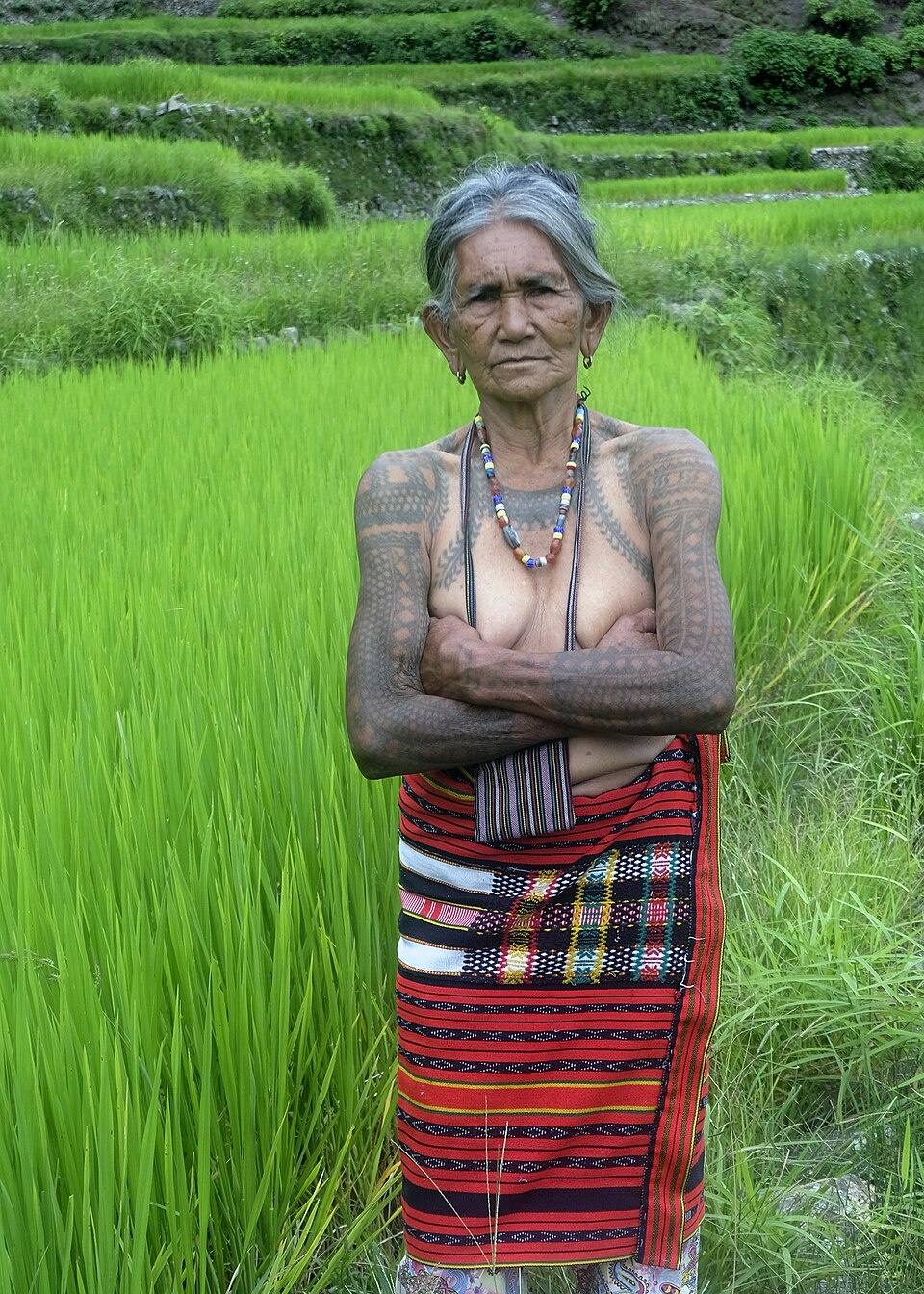
Young boys from Kalinga are known for performing the traditional muscle dance, while Kalinga women—such as those from Buscalan in Tinglayan—are often adorned with whatok tattoos that symbolise beauty, strength, and cultural identity. One of the most renowned practitioners of this tradition is Apo Whang-od, who continues to apply Kalinga tattoos using characteristic Austronesian tools: a hafted needle and a wooden mallet. [Source: Wikipedia]
Kalinga men traditionally have worn ba-ag (loincloths), while women have worn saya, a colorful garment that covers the body from the waist to the feet. Women are sometimes tattooed on the arms up to the shoulders and adorn themselves with bright ornaments such as bracelets, earrings, and necklaces, especially during festivals and celebrations. Valued heirlooms include Chinese plates (panay), jars (gosi), and gongs (gangsa). Traditional dances include the salidsid, a courtship dance, and the pala-ok or pattong, which are war dances.
The Kalinga observe many customs and traditions that may seem unusual to outsiders. For instance, pregnant women and their husbands are prohibited from eating beef, cow’s milk, and dog meat. They are also expected to avoid streams and waterfalls, which are believed to harm unborn children. Other important practices include ngilin, which involves avoiding the evil water spirit, and kontad or kontid, a ritual performed for a child to protect them from future harm. Betrothals are common and may even be arranged at birth, though either party may later end the engagement if they do not agree to it. When a person dies, sacrifices are offered to honor the spirit of the deceased, and kolias, a commemorative ritual, is held after a one-year mourning period.
Among the Kalinga of northern Luzon, a youth institution similar to the olag (girls house) once existed, though later accounts describe it in a more limited form called maki-obóg. Children could enter this system around age 10. Nudity was generally not seen as an issue, even into adulthood. There were no strict rules about when people should start dating or marry, and some boys were said to be more interested in work than in relationships. In wealthier families, children were sometimes promised in marriage early to help preserve family property. [Source: “Growing Up Sexually, Volume” I by D. F. Janssen, World Reference Atlas, 2004]
Kalinga Tattoos and 108-Year-Old Tattoo Artist
Tattoos among the Kalinga are known as batok or batek (called whatok among the Butbut Kalinga). They are among the most well-known tattoo traditions in the Cordillera, largely due to the fame of Apo Whang-od, once described as the “last mambabatok” (traditional tattoo artist), who now trains younger practitioners to ensure the survival of the practice. [Source: Wikipedia]
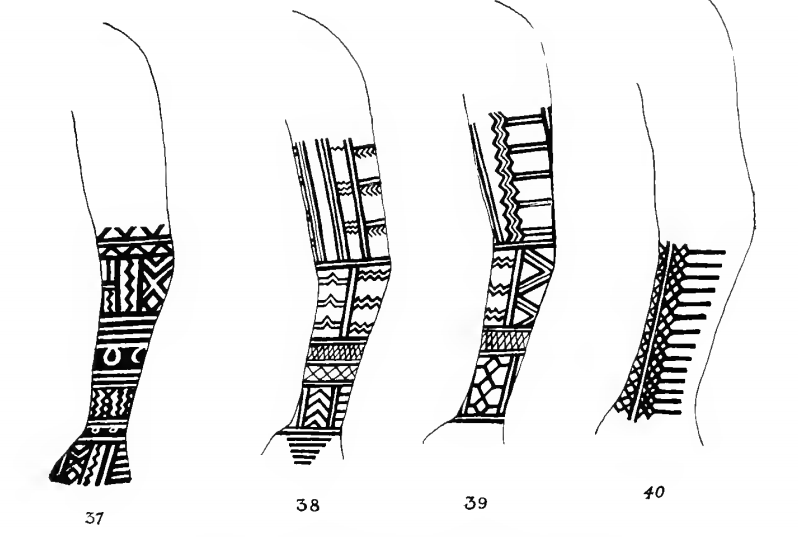
Traditionally, tattoos were given to men after successful headhunting raids, while women received tattoos to enhance beauty and attract suitors. Among the Kalinga, tattoos were viewed as symbols of prestige, honor, beauty, and endurance. Common Kalinga tattoo motifs include centipedes (gayaman), centipede legs (tiniktiku), snakes (tabwhad), snakeskin (tinulipao), hexagonal shapes representing snake belly scales (chillag), coiled snakes (inong-oo), rain (inud-uchan), fern designs (inam-am, inalapat, nilawhat), fruits (binunga), parallel lines (chuyos), alternating lines (sinagkikao), hourglass forms symbolizing day and night (tinatalaaw), rice mortars (lusong), pig hind legs (tibul), rice bundles (sinwhuto or panyat), criss-cross patterns (sina-sao), ladders (inar-archan), eagles (tulayan), frogs (tokak), and axe blades (sinawit).
These same motifs also appear on textiles, pottery, and tools. Each design carries specific symbolic meanings or is believed to possess protective or talismanic powers. For example, tinulipao is thought to help camouflage warriors and shield them from harm. Fern motifs signify that a woman is ready to conceive, promote good health, and protect against stillbirth. Hourglass and rice mortar designs indicate family wealth, while rice bundle motifs symbolize abundance.
Whang-Od Oggay, popularly known as Apo Whang-Od, has been recognized as the oldest tattoo artist in the Philippines and the last traditional mambabatok of the Kalinga. Born in 1917 and living in the village of Buscalan in Kalinga province, she began tattooing at the age of 15, learning the craft from her father and initially marking headhunters as part of long-standing warrior traditions. In April 2023, 106-year-old Whang-od appeared on the cover of Vogue Philippines' Beauty Issue, making her the oldest living person to ever be on the cover of Vogue. She was still alive as of late 2025 [Source: Bryan Ke, Nextshark, July 7, 2020]
Apo Whang-Od practices an ancestral tattooing method that involved tapping pomelo tree thorns dipped in charcoal water into the skin using a coffee tree hammer. Her tattoos featured varied designs, including lines, animals, and her well-known three-dot signature, with motifs symbolizing qualities such as strength and fertility.
In later years, Whang-Od opened her practice to outsiders, drawing visitors from around the world who traveled long distances to Buscalan to experience traditional tattooing. Preserving the mambabatok tradition required passing the knowledge within the family. Although Whang-Od had no children, she trained her grandnieces, Grace Palicas and Ilyang Wigan, to continue the practice.
Image Sources: Wikimedia Commons
Text Sources: “Encyclopedia of World Cultures Volume 5: East/Southeast Asia:” edited by Paul Hockings, 1993; National Geographic, Live Science, Philippines Department of Tourism, Metropolitan Museum of Art, Natural History magazine, New York Times, Washington Post, Los Angeles Times, Smithsonian magazine, Encyclopedia.com, Times of London, Library of Congress, The Conversation, The New Yorker, Time, BBC, CNN, Reuters, Associated Press, AFP, Lonely Planet Guides, Google AI, Wikipedia, The Guardian and various websites, books and other publications.
Last updated February 2026