
FILIPINO SOCIETY
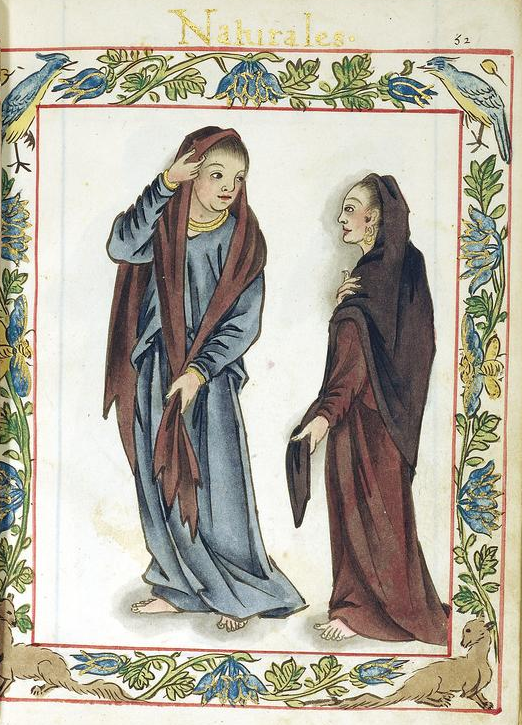
Philippine concepts about debt repayment and kinship responsibilities plays a major rile in how society structured. The family and the Catholic church are characterized the main bonding forces in Filipino society (See Family). The countryside is divided into “barangay” (rural communities) that have their own leaders or chiefs. Some say Philippine society is more like a Latin American society than an Asian one.
Asianjournal.com reports:“Some anthropologists describe the Filipino society as a “high-context” culture in comparison with the Western “low context” societies. It is believed that in the Philippines a “yes” is “yes,” but “no” is “maybe.” Though “maybe” of the Filipino may appear indecisive to Westerners, yet it shows the Filipinos well-mannered ability not to directly hurt the other person’s feelings. By contrast, the “low-context” behavior of Western societies is described as abrasive, impersonal, untactful, and direct. [Source:asianjournal.com]
The Filipinos have two groups within their approach to studying the psychology of their people. Kapwa, togetherness, has Ibang Tao (other people) and Hindi Ibang Tao (not other people). Within the Ibang Tao (“outsider”) construct there are five domains: 1) Pakikitungo: civility (In Confucian ethics, right behavior meant right demeanor towards authorities, parents, and elders); 2) Pakikisalamuha: act of mixing (a social value that is primarily communitarian and Confucian. It espouses the ability to adapt); 3) Pakikilahok: act of joining (participation of the entire community to help a person); 4) Pakikibagay: conformity (this runs into conflict with individuality which many Filipinos in fact willingly throw away in favor of conformity with demands of those who are in charge); 5) Pakikisama (being united with the group). The Hindi Ibang Tao (“one-of-us”) construct has three domains: 1) Pakikipagpalagayang-loo (act of mutual trust); 2) Pakikisangkot (act of joining others); 3) Pakikipagkaisa (being one with others). [Source: Jeff Harvie, filipinawives.wordpress.com, September 2, 2014]
RELATED ARTICLES:
POVERTY IN THE PHILIPPINES: POOR, HUNGRY, INEQUALITY, CAUSES factsanddetails.com
TONDO — MANILA LARGEST SLUM AND HOME TO SMOKY MOUNTAIN factsanddetails.com
RICH AND POWERFUL FAMILIES IN THE PHILIPPINES factsanddetails.com
FILIPINO CHARACTER AND PERSONALITY: VALUES, EMOTIONS, FRIENDLINESS factsanddetails.com
FILIPINO HIYA (SHAME), AMOR PROPIO (SELF-ESTEEM) AND GO BETWEENS factsanddetails.com
CATHOLIC, ASIAN, SPANISH AND AMERICAN INFLUENCES ON FILIPINO IDENTITY AND CULTURE factsanddetails.com
SOCIAL RELATIONS IN THE PHILIPPINES: UTANG NA LOOB, BAYANIHAN AND PAKIKISAMA factsanddetails.com
ETIQUETTE AND MANNERS IN THE PHILIPPINES: CUSTOMS, PUBLIC ACTIONS, RESPECT factsanddetails.com
FILIPINO COMMUNICATION STYLES: GESTURES, BODY LANGUAGE, EYEBROWS, SPACE factsanddetails.com
PEOPLE OF THE PHILIPPINES: FILIPINOS, IDENTITY, CHARACTERISTICS factsanddetails.com
AUSTRONESIAN PEOPLE OF THE PACIFIC, INDONESIA, MALAYSIA, TAIWAN AND THE PHILIPPINES: ORIGIN, HISTORY, EXPANSION factsanddetails.com
MALAYS AND MALAY-RELATED PEOPLE: HISTORY, DEFINITIONS, ORIGINS, LIFE, CULTURE factsanddetails.com
ETHNIC GROUPS AND MINORITIES IN THE PHILIPPINES factsanddetails.com
MAIN ETHNIC GROUPS OF LUZON: TAGALOGS, ILOCANO AND BICOL factsanddetails.com
ETHNIC GROUPS OF THE CENTRAL PHILIPPINES ISLANDS: VISAYANS, CEBUANO, WARAY factsanddetails.com
MOROS: MUSLIMS IN MINDANAO AND THE SOUTHERN PHILIPPINES factsanddetails.com
LANGUAGES IN THE PHILIPPINES factsanddetails.com
RELIGION IN THE PHILIPPINES factsanddetails.com
Filipino Amor Propio and Smooth Interpersonal Relationship (SIR)
Alfredo Roces and Grace Roces wrote: An American Yale historian doing research in Iloilo discovers some interesting old books and documents in the possession of two ageing spinsters and, expressing great interest, requests permission to study the dusty tomes; he meets with reluctance and suspicion. It takes him six months of persistence before he is allowed to go over the books. He brings a Filipina colleague from Ateneo University who chats with the two spinsters, and after a long conversation unrelated to the books, is instantly allowed to examine and read them. Amazed, the American exclaims, ‘How did you do that? It took me months to win their confidence!’ The Filipina explains, ‘I did not show too much interest in the books, I did not even look at the books. First I established my identity in their eyes by saying that I am the niece of someone they know, a friend of another they also know, placing myself in a context of mutual acquaintances.’ [Source: “Culture Shock!: Philippines” by Alfredo Roces and Grace Roces, Marshall Cavendish International, 2010]
According to asianjournal.com: Philippine society is characterized by many strong positive traits, such as “amor propio” (self-esteem) and smooth interpersonal relationship (SIR). Filipinos are sensitive to criticisms on their own self-esteem and intuitively sharp to the self-esteem of others as well. Anything that hurts one’s self-esteem is not allowed because it endangers smooth interpersonal relationships and harmony in society. Filipinos highly value their “being-in-relation,” or find their identity in the kinship group to which they belong, such as “kamaganak” (family), or “kababayan” (townsfolk). Because of this cultural trait to find one’s identity always in relation with the community or group, it is not surprising for a Filipino to always look for levels of connectivity to establish personal and social relationships. (Taga-saan ka sa atin? “Where are you from the Philippines?”) [Source: asianjournal.com]
“However, those positive traits can also give rise to deception, pretension, and hypocrisy. To achieve smooth interpersonal relationship and not to embarrass self and others, a Filipino will avoid open conflict and frank dialogue, or give in to community or group pressure. A Filipino will still show a happy face even if he is hurting, and refrain from expressing anger, in order not to lose face, displease others and sever one’s ties with the kinship group. Because the family and kinship ties are of the highest value for a Filipino, he would sacrifice his personal integrity, true feeling, and principles to remain in good standing with the kinship group. This negative attitude gives rise also to clannishness. Beyond his community, family, and clan, the Filipino could care less, because he does not expect support, loyalty and trust beyond his immediate group or family. The Filipino could care less for the greater good and welfare of the majority, as long as they do not impact on his clan and community. This attitude is a stumbling block to the nation’s building.
Filipino Kin Groups and Relations
Rather than viewing themselves as individuals, Filipino often sees themselves as an integral member of a kin-group comprised of parents, grandparents, children, uncles, aunts, cousins, second cousins, in-laws, compadres and comadres (godparents). In an open conflict, one wounds not just an individual but the whole kin group. The anthropologist Frank Lynch observed: ‘When two Filipinos have a serious fight, there is much more at stake than when two Americans break off relations. That fact is, in my opinion, one reason why smooth interpersonal relations are more highly cultivated in the Philippines than in the United States.’ [Source: “Culture Shock!: Philippines” by Alfredo Roces and Grace Roces, Marshall Cavendish International, 2010]
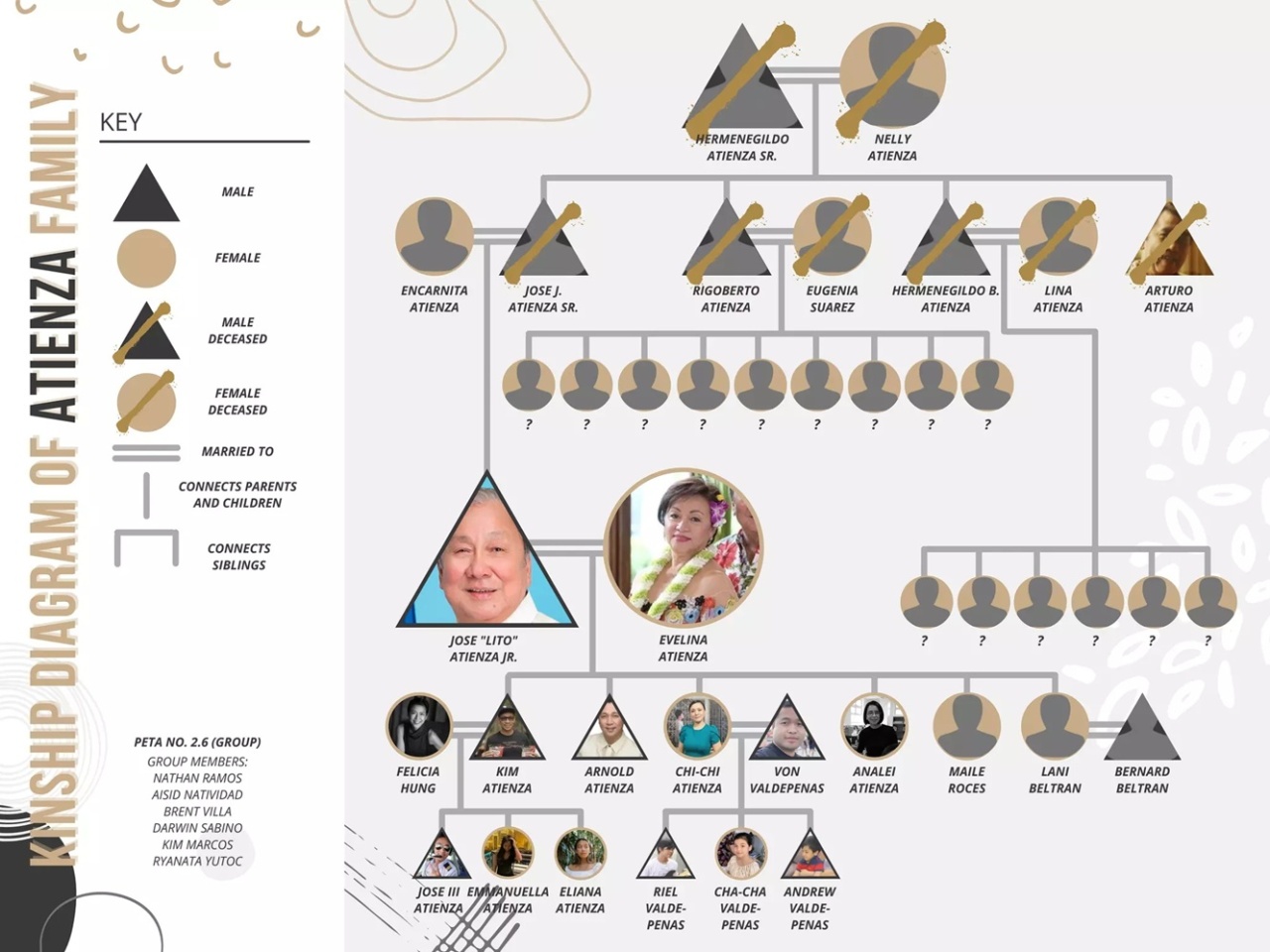
What anthropologist Dr Robert Fox wrote in 1946 in “Human Relations Area Files” describes Filipino kinship groups very well: “The basic social unit of the society is the elementary family of mother, father and children, and the extended bilateral family which includes consanguineal relatives of both the mother and father. The influence of the family permeates all facets of Philippine society. It is the primary unit of corporate action about which social, economic, and religious activities revolve. Religion is family and home-centred to a notable degree. Economic activities, agriculture, fishing and cottage industries commonly involve all adult members of the family in cooperative labour; often the older children are included as well. The so-called ‘corporations’ in the Philippines are characteristically family-owned. Nepotism in government and business is widespread, a reflection of family cohesiveness. [Source: “Culture Shock!: Philippines” by Alfredo Roces and Grace Roces, Marshall Cavendish International, 2010]
‘The Filipino family displays great solidarity, emphasising loyalty and support of the blood group, frequently to the neglect of social organisation of broader dimensions such as town or nation...In the typical barrio or village, political organisation is weakly developed. Group activities are organised on the basis of familial alliance and common economic and ritual interests. Leadership is provided by the dominant family (or families), the primary determinants of the leadership being wealth and the size of the kin group.
‘The cohesiveness of the family also has a powerful influence upon interpersonal relationships, particularly with non-kinsmen. An offence against one of its members is interpreted as a threat to the whole family. The family, on the other hand, provides a secure environment for its members, in sharp contrast to the often uncertain and delicate relationships with non-relatives ...’
Evolution of Philippine Society
Like other traditional societies in Asia and Europe, Filipino society has moved from being predominantly agricultural to modern in the post-Cold War era. These economic transformations have brought new social changes, as the concept of the traditional family continues to evolve. Still, the Philippines continues to be a largely rural society, despite increasing urbanization. The family remains the prime unit of social awareness, and ritual kin relations and associations of a patron-client nature still are the basis for social groupings beyond the nuclear family, rather than horizontal ties forged among members of economically based social classes. [Source: Library of Congress *]
Improvements in the national transportation system and in mass communications in most parts of the archipelago in the 1970s and 1980s tended to reduce ethnolinguistic and regional divisions among lowland Filipinos, who made up more than 90 percent of the population. Some resistance to this cultural homogeneity remained, however, and continued regional identification was manifested in loyalty to regional languages and in opposition to the imposition of a national language based largely on Tagalog, the language of the Manila area. Large numbers of rural migrants continued to flow into the huge metropolitan areas, especially Metro Manila. Filipinos also migrated in substantial numbers to the United States and other countries. Many of these migrants, especially those to the Middle East, migrated only to find temporary employment and retained their Philippine domiciles. *
As a result of economic policies that permitted fruit and logging companies to expand their landholdings, previously formed by tribal people, and to push farther and farther into the mountains to exploit timber resources, upland tribal people have been threatened and dislocated, and the country's rich rain forests have suffered. Despite government efforts to instill respect for cultural diversity, it remained to be seen whether minorities and the ecosystem they shared would survive the onslaught of powerful economic forces that include the migration of thousands of lowland Filipinos to the frontier areas on Mindanao, as well as the intrusion of corporate extractive industries. Even if these influences were held in check, the attraction of lowland society might wean the tribal people from their customary way of life. *
Although it would seem that the continued high rate of population growth aggravated the state of the Philippine economy and health care, population growth did not seem to be a major concern of the government. Roman Catholic clergy withdrew cooperation from the Population Control Commission (Popcom) and sought its elimination. The commission was retained, and government efforts to reduce population growth continued but hardly on a scale likely to produce major results. *
Globalization has created international employment opportunities for migrant workers, especially women, as more and more Filipinos are "sacrificing" themselves to work abroad and support their families back home. The role of the family changes when a husband and wife are separated for extended periods. When a wife decides to work overseas and leaves her family behind, the structure of the household changes. Children are cared for by aunts and grandparents, and the husband's traditional role as breadwinner is threatened. Before discussing the dynamic and changing meaning of the Filipino family concept, it may be helpful to briefly review some historical transformations that have occurred in Philippine society. [Source: Kathleen Nadeau, International Encyclopedia of Marriage and Family, Gale Group Inc., 2003]
Philippines Society and Kin System in 1919
In 1919, A. L. Kroeber of The American Museum Of Natural History wrote: “The principles characterizing native society in the Philippines are : 1) A lack of political structure or sense, except where foreign influence, chiefly Mohammedan, is clear. 2) The place of political organization is taken by an organization on the basis of actual kinship, modified secondarily by community of residence or economic interests. 3) The stratification of society into wealthy, poor, and economically deficient is emphasized by the translation of these classes into nobility, free, and slaves. 4) There is no chieftainship other than as based on the combination of personal qualities with preeminence among the nobility, that is, precedence in wealth. Excep- tions are again due to Mohammedan — or Christian — influence. 5) Property being wholly transmitted by inheritance except for some consump- tion in sacrifice, and rank inclining to follow wealth, there is a strong tendency for social status to be hereditary. 6) The mechanism of law is economic instead of political. Legal claims are enforced only by the threat or exercise of violence, and adjusted by transfers of property. 7) There are no totems, clans, nor any system of exogamy between artificial kin groups. 8) Women are socially the equals of men. This is clear from their position in marriage, descent, and the holding of property. The division of labor between the sexes is on a physiological rather than a social basis. [Source: A. L. Kroeber, The American Museum Of Natural History, 1919 ^*^]
“The distinctive traits thus are the importance of blood kinship and of economic factors, the insignificance of political and exogamous or ''arbitrary" aspects of society, and the non-differentiation of the sexes. These features reveal Filipino society as simple and ''natural" in character; that is, close to its biological substratum, and comparatively free from the purely social creations or elaborations that tend to flourish in many other parts of the world. ^*^
“The kinship schemes accord well with these institutions. The equality of the sexes is reflected in the paucity of the sex-limited terms of relationship and in the total absence of any terms implying the sex of the ego or person to whom the relationship exists. The failure to sepa- rate kindred in the male and female line may be connectible with the same equalizing of the sexes in actual life; or with the want of clans and other artificial exogamic groups which in order to maintain their identity must reckon descent unilaterally; or with both factors. The organiza- tion of society on a basis of blood is likely to have something to do with the disinclination to distinguish lineal and collateral relatives. Even the tendency to treat the spouse's kin as blood kin may have some con- nection with the social balance or non-differentiation of the sexes. At any rate, where the social status of men and women is markedly and fortifiedly distinct, it seems extremely unlikely that a man could feel his wife's father to be sufficiently identical with his own father for him to call him father : the psychology of the terminology would clash with the psychology of the relation as it does not clash in Filipino life. ^*^
“As to the question whether kinship terminologies may be construed rather as reflecting institutional or linguistic or vaguer psychological conditions, the present material points to the following inferences. Kinship systems are considerably but superficially modified by linguistic and even dialectic factors. The effect of these factors is great enough to make the prediction of any specific institution from any specific term or set of terms extremely venturesome. Institutions and terminologies unquestionably parallel or reflect each other at least to the degree that a marked discrepance of plan is rare. Institutions probably shape terminologies causally, but in the main by influencing or permitting a logical scheme. In a sense this logical scheme under- lies both institution and terminology, so that the correlation between them, although actual, can be conceived as indirect. Development of particular terms or their denotation under the influence of institutions may occur to a greater or less extent, but is constantly liable to distortion by linguistic factors. The influence on kinship terminology of general levels of culture — those other than narrowly social or institutional ones, seems not to have been seriously examined. The present case shows that such influence may be rather less significant than might be expected in a transition from a state of comparative savagery to one of comparative civilization.” ^*^
“The simplicity and adaptability” of the Philippines kin “system are obvious. It operates with its meager resources by merging most collateral with lineal kin; by mostly treating connections by marriage as if they were blood kin, with the logical implication that spouses are one person; by not distinguishing sex, except in parents, perhaps uncles and aunts, and possibly siblings-in-law ; and by nowhere bifurcating, that is, discriminating the line of descent, the sex through which relationship exists. The primary consideration is generation; this is slightly elaborated by hesitating and inconsistent introduction of the factors of collaterality, sex, marriage, and absolute age. Reciprocity is of moment. Self- reciprocal terms occur in every language, and in the Philippines as a whole are found in every class of relationships except the parent-child group. ^
Tagalog Society
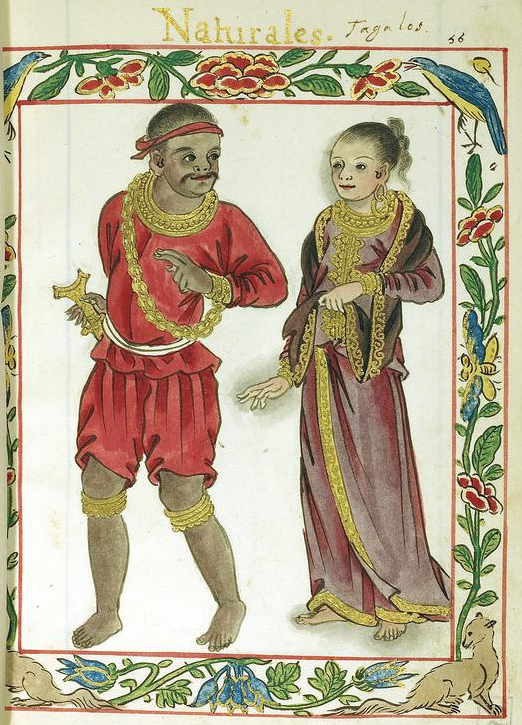
The Tagalog are the largest ethnic group in the Philippines, making up about 28 percent of the country’s population. Tagalog society appears to be strongly kinship-based, though non-kin are generally incorporated into networks of reciprocal obligation and interaction. Horizontal class distinctions based on wealth and proximity to economic resources and political power are crosscut by vertical genealogical and ritual ties of kinship, linking the upper and lower classes into pyramidal networks of various levels. These networks' boundaries and internal relationships are constantly being rearranged. [Source: Charles Kaut, “Encyclopedia of World Cultures Volume 5: East / Southeast Asia:” edited by Paul Hockings, 1993 |~|] [Source: “Encyclopedia of World Cultures Volume 5: East / Southeast Asia:” edited by Paul Hockings, 1993 |~|]
The fundamental kin unit is the sibling group, kamagkapatid (kapatid = sibling). Special terms distinguish birth order, such as panganay (firstborn) and bunso (youngest), and in some families Chinese-derived terms indicate numerical rank. Each marriage forms a nuclear family, kamaganakan (anak = child), embedded within a bilaterally extended network tracing descent from recognized ancestors or sibling groups. These extended families connect through marriage into broader groupings known as angkan or pamilia, typically identified by patrilineally inherited surnames that women may retain after marriage.
Outside major urban centers, many Tagalog communities continue to rely on local customs that resemble the adat systems found in other parts of insular Southeast Asia. Although formal legal institutions and police authority exist, everyday conflicts are often managed through community norms and personal influence. Local leaders are effective mainly when they command respect and maintain strong relationships with those involved in disputes. Social control is often exercised informally, with practices such as ostracism and public ridicule used to discourage unacceptable behavior.
Bayanihan
“Bayanihan” ("buy-uh-nee-hun") is a Filipino word derived from the word bayan meaning town, nation, or community in general. "Bayanihan" literally means, "being a bayan," and is thus used to refer to a spirit of communal unity and cooperation. Although bayanihan can manifest itself in many forms, it is probably most clearly and impressively displayed in the old tradition of neighbors helping a relocating family by getting enough volunteers to carry the whole house, and literally moving it to its new location. They do this by placing long bamboo poles length-wise and cross-wise under the house (traditional Filipino houses were built on stilts), and then carrying the house using this bamboo frame. It takes a fairly large number of people — often 20 or more — working together to carry the entire house. All this is done in a happy and festive mood. At the end of the day, the moving family expresses their gratitude by hosting a small fiesta for everyone. [Source: groups.csail.mit.edu/cag/bayanihan]
According to the Philippines Australia Business Council: “The concept of bahala na enables Filipinos to tackle difficult problems. Bahala na is a source of psychological strength when options are few and a decision must be made. Bahala na is calculated risk. It is not fatalism or resignation, but an inner strength; it is the force that makes Filipinos daring and resilient. A person must extend not only material help to someone suffering from misfortune, but also emotional support. Sometimes awa is used to draw attention to one’s self or to influence decisions, ‘Sir, maawa na kayo sa akinâ?’ (Sir, have pity on meâ?) [Source: Philippines Australia Business Council]
The Canadian Center for Intercultural Learning says: Filipinos cherish the ancestral trait of "bayanihan" which means cooperation. However, this can be used to the extreme through "pakikisama" which means that Filipinos prefer smooth relations with colleagues, friends and relatives, even when those others are wrong. They also have a high sense of gratitude ("utang na loob"): showing appreciation or returning the favour to someone who did something beneficial to you. The "padrino" (godfather) system is still in force. In this case, a "padrino" who is a person of position will get things done faster for you through his clout. It should be noted though that a non-local (expat) is not expected to abide by the unwritten rules of "utang na loob". Be firm about operational standards and procedures and be transparent with these.[Source: Canadian Center for Intercultural Learning+++]
Barangay
A barangay, formerly called a barrio, is the smallest administrative unit in the Philippines. The term is the native Filipino word for a village, district, or ward. In everyday usage, it may refer to a neighborhood within a city, a suburb, or a small local community. Cities and municipalities are divided into barangays, which may themselves be further subdivided into smaller areas such as purok (zones or clusters of households) and sitio, a smaller territorial area within a barangay that is especially common in rural communities. As of 2025, there were more than 42,000 barangays across the Philippines, about the same number as a decade earlier. [Source: Wikipedia]
Historically, the word barangay comes from balangay, a type of wooden boat used by Austronesian peoples who migrated through Southeast Asia and eventually settled in the Philippine archipelago. Early communities were formed by groups of families who arrived together in these boats, and the term eventually came to describe the settlements they established.
Many of these early barangays were located along coasts or rivers. Waterways played a central role in daily life because early inhabitants depended heavily on fishing for food and livelihood. Rivers and coastal routes also served as the main transportation corridors, allowing people to travel, trade, and communicate with other communities. Paths and settlements often developed alongside these rivers, which were also important sources of water for bathing, washing, and drinking.
In modern Filipino culture, the word barangay can also be used informally to refer to a large community or group of supporters. A well-known example is Barangay Ginebra, the passionate fan base of the Ginebra San Miguel basketball team. In 1999, the team even adopted the name Barangay Ginebra Kings to honor its loyal supporters, emphasizing the sense of community associated with the term.
See Separate Article: LOCAL GOVERNMENT, THE BUREAUCRACY, TAXES AND WELFARE IN THE PHILIPPINES factsanddetails.com
Social Stratus and Forces That Unify the Philippines
Because of a common religious tradition and the spread of Pilipino as a widely used—though not universally accepted—national language, Filipinos are a relatively homogeneous population, with important exceptions such as the Muslim minority in Mindanao, Sulu, and southern Palawan, as well as upland tribal minorities scattered throughout the islands. There are also difference between Visyans in the central islands and Tagalogs and other groups in Luzon. [Source: Library of Congress]
Filipinos share a common set of values that emphasize social acceptance as a key virtue and a shared worldview in which education serves as a primary path to upward social mobility. Social divisions in the country are based mainly on religious differences (such as between Muslims and Christians), sociocultural distinctions (such as between upland tribal groups and lowland coastal Filipinos), and urban–rural contrasts, rather than on ethnic or racial differences.
In Filipino society, social acceptance and status are highly valued, and education is widely seen as an important pathway to upward mobility. Several factors influence a person’s social standing, including skin color, physical appearance, and wealth. Fairer skin has historically been associated with higher status and intelligence, and attractive individuals may receive social or professional advantages. Family background and patron-client relationships also play an important role in achieving success. Influential figures such as government officials, wealthy acquaintances, and community leaders often act as sponsors at events like weddings and baptisms, reinforcing networks of social connection that can be important for advancement. [Source: “Encyclopedia of World Cultures Volume 5: East / Southeast Asia:” edited by Paul Hockings, 1993 |~|]
Material wealth is another visible marker of social status. The ability to purchase consumer goods signals power and prestige. Wealthier Filipinos often adopt Western lifestyles, travel abroad frequently, and take pride in their connections with foreigners. Owning a private car—especially outside major cities like Manila—is a clear indicator of high status. Housing and home furnishings also reflect social position: upholstered furniture, numerous electrical appliances, decorative rugs, and other modern amenities are often used to demonstrate affluence. Perhaps the most significant sign of status is the ability to send children to prestigious schools, many of which are private and expensive.
Income Disparity in the Philippines
Economic inequality in the Philippines is often described in terms of three broad social classes. The upper class represents roughly 10 percent of the population but controls about 90 percent of the country’s wealth. This group includes major industrialists, corporate leaders, and owners of large agricultural estates or plantations. The middle class makes up around 20 percent of the population and consists mainly of professionals such as doctors, lawyers, and other skilled workers. The remaining 70 percent belong to the lower or poor class, which collectively holds only about 10 percent of the national wealth. Many in this group struggle to earn enough to cover basic necessities or save for emergencies, though education and hard work are often seen as possible paths to improving their circumstances. [Source: “Encyclopedia of World Cultures Volume 5: East / Southeast Asia:” edited by Paul Hockings, 1993 |~|]
Despite social mobility for some individuals, economic power in the Philippines remains concentrated among a small, extremely wealthy and politically influential elite who continue to dominate much of the country’s economy, business sector, and political life. The middle class remains relatively small, while the lower-middle class is larger and largely urban. Many families in this group can meet only some of their extended family obligations and often lack a reliable social safety net. In addition, large numbers of urban poor live in overcrowded or informal settlements, frequently without secure land rights, and face ongoing challenges such as food insecurity and limited access to basic services.
There is a small wealthy elite and a multitude of rural poor. The richest 20 percent has an income 20 times higher than the poorest 14 percent and 75 percent of the Philippines’s land is owned by 2 percent of the people. Household income or consumption by percentage share lowest 10 percent: 2.9 percent; highest 10 percent: 31.6 percent (2023 est.). This compares to the lowest 10 percent (2.6 percent) and highest 10 percent (33.6 percent) in 2009
The Gini Index (or coefficient) is a statistical measure of economic inequality, commonly representing income or wealth distribution within a nation, ranging from 0 to 1. The Gini Index coefficient for the Philippines was estimated to .39 in 2023 and .45 in 2009. A score of 0 indicates perfect equality (everyone has the same), while 1 indicates maximum inequality (one person has everything). 0.2–0.3 is very low inequality (such as some Scandinavian countries). 0.4 is The World Bank's threshold for high inequality. 0.5–0.7 is High inequality (such as in parts of South America and South Africa). You would think the Philippines would have a higher, more unequal, Gini Index, as there is a very rich elite and lot of rural and urban poor in the country but money that pours in from overseas Filipino workers helps lower the Gini Index.
Different income groups lived in different neighborhoods in the cities and lacked the personal contact essential to the patron-client relationship. Probably the major social division was between those who had a regular source of income and those who made up the informal sector of the economy. The latter subsisted by salvaging material from garbage dumps, begging, occasional paid labor, and peddling. Although their income was sometimes as high as those in regular jobs, they lacked the protection of labor legislation and had no claim to any type of social insurance. [Source: Library of Congress]
Middle Class in the Philippines
In the cities, there existed a considerable middle-class group consisting of small entrepreneurs, civil servants, teachers, merchants, small property owners, and clerks whose employment was relatively secure. In many middle-class families, both spouses worked. They tended to place great value on higher education, and most had a college degree. They also shared a sense of common identity derived from similar educational experiences, facility in using English, common participation in service clubs such as the Rotary, and similar economic standing. [Source: Library of Congress]
The members of the middle class in the Philippines represent about 20 percent of the population. They are composed of professionals (doctors, lawyers, etc.). The middle class is small and the lower middle class much larger. Its members live in urban areas and, typically, can only meet some of their extend family needs with no social safety net to fall back on. The middle class feels too obligated to those in power to attempt to make societal changes. [Source: Canadian Center for Intercultural Learning+++]
Many members of what would be considered the middle class work abroad. Sometimes the pay of teachers and civil servants is so low that their income is below the poverty line and they are forced to live in slums.
Failure of Philippines Economic Policy to Reduce Income Inequality
According to the BBC: The Philippines stands out — in a region that was once a byword for crippling poverty — for its failure to match its neighbors' partial success in reducing inequality.Official statistics show that poverty has stayed at more or less the same level from 2005 to 2015, despite economic growth averaging 6 percent. Ask a motor tricycle driver or a day laborer how the government has changed their lives, and they will nearly all tell you: not one bit. If you look at how they live, you can believe them. [Source: Jonathan Head, BBC, May 8, 2016]
According to figures compiled by the World Bank, the Philippines was the only populous country in East Asia where the absolute number of people living on less than one dollar a day remained unchanged between 1981 and 1995. This indicated that, despite economic growth in parts of the region, poverty levels in the Philippines did not significantly decline during that period. [Source: Maria Cecilia T. Ubarra, Worldmark Encyclopedia of National Economies, Gale Group Inc., 2002]
From the 1960s to the 1980s, economic policies emphasized a capital-intensive, import-substitution strategy. While intended to promote industrial growth, this approach often produced inefficient industries and contributed to the neglect of agriculture. Industrialization policies favored urban development, especially in major cities, while rural areas remained largely underdeveloped. Metro Manila, in particular, received much of the country’s infrastructure investment and social development projects, attracting the majority of manufacturing jobs and business activity. Meanwhile, living standards in many rural communities declined, leaving numerous farming families struggling to meet basic needs.
Beginning in the mid-1980s, the government shifted toward a more open and market-oriented economic strategy. However, as industrialization continued, the country’s foreign debt increased significantly. A large portion of government resources was devoted to repaying debt and interest, limiting the state’s ability to fund infrastructure and social services for underserved populations. By the mid-1990s, income inequality had grown more pronounced. The wealthiest 10 percent of the population increased their share of the nation’s total income, while the remaining majority experienced far fewer gains, highlighting the uneven distribution of economic growth. An analyst with Standard and Poor in Singapore told the New York Times. “People cannot enjoy the fruits of economic development because of the feudal ownership of the land.” The poor have a deep-seated suspicion of the urban elite, The elite sometimes refer to the poor as “mabaho”, “mangmang” and “walang pinagaralan “(foul-smelling, ignorant and uneducated). Under Marcos, the poor were encouraged to improve their lives by eating earthworms and snails for protein. [Source: Floyd Whaley, New York Times, June 19, 2013]
Many people with college degrees can’t find work. Floyd Whaley wrote in the New York Times, “Julita Cabading, 56, a Manila resident with a college degree in accounting, had hoped to benefit from one of the government’s antipoverty programs. She said she had not been able to find work as an accountant because employers preferred to hire younger people, and she could not afford training to improve her job skills. So Mrs. Cabading earns the equivalent of about $3 a day selling newspapers, pens and gum along the sidewalk in Manila. When she applied for government assistance, she was told that she would need to wait at home as long as two months for a government representative to interview her. She was unable do this because she had to work at her small stand to pay her rent. She has since borrowed from a local lender and now she is in a common poverty trap in the Philippines: She is working at subsistence wages, without government help, to survive and pay off her loans. “The Philippines is improving,” she said while waiting for the next customer at her small stand. “But it hasn’t reached me yet.”
Image Sources: Wikimedia Commons
Text Sources: “Encyclopedia of World Cultures Volume 5: East/Southeast Asia:” edited by Paul Hockings, 1993; “Culture Shock!: Philippines” by Alfredo Roces and Grace Roces, Marshall Cavendish International, 2010; National Geographic, Live Science, Philippines Department of Tourism, New York Times, Washington Post, Los Angeles Times, Smithsonian magazine, Encyclopedia.com, Library of Congress, The Conversation, The New Yorker, Time, BBC, CNN, Reuters, Associated Press, AFP, Lonely Planet Guides, Google AI, Wikipedia, The Guardian and various websites, books and other publications.
Last updated March 2026