
HIYA
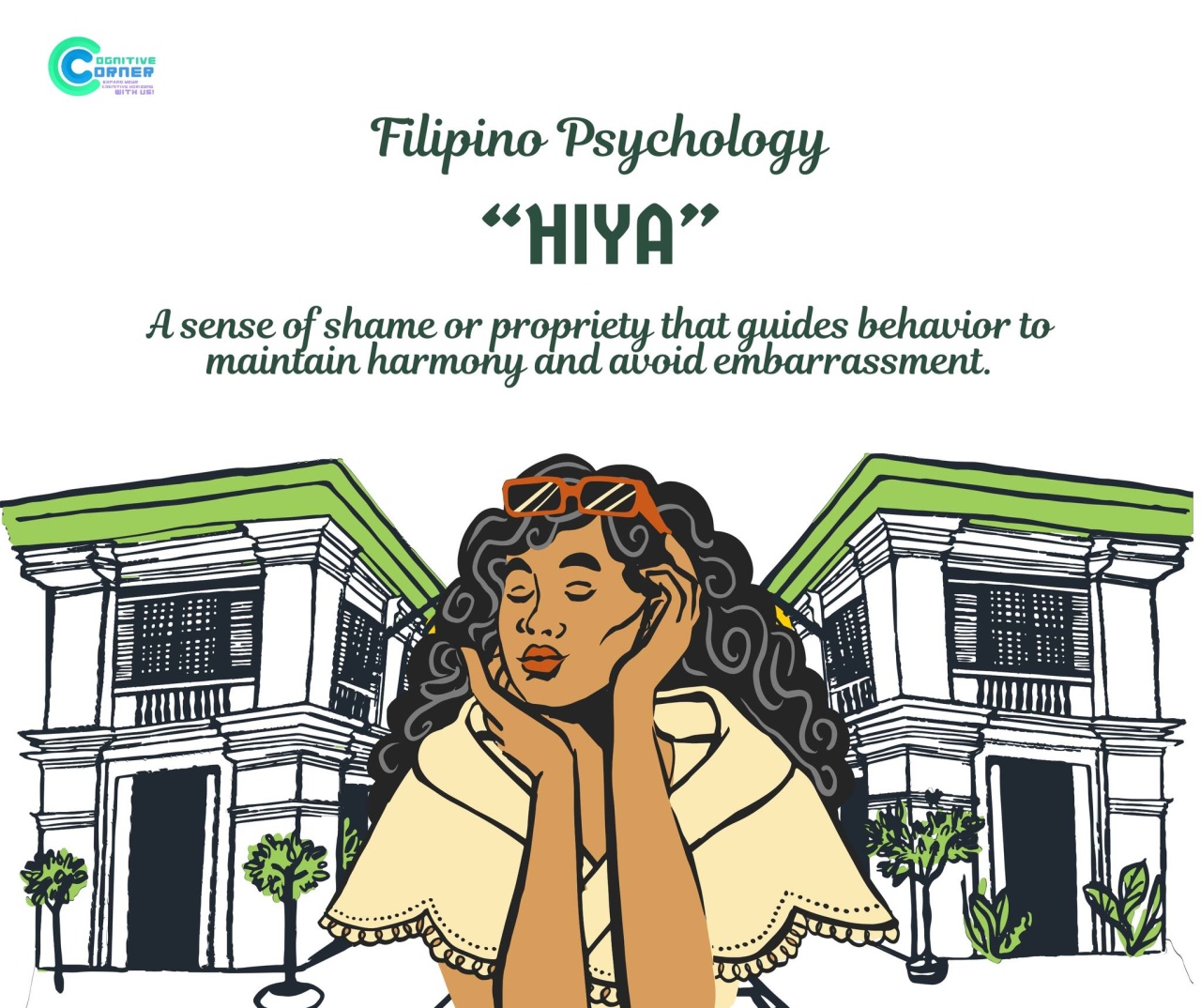
“Hiya” (pronounced hee-ya) is an important idea in the Philippines. It literally translates to ‘a sense of shame. Sometimes hiya is interpreted as ‘losing face’, but that is not the whole story. According to laonlaan.blogspot.com: “Filipinos are very sensitive to personal affront. They try, as much as possible, to avoid feeling “hiya”, a painful emotion or deep shame arising from a realization of having failed to live up to the standards of Filipino society. It is a kind of anxiety, a fear of being left exposed, unprotected and unaccepted. It is a fear of being shunned by their society, which would mean personal humiliation. [Source: laonlaan.blogspot.com ]
Hiya can be shame, shyness, losing face, and/or embarassment, or a combination of these. The anthropologist Frank Lynch, described it as ‘the uncomfortable feeling that accompanies awareness of being in a socially unacceptable position, or performing a socially unacceptable action’. According to Philippines Australia Business Council: “Hiya is the Filipino reaction to anything which is an affront to his honor, dignity, or pride. It reflects in all his personal relations, as well as how he looks at himself relative to another individual. A Tagalog would say ‘Di baling saktan mo ako, huwag mo lang akong hiyain: (I would not mind if you hurt me physically, just do not shame me). A harsh speech or discourteous comment may trigger a violent reaction from a Filipino. A Tagalog would say ‘Ang sugat ng itak ay mas mahanay kaysa sa sugat ng masamang pangungusap’ (The wound from a knife is more bearable than an offensive word). Another Filipino proverb which stresses the importance of hiya says ‘Kung gumagaling ang isang sugat, di kumukupas ang masamang pangungusap’ (A wound may heal, but an offensive word never fades away. [Source: Philippines Australia Business Council ^^]
In other words, a Filipino prefers to agree, especially with superiors, rather than take the risk of being offended by rebuff; it drives him to do the ‘right’ thing in the eyes of others, even if this requires sacrifices on his part. It also helps maintain order within his own group and serves as an unwritten code of conduct for the community. Hiya has been descried as ‘the uncomfortable feeling that accompanies awareness of being in a socially unacceptable position, or performing a socially unacceptable action.’ It is a very controlling element in Filipino society. To call a Filipino walang-hiya (shameless) is to wound him seriously. Hiya may even operate when a person is absolutely right, and the other person is wrong. This is to preserve the balance between hiya and amor propio (self-esteem). For example, a Filipino may hesitate to collect a long overdue debt, because to bring up the matter face-to-face may place a person’s amor propio at risk. ^^
RELATED ARTICLES:
FILIPINO CHARACTER AND PERSONALITY: VALUES, EMOTIONS, FRIENDLINESS factsanddetails.com
CATHOLIC, ASIAN, SPANISH AND AMERICAN INFLUENCES ON FILIPINO IDENTITY AND CULTURE factsanddetails.com
SOCIAL RELATIONS IN THE PHILIPPINES: UTANG NA LOOB, BAYANIHAN AND PAKIKISAMA factsanddetails.com
FILIPINO SOCIETY factsanddetails.com
RICH AND POWERFUL FAMILIES IN THE PHILIPPINES factsanddetails.com
ETIQUETTE AND MANNERS IN THE PHILIPPINES: CUSTOMS, PUBLIC ACTIONS, RESPECT factsanddetails.com
FILIPINO COMMUNICATION STYLES: GESTURES, BODY LANGUAGE, EYEBROWS, SPACE factsanddetails.com
PEOPLE OF THE PHILIPPINES: FILIPINOS, IDENTITY, CHARACTERISTICS factsanddetails.com
AUSTRONESIAN PEOPLE OF THE PACIFIC, INDONESIA, MALAYSIA, TAIWAN AND THE PHILIPPINES: ORIGIN, HISTORY, EXPANSION factsanddetails.com
MALAYS AND MALAY-RELATED PEOPLE: HISTORY, DEFINITIONS, ORIGINS, LIFE, CULTURE factsanddetails.com
ETHNIC GROUPS AND MINORITIES IN THE PHILIPPINES factsanddetails.com
MAIN ETHNIC GROUPS OF LUZON: TAGALOGS, ILOCANO AND BICOL factsanddetails.com
ETHNIC GROUPS OF THE CENTRAL PHILIPPINES ISLANDS: VISAYANS, CEBUANO, WARAY factsanddetails.com
MOROS: MUSLIMS IN MINDANAO AND THE SOUTHERN PHILIPPINES factsanddetails.com
LANGUAGES IN THE PHILIPPINES factsanddetails.com
RELIGION IN THE PHILIPPINES factsanddetails.com
Role of Hiya in Filipino Society

According to laonlaan.blogspot.com: "“Hiya” is one value that regulates the Filipinos social behavior. Just as one is very careful not to be subjected to embarrassment or “mapahiya” one must also make it a point NOT to cause another person’s embarrassment. For example, in asking favor, both parties are careful not to offend the other. So if a favor cannot be granted, the person who cannot oblige apologizes for his failure to do so with an explanation that it is not his intention to refuse but that other factors beyond his control keep him from doing so. [Source: laonlaan.blogspot.com ]
“Hiya is the currency applied within the society, controlling and motivating a person’s social behavior. This is the reason why a vast majority of Filipinos still remain conservative in their actions in the modern age. Everyone is expected to have hiya in the way they behave in order to win respect from the community. Dressing cleanly, being friendly and living up to your word are good ways avoiding “hiya”.
“Hiya is a controlling element in the Filipino society. A person’s behavior is socially restricted by his sense of “hiya” while public behavior is censured, or approved of, by hiya. For example, an employee dismissed from his job may react with violence because of “hiya.” Or a workmate may not openly disagree with you even if he feels strongly against your opinion out of “hiya”. For other examples, an employee could refrain from asking questions from his supervisor even if he is not quite sure what to do, because of hiya. Or a party host may end up spending more than she can afford for a party, driven by hiya, or the fear of being perceived of in any negative way.
In many barrios, where much of the Filipino population lives, police officers plays a minimal role, if he exists at all. The entire community maintains community harmony and controls crime through group consensus, applying the value of hiya to resolve disputes. Everyone must have hiya, or social dignity, and behave in a way that earns respect from the community. [Source: “Culture Shock!: Philippines” by Alfredo Roces and Grace Roces, Marshall Cavendish International, 2010]
Filipino employees tend not to ask questions of a supervisor, even if they are unsure of what to do, because of hiya. A host may spend more than he can afford on a party because of hiya. An employee who has been fired may react violently because of hiya. A colleague may not openly disagree with you, even if he feels strongly about it, because of hiya. Hiya is a rather difficult word to define. As we mentioned earlier, being accused of lacking this sense of hiya is considered a grave social sin, and being labeled walang-hiya is the ultimate insult.
Avoiding Hiya
“Public ridicule, or to be censured openly, or to fail to do what is expected of one, is to suffer hiya, a loss of esteem. Inversely, if one has not acted improperly, or continued to behave in a manner disapproved of by the community, it's to be without hiya. This label automatically results in the withdrawal of acceptance within one’s group, if not the entire community. To be charged with not having this sense of hiya is regarded as a grave social sin, for one to be called “walang hiya” is an ultimate insult. /
Stephen wrote in livinginthephilippines.com: “The Filipino people are not known for being confrontational ... But if you get in their face, raise your voice and call them names, you are likely to push them over the brink .. Our western culture is that of being 'rugged individuals'. This means being a self-reliant and independent people. Surely we are all citizens, but responsible for ourselves and our own futures. This 'rugged individualism' is especially true for America, Canada, New Zealand and of course Australia. But because of the Philippine 'Hiya' concept it means that the Pinoy outlook is completely different. The Philippine people need to be close to, and accepted, by others. Most personal behavior is driven in seeking to be well-accepted and respected group members.Thus, our individualism is not something that a normal Pinoy would ever aim for. [Source: Stephen, livinginthephilippines.com/forum, August 22, 2013]
This Philippine concept of hiya may seem somewhat meaningless or unknown to we westerners whom value individualism and non-conformism, because our behavior is controlled more by an individual sense of right and wrong, and much less by outside group censure. In the Philippines, to lose hiya and so the support of your kinsmen is to become a social outcast. This strong social/cultural drive leads to the over-riding importance of "Filipino Hiya" at all times. Hence, it's a really good idea not to shout-at or abuse any Filipino, especially in public. If one causes a perceived loss of hiya, things could get ugly very quickly indeed and especially for you. It's best to smile in a friendly way, so Pinoys can feel that doing what you want brings respect to them for treating foreigners well. However, if one is shouting and displaying anger in public, then a Filipino can gain respect from other Pinoys by treating you, a rude foreigner, disrespectfully. They would gain in hiya by simply putting a rude person in their place.
Importance of Social Approval to Filipinos
Jeff Harvie wrote in filipinawives.wordpress.com: “Filipinos are very aware of the opinions of others and what people think of them. While this might seem a bit silly to westerners, it is how it is and you’re not going to change it, even if change was a good thing. Social approval, or acceptance by the group, is very important to Filipinos. If you, as the fiancé or husband of a Filipina, do something to cause her to feel hiya within her social group, then you have offended her and hurt her in ways you might never be able to appreciate. [Source: Jeff Harvie, filipinawives.wordpress.com, August 19, 2014 =]
“Going out in public unshaven, unkempt and wearing dirty clothes, old flip flops and looking like you just crawled off Smokey Mountain (a giant garbage dump in Manila) will cause her to feel hiya. She wants the world to be proud of you because you are the living embodiment of how well she can take care of her family. You never see Filipinos at the mall dressed like beggars unless they are, indeed, begging. No matter how poor, when they go out in public they will make sure every member of the family is clean and as well dressed as circumstances allow. =
“Speaking your mind in that blunt, forthright and very direct way we westerners see as being honest and admirable is also a way you can evoke hiya in those around you. Yes, the Philippines has some serious social issues to deal with. Yes, there are inequalities and corruption is systemic; but that doesn’t mean you need to remind everyone in earshot. Filipinos know there are problems to be solved but so too do we have serious social issues in our own countries. You wouldn’t like it if someone kept on and on about racial problems in the USA or welfare cheats in the UK, how Aborigines are treated in Australia or whatever. Regardless of how accurate the comments may be, nobody likes to be hammered about these things, especially in social settings. Filipinos do worry what others think about them. Accept that. Do be aware that what you do, say and how you behave can hurt those around you. Understand that hiya, a sense of shame, is very real and if you don’t want to be the archetypal ugly ‘Kano’, be mindful of the part hiya plays in Filipino society. =
Filipino "Amor Propio "
“Amor propio” is Spanish word which means self –love; a sense of self-esteem or self respect that prevents a person from swallowing his pride. According to the Philippines Australia Business Council: Amor propio often implies a vindictive reaction to questioning an individual’s action, integrity, or honor. Injury is personal and does not need to be shared; it is enough to the aggrieved person that injury has been inflicted. Amor propio is like a high tension wire, which holds an individuals self-respect and esteem and provides protection from rebuff. Amor propio is not aroused by every insult or offensive remark, but only by those which hit at an individual’s most highly valued attributes. If amor propio is aroused, the impulse to hit back physically or verbally often overrides pakikisama and the desire to avoid violence. [Source: Philippines Australia Business Council]
According to laonlaan.blogspot.jp: Amor propio “includes sensitivity to personal insult or affront. A slight remark or offensive gesture, though insulting, would not trigger a sense of “amor propio”. The stimulus that sets it off is only that which strikes at the Filipino’s most highly valued attributes. For example, an abandoned wife will refuse to seek financial support from a husband who has abandoned her no matter how financially destitute she is on this principle. Amor propio in short means ego defensiveness, dignity or one’s personal pride akin to the traditional oriental attitude of having ‘face’. [Source: laonlaan.blogspot.jp, June 18, 2010 /]
“In Philippine society, building up one’s self-esteem is essential, and to this end amor propio in all respect reinforces the Filipino trait “hiya”. To damage another person’s amor-propio is to invite conflict, even violence; a Filipino is prevented by “hiya” from placing a person’s self-esteem in jeopardy For example, a bride who stoods up a groom in the altar places the latter’s “amor propio” at risk and could lead to a conflict between the families of both. /
“A person whose breach of conduct, such as the bride in the above example, is deemed to have lost him self-esteem or “amor-propio” may receive the judgment: ‘Basang basa ang papel niyan sa amin’. (’His public image is shattered with us.’) A literal translation makes reference to one’s ‘paper’ being ‘wet’, allusions to ‘image’ being presented before the public being ‘all wet’. Her act is said to be “nakaka-hiya” or shameful. /
“Unlike in the West where there is only wrong and right and a person only needs to feel guilty if he is wrong, hiya operates even when the person is absolutely right and the other person wrong. This is because of the Filipino interaction between “hiya” and “amor propio”. Like for example, a person may hesitate to collect a long overdue financial debt or item borrowed because to raise the matter face to face may place a person’s amor-propio at risk and can cause the latter to flare up. Public confrontation can lead to violence. Filipinos avoiding open confict as matter of amor-propio and honour.
Now if you are wondering why a Filipino hesitates to bring up a problem, or point out that “your slip is showing”, or call your attention to an anomalous situation, remember that it is hiya in operation. Filipinos feel uneasy if they are instrumental in making waves, rocking the boat and exposing someone’s volatile amor-propio to injury. To avoid further confrontation and damage to one’s “amor propio”, the best solution one can resort to is to get a “go between”.
Consequences of Amor-Propio
Alfredo Roces and Grace Roces wrote: Promises and pleasing half-truths are important tools to avoid wounding amor-propio, because smooth interpersonal relations always take precedence over other values. Americans are flabbergasted when a Filipino ‘yes’ turns out to be a ‘maybe’ or when they are given the runaround instead of a straight ‘no’. [Source: “Culture Shock!: Philippines” by Alfredo Roces and Grace Roces, Marshall Cavendish International, 2010]
One reason Filipinos are not conscientious correspondents (not bothering to reply to RSVP invitations and then showing up, for example) is that for Filipinos the formal written context demands actual commitment and therefore sincerity at its fullest extent. Just as advertising, politics and official negotiations in the American context call for some suspension of expectations of sincerity, it is the face-toface situation in the Philippine context that calls for a watered-down reading of expectations of sincerity.
It is safe to say that a non-Filipino should take with a grain of salt what is promised in a face-to-face situation because Filipinos themselves always do. To establish the measure of sincerity, reiterate and obtain reconfirmation of the commitment several times, as well as act immediately to formalise and make irrevocable a verbal commitment. It is at this point that the person’s ‘sincerity’ is tested, because if he hedges or does not act straight away, the promise and the ‘yes’ have been granted just to please you.
The Westerner is irritated because the Filipino will not come out and say ‘no’ to end the matter and save time; the Filipino is furious the Westerner cannot take the hint that the answer is ‘no’. The Filipino thinks he is being considerate of the Westerner’s self-esteem. What is offensive and what is considerate? It is merely a cultural interpretation.
Filipino Euphemisms and Indirect Communications
One way Filipinos maintain smooth interpersonal relations is through the use of euphemism and indirect criticism. Rather than disagree openly or risk embarrassing someone, people often soften their responses or avoid giving a direct negative answer. This helps explain why Filipinos may say “yes” easily or smile even when they do not fully agree. The goal is not to deceive but to preserve harmony and prevent discomfort for others. [Source: “Culture Shock!: Philippines” by Alfredo Roces and Grace Roces, Marshall Cavendish International, 2010]
Observers have long noted this tendency toward indirect communication. Filipino sociologist Tomas Andres remarked that foreigners sometimes see Filipinos as using equivocation, “white lies,” or gentle wording to avoid unpleasant truths. Instead of directly refusing a request, a person may give a noncommittal response such as “It’s up to you.” Similarly, someone might say they are “not around” rather than answer a phone call or meet a visitor whose request they would prefer to decline. Even when a proposal is ultimately rejected, the process may take time, with the decision passed through committees or higher authorities before a polite refusal is delivered.
Criticism is also commonly expressed in subtle ways. Rather than stating a negative opinion outright, a person might phrase it indirectly: “Do I understand you to mean…?” or “I think what he is trying to say is….” Negative comments are often preceded by disclaimers such as “This is just my personal opinion,” or “I think it is very good, but….” Sometimes criticism is addressed to a group rather than a specific individual, accompanied by a playful warning not to take offense. A well-known Filipino saying captures this approach: “Bato-bato sa langit, ang matamaan ay huwag magalit”—“A stone thrown into the sky; whoever it hits should not be angry.”
Foreigners who prefer direct communication may also notice that Filipinos often begin visits with casual conversation before addressing the real purpose of the meeting. A visitor may spend time in friendly small talk while waiting for the host to ask something like, “What can I do for you?” Only then might the visitor finally mention the real reason for the call, sometimes almost as an afterthought. This indirect approach helps create a comfortable atmosphere before sensitive requests are raised.
Certain phrases function as polite euphemisms for hesitation or refusal. Expressions such as siguro nga (“maybe”), kung sinabi mo ba e (“if you say so”), sisikapin ko (“I will try”), pipilitin ko (“I will make an effort”), titingnan natin (“we’ll see”), or bahala na (“we’ll see what happens”) often signal uncertainty or a gentle “no.” Even a raised eyebrow without comment can convey disagreement. These linguistic strategies help protect a person’s sense of dignity—known as hiya or amor propio—and preserve harmonious relationships.
In general, Filipino communication tends to avoid direct confrontation. While Western cultures may attempt to resolve conflict by openly discussing it, Filipino social norms often favor minimizing tension and maintaining harmony through indirectness, tact, and careful language.
Importance of “Go-Betweens” in the Filipino Society
A breach of etiquette involving the inter-play between “hiya” and “amor propio” can be a serious matter and face to face situations resolving the matter can be too potentially explosive to be handled delicately and appropriately. Thus, according to laonlaan.blogspot.jp, “an intermediary or “go-between” (locally termed as “padrino”) is needed to defuse the situation. The “go-between” makes it possible to raise matters that may have caused a person’s “hiya” or embarrassment. The person addressed by the go-between has the prerogative to turn down the request, or contradict the charges and explain his side without fear that he is threatening the amor propio of the petitioner. [Source: laonlaan.blogspot.jp, July 12, 2010 /]
“For example, a simple request for a job placement from a friend/family is fraught with “amor propio” elements, since to say a person is not qualified may wound that person’s “amor propio” and cause “hiya” for having presumed that he can do the job and for having aspired for it; rejection of an application creates an awkward situation for both the applicant and the person who has to turn him down. This is much harder when the other element of Filipino society such as kinship comes in. “Amor propio” would be more wounded if the person who turned down the request is, say, a relative or a friend. In this situation, the job of the third person is to convey the request, in which case the person from whom the job is solicited will feel free to say no gracefully, rejection is taken in better grace when explained by the intermediary. /
“A “go-between” is often used by a young man to know whether the lady he is courting likes him as well. As we say, the way to a Filipina’s heart is through her best friend, or a cousin. Because of “hiya” and “amor propio”, face to face confrontations are very much discouraged which makes the “go-between” indispensable. This is also inculcated within the Filipino family. Children approaches the mother over a grievance or disciplinary problems involving the father. A grandmother, aunt, sister, or brother may all serve as intermediaries over inter-family differences. /
According to the Philippines Australia Business Council: “To avoid situations where hiya or amor propio may come into play, a go-between, or intermediary is often used. It is easier to solve a problem, or turn down a request this way. For example a child learns to approach their mother for solving disciplinary problems involving their father; an employer rejecting a job applicant, may find it appropriate to use a go-between to relay the information to diffuse what may be an awkward situation for both employer and intending employee. A go-between helps maintain SIR. He can relay an unpleasant message with less pain than if it comes directly from the sender. The receiver can then let off steam without directly affecting the sender, and conflict can be avoided. [Source: Philippines Australia Business Council ^^]
Image Sources: Wikimedia Commons
Text Sources: “Encyclopedia of World Cultures Volume 5: East/Southeast Asia:” edited by Paul Hockings, 1993; “Culture Shock!: Philippines” by Alfredo Roces and Grace Roces, Marshall Cavendish International, 2010; National Geographic, Live Science, Philippines Department of Tourism, New York Times, Washington Post, Los Angeles Times, Smithsonian magazine, Encyclopedia.com, Library of Congress, The Conversation, The New Yorker, Time, BBC, CNN, Reuters, Associated Press, AFP, Lonely Planet Guides, Google AI, Wikipedia, The Guardian and various websites, books and other publications.
Last updated March 2026