
MARRIAGE IN INDONESIA
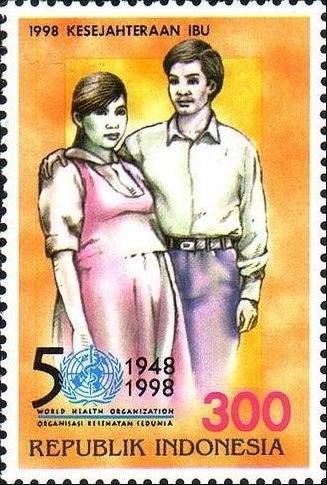
Marriage and parenthood are important in defining full adult status in Indonesia. Unmarried adults are uncommon, though urban people are marrying later ages than in the past and in rural society People are not not asked: "Are you married?" Instead they are asked "Are you married yet?". The correct response to thus question is: "Yes" or "Not yet." The same is true in questions about whether a person has children.. Even homosexuals are under family pressure to marry, whether or not their orientation is known. [Source: Clark E. Cunningham, International Encyclopedia of Marriage and Family, Gale Group Inc., 2003]
Marriages in Indonesia are regarded as valid only of they have been performed in accordance with religious beliefs. Married couples must declare their religion and have it recognized by a government registrar and a religion official and have a ceremony conducted by a representative of their religion. The Civil Registry Office records marriages of members of all the major faiths but not atheists or agnostics. In most cases, in marriages between couples of two different religion, one member must adopt the faith of the other. Foreigners are required to get written permission from their embassy before they can get married to avoid "religious-related" marriage problems. Legal Muslim marriages are performed by a member of the office of Religious Affairs at a ceremony in a mosque, home a restaurant or other place.
Most marriages are monogamous, In rural areas arranged marriages are often the norm. In urban areas love match are more common. Traditionally, Indonesians tended to marry early and have lots of children, which has prompted the government to promote a two-children-per-family policy, which is often the norm now. Indonesian men are allowed up to four wives. Marriages between people of different religions are rare, and unions across ethnic lines, while still limited, are becoming more common in urban areas and among the more highly educated.
Women in rural areas of Indonesia are often married by the time they are 20 years old. Although people throughout the country have more freedom to choose their own marriage partners than they had in the past, rural families are generally more involved than urban families are in the choice of their children's spouses, and men generally have somewhat more freedom in choosing their spouses than women have. Engagement is more than an agreement between the future bride and groom; it binds the two families. Members of the extended family often live under the same roof or near one another. Older people are shown special respect. [Source: Indonesia-fascination.blogspot.jp]
Currently married women (ages 15-49): 70.3 percent (2022 estimate) [Source: CIA World Factbook, 2025]
RELATED ARTICLES:
POLYGAMY IN INDONESIA factsanddetails.com
DIVORCE IN INDONESIA factsanddetails.com
WEDDINGS IN INDONESIA: INVITATIONS, GIFTS, THE RECEPTION AND PHOTOGRAPHS factsanddetails.com
WEDDINGS OF DIFFERENT ETHIC GROUPS IN INDONESIA: JAVANESE, CHINESE, SUNDANESE AND BATAK factsanddetails.com
COURTSHIP, DATING AND LOVE IN INDONESIA factsanddetails.com
FAMILIES AND KINSHIP IN INDONESIA factsanddetails.com
GENDER IN INDONESIA: VIEWS, ROLES, DIVISIONS factsanddetails.com
WOMEN IN INDONESIA: STATUS, WORK, ISLAM, HIJAB factsanddetails.com
WOMEN’S RIGHTS IN INDONESIA factsanddetails.com
CHILDREN IN INDONESIA factsanddetails.com
CHILD HEALTH, PREGNANCY AND BIRTH IN INDONESIA factsanddetails.com
RITES OF PASSAGE FOR INDONESIA CHILDREN: BIRTH RITES AND CIRCUMCISION factsanddetails.com
BALINESE FAMILY: MARRIAGE, WOMEN, RITES OF PASSAGE factsanddetails.com
JAVANESE SOCIETY: FAMILY, MARRIAGE, GENDER, CUSTOMS, CLASSES factsanddetails.com
INDONESIAN SOCIETY factsanddetails.com
CLASSES, HIERARCHIES AND STRATIFICATION IN INDONESIAN SOCIETY factsanddetails.com
PEOPLE IN INDONESIA: UNITY, DIVERSITY, CHARACTERISTICS, ADAT factsanddetails.com
ETIQUETTE AND CUSTOMS IN INDONESIA factsanddetails.com
SOCIAL CUSTOMS IN INDONESIA factsanddetails.com
For information on different marriage and wedding traditions and customs of different ethnic group See Minorities and Regions:
INDONESIAN GOVERNMENT, MINORITIES, CHINESE AND CHRISTIANS factsanddetails.com
ETHNIC GROUPS ON SUMATRA factsanddetails.com
ETHNIC GROUPS ON JAVA factsanddetails.com
ETHNIC GROUPS IN NUSA TENGARRA (ISLANDS EAST OF BALI) factsanddetails.com
ETHNIC GROUPS ON SULAWESI factsanddetails.com
BORNEO AND ETHNIC GROUPS IN BORNEO factsanddetails.com
ETHNIC GROUPS IN THE MOLUCCAS AND OTHER ISLANDS factsanddetails.com
BALI factsanddetails.com
ACEH factsanddetails.com
PAPUA factsanddetails.com
Forces That Shape Marriages in Indonesia

In many Indonesian societies, marriage is not simply a personal decision but a process involving extended negotiations and exchanges of gifts, often facilitated by intermediaries. In parts of Sumatra and eastern Indonesia, systems of affinal alliance shape marriage practices, with unions arranged between related patrilineal groups, sometimes involving cross-cousins. These arrangements reinforce enduring obligations between wife-giving and wife-taking families, creating long-term networks of exchange and mutual support. Among the Batak, for example, clan identity and marriage alliances remain important whether individuals live in their traditional highland communities or in distant urban centers.[Source: Clark E. Cunningham, International Encyclopedia of Marriage and Family, Gale Group Inc., 2003]
Although such marriages may serve to strengthen kinship ties, the preferences of the couple are not entirely ignored. Families may also consider factors such as love, education, occupation, religion, and wealth, particularly in urban settings. After marriage, couples are often expected to live with one set of parents—typically until they have children—and in some communities, the husband is expected to assist his wife’s parents during this period.
In societies without strong lineage systems, romantic attachment tends to play a larger role in partner selection. However, practical considerations remain important. In rural areas, qualities such as diligence, the ability to provide, and access to land or resources are highly valued, while in urban environments, social class, education, and economic status carry greater weight. In more socially stratified groups, such as the Javanese or Bugis, higher-status families are more likely to arrange marriages or intervene in their children’s relationships. Marriage in these contexts can significantly influence family status, and elaborate ceremonies—often incorporating elements derived from Hindu traditions—serve as public displays of social standing.
Views on Marriage in Indonesia
A common saying wich sums up the pragmatic Indonesia attitude toward relationships is may “taste greener pastures” so long as he does not bring another partner into the household. At the same time, ideas about lineage remain deeply influential. Many Indonesians place importance on ancestry and believe that honoring and loving others can invite blessings from their forebears. [Source: Jill Forshee, “Culture and Customs of Indonesia”, Greenwood Press, 2006]
Among many Indonesians remaining unmarried is equated with remaining a child, regardless of age. To stay single is widely viewed as abnormal, and childlessness is often seen as a misfortune. Indonesians may express sympathy for childless Westerners, using the phrase kasihan (“what a pity”).
Compared to Western ideals of romantic love, Indonesian marriages are frequently shaped by family involvement or approval. Traditional expectations often assign women responsibility for managing household finances and raising children, while men occupy the more visible role of authority, though affectionate and loving marriages certainly exist.
Although global media—especially films—have introduced stronger notions of romantic love, passion and sexual attraction are not always considered essential foundations for marriage. In some cultures, such as among the Javanese, intense passion is even viewed with caution, seen as a destabilizing force that can disrupt harmony. In societies where bridewealth is required, high-status women may remain unmarried because the cost—often involving livestock, gold, or other valuables—is prohibitively high. However, increasing migration for education and work has led many men to marry outside their home regions, where such obligations may be less burdensome and personal choice plays a larger role.
Bride Prices in Indonesia
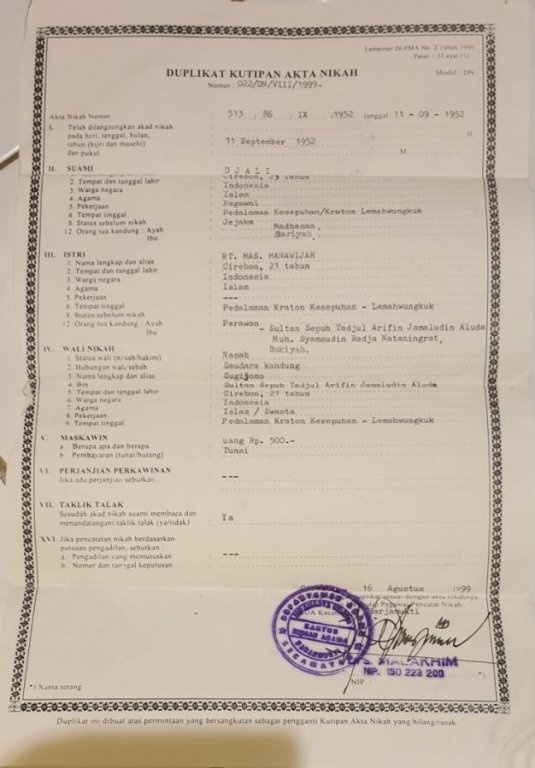
Bride price is often confused with dowry, but they are different. A bride price (also called mahr or mas kawin in Indonesia) is a gift or payment given by the groom to the bride or her family. A dowry, by contrast, is a payment made by the bride or her family to the groom or his family. [Source: Center for Southeast Asian Social Studies, Universitas Gajah Mada, Yogyakarta August 15, 2019]
In Indonesia, practices vary widely because the country has many regional cultures. In some areas, bride price is essential, while in others it is less important or not required. In Muslim communities, the concept of mahr comes from Islamic teachings and is considered a mandatory part of marriage. It is a gift from the groom to the bride as a sign of sincerity and commitment. The mahr does not have to be money or jewelry—it can also include items such as livestock, religious objects like the Qur’an, or even services, such as teaching useful skills.
Islamic teaching, as stated in the Qur’an, requires that a groom give a gift to his bride willingly. While the obligation exists, no fixed amount is specified, so the value is usually agreed upon by the families. In this system, the responsibility for providing financially lies with the man, while the woman is not required to contribute financially to the marriage.
Local traditions also shape how bride price is practiced. In Java, for example, it is combined with traditional ceremonies and may include symbolic gifts such as betel leaves, clothing, food items, household goods, rings, and money. In contrast, in places like Bali, giving such gifts may be optional rather than required. The amount of bride price in Indonesia is often influenced by factors such as the bride’s education, social status, and occupation. Because there is no standard amount, it can sometimes become very high, creating financial challenges for the groom.
Ray.D Posted on Quora.com in 2021: Some areas such as West Sumatra, Nias or the Batak tribe do have a tradition of stricter dowries, but in modern times like now, it is negotiable. Usually, an engagement will only provide jewelry (rings or necklaces), it can also be in the form of money, the amount is usually only symbolic, for example Rp. 3,333,333 (rupiahs not dollars) or according to the wedding date. Some gives the Koran. The money is usually decorated and handed over during “Seserahan”. There are also regions that have a tradition of giving out several pigs or oxen/cow. It all depends on the traditions of each family.
Bride prices are sometimes viewed as a way to discourage divorce. In Indonesia, in the case of a divorce, if the man is at fault, he loses the bride-price paid to his wife's family. If the woman is at fault, the bride-price must be repaid. Thus, although this practice provides a disincentive to divorce, it does not prevent it entirely.[Source: George P. Monger, “Marriage Customs of the World From Henna to Honeymoons”, 2004]
Javanese Marriage
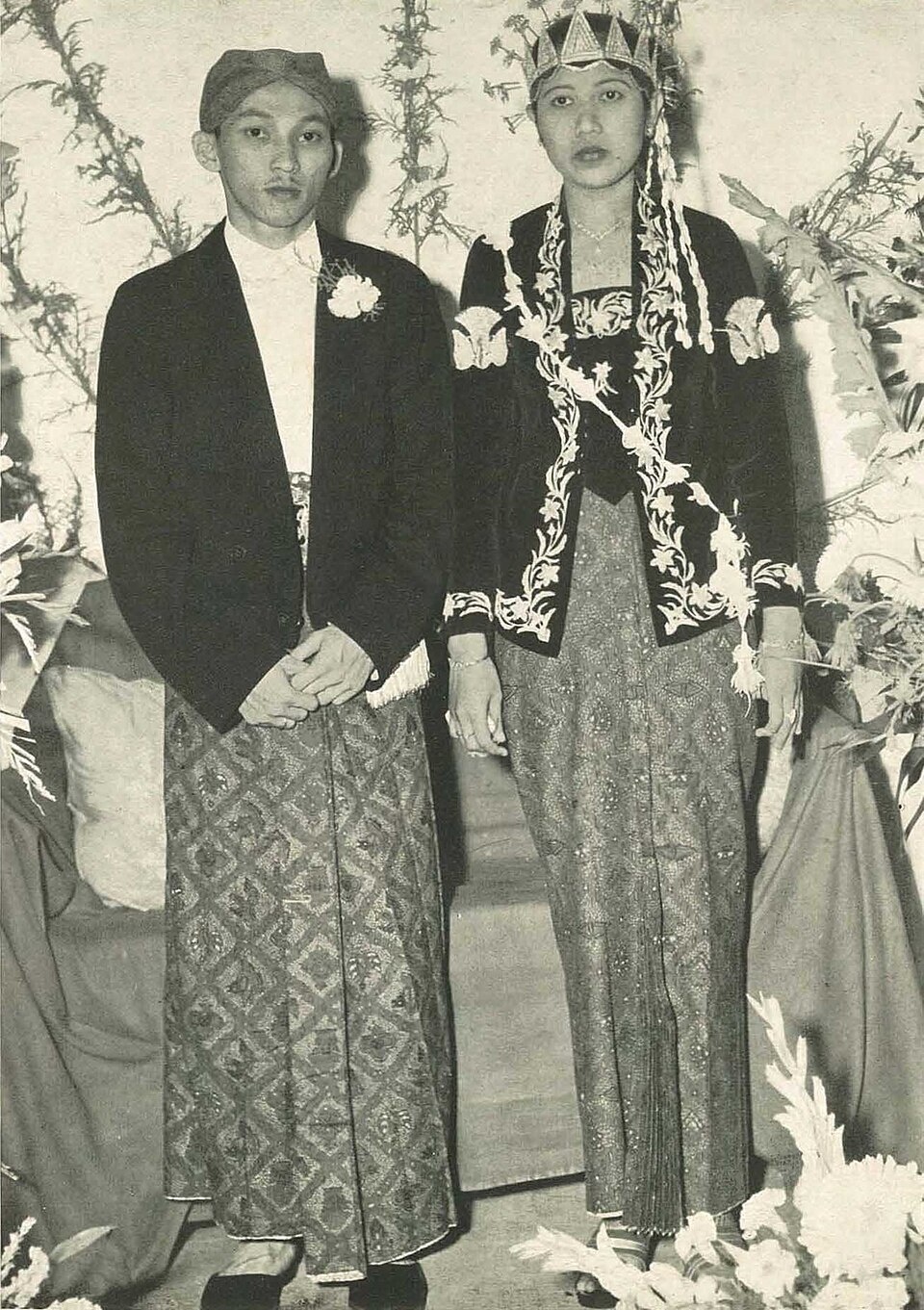
Among Javanese, individuals often chose their spouses with parental consent although marriages can also be arranged .Some types of marriages are frowned upon but these can be sanctioned by performing certain protective rituals. Qualities like proper behavior, social compatibility, and especially family status are emphasized. Concepts such as tinggi (“high”) and rendah (“low”) play a significant role in evaluating potential matches. Men may marry women of lower status, but the reverse is uncommon. Concerns about class are influenced by ideas about the “quality of blood” and notions of “pure” or “white” blood are associated with higher status, and preserving lineages. For elite families especially, maintaining these ancestral lines often outweighs all other considerations in choosing a marriage partner. [Source: Jill Forshee, “Culture and Customs of Indonesia”, Greenwood Press, 2006]
Javanese marriage formalities have traditionally consisted of the presentation of a gift to the bride’s parents from the groom’s parents, a meeting of the bride’s relatives at her house on the night before the wedding ceremony, civil and religions ceremonies and transactions and ceremonial meeting of the couple. In northern Sumatra young people decide who they want to marry but do not issue proposals themselves. Instead the groom’s parents send a representative to the bride’s parents to ask for her hand in marriage. If her parents agree they give the representative a “kong narit”, a gold ornament and a cash payment to seal the union.
For a Javanese marriage the parents of the groom-to-be man send an envoy to the parents of the bride-to-be, proposing that their son is willing to marry their daughter. Nowadays, for practical reasons, the parents of both sides can talk directly. The parents of the couple have to approve the marriage. Usually, the parents of bride-to-behave a greater say, as they are the ones who will organise the ceremonies (a big wedding will require a Paés Agung (kings make-up), a small one will require a Paés Kesatrian (knight’s make-up). They are responsible for the wedding ceremonies that will be followed, such as Siraman (bathing ceremony), Midodareni (ceremony on the eve before the wedding), Peningsetan (traditional engagement ceremony), Ijab (religious marriage consecration) and other Javanese ceremonies following the wedding celebration. They will also organise the wedding reception to give family and friends the opportunity to send their blessings to the newly wed couple. [Source: Dirk and Irien, Javenese Ceremonies, users.skynet.be]
Types of Marriages in Indonesia
Marriage in Indonesia must adhere to one of the six government-recognized religions. Muslim Marriage are conducted through the Office of Religious Affairs (KUA) and registered via a Buku Nikah. Non-Muslim Marriage are Conducted by religious authorities (church/temple) and then recorded with the Civil Registry Office (Catatan Sipil) to receive a marriage certificate. [Source: U.S. Embassy & Consulates in Indonesia}
Mixed Marriages refer to marriages between people of different cultural or ethnic backgrounds, or, frequently in Indonesian terminology, marriages between an Indonesian and a foreign national.
Some kinds of marriage arrangements mask exploitative practices, including short-term “contract marriages” that can resemble prostitution, particularly involving foreign tourists. Similar practices occur elsewhere in the region, with variations in legality and enforcement. Women in unregistered marriages often lack legal protections. Without official documentation, they may have no claim to inheritance or marital rights, and their children may face lifelong barriers, including difficulty accessing education or obtaining passports. [Source: Niniek Karmini. Associated Press, February 18, 2013]
Marriage by Proxy: Although it is usually considered essential for both members of the couple to be present when exchanging vows and rings, it is not unheard of for a marriage to take place when one of the couple is absent. In the 1900s, Ernest Crawley described a southern Sulawesi culture in which the bride and groom each had a representative; if the bride's representative was male, the groom's representative would be female. The bride would not appear at the wedding, instead being confined to a room while her deputy took her place. After the ceremony, the groom was unable to see his bride, instead returning to his home and leaving his sword behind as his representative. Three days later, he returned to his bride and reclaimed his sword in exchange for a present. [Source: George P. Monger, “Marriage Customs of the World From Henna to Honeymoons”, 2004]
Child Marriages in Indonesia
Indonesia has one of the highest rates of child marriage in the world according to UNICEF. The CIA World Factbook, reports 2 percent of women were married by age 15 and 16.3 percent were married by age 18 in 2017. There were nearly 1.5 million child brides in Muslim-majority Indonesia in 2019, which has the world's eighth-highest number of underage unions according to the United Nations. Poverty and tradition are primary contributors to one in nine girls being married in Indonesia before age 18, according to official statistics. According to campaign group Girls Not Brides child face greater risks of exploitation, sexual violence and domestic abuse. [Source: Beh Lih Yi, Reuters, October 31, 2019]
According to UNICEF, roughly 340,000 girls married before the of 18 annually in Indonesia while around 50,000 married before turning 15. Government data has also shown that nearly a quarter of women aged 20 to 24 were married before reaching adulthood. Many girls are still being forced into marriage by desperate families in poverty. Anti-child marriage advocates say that early marriage increases the likelihood that girls will drop out of school and death during childbirth. [Source: AFP, September 2, 2020]
Arranged marriages between older men and much younger girls are common in poor rural areas in Indonesia. These marriages are not registered so they are not legally recognized, but are religiously sanctioned. Indonesian law has harsh penalties for pedophilia, which have been applied to child marriages. According to UNICEF the practice of early marriage is most common in Sub-Saharan Africa and South Asia. [Source:AlArabiya.net, March 18, 2009]
West Nusa Tenggara province—which includes Lombok—ranks among the top regions in Indonesia for child marriage. On Lombok, one of the country’s major sources of migrant labor, some parents believe that marrying off their daughters offers protection while they work abroad. Marriage is also seen as a way to ease economic pressures on the family. Religious ceremonies based on Islamic practices are also common. While such unions may be permitted under Islamic law, many go unregistered, leaving women without legal protections, including rights to financial support in the event of divorce. [Source: Beh Lih Yi, Reuters, October 31, 2019]
According to Faozan of the Village Children Protection Group, the practice is often justified as tradition, leading many people to accept it without questioning whether it is harmful or appropriate. Faozan, like many Indonesians known by a single name, noted that widespread underage marriage on the island is associated with a range of social problems, including high divorce rates, unintended pregnancies, maternal deaths, and stunted child development.
Efforts to End Child Marriages in Indonesia
The Indonesian government raised the marriage age for girls from 16 to 19 in September 2019. The change came after Indonesia's top court in 2018 year ruled in favour of a petition by women's rights groups who argued the rule discriminated against girls, who could marry at 16 while the legal age for men is 19. But the new law permits exceptions if parents ask the court for permission, raising concerns that young women could still be forced to marry in large numbers. [Source: Beh Lih Yi, Reuters, October 31, 2019]
Rights groups say deep-rooted traditions and the practice of not registering unions could hamper efforts to end child marriages. Indonesia's Women Empowerment and Child Protection Ministry said that it planned to raise awareness through education among children, parents and religious leaders to end child marriage.
In March 2017, female Islamic clerics in Indonesia issued a landmark fatwa condemning child marriage. Although such rulings are not legally binding, they carry considerable moral influence within Muslim communities. The declaration came at the close of a rare three-day gathering of women religious scholars—an unusual instance of women taking a leading role in religious decision-making. Conference organizer Ninik Rahayu emphasized that female clerics are uniquely positioned to confront the issue, noting their direct understanding of the challenges faced by women and girls. She pointed to Indonesia’s high maternal mortality rate as one of the urgent concerns linked to early marriage. Rather than waiting for government action, she said, women religious leaders can help drive change and advocate for the protection of young girls. [Source: Reuters, April 28, 2017]
The fatwa declared child marriage harmful and called for its prevention as a religious obligation. It cited research showing that many girls who marry young are forced to abandon their education, and that about half of such marriages end in divorce. The clerics urged authorities to raise the legal minimum age of marriage for girls from 16 to 18, echoing long-standing demands from activists.
Bride Kidnapping in Indonesia
Among the Sasak of Lombok, some marriages have traditionally taken place through elopement, which the Sasak refer to as merariq (“bride capture”), often described as “bride kidnapping,” Marriage by elopement is considered an economical alternative to a formal wedding. In such cases, the young man secretly takes the woman to another village, where he reports to the village head, receives 44 lashes as a symbolic punishment, and is required to wear a black string on his wrist as a public marker of the act. The village head then informs the woman’s family through their own headman. The groom subsequently sends a delegation to negotiate the bride-price, which is distributed among the bride’s relatives. Elders say the practice was traditionally part of a structured courtship ritual involving the consent of both families. Today, however, it is frequently misused to justify early and sometimes coerced marriages.
Not all such marriage go well. Just fifteen minutes into her first date, Indonesian teenager Helma Yani was asked to marry a boy she had only just met. Soon after, he took her to a relative’s home, and within a month—at the age of 17—she was married. “I didn’t know what to do when he proposed, so I said yes,” Yani recalled quietly. “We rode off on a motorbike from the beach to his relative’s house.” Her parents had no idea where she was for several days, only learning of her whereabouts when village leaders informed them she had been taken and preparations for marriage were underway. [Source: Beh Lih Yi, Reuters, October 31, 2019]
Videos showing women being abducted on the island of Sumba have ignited a nationwide debate in Indonesia over the controversial practice. The practice, known as kawin tangkap or “capture marriage,” involves women being forcibly taken by men or their relatives as a way of securing a bride. Though its origins are disputed, it persists in parts of Sumba, a remote island east of Bali, despite long-standing criticism from women’s rights groups.
One victim, Citra (not her real name) initially believed she was attending a routine work meeting in the mid 2010s. Two men, posing as local officials, asked to discuss budgets for a project she managed at an aid organization. Although slightly uneasy about going alone, the 28-year-old set aside her concerns, hoping to prove herself professionally. [Source: Liza Tambunan, BBC, July 21, 2020]
See Bride Kidnapping Under SASAK PEOPLE OF LOMBOK: HISTORY, CULTURE, LIFE, RELIGION factsanddetails.com and SUMBANESE: LIFE, RELIGION, TRADITIONAL HOUSES factsanddetails.com
Are There Prohibitions of Interfaith Marriage in Indonesia?
According to the Library of Congress Law Library: The Indonesian marriage law has been interpreted as prohibiting marriage between people who follow different religions. However, this interpretation is disputed by some scholars, and the Supreme Court of Indonesia has essentially found that there is a “legal vacuum” in this area. In practice, it has been reported that the law and administrative processes make it difficult to register an inter-religious marriage. Couples may therefore choose to marry overseas or one party may decide to convert to the religion of the other. The laws relating to divorce also distinguish between marriages conducted under different religions, requiring that an application be submitted to either a General Court or a Religious Court depending on the religion involved. [Source: Kelly Buchanan, Foreign Law Specialist, Library of Congress Law Library, Legal Reports, July 2010 |*|]
Article 2(1) of Law No. 1 of 1974 on Marriage (Marriage Law) states that “a marriage is legitimate, if it has been performed according to the laws of the respective religions and beliefs of the parties concerned.” Article 2(2) requires that marriages be registered with the authority designated by the associated regulations. The Marriage Law therefore does not expressly prohibit interfaith marriage, and there has been debate over the meaning of article 2(1) and its impact on such marriages. A strict interpretation of the provision may lead to a conclusion that marriage between two parties of different religious beliefs is not permitted. However, some scholars argue that, since the law itself is silent on the issue, if the religions of the parties do not prohibit the marriage then it may be carried out. [Source: Library of Congress Law Library, Legal Legal Reports, 2015 |*|]
The Ministry of Religious Affairs officially recognizes six religions in Indonesia (Islam, Hinduism, Buddhism, Protestantism, Catholicism, and Confucianism), each with its own rules that may impact the ability to marry someone of a different faith. In particular, various rulings of Islamic bodies in Indonesia have stated that marriage between Muslims and non-Muslims is forbidden. The Compilation of Islamic Laws in Indonesia, produced by the Ministry of Religious Affairs in the 1990s, explicitly prohibits a Muslim man from marrying a non-Muslim woman, and a Muslim woman from marrying a non-Muslim man. |*|
In practice, the generally accepted view appears to be that interfaith marriages are usually not permissible. At the government level, the registration processes create barriers to the recognition of such marriages, with the Civil Registry Office tasked with registering marriages between non-Muslims and the Office of Religious Affairs only registering marriages involving Muslims. Reports indicate that the Civil Registry Office will only register marriages between people of the same religion, as evidenced by their identity cards. If the cards indicate different religions, “proof of conversion is required before the marriage can be recorded.” However, there may be a degree of flexibility in the policy, and there appears to remain some uncertainty regarding the approach to be taken. |*|
In June 2015, in response to a challenge to article 2(1) of the Marriage Law, the Indonesian Constitutional Court found that this article does not breach provisions of the Indonesian Constitution related to freedom of religion, equal treatment before the law, and the right to form a family. The Court considered that marriage includes spiritual and social aspects, as well as formal aspects, and held that the role of the state is to provide protection and legal certainty for marriages validly performed according to a religion. |*|
For the complete article from which the material here is derived see “Indonesia: Inter-Religious Marriage” by the Library of Congress Law Library tile.loc.gov
Marriage Discrimination in Indonesia
The civil registration system discriminates against persons not belonging to one of the six recognized religious groups. Animists, Bahais, and members of other small minority religious groups sometimes have found it difficult to register births or marriages, notwithstanding the 2007 regulation pertaining to marriage and civil administration that allowed Aliran Kepercayaan marriages to be officially recognized. According to representatives of the Aliran Kepercayaan communities, adherents sometimes found it difficult to find employment or educational opportunities due to the blank religion field on their identity cards (KTPs). [Source: International Religious Freedom Report for 2012, Indonesia, U.S. Department of State ]
In practice, couples prevented from registering their marriage or the birth of a child sometimes converted to one of the recognized religions or misrepresented themselves as belonging to one of the six religions. Those who chose not to register their marriages or births risked future difficulties, such as an inability to obtain birth certificates for children, which were required for school enrollment, scholarships, and government employment.
Interreligious couples also continued to face obstacles to marrying and officially registering their marriages and often had difficulty finding clergy to perform the required ceremonies before registering a marriage. As a result, some couples traveled outside the country to marry and then registered the marriage at an Indonesian embassy. Despite being among the officially recognized religious groups, Hindus stated that they frequently had to travel long distances to have their marriages registered, because in many rural areas the local government could not or would not process the registration. On November 12, the director of the local office of the Ministry of Religious Affairs in Salawu, West Java refused to register the marriage of an Ahmadi Muslim groom and Sunni bride, as it was “haram (prohibited under Islamic Law) to record their marriage as they (Ahmadis) are not the real Muslims.”
Indonesia Proposes Foreign Men Pay $55,000 to Marry Local Women
In 2010, the Indonesian government proposed that foreign men pay a US$55,000 “security guarantee” to marry Indonesian women but the measure was never implemented. At the time the idea was proposed, AFP reported: “Enraged brides-to-be are threatening to flee the country and marry their boyfriends abroad if the government approves the plan, which is part of a wider marriage law reform being pushed by Muslim conservatives. And befuddled foreign grooms are asking why they are being targeted when stories of foreign men being exploited by gold-digging women are rife in Indonesia. [Source: AFP, June 1, 2010 ]
The proposal aimed to "protect" wives and children in cases of abandonment was strongly supported by the Indonesian Council of Ulema (a powerful Muslim judicial group). The proposal would require foreign men marrying Muslim women in Indonesia to deposit Rp500 million as a financial guarantee in an Islamic bank. If the couple divorced, the wife would receive the money; if they stay married for at least 10 years, it becomes shared property. The policy also intended discourage sham marriages used for business or property ownership. It did not apply to foreign women who married to Indonesians.
Backed by the Religious Affairs Ministry, the plan was framed as safeguarding the sanctity of marriage and preventing the exploitation of Indonesian women by foreign men. Officials argued that some foreigners entered marriages for personal gain and then left their wives without support. However, the proposal sparked strong backlash from couples, who saw it as discriminatory and demeaning. Critics argued it unfairly targeted foreign men while ignoring similar issues involving local men, and some said it treated women like commodities. Many couples threatened to marry abroad or avoid legal marriage altogether.
Reactions were mixed among religious leaders, lawmakers, and advocacy groups. Some clerics supported the measure as necessary protection, while others warned it could discourage marriage, increase cohabitation outside wedlock, and create unintended social consequences. Women’s rights groups and mixed-marriage advocates largely opposed the plan, arguing it undermined women’s dignity and could drive couples away from Indonesia. There were also concerns that it might lead to “runaway marriages” or broken engagements, as some foreign partners reconsidered marriage due to the financial burden.
Taiwanese Man Undergoes to Circumcision to Marry Indonesian Woman
In 2017, a Taiwanese man drew attention for his willingness to undergo circumcision in order to marry the Indonesian woman he loved. Jayanti, a 23-year-old from Cirebon in West Java, married 34-year-old Taiwanese businessman Zhou Hong Ze in her home village. She had previously worked in Taiwan as a domestic helper and caregiver for Hong Ze’s father, while he was described in the media as a wealthy entrepreneur with several companies. [Source: Coconuts, April 28, 2017]
According to Jayanti, the couple first met on January 27, 2017, after being introduced by her employer. Their relationship developed quickly, and within three months they decided to marry. Jayanti set two conditions for the marriage: that the wedding follow her cultural traditions and that Hong Ze convert to Islam, which included undergoing circumcision. Demonstrating his commitment, Hong Ze formally converted to Islam shortly before the wedding. The couple celebrated with a traditional procession through Jayanti’s village, drawing local attention, and he underwent the procedure later that same day.
Image Sources: Wikimedia Commons
Text Sources: “Encyclopedia of World Cultures Volume 5: East/Southeast Asia:” edited by Paul Hockings, 1993; “Culture and Customs of Indonesia” by Jill Forshee, Greenwood Press, 2006; National Geographic, New York Times, Washington Post, Los Angeles Times, Smithsonian magazine, Encyclopedia.com, Library of Congress, Indonesia Tourism website (indonesia.travel), Indonesia government websites, Live Science, The Conversation, The New Yorker, Time, BBC, CNN, Reuters, Associated Press, AFP, Lonely Planet Guides, Google AI, Wikipedia, The Guardian and various websites, books and other publications.
Last updated April 2026