
IDEAS ABOUT GENDER IN INDONESIA
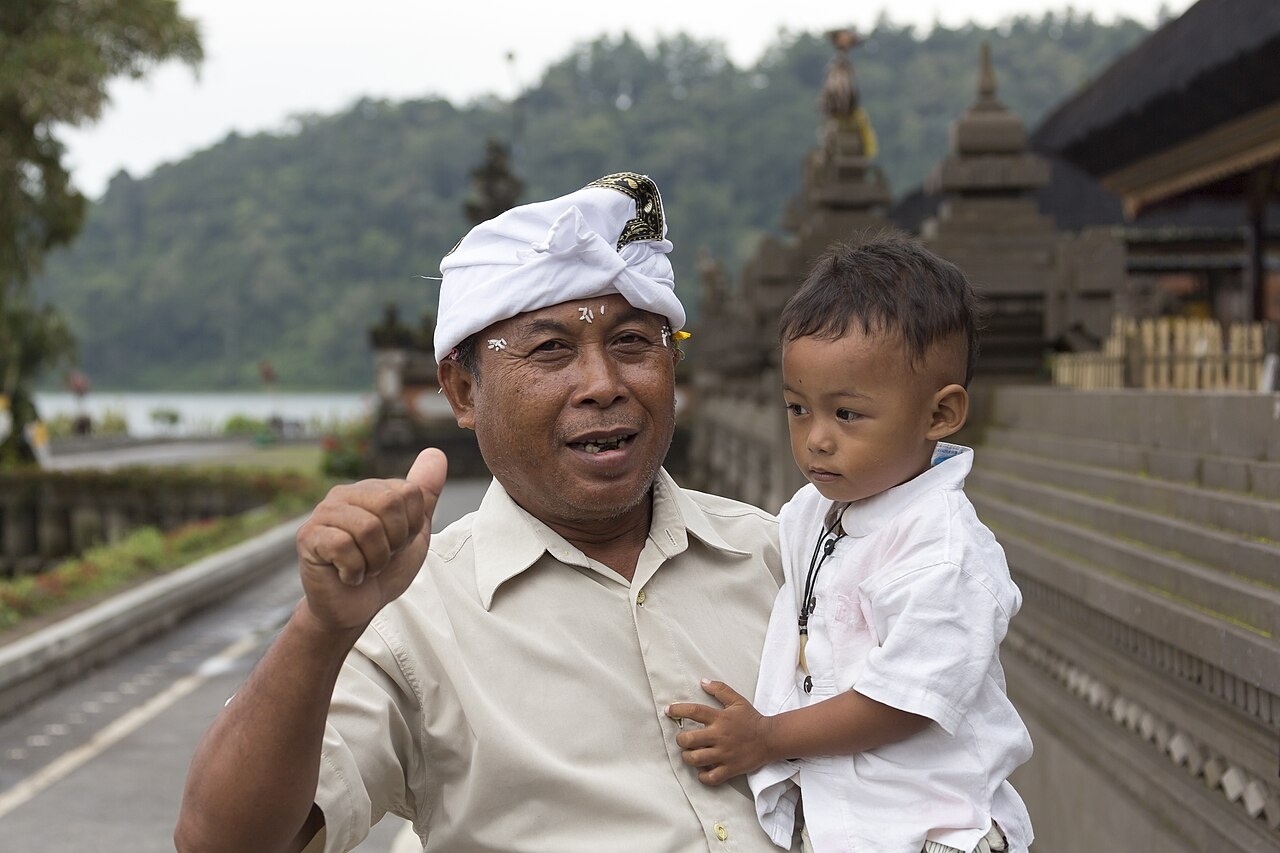
Ideas about gender take varied forms across Indonesia, not always following predictable patterns. Indonesian contains no gender-specific pronouns, such as 'he' or 'she'. This trait is also found in other indigenous languages throughout the archipelago (and across Southeast Asia). Historical accounts from many centuries ago describe hairstyles and clothing that did not emphasise sexual distinctions. People wore sarongs or wrapped cloth around their waists and wore their hair long. New religions, colonialism and the popularity of world fashion changed this. However, early markers of masculinity and femininity were probably evident in ways that were too subtle for outside observers to recognise, so much remains unknown. Foreign chronicles of early Indonesian customs inevitably reflected the biases and cultural unawareness of their authors. [Source: Jill Forshee, “Culture and Customs of Indonesia”, Greenwood Press, 2006]
Early visitors to Indonesia noted a relatively high level of autonomy of women. One historian remarks: “It would be wrong to say that women were equal to men—indeed there were few areas in which they competed directly. Women had different functions from men, but these included transplanting and harvesting rice, weaving, and marketing. Their reproductive role gave them magical and ritual powers which it was difficult for men to match. These values may explain why the value of daughters was never questioned in Southeast Asia as it was in China, India, and the Middle East.”
This still holds true to a great extent, as women continue to control the family's social and economic affairs. However, handling money is not considered a prestigious activity in most of Indonesia and is seen as beneath the concerns of men. Market women are considered coarse by Indonesian standards, and the term 'market language' (bahasa pasar) is often used to describe low levels of speech. While women may direct the public sphere through commerce, men control it through political prestige, such as higher-level jobs or leadership positions. Nevertheless, power manoeuvres through sinuous routes, and one must live among Indonesians to understand the social forces directing households and societies. Women’s reproductive and magical powers are evident in daily life through birth, agriculture, textile production and dyeing, and cooking. Importantly, women control the social information and tone that affects family and community relations.
RELATED ARTICLES:
FAMILIES AND KINSHIP IN INDONESIA factsanddetails.com
MARRIAGE IN INDONESIA: LAWS, TYPES, TRADITIONS factsanddetails.com
WOMEN IN INDONESIA: STATUS, WORK, ISLAM, HIJAB factsanddetails.com
WOMEN’S RIGHTS IN INDONESIA factsanddetails.com
CHILDREN IN INDONESIA factsanddetails.com
RITES OF PASSAGE FOR INDONESIA CHILDREN: BIRTH RITES AND CIRCUMCISION factsanddetails.com
WEDDINGS IN INDONESIA: INVITATIONS, GIFTS, THE RECEPTION AND PHOTOGRAPHS factsanddetails.com
WEDDINGS OF DIFFERENT ETHIC GROUPS IN INDONESIA: JAVANESE, CHINESE, SUNDANESE AND BATAK factsanddetails.com
COURTSHIP, DATING AND LOVE IN INDONESIA factsanddetails.com
POLYGAMY IN INDONESIA factsanddetails.com
DIVORCE IN INDONESIA factsanddetails.com
BALINESE FAMILY: MARRIAGE, WOMEN, RITES OF PASSAGE factsanddetails.com
JAVANESE SOCIETY: FAMILY, MARRIAGE, GENDER, CUSTOMS, CLASSES factsanddetails.com
INDONESIAN SOCIETY factsanddetails.com
CLASSES, HIERARCHIES AND STRATIFICATION IN INDONESIAN SOCIETY factsanddetails.com
PEOPLE IN INDONESIA: UNITY, DIVERSITY, CHARACTERISTICS, ADAT factsanddetails.com
ETIQUETTE AND CUSTOMS IN INDONESIA factsanddetails.com
SOCIAL CUSTOMS IN INDONESIA factsanddetails.com
For Information on Gender and Women Among Different Ethnic Groups See Minorities and Regions:
INDONESIAN GOVERNMENT, MINORITIES, CHINESE AND CHRISTIANS factsanddetails.com
ETHNIC GROUPS ON SUMATRA factsanddetails.com
ETHNIC GROUPS ON JAVA factsanddetails.com
ETHNIC GROUPS IN NUSA TENGARRA (ISLANDS EAST OF BALI) factsanddetails.com
ETHNIC GROUPS ON SULAWESI factsanddetails.com
BORNEO AND ETHNIC GROUPS IN BORNEO factsanddetails.com
ETHNIC GROUPS IN THE MOLUCCAS AND OTHER ISLANDS factsanddetails.com
BALI factsanddetails.com
ACEH factsanddetails.com
PAPUA factsanddetails.com
Gender Divisions in Indonesia
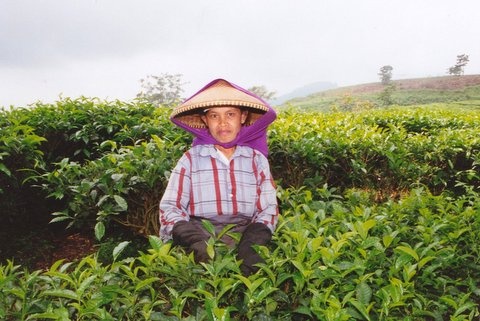
Across Indonesia, women and men share many responsibilities in village agriculture, although certain tasks are more closely associated with one gender. Men are more likely to handle plowing, while women often work together in harvesting groups. Both men and women tend gardens, though men are more commonly responsible for orchards. Men also take on activities such as hunting and fishing, which can keep them away from home for extended periods. When men migrate for work, women frequently take on full responsibility for farming and household production. [Source: Clark E. Cunningham, International Encyclopedia of Marriage and Family, Gale Group Inc., 2003]
In rural communities, women often shoulder heavier workloads than men, .carrying out a wide range of daily tasks, including childcare, cooking, cleaning, farming, processing food, weaving, and trading in local markets, In urban areas, women participate in the workforce in shops, markets, small industries, and some higher-level businesses, but they are generally fewer in number and hold lower positions than men. In education, women are well represented at the primary school level, while men are more prominent in secondary schools and universities.
Men continue to dominate positions of power in government, with women often occupying subordinate roles. For example, in the early 2000s, only a small number of cabinet positions were held by women. Although Megawati Sukarnoputri served as president, her political support was often linked to her father, Sukarno, Indonesia’s first president, rather than her own achievements. Her leadership also faced resistance from some Muslim leaders who opposed a woman holding such a high office. Objects also came from females. On the issue of whether Megawati was presidential timber or not, a 17-year-old girl told the New York Times, "We think a woman always follows her feelings and is too emotional."
Gender roles, however, are not uniform, and individual dynamics vary widely. Some women are assertive and influential, while some men take on more passive roles. Still, men generally enjoy greater freedom of movement, spending leisure time socializing, traveling, or pursuing personal interests outside the home. Women, by contrast, tend to focus more on domestic responsibilities and family care, although they also maintain social networks with other women.
Traditional Views About Masculinity in Indonesia
Ideas of masculinity vary across Indonesia. In Java, the ideal emphasizes refinement, self-control, and inner strength. This is reflected in traditional wayang kulit shadow plays, where noble heroes are portrayed as small, graceful figures, in contrast to the large, crude villains. These refined (halus) heroes succeed not through physical force, but through intelligence, strategy, and spiritual power, showing that true masculinity is not based on brute strength. [Source: Jill Forshee, “Culture and Customs of Indonesia”, Greenwood Press, 2006]
In Javanese culture, a man’s status is linked to the idea of “potency”—a form of inner power associated with authority, self-mastery, and influence. Losing one’s temper or acting aggressively is seen as a sign of weakness and poor character. This helps explain why overt displays of anger, more common in some Western cultures, can be viewed as inappropriate or even shocking in Indonesia.
Outside Java, concepts of masculinity can differ. In some regions, especially those with histories of warfare or headhunting, controlled displays of fierceness and bravery are valued. Even so, men are still expected to follow local standards of politeness and proper behavior. Across the archipelago, masculinity is often expressed through competitive or performative activities such as cockfighting, boxing, horseback contests, or even modern forms like karaoke and motorbike displays.
Positive qualities associated with men include berani (bravery or boldness) and kejantanan (virility or manliness). While physical strength and heroic imagery are often celebrated—seen, for example, in public monuments—everyday behavior tends to favor restraint rather than aggression.
In daily social life, overly “macho” behavior is generally discouraged. Men who are rude or aggressive risk being labeled kasar (coarse) or kurang ajar (deeply disrespectful), terms that carry strong negative connotations. As a result, masculinity in Indonesia often balances strength with politeness, self-control, and social harmony.
Traditional Views of Femininity in Indonesia
Across Indonesia, traditional ideas of femininity often emphasize softness, composure, and grace. Women are sometimes described with the word lemah, which can mean “weak,” but also conveys qualities such as gentleness, flexibility, and elegance. Ideally, women are expected to move calmly, speak softly, and maintain controlled facial expressions, reflecting broader cultural values that prize restraint and harmony. [Source: Jill Forshee, “Culture and Customs of Indonesia”, Greenwood Press, 2006]
At the same time, there is a clear gap between these ideals and everyday reality. Women are often said to tire easily or lack physical endurance, yet in practice many carry out demanding physical labor. In rural areas, women regularly walk long distances carrying heavy loads of produce or water, while in places like Bali they may work on construction crews, hauling stones and performing strenuous tasks for hours. Despite this, cultural expectations continue to frame femininity in terms of delicacy and poise rather than strength.
Appearance also plays an important role. Women are generally expected to keep their hair clean, neat, and tied back—often in a ponytail or bun, depending on age and setting. Loose or unkempt hair is traditionally associated with disorder, lack of self-control, or even madness. Maintaining a composed appearance is thus closely tied to ideas of respectability and social order.
These gender norms extend into perceptions of leadership and capability. For example, when Megawati Sukarnoputri became Indonesia’s first female president, some people questioned her suitability for the role based on assumptions that women are more emotional and less rational than men. Such views reflect enduring stereotypes about women’s nature, even as Indonesian women continue to take on increasingly diverse roles in education, work, and public life.
Government-Endorsed Views on Gender in Indonesia
The foundations of Indonesia’s Constitution, established in 1945, emphasized a collective vision of society made up of groups and individuals. This framework was neither fully democratic nor communistic, but instead reflected Javanese, largely feudal, ideas of power. Notably, the Constitution did not include formal human rights protections, despite earlier proposals by Vice President Mohammad Hatta. This absence created space for the arbitrary exercise of political authority. [Source: Jill Forshee, “Culture and Customs of Indonesia”, Greenwood Press, 2006]
During President Suharto’s New Order era (1966 — 1998), the state reinforced traditional gender roles. Wives of civil servants were required to join Dharma Wanita, a government-backed women’s organization that promoted ideals of obedience, conformity, and devotion to husbands and the state. Rooted in both military thinking and Javanese cultural norms, the organization helped institutionalize an image of women as submissive housewives, often symbolized through conservative traditional dress.
At the same time, longstanding cultural notions linked male power with control over women, and among political and bureaucratic elites, sexual access was often seen as a sign of status and success. Over time, however, women within Dharma Wanita began to push back, protesting issues such as infidelity, domestic abuse, lack of financial support, and men’s freedom to divorce. Even Suharto’s wife supported a 1983 law aimed at protecting women.
Despite these efforts, the New Order continued to tightly regulate family life, particularly through the economic dependence of civil servants and their families. Many women remained in unhappy marriages due to financial pressures, concern for their children, or social expectations—especially among the elite. A common saying, “As long as the boss is happy,” reflected a broader culture that tolerated corruption and normalized male privilege, including extramarital relationships.
This connection between political power and sexual privilege was starkly illustrated during the 1999 presidential campaign period, when members of the long-dominant Golkar party openly paired with prostitutes during a convention event. Such scenes highlighted how authority, masculinity, and entitlement were often intertwined in Indonesia’s political culture at the time.
Image Sources: Wikimedia Commons
Text Sources: “Encyclopedia of World Cultures Volume 5: East/Southeast Asia:” edited by Paul Hockings, 1993; “Culture and Customs of Indonesia” by Jill Forshee, Greenwood Press, 2006; National Geographic, New York Times, Washington Post, Los Angeles Times, Smithsonian magazine, Encyclopedia.com, Library of Congress, Indonesia Tourism website (indonesia.travel), Indonesia government websites, Live Science, The Conversation, The New Yorker, Time, BBC, CNN, Reuters, Associated Press, AFP, Lonely Planet Guides, Google AI, Wikipedia, The Guardian and various websites, books and other publications.
Last updated April 2026