
DIVORCE IN INDONESIA
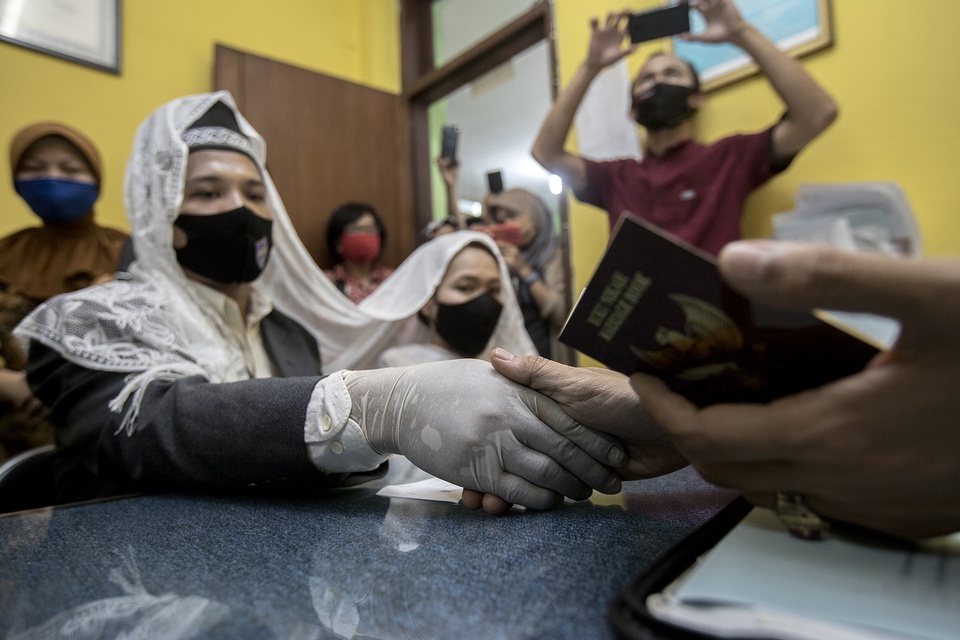
Divorce rates in Indonesia have reached concerning levels, with more than 463,000 cases recorded in 2023. Although this marked a slight decline from over 516,000 cases in 2022, the overall trend remains high. Notably, around 75–79 percent of divorces are initiated by wives rather than husbands. [Source: BRIN - Badan Riset dan Inovasi Nasional (National Research and Innovation Agency, an Indonesian government body)]
Most cases are concentrated in densely populated provinces on Java, particularly West Java, East Java, and Central Java. A significant portion—about 60 percent—involves couples who have been married for less than five years, suggesting that many marriages are breaking down relatively early.
The main reasons for divorce include ongoing arguments and conflict, which account for over 60 percent of cases, followed by economic difficulties at around 25 percent, and abandonment at nearly 9 percent. Other contributing factors include domestic violence, infidelity, the influence of social media, and the growing financial independence of women.
Economic pressures such as poverty, unemployment, and financial instability remain key drivers of marital breakdown. At the same time, social changes—such as greater awareness of legal rights and shifting attitudes toward divorce—have made it more acceptable and accessible, especially for women, to end unhappy marriages.
In response to rising divorce rates, the government has introduced measures such as premarital counseling and family education programs aimed at strengthening relationships and reducing the likelihood of separation.
RELATED ARTICLES:
MARRIAGE IN INDONESIA: LAWS, TYPES, TRADITIONS factsanddetails.com
POLYGAMY IN INDONESIA factsanddetails.com
WEDDINGS IN INDONESIA: INVITATIONS, GIFTS, THE RECEPTION AND PHOTOGRAPHS factsanddetails.com
WEDDINGS OF DIFFERENT ETHIC GROUPS IN INDONESIA: JAVANESE, CHINESE, SUNDANESE AND BATAK factsanddetails.com
COURTSHIP, DATING AND LOVE IN INDONESIA factsanddetails.com
FAMILIES AND KINSHIP IN INDONESIA factsanddetails.com
GENDER IN INDONESIA: VIEWS, ROLES, DIVISIONS factsanddetails.com
WOMEN IN INDONESIA: STATUS, WORK, ISLAM, HIJAB factsanddetails.com
WOMEN’S RIGHTS IN INDONESIA factsanddetails.com
CHILDREN IN INDONESIA factsanddetails.com
RITES OF PASSAGE FOR INDONESIA CHILDREN: BIRTH RITES AND CIRCUMCISION factsanddetails.com
BALINESE FAMILY: MARRIAGE, WOMEN, RITES OF PASSAGE factsanddetails.com
JAVANESE SOCIETY: FAMILY, MARRIAGE, GENDER, CUSTOMS, CLASSES factsanddetails.com
INDONESIAN SOCIETY factsanddetails.com
CLASSES, HIERARCHIES AND STRATIFICATION IN INDONESIAN SOCIETY factsanddetails.com
PEOPLE IN INDONESIA: UNITY, DIVERSITY, CHARACTERISTICS, ADAT factsanddetails.com
ETIQUETTE AND CUSTOMS IN INDONESIA factsanddetails.com
SOCIAL CUSTOMS IN INDONESIA factsanddetails.com
Indonesian Divorce Rate Surges
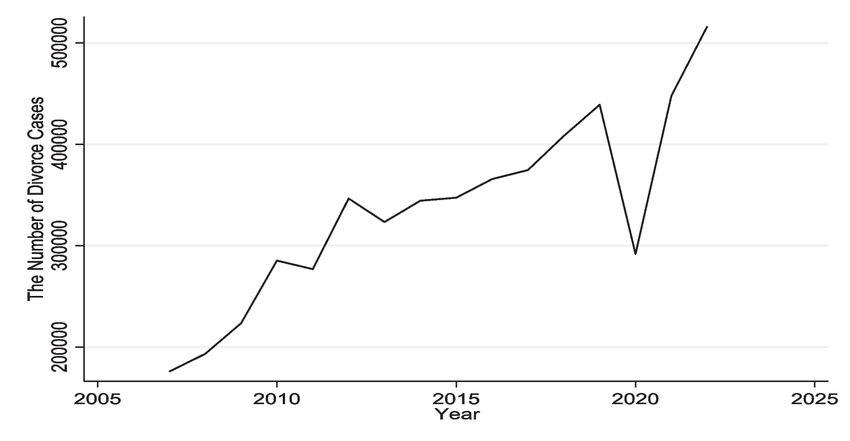
In 2009, the BBC reported: “The divorce rate in Indonesia has risen dramatically over the past decade, according to official figures. Women have a greater awareness of their rights and are bringing more cases to court. The number citing polygamy as grounds for divorce is also rising. The Religious Affairs Ministry said the divorce rate had jumped from an average of 20,000 a year to more than 200,000. [Source: BBC, February 4, 2009 *]
Since the introduction of democratic reforms 10 years ago, authoritarian attitudes to marriage are changing. The BBC correspondent in Jakarta, Lucy Williamson, says it is mainly women who are driving this. Women are becoming more economically independent, and the free flow of information is spreading a greater awareness of their rights, our correspondent says. One result of this is that - quite apart from infidelity and financial issues - they are refusing to put up with domestic violence or absent husbands. *
But changes in lifestyle are not the only cause of marriage break-up, according to an official at the Religious Affairs Ministry, Nasaruddin Umar. "Believe it or not," said Mr Umar, "some couples decide to divorce because the husband and wife have different takes on political issues. This has never happened before." Religious difference can also cause friction. Indonesia has sizeable Christian, Hindu and Buddhist minorities, and the latest figures show that 90 percent of Indonesians who marry someone of a different faith end up going through divorce. *
Divorce in Indonesia in the 2010s
In September 2013, Indonesia’s Ministry of Religious Affairs said there 212,000 divorce cases a year in Indonesia, a significant increase from 10 years earlier. "The numbers increased from 10 years ago, in which the divorce rate was only around 50,000 per year," Deputy Minister of Religious Affairs Dr. Nasaruddin Umar said. Nasaruddin is deeply concerned about the high divorce rate. Moreover, nearly 80 percent who divorced were at a young age. "The age of marriage is relatively young with small children. This will lead to more social impact," he explained. [Source: Antaranews.com, September 17, 2013]

“Nearly 70 percent of divorces are khul'a divorce. In other words, more women filed for divorce than a man who divorces his wife. "Divorce also raises new issues that is the emergence of the new poor," added Nasaruddin. There are a variety of reasons of divorce, he added, but what does not make sense is that divorce is due to differences in political views. "It really does not make sense, but it happens," he said.
The conservative Islamic group Hizbut Tahrir Indonesia said: “The ministry of religious affairs has anticipated the high number of divorce cases by providing 'short courses on marriage knowledge' for the future bride. The future couple is given an understanding of what are the rights and responsibilities of both wife and husband. But this is not the real solution for the problem. There are a lot of Indonesian women who filed for divorce because of economic and psychological problems. Their husbands committed domestic violence, didn't afford their family's needs because they were jobless, low income or no responsibility. Other factor triggers the khul'a is the poison of gender equality. Women tend to be independent with no need for men and marriage as they can earn money by themselves. The financial security is mostly the reason of khul'a when there is a marriage problem. [Source: Iffah Ainur Rochmah, Khilafah, hizbut-tahrir.or.id]
From the fact we can conclude that the increasing number of divorces is a problem faced by a society in which capitalism is implemented. No responsibility to family and committing domestic violence is a picture of men in capitalist system. Poverty, insufficient jobs and no prosperity among people are also the result of capitalism. Women's liberty is also the rotten fruit of liberal ideas such as gender equality and human rights. Those ideas are grown up in capitalism and the absence of Islamic values and system in the society. The only solution for this social problem is to redefine the responsibility of the government. Not only by providing short courses about marriage to the bride. Fostering every people to values of marriage and family should be integrated through the education and counseling curriculum. This program should be accompanied by removing all of the media and spread of ideas that are counterproductive to the value of the family. It is also the obligation for the government to generate adequate employment, realize a conducive climate for business, and provide public needs such as education and health without any charge.
Divorce Rate Continue to Climb in the 2020s
Indonesia’s divorce rate continued to climb in the 2020s, with more than 400,000 divorces across Indonesia in 2024. Data from the Central Statistics Agency (BPS) show that West Java recorded the highest number of divorces in 2024, with nearly 89,000 cases, followed by East Java (79,000) and Central Java (65,000). Other provinces with notably high figures include North Sumatra, Lampung, Banten, Jakarta, and South Sulawesi. [Source: Jakarta Globe, October 31, 2025]
The rising trend has alarmed government officials. Indonesia’s Religious Affairs Minister, Nasaruddin Umar, warned that the country has entered a “warning zone” and urged couples to prioritize family stability. Speaking during a visit to Makassar, he cautioned that national strength depends on the resilience of households. “We’ve hit a yellow light,” he said. “No great nation can grow on broken families. If our households are strong, our society and country will be strong too.”
The main drivers behind these divorces were persistent conflict and financial hardship, which together accounted for more than 250,000 cases nationwide. Domestic violence ranked as the third most common cause, contributing to over 7,000 divorces. According to Nasaruddin the increase reflects a combination of factors, including declining religious awareness, a more permissive social environment, widespread access to digital technology, and the persistence of child marriage.
Nasaruddin, who also heads the Marriage Counseling and Preservation Board (BP4), warned that social media can exacerbate marital tensions. He noted that smartphones can facilitate infidelity if not used responsibly, cautioning that “if we’re not careful, we’ll end up being slaves to social media.” He emphasized that addressing the issue requires a return to core values such as faith, communication, and mutual respect. “We need to rebuild families that talk, care, and pray together,” he said, adding that strong families form the foundation of a strong nation.
Divorce Practices in Indonesia
The practices surrounding divorce and remarriage are diverse. Among Muslims, they are governed by Islamic law and may be settled in Islamic courts. As with non-Muslims, however, they may also be settled in the government's civil court. The initiation and settlement of divorce favours males among Muslims, as it does in many traditional societies. Divorce and remarriage may be handled by local elders or officials according to customary law, and the terms of such settlements may vary considerably by ethnic group. [Source: Clark E. Cunningham, Countries and Their Cultures, Gale Group Inc., 2001]
Societies with strong descent groups, such as the Batak, generally eschew divorce, which is very rare. Such societies may also practise levirate, whereby widows marry the brothers or cousins of their deceased spouses. In societies without descent groups, such as the Javanese, divorce is much more common and can be initiated by either spouse. Remarriage is also easy. It is reported that Javanese people who are not members of the upper class have a high divorce rate, whereas divorce is rarer among the upper class and wealthy Javanese.
In Java, divorce is common and achieved through Muslim law. Women can initiate divorce proceedings which is not always the case in Muslim countries. Feminists and liberals would like to see better laws in the books that make it easier for women to get a divorce.
Divorce Laws in Indonesia
According to the Library of Congress Law Library: The 1974 Marriage Law of Indonesia regulates the dissolution of marriage and outlines regulations, requirements and processes, including the legal grounds for divorce. Divorce must be carried out before a court. If the marriage was conducted in accordance with Islamic law then a request for dissolution would need to be submitted by the husband to an Islamic (or “Religious”) Court. If the marriage was registered as a non-Muslim marriage then the General Courts would have jurisdiction. A separate law relating to the Religious Courts includes provisions that apply to Muslim divorce proceedings. [Source: Kelly Buchanan, Foreign Law Specialist, Library of Congress Law Library, Legal Reports, July 2010 |*|]
Indonesian judge Rahmat Arijaya wrote in the Jakarta Post: “Law No. 1/1974 on Marriage and Government Regulation No. 9/1975 on the implementation of the Marriage Law clearly state that divorce is not allowed to be carried out except in court, after careful examination of each case by judges. The law stipulates that divorce can only be allowed for one of the following reasons: One of the spouses is adulterous, a drunk, a junkie or a gambler, and he or she is not yet rehabilitated; one spouse leaves the other for two years successively without any legal reason or the other’s permission; one of the spouses is convicted by a court and sentenced to five years’ incarceration or longer during the marriage; one of the spouses commits cruelty and extreme oppression which threatens the other’s safety; one of the spouses suffers from a disease and/or physical defect which is incurable, preventing him or her from fulfilling his/her spousal duties; and the spouses are in an extreme and continuous dispute without hope of living together in harmony. [Source:Rahmat Arijaya, Jakarta Post, Opinion September 12, 2011 |*|]
“It is necessary to note that according to article 10 verse 1 of Law No. 48/2009 on Religious Courts, courts are not allowed to reject any case filed with them. Thus, judges have to examine and decide the cases brought before them. The law stipulates some difficult requirements that need to be fulfilled by spouses seeking divorce. The law does not recognize as a basis for divorce the kind of agreement that is accepted in Australia: namely, where spouses can mutually agree to end their marriage contract after 12 months of living separate lives. I often found many spouses tried to deceive the law by presenting a joint agreement to divorce while they did not have any legal reason to support their desire to divorce as stated by the law. In this case, judges are not immediately convinced to divorce them, but must examine whether they really have strong legal reasons or not. Judges will not divorce spouses if their marriage is in fact harmonious. |*|
“Furthermore, judges are obliged to comply with Supreme Court Regulation No. 1/2008 on mediation procedures in courts. Article 2, verse 4, states that judges must mention in their verdicts that a mediation procedure has been performed. If not, a verdict will be declared invalid. Spouses are given 40 days for mediation, which is extendable by 14 days. Indeed, spouses have ample time to find the best solution for their marriage. They are assisted by a professional, independent mediator, or one of the judges acts as mediator.” |*|
Why is Divorce in Indonesia Increasing?
Rahmat Arijaya wrote in the Jakarta Post: “Quite recently, a prominent Indonesian Muslim scholar, Nazarudin Umar, expressed curiosity as to why the divorce rate in Indonesia has increased, particularly after the Supreme Court adopted a one-roof judicial system. According to him, most judges at the Religious Courts conduct divorces for couples too easily. As a judge, and based on my experiences in many divorce cases, such a statement is absolutely wrong. Worse, Nazarudin said most judges were motivated to gain “reward points” for promotion in their careers. The more they separate spouses, the more reward points they get. [Source: Rahmat Arijaya, Jakarta Post, Opinion September 12, 2011. The writer is a judge at the Religious Court in Cilegon and a staff member with the Directorate General of Religious Courts for Foreign Affairs. |*|]
“The courts work hard to save family unity and it often pays off. It is urgently noted that in litigation, judges endeavor to reconcile spouses by giving them advice. Do the judges seek “reward points”? It is obviously a contemptible accusation. As judges, we are never promised that. On the contrary, we are required to give serious attention to the mediation procedure. Indeed, the Supreme Court has provided a number of mediation trainings for judges. It is all aimed at saving Indonesian families. “Frankly speaking, we feel very happy when we succeed in mediating conflicting spouses. They will continue their married life with their beloved children in harmony. It is no different in style or trend to the litigation procedures in religious courts after the one-roof system took effect. Judges apply the same procedural law they used to follow.|*|
“So why does divorce increase every year? There are so many factors involved, all of which are very complicated and interrelated behind a decision to divorce. First, a poor economic condition within a family will influence the longevity of married life. In 2010, divorce data from the Directorate General of the Religious Courts (Badilag) showed that 67,891 couples (24 percent) divorced due to economic problems. In Indonesia, it commonly happens that a young man is allowed to marry a girl even though he is not economically independent. He has no permanent job to make money. Even worse, he still completely depends on maintenance from his parents.|*|
“Second, a lack of responsibility by spouses for their marriages is also responsible for divorce. A husband leaves his wife for several years and he never comes back. In some extreme cases, he even marries another woman. There were 78,407 divorces (27 percent) in 2010 due to this reason. Third, a continuing dispute between spouses also causes divorce. This is commonly triggered and prolonged by bad communication, immaturity, a lack of mutual understanding, etc. In this case, judges will examine whether there is a possibility or not to save a family by giving the spouses more time. Judges will also commonly suggest that, in such cases, they should seek reconciliation with help from their families, religious leaders, priests and others. The data shows that 40 percent, or 112,374 couples divorced due to this factor. |*|
“Fourth, awareness of the law, particularly relating to people’s rights, also plays an important role in causing divorce. When a spouse is consciously aware that his or her marriage is not working anymore and has broken down, he or she will suddenly think to come to the court. They already know that divorce can only take place in court as stipulated by the law. Interestingly, most women have begun to understand that they also have the legal right to end their marriage. In 2010, 169,673 divorce cases (57 percent) were filed by women, and 81,535 (28 percent) by men.” |*|
Child Abduction Involving Parents in Indonesia
Child abduction in non-Hague countries occurs when a parent or guardian wrongfully removes or retains a child outside their country of habitual residence without consent, violating custodial rights, but the destination country is not a signatory to the 1980 Hague Convention. Without this treaty, return procedures are complex, relying on local laws, foreign courts, and international diplomacy rather than automatic legal mechanisms.
No specific provisions were located in Indonesian law regarding international parental child abduction or legal assistance for those involved. Under Law No. 16 of 2011 on Legal Aid and Government Regulation No. 42 of 2013, free legal assistance is available for civil proceedings, mediation, and nonlitigation matters. Eligibility is based on a provision in the Law that states that recipients of legal aid include “any person or group of poor people who cannot meet the basic right [sic] appropriately and independently.” [Source: Library of Congress Law Library, Legal Legal Reports, 2015 |*|]
In addition to a written application, people must provide a letter from the head of village or other official where they live certifying that they are poor. Government legal aid funding is administered by the Ministry of Law and Human Rights, with legal assistance delivered by more than three hundred accredited organizations throughout the country. Mediation services are available through the religious courts, which handle family law cases involving Muslims, as well as the civil courts. |*|
Image Sources: Wikimedia Commons
Text Sources: “Encyclopedia of World Cultures Volume 5: East/Southeast Asia:” edited by Paul Hockings, 1993; “Culture and Customs of Indonesia” by Jill Forshee, Greenwood Press, 2006; National Geographic, New York Times, Washington Post, Los Angeles Times, Smithsonian magazine, Encyclopedia.com, Library of Congress, Indonesia Tourism website (indonesia.travel), Indonesia government websites, Live Science, The Conversation, The New Yorker, Time, BBC, CNN, Reuters, Associated Press, AFP, Lonely Planet Guides, Google AI, Wikipedia, The Guardian and various websites, books and other publications.
Last updated April 2026