
WEDDINGS OF DIFFERENT ETHIC GROUPS IN INDONESIA:
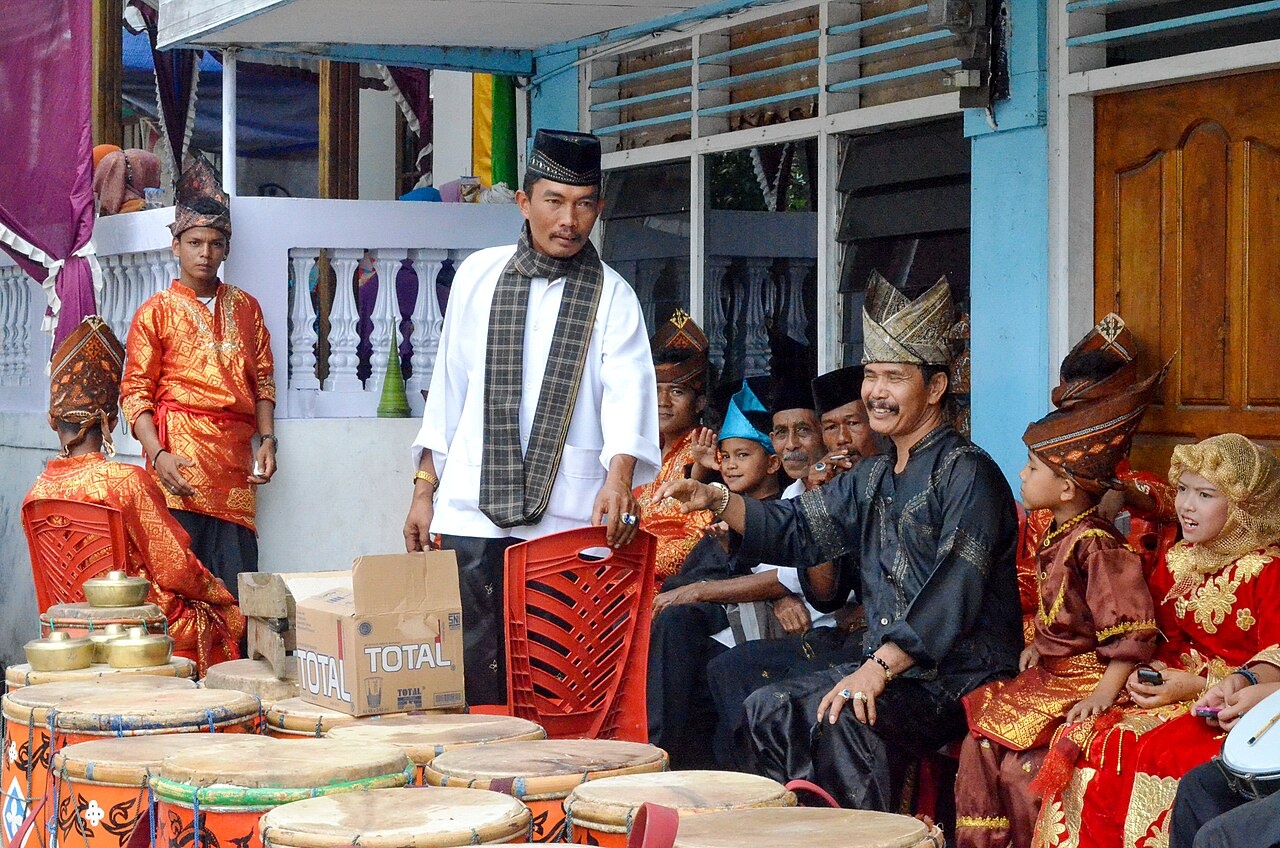
Marriage ceremonies across Indonesia vary widely. In Bali, elopement (nganten) is common and often quietly accepted by parents, partly because it avoids the high costs of formal weddings, which can be elaborate temple-based rituals led by priests. Among the Javanese, weddings typically involve a slametan (communal ceremonial meal) at the bride’s home, followed by official registration with a religious authority. In other regions, ceremonies may be simple, conducted by a shaman, priest, or elder, after which the bride is taken to the groom’s family—sometimes amid playful, ritualized displays of resistance from her community. Western-style weddings, complete with white gowns and church ceremonies, have also become popular among Christians. [Source: Jill Forshee, “Culture and Customs of Indonesia”, Greenwood Press, 2006]
The Betawi are an indigenous ethnic group in Indonesia, primarily inhabiting Jakarta. They who are descendants of various Southeast Asian ethnicities, Chinese, Arabs, and Europeans brought to the city during the Dutch colonial era. During a Betawi wedding ceremony, there is a palang pintu (literally door's bar) tradition of silat Betawi demonstration. It is a choreographed mock fighting between the groom's entourage with the bride's jagoan kampung (local champion). The fight is naturally won by the groom's entourage as the village champs welcome him to the bride's home. The traditional wedding dress of Betawi displays Chinese influences in the bride's costume and Arabian influences in the groom's costume. Betawi people borrowed the Chinese culture of firecrackers during weddings, circumcisions, or any celebrative events. The tradition of bringing roti buaya (crocodile bread) during a wedding is probably a European custom.
In West Java, the bride’s crown, known as a Says, features jasmine. Richly dressed and adorned in this way, the bride is expected to sit perfectly still for many hours during the celebrations. During this time, female attendants dressed like nymphs from Islamic and Hindu legend cool her with fans. The groom is also highly ornamented and considered royalty on his wedding day. He wears gold jewellery, belts and buckles, and carries a kris (a dagger) in a bright scabbard. This is despite Islam’s disapproval of gold jewellery for men. Many of the gold adornments for the bride and groom are rented for the occasion and may be imitations. The groom’s family gives gold and silver jewellery to the bride’s family, who in turn present handwoven cloths to the groom’s family. This exchange of gifts has a certain amount of symbolism: the soft, feminine cloth contrasts with the hard, masculine metal. [Source: George P. Monger, “Marriage Customs of the World From Henna to Honeymoons”, 2004]
In the Nusa Tenggara island group (also known as the Lesser Sunda Islands) in eastern Indonesia, which includes Timor, Sumba and Flores, the bride’s family is likely to present beads or beadwork when the gifts are exchanged between the families, as beads are considered to be feminine goods. In the Sumbian region (part of the Javanese island group), the bride may give cloths with tufts of ornamental thread, decorated with split shells, glass, and ceramic beads as part of the dowry. See SUMBANESE: LIFE, RELIGION, TRADITIONAL HOUSES factsanddetails.com
RELATED ARTICLES:
WEDDINGS IN INDONESIA: INVITATIONS, GIFTS, THE RECEPTION AND PHOTOGRAPHS factsanddetails.com
MARRIAGE IN INDONESIA: LAWS, TYPES, TRADITIONS factsanddetails.com
COURTSHIP, DATING AND LOVE IN INDONESIA factsanddetails.com
POLYGAMY IN INDONESIA factsanddetails.com
FAMILIES AND KINSHIP IN INDONESIA factsanddetails.com
RITES OF PASSAGE FOR INDONESIA CHILDREN: BIRTH RITES AND CIRCUMCISION factsanddetails.com
BALINESE FAMILY: MARRIAGE, WOMEN, RITES OF PASSAGE factsanddetails.com
JAVANESE SOCIETY: FAMILY, MARRIAGE, GENDER, CUSTOMS, CLASSES factsanddetails.com
For information on different marriage and wedding traditions and customs of different ethnic group See Minorities and Regions:
INDONESIAN GOVERNMENT, MINORITIES, CHINESE AND CHRISTIANS factsanddetails.com
ETHNIC GROUPS ON SUMATRA factsanddetails.com
ETHNIC GROUPS ON JAVA factsanddetails.com
ETHNIC GROUPS IN NUSA TENGARRA (ISLANDS EAST OF BALI) factsanddetails.com
ETHNIC GROUPS ON SULAWESI factsanddetails.com
BORNEO AND ETHNIC GROUPS IN BORNEO factsanddetails.com
ETHNIC GROUPS IN THE MOLUCCAS AND OTHER ISLANDS factsanddetails.com
BALI factsanddetails.com
ACEH factsanddetails.com
PAPUA factsanddetails.com
Javanese Weddings
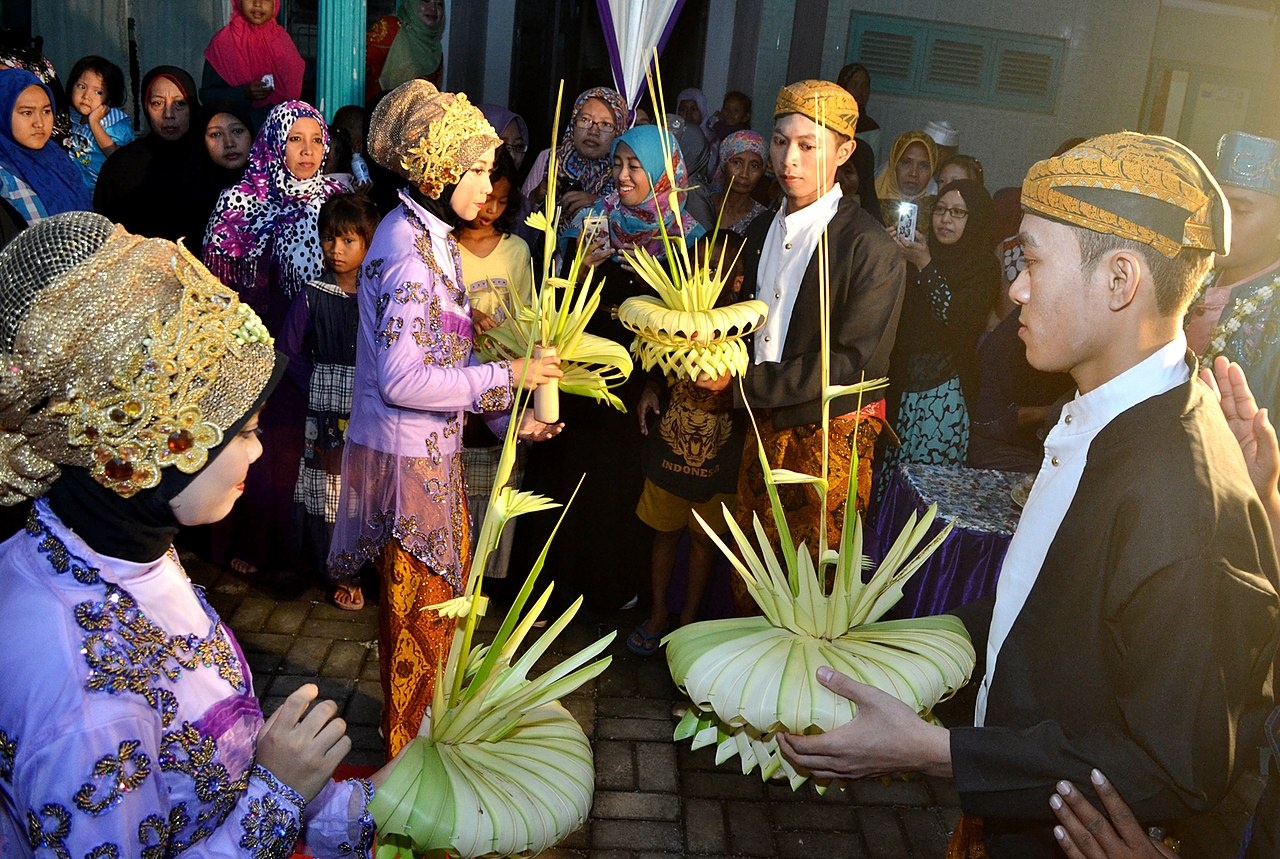
According to rami-services.com: “Normally the celebration lasts two days. The first day is similar to a shower, as is commonly known in the western hemisphere, and the second day is the marriage ceremony and the wedding celebrations. The future husband doesńt normally attend the shower celebration which is reserved for the immediate family and very close friends. But there can be exceptions... Javanese people are very smooth and resilient. [Source: rami-services.com ^]
“The wedding ceremony usually begins at 9 in the morning and if the ceremony is of the Muslim faith, the vows take place in the bridés parentś home. Otherwise, the marriage can be in a church or in a government office if you prefer a civil marriage. Afterwards, the music begins and the couple is invited to sing along with the musicians if live music is present. Cantik Javanese Dancer Guests can also sing and others are invited to sing along. So dońt be surprised by the wide selection of music since most professional musicians can play all styles such as Dangdut, Latin, pop, rock and roll and most top 40 tunes and supply song books. ^
“Guests are oftentimes honored by the participation of a Bali or Dangdut dancer which is most appreciated by everyone. Gamelan music is a well preserved tradition in Java and Bali. The gamelan is a percussion instrument made of bronze and each one has a particular sound and doesńt follow the western rule of a fixed musical scale. Dangdut, on the other hand, is a more contemporary type of music. Modern instruments such as electric guitar, bass, mandolin, drum set and electric violin play along with traditional instrument such as the kendang, a drum which produces the dang and the dut on a 4/4 beat. Also a seruling tastefully comes in to fill in for the melody when the singer ends a musical phrase. Most of the time, Dangdut music is enhanced with eight beautiful dancers, women and men, smiling all the way through a song. Dangdut can take many forms such as rock-dangdut, pop-dangdut, reggae-dangdut, tango-dangdut, salsa-dangdut and frequently reminds the listener about Arabian, Latin and Indian influences. ^
“Traditional food is served to the guests before they gradually leave while other people such as neighbors and co-workers come over to pay a small visit and enjoy the food and music.The Flower Bath ceremony is held at the bridés parents house. In this ceremony the parents and close relatives offer a flower shower to the bride as a symbol of purifying body and soul before the wedding that will take place the next day. Also held on the day prior to the wedding day, the Step Over Ceremony takes place if the bride has an elder sister who hasńt married yet. This ceremony is for appreciation to the elder sister so that the wedding can be held with her blessing. The younger sister will also give a gift to the older one. This ceremony is quite moving: a mixture of joy for the future bride and sadness for the elder sister. ^
Javanese Wedding Ceremony
According to jagadkejawen.com: Ijab is the most important rite to legalize a marriage. Ijab is a wedding registration in accordance with Islamic religion. In Indonesia, a marriage is legalized according to the religion of the couple. After the Ijab , the ceremony is followed by a civil registration which makes the couple legally husband and wife. [Source: .jagadkejawen.com -]
“The Panggih or Temu Manten Ceremony is a traditional ceremony which takes place in the home of the bride’s parents. It is the meeting of the bride and groom and is conducted immediately after the Ijab and the civil registration. During this part of the ceremony, the groom is accompanied by his close relatives (but not his parents who are disallowed to be present) and stop at the front gate while the bride and her parents stand inside the front door. Two young girls called Patah, stand in front of the bride holding fans. Two boys or elderly women each hold a a one meter high floral bouquet called Kembar Mayang. A female family member of the groom steps forward and gives the mother of the bride a token of appreciation for her hospitality in the form of a gift of bananas and flowers in a tray covered with banana leaves called Sanggan . After the Panggih meeting between the bride and groom, the Kembar Mayang is strewn at the nearest intersection in order that no evil spirits can reach the house and disturb the matrimonials. -
“The bride meets the groom in the front veranda of the house . They are approaching each other. When they are about two meters facing each other, they stop and start with the rite of Balangan Suruh.That is, throwing to each other seven bundles of betel leaves with lime inside tied with white yarn. They do it eagerly, smiling, witnessed happily by everyone presents. According to ancient belief, betel leaves have natural energy to drive out evil spirits. Through this ritual of Balangan Suruh, the bride and the groom are the real persons, not ghosts nor fakes . -
“Following the previous rituals, the groom then crashes a chicken egg with his right foot, the bride washes his foot with water mixed with several kind of petals of flowers. It depicts, the groom is ready to become a responsible head of the family and the family will have good children. In Yogyakarta the bride and the groom stand face to face. The bride kneels to wash the right foot of the groom with water mixed with several kind of flowers’ petals. The Pemaes- The Beautician who leads the ceremony holds a chicken egg in her right hand. She touches the forehead of the groom and the bride using the tip of the egg. Then, she breaks the egg above the petals of flowers on the floor between the bride and the groom. It depicts the couple have already a strong mind and they are aware to build a family based upon mutual love.They believe, blessed by The Loving God to have a happy family with good children.” -
Kacar Kucur and Dhahar Klimah
According to jagadkejawen.com: The couple walks by holding each other with their little fingers to the site where this rite is going to be held i.e. in front of the Krobongan.( In a Javanese traditional house , every house has a Krobongan i.e a room located in the center of the house where offerings are placed on certain auspicious days. In front of the room stand a pair of wooden statues called Loro Blonyo, the symbol of prosperity. Prayers, meditation, special events including wedding ceremonies are held in front of the Krobongan. [Source: .jagadkejawen.com -]
“The ritual Kacar Kucur depicts the husband gives all his income to his wife. In this rite, the groom gives to his wife some mixture of peanuts, soybean, rice, corns, yellow rice, dlingo bengle herbs, severaL kind of petals of flowers, coins ( the quantity of the coins must be even). The bride with open heart receives these gifts in a small white cloth, above an old mat on her lap. It symbolizes she must be a good wife and mother who always behaves responsibly. -
“Dhahar Klimah or Dhahar Kembul is the rite of eating together for the bride and the groom, witnessed by the parents and close families of the bride. The groom makes three small balls of yellow rice with dishes of fried eggs, tempeh, soybean, slices of dried fried meat ( abon), chicken’s liver. First, the groom feeds the bride and in turn the bride feeds the groom. Then they drink sweet tea from the same cup. This rite depicts that from now on, they will use and enjoy their belongings together. In the old days, the rite of Tampa Kaya, Dhahar Kembul- eating together are held in front of the Krobongan in the center of the house. Nowadays, even a wedding party is held in a hotel or convention hall, the rituals are also carried out.The place where these rituals are held is decorated with krobongan like ornaments.” -
Sungkeman
According to jagadkejawen.com: “The bride’s parents meet the parents of the groom in front of the house. If the wedding is held in a function centre they will meet them in the front door of the reception hall. They walk together to the place of the ceremony. The mothers walk in front of the fathers. The parents of the groom are seated on the left side of of the newly wed couple. The bride’s parents sit on the right side of the couple. [Source: .jagadkejawen.com -]
“The groom and the bride do sungkem (putting both hands together as in prayer and bowing seeking blessings) to both parents. First to the parents of the bride, then to the parents of the groom.Sungkem is a show of deep respect, traditionally done: The parents sit on a chair. The bride and the groom kneel in front of them. The groom does the sungkem first to his father- in- law, then to mother-in-law. Kneeling he does a sembah- respecful greeting with his two palms of the hands joined together, fingertips upward, his two thumbs touching the tip of his nose. Slowly and lightly, he holds the right knee of his father – in-law and presses lightly his face to his father-in-law’s knee. In a low voice, politely, he says to him :” I give you my pangabekti – devotion”. The father-in-law with his left hand touching the upper part of his son-in-law’s back, in whispering voice says :” Accept my sincere blessings”. -
“Sungkem is a traditional way of expressing a sincere respect towards parents and the elderly and also to the Javanese kings in Yogyakarta and Surakarta during special palace Ceremonies. While the groom is doing sungkem, he is not allowed to wear his kris-dagger. Temporarily, the Pemaes holds the kris. After the sungkeman, the groom wears again his kris. After the groom, the bride is also doing sungkem. Then they do sungkem also to parents of the groom. -
“The sungkem ceremony is very emotional for the parents as well as for the newlyweds. The parents wholeheartedly accept their children’s love and devotion and at the same time, they give the very best wishes to their children to live happily in a harmonious fortunate family. In fact, the parents have given their blessing to the newly wed couple by wearing batik clothes of truntum designs during the wedding ceremony. It means a wish for fortunate life for the couple. The parents of both sides also wear the same design of Sindhur – a large and long waist sash with its curved edges which means life is like a river which winds through the mountains which symbolises that the parents are imploring their offspring to act wisely in their walk in life. -
Indonesian Chinese Wedding
According to expat.or.id: “On the surface, ethnic Chinese weddings may seem more similar to western weddings, due to the Chinese Indonesian wedding –– bridal party adaptation of western wedding dress and the wedding cake. But that may be the extent of the similarities. About a week before the wedding, the family of the groom will go (without the groom) to the house of the bride bringing various gifts that are arranged in red baskets or red boxes or other red containers. Red symbolizes happiness and prosperity for the Chinese. Each basket should be carried by a member of the immediate family of the groom. The contents of the basket determines who should carry each basket. [Source: expat.or.id /~/]
“Three days before the wedding, the bride's family returns the favor and brings red baskets to the groom's house. These baskets are carried by females of the bride. s immediate family. The baskets normally contain clothes for the groom, shoes and fruit. Basically, things that he would use everyday. Some of the baskets contain makeup and personal things for the bride, such as nightgowns. This symbolizes that the groom's family is accepting her into their house. On her wedding day when she moves in, all of her personal belongings will already be in the groom's house. Again the gifts are sorted through and about half are returned. /~/
“On the morning of the wedding day, the groom is symbolically dressed by his parents (helping him put his jacket on and his flower on his lapel). Then the groom and his parents would go to the house of the bride. The wedding couple would serve tea to both sets of parents while kneeling down in front of them. This symbolizes paying their respects as well as asking permission of their parents. The bride and groom would then go to the church, together in the same car, for the service. The church service is not really considered that important and only immediate family normally attend. The more important event to attend is the reception.
“After the church service, the newlyweds proceed to a professional photo studio and have their picture taken in 20 different poses so they have something to show their children 20 years later. After the photo session, the newlyweds go on to the reception that is usually a standing only event. The reception is run by an MC, usually someone who is hired to do the job and has perhaps met the couple once on a previous occasion to ask them some very informal questions so as he can pretend to know them. The reception begins with a speech of welcome from the MC. /~/
See Separate Article: CHINESE INDONESIAN CULTURE AND LIFE: WEDDINGS, PUPPETS, MONEY factsanddetails.com
Sundanese Wedding Ceremony
According to expat.or.id: “Some common practices from a traditional Sundanese (West Java) wedding ceremony:Welcoming the bridegroom ceremony: 1) The bridegroom is welcomed with the umbul-umbul, a decoration indicating that a wedding ceremony is going on, which is also auspicious for the bridegroom. 2) The welcome is followed by a procession of ladies with candles. They pray to the Almighty seeking His blessing in order that there maybe no hindrances in the ceremony. 3) The showering of flowers by the dancers is symbolic of a fragrant future for the couple. 4) The umbrella held over the couple's heads, apart from serving as a protective symbol, indicates esteem and respect. 5) The mother of the bride gives the bridegroom a garland of flowers indicating his acceptability to the family. 6)The mother of the bride gives the bridegroom a keris, a hidden message to the son-in-law not to be disheartened while toiling for his family. [Source: expat.or.id /~/]
During the ceremony, the bride and groom sit side by side beneath a selendang or veil, representing two individuals united in one purpose. They then perform sungkem, bowing to kiss their parents’ knees to ask forgiveness, receive blessings, and affirm their ongoing devotion and respect. Another ritual, sawer, takes place near a water spout or gargoyle, whose flowing water symbolizes the unending love of parents for their children.
George P. Monger wrote: The bride and groom, still seated in front of the house beneath the umbrella, are serenaded with a song, called a kidung, sung by a man and woman, which asks a blessing on the couple and advises them to treat each other well and to live in harmony. The couple are then showered with the sawer, consisting of turmeric rice (the yellow color symbolic of everlasting love and the rice of prosperity), coins (to remind the couple to share their wealth with the less fortunate), and candy to indicate sweetness and fragrance throughout the marriage. A betel nut is also set down near the couple as a reminder that their different customs should not spoil their marriage. [Source: George P. Monger, “Marriage Customs of the World From Henna to Honeymoons”, 2004 ^]
The next part of the ceremony is the nincak endog, the egg-breaking ceremony. This is conducted by the woman who was in charge of the bridal make-up and begins with the bride being given a harupat, seven broomsticks, which are burned by the bridegroom lighting them with seven candles (ajug). The fire is extinguished, and the remainder of the sticks broken and thrown away (this is to symbolize that the couple discard old bad habits that may compromise their future harmony). [Source: George P. Monger, “Marriage Customs of the World From Henna to Honeymoons”, 2004 ^]
See Separate Article:
SUNDANESE SOCIETY: FAMILY, MARRIAGE, GENDER factsanddetails.com
Weddings in Sumatra
In South Sumatra, cockerel-shaped containers known as kendi are used in wedding ceremonies to symbolize the couple’s transition into a new phase of life and their entry into adult roles. The cockerel, which heralds the dawn after the darkness of night, represents renewal and new beginnings. [Source: George P. Monger, “Marriage Customs of the World From Henna to Honeymoons”, 2004 ^]
During the ceremony, the groom’s party processes to the bride’s home, where they are formally received by the bride’s family through the recitation of poetic verses. The groom’s party responds with their own verses before eventually being invited inside. The groom then joins the bride, and together they appear before a Muslim cleric and witnesses. The cleric recites verses from the Qur’an and asks both parties to declare their consent to the marriage, after which the marriage certificate is signed.
The dowry is typically arranged in advance between the two families, and the bride may set specific conditions for the marriage through an agreement known as ta’lik. This agreement, whether written or spoken, must be witnessed. Following the ceremony, the couple are seated on elaborately decorated wedding thrones, adorned in gold attire, becoming the focal point of the celebration as feasting and festivities take place around them.
In West Sumatra, a Minangkabau bride is often dressed in ornate songket garments and seated in the carved window of a rumah gadang, the traditional Minangkabau house, highlighting the richness of local wedding customs.
Karo Batak Wedding
The Karo Batak are one of several Batak peoples whose homelands lie in the highlands of North Sumatra, particularly north and east of Lake Toba.A Karo Batak wedding is a complex, highly symbolic life-cycle ceremony that affirms marriage not only between two individuals but between extended families and clans (marga). [Source: Danielle Surkatty, Kem Chicks' World, September 2001.expat.or.id]
Central to a Karo Batak marriage is the marga system, an extensive network of patrilineal clans that regulates social identity and marriage rules. Ideally, a Karo Batak marries another Batak, but never someone from the same clan. When a non-Batak groom is involved, he may be ritually adopted into a Karo clan through a formal ceremony, thereby gaining a clan identity and the right to marry according to adat. This adoption is not symbolic alone: it creates lasting social obligations and relationships, though inheritance rights are usually excluded.
The main wedding feast, known as kerja si mbelin (“the great work” or big party), is a vibrant public celebration. Guests sit on woven mats rather than chairs, emphasizing equality and communal participation. The bride and groom enter in a long procession with their families, accompanied by ritual gestures symbolizing fertility and prosperity. [Source: Danielle Surkatty, Kem Chicks' World, September 2001.expat.or.id]
A distinctive feature of the ceremony is the landek dance, performed by the couple and their families. Once the bridewealth is formally paid and accepted, the couple is considered married under Batak custom. As the bride and groom dance and sing, relatives and guests may step forward to place money or gifts before them—a modern addition that complements, but does not replace, traditional obligations.
See Separate Article: BATAK MARRIAGE AND WEDDINGS factsanddetails.com
Image Sources: Wikimedia Commons
Text Sources: “Encyclopedia of World Cultures Volume 5: East/Southeast Asia:” edited by Paul Hockings, 1993; “Culture and Customs of Indonesia” by Jill Forshee, Greenwood Press, 2006; National Geographic, New York Times, Washington Post, Los Angeles Times, Smithsonian magazine, Encyclopedia.com, Library of Congress, Indonesia Tourism website (indonesia.travel), Indonesia government websites, Live Science, The Conversation, The New Yorker, Time, BBC, CNN, Reuters, Associated Press, AFP, Lonely Planet Guides, Google AI, Wikipedia, The Guardian and various websites, books and other publications.
Last updated April 2026