
INDONESIAN SOCIAL CUSTOMS
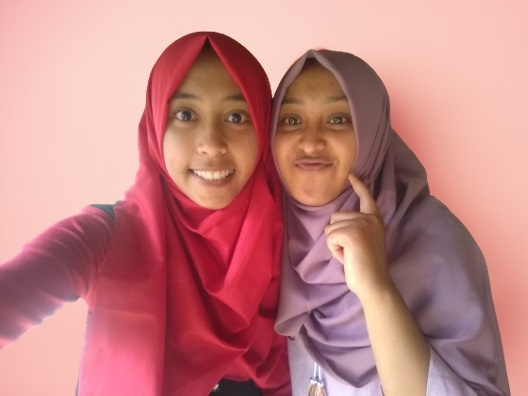
When socializing, one never touches the head of another person. Unless married or engaged to her, a man usually does not touch a woman in public, except to shake hands. Otherwise Indonesians of the same sex are often very physical and frequently touch each on the arm when they talk. Indonesians often aren’t shy when it comes to giving advice and making remarks about others’ physical appearance and manners. Some foreigners say it takes some getting used to.
Giving and receiving things: Always use your right hand when passing and receiving things. Using the left hand is considered very impolite. The left hand is not used to shake hands, touch others, point, eat, or give or receive objects. Slightly bow your head as you say thank you.
1) Always defer to people older than yourself, and more respect is better than less. 2) Calmness is a virtue. Expressions of anger are considered rude and inappropriate. 3) Especially with foreigner, Indonesians ask a lot of personal questions. This is done in part to size a person up and figure out what level of respect to use when speaking to the person. 4) Indonesians often laugh when embarrassed, anxious or nervous. 6) Indonesians are often late.
7) Indonesians are more comfortable with silences that Wester people. Sometimes there are long pauses when people are thinking. 8) At parties people are often asked to give or speech or sing a karaoke song. In the speeches one is expected to express his or her pleasure with meeting everyone and to thank the host. 9) Javanese has 10 words for "stand up" and 20 words for "sit down." The various terms describe difference in posture, feeling and symbolism. 10) Unlike foreign tourist who like to take photographs of natural sights such as volcanos and enjoy the view, Indonesians like to make an offering to the volcano and take photographs of their friends and relatives. They often seem to care less about the view.
According to the Muslim leader Imam Shamshad A. Nasir: 1) Selamat means peace and is a traditional greeting. 2) "Yes, but" means no when someone is speaking to you. 3) Never allow your voice to get loud, whether in anger or joy. 4) Expressing anger in public through tone of voice, loudness, or body language is always inappropriate. 5) Do not use red ink when writing, or having printing done (Chinese). 6) Never show the soles of your feet/shoes or touch anything with your foot. 7) Never touch another person's head, this includes a child's head (such as a pat on the head). 8) Remove your hat and sunglasses when going indoors.[Source: Imam Shamshad A. Nasir cyborlink.com]
RELATED ARTICLES:
ETIQUETTE AND CUSTOMS IN INDONESIA factsanddetails.com
EATING CUSTOMS IN INDONESIA factsanddetails.com
INDONESIAN CHARACTER AND PERSONALITY factsanddetails.com
SOCIAL RELATIONS IN INDONESIA: GOTONG-ROYONG, BAPAKISME AND CONFLICT AVOIDANCE factsanddetails.com
JAVANESE PEOPLE: HISTORY, DEMOGRAPHICS, LANGUAGE factsanddetails.com
JAVANESE SOCIETY: FAMILY, MARRIAGE, GENDER, CUSTOMS, CLASSES factsanddetails.com
INDONESIAN SOCIETY factsanddetails.com
CLASSES, HIERARCHIES AND STRATIFICATION IN INDONESIAN SOCIETY factsanddetails.com
RICH IN INDONESIA: WEALTH, LIFESTYLE AND TIES TO SUHARTO AND CURRENT LEADERS factsanddetails.com
POVERTY IN INDONESIA factsanddetails.com
PEOPLE IN INDONESIA: UNITY, DIVERSITY, CHARACTERISTICS, ADAT factsanddetails.com
AUSTRONESIAN PEOPLE OF THE PACIFIC, INDONESIA, MALAYSIA, TAIWAN AND THE PHILIPPINES: ORIGIN, HISTORY, EXPANSION factsanddetails.com
MALAYS AND MALAY-RELATED PEOPLE: HISTORY, DEFINITIONS, ORIGINS, LIFE, CULTURE factsanddetails.com
LANGUAGES OF INDONESIA factsanddetails.com
BAHASA INDONESIAN: GRAMMAR, WRITTEN FORM, SPEAKING IT factsanddetails.com
Greetings in Indonesia
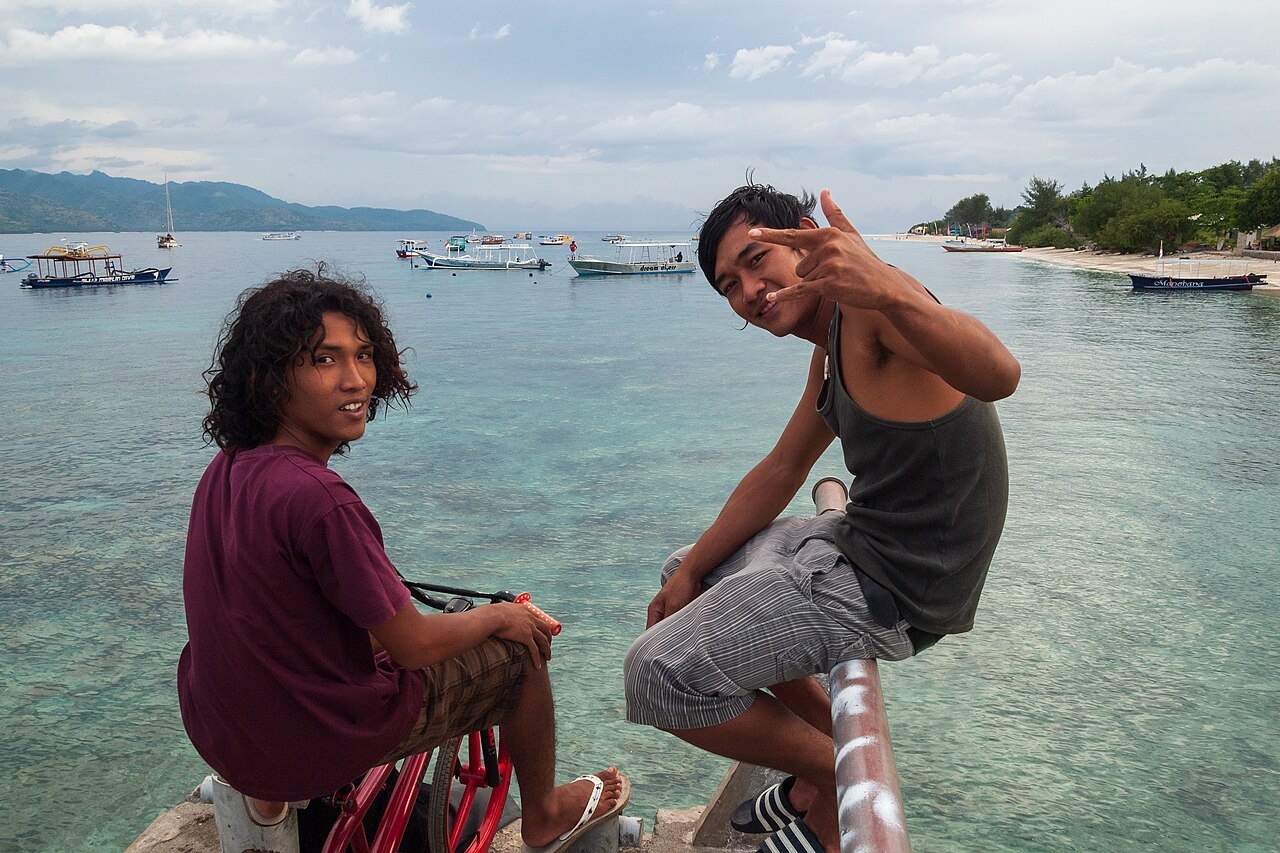
A nod or slight bow is the usual form of greeting. People usually only shake hands only when being introduced for the first time and then they usually clasp hand lightly and say their name and then shake limply. If someone touches their heart while shaking hands that presents an especially heartfelt welcome. Handshakes are also used when congratulating someone or when saying goodbye before a long trip. [Source: “The Traveler's Guide to Asian Customs & Manners” by Elizabeth Devine and Nancy L. Braganti.
Muslims sometimes greet each other with a “salaam”, in which two individuals each extend both hands and grasp both their hands somewhat like a double handshake. The gesture is also used when saying goodbye. The salaam is only used when greeting men. As a sign of deep respect young people kiss the hand of an elder and touch the hand to their forehead. In some places, particularly on Java, some people greet each other by pressing their palms together, with the right slightly forward and touching the other person’s right hand. Shaking hands is generally acceptable between the sexes but men should ere on the side of caution and should not shake hands with women unless they extend their hands first.
According to the Muslim Imam Shamshad A. Nasir: 1) Shake hands upon greeting and leaving, and always using your right hand. The handshake is limp and lasts 10-15 seconds. 2) For religious reasons (Muslim and Hindu) men and women do not touch in public in this culture. 3) Women do not offer a handshake to an Indonesian man. However, should a man extend his hand, always shake hands. Some Indonesian men may follow western business rules in a business setting. 4) Men do not offer a handshake to an Indonesian woman. Reciprocate, however, if she initiates. 5) Indonesian Chinese may bow, or combine a bow with a handshake. 6) When Muslims greet each other, instead of saying, “good morning” or “hello” they say “Assalamo Alaikum,” which means “May peace be upon you and may God's blessings be with you.” This greeting makes a Muslim aware that he has to spread love and peace wherever he goes. [Source: Imam Shamshad A. Nasir cyborlink.com]
According to kwintessential.co.uk: 1) Greetings can be rather formal as they are meant to show respect. 2) A handshake is the most common greeting accompanied with the word "Selamat". 3) Many Indonesians may give a slight bow or place their hands on their heart after shaking your hand. 4) If you are being introduced to several people, always start with the eldest or most senior person first. [Source: kwintessential.co.uk]
According to Bahasa Indonesia Lima: When you meet an Indonesian person for the first time, you need to make some quick decisions! Do you refer to them formally as Bapak or Ibu or more informally as Kakak/kak, Adik/dik, Mbak or Mas? Do you shake their hand or offer both of your hands with palms together? The following guides may help but it’s often best just to let them take the lead!To greet an elder (a respected person in the community, a teacher, your parents, grandmother, and so on), move their offered hand to slightly touch your forehead.[Source: Bahasa Indonesia Lima, Our Indonesian Language Hub: 5 Schools Bekerja-sama indo5.net
“Shake hands softly and then slightly touch your chest afterwards. Men usually give a stronger grip than women when they are shaking hands.Touching your chest after shaking hands demonstrates respect to other person (you’re taking their greeting into your heart). It’s often OK to shake hands with someone of the opposite sex. Just use a soft grip and then slightly touch your own chest as well. When female friends meet, they often greet each other by kissing cheek to cheek. This is known as cipika cipiki in Indonesian. Sometimes you may meet a Muslim Indonesian who will not touch someone (who they don’t know) of the opposite sex. Greet them with your hands together instead and bow a little bit.”
Names and Titles in Indonesia
Different ethnic groups address each using different names. To avoid confusion, ask a person how they want to be addressed. When addressing people for the first time, be polite, respectful, always use the formal terms, i.e. bapak for a man, ibu for a woman before their proper names. When meeting, Indonesians touch their heart in greeting, often after the handshake. It feels a bit awkward and pretentious to do this at first, but you get into the habit rather quickly and it is a respectful gesture when meeting officials.
Indonesian culture is based on honor and respect for the individual. Letters begin with Dengan hormat, meaning “With respect,” and respect is important in greeting others. Status is also important; the most senior person or the host should be greeted first, and special deference should be shown to older people. Titles are very important and should be used when greeting and in general conversation. The most formal introduction would include, in roughly this order, Bapak (“Sir”) or Ibu (“Madam”), an academic or professional title (if applicable), the noble title (if the person uses it), and the person’s given and family names. Many Indonesians, especially the Javanese, have only one name and are therefore addressed both formally and casually by that name. Business representatives often exchange cards when greeting each other. [Source: Indonesia-fascination.blogspot.jp]
Titles are important and they are often references to kinship. Older men are often referred to “bapak” ("pak" for short), which means "father." Older women are often referred to ibu” ("bu" for short), which means "mother." The titles of doctor, professor and engineer are also used. Titles are often used without a name. You can easily and safely address everybody by Ibu (Mrs. and Ms.), usually shorten to Bu and Bapak (Mr.) usually shorten to Pak. Coworkers address each other Mbak/Mas (older sister/older brother in Javanese) instead of the formal Bu/Pak.
According to kwintessential.co.uk: 1) Titles are important in Indonesia as they signify status. If you know of any titles ensure you use them in conjunction with the name. 2) Some Indonesians only have one name, although it is becoming more common for people to have a first name and a surname, especially in the middle class. 3) Many Indonesians, especially those from Java, may have had an extremely long name, which was shortened into a sort of nickname for everyday conversation. 4) There are several ethnic groups in Indonesia. Most have adopted Indonesian names over the years, while some retain the naming conventions of their ethnicity. [Source: kwintessential.co.uk]
According to the Muslim Imam Shamshad A. Nasir: 1) Address each person using his/her title plus full name. A title may be an honorific title or an academic title. Rank and status is very important in this culture. 2) One important honorific title is for Muslims who have made a pilgrimage to Mecca. Haji is the title for a man, Hajjah is for a woman. 3) Mr., Madam, Mrs. or Miss is used if a person does not have a title. A man is addressed as Pak (Mr.) or Bapak(Sir) . A lady is addressed as Ibu. 4) People are normally called by their first name, as in Mr. Robert or Miss Susan, rather than using their last name. 5) Married Chinese women keep their maiden name. [Source: Imam Shamshad A. Nasir cyborlink.com]
In addition to the usual ranks and professional titles, it is customary to add Pak or Bapak and Saudara for addressing men, and Bu or Ibu for addressing women. Pak and Bapak are literally translated as "father", with Bapak being the more formal and used in speech much like the English word "sir". Saudara is a term of greater respect and formality, literally translated as "kinsman". Ibu is literally translated as "mother" and is used in speech much like the English words "ma'am" and "lady". If a person's name is unknown, one can call an Indonesian man Bapak or an Indonesian woman Ibu. Another informal way to address significantly older people is to call them Om and Tante, which mean "uncle" and "aunt". The terms are Dutch-influenced and quite commonly used in big cities. However, local honorifics continue to be employed throughout Indonesia, such as the casual general way Kakak is used for older sister/brother; in Javanese Mbak is used for older sister. Mas is used for older brother; in Sumatran Malay or Minangkabau cultural spheres it corresponds to Abang for older brother, but it is common to call a becak driver, angkot driver, vegetable vendor, fishmonger or hawker abang. Additionally, 'Gus' (from bagus), as used to address former president 'Gus Dur', is usually used exclusively to address honorable Eastern Javanese people with strong traditional and religious links. [Source: Wikipedia +]
See Separate Article: NAMES IN INDONESIA factsanddetails.com
Indonesian Hospitality and the "Three No" Rule
One woman posted on expat.or.id: “Often in Indonesia one is offered something which one might not want. Not wanting it, you will refuse the offer kindly and thank them. Five to ten minutes later you will be offered it again. Once again you will refuse it. Five, ten, twenty minutes go by and you are offered it again. Once you refuse it the third time they accept that and won't offer it again unless you are there for a couple hours and then it will start all over again. [Source: expat.or.id ***]
“Same thing goes when you offer someone something. Whether they want it or not they will most likely refuse it. Let five to ten minutes go by and offer it a second time. It will then get refused again, even if they would really like it. On the third try you will know if they really don't want it or if they actually do. Sometimes when I know someone could really use the help, to avoid the three no rule I might say something like this, "It would really make me happy if you would accept my gift." That guaranteed, in the past, allows them happily to accept for they are helping me by making me happy. (Of course it is important that you really know they would like it or could use it. You don't want someone accepting something they don't want just to please you, now do you? I found this out purely by observation ... being offered and offering. What a gift it was figuring that cultural intricacy out. ***
Personal Space and Lack of Privacy in Indonesia
According to .expat.or.id: “Due, no doubt, to the high concentration of the population, Indonesians have little, if any, sense of personal space or privacy. There is no word in the Indonesian language for “privacy”. Gossip and curiosity is rampant and Indonesians will ask you a wide range of personal questions without batting an eye. [Source: expat.or.id ***]
In North America social space ranges from 4 to 10 feet and is used for communication among business associates, as well as to separate strangers using public areas such as beaches and bus stops. Personal space ranges from 2 to 4 feet and is used among friends and family members, and to separate people waiting in lines at teller machines for example. The North American personal space equates the Indonesian social space. When having business meetings with your Indonesian counterpart, you might find yourself backing away trying to regain your social space, while your Indonesian counterpart moves closer to you to maintain his / her social space.[Source: Canadian Centre for Intercultural Learning, intercultures.gc.ca \~]
Direct eye contact should be avoided. You can probably look at the person on the chin or you can also look them in the eye for very short periods of time as they will feel very uncomfortable to have direct eye contact constantly while having a conversation with you. But do use your judgement. If you know that the person grew up in Jakarta and has been educated abroad, it should be okay. Touching someone when speaking to them is reserved for friends and acquaintances of the same sex. You should refrain from doing so when speaking to someone of the opposite sex and professional associates. \~\
“Foreigners quickly get tired of the “20 Questions Game" that they are subjected to every time they meet a new person. Be polite in your responses, and understand that they are just being friendly in their own way, or just perhaps smile and don’t answer. You might want to turn the questions back on them ... asking them the same questions they ask you. Strike up a conversation and learn some Bahasa Indonesia. ***
Some Indonesians call Western foreigners “bule.: “Yes, we know, all foreigners are albinos (the actual meaning of the word bule). It is not uncommon for people to yell out “Hey Bule” when they see you … addressing the novelty of your appearance in their neighborhood. The best response is just to smile and nod your head … !
Most foreigners are also familiar with the common variety of “Hey Bule”, which is “Hey Mister” … yes all foreigners are men. These verbal pointing episodes are most common when there is a group of boys or young men congregating, often trying to one-up each other with their verbal acknowledgment of your presence. If you are a woman and their form of address is impolite, it’s best to just ignore them. Women should understand that dressing immodestly will undoubtedly result in more staring and more “Hey Misters” or other rude comments. Remember, the average persons “knowledge” of western lifestyles and mores, is influenced by what they see from western TV shows and movies! ***
Conversation Topics in Indonesia
Good conservation topics include families, local communities, and food and places in Indonesia and your home country. Avoid discussions about politics, sex, material possessions, and the Chinese and don't say anything negative about Islam or Indonesia. Indonesians, and Javanese in particular, are often not very direct. They artfully talk about an issue by talking around it.
Family is often the first topic to be discussed, The family is very important to Indonesians. The Javanese, the ethnic Indonesian with the most population, have a saying that goes like this: "Mangan ora mangan asal ngumpul" which means: having food or having no food, the most important thing is that we are together. Indonesians will ask you your marital status. They ask about children, their age, etc. It is always safe to ask these questions in return and often it is necessary to go through this ritual of polite, light conversation (even in business) before getting to the topic or purpose of the meeting. Religion is also a common topic. All Indonesians identify with a religion, there are very few declared atheists, and they assume that Westerners are Christian. It is better to just declare yourself as a Christian (if you are an atheist), rather than asserting otherwise. [Source: Canadian Centre for Intercultural Learning, intercultures.gc.ca]
When meeting Indonesians who travel or have been educated abroad, you can also ask them about their experiences. Ask Indonesians about their origin. Which part of Indonesia do they come from? After having lived in Indonesia for a little while, you will be able recognize family names from certain areas or you will be able to recognize names from certain regions, such as Supomo, Soeprapto etc. Names beginning with "Su, Soe" and ending with an "o" are usually Javanese. Take a chance and ask them, "Are you from Central/East Java?"
Things to avoid discussing: 1) Age, as in many cultures, it is impolite to bluntly ask about their age. 2) Religion, Politics and human rights, unless somebody else started the discussion and the discussion is kept calm and controlled, it is not recommended to start discussions about these two very sensitive topics. 3) Be sensitive to their international travel experiences, allow Indonesians to tell about their experiences and do not overwhelm them with one of your own. Among lower middle class Indonesians, domestic travel is usually in response to death in the family and rarely for pleasure. The expatriate that has been in the country for two to three years may have seen more of the country than most of his Indonesian counterparts and friends.
In the past politics was a delicate subject, but in the new Indonesia it has become more of a topic of discussion. Also, when I was in Indonesia, there was often a perception that Westerners are experts in their field so I was often posed questions regarding my work and profession - sometimes with high expectations as to my level of expertise. I never felt shy about admitting my limitations, however Indonesians can be hesitant to admit they are unaware of something. The best example of this is just in asking for directions, no one will admit to not knowing something and you can be sent in all kinds of directions before realizing that you were just sent along on your way.
Things that might surprise you: Even if it was the first time that they met you, Indonesian might startle you by asking "personal questions" such as whether you were married, and if not, whether you were then engaged to be married? They will ask you about your family, where you work, what your occupation is, where you were educated and so on. Please just answer all these questions casually as you do not have to answer them in details. Indonesians often feel uneasy when they meet you for the first time. They do not know who you are and so they do not know "how to place you". Should I treat this person as an equal (i.e. the same age and/or social status) or should I treat her/her differently? They will usually err on the safe side by treating you as if you were "older and/or having a higher social status" and then slowly adjusting their behaviour after they get to know you better. The Indonesian society is a very hierarchical society, hence knowing where to place somebody is very important.
If you were married, they might ask you casually what kind of birth control you are using. This topic occurs very often in social conversations since the government has been working very hard to socialize it since the 70’s to control the increase in the population. As you know, Indonesia is the 4th most populated country in the world.
One final question that you will be posed constantly is "mau ke mana" where are you going? This can get a little annoying and you can feel that it is a little too personal to be asked this by your neighbor or your shop clerk etc. It is just a polite phrase for which they are not really expecting a long explanation of your plans. I often replied "jalan jalan saja" which means I am just walking.
Gift Giving Etiquette
Gift giving etiquette in Indonesia heavily depends on the ethnicity of the receiver. Religion and culture dictates specific rules for appropriate gifts. Muslim, Hindus, and the Chinese culture each have rules regarding food, alcohol, and other items. Make sure your gift is not offensive to the person you are giving it to. Gift something from your country or fruit or chocolate are generally safe and appreciated. Don't give pork or alcohol. People usually don’t open heir gifts in the presence of gift givers. “Oleh-oleh” presents are an Indonesian tradition of bringing back a small gift from one’s journey for those who stayed home.
Gift-giving etiquette for ethnic Malays and Muslims: 1) In Islam, alcohol is forbidden. Only give alcohol if you know the recipient will appreciate it. Any food substance should be 'halal'; things that are not halal include anything with alcoholic ingredients or pork derivatives, such as gelatine. Halal meat means that the animal has been slaughtered according to Islamic principles. Offer gifts with your right hand only. 4) Gifts should not be opened when received. This shows that the recipient is gracious, not greedy. [Source: kwintessential.co.uk =]
According to the Muslim leader Imam Shamshad A. Nasir: 1) Gifts, though small, are frequently given. 2) Do not give gifts of alcohol or pork. This would also include perfume since it is made with alcohol, and any leather product made from pigskin (Muslim). 4) Do not give gifts or pictures that show dogs. They are considered unclean. [Source: Imam Shamshad A. Nasir cyborlink.com]
Chinese gift-giving etiquette:1) It is considered polite to verbally refuse a gift before accepting it. This demonstrates that the recipient is not greedy. 2) Avoid giving scissors, knives or other cutting utensils, as these items symbolise severing the relationship. 3) Elaborate wrapping is expected, and gold and red are considered auspicious colours. Gifts are not opened when received. 5) Chinese people may politely refuse a gift three times before accepting it. When the gift is accepted, express your happiness at their acceptance. On Chinese New Year, give a gift of money to children and people you frequently deal with who are not government employees. The money must be in the form of an even number of new bills and be presented in a red envelope. 7) Do not give a gift with the number four on it or featuring a crane or stork. When selecting a gift or gift wrapping paper, avoid the colours white, black or blue. 8) A gift of an umbrella means that you do not want to see that person again. =
Gift-giving etiquette for Hindus: Offer gifts with the right hand only. 2) Wrap gifts in red, yellow or green paper, as these colours are considered to bring good fortune. Do not give leather products to a Hindu. Do not give alcohol unless you are certain the recipient drinks. Gifts are not opened when received. =
Image Sources: Wikimedia Commons
Text Sources: “Encyclopedia of World Cultures Volume 5: East/Southeast Asia:” edited by Paul Hockings, 1993; “Culture and Customs of Indonesia” by Jill Forshee, Greenwood Press, 2006; National Geographic, New York Times, Washington Post, Los Angeles Times, Smithsonian magazine, Encyclopedia.com, Library of Congress, Indonesia Tourism website (indonesia.travel), Indonesia government websites, Live Science, The Conversation, The New Yorker, Time, BBC, CNN, Reuters, Associated Press, AFP, Lonely Planet Guides, Google AI, Wikipedia, The Guardian and various websites, books and other publications.
Last updated April 2026