
FRIENDLY AND SOCIABLE INDONESIANS
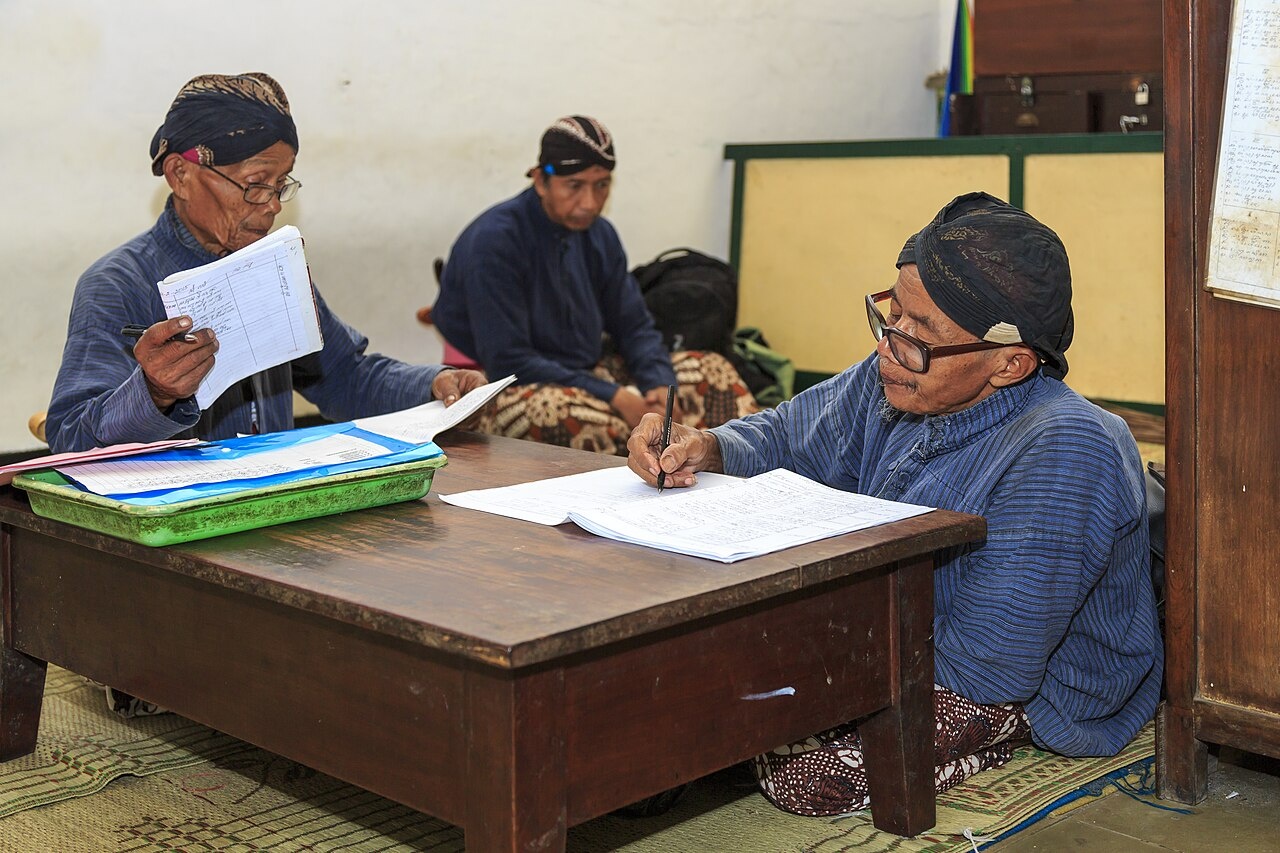
Indonesians are very friendly and love to make friends. “Indonesians laugh a lot”, said Prooke of Marlborough, UK. It’s the land of laughs and smiles. They are sociable and curious to a degree that some Westerners find annoying. For a foreigner, sometimes it is hard to be left alone or find some place without Indonesian staring, saying Hello Mister or asking lots of questions.
Indonesians often seem to be busy and heading somewhere. “Where are you going?” is a common greeting. But at the same time they often can make time to chat with a friend. Indonesians ask questions like “What are you doing?” and “Where are you going?” when the answer is obvious as a way of making small talk to start a conversation. The polite response is to ask more questions.
As for foreigners, Indonesians are usually very friendly and helpful. They would be happy to show you around and experience the local culture. Be sensitive though when asking a married friend because he/she might not have the luxury of time to do that. Friends and colleagues appreciate the efforts you make in learning the language and the culture and are likely to be keen in helping you along. As your relationship grows, you will be invited to family events, such as marriages and other family and religious ceremonies; they will guide you on how to dress, act etc. Often, friends and colleagues will ask for your assistance in return to help with their English. [Source: Canadian Centre for Intercultural Learning, intercultures.gc.ca]
To Indonesians who have been to the West often find Westerners as "cold" when first meeting them and it takes a while before they warm up to new people, which can be very discouraging. Often there are misconceptions about typical behaviours, as in many countries. Indonesia is a hot, tropical place and it is certain that the pace of life is more relaxed. It can be perceived by foreigners that locals are lazy or slow, but it is the responsibility of the foreigner to adjust to local rhythms rather than impose western expectations and judgements.
RELATED ARTICLES:
INDONESIAN CHARACTER AND PERSONALITY factsanddetails.com
ETIQUETTE AND CUSTOMS IN INDONESIA factsanddetails.com
SOCIAL CUSTOMS IN INDONESIA factsanddetails.com
JAVANESE PEOPLE: HISTORY, DEMOGRAPHICS, LANGUAGE factsanddetails.com
JAVANESE SOCIETY: FAMILY, MARRIAGE, GENDER, CUSTOMS, CLASSES factsanddetails.com
INDONESIAN SOCIETY factsanddetails.com
CLASSES, HIERARCHIES AND STRATIFICATION IN INDONESIAN SOCIETY factsanddetails.com
RICH IN INDONESIA: WEALTH, LIFESTYLE AND TIES TO SUHARTO AND CURRENT LEADERS factsanddetails.com
POVERTY IN INDONESIA factsanddetails.com
PEOPLE IN INDONESIA: UNITY, DIVERSITY, CHARACTERISTICS, ADAT factsanddetails.com
AUSTRONESIAN PEOPLE OF THE PACIFIC, INDONESIA, MALAYSIA, TAIWAN AND THE PHILIPPINES: ORIGIN, HISTORY, EXPANSION factsanddetails.com
MALAYS AND MALAY-RELATED PEOPLE: HISTORY, DEFINITIONS, ORIGINS, LIFE, CULTURE factsanddetails.com
LANGUAGES OF INDONESIA factsanddetails.com
BAHASA INDONESIAN: GRAMMAR, WRITTEN FORM, SPEAKING IT factsanddetails.com
Groupism and the Persistence of Village Social Life in Indonesia

The interests of the group and being with a group are regarded as more important than the interests of the individual. Individualism is often regarded as selfish and being by oneself is regarded a strange, pitiable and lonely. Indonesians rarely do things or go to places alone. Indonesians have a very strong sense of community and prefer to be “one of a group”. They always like to have a friend to accompany them and will feel pity for someone who is alone, saying “Kok sendirian?” (Oh, you’re by yourself?”) [Source: expat.or.id ]
The village remains the basic home for less than half of the Indonesian population. Yet even in cities such as Jakarta, Yogyakarta, Surabaya, and Denpasar, neighborhoods often divide into small alleys (gangs) where kin and neighbors live in close quarters, recreating a village-like sociability and atmosphere. In recent decades, these neighborhoods have suffered from massive urban renewal projects, which displace many of the urban poor from their modest living spaces. Many Indonesian city dwellers also claim an outlying village as their true home, and some return for special ceremonies or to assist during harvest time. Village political life typically centers on a dominant clan group or an elected village head (kepala desa). [Source: Jill Forshee, “Culture and Customs of Indonesia”, Greenwood Press, 2006]
People engage in a system of mutual assistance called gotong royong (“mutual cooperation”), in which help or goods received by a family are eventually returned in kind. “What goes around comes around” aptly reflects Indonesian ways of sustaining community life. This system may involve building a new house, contributing to a funeral, helping with a wedding, or giving a gift of fresh fish. Often, “debts” between villagers are not monetary but are repaid through physical assistance. Maintaining a communal water system or building a new roof on a home may involve the entire village and extended relations.
Social Relations Among Indonesians
In matters of rules and disputes, Indonesians strive to reach consensus when making decisions. Meetings known as musyawarah often take place among relatives or neighbors to discuss marriages, funerals, agricultural concerns, trade obligations, crimes, or disagreements. Ideally, a resolution is achieved only when everyone present reaches agreement, rather than through a simple majority. Indonesians place a high value on social harmony and seek balance in their relationships and activities; when that balance is disrupted, disorder can emerge, as history has shown. [Source: Jill Forshee, “Culture and Customs of Indonesia”, Greenwood Press, 2006]
People rarely express open disagreement or argue face-to-face. To Westerners, they may appear indecisive or evasive, as responses to questions are often framed as “maybe” or “not yet” instead of direct “yes” or “no” answers. Indonesian etiquette emphasizes formal politeness and deference toward others, and displaying too much certainty can be seen as aggressive. Respect for kin and elders remains central, and daily life is shaped by complex networks of family obligations.
Blatant individualism is often viewed as egotistical (egois) or childishly selfish, and the degree of honor and consideration Indonesians extend to others can surprise outsiders. One Indonesia said: “We are not so deep by nature that it will break anyone’s head to understand our wisdom. There is no word for selfishness in our language. Happy language where that word has never penetrated.”
Spending long periods alone is uncommon, as both young and old prefer the company of family and friends. At times, Indonesians may seem intrusive or overly attached to Western observers, with little sense of privacy. This reflects the reality of large extended families living in close quarters and a cultural norm of constant social interaction. In fact, Indonesians generally value and enjoy close contact with others, and many report feeling isolated (sepi) when alone. Even routine activities, such as going to the market or taking an evening walk, are usually done with one or more companions.
Gotong-Royong
“Gotong royong” is a concept of sociality that is familiar to much of Indonesia, Singapore, Brunei and Malaysia. The phrase has been translated into English in many ways, most of which relate to the idea of reciprocity or mutual aid. According to M. Nasroen, gotong royong is one of the core tenets of Indonesian philosophy. Paul Michael Taylor and Lorraine V. Aragon state that 'gotong royong is cooperation among many people to attain a shared goal'. [Source: Wikipedia]
In a 1983 essay Clifford Geertz points to the importance of gotong royong in Indonesian life: “An enormous inventory of highly specific and often quite intricate institutions for effecting the cooperation in work, politics, and personal relations alike, vaguely gathered under culturally charged and fairly well indefinable value-images — rukun ("mutual adjustment"), gotong royong ("joint bearing of burdens"), tolong-menolong ("reciprocal assistance") — governs social interaction with a force as sovereign as it is subdued.
Anthropologist Robert A. Hahn writes: “Javanese culture is stratified by social class and by level of adherence to Islam. ...Traditional Javanese culture does not emphasize material wealth. ...There is respect for those who contribute to the general village welfare over personal gain. And the spirit of gotong royong, or volunteerism, is promoted as a cultural value.
Gotong royong has long served as a moral conception of the political economy on the scale of the village. However, as the political economy has become more privatised, capitalistic and individualistic, the importance of gotong royong has probably diminished. Pottier records the impact of the Green Revolution in Java: "Before the GR, 'Java' had relatively 'open' markets, in which many local people were rewarded in kind.
With the GR, rural labour markets began to foster 'exclusionary practices'... This resulted in a general loss of rights, especially secure harvesting rights within a context of mutual cooperation, known as gotong royong." Citing Ann Laura Stoler's ethnography from the 1970s, Pottier writes that cash was replacing exchange, that old patron-client ties were breaking, and that social relations were becoming characterized more by employer-employee qualities.
Senang-Senang (Being Happy)
Senang-senang—a state of ease, contentment, and enjoyment—often serves as an ideal way of living in Indonesia, even if not always a constant condition. Across many islands, people gather on porches or balé, sitting on woven tikar mats. With little furniture to distinguish rank, social hierarchy is expressed subtly: younger or lower-status individuals sit toward the edges out of respect. Invitations into a home are often extended simply by asking someone to join on the porch or floor. By evening, these spaces come alive with groups playing cards, eating, talking, and laughing under the glow of kerosene or fluorescent lamps. Floors function as central social spaces—lived-in, practical, and marked by everyday activities—while also emphasizing the symbolic importance of the home’s more elevated, sacred areas. [Source: Jill Forshee, “Culture and Customs of Indonesia”, Greenwood Press, 2006]
These gatherings are often filled with humor and lively interaction, especially when guests are present. Hospitality customs require that visitors be promptly offered coffee or tea, and refusing such offerings may be considered impolite. In some places, betel nut is presented even before drinks. Storytelling is a favorite pastime, particularly tales that are strange, humorous, or exaggerated. Rich in both ancient and contemporary themes, Indonesian folklore often highlights the consequences of breaking social norms, reinforcing the importance of custom. Playful teasing and verbal sparring are also common, and laughter—often loud and contagious—serves as a powerful social equalizer, bringing together people of all ages and backgrounds.
In both rural areas and cities, socializing remains a central and spontaneous part of daily life. Even in urban kampung neighborhoods, people gather in the evenings on porches or walkways, sharing snacks, drinks, and conversation. Activities such as chewing betel nut, smoking, or simply chatting contribute to a strong sense of community. Social interaction is accessible, informal, and often requires little expense.
Celebrations, whether small gatherings (pesta) or larger festive events (perayaan), are a regular feature of Indonesian life. Successful occasions are marked by decorative displays, abundant food, and lively music. Indonesians tend to favor environments that feel vibrant and animated (ramai); places that are too quiet may be described as kurang ramai and quickly abandoned in favor of more energetic settings. Whether in homes, gatherings, or public spaces, there is a shared expectation that life should be infused with spirit (semangat), regardless of how modern or urban the surroundings may be.
Privileges, Favors and Conflicts in Indonesia
It is common for Indonesians to give and expect special privileges among friends. Naturally a colleague or employee would expect that from you if you have a personal relationship friendship with her/him. Foreigners often feel uncomfortable when being asked for a special favour by a colleague or subordinate given your personal relationship or friendship. There are however circumstances where you can grant such privileges or considerations. [Source: Canadian Centre for Intercultural Learning, intercultures.gc.ca]
For Javanese, maintaining harmony and showing respect is very important. You have to take care not to cause any "loss of face" to either yourself or people around you. The concept of "saving face", to show respect and maintaining harmony is very important. Showing your anger, raising your voice to anybody in front of others will cause loss of face to both yourself and the person you are being angry at. If this happens, your Indonesian friends will lose their respect for you and the person you shouted at will not be able to bear the "loss of face" you caused for him/her.
Javanese is a high context language, thus coworkers tends to relate this way by trying to avoid confrontations, by always trying to save a friend’s face, by giving hints instead of saying something outright. They will beat around the bush instead of being straightforward because that is the polite way of behaviour according to the Javanese culture.
Depends on your status and the status of the colleague. If you have a problem with someone lower in the hierarchy then it is ok to talk to them, but not aggressively, and certainly never in front of other staff. Take them aside and discuss your problem in a friendly manner. If it is someone equal or higher in status than you, this can become more delicate. If you feel comfortable with this person and have a basic personal relationship, it would be good to have a conversation and they would likely appreciate it if you made the first move since they will not likely bring it up. If the situation is drastic, between a colleague, it would be useful to ask another colleague to help mediate or to ask your superior to intervene. If you are having problems with a superior, then it might be useful to ask other external resources for advice on how to proceed. People who have a good professional working relationship with the superior, such as their supervisor or external consultants, funding agency representatives, etc. They won’t talk to you if they are having problems with you.
Bapakisme- Loyalty to Hierarchical Structures
According to kwintessential.co.uk: 1) As with most group orientated cultures, hierarchy plays a great role in Indonesian culture. 2) Hierarchical relationships are respected, emphaised and maintained. 3) Respect is usually shown to those with status, power, position, and age. [Source:kwintessential.co.uk]
4) This can be seen in both the village and the office where the most senior is expected to make group decisions. 5) Superiors are often called "bapak" or "ibu", which means the equivalent of father or mother, sir or madam. 6) Although those higher up the hierarchy make decisions Indonesians are advocates of group discussion and consensus. This ties back to the idea of maintaing strong group cohesiveness and harmonious relationships.
George B. Whitfield III wrote on expat.or.id: “‘Loyalty to a hierarchical structure of authority’ is also called Bapakisme. At its worst it can be described as a blind submission to a higher authority with a lack of concern about work performance, standards, or initiative. At its best it is a system that encourages harmony, trust, and deference while motivating the subordinate to work diligently to obtain the superior’s goals. I believe that this value has its roots in the concept of natural born leaders and natural born followers. which translates in the marketplace as a kind of ‘divine right of bosses’. [Source: George B. Whitfield III expat.or.id ^^]
“In a society that values loyalty to a hierarchical structure of authority, subordinates may try to keep the boss happy, but may not understand what the boss really wants. Bosses are perceived to have divinely inspired knowledge and abilities. Good ideas flow from the boss and bad ideas are the fault of the subordinate. Seniors and superiors are to be respected due to their positions in a business’ hierarchical organization or, more generally, their positions in society, regardless of their sophistication, actual competence, or technical ability. Disrespect to a senior or superior may result in semi-divine retribution. This encourages the belief that a superior is always right. Rarely would a subordinate lose respect for, or argue with, a superior just because that person was obviously mistaken or overly concerned with his own status and the deference paid to him.^^
“If you cause a senior Indonesian manager to lose face, and the next day you are in a traffic accident, in the minds of many Indonesian office personnel there is a direct cause and effect relationship. You acted improperly, violated the natural order, and you were duly punished.If the boss mistakenly says that the sky is green in a meeting, for the duration of the meeting everyone may appear to operate on the assumption that the sky is green. Afterwards, information may be sent through an intermediary that, in fact, the sky is blue, allowing the Bapak to reconsider the sky’s true color before the next meeting. ^^
“While Indonesian personnel in senior positions are accorded the status of Bapak almost by default, foreign managers normally do not broadcast the same ‘signals’ as their Indonesian counterparts. Westerners often appear too egalitarian and friendly, or alternatively, vulgar and rude. They lack the aristocratic aura and ‘princely distance’ that characterizes the true Indonesian Bapak. Their subordinates may not feel comfortable in the non-standard relationship they must assume with the foreign boss and are not sure of his or her motivation and priorities. Thus foreigners, if they wish to assume the mantle of Bapak (Ibu for women), must earn it by fostering an image of parental concern and demonstrating a desire to look after the interests of their subordinates.” ^^
Avoiding Bad News and a Lack of True Information in Indonesia
Indonesians go throw great lengths not be a bearer of bad news and don’t like say no, instead telling people what they want to hear, to be polite.George B. Whitfield III wrote on expat.or.id: “Expatriates are often frustrated by lack of what they perceive as the ‘true information’ about a situation or problem and need to spend time explaining how they, as the Boss, want to be kept happy by having ‘bad news’ communicated as soon as possible so that actions may be taken to address the situation. Not conveying bad news is partly to protect the boss, the bearer of the news, or the bearer's own subordinates, and also to avoid drastic or upsetting actions being taken. There is a feeling that bringing bad news implicates the bearer.[Source: George B. Whitfield III expat.or.id ^^]
“Mid-level Indonesian managers may be reluctant to report problem areas within their own bailiwick. Therefore, a subordinate may try very hard to solve problems in his work area himself without disturbing the boss; thus losing the benefit of the boss’s wisdom and authority to influence the resolution of problems. Displays of displeasure or anger by foreigners upon receiving bad news almost guarantee that Indonesian personnel will remain silent in the future. Subordinates often must be encouraged to report potential and actual problems and this behavior positively reinforced if the boss wishes to be correctly informed in a timely manner. ^^
“Foreigners, when not informed of the ‘true’ situation by their Indonesian peers or subordinates, may decide that that employee is untrustworthy or incompetent, lose respect for that individual, and, thereafter, telegraph that lack of respect through actions and words. Indonesians are extremely sensitive to such signals and this can irreparably harm important business relationships.
Conflicts Avoidance in Indonesia
On “conflict avoidance” George B. Whitfield III wrote on expat.or.id: “‘Conflict Avoidance’ is also called Harmoni Kelompok. Most Indonesians value maintaining the appearance of harmony at all costs. This leads to situations involving possible obfuscation (e.g., saying ‘yes’ when they mean ‘no’) and perhaps taking an outwardly passive attitude toward most situations. There is a strong separation between appearance and reality in fundamental Indonesian belief systems. Usually, more importance is placed on the appearance or interpretation of a situation rather than on the ‘real’ facts or rational analysis. Reality is often best hidden. A few examples may best be of value here. [Source: George B. Whitfield III expat.or.id ^^]
If a problem arises in an Indonesian office, for many personnel it is often better to use the conflict resolution strategy of ‘denial’ to maintain the appearance of harmony rather than risk even the possibility of confrontation. This can be seen in the unwillingness of an employee to address problems or difficult situations and in the difficulty of accepting personal responsibility and demonstrating initiative. Former President Suharto often used a saying that loosely translates, “Everyone understands the situation without having to discuss it.”
The underlying value being that discussing or using direct communication as a conflict resolution tool makes a situation or problem too real. This could lead to confrontation, which is to be avoided if at all possible, regardless of any possible beneficial effects. If an employee has made a mistake or serious error in the performance of the job, a supervisor who remonstrates that employee in private (i.e., behind closed doors) allows office personnel, though they are may be fully aware of the situation, to act as if nothing ‘disturbing’ has happened, thereby preserving the appearance of office harmony.
There is often a large gap between reality and appearance, with appearance being the more important. Situations that can be rationalized can be accepted, even though the ‘reality’ might not quite fit. Therefore, questions as to why health and safety standards are disregarded, or economic growth is low, can be blamed on outside factors and, by not assigning blame within the group, harmony is maintained.
Social Taboos Hinder Indonesia's Effort to Combat Covid-19
In June 2020, in the midst of the Covid-19 pandemic, Indonesian authorities reported that hundreds of people refused testing for the coronavirus, as social stigma emerged as a major barrier to controlling its spread there. Indonesia recorded the highest number of infections in Southeast Asia. [Source: Agustinus Beo Da Costa, Reuters, June 24, 2020]
In several regions, including Bali and Sumatra, hundreds of traditional market traders declined to be tested, even though crowded markets had been identified as key sites of transmission. In Tabanan, Bali, officials had planned to test 2,200 traders, but around 200 failed to appear. Local leaders attributed this to fear of stigma and the possibility of being isolated if they tested positive. Similar concerns arose in West Sumatra, where dozens of traders at Solok market also refused testing. Officials emphasized the need for better public education and more persuasive outreach to address these fears.
In some communities, fear of contagion led villages in Java and Kalimantan to prohibit funerals for COVID-19 victims, out of concern that burial practices could spread the disease. At the same time, stigma discouraged some symptomatic individuals from seeking treatment at designated hospitals.
In other cases, tensions arose between public health protocols and religious traditions. In parts of Sulawesi, communities forcibly retrieved the bodies of suspected COVID-19 victims from hospitals in order to conduct traditional burial rites rather than follow official guidelines.
Image Sources: Wikimedia Commons
Text Sources: “Encyclopedia of World Cultures Volume 5: East/Southeast Asia:” edited by Paul Hockings, 1993; “Culture and Customs of Indonesia” by Jill Forshee, Greenwood Press, 2006; National Geographic, New York Times, Washington Post, Los Angeles Times, Smithsonian magazine, Encyclopedia.com, Library of Congress, Indonesia Tourism website (indonesia.travel), Indonesia government websites, Live Science, The Conversation, The New Yorker, Time, BBC, CNN, Reuters, Associated Press, AFP, Lonely Planet Guides, Google AI, Wikipedia, The Guardian and various websites, books and other publications.
Last updated April 2026