
INDONESIAN SOCIETY
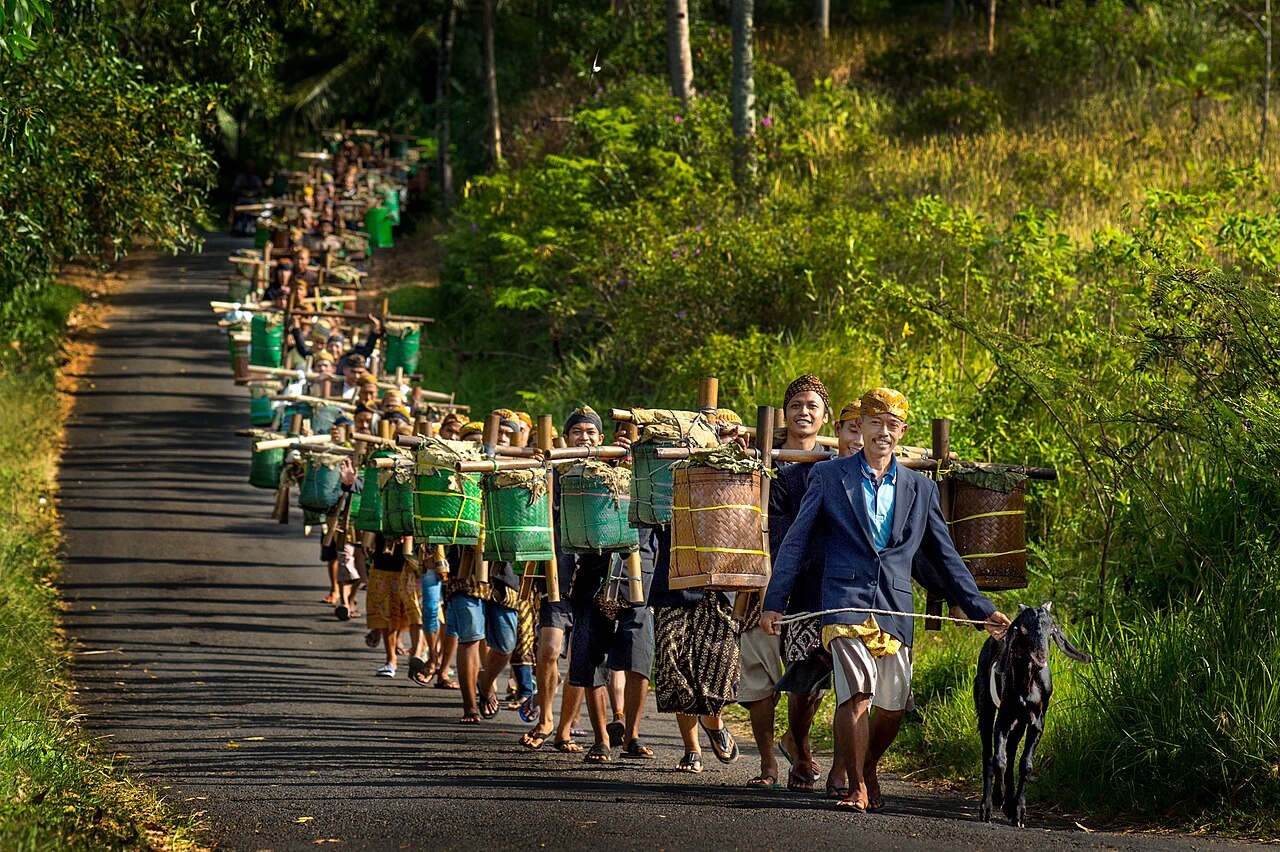
A high degree of social stratification has traditionally existed in much of Indonesia, yet classes have often been hard to clearly divide. Indonesia and Malaysia blend Asian group think values with Islamic morality. Emphasis is on the group rather than the individual. After seeing a poster in an American elementary school classroom that read, “We are each unique and special,” an Indonesian eductaor told the New York Times, “This impressed me very much. We would never say something like this in Indonesia. Sometimes we only care for the group and not the individual.”
Indonesia society operates in accordance with intricate social codes. Social status is important. It is no unusual for high status people to keep low status people waiting. According to kwintessential.co.uk: 1) Due to the diverse nature of Indonesian society there exists a strong pull towards the group, whether family, village or island. 2) People will define themselves according to their ethnic group, family and place of birth. 3) The family is still very traditional in structure. 4) Family members have clearly defined roles and a great sense of interdependence.[Source: kwintessential.co.uk]
Many people in rural areas and on the smaller, less industrialized islands live in or near poverty. Much of the country's wealth is controlled by a small number of well-connected political officials and businesspeople. The country's healthcare system is adequate. Many people have access to clinics. [Source: Blackbirch Kid's Visual Reference of the World, Gale Group, Inc., 2001]
As the world’s largest archipelago and fourth most populous country, Indonesia, a diverse nation, faces environmental and social challenges of breathtaking scope. While improved access to education has resulted in lower birth rates, higher incomes, better health and greater political participation, this has also come at a severe environmental cost. Preserving the country’s rich ethnic, linguistic and ecological diversity must increasingly be balanced against the homogenising influences of ever-more integrated and interconnected national and international economies. Finding a sustainable balance between these interests will be one of the central challenges Indonesia will face in the coming decades. [Source: Junior Worldmark Encyclopedia of the Nations, Thomson Gale, 2007]
RELATED ARTICLES:
CLASSES, HIERARCHIES AND STRATIFICATION IN INDONESIAN SOCIETY factsanddetails.com
RICH IN INDONESIA: WEALTH, LIFESTYLE AND TIES TO SUHARTO AND CURRENT LEADERS factsanddetails.com
POVERTY IN INDONESIA factsanddetails.com
PEOPLE IN INDONESIA: UNITY, DIVERSITY, CHARACTERISTICS, ADAT factsanddetails.com
ETIQUETTE AND CUSTOMS IN INDONESIA factsanddetails.com
SOCIAL CUSTOMS IN INDONESIA factsanddetails.com
INDONESIAN CHARACTER AND PERSONALITY factsanddetails.com
SOCIAL RELATIONS IN INDONESIA: GOTONG-ROYONG, BAPAKISME AND CONFLICT AVOIDANCE factsanddetails.com
JAVANESE PEOPLE: HISTORY, DEMOGRAPHICS, LANGUAGE factsanddetails.com
JAVANESE SOCIETY: FAMILY, MARRIAGE, GENDER, CUSTOMS, CLASSES factsanddetails.com
AUSTRONESIAN PEOPLE OF THE PACIFIC, INDONESIA, MALAYSIA, TAIWAN AND THE PHILIPPINES: ORIGIN, HISTORY, EXPANSION factsanddetails.com
MALAYS AND MALAY-RELATED PEOPLE: HISTORY, DEFINITIONS, ORIGINS, LIFE, CULTURE factsanddetails.com
For information on the Societies of Different Ethnic Groups See Minorities and Regions:
INDONESIAN GOVERNMENT, MINORITIES, CHINESE AND CHRISTIANS factsanddetails.com
ETHNIC GROUPS ON SUMATRA factsanddetails.com
ETHNIC GROUPS ON JAVA factsanddetails.com
ETHNIC GROUPS IN NUSA TENGARRA (ISLANDS EAST OF BALI) factsanddetails.com
ETHNIC GROUPS ON SULAWESI factsanddetails.com
BORNEO AND ETHNIC GROUPS IN BORNEO factsanddetails.com
ETHNIC GROUPS IN THE MOLUCCAS AND OTHER ISLANDS factsanddetails.com
BALI factsanddetails.com
ACEH factsanddetails.com
PAPUA factsanddetails.com
Village Society in Indonesia
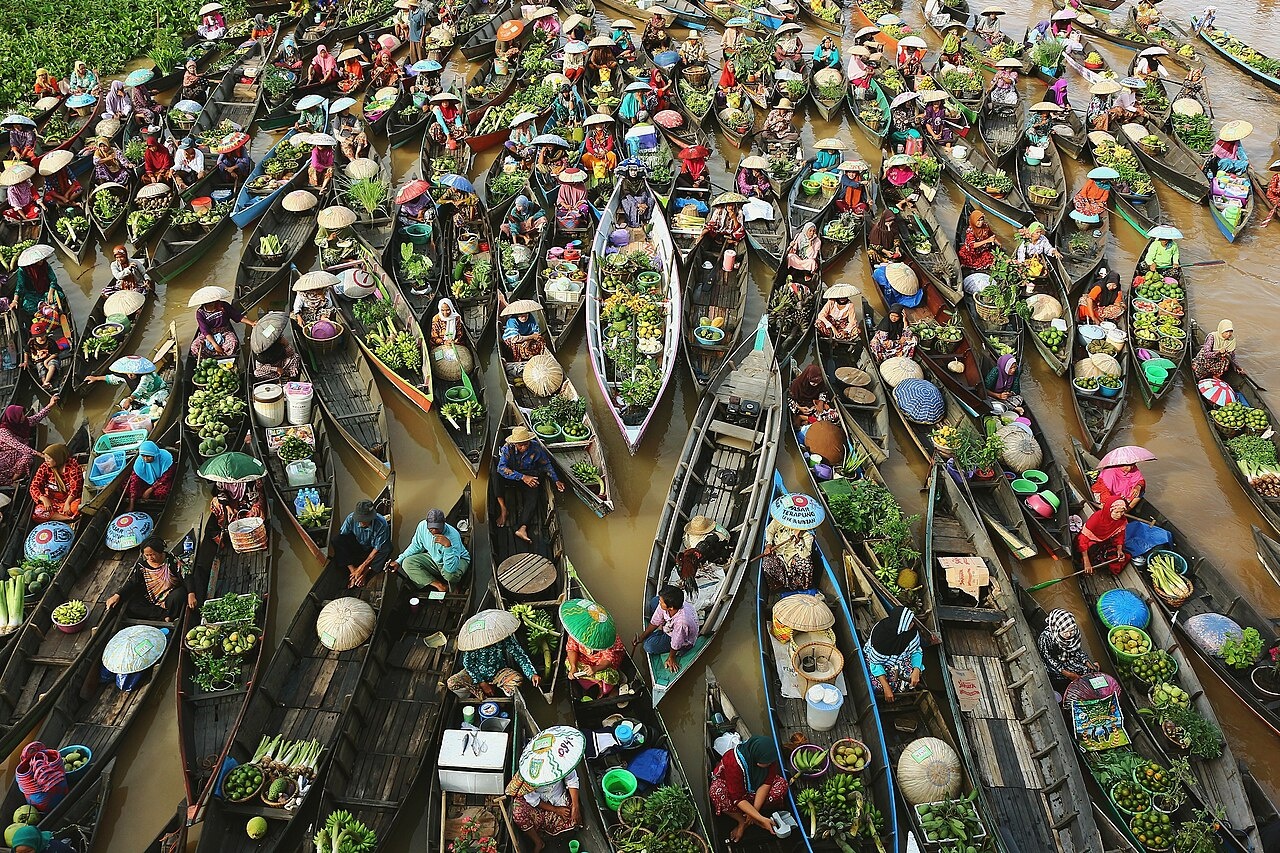
Home villages very important even among people living in cities. Village living is often dictated by established custom and mutual agreement by recognized leaders. The most important social units: 1) immediate family; 2) extened family; village or community.
Village are usually governed by village councils (banjar) and chiefs. In some placed the position of village chief is passed down from males of one generation to the sons of females in the next generation because sons of chiefs were killed by the Dutch .
Village life is often strictly codified. Social control and conformity are enforced on the village level through gossip and shunning. Since everyone knows and gossips about each other, morals tend to be similar. People who stand out or assert themselves as individuals are often regarded with suspicion and hostility by other villagers. People that are different are made fun of.
Villagers help one another in various ways. They help each other harvest their crops and build their homes. If someone has a serious health problem often everyone pitches in at least some money to help pay the medical bills. They also lend a hand taking care of widows and orphans, fighting fires and helping fix farm equipment.
Javanese Society
The Javanese are the largest ethnic group in Indonesia, making up about 40 percent on Indonesia’s population. Javanese society is very status oriented and patronage is one of its guiding principals. Major leader and chiefs alike have allowed to rule with unchallenged power if they brought peace, security and prosperity to their people. Leaders that aren't authoritarian and reprieve are often regarded as weak. This set of values helps to explain why someone like Suharto could rule for so long.
Differences in social class are less elaborate and less pronounced in Javanese rural villages than in urban areas. In villages where land is relatively evenly distributed, some form of mutual labor exchange is common; in villages where there are large numbers of landless peasants, however, there also are relationships of a clear client — patron nature with landowners, who themselves rarely own more than two hectares. In urban centers, the distinctions among a refined, traditional elite, an intermediate-level bourgeoisie sharing patterns of consumption, and a more collectivist peasantry are more pronounced. [Source: Library of Congress]
Leaders are usually male, in both the village and the urban neighborhood. Although some are political appointees, these leaders are theoretically chosen by popular consensus. This consensus system proceeds—ideally—through a discussion of different points of view, after which a senior-level participant makes a final decision. Although there is increasing acceptance of competitive elections, in many decision-making contexts it is not uncommon to make use of a process referred to as musyawarah mufakat (deliberation with consensus).
It has been suggested that the structure of Javanese and Balinese society in some ways is based on the sharing of water in the irrigation systems. Concepts and rules about status and social organization endure from the Mataram Kingdom. See MATARAM KINGDOM: HISTORY, HINDUISM, PRAMBANAN, AFTERWARDS factsanddetails.com
Musyawarah Mufakat (Discussion with Consensus)
Musyawarah in Indonesia is a process of discussion of the issue in order to reach a joint decision. The resulting consensus is the agreement after discussion and the collective bargaining process. So it is a process of deliberation to discuss issues together in order to reach a mutual agreement. Deliberation is done as a way to avoid a vote that produced a minority and majority groups. With deliberation expected two or more parties disagree not continue fighting and got a middle ground. Therefore, in the process of deliberation, it is necessary to have humility and sincerity. [Source: sharonjacob94, studymode.com, April 2013]
Musyawarah is a Malay, Indonesian, and Brunei term for consensus. Consensus in those communities or in most tribal societies is a decision that comes out after a prolonged discussions and sharing of ideas or opinions within the sitting (meeting). In social life, consensus agreement has several immediate benefits, as follows: a) a proper way to address the clash of ideas. b) To reduce the use of violence in fighting for the interests. c) To avoids and resolve potential conflicts.
Pancasila democracy is a form of democracy based on Indonesia’s national philosophy, especially its fourth principle: decision-making should be guided by wisdom through deliberation and representation. Instead of relying mainly on voting, it emphasizes discussion and consensus — musyawarah-mufakat — to resolve social and political issues.
This approach reflects traditional Indonesian practices, where communities meet, discuss problems, and aim to reach agreement acceptable to all. It is commonly seen in village meetings and has also influenced modern political institutions, including parliament. The idea is that everyone, regardless of status, should have a chance to express their views before a decision is made.
Compared to liberal democracy, which often depends on majority voting, Pancasila democracy prioritizes harmony and collective agreement. Voting may still be used, but usually only when consensus cannot be reached after long discussion. Supporters argue that this system promotes stability and inclusiveness by ensuring all voices are heard. However, critics note that it can be slow and less efficient, as reaching consensus often takes more time than simply holding a vote.
National, Religious, and Local Authority in Indonesia
Most Indonesians have a strong sense of citizenship in the larger Indonesian state and its various levels of government in addition to feeling attached to their family and household. Three generations of schoolchildren have worn similar uniforms, sung common songs, learned a common language, and recited similar facts of history, civics, and the Pancasila ideology. The red and white Indonesian flag is a common sight throughout the archipelago. Uniformed state employees and ordinary citizens alike have all grown accustomed to carrying their kartu tanda penduduk, or national identification card. [Source: Library of Congress]
In 1998, however, after nearly 32 years of gradual centralization of power and authority under Suharto (1967 — 98), the relationship of ordinary Indonesians to their vast nation-state began to change rapidly. One of the most noticeable changes was a trend toward challenging central authority occurring at the same time as a move toward decentralization. Assertions of local control and authority became more frequent in the early twenty-first century. In some cases, such assertions took the form of vigilante violence and protests, as local citizens bypassed the courts and took the search for justice into their own hands. As protests and unrest increased, citizens began monitoring calls for change (generally dubbed reformasi) in newly uncensored newspapers and Internet sources; print circulation and Internet subscriptions both increased rapidly. *
These challenges often took the form of assertions of religious rather than secular authority, as the leadership of Islamic groups, long suppressed during the New Order government of Suharto, began to find its voice. One striking trend was visible in Java among young women, who, in increasing numbers, began to wear the jilbab, the traditional Islamic women’s head covering. Anthropologist Suzanne Brenner has argued, based on extensive interviews with Javanese women, that this was less a statement of submission to an ideology of male-dominated tradition than an assertion of independence from a perceived status quo of secular authoritarianism. Young women, in other words, were employing the veil or head covering as a way of making a statement about their feelings toward what they regarded as the moral laxity and corruption of the state, and of society more generally. It did not necessarily signal a stance in favor of an Islamic state.
Role of NGOs and the Media in Indonesian Society
Although the family, the community, and the government are important sources of authority in Indonesia, nongovernmental organizations (lembaga swadaya masyarakat, or LSM, or also sometimes organisasi nonpemerintah, or ornop), such as foundations or charitable organizations (yayasan), associations (perserikatan), and movements (gerakan), play an increasingly important role in defining and shaping social life. While some yayasan, for example, provide complex but significant financial loopholes for businesses, since the 1980s, environmental, legal aid, and women’s groups have played an increasingly important public role. [Source: Library of Congress]
“Islamic civic organizations constitute another important manifestation of civil society in Indonesia. In the period following the 1997 — 98 economic crisis and the downfall of Suharto, these organizations played an important role in filling the vacuum of authority. Well before the term civil society became widespread in the 1980s, Islamic organizations in Indonesia participated in activities that mediated between the state and the family. For instance, Muhammadiyah (Followers of Muhammad) is one of the two most important, modern Islamic social-religious organizations in Indonesia. Established in 1912, it has played an increasingly important role in social and cultural spheres of Indonesian life, such as education, finance, socioeconomic development, health care, and care for indigent people and orphans. After the collapse of the New Order in 1998, when new political parties were being established across the archipelago, Muhammadiyah had the opportunity to transform itself from a social and cultural organization into a political party. However, the membership rejected this change, and in 2008 no official link existed between Muhammadiyah and any political party.
The increasingly free news media are an important means of expression for Indonesian civil society. Immediately preceding the fall of Suharto in 1998, Indonesians began to enjoy expanded access to print and electronic news sources. Although not completely unfettered, the news media were vibrant and played an increasingly important role in informing public debate. Immediately upon Suharto’s departure, however, the media were openly reporting on strikes, popular demonstrations, and other expressions of opposition to government authority. Intimidation by officials and private interests remained a serious problem, but journalists reported and advocated positions at odds with those of the government, sometimes at their peril. Media observers, such as Krishna Sen and David T. Hill, believe that the Internet may also have played a role in this new openness, as the freedom it offered during the waning days of the Suharto era became a constant reminder of the absence of openness and freedom in other media.
Income Disparity in Indonesia
Income inequality in Indonesia is among the highest in Southeast Asia. Studies by Oxfam have found that the top 10 percent of earners capture as much as 77 percent of national income, while the bottom half receives only about 12–15 percent. Over the past two decades, this gap has widened significantly, placing Indonesia among the most unequal countries globally; in extreme terms, a handful of billionaires have been reported to hold more wealth than tens of millions of poorer citizens.
The Gini Index (or coefficient) is a statistical measure of economic inequality, commonly representing income or wealth distribution within a nation, ranging from 0 to 1. The Gini Index coefficient for Indonesia was 0.375 as of March 2025, showing a slight decrease from 0.381 in September 2024 and 0.379 in March 2024, indicating a gradual reduction in inequality. The ratio is higher in urban areas (0.395) compared to rural areas (0.299). A score of 0 indicates perfect equality (everyone has the same), while 1 indicates maximum inequality (one person has everything). 0.2–0.3 is very low inequality (such as some Scandinavian countries). 0.4 is The World Bank's threshold for high inequality. 0.5–0.7 is High inequality (such as in parts of South America and South Africa). You would think the Philippines would have a higher, more unequal, Gini Index, as there is a very rich elite and lot of rural and urban poor in the country but money that pours in from overseas Filipino workers helps lower the Gini Index.
United Nations Development Programme data based on the Gini index indicate that Indonesia stands comparatively well regarding income inequality in the late 2000s. For example, the Gini index for Indonesia in 2008 was estimated at 0.34, significantly lower than the indexes for several neighboring countries: Singapore (0.42), the Philippines (0.44), Malaysia (0.49), and Papua New Guinea (0.51). [Source: Wikipedia]
Between the nation’s poor and privileged classes lies a complex mosaic of groups forming what might loosely be called a middle class. Not characterized by a common political vision, a set of economic interests, ethnic identification, or even income levels, the notion of a middle class in Indonesia is invoked by outsiders and analysts but rarely defined, especially by Indonesians themselves. While middle-income Indonesians appear to share some consumption patterns—the purchase and exclusive use of consumer durables such as televisions, motorcycles and smart phones — the decentralization of power after 1998 does not seem to have resulted in an empowered middle class. As Richard Robison and Vedi Hadiz argued in 2004, the Indonesian oligarchy adapted to the collapse of the New Order and the financial crisis in some new ways but continues to use state power for private interests. [Source: Library of Congress]
Regional Income Disparity in Indonesia
A major feature of this inequality is regional disparity. Economic growth has been uneven across the archipelago, with resource-rich areas such as Sulawesi and Maluku benefiting from mining and natural resources, while many rural areas in Java and Sumatra continue to lag behind due to weaker infrastructure and fewer economic opportunities.
Income disparities between the Outer Islands and the rest of the country and between rural and urban areas remain a major cause of concern, although the productivity gap between Java and the Outer Islands has narrowed. While the urban areas of Indonesia, especially Java and Bali, grew disproportionately wealthy in relation to their counterparts in more rural areas and the Outer Islands through much of the 1990s, they were also hit particularly hard by the 1997 — 98 financial crisis. By 2000, income and consumption inequalities were back to levels experienced in the 1980s. [Source: Library of Congress]
On Java there has traditionally been a small elite of super rich and millions below or near the poverty line,. In the 1980s, 1 percent of landowners owned much of the land and 80 percent of rural families were landless. Some people worry that the gap between rich and poor will engender political instability.
Reasons for Income Disparity in Indonesia
Wealth concentration is reinforced by the dominance of large corporations and high-net-worth individuals, who control significant shares of land, capital, and key industries. According to analyses by organizations such as Asian Development Bank, Indonesia’s economic structure—particularly its reliance on natural resources and industrial sectors—has tended to concentrate gains at the top when redistribution mechanisms are limited.
Labor market conditions further contribute to inequality. Many workers face low wages, job insecurity, and limited access to high-skilled employment. Women are particularly affected, with a persistent gender pay gap of around 23 percent. At the same time, the country’s middle class has shown signs of stagnation or contraction despite steady economic growth of around 5 percent, suggesting that prosperity is not being broadly shared.
Structural barriers also play a significant role. Unequal access to quality education and vocational training limits upward mobility for poorer populations, restricting their ability to enter higher-paying sectors. In addition, Indonesia’s tax system has historically relied heavily on wage income—accounting for about 90 percent of personal income tax revenue—while contributions from the wealthiest individuals remain comparatively limited, though reforms have been introduced in recent years.
These patterns are driven by interconnected factors, including disparities in education, the structure of the economy, and the growing influence of financial sectors that tend to benefit wealthier groups. While the Indonesian government has acknowledged the problem and expanded social assistance programs, reducing inequality remains a major and ongoing challenge.
Violence in Indonesia
As in many other societies, civil-society organizations in Indonesia ideally promote peace, justice, and social tolerance, but that is not always the reality. For instance, on October 12, 2002, terrorists associated with the radical group Jemaah Islamiyah (Congregation of Islam) blew up two Bali nightclubs, killing 202 people. On August 5, 2003, individuals allegedly linked to the same group struck the Jakarta JW Marriott Hotel, killing 14. Nonetheless, a national poll in 2003 suggested that politically militant Islam was not on the rise. Fully 85 percent of the respondents indicated that they did not support the idea of an Islamic state or rollbacks of democratic freedoms. In spite of high-publicity attacks by militant Muslim groups, Muslim conservatives play a far smaller role in national politics than they did in the 1950s. [Source: Wikipedia]
Indonesia experienced a high level of civil violence from about 1996 to 2003. Instances included ethnic conflict in Sumba (Nusa Tenggara Timur); apparently ethnic and religious strife in Kalimantan, Sulawesi, Ambon, and Halmahera (in the Malukus); sectarian rioting in the cities of Situbondo (Jawa Timur) and Tasikmalaya (Jawa Barat); race rioting in Jakarta; gang warfare in Timor; and government repression of student protests at Trisakti University in Jakarta on May 12, 1998. The cumulative casualty toll was in the thousands, and the number of displaced persons rose to more than 500,000, according to the U.S. Committee for Refugees. The predominant theme to this unrest, according to some analysts, was not religion, ethnicity, or politics, but rather a tendency to use extralegal means to exact vengeance and retaliate against enemies.
As the Suharto administration began to assume power, it was involved in a bloody retaliation against alleged communist actions during 1965 — 66; for the next 30 years, vigilante neighborhood watch groups consisting of young men routinely captured and killed alleged thieves without legal process but with the implicit approval of the government. Because the court system was viewed as corrupt and susceptible to bribery, and many law enforcement agencies were nearly bankrupt because of the financial crisis, many Indonesians came to believe that violence was the only route to justice. The violence of 1996 — 2003 represented a continuation and intensification of these patterns.
RELATED ARTICLES:
INDONESIAN WAR OF INDEPENDENCE (1945-1949): POLICE ACTION, ATROCITIES, MASSACRES factsanddetails.com
COUP OF 1965 AND THE FALL OF SUKARNO AND RISE OF SUHARTO factsanddetails.com
VIOLENT CRACKDOWN ON COMMUNISTS IN INDONESIA IN 1965-66: KILLERS, VICTIMS, REASONS factsanddetails.com
LEGACY OF THE VIOLENT CRACKDOWN ON COMMUNISTS IN INDONESIA IN 1965-66: FEAR, FILMS AND LACK OF INVESTIGATION factsanddetails.com
VIOLENCE TOWARDS CHINESE IN INDONESIA factsanddetails.com
VIOLENCE AGAINST THE MADURESE IN BORNEO factsanddetails.com
MUSLIM-CHRISTIAN VIOLENCE IN INDONESIA IN POSO, SULAWESI 1998-2002 factsanddetails.com
MUSLIM-CHRISTIAN VIOLENCE IN THE MOLUCCAS factsanddetails.com
Image Sources: Wikimedia Commons
Text Sources:“Encyclopedia of World Cultures Volume 5: East/Southeast Asia:” edited by Paul Hockings, 1993; “Culture and Customs of Indonesia” by Jill Forshee, Greenwood Press, 2006; National Geographic, New York Times, Washington Post, Los Angeles Times, Smithsonian magazine, Encyclopedia.com, Library of Congress, Indonesia Tourism website (indonesia.travel), Indonesia government websites, Live Science, The Conversation, The New Yorker, Time, BBC, CNN, Reuters, Associated Press, AFP, Lonely Planet Guides, Google AI, Wikipedia, The Guardian and various websites, books and other publications.
Last updated April 2026