
MUSLIM-CHRISTIAN VIOLENCE POSO, SULAWESI
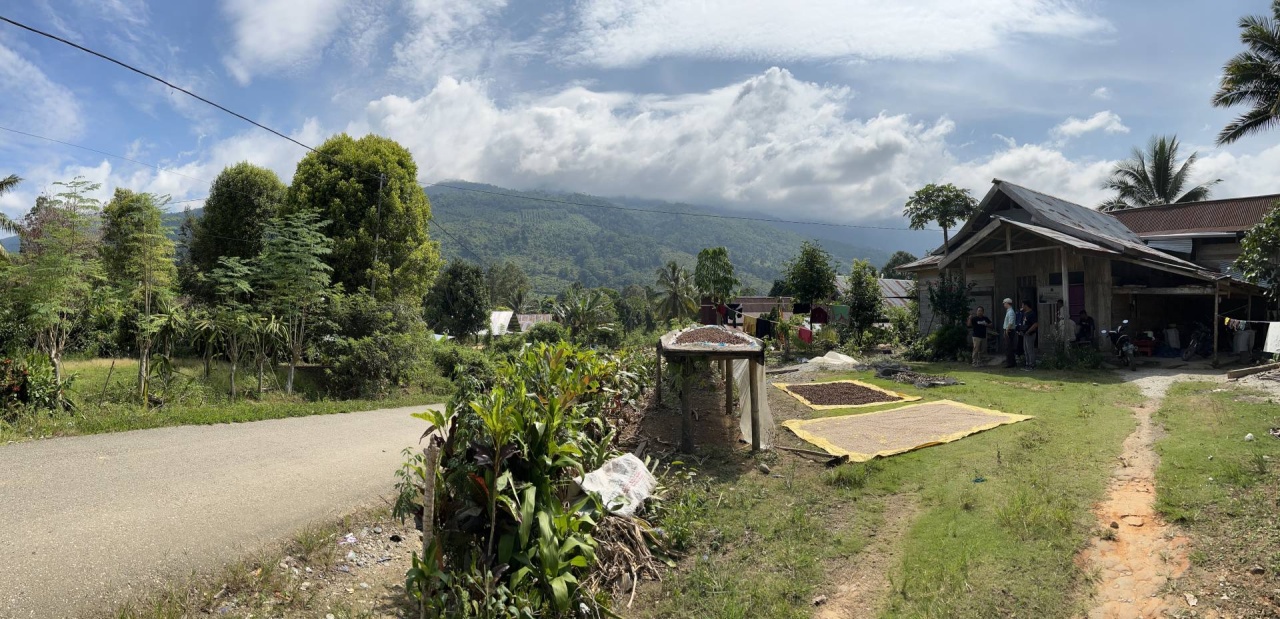
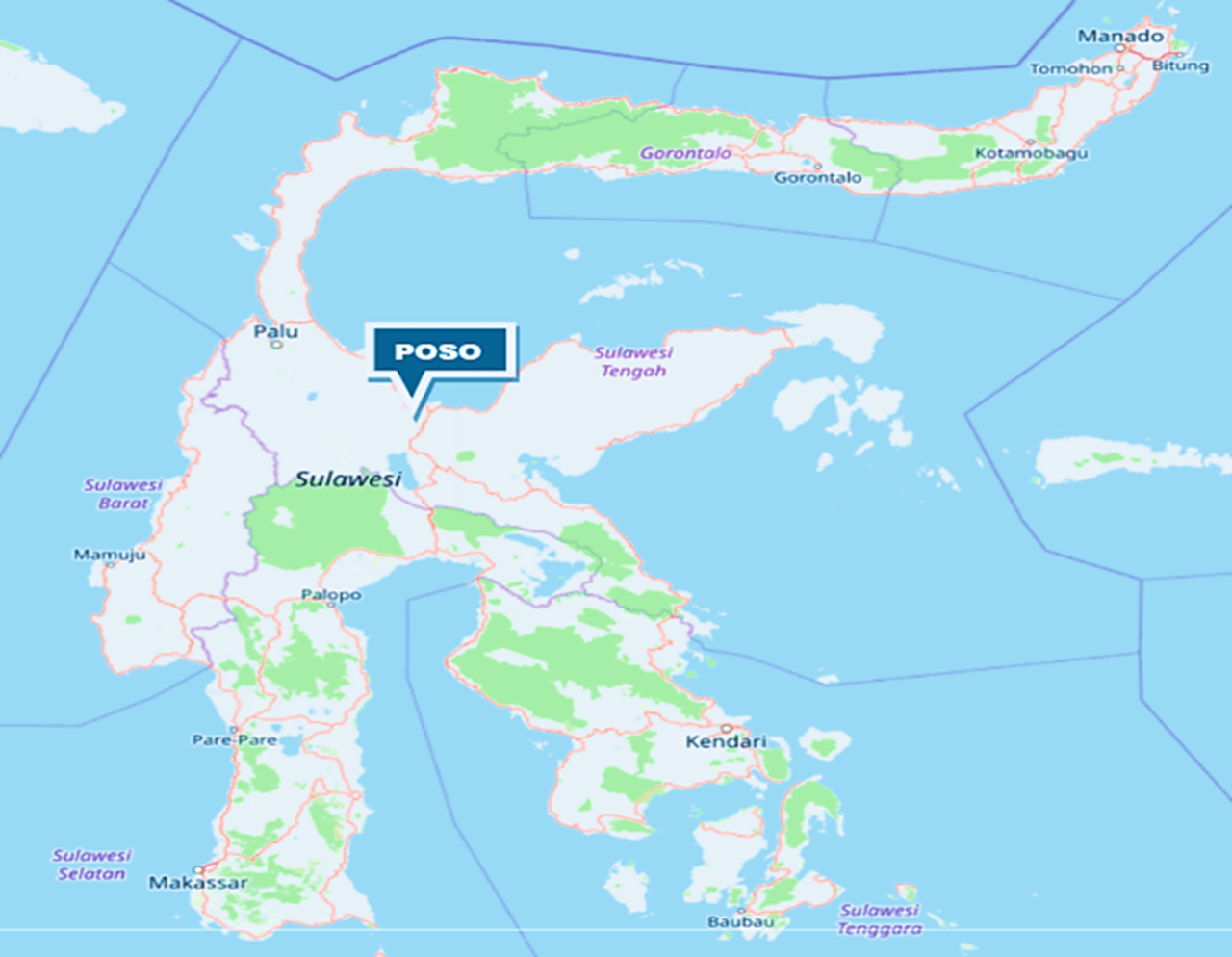
Poso district in central Sulawesi endured a wave of violence between December 1998 and 2002 that left between 1,000 to 2,500 dead and thousands more injured. Scores of churches and mosques were burned and 100,000 people were forced to flee their homes. At one point, so many had left Poso city—the capital of Poso district—it was described as a 'dead city'. [Source: Lorraine V Aragon, Inside Indonesia, April-June 2002. Aragon teaches anthropology at East Carolina University ]
Lorraine V Aragon wrote in Inside Indonesia, “It began as a street fight between hot-headed young men, one Protestant and one Muslim, during a tense local political campaign. The brawl quickly deteriorated into a religiously polarised battle in this formerly quiet, multiethnic region. Police and military forces could not, or would not, stop the arson and attacks between the two communities. The infrastructure of Poso city and surrounding towns was devastated. Refugees in holding camps suffered harsh conditions and burden locals — mostly Muslims in Palu and South Sulawesi, mostly Christians in North Sulawesi, Tentena, and the Lore Valley. Fear and vengefulness made it difficult to stop the cycle of bloodshed.”
For the complete article from which much of the material here is derived see Indonesia: Violence Unchecked in Central Sulawesi by Human Rights Watch, December 4, 2002 .hrw.org and the 48-page report “Breakdown: Four Years of Communal Violence in Central Sulawesi” hrw.org
RELATED ARTICLES:
CHRISTIANS IN INDONESIA factsanddetails.com
CHRISTIANS AND MUSLIMS IN INDONESIA; HISTORY, RELATIONS, VIOLENCE factsanddetails.com
MUSLIM-CHRISTIAN VIOLENCE IN THE MOLUCCAS factsanddetails.com
CHINESE IN INDONESIA factsanddetails.com
DISCRIMINATION AGAINST CHINESE IN INDONESIA factsanddetails.com
VIOLENCE TOWARDS CHINESE IN INDONESIA factsanddetails.com
FALL OF SUKARNO, RISE OF SUHARTO AND THE MYSTERIOUS COUP OF 1965 factsanddetails.com
CHINESE IN SOUTHEAST ASIA factsanddetails.com
RELIGION IN INDONESIA factsanddetails.com
RELIGIOUS DISCRIMINATION IN INDONESIA factsanddetails.com
ISLAM IN INDONESIA: CHARACTERISTICS, TYPES, MUSLIM ORGANIZATIONS factsanddetails.com
ETHNIC GROUPS IN INDONESIA: HISTORY, DIVERSITY AND JEWS factsanddetails.com
INDONESIAN GOVERNMENT AND ETHNIC GROUPS: ISSUES, POLICIES, factsanddetails.com
History of the Muslim-Christian Conflict in Central Sulawesi
Lorraine V Aragon wrote in Inside Indonesia, “Dutch missionaries from the early 1900s converted indigenous animist groups in the mountainous interior of what is now Central Sulawesi province. The colonial administration envisioned these Protestants as an allied population buffer against Muslim-influenced coastal kingdoms. Many of these slash-and-burn farmers were resettled in model villages and taught wet-rice farming by the Dutch. Most groups living around Poso Lake, between Poso and the mission center of Tentena, came to identify themselves ethnically as Pamona.[Source: Lorraine V Aragon, Inside Indonesia, April-June 2002. ]
“The Japanese Occupation and independence in 1945 was followed by a chaotic period when Muslim rebels from South Sulawesi attacked interior animists and Christians. Yet, once the Suharto regime took control, the majority population of the region still was Protestant ('Kristen' in Indonesian), and Pamona leaders exercised partial control over the local bureaucracy.
“Much had changed by the end of Suharto's presidency. In 1973, Suharto designated Central Sulawesi as one of ten new transmigration provinces. The Trans-Sulawesi Highway was cut into the rugged mountain forests to ease the path for transmigrants. The new roads and settlements also attracted a flood of voluntary migrants, especially Muslim Bugis and Makassar people from South Sulawesi.
“The financial crisis beginning in late 1997 spurred further immigration into the ebony-producing Poso area. Entrepreneurial Muslims arrived from South Sulawesi to cash-crop cacao, an agricultural export that maintained an exceptionally high value during the crisis. Pamona Protestants lost their religious and ethnic majorities in the district. Many also had been displaced from their ancestral lands through processes of land commodification that had nothing to do with religion.
“Pamona Protestant Christians, like many interior groups in the outer islands, had also lost some of their indigenous political control. After the 1970s, much local authority was removed from customary councils of elders and transferred to a national bureaucracy. Modernist Muslims were installed in high-ranking military posts and Christians found it harder to get their leaders selected for local governance. By the end of his presidency, Suharto himself had become more pro-Muslim. Protestant mission funding became closely regulated. The government seized many schools and clinics originally funded by churches.”
Beginning of Muslim-Christian Violence in Poso in 1998
Lorraine V Aragon wrote in Inside Indonesia, “When the Poso violence began in December 1998, the district mayor (bupati) of Poso was a Muslim named Arief Patanga. Patanga's term of office was due to expire in June 1999. His district secretary (sekretaris wilayah daerah, sekwilda) was a Protestant Pamona named Yahya Patiro. This type of religious power-sharing at the district level had been known in earlier New Order Poso. Many Christians hoped Patiro would succeed his Muslim predecessor. Muslim factions, representing Bugis-influenced ethnic groups along the coast and towards South Sulawesi, promoted Muslim candidates. The new economic stakes raised the election heat. The 1999 Regional Autonomy Laws promised a shift in control over resources from the national to the regional level. Both Muslim and Christian elites in Poso viewed this election as critical to their future access to government contracts. [Source: Lorraine V Aragon, Inside Indonesia, April-June 2002. ]
“The street fight that began in the heart of Poso city on the eve of both Christmas and Ramadan, 1998, fed into religious tensions promoted by inflammatory graffiti during the campaign. Soon, supporters from allied towns arrived to reinforce the Protestant and Muslim mobs. After a week of chaotic street fighting and arson, about 200 people were injured and 400 homes burned. Reportedly, Christians suffered most of the damage in what became the conflict's 'first phase'. A Pamona Protestant leader of the political campaign, Herman Parimo, was jailed for heading a group of fighting Christians. No Muslims were prosecuted. This apparently partisan response by the authorities increased Protestant resentment.
Muslim-Christian Violence in Poso Escalates in 2000
Lorraine V Aragon wrote in Inside Indonesia, “A second escalating street fight occurred in mid-April 2000. By that time, a Muslim (although not the prior incumbent's favourite) had been installed as the new district mayor. When a Muslim youth reported being knifed by a Protestant, a Muslim posse began a retaliation campaign that the police could not handle. Supporters with homemade weapons again arrived from allied Muslim and Protestant towns. Army personnel followed from Makassar, South Sulawesi, but the fighting continued for over two weeks. By early May, over 700 homes had been burned, mostly belonging to Christians, along with several church buildings and a police barracks. Thousands of refugees, mostly Christians, fled. [Source: Lorraine V Aragon, Inside Indonesia, April-June 2002. ]
“The 'third phase' began only three weeks later when a group of Christians made a night-time raid on the Muslims they considered responsible for the earlier destruction of Christian neighbourhoods. The masked 'ninja' group of about a dozen men is alleged to have included both Protestant Pamona and Catholic immigrants from Flores who resided in the Poso district. Fighting then intensified throughout the region, abetted by teams of local Christian militias. This third phase culminated in a massacre of Javanese men who fled to a Muslim boarding school in a transmigration area south of Poso. Over a hundred were executed with homemade weapons, their bodies tossed in the Poso River and mass graves. The fighting continued until the end of July 2000, when three Catholic ringleaders were captured. These Flores immigrants were tried between December 2000 and April 2001, when they were sentenced to death.
“Despite a few high-profile reconciliation efforts in late 2000, many criticised the lack of government aid and biased processes of law enforcement. Sporadic fighting continued and most refugees were too scared to return home. Instead, the population underwent an increasing de facto religious segregation - Muslims in Poso city, Protestants in the highland towns.”
Muslim-Christian Violence in Poso in 2001
Lorraine V Aragon wrote in Inside Indonesia, “During the first months of 2001, violence worsened again. In addition to surprise attacks on farmers, disgruntled factions planted bombs in religious buildings and police posts. After the three Catholics were sentenced to death, attacks on Muslims increased. This began to be called 'phase four.' Then in July, the Laskar Jihad group, based in Yogyakarta, sent emissaries to meet with senior religious and government leaders in Central Sulawesi. [Source: Lorraine V Aragon, Inside Indonesia, April-June 2002. ]
“Violence surged again at the end of 2001 when thousands of well-armed Laskar Jihad troops were added to the volatile mix of local fighters. Over a hundred more persons were killed in what we can call 'phase five'. By mid-November, desperate pleas emerged from Protestant towns. Christians reported invasions by Muslim militias who threatened to rule the area by the end of Ramadan. At least half a dozen churches and 4,000 houses in thirty villages were burned, seemingly under the blind eye of security forces. Roughly 15,000 more people fled their homes. Muslim militias seized control of fuel stations and roadside checkpoints, where some displayed posters of Osama bin Laden. In the aftermath of September 11th, these reports caught the attention of government officials and human rights workers in the United States and elsewhere, and led to pressure on the Indonesian government to control radical Muslims.”
Peace Deal Sort of Ends Muslim-Christian Violence in Poso
Lorraine V Aragon wrote in Inside Indonesia, “On December 4, 2001, Indonesia's chief security minister, Susilo Bambang Yudhoyono, traveled to Sulawesi to meet with Muslim and Christian leaders. Jusuf Kalla, the Coordinating Minister for the People's Welfare (Menko Kesra), was assigned as mediator. Roughly fifty delegates, half Muslim and half Christian, met separately with Kalla in Malino, South Sulawesi. [Source: Lorraine V Aragon, Inside Indonesia, April-June 2002. ]
“On December 20, 2001, a ten-point bilateral peace agreement was announced. With the arrival of 4,000 military and police, as well as national and international attention on Central Sulawesi, Christmas proceeded peacefully. At New Year's, four Protestant churches were bombed in the provincial capital of Palu, but implementation of the accord continued.
“The Malino Agreement includes some unarguable points: both sides should stop fighting, obey laws, expect security forces to be firm and fair, reject unauthorised 'outside' interference or militias, stop slander, and promote apologies and respect for all traditions and religions. Problems likely will come in implementing points such as weapons collection and the return of property to 'pre-conflict' status. It will be difficult to divide rehabilitation funds fairly and resettle about 90,000 refugees, who may claim land now occupied by other mobile citizens. Finally, there is the lingering issue of power sharing at the political level, an issue raised by the Christian delegates, but not included in the final peace agreement.
Three Christians Executed in Central Sulawesi
In September 2006, an Indonesian firing squad executed three Christian men convicted in connection with the sectarian violence that devastated Central Sulawesi. The government proceeded despite a last-minute appeal from the European Union urging a moratorium on the death penalty. [Source: Raymond Bonner, New York Times, September 22, 2006]
Although no direct evidence tied the men to specific killings, two were identified as leaders of a Christian militia accused of killing around 200 Muslims in 2000, while the third was said to have trained Christians to use weapons such as arrows, according to trial observers. The European Union’s appeal did not single out this case but instead called for a halt to all executions, including those of the perpetrators of the 2002 Bali bombings, which killed 202 people.
The executed men—Fabianus Tibo, Marinus Riwu, and Dominggus da Silva—had been convicted in 2001. Observers noted that no witnesses testified to seeing them personally commit killings. Some analysts argued that, even if they had leadership roles, the death sentences were disproportionate, especially since over 150 others tried in connection with the conflict received no more than 15-year prison terms.
The case became politically entangled with that of the Bali bombers. In Indonesia, the government feared backlash if it executed Muslim militants but not the Christian men. Officials indicated that executions of those responsible for the Bali attacks would proceed, though they had already been delayed and were expected to occur only after Ramadan. Nevertheless, many analysts and diplomats remained skeptical that those executions would ultimately be carried out.
Image Sources: Wikimedia Commons
Text Sources: “Encyclopedia of World Cultures Volume 5: East / Southeast Asia:” edited by Paul Hockings, 1993; National Geographic; New York Times, Washington Post, Los Angeles Times, Lonely Planet Guides, Library of Congress, Smithsonian magazine, The New Yorker, Time, Reuters, AP, AFP, Wikipedia, BBC, CNN, and various books and other publications.
Last Updated December 2025