
VIOLENCE DURING INDONESIA’S STRUGGLE FOR INDEPENDENCE
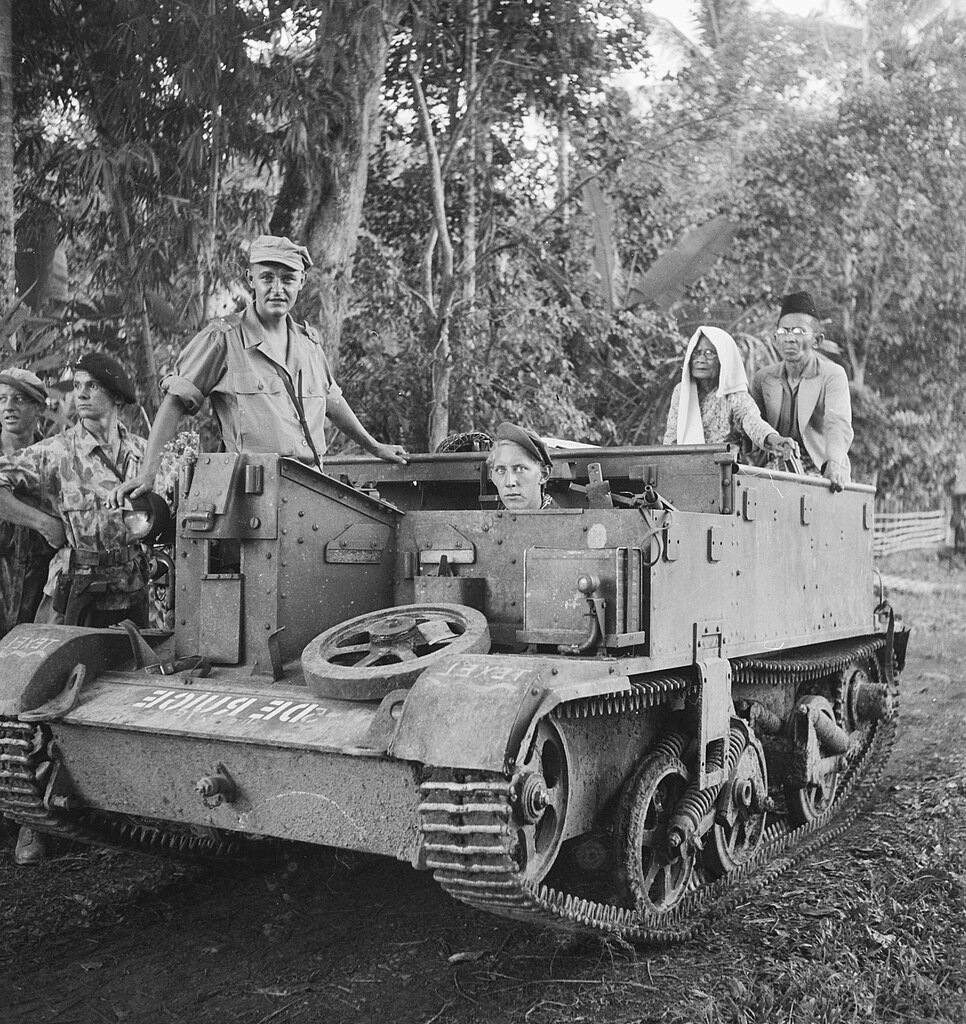
After three years of Japanese occupation during World War II, Indonesian nationalists led by Sukarno and Mohammad Hatta proclaimed the Republic of Indonesia on August 17, 1945—just days after Japan’s surrender. They established a provisional government and adopted a temporary constitution. The Dutch, refused to accept the declaration and attempted to restore colonial rule.
The struggle that followed the proclamation of independence on August 17, 1945, and lasted until the Dutch recognition of Indonesian sovereignty on December 27, 1949, is generally referred to as Indonesia’s National Revolution. It remains the modern nation’s central event, and its world significance, although often underappreciated, is real. [Source: Library of Congress *]
In all, around 6,000 Dutch soldiers died in the war and at least 150,000 Indonesians were killed. Around 100,000 Indonesians died as a direct result of the war, and the total human cost has been estimated at about 250,000 lives. Although perceptions of the conflict have been changing in the Netherlands, the Dutch government had never fully examined or acknowledged the scope of its responsibility. [Source: Toby Sterling and Anthony Deutsch, Reuters, February 17, 2022]
According to The Independent: “Jop Hueting, perhaps the most famous Dutch soldier of the Indonesian war, who was decorated for the bravery he displayed in an airborne assault on Jakarta, has compared some of the massacres he witnessed to the My Lai incident during the Vietnam War. Mr Hueting, says the comparison between the Nazi SS and the Dutch forces is appropriate, because 'it is a metaphor for unbelievably violent behaviour by our forces'. “He said: 'I went to war as a naive boy from a liberal family, so I don't feel guilty for what happened.' But while he has spoken out about the war crimes since the late 1950s, 'it was impossible for me to break through the wall of silence'. . [Source: Leonard Doyle, The Independent, May 28, 1994]
RELATED ARTICLES:
INDONESIA DECLARES INDEPENDENCE IN 1945 AT THE END OF WORLD WAR II factsanddetails.com
INDONESIA’S NATIONAL REVOLUTION: THE STRUGGLE FOR INDEPENDENCE 1945-1949 factsanddetails.com
INDONESIA OFFICIALLY ACHIEVES INDEPENDENCE factsanddetails.com
RISE OF INDONESIAN NATIONALISM IN THE EARLY 20TH CENTURY factsanddetails.com
INDONESIA IN WORLD WAR II factsanddetails.com
JAPANESE OCCUPATION OF THE DUTCH EAST INDIES (1942-1945) factsanddetails.com
DIFFICULTY MAKING DEMOCRACY WORK IN INDONESIA IN THE 1950s factsanddetails.com
SUKARNO: HIS LIFE, CHARACTER AND IDEOLOGY factsanddetails.com
SUKARNO AS PRESIDENT: CHALLENGES, AUTHORITARIANISM, GUIDED DEMOCRACY factsanddetails.com
INTERNATIONAL RELATIONS UNDER SUKARNO: NON-ALIGNMENT, ISOLATION, WAR WITH MALAYSIA factsanddetails.com
Dutch Police Action
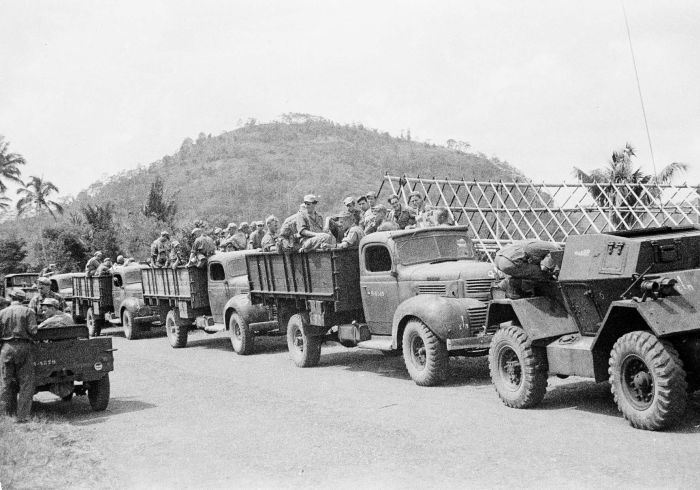
On July 21, 1947, less than two months after the KNIP had, following bitter debate and maneuvering, approved the agreement, Dutch forces launched what they euphemistically called a “police action” against the Republic, claiming it had violated or allowed violations of the Linggajati Agreement. Republican officials were imprisoned in Java and Kalimantan; the Dutch occupied Medan and Palembang in Sumatra after a series of bombings there. In south Sulawesi a Captain Westerling was accused of pacifying the region by murdering 40,000 Indonesians in a few weeks. The Dutch retook Jakarta and the republicans set up their government in Yogyakarta.
Dutch troops drove the republicans out of Sumatra and East and West Java, confining them to the Yogyakarta region of Central Java. They secured most of the large cities and valuable plantation areas of Sumatra and Java and arbitrarily established boundaries between their territories and the Republic, known as the Van Mook Line, after Lieutenant Governor General H. J. van Mook. The Republican military, the Indonesian National Army (TNI), and its affiliated militia (“laskar”) were humiliated, and yet greater criticism of the government arose, now even from within the military itself and from Muslim leaders. [Source: Library of Congress *]
The international reaction to the police action was against the Dutch. The United Nations Security Council established a Good Offices Committee to sponsor further negotiations. This action led to the Renville Agreement (named for the United States Navy ship on which the negotiations were held), which was ratified by both sides on January 17, 1948. It recognized temporary Dutch control of areas taken by the police action but provided for referendums in occupied areas on their political future. *
Rawagede Massacre
The Rawagede massacre was committed by Royal Netherlands East Indies Army on 9 December 1947 in the village of Rawagede (now Balongsari in West Java), during Operatie Product. Dutch forces were deployed in the East Indies to try to retain them as a colony. They were battling Indonesian independence fighters and militia forces seeking independence for Indonesia. Almost all males from the village, amounting to 431 men according to most estimates, were killed by the Dutch military, since the people of the village would not tell where the Indonesian independence fighter Lukas Kustario was hiding. Although Dutch Army General Simon Hendrik Spoor recommended that the responsible officer, Major Alphons Wijnen, be prosecuted, no criminal investigation was started. A report from the United Nations published on 12 January 1948 called the killings "deliberate and merciless". [Source: Wikipedia]
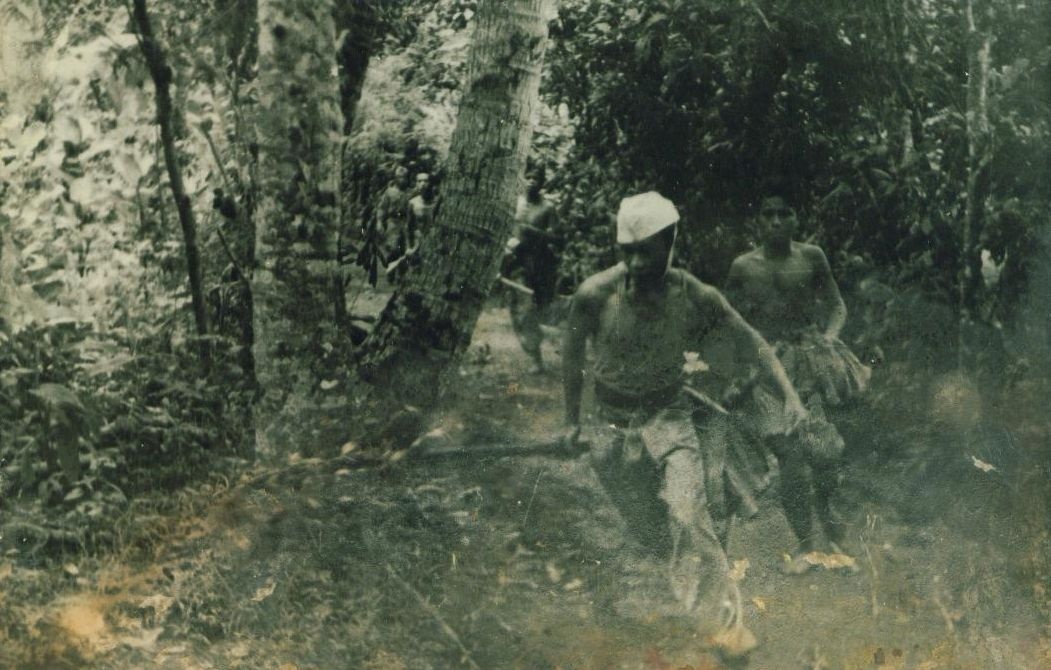
Associated Press reported: “Dutch troops clinging to their retreating colonial empire arrived in Rawagede just before dawn and opened fire, sending sleepy residents scattering from their homes in panic. The soldiers were looking for resistance leader Lukas Kustario, known for ambushing Dutch bases. When villagers said they didn't know where he was, nearly all the men were rounded up and taken to the fields. Squatting in rows, with both hands placed on the backs of their heads, they were shot one by one. [Source: Niniek Karmini, Associated Press, December 9 2011]
“Wanti binti Sariman was nine months pregnant with her second child when her 26-year-old husband, Tarman, was taken to a field with other men. She found his body in the last of three rows of corpses. “"I was so shocked to see him lying there with the other men," she said. "It had been raining. Their blood was mixed with the water, creating red pools all around them. "I can't get that image out of my head," she said. "I still have nightmares about it.“Some men escaped by hiding in the swamps and plantations, she said, but they were chased down by dogs and shot. "It was horrific. But I've come to accept it. That was our destiny," the widow said as she wiped away her tears. "And of course, we have to forgive the troops who killed our men."“The other women around her nodded. "It's true," said Lasmi binti Kasilan, who miscarried after her seventh month of pregnancy when she learned of her husband's death. [Source: Niniek Karmini, Associated Press, December 8, 2011]
In December 2011, the Netherlands formally apologized for the Rawagede massacre. Associated Press reported: “After six decades of waiting, relatives of men killed in a notorious massacre during Indonesia's bitter struggle for independence finally got what they wanted: An official apology from the Dutch state. Tjeerd de Zwaan, ambassador to Indonesia, made the announcement before hundreds of villagers in Rawagede. The crowd, tense with emotion, erupted in cheers. Tears rolled down the cheeks of surviving widows, now in their late 80s and early 90s, some of whom had started to doubt they would ever hear the words. "It makes me feel my struggle for justice was not useless," said Cawi binti Baisa, who was 20 when her husband of two years headed to the rice paddy in the morning never to return. The apology followed a landmark ruling earlier this year by a Dutch court - in a case filed by nine surviving relatives - that said the state was responsible for the massacre.The relatives' lawyer, Liesbeth Zegveld, said the state also would pay each of the nine relatives euro 20,000 ($27,000) compensation.
Eyewitness Accounts of the Rawagede Massacre
Radio Netherlands reported: “On December 9, 1947, one day after the negotiating Renville. Dutch soldiers surrounded the village and searched every house but they did not find any guns there. Then the Dutch army then gathered all the inhabitants in an open field. Males were told to line up, and asked where the fighters and the Indonesian Army were. None of the residents said anything. Then due to the silence of the population, the leader of the Dutch soldiers ordered to shoot to death the whole male population, both old and adolescents. Some people managed to escape to the forest, although many were hurt badly. Saih Bin Sakam was supposed to be one of the executed, but the bullet hit his hand. He kept still under a corpse for half an hour. [Source: Radio Netherlands, December 4, 2010 ***]
“Dutch soldiers shot dead by strafe with a machine gun without mercy. Actually, the death toll was higher than 431, because many corpses are swept away into the river due to flooding and heavy rain. The next day the Dutch troops left the village. The women who are still alive buried the bodies of the male population with simple equipment. Since they were not able to dig too deep, the bodies were covered with pieces of wood and leaves and then the soil covering. Consequently the the smell of dead bodies lingered for days. ***
A woman survivor named Wanti said,."I was pregnant three months when she saw her husband was shot by Dutch troops... Initially all the men were ordered out of the house, and told to march. They were shot in the head with a rifle by Dutch troops, only women and children escaped. Wanti said after the shooting took place in morning, she and other women began looking for the bodies to their husbands. ***
An anonymous letter received by the Dutch Honorary Debts Committee (KUKB) given by someone who claimed to receive it from a war veteran read: “I can not mention my name, but I can tell you what really happened in the village of SWAMP Gedeh.You know, between the years 1945 - 1949, we tried to retake our colonies in Southeast Asia. For that from 1945 to 1949, about 130,000 Dutch soldiers were sent to the former Dutch East Indies, now Indonesia. There occurs the following:In West Java, east of Batavia, in the area Krawang, there is the village of Rawa Gedeh. From the Swamp Gedeh Dutch troops were fired upon. So it was decided to beat up the village to be a lesson to other villages. Gedeh Swamp at night was surrounded. Those who tried to leave the village were killed without sound (attack, pressed into the water until it sinks; their head was hit with rifle butts, etc.). At half six in the morning, when it began to noon, the village with mortar fire. Men, women and children who would otherwise escape should be killed: all of them were shot dead. Hundreds of them. After the village was burned, the Dutch troops occupied the region. The remaining villagers were then gathered, squat, with hands folded behind his neck. Only a few left. Swamp Gedeh has received the 'lesson'.All the men were shot to death - even though we named 'Royal Army'.All the women were shot to death - even though we come from democratic countries. All children were shot to death - even though we are Christian soldiers mengakunya advent Week 1947.Now I remembered Swamp Gedeh day and night, and it makes my head hurt and my tears burned my eyes, especially when I think of the children whose arms are too short to fold his hands behind his neck, and their eyes widened, fear and do not understand. I can not mention my name, because this information is not favored certain circles.” ***
Atrocities in South Sulawesi
South Sulawesi was the site of one of the worst atrocities committed by Dutch forces during Indonesia’s struggle for independence. Thousands of Indonesian men were summarily executed in a ruthless campaign aimed at crushing local resistance to Dutch rule. In December 1946, the Special Forces Depot (Depot Speciale Troepen, DST), commanded by Captain Raymond “Turk” Westerling—a commando officer known for harsh counter-insurgency tactics—launched operations to “pacify” southern Sulawesi. Westerling’s methods relied on arbitrary terror, summary executions, and collective punishment, and were later copied by other anti-Republican forces. Estimates of the death toll vary widely: while some Indonesian accounts claim as many as 40,000 victims, most historical studies place the number between 3,000 and 4,000. Other research suggests 3,500 to 6,500 people were killed during the months-long campaign. Although the operation was widely condemned, Westerling was merely relieved of duty in 1948 and never faced trial for war crimes. [Source: Leonard Doyle, The Independent, May 28, 1994; Bastiaan Scherpen, Jakarta Globe, September 12, 2013; Wikipedia]
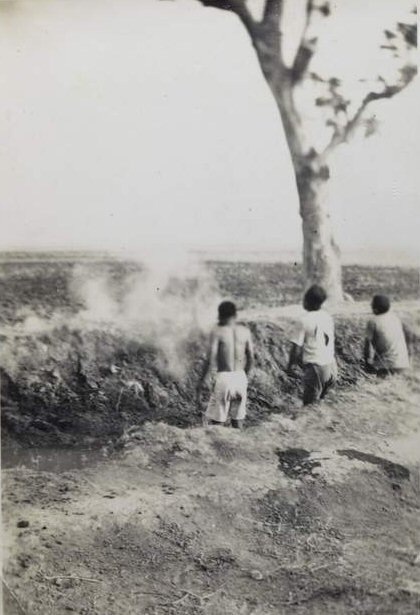
In January 1947, more than 200 Indonesian men were executed in a field in front of a local government office in what was then known as Celebes. AFP reported: Abdul Khalik remembers vividly the moment almost seven decades ago he saw his father being driven away from their remote Indonesian village by Dutch soldiers to be executed. “"He said to me, 'Go home, son', but I refused," recalled the 75-year-old, during an interview in Bulukumba district in Sulawesi. “His father was shot dead the next day, one of thousands killed by the Dutch army during the 1940s war of independence as Indonesia fought to shake off colonial rule. [Source: AFP, May 1, 2014]
Mr Khalik recalled his father and others were "piled up in a truck like animals" before being driven away — although the older man still managed to wave goodbye to his son as the vehicle drove off. "The next day my father was taken from prison, chained up with eight others and they were all executed," he said.
According to Dutch military historian Petra Groen, the South Sulawesi campaign must also be seen in the context of Dutch efforts to secure the newly created State of East Indonesia. “This state formed the foundation for the federal [United States of] Indonesia that the Netherlands envisioned as a political answer to the Republic’s independence struggle,” she told the Jakarta Globe. With the state’s political center in Makassar and TNI guerrillas gaining control of the surrounding region by mid-1946, the colonial administration deployed Westerling’s special forces to try to regain the initiative.
“Westerling Method”
Captain Raymond Westerling, one of the most notorious officers in the Dutch colonial army, masterminded the brutal campaign in South Sulawesi. Dutch troops would encircle villages, pull out suspected Republican fighters, and execute them on the spot without trial. Under Westerling’s command, young conscripts burned settlements and killed civilians, including women and children. The worst atrocities took place between December 1946 and early 1947 in South Celebes, where his units killed at least 4,000 Indonesians in the span of two months. Neither Westerling nor the officers and political leaders who authorized the operation were ever charged. [Source: Leonard Doyle, The Independent, May 28, 1994; Bastiaan Scherpen, Jakarta Globe, September 12, 2013; Wikipedia]
The “Westerling Method” involved mass roundups, house-to-house searches, and summary executions of anyone suspected of anti-Dutch activity, as well as killings of those who refused to give information—or simply those chosen as additional victims. Estimates of the death toll vary sharply: historian Jaap de Moor places deaths directly caused by the Special Forces at around 1,500, while noting that regular Dutch units were responsible for many more. Indonesian authorities at the time put the total at as high as 40,000.
According to historian Petra Groen, Westerling was not initially ordered to carry out summary executions, but his methods were later tacitly approved by the Dutch government. Westerling, who died in 1987, remained one of the most controversial figures of the colonial war, yet he was never brought to justice. The war crimes that occurred in South Sulawesi were not officially acknowledged until 2015, when a court in The Hague held the Dutch state responsible, paving the way for compensation to survivors and victims’ families.
Second Police Action and Pressure for Indonesian Independence
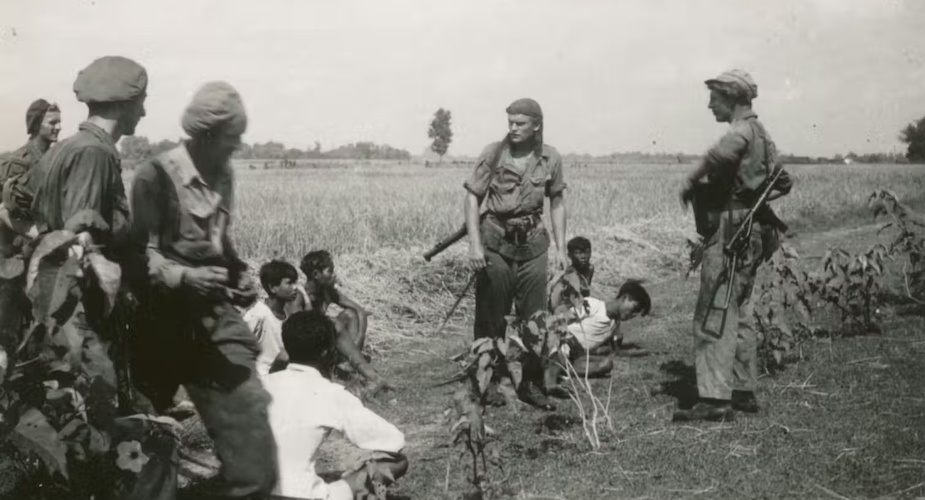
In February 1948 the Dutch launched another full-scale attack on the Republicans, breaking the UN agreement. Although the Dutch were gaining the upper hand military, world opinion had turned against them. Under pressure from the U.S., which threatened to withdraw its postwar aid to the Netherlands, and a growing realisation at home that this was an unwinnable war, the Dutch negotiating for Indonesian independence,
Immediately following the Madiun Affair, the Dutch launched a second "police action". On December 19, 1948, Dutch forces launched an attack designed to destroy the Republic, occupying its capital of Yogyakarta and capturing and imprisoning Sukarno, Hatta, five other cabinet members, and Syahrir (then an adviser). Sukarno, Hatta, who was there serving both as vice president and prime minister, and other republican leaders were exiled to northern Sumatra or the island of Bangka. An emergency republican government was established in western Sumatra. But The Hague's hard-fisted policies aroused a strong international reaction not only among newly independent Asian countries, such as India, but also among members of the UN Security Council, including the United States. [Source: Library of Congress *]
In response to this outright defiance, the UN Security Council demanded the reinstatement of the Republican government, and a full transfer of sovereignty to Indonesia no later than July 1, 1950. International pressure, which included a U.S. threat to withdraw Marshall Plan aid from the Netherlands, was too great for The Hague to withstand. At the same time, the Republic had initiated a guerrilla war (“gerilya”) against Dutch forces immediately after the fall of Yogyakarta. The significance of this “gerilya” has been generally underestimated, largely because it involved TNI struggles against armed internal opposition (for example, by the NII in western Java and by those loyal to Tan Malaka, who was captured and killed in eastern Java in February 1949) as well as Dutch forces. But Indonesian resistance was sufficiently effective to convince Dutch commanders that this was a war that could not be won on the ground. *
Study Says Dutch Troops Used 'Extreme' Violence in the 1945-49 Conflict
According to a major research project released in February 2022, Dutch forces committed “extreme violence” — often deliberately — during Indonesia’s war for independence in the 1940s, and political and military leaders in the Netherlands largely ignored or condoned these actions, The 4½-year investigation, carried out by three historical institutes, directly challenges the long-standing Dutch government position that such violence was only occasional. Researchers concluded that extreme abuses by Dutch troops were “widespread, deliberate, and tolerated at every level — political, military, and legal.” They said it was impossible to determine exact numbers of victims. [Source: Mike Corder, Associated Press, February 17, 2022]
Pressure from legal cases brought by survivors and relatives of victims helped force a re-evaluation of the Dutch role in the 1945–1949 conflict. A 1969 Dutch report had acknowledged “violent excesses” but framed them as isolated incidents within broader “police actions” against guerrillas. The new study depicts a far harsher reality: repeated extrajudicial executions, torture and ill-treatment, mass detentions under inhumane conditions, the burning of homes and villages, looting and destruction of property and food supplies, disproportionate air and artillery strikes, and widespread arbitrary arrests and internments. The researchers also emphasized that the military acted “in close consultation with, and under the responsibility of, the Dutch government.”
The study found the government sent soldiers on an impossible mission they had not been properly trained for. Some then engaged in acts of torture, extrajudicial killings and disproportionate use of weapons.“Violence by the Dutch military, including acts such as torture that would now be considered war crimes, was "frequent and widespread," said historian Ben Schoenmaker of the Netherlands' Institute for Military History, one of more than two dozen academics who participated in the study."The politicians responsible turned a blind eye to this violence, just as the military, civil and legal authorities: they aided it, they concealed it, and they punished it barely or not at all," he said. [Source: Toby Sterling and Anthony Deutsch, Reuters, February 17, 2022]
Veterans’ groups criticized the report. The Netherlands Veterans Institute said the conclusions unfairly cast all veterans of the former Dutch East Indies as suspects. Another veterans’ leader, Hans van Griensven, told Dutch media that the violence was “not as pervasive as suggested,” arguing that the report overlooked humanitarian efforts, such as distributing food and rebuilding infrastructure.
Netherlands Apologizes and Pays Some Compensation for Indonesian Colonial Killings
The Dutch government has issued various apologies in connection with violence in the 1945-49 Conflict. In September 2013, the Netherlands made a formal public apology for specific atrocities, — for thousands of summary executions carried out by Dutch troops in Indonesia. In 2020 King Willem-Alexander apologized for Dutch aggression during a state visit to Indonesia. After the release of the 2022 study on the use of "extreme vioelnce" Prime Minister Mark Rutte said that the findings compelled him to again offer a “deep apology” for the “systematic and widespread extreme violence” and for the way earlier Dutch governments “looked away.” He added that apologies were also owed to people in the Netherlands still living with the conflict’s legacy.
Two high-profile court cases in the Netherlands have resulted in 20,000 euros ($26,600; £16,800) being awarded to the widows of some of the victims. There are also demands for compensation to be paid to children of victims. No Dutch soldiers have faced prosecution over the deaths.
In 2013, the Dutch government introduced a measure enabling any future claim to be "settled in a uniform manner, without the involvement of the courts.” An announcement in the government gazette Staatscourant published outlined requirements that victims had to meet to file a successful claim for monetary compensation under the new regulation. The requirements include: the claimant must have been married to a person summarily executed by Dutch soldiers, the execution in question must have been of a similar nature as those in Rawagede and South Sulawesi, and the execution must have already been mentioned in a publication. Statements of witnesses will be accepted as proof of the fact that the deceased husband was indeed summarily executed, the announcement reads. Claims will be accepted until September 2015. [Source: BBC, September 12, 2013; Bastiaan Scherpen, Jakarta Globe, September 12, 2013
Image Sources: Wikimedia Commons
Text Sources: New York Times, Washington Post, Los Angeles Times, Lonely Planet Guides, Library of Congress, Compton’s Encyclopedia, The Guardian, National Geographic, Smithsonian magazine, The New Yorker, Time, Reuters, AP, AFP, Wikipedia, BBC, CNN, NBC News, Fox News and various books and other publications.
Last updated December 2025