
SUKARNO AS PRESIDENT OF INDONESIA
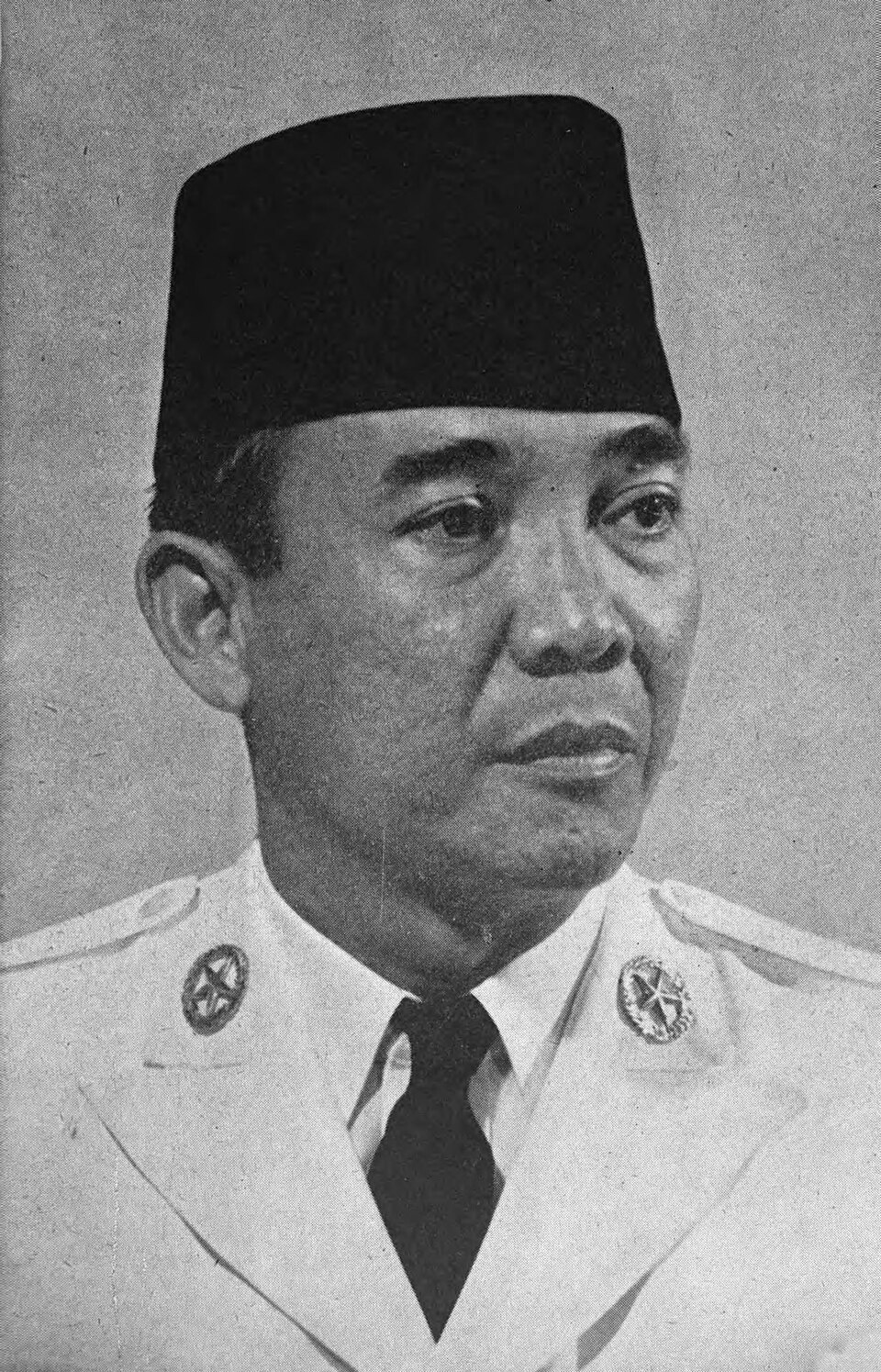
Sukarno declared himself Indonesia’s president’s after the Japanese left in 1945 and officially became the president of Indonesia when Indonesia became independent in 1949. He preached religious and racial tolerance, and the ideology which became the cornerstone of Indonesia's identity. His greatest achievement was to unify Indonesia and make Javanese, Timorese, Sumatrans and Balinese proud to call themselves Indonesians. He founded the national ideology (“Pancasila”), which he said was the “highest common factor and the lowest common multiple of Indonesian thought” and promoted the national language Bahasa Indonesian. He remained president until 1967.
Sukarno’s personal life drew criticism; he married six times and was notorious for extramarital affairs. Yet many Indonesians still remember him with affection. Charismatic and free of racial prejudice, he tried to protect minorities and different religious communities—including indigenous belief systems—and fostered national consciousness among even the poorest Indonesians. [Source: “Culture and Customs of Indonesia” by Jill Forshee, Greenwood Press, 2006]
When elections were finally held in Indonesia in 1955, Sukarno’s party, PNI, won the most votes but did not win a majority. The Communists (PKI) also did well. Sukarno was unable to form a government and unstable coalitions continued. In 1956, Sukarno criticized parliamentary democracy, saying it was based on “inherent confect.” His attempt to create a unifying government based on nationalism religion and communism—chosen in part because they represented the three main political factions, the military, Islamic parties and the communists—was largely a failure.
RELATED ARTICLES:
SUKARNO: HIS LIFE, CHARACTER AND IDEOLOGY factsanddetails.com
INTERNATIONAL RELATIONS UNDER SUKARNO: NON-ALIGNMENT, ISOLATION, WAR WITH MALAYSIA factsanddetails.com
DIFFICULTY MAKING DEMOCRACY WORK IN INDONESIA IN THE 1950s factsanddetails.com
INDONESIA DECLARES INDEPENDENCE IN 1945 AT THE END OF WORLD WAR II factsanddetails.com
INDONESIA’S NATIONAL REVOLUTION: THE STRUGGLE FOR INDEPENDENCE 1945-1949 factsanddetails.com
INDONESIAN WAR OF INDEPENDENCE (1945-1949): POLICE ACTION, ATROCITIES, MASSACRES factsanddetails.com
INDONESIA OFFICIALLY ACHIEVES INDEPENDENCE factsanddetails.com
RISE OF INDONESIAN NATIONALISM IN THE EARLY 20TH CENTURY factsanddetails.com
JAPANESE OCCUPATION OF THE DUTCH EAST INDIES (1942-1945) factsanddetails.com
COUP OF 1965 AND THE FALL OF SUKARNO AND RISE OF SUHARTO factsanddetails.com
VIOLENT CRACKDOWN ON COMMUNISTS IN INDONESIA IN 1965-66: KILLERS, VICTIMS, REASONS factsanddetails.com
LEGACY OF THE VIOLENT CRACKDOWN ON COMMUNISTS IN INDONESIA IN 1965-66: FEAR, FILMS AND LACK OF INVESTIGATION factsanddetails.com
SUHARTO: HIS LIFE, PERSONALITY AND RISE TO POWER factsanddetails.com
Challenges Sukarno Faced as President
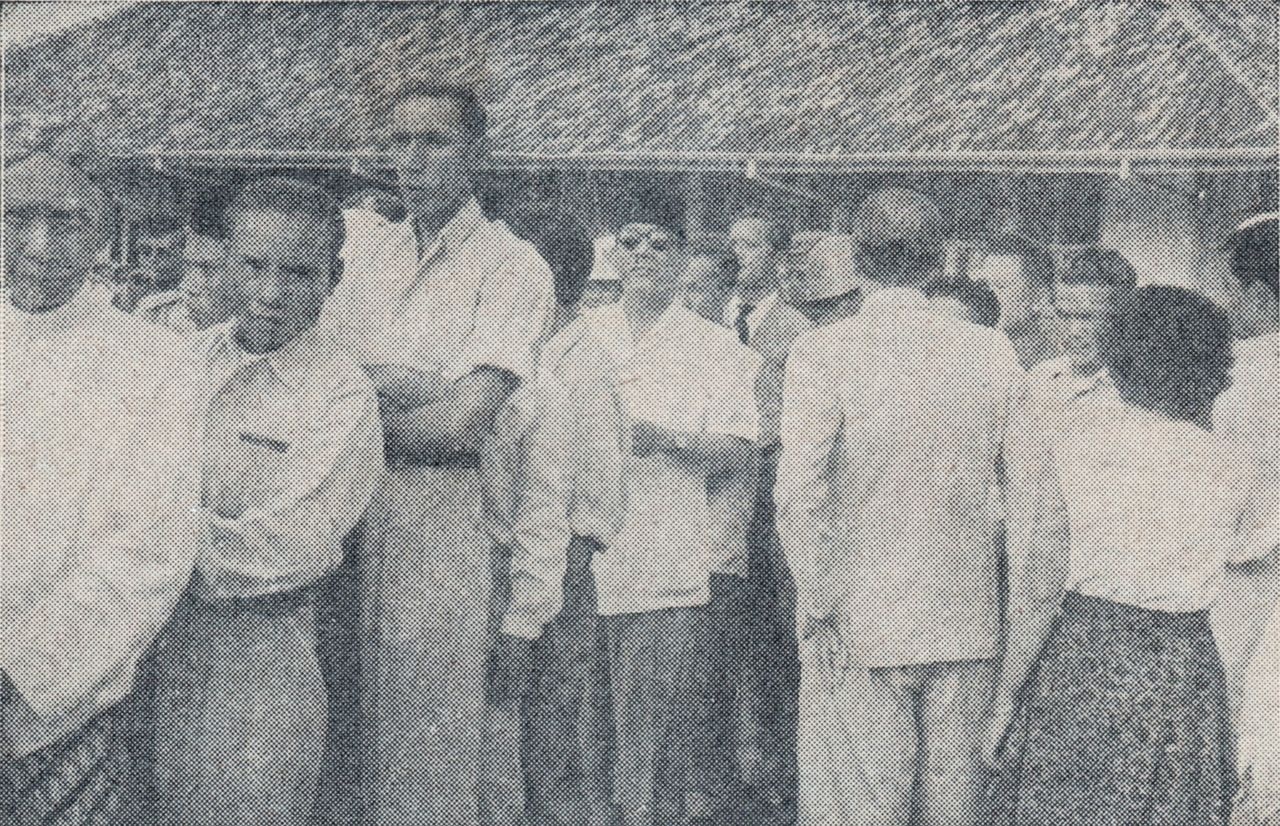
Sukarno was barely able to keep the lid on a country divided by numerous factions including ethnic groups, the Indonesian Communist Party, various Muslim groups and trade unions. The relationship between Sukarno and the military was tenuous at times, but both needed each other. Even though he was adored by millions, Sukarno would have had a hard time surviving as long as he did without backing of the military.
A multiplicity of political parties, inherited from the Dutch colonial era, soon developed. Regional rivalries also threatened the unity of the new nation. Java, which had two-thirds of the country's population, was not the source of the greatest wealth. Those living in the so-called Outer Islands believed that too much government revenue was spent in Java and too little elsewhere. [Source: Worldmark Encyclopedia of Nations, Thomson Gale, 2007]
After Vice President Hatta, a Sumatran, resigned in December 1956, many in the outer islands felt they had lost their chief spokesman in Jakarta. Territorial army commanders in Sumatra staged coups and defied the central government, and other rebel movements developed in Sulawesi. The government took measures to provide greater fiscal and administrative decentralization, but discontent remained, and the rebellions were put down by force.
Sukarno Uneven and Turbulent Leadership
Indonesia under Sukarno were marked by turbulence. Although he inspired millions and helped forge a sense of national identity and achieved the major accomplishment of uniting diverse peoples and regions under one government and language, his leadership became increasingly erratic and his administration was marked by inefficiency, injustice, corruption, and chaos. The rapid expropriation of Dutch property and the ousting of Dutch citizens in the late 1950s severely disrupted the economy. The country's wealth went unexploited, resulting in soaring inflation and great economic hardship. A popular revolt stemming from a desire for greater autonomy began on Sumatra in early 1958 and spread to Sulawesi and other islands. [Source: Columbia Encyclopedia, 6th ed., Columbia University Press]
Sukarno favored grandiose projects and rhetorical revolution over practical governance. Despite his call for “Guided Democracy,” colonial-era restrictions on assembly and expression remained, and dissent was treated as treason. Extravagant construction projects contrasted sharply with deteriorating economic conditions, and corruption became widespread as officials scrambled for income in a weakening economy. [Source: “Culture and Customs of Indonesia” by Jill Forshee, Greenwood Press, 2006]
Faced with economic problems and separatist movements, Sukarno assumed greater authority in 1959 by establishing what he called a "guided democracy" with himself as the guide and cabinet filled with representatives of various parties that answered to him. Without offering any good reason why, he dissolved the national assembly established by the constitution of 1945 and appointed advisory councils and consolidated the 60 existing political parties into 11.
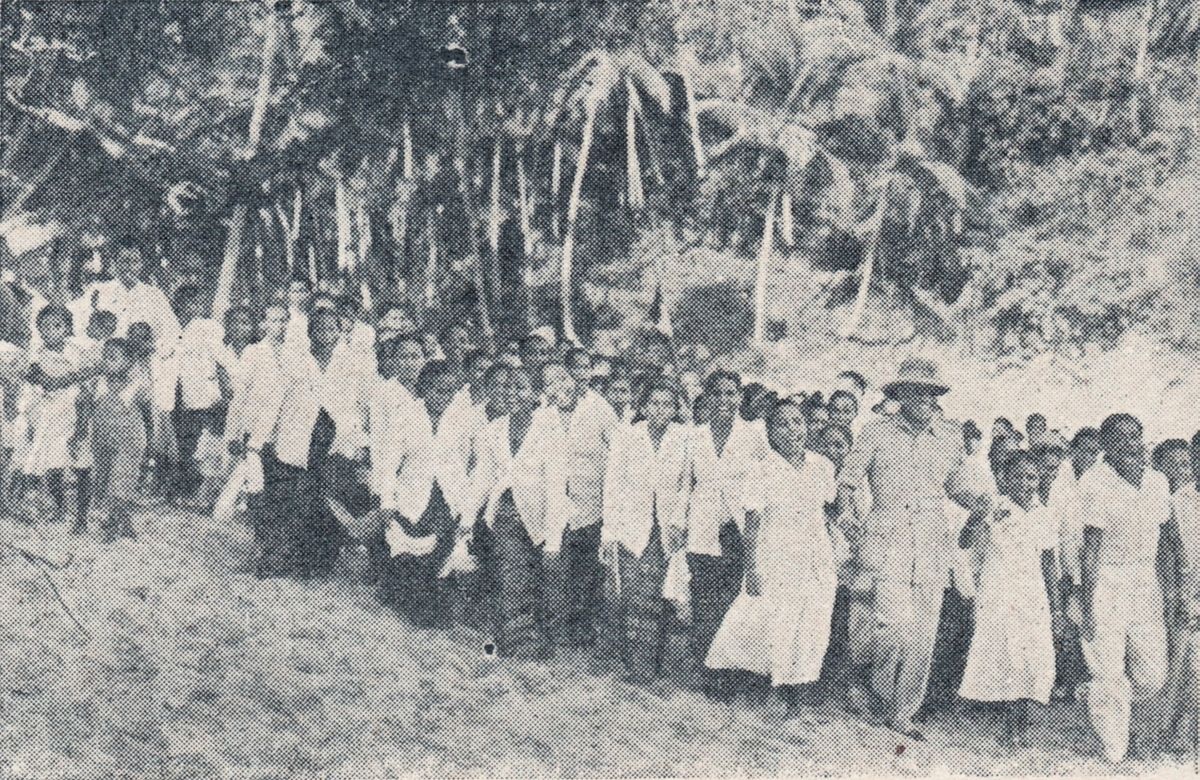
Indonesia’s unstable political environment meant the planned 1960 election never took place. In 1960, Sukarno suspended parliament and established a new one with only advisory powers. Sukarno issued a decree on July 5, 1959 to dismiss the parliament and Konstituante. He also formed new bicameral legislative agencies: Gotong Royong House of Representative (DPR GR) and a Provisional People’s Consultative Assembly (MPRS) — whose members were chosen by the president himself. The dismissal of the parliament and Konstituante in 1959 marked the end of Indonesia’s parliamentary democracy and the start of the era of guided democracy which had no election until 1971, after Suharto took office.
After Sukarno dissolved parliament in 1960 he reinstated the 1945 constitution, which provided for a strong, independent executive. The army, whose influence was strengthened by its role in quickly quelling the revolts, and the Communist Party, whose ranks were growing rapidly, constituted two important power blocs in Indonesian politics. Sukarno held the balance of power between the two blocs. After the last rebellions against him were put down in 1962 he declared himself "president for life" in 1963. To pull all this off Sukarno needed the support of the military and to do that he played the military and the powerful Communists off one another in a way that earned him comparisons to a traditional Indonesian puppet master. The result was deep dissatisfaction with Sukarno and the Indonesian government in general. By this time Indonesia was increasingly becoming a big mess. The government was rife with corruption and undermined by mismanagement. Rebellions broke out anew; there was great resentment against the Javanese. Sukarno’s “late reputation would rest on active self-aggrandizement.” His presidential convoy was once targeted in a a grenade attack. He survived by many were injured.
See Separate Article on the Struggle for Independence, Economic History, Education, See Constitution, History of Islam, Religion.
Sukarno’s Increasing Authoritarianism
Sukarno had long been impatient with party politics and suggested in a speech on October 28, 1956, that they be discarded. On March 14, 1957, the liberal phase of Indonesian history was brought to an end with Sukarno's proclamation of martial law. In an unstable and ultimately catastrophic coalition with the army and the PKI, he sought to rescue the fragile unity of the archipelago. [Source: Library of Congress *]
According to Lonely Planet: “By 1956 President Sukarno was openly criticizing parliamentary democracy, stating that it was ‘based upon inherent conflict’. He sought a system based on the traditional Indonesian village system of discussion and consensus, which occurred under the guidance of village elders. He proposed the threefold division – nasionalisme (nationalism), agama (religion) and komunisme (communism) – be blended into a cooperative Nas-A-Kom government, thereby appeasing the main factions of Indo―nesian politics: the army, Islamic groups and the communists. In February 1957, with military support, Sukarno proclaimed ‘guided democracy’ and proposed a cabinet representing all the political parties of importance (including the PKI). For the next 40 years, Western-style, party-based democracy was finished in Indonesia, though the parties were not abolished. [Source: Lonely Planet]
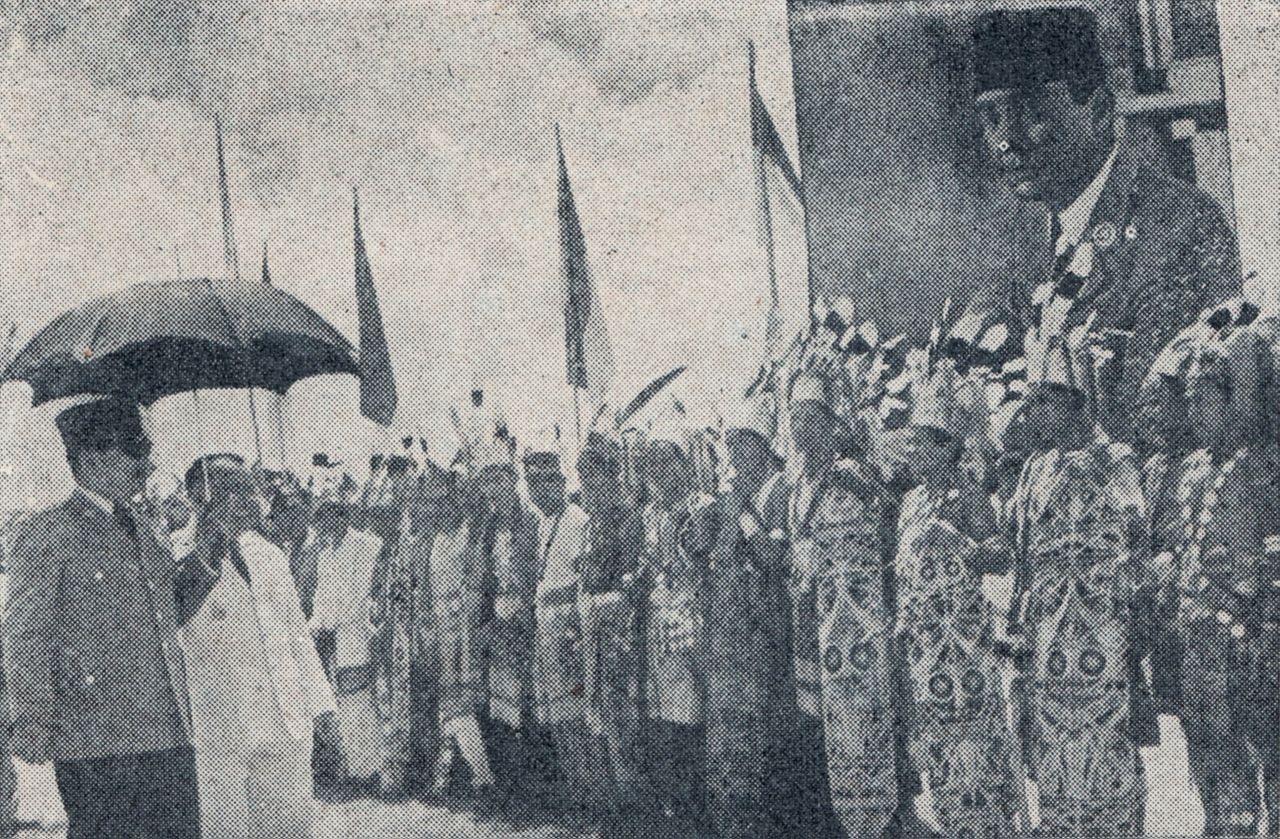
The year 1957 witnessed the move of the PKI to the center of the political stage. In provincial elections held in July 1957 in Jawa Barat and Jawa Tengah provinces, the PKI won 34 percent of the vote, ahead of the other major parties — the PNI, Nahdatul Ulama, and Masyumi — although Masyumi defeated the PKI narrowly in Jawa Timur Province. The PKI's success was attributable to superior grass-roots organization, the popular appeal of its demand for land reform, and its support for Sukarno's Guided Democracy idea. *
As tensions between the republic and the Netherlands over West New Guinea grew, PKI-controlled unions led a movement to nationalize Dutch-owned firms: on December 3, 1957, the Royal Packetship Company (KPM), which controlled most of the archipelago's shipping, was seized and, two days later, Royal Dutch Shell. Some 46,000 Dutch nationals were expelled from Indonesia, and Nasution ordered officers of the Armed Forces of the Republic of Indonesia (ABRI), which had been involved in economic affairs since the late 1940s, to take a role in managing nationalized firms. This action marked the beginning of the armed forces' role in the economy, a role which grew substantially in later years. Control of the oil industry was seized by ABRI, and Colonel Ibnu Sutowo, Nasution's deputy, was placed in charge of a new national oil company, Permina. *
Reaction to Sukarno’s Increasing Authoritarianism
On December 1, 1956, Mohammad Hatta had resigned as vice president in protest against Sukarno's growing authoritarianism. Hatta's exit from the political scene did not improve the relations among the central government, Sumatra, and the eastern archipelago, where Hatta was very popular. [Source: Library of Congress *]
According to Lonely Planet: In 1958, rebellions backed by the CIA, with support from the UK and Australian governments, broke out in Sumatra and Sulawesi. These were a reaction against Sukarno’s usurpation of power, the growing influence of the PKI and the corruption and mismanagement of the central government. They were also a reaction against Java, whose leaders and interests dominated Indonesia despite the fact that other islands provided most of the country’s export income. The rebellions were put down by mid-1958, though guerrilla activity continued for three years. Rebel leaders were granted amnesty but their political parties were banned. Some of the early nationalist leaders, such as former prime minister Syahrir, were discredited or arrested. [Source: Lonely Planet]
On February 10, 1958, when Sukarno was out of the country, a group of Sumatran military officers, Masyumi politicians, and others sent an ultimatum to Jakarta demanding Sukarno's return to a figurehead role as president and the formation of a new government under Hatta and Yogyakarta sultan Hamengkubuwona IX. Five days later, the group proclaimed the Revolutionary Government of the Indonesian Republic (PRRI). [Source: Library of Congress *]
On February 17, Permesta rebels in Sulawesi made common cause with them. Although the rebellion was not completely suppressed until 1961, decisive action by the military had neutralized it by mid1958 . There were several important consequences: the forced retirement of many officers from Sumatra and the eastern archipelago, making the officer corps proportionately more Javanese (and presumably more loyal to Sukarno); the firm implantation of central authority in the Outer Islands; and the emergence of Nasution, promoted to lieutenant general, as the most powerful military leader. But the army's victory in suppressing regional rebellion caused Sukarno dismay. To offset the military's power, Sukarno's ties with the PKI grew closer. *
The PRRI revolt also soured Sukarno's relations with the United States. He accused Washington of supplying the rebels with arms and angrily rejected a United States proposal that marines be landed in the Sumatra oil-producing region to protect American lives and property. The United States was providing clandestine aid to the rebels and Allen Pope, an American B-25 pilot, was shot down over Ambon on May 18, 1958, creating an international incident. Deteriorating relations prompted Sukarno to develop closer relations with the Soviet Union and, especially, the People's Republic of China. *
In July 1958, Nasution suggested that the best way to achieve Guided Democracy was through reinstatement of the 1945 constitution with its strong "middle way," presidential system. On July 5, 1959, Sukarno issued a decree to this effect, dissolving the old House of Representatives. This marked the formal establishment of the period of Guided Democracy which lasted six years. In March 1960, a new legislature, the House of People's Representatives-Mutual Self-help (DPR-GR; later, simply DPR) was established. One hundred fifty-four of its 238 seats were given to representatives of "functional groups," including the military, which became known as Golkar. All were appointed rather than elected. As many as 25 percent of the seats were allocated for the PKI. Another body, the 616-member Provisional People's Consultative Assembly (MPRS; later, simply MPR), was established with communist leader Dipa Nusantara Aidit as deputy chairman. In August 1960, Masyumi and the PSI were declared illegal, a reflection of their role in the PRRI insurrection, the MPRS's enmity toward Sukarno, and its refusal to recognize Guided Democracy. *
Sukarno’s Dictatorial “Guided Democracy’
Unsuccessful rebellions on Sumatra, Sulawesi, West Java, and other islands beginning in 1958, plus a failure by the constituent assembly to develop a new constitution, weakened the parliamentary system. Consequently, in 1959, when President Sukarno unilaterally revived the provisional 1945 constitution that gave broad presidential powers, he met little resistance. From 1959 to 1965, President Sukarno imposed an authoritarian regime under the label
Sukarno had introduced the concept of Guided Democracy — a system new in name but rooted in ideas he had held since before World War II —in 1956. In the early years of independence, parliamentary structures had limited his authority, but Guided Democracy allowed him to move beyond those constraints. [Sukarno reorganized Indonesia’s political system to concentrate real power in his own hands. In 1960, he dissolved the elected parliament and replaced it with a body whose members were appointed by, and answerable to, the president. A non-elected Supreme Advisory Council became the country’s chief policy-making institution. Sukarno also created a national front meant to “mobilize the revolutionary forces of the people,” which he used to orchestrate demonstrations supporting his agenda. [Source: Lonely Planet; Library of Congress]
Throughout the 1960s, Sukarno managed a fragile balance among Indonesia’s major political forces. He drew the armed forces and the Indonesian Communist Party (PKI)—then the largest communist party outside the Soviet bloc—into an uneasy coalition, playing each off against the other while largely excluding Islamic political groups, especially the modernist Masyumi Party, which had been banned. His political strategy also emphasized an assertive foreign policy: first confronting the Netherlands over West New Guinea (Irian Barat/Irian Jaya), and later launching a campaign of konfrontasi against the new state of Malaysia. At home, Sukarno relied heavily on mass mobilization and emotional appeals to the public.
The key actors during the Guided Democracy period were Sukarno himself, the military, and the PKI. Because the military and communist forces were roughly comparable in strength, Sukarno maintained his dominance by alternately aligning with one side and then the other. A flamboyant speaker, Sukarno spun out slogans and catchwords that became the nebulous basis of a national ideology. One of the most important formulas was Manipol-USDEK, introduced in 1960. Manipol was the Political Manifesto set forth in Sukarno's August 17, 1959, independence day speech, and USDEK was an acronym for a collection of symbols: the 1945 constitution, Indonesian Socialism, Guided Democracy, Guided Economy, and Indonesian Identity. Another important slogan was Nasakom, the synthesis of nationalism, religion, and communism — symbolizing Sukarno's attempt to secure a coalition of the PNI, the Nahdatul Ulama (but not Masyumi), and the PKI. In a manner that often bewildered foreign observers, Sukarno claimed to resolve the contradiction between religion and communism by pointing out that a commitment to "historical materialism" did not necessarily entail belief in atheistic "philosophical materialism." *
Deterioration of the Indonesian Economy Under Sukarno’s “Guided Democracy’
Despite achieving national unity, Sukarno could not create a viable economic system to lift Indonesia out of poverty. What’s more, great funds were spent on symbols designed to celebrate Indonesia’s identity, including Jakarta’s National Monument and the massive Mesjid Istiqlal. Unable to advance from revolution to rebuilding, Sukarno’s monuments became substitutes for real development.
Indonesia's ailing economy grew worse as Sukarno ignored the recommendations of technocrats and foreign aid donors, eyed overseas expansion, and built expensive public monuments and government buildings at home. In late 1960, an eight-year economic plan was published, but with its eight volumes, seventeen parts, and 1,945 clauses (representing the date independence was proclaimed: August 17, 1945), the plan seems to have been more an exercise in numerology than economic planning. Ordinary people suffered from hyperinflation and food shortages.
Motivated by rivalry with the pro-Beijing PKI and popular resentment of ethnic Chinese, the army backed a decree in November 1959 that prohibited Chinese from trading in rural areas. Some 119,000 Chinese were subsequently repatriated, a policy that caused considerable economic disruption. Although Washington and the International Monetary Fund (IMF) sought to encourage rational economic policies, Sukarno resisted. A major reason was that IMF recommendations would have alienated his millions of popular supporters, especially those in the PKI. [Source: Library of Congress *]
PKI power in Java's villages expanded through the early 1960s. In late 1963, following Sukarno's call for implementation of land reform measures that had been made law in 1960, the PKI announced a policy of direct action (aksi sepihak) and began dispossessing landlords and distributing the land to poor Javanese, northern Sumatrans, and Balinese peasants. Reforms were not accomplished without violence. Old rivalries between nominal Muslims, the abangan, many of whom were PKI supporters, and orthodox Muslims, or santri, were exacerbated. The PKI membership rolls totaled 2 million, making it the world's largest communist party in a noncommunist country. Affiliated union and peasant organizations had together as many as 9 million members. PKI leader Aidit pursued his own foreign policy, aligning Indonesia with Beijing in the post-1960 Sino-Soviet conflict and gaining Chinese support for PKI domestic policies, such as unilateral and reform actions. Some observers concluded that by 1964 it appeared that a total communist takeover was imminent. *
Indonesia Claims West New Guinea
On December 27, 1949, the Dutch recognized the independence of the former Dutch East Indies, except for West New Guinea (Irian Jaya), as the Republic of the United States of Indonesia. A few months later, on August 17, 1950, the federal system was rejected, and a unitary state—the Republic of Indonesia—was established under a new constitution. West New Guinea remained under Dutch control until October 1962 when the Netherlands transferred the territory to the United Nations Temporary Executive Authority (UNTEA). Indonesia took complete possession of the disputed territory on May 1, 1963, establishing it as the province of Irian Barat (West Irian), which was renamed Irian Jaya in 1973.[Source: Worldmark Encyclopedia of Nations, Thomson Gale, 2007]
Continued Dutch occupation of West New Guinea, which was claimed by Indonesia but firmly held by the Dutch, led to a break in diplomatic relations between Jakarta and The Hague in 1960. In December of that year, Sukarno established a special military unit, the Army Strategic Reserve Command (Kostrad), also known as the Mandala Command, based in Ujungpandang, to "recover" the territory. In 1961, armed clashes broke out between Indonesian and Dutch troops. In early 1962, Sukarno dispatched paratroopers to Dutch New Guinea, a territory claimed by Indonesia but firmly held by the Dutch. To avoid full-scale war, the Dutch agreed to a compromise was worked out under United States auspices in which West New Guinea was first turned over to UN and then to Indonesian administration. It was understood that the area would then pass under Indonesian administration in May 1963, pending a referendum to be held by 1970. The UN replaced the Dutch on October 1, 1962, and in May 1963, Indonesian authority was established. [Source: Library of Congress; Columbia Encyclopedia, 6th ed., Columbia University Press]
The so-called Act of Free Choice, a UN-sanctioned and -monitored referendum to discover whether the population, mostly Papuans living in tribal communities, wanted to join the republic, was held in 1969. A total of 1,025 community leaders representing the various sectors of society were chosen by consensus at local level meetings and then met among themselves at the village, district, and provincial levels to discuss affiliation. Only these community leaders could vote and they approved incorporation unanimously. A subsequent UN General Assembly resolution confirmed the transfer of sovereignty to Indonesia. Criticism of the process by foreign observers and suspicions of pressure on the voting leaders threw its legitimacy into question.
After the August 1969 referendum, Netherlands New Guinea was formally annexed by Indonesia and renamed West Irian (Irian Barat), then Irian Jaya, and finally Papua. Opposition to Indonesian administration of Papua gave rise to small-scale guerrilla activity, led by the Organisasi Papua Merdeka (OPM; Free Papua Movement), in the years following Jakarta's assumption of control. The OPM seeks Papua's independence. In the more open atmosphere since 1998, there have been more explicit expressions within Papua calling for independence from Indonesia.
Sukarno At the End of His Presidency
Sukarno began to lean increasingly toward the left, openly summoning Communist leaders for advice, exhibiting hostility toward the United States, and cultivating the friendship of Communist China. In 1965 he withdrew Indonesia from the United Nations. He may have known in advance of the abortive army coup that began in September 1965, with the assassination of six high army officials. [Source: Columbia Encyclopedia, 6th ed., Columbia University Press]
By 1965, Sukarno's government was riddled with corruption, indecision and economic decline. After Suharto took over in October 1965, Sukarno stayed on as President and insisted that he was in charge of the country although it was Suharto that really was. In February 1967, five four-star generals—the heads of army, navy, air force and national police, plus the minister of defence—showed up about the Medeka Palace, the official residence of the president. They had been sent by Suharto to persuade Sukarno to officially transfer power to Suharto.
By that time Sukarno had lost nearly all of his official powers. He had been censured by the legislature but he still had millions of loyal supporters. Emotions ran high at the Japanese 1967 meeting. Sukarno repeatedly said, “How could you do this to me” to which the others responded with tears. In the end Sukarno agreed to leave, reportedly to spare Indonesia civil war. Suharto became the head of the Indonesian government and Sukarno lived the last years of his life under house arrest in Bogor Palace.
Image Sources: Wikimedia Commons
Text Sources: New York Times, Washington Post, Los Angeles Times, Lonely Planet Guides, Library of Congress, Compton’s Encyclopedia, The Guardian, National Geographic, Smithsonian magazine, The New Yorker, Time, Reuters, AP, AFP, Wikipedia, BBC, CNN, NBC News, Fox News and various books and other publications.
Last updated December 2025