
GROWTH OF AN INDONESIAN NATIONAL CONSCIOUSNESS
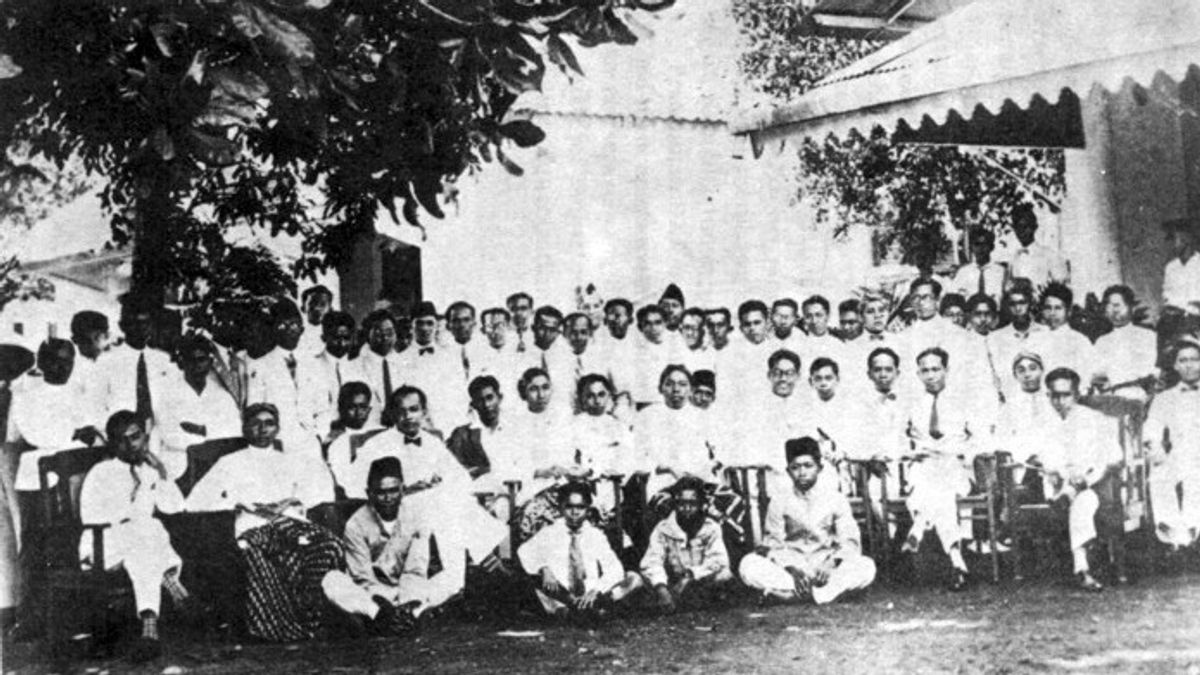
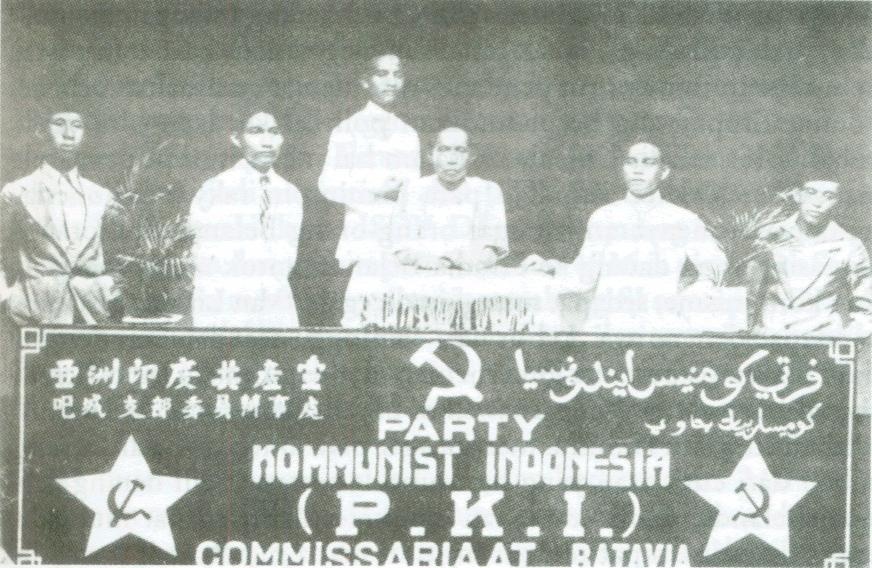
The Indonesian movement for independence began early in the 20th century. By the 1920s, Indonesian students were forming youth associations opposed to Dutch rule. In 1926, these groups united in the Youth Congress, pledging loyalty to a single Indonesian nation with Malay (later Bahasa Indonesia) as its language. Their red-and-white flag became the emblem of the future independent state. The Indonesian Communist party (PKI) was founded in 1920. It was the first such leftist organization established in Asia outside Russia.
Sporadic nineteenth century revolts against Dutch practices occurred mainly in Java, but it was in the early twentieth century that Indonesian intellectual and religious leaders began to seek national independence. Despite efforts by the Dutch to suppress it the nationalist movement became stronger. In 1928, the All Indonesia Youth Congress proclaimed Indonesian to be a national identity unfiled under one language (Bahasa Indonesian). In 1927 Achmed Sukarno founded the Partai National Indonesia (PNI). It was banned a few years later and Sukarno was arrested. Even after Nazi Germany invaded the Netherlands, the Dutch colonial government in Asia was determined to hang on to power. The nationalist movement received its impetus during World War II, when the Japanese drove out (1942) the Dutch and occupied the islands.
National consciousness emerged gradually in the archipelago during the first decades of the twentieth century, developed rapidly during the contentious 1930s, and flourished, both ideologically and institutionally, during the tumultuous Japanese occupation in the early 1940s, which shattered Dutch colonial authority. As in other parts of colonial Southeast Asia, nationalism was preceded by traditional-style rural resistance. The Java War, joining discontented elites and peasants, was a precursor. Around 1900 the followers of Surantika Samin, a rural messiah who espoused his own religion, the Science of the Prophet Adam, organized passive resistance on Java that included refusal to pay taxes or perform labor service. Militant Islam was another focus of traditional resistance, especially in Sumatra. [Source: Library of Congress *]
Indonesian nationalism reflected trends in other parts of Asia and Europe. Pilgrims and students returning from the Middle East brought modernist Islamic ideas that attempted to adapt the faith to changing times. Other influences included the founding of the Indian National Congress in 1885; the Philippine struggle for independence against both Spain and the United States in 1898-1902; Japan's victory over tsarist Russia in the Russo-Japanese War (1904-05), a major challenge to the myth of white European supremacy; and the success of Kemal Ataturk in creating a modern, secularized Turkey after World War I on the ruins of the Ottoman Empire. The Russian Revolution of 1917 also had a profound impact, reflected in the growth of a strong communist movement by the late 1920s. National consciousness was not homogeneous but reflected the diversity of Indonesian society. Dutch repression and the shock of war from 1942 to 1945, however, forged diverse groups into something resembling a unified whole. *
RELATED ARTICLES:
EARLY DUTCH PERIOD IN INDONESIA AND THE DUTCH EAST INDIA COMPANY (VOC) factsanddetails.com
DUTCH EMPIRE: WEALTH, EXPLORATION AND HOW IT WAS CREATED factsanddetails.com
DUTCH, THE SPICE TRADE AND THE WEALTH GENERATED FROM IT factsanddetails.com
END OF THE DUTCH EAST INDIA COMPANY, BRITAIN IN INDONESIA AND THE JAVA WAR factsanddetails.com
NETHERLANDS INDIES EMPIRE IN THE 19TH CENTURY factsanddetails.com
INDONESIA UNDER DUTCH RULE IN THE EARLY 20TH CENTURY factsanddetails.com
MATA HARI factsanddetails.com
INDONESIA IN WORLD WAR II factsanddetails.com
JAPANESE OCCUPATION OF THE DUTCH EAST INDIES (1942-1945) factsanddetails.com
INDONESIA DECLARES INDEPENDENCE IN 1945 AT THE END OF WORLD WAR II factsanddetails.com
INDONESIA’S NATIONAL REVOLUTION: THE STRUGGLE FOR INDEPENDENCE 1945-1949 factsanddetails.com
INDONESIAN WAR OF INDEPENDENCE (1945-1949): POLICE ACTION, ATROCITIES, MASSACRES factsanddetails.com
INDONESIA OFFICIALLY ACHIEVES INDEPENDENCE factsanddetails.com
Rise of Education and Student Associations in the Early 1900s
At the dawn of the twentieth century, the young daughter of a Javanese “pangreh praja”, Raden Ajeng (R. A.) Kartini (1879–1904), expressed in letters to Dutch friends her enthusiasm for the “Spirit of the Age ... [before which] solid ancient structures tottered,” and her joy at witnessing the “transition from old to new” that was going on around her. Her main concern, however, was how her own people, whom she described as “grown-up children,” might progress—not precisely on a European model, but certainly with Dutch assistance— and concluded that the only way forward was through Dutch education. Kartini was only in part echoing ideas close to the hearts of the Ethicists who befriended and later lionized her and her efforts to promote modern education for women as splendid examples of their cause; it is clear that she rebelled against her traditional environment early on, and also did not always agree with her Ethicist friends. She was not alone. [Source: Library of Congress *]
At roughly the same time, young male contemporaries from the Javanese privileged classes who attended government schools were coming to similar conclusions, and were in a better position to take more public, activist positions. Like Minke, the hero of the 1980 novel set in Kartini’s day by Pramudya Ananta Tur (1925– 2006) in his “Bumi Manusia “(This Earth of Mankind), they were alienated from their parents’ generation, saw no future in aristocratic status or careers as “pangreh praja”, and felt drawn to all that was new, scientific, and modern. They did not yet have the idea of a nation in mind, but they were busy trying to imagine a modern society of their own, and how to make it a reality. In the process, they began to coalesce as a new “priyayi “class—a class based on achievement rather than birth, devotion to modernity rather than tradition—that would determine the course of their country’s history for the remainder of the century. *
That was not, of course, exactly what the Ethicists had in mind when they promoted Western education. They had hoped to create a broad new “priyayi “class, which, thanks to a modern Western education, would take a cooperative, associationist path. Such was the goal behind the extensive education reforms that, beginning in 1900, overhauled the limited training available for medical personnel, vernacular primary school teachers, and prospective “pangreh praja”. The most important institutions to appear were the School for Training Native Government Officials (OSVIA) and the School for Training Native Doctors (STOVIA), both established in 1900, and the Dutch–Native Schools (HIS), established in 1914, which were Dutch-language primary schools for the upper classes. There was also a significant expansion of vernacular primary village schools (“sekolah desa”). *
Looking at the colony as a whole, these advances may seem negligible. As late as 1930, about 10,000 “sekolah desa “enrolled roughly 1.6 million students, or 2.8 percent of a population estimated at 60 million. Dutch-language education enrolled far fewer indigenous students: about 85,000 or roughly 0.14 percent of the total population. General literacy was estimated at 7.5 percent and in Dutch, about 0.3 percent. The Dutch-language schools with Western-style curricula created a small but motivated group, however, who emerged with a changed outlook. The schools were located principally on Java, where they gathered together students from all over the archipelago and gave them a shared experience. More convinced than ever of the power of Western education, they also grew dissatisfied. Although Dutch-language schools above the HIS enrolled Europeans as well as indigenes, the latter were a comparatively small minority, and they often felt the sting of prejudice, both real and perceived. Equal in education, indigenous students began to chafe under obvious inequalities: legal, economic, and social. They also quickly became aware of what a tiny minority they were in their own society, and that the demand for Dutch-language education, widely seen as key to social and economic advancement, was far beyond the colonial government’s ability or willingness to provide. Rather than generations of grateful and subservient graduates, the colonial schools quickly produced a significant number of malcontents, whose most common message was not that the colonial state was modernizing indigenous society too quickly, but precisely the opposite. They believed they could, and had the duty to, do better. *
Important Leaders and Political Groups in the Early 1900s
Students from Dutch-language schools founded the first indigenous groups organized along Western-influenced lines and aimed at modernization and education. Probably the first person to do this was the “pangreh praja “son, ex-STOVIA student, and pioneer journalist Raden Mas Tirtoadisuryo (1880–1918), who in 1906 established the Serikat Priyayi (Priyayi Association), aimed at convincing the colonial authorities to expand educational opportunities for “priyayi”. The best-known and officially recognized organization, however, was Budi Utomo (Noble Endeavor), founded in 1908 by Wahidin Sudirohusodo (1857–1917), also a “pangreh praja “son, graduate of a STOVIA predecessor school, and journalist. Wahidin’s goal was to organize financial support that would allow more “priyayi “to attend Dutch-medium schools; he discovered his most enthusiastic supporters were found among STOVIA students, who formed the core of Budi Utomo.
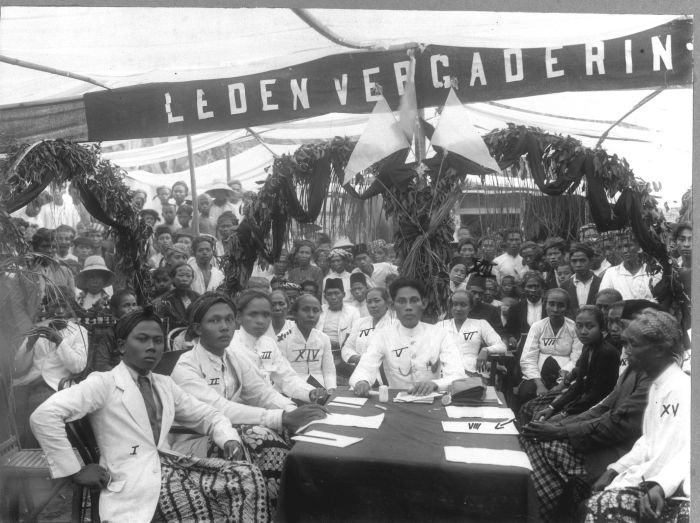
In 1909 a Surakarta batik merchant, Samanhudi (1868– 1956), asked Tirtoadisuryo to organize native businessmen, apparently in response to Chinese competition in the trade. The result was the Sarekat Dagang Islam (Islamic Trade Association), which in 1912 became the Sarekat Islam (Islamic Association). Now under the leadership of Haji Umar Said (H. U. S.) Cokroaminoto (1882–1934), an OSVIA graduate who had left government service, the Sarekat Islam had as one of its major goals the expansion of education of, especially, lower “priyayi”, and as a result the colonial government initially reacted approvingly, as it had done with Budi Utomo. [Source: Library of Congress *]
Cokroaminoto’s personal charisma, and his ability to use religion to attract wide public interest, helped the organization expand rap-idly—perhaps to 2 million members in 1919—and this mass base in turn attracted those with quite different political interests. Founded in 1913 by the Dutch radical socialist Hendrik Sneevliet (1883– 1942), the Indies Social-Democratic Association (ISDV), a small leftist party that had at first sought an audience in Eurasian groups and among laborers in modern industries, turned to Sarekat Islam. The young Javanese railway worker Semaun (1899–1971) and the Minangkabau journalist Abdul Muis (1890–1959) propagated radical Marxist ideas among followers of Sarekat Islam, which eventually split over political issues. The ISDV in 1920 became the Communist Association of the Indies (PKH), which after 1924 was known as the Indonesian Communist Party (PKI). The Muslim organization Muhammadiyah (Followers of Muhammad) was founded in Yogyakarta in 1912 by Kiyai Haji Muhammad Dahlan (1869–1933), a reforming “modernist” who had joined Budi Utomo three years earlier and had been encouraged by its members to establish modern Muslim schools. Muhammadiyah, and its “traditionalist” counterpart Nahdlatul Ulama, founded in Surabaya in 1926 by Kiyai Haji Hasyim Asyari (1871–1947), became very large and important associations, but their focus was primarily on educational and social affairs. *
Revolts and Tensions in Indonesia in the Early 1900s
It has become customary to describe Indonesia’s formative nationalist discourse in terms of three distinct streams of thought (“aliran”), and to emphasize the discord among the “secular” or “territorial,” Marxist, and Muslim streams; a further division sometimes referred to is between “radical” and “moderate” followers. This sort of categorization is not entirely beside the point, for it indeed reflects many of the tensions and debates that filled the air. The colonial state, which founded the Political Intelligence Service (PID) in 1916 in an effort to understand the burgeoning political activity among Indonesians, borrowed these categories from the writings and speeches of those whom they watched and used them to organize their reports. The separation, however, was in some respects artificial. [Source: Library of Congress *]
For one thing, Indonesians began rather early to speak of the movement (“pergerakan”), by which they meant all efforts that aimed at or presupposed obtaining freedom (“merdeka, kemerdekaan”) from Dutch rule. Among both sophisticates and more ordinary folk, membership in two or more organizations that straddled categories was not uncommon, and leaders made a variety of attempts to bridge them, for example Muslim and Marxist ideas by the Javanese “Red Haji,” Mohamad Misbach (?–1926), or Marxist and nationalist principles by the Minangkabau Tan Malaka (1897–1949). Still, there was something thrilling about both the discord and the struggle to find a way out of it, something that suggested not just an intellectual world in motion but physical action. *
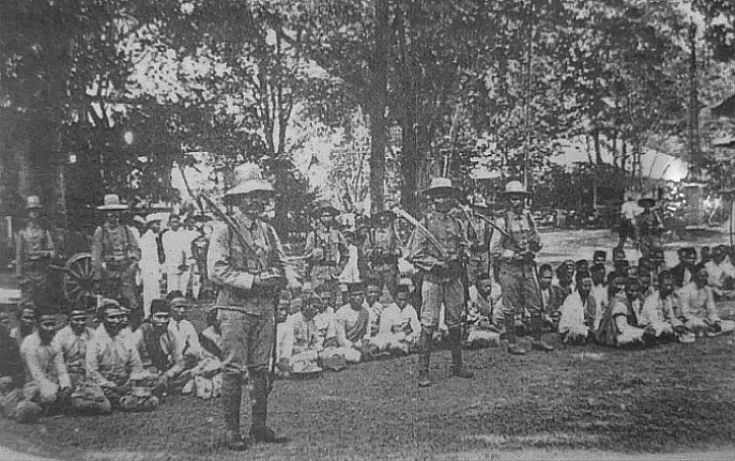
Already, in 1919 bloody uprisings in Tolitoli, Manado (northern Sulawesi), and Cimareme, Garut (western Java), Sarekat Islam had been implicated and the specter of a radical, activist Islam raised. The colonial state moved in quickly with investigations and arrests. In 1925 PKI labor organizers led strikes in the principalities and in the cities of Semarang and Surabaya, and in 1926 and 1927 local PKI leaders prompted sabotage and rebellion in western Java and western Sumatra, respectively. The colonial state responded by arresting more than 13,000 people, of whom 4,500 were given prison sentences, and nearly one-third of these were sent to a newly constructed prison camp in remote Boven Digul known as Tanah Merah (Red Earth), in Papua. *
Early Political Movements
Centuries of Dutch cooptation made the highest ranking priyayi on Java and their counterparts on other islands politically conservative. But lower ranking members of the elite — petty officials, impoverished aristocrats, school teachers, native doctors, and others — were less content with the status quo. In 1908 students of the School for Training Native Doctors in Batavia established an association, Budi Utomo (Noble Endeavor), which is considered by many historians to be the first modern political organization in Indonesia. Java-centered and confined largely to students and the lower priyayi, Budi Utomo had little influence on other classes or non-Javanese. Because of its limited appeal and the suspicion of many members of the high-ranking priyayi, the organization did not thrive. Similar eliteoriented groups, however, were established during the 1910s both inside and outside Java. [Source: Library of Congress *]
Significantly, Budi Utomo adopted Malay rather than Javanese as its official language. Malay, the lingua franca of the archipelago, became a symbol of its unity and the basis for the national language of independent Indonesia, Bahasa Indonesia. Unlike Javanese, which was laden with honorific language emphasizing status differences, Malay was linguistically democratic as well as free of Java-centeredness, although Bahasa Indonesia itself does not abandon status-conscious forms altogether. *
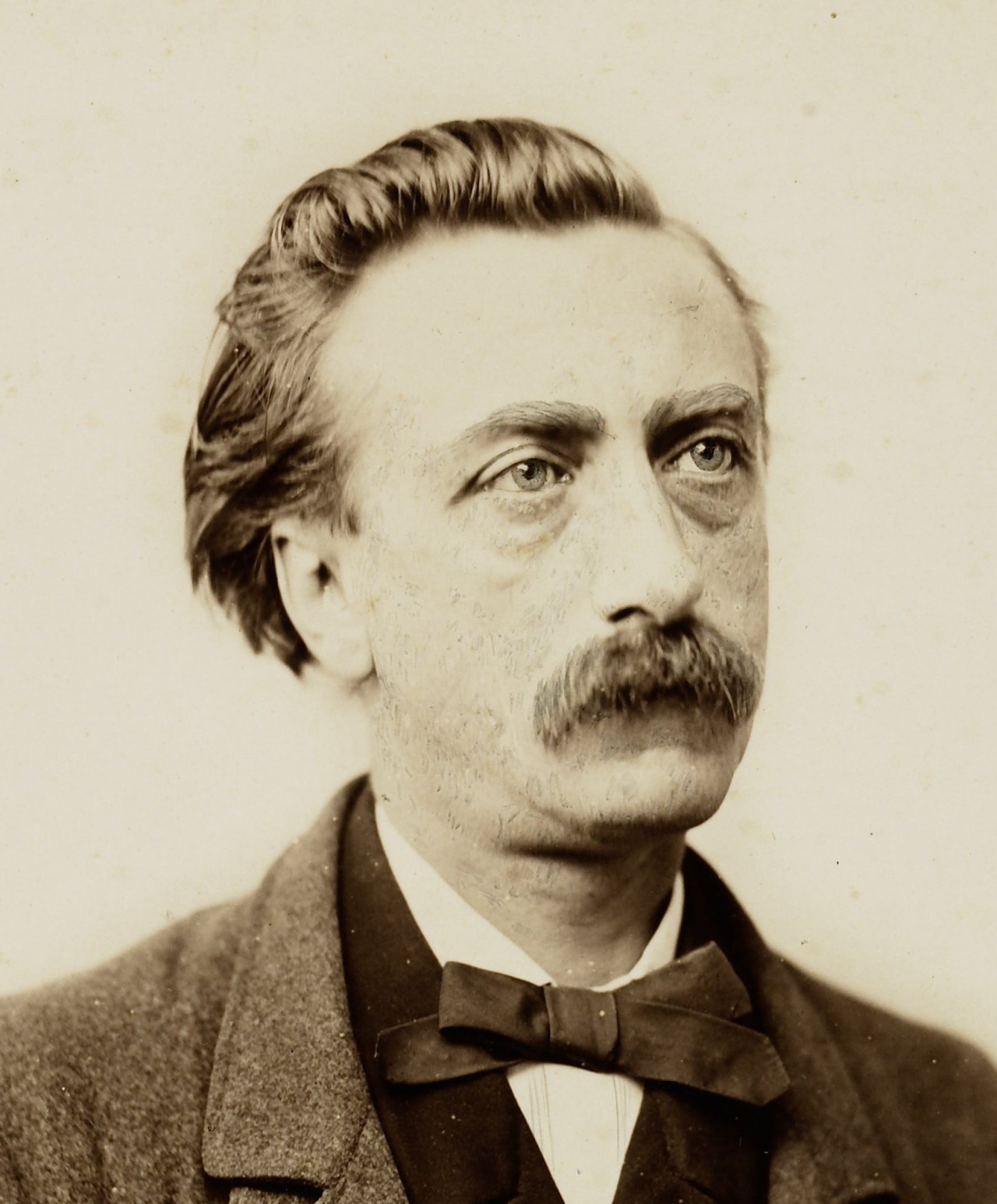
A more assertive political movement than Budi Utomo appeared with the establishment in 1910 of the Indies Party (Indische Partij) by E.F.E. Douwes Dekker (known after 1946 as Danudirja Setyabuddhi), a Eurasian and descendant of the author of Max Havelaar. A veteran of the Boer War (1899-1902) fighting on the Afrikaaner side and a journalist, Douwes Dekker criticized the Ethical Policy as excessively conservative and advocated selfgovernment for the islands and a kind of "Indies nationalism" that encompassed all the islands' permanent residents but not the racially exclusive trekkers.*
In July 1913, close associates of Douwes Dekker, including physicians Tjipto Mangunkusumo and R.M. Suwardi Surjaningrat (known also as Ki Hadjar Dewantara, later founder of the Taman Siswa or Garden of Pupils school movement), established the Native Committee in Bandung. The committee planned to petition the Dutch crown for an Indies parliament. In 1913 it also published a pamphlet written by Suwardi, "If I were to be a Dutchman," that gained almost instant notoriety. Regarded as subversive by the colonial government and impudent by Dutchmen in general, the pamphlet, which was translated into Malay, led to the exile to the Netherlands of Douwes Dekker and his two Javanese associates. In exile, they worked with liberal Dutchmen and compatriot students. It is believed that the term Indonesia was first used in the name of an organization, the Indonesian Alliance of Students, with which they were associated during the early 1920s. *
Formation of Political Parties in the Early 1900s
All of these organizations, and the myriad student groups that sprang up after 1915 under names such as Young Java (Jong Java), the Young Sumatrans’ Association (Jong Sumatranen Bond), and Minahasa Students’ Association (Studerende Vereniging Minahasa), had similar Western-oriented, upper-class, younger-generation, new “priyayi “outlooks and expressed similar dissatisfactions with—and sought one or another degree of emancipation from—the colonial state. Initially none of them articulated a national idea. Then one organization ventured down that path: the Indies Party (Indische Partij), founded in 1911 by the radical Eurasian E. F. E. Douwes Dekker (1879–1950), grandson of Multatuli’s brother Jan. The younger Douwes Dekker was later joined by two Javanese, Cipto Mangunkusumo (1886–1943), a STOVIA graduate and charter member of Budi Utomo, and Raden Mas Suwardi Suryaningrat (1889–1959), an aristocrat of the Pakualaman, STOVIA student, and journalist. After 1922, under the name Ki Hajar Dewantara, Suwardi became an important leader in the field of education by establishing the private Taman Siswa (Student Garden) schools. [Source: Library of Congress *]
Douwes Dekker and the Indies Party not only called for independence of the colony but argued, using Austria-Hungary, Switzerland, and the United States as supporting examples, that all those who called the archipelago home should be citizens regardless of race. He called for a nation and nationalism that were modern and multiethnic. In 1913 Suwardi published an article entitled “Als ik eens een Nederlander was” (If I were a Dutchman), which, with famously acid humor, suggested that, if he were a Dutch person celebrating the centennial of liberation from Napoleonic rule in that year, he would not let the natives of the colony know about it, as they might get ideas about freedom, too. This was too much for the colonial government, which promptly banned the party and exiled its three leaders to the Netherlands for six years. *

It was precisely there and at that time, however, that the idea of Indonesia (from the Greek “indos”—for India—and “nesos”—for island) was taking shape. The term was coined by mid-nineteenth-century English observers, who meant it in a general ethnographic or geographic sense. Europeans, including the Dutch, found the word descriptively handy, and it was used in learned circles in the early twentieth century. That is when the small number of indigenous students who came from the Netherlands Indies encountered it. Australian historian Robert E. Elson reports that the first recorded uses of the words “Indonesia” and “Indonesians” by an indigenous speaker were in 1917 public talks by the musicologist Raden Mas Sonder
Suryaputra in The Hague and Baginda Dahlan Abdullah in Leiden. They used the phrase “we Indonesians” and spoke of the right of Indonesians “to share in the government of the country.” In 1922 the organization of Indonesian students in the Netherlands changed its name from the Indies Association (Indische Vereniging) to Indonesian Association (Indonesische Vereniging), the first organization to use the word “Indonesia” (in Dutch) in its name. When Suwardi gave a speech at Leiden University using the term a few months later, it was clear that both the idea and name of Indonesia had taken hold, and the struggle to give it intellectual and practical meaning had truly begun. *
Rise of Islamic Parties
The responses of Islamic communities to the new political environment reflected their diversity. Sarekat Islam (SI, Islamic Union) was an early nationalist movement founded in 1909 by Islamic traders initially to combat Chinese influence in the batik trade but soon widening its agenda to take a more radical anticolonial stance. It grew out of the Islamic Traders' Association and was headed by a former government official, Haji Umar Said Cokroaminoto. Sarekat Islam became the first association to gain wide membership among the common people. By early 1914, its membership numbered 360,000. Committed in part to promoting Islamic teaching and community economic prosperity (anti-Chinese sentiment was a major appeal), the organization also drew on traditional Javanese beliefs about the return of the "Just King," and Cokroaminoto went so far as to cast himself in the role of a charismatic, if not divine, figure. Cokroaminoto's advocacy of Indies self-government caused the Dutch some anxiety. By 1916 Sarekat Islam had some eighty branches both on Java and in the Outer Islands. *
The modernist or reformist trend in Islam was represented by Muhammadiyah (Followers of Muhammad), a group established at Yogyakarta in 1912. It was particularly strong among the Sumatran Minangkabau, and a number of modernist schools were established there. Its importance is reflected in the fact that Minangkabau, such as Mohammad Hatta, were surpassed in numbers only by Javanese among the leadership of the Indonesian revolution. In 1926 the Nahdatul Ulama (Revival of the Religious Scholars and sometimes known as the Muslim Scholars' League) was organized as a conservative counterweight to the growing influence of Cokroaminoto's syncretism and modernist ideas among believers. *
Communist Party of Indonesia
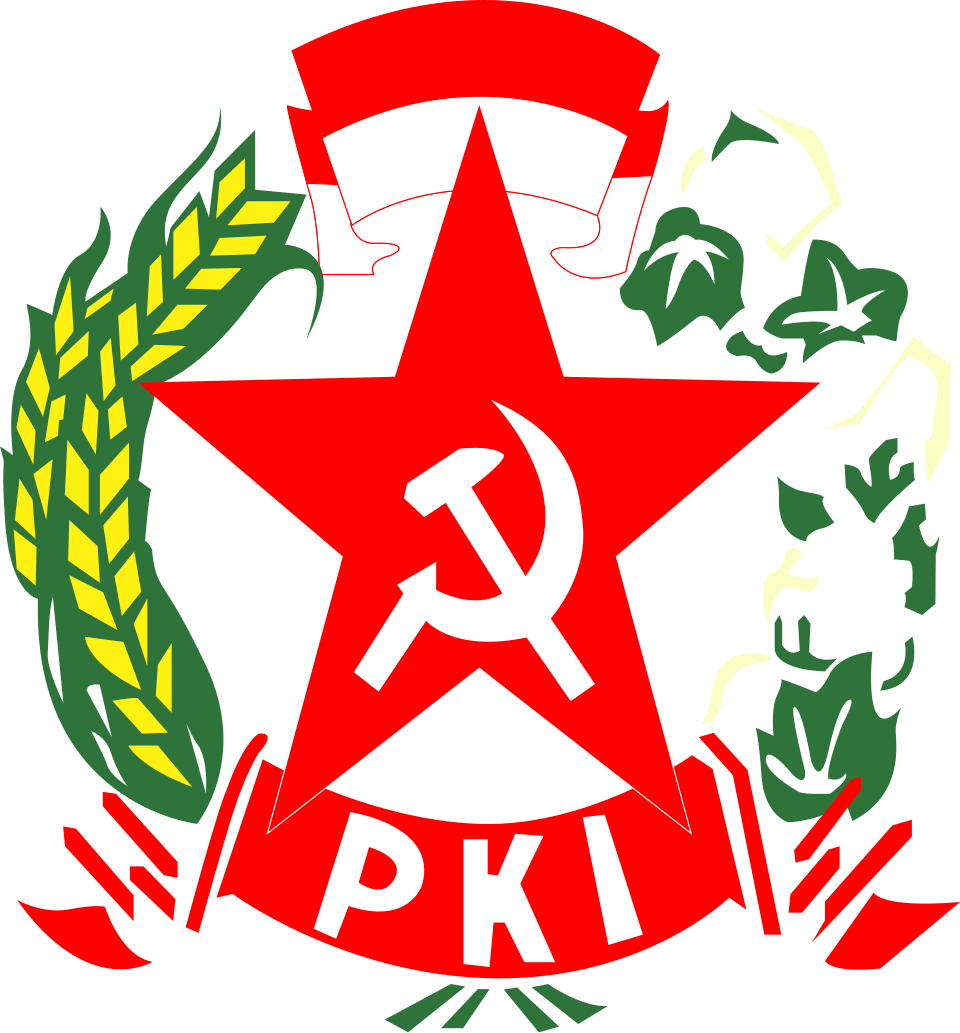
The Indonesian Communist Party (Partai Komunis Indonesia, PKI) was founded in 1920 and quickly found support in the cities and among factory workers. It began as a splinter group within SI and developed the PKI into Indonesia’s first fully fledged pro-independence party inspired by European politics after its members were expelled by SI for their radical ideas. In 1926 the PKI attempted an uprising, carrying out isolated insurrections across Java and West Sumatra. This outraged the Dutch government and led to a brutal crackdown that resulted in the arrest and exile of thousands of communists and effectively shut the party down until the Dutch were kicked out of Indonesia. [Source: Lonely Planet]
In May 1914, Hendricus Sneevliet (alias Maring) established the Indies Social-Democratic Association (ISDV), which became the Communist Association of the Indies (Perserikatan Komunisi di Hindia) in May 1920 and the Indonesian Communist Party (PKI) in 1924. Backed by the Communist International (Cominterm) in Moscow, the PKI became active among trade unionists and rural villagers. In 1926 and 1927, despite advice by Tan Malaka, a Comintern agent from Sumatra, to the contrary, local leaders instigated rural insurrections in western Java and Sumatra. The government moved decisively to crush the insurrections and imprison communist leaders. Some, like Tan Malaka, fled into exile. But 1,300 communists were exiled to the grim Boven Digul penal colony in West New Guinea. The PKI all but disappeared, not to be an important actor on the political stage until after independence. [Source: Library of Congress]
Sukarno and the Nationalist Movement
The late 1920s witnessed the rise of Sukarno to a position of prominence among political leaders. He became the country's first truly national figure and served as president from independence until his forced retirement from political life in 1966. The son of a lower priyayi schoolteacher and a Balinese mother, Sukarno associated with leaders of the Indies Party and Sarekat Islam in his youth and was especially close to Cokroaminoto until his divorce from Cokroaminoto's daughter in 1922. A graduate of the technical college at Bandung in July 1927, he, along with members of the General Study Club (Algemene Studieclub) established the Indonesian Nationalist Union (PNI) the following year. Known after May 1928 as the Indonesian Nationalist Party (PNI), the party stressed mass organization, noncooperation with the colonial authorities, and the ultimate goal of independence. [Source: Library of Congress *]
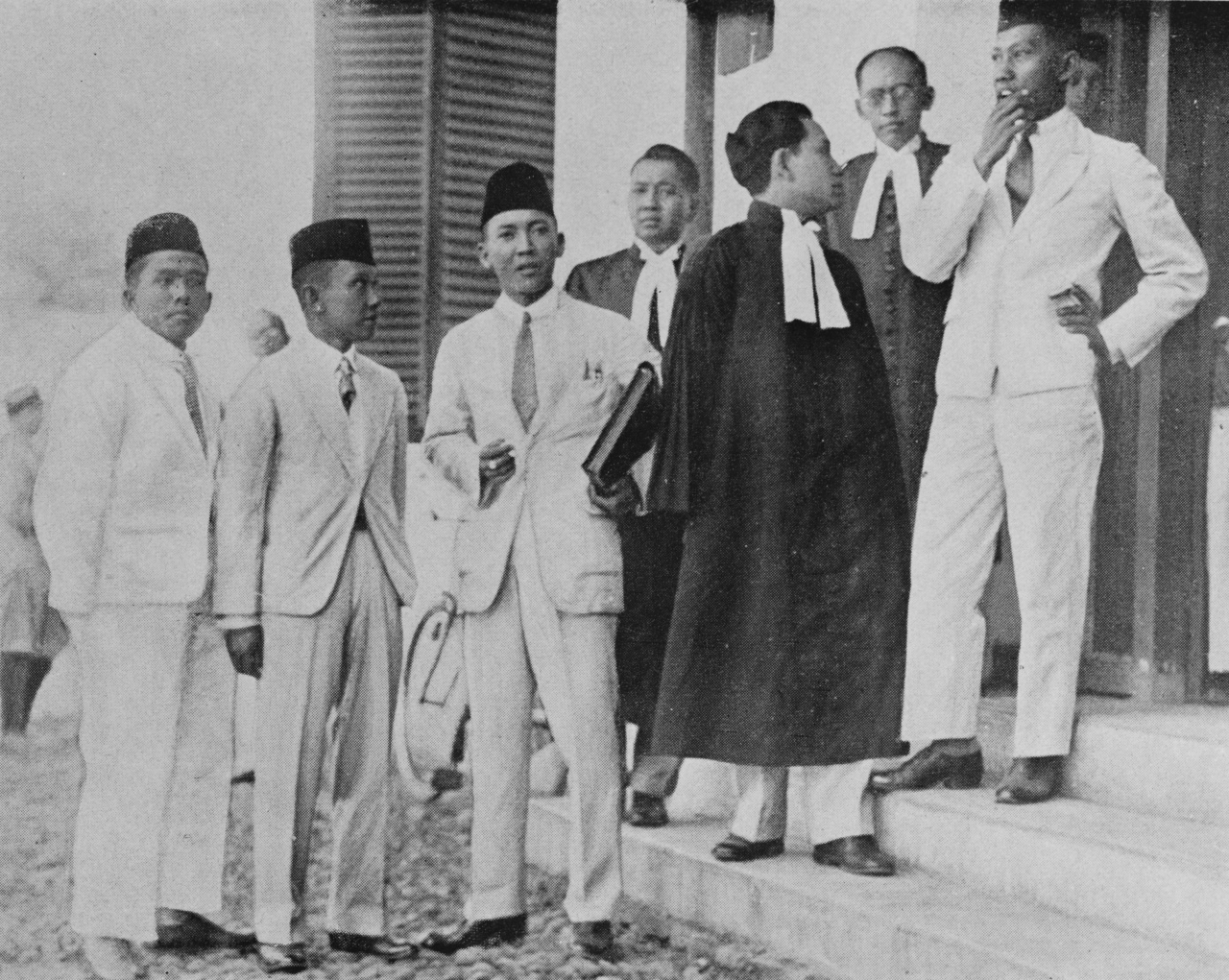
Unlike most earlier nationalist leaders, Sukarno had a talent for bringing together Javanese tradition (especially the lore of wayang theater with its depictions of the battle between good and evil), Islam, and his own version of Marxism to gain a huge mass following. An important theme was what he called "Marhaenism." Marhaen (meaning farmer in Sundanese) was the name given by Sukarno to a man he claimed to have met in 1930 while cycling through the countryside near Bandung. The mythical Marhaen was made to embody the predicament of the Indonesian masses: not proletarians in the Marxist sense, they suffered from poverty as the result of colonial exploitation and the islands' dependence on European and American markets.
Beyond the goal of independence, Sukarno envisioned a future Indonesian society freed from dependence on foreign capital: a community of classless but happy Marhaens, rather than greedy (Western-style) individualists, that would reflect the idealized values of the traditional village, the notion of gotong-royong or mutual self-help. Marhaenism, despite its convenient vagueness, was developed enough that by 1933 nine theses on Marhaenism were developed in which the concept was synonymous with socio-nationalism and the struggle for independence. Mutual self-help in diverse contexts became a centerpiece of Sukarno's ideology after independence and was not abandoned by his successor, Suharto, when the latter established his New Order regime in 1966. Considering himself a Muslim of modernist persuasion, like Ataturk in Turkey, Sukarno advocated the establishment of a secular rather than Islamic state. This understandably diminished his appeal among Islamic conservatives in Java and elsewhere. *
The Minangkabau Sutan Syahrir (1909-66) and Mohammad Hatta became Sukarno's most important political rivals. Graduates of Dutch universities, they were social democrats in outlook and more rational in their political style than Sukarno, whom they criticized for his romanticism and preoccupation with rousing the masses. In December 1931 they established a group officially called Indonesian National Education (PNI-Baru) but often taken to mean New PNI. The use of the term "education" reflected Hatta's gradualist, cadre-driven education process to expand political consciousness. *
By the late 1920s, the colonial government seemed to have moved a long way from the idealistic commitments of the Ethical Policy. Attitudes hardened in the face of growing Indonesian demands for independence. Sukarno was arrested in December 1929 and put on trial for sedition in 1930. Although he made an eloquent speech in his own defense, he was found guilty and sentenced to four years in prison. His sentence was commuted after two years, but he was arrested again and exiled to the island of Flores, later being transferred to the town of Bengkulu in Sumatra. In April 1931, what remained of the PNI was dissolved. To replace the PNI, the Indonesia Party (Partindo) was soon established and, in 1932, Sukarno and thousands of others joined it. Partindo called for independence but was repressed by the Dutch and it dissolved itself in 1934. After Japanese forces occupied the Netherlands Indies in March 1942, however, Sukarno was allowed to reenter the political arena to play a central role in the struggle for independence. *
Dutch Response to Rising Indonesian Nationalism
The colonial government found this new Indonesian nationalism at least as revolutionary, and at least as frightening, as it had the prospects of Muslim or Marxist revolution. In 1927–28 Hatta and several other Perhimpunan Indonesia members were arrested in the Netherlands and charged with fomenting armed rebellion, but acquitted. In the East Indies, after his arrest and trial in 1929–30, Sukarno served two years in prison. Taken into custody again in 1933, he was held under house arrest, first in remote Ende, Flores, then in Bengkulu, western Sumatra, until the Japanese occupation (see The Japanese Occupation, 1942–45). Hatta and Syahrir were arrested in 1934 and sent to Boven Digul, and two years later to Banda Neira, Maluku, also for the remainder of Dutch rule. These and other arrests of leaders, along with ever- tighter political surveillance, crippled noncooperating parties and curbed public anticolonial expression but did not halt the spread of nationalist sentiment. [Source: Library of Congress *]
In 1932 the government, convinced—with some justification— that privately run Indonesian schools (for example, Ki Hajar Dewantara’s Taman Siswa schools and schools supported by Muhammadiyah and by various political parties like the PNI) were nationalist breeding grounds, attempted to subject them to strict state control in a so-called Wild Schools Ordinance. The outcry was so loud and so unequivocal, even among the most cooperative groups, that the ordinance had to be modified, and in the following decade the number of Indonesian-run and -financed private schools grew rapidly. Far more Indonesians, particularly those from an expanding urban middle class, sought a modern education than the colonial government was able or willing to satisfy; the Indonesian intelligentsia took the initiative themselves, and effectively used the opportunity to further a nationalist agenda. History lessons, for example, did not follow the colonial curriculum but emphasized the glories of Majapahit and made national heroes of all those who had fought Dutch forces, such as Diponegoro. These schools had a significant impact. By the end of the 1930s in the city of Surabaya, for instance, they enrolled four times as many students as the government schools. *
The attempts of the colonial government during the 1930s to repress Indonesian nationalism were associated particularly with Governor General B. C. de Jonge (in office 1931–36), infamous for his remark that the Dutch had already ruled the Indies for 350 years and were going to do so for 350 years more. Not everyone in the European community agreed with these hardline views, and some supported greater autonomy from The Hague so that they could run the Indies as they wished. Some voted in favor of the Sutarjo Petition of 1936, which modestly sought approval for a conference to consider dominion status for the Netherlands East Indies in 10 years’ time (it was later rejected by the Dutch government); others complained aloud that the East Indies had become a police state. But the approaching war made the thought of change even less, not more, likely. The Netherlands fell to Hitler’s forces on May 10, 1940, leaving the colony more or less to its own devices. Six months later, the colonial government made it clear that it was unalterably opposed to “Indonesia merdeka”—a free Indonesia—and therefore to the Indonesian national idea as it had developed to that time; no real accommodation was possible. Little wonder that by that time a great many thoughtful Indonesians, even the most moderate, had concluded that only the shock and dislocation of war in the archipelago might— possibly—bring about changes favorable to them. *
According to Lonely Planet: “Nationalist sentiment remained high during the 1930s, but with many nationalist leaders in jail or exiled, independence seemed a long way off. Even when Germany invaded the Netherlands in May 1940, the colonial government in exile was determined to hold fast. [Source: Lonely Planet]
Image Sources: Wikimedia Commons
Text Sources: New York Times, Washington Post, Los Angeles Times, Times of London, Lonely Planet Guides, Library of Congress, Compton’s Encyclopedia, The Guardian, National Geographic, Smithsonian magazine, The New Yorker, Time, Reuters, AP, AFP, Wikipedia, BBC, CNN, NBC News, Fox News and various books and other publications.
Last updated December 2025