
INDONESIA UNDER DUTCH RULE IN THE EARLY 20TH CENTURY
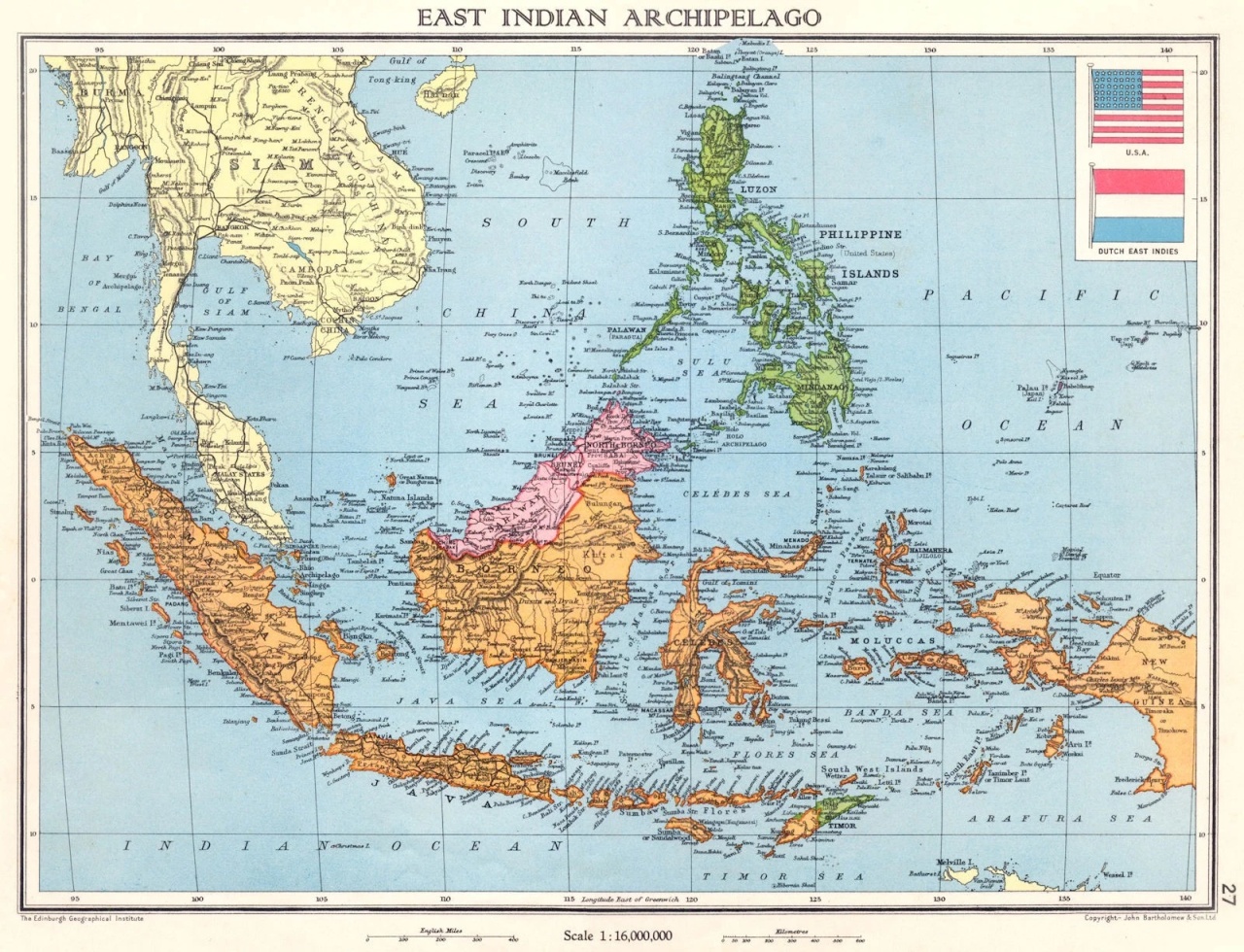
The Dutch in Indonesia were primarily concerned with earning profits from cash crops. They did little to develop manufacturing or build an infrastructure. Only in the last years of their rule did they try to build a trained public service sector and legal and educational systems. The first university was not opened until 1920. Even in the 1940s only about 4 percent of the Indonesian population could read.
The population of Java grew from around 2 million in 1775 to 29 million in 1900. The courts of Solo and Yogyakarta for the most part remained loyal to the Dutch but ordinary Indonesians were becoming more and more unhappy under Dutch rule. Being a Dutch colony would not help Indonesia out much later on. The Dutch language was not spoken anywhere except the Netherlands and among Afrikaners in South Africa and some people in Suriname. By contrast the colonies of France and Britain would pick languages that would help them in the global economy. One Indonesians government spokesman told Newsweek, “We didn’t come away like India with 100 years of British administrative tradition and functioning institutions.”
Elizabeth Day wrote in The Guardian, “Jan Bras’s father was a Dutch planter living and working in the colonies. Bras was born in Indonesia, the youngest child of eight, two of whom died in childhood. One of his earliest memories is of accompanying his father on a work trip into the jungle and coming face to face with a tiger. He wasn’t scared, he recalls, because tigers “had no bad instinct at all. We were frightened of bears because they climbed up trees and we were frightened they would fall on us”. [Source: Elizabeth Day, The Guardian, July 26, 2015 ><]
RELATED ARTICLES:
EARLY DUTCH PERIOD IN INDONESIA AND THE DUTCH EAST INDIA COMPANY (VOC) factsanddetails.com
DUTCH EMPIRE: WEALTH, EXPLORATION AND HOW IT WAS CREATED factsanddetails.com
DUTCH, THE SPICE TRADE AND THE WEALTH GENERATED FROM IT factsanddetails.com
END OF THE DUTCH EAST INDIA COMPANY, BRITAIN IN INDONESIA AND THE JAVA WAR factsanddetails.com
NETHERLANDS INDIES EMPIRE IN THE 19TH CENTURY factsanddetails.com
RISE OF INDONESIAN NATIONALISM IN THE EARLY 20TH CENTURY factsanddetails.com
MATA HARI factsanddetails.com
SPICES, TRADE AND THE SPICE ISLANDS factsanddetails.com
CLOVES, MACE AND NUTMEG: THE SPICE ISLANDS SPICES factsanddetails.com
INDONESIA WHEN EUROPEANS FIRST ARRIVED: SPICES, POWERFUL STATES, DEALS, ISLAM factsanddetails.com
EARLY INDIANS, CHINESE AND ARABS IN INDONESIA: IBN BATTUTA, YIJING, ZHENG HE factsanddetails.com
EARLY EUROPEAN EXPLORERS IN INDONESIA: MARCO POLO, NICOLÒ DEI CONTI, MAGELLAN'S CREW factsanddetails.com
AGE OF EUROPEAN EXPLORATION factsanddetails.com
PORTUGUESE IN INDONESIA factsanddetails.com
PORTUGAL AND THE AGE OF DISCOVERY factsanddetails.com
PORTUGUESE TRADE EMPIRE IN ASIA factsanddetails.com
Efforts to Improve the Lives of Ordinary Indonesians
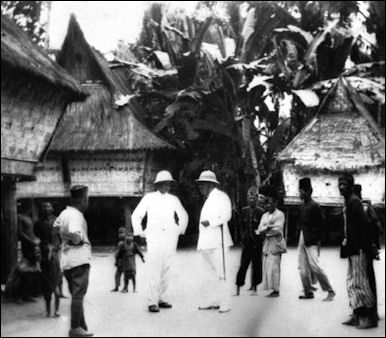
The Dutch in Sumatra During the Liberal Period, which began in the 1860s as a response to reports of suffering by Indonesians at the hands of the colonel government, an effort was made to right injustices created by the Cultivation System. Agrarian reforms ended some requirement to produce export crops and permitted local aristocrats to establish large private plantations. During this period sugar production doubled; rubber was introduced but and numbers of people continued to die in famines because large amounts of land was used to grow cash crops rather than food crops.
During the Ethical Period, launched in 1901 to improve the welfare of Indonesians, an effort was made to bring modern health care, education and social programs to Indonesia. Irrigation projects were started; transmigration policies were initiated to relieve population pressures in Java; and plans for improving roads, communications, flood control were launched. To set up these programs a stronger government presence was established in areas that had been largely independent before and this lead to revolts. Many of the projects had little impact largely because ambitions far exceeded funding.
In 1916, the Netherlands gave the East Indies a degree of self rule. A partly-elected parliament was opened in 1918 but ultimate power was held by the governor-general of the Netherlands. A more egalitarian social system evolved in the 20th century and some upward mobility could be achieved. The Indonesians who benefitted the most from education opportunities presented by the Ethical Period were the children of the Indonesian elite. They received a Western-style education in part to train them to work in the increasingly large bureaucracy. But exposure to Western ideas about freedom and democracy gave rise to a sense of nationalism and calls for independence among the educated Indonesian elite. At the same times Islamic organizations like Sarekat Islam were leaders in the early nationalist movement but they were inspired more by Islamic and Javanese mysticism than by ideas of democracy and self rule. In any case these movements unified Indonesians and to a large degree it unified them under Islam.
Books: “This Earth of Mankind”, “Child of All Nations”, “Footsteps” and “House of Glass”, know collectively as the Buru Quartet by Pramoedya Ananta Toer, Indonesia's best known novelist.
Ethical Policy in Indonesia
A new approach to colonial government, commonly referred to by historians as the Ethical Policy, was introduced 1899 and shaped Dutch policy in Indonesia in the early 1900s. The priorities of both the VOC and the Netherlands Indies state after 1816 were overwhelmingly commercial. Not even in British India was the ledger book such a weighty consideration. But opinion in the Netherlands was changing. In 1899 a liberal lawyer named Conrad Théodoor van Deventer published a polemical essay, "A Debt of Honor," the Dutch journal De Gids. Van Deventer, who had long experience in the Indies, argued that the Netherlands had a moral responsibility to return to the colony all the profits that had been made from the sale of cash crops following the Dutch Staten-Generaal's assumption of fiscal responsibility for the islands in 1867. He estimated that this amount totaled almost 200 million guilders, which should be invested in welfare and educational facilities. When a liberal government was elected in the Netherlands in 1901, these ideas became the basis for what was known as the Ethical Policy. Its scope included expansion of educational opportunities for the population as a whole, improvements in agriculture, especially irrigation, and the settlement of villagers from overpopulated Java onto some of the Outer Islands. *
In 1901 Queen Wilhelmina of the Netherlands announced the government’s acceptance of the idea that it owed a “debt of honor” to the East Indies because of the profits generated by the Cultivation System, and its intention of henceforth basing its colonial policies on a “moral duty” to them. The Ethical Policy, called for new and extensive government initiatives to expand public schooling, improve health care, modernize infrastructure (communications, transportation, and irrigation), and reduce poverty. The administrative system was to be overhauled in favor of a more modern, efficient structure. Colonial authorities began decentralizing fiscal and administrative responsibilities (in 1903 and 1922, respectively), forming local and colony-wide semirepresentative political bodies (among them the Peoples’ Council, or Volksraad, in 1918), and ending, or at least modifying, the dualism inherent in the interior administrative service with its parallel lines of European and indigenous officials. In addition, for the first time, the colonial state attempted to simplify and standardize the administrative features of its rule in the Outer Islands, using what was being done on Java (and Madura and Bali) as a rough template. [Source: Library of Congress *]
Filled with good intentions, the proponents of the Ethical Policy, like Daendels and Raffles before them, generally ignored the "feudal" political traditions that had bound together Dutch officials and Indonesian subordinates since the early days of the VOC. The rationalization and bureaucratization of the colonial government that occurred in the wake of new welfare policies alienated many members of the priyayi elite without necessarily improving the lot of the common people. Whereas Sumatra and the eastern archipelago were thinly inhabited, Java at the beginning of the twentieth century had serious population and health problems. In 1902 the government began a resettlement program to relieve population pressures by encouraging settlement on other islands; the program was the beginning of the Transmigration Program (transmigrasi) that the Republic of Indonesia would pursue more aggressively after 1950. *
According to Lonely Planet: New policies were implemented, including the transmigrasi (transmigration) of farmers from heavily populated Java to lightly populated islands. There were also plans for improved communications, agriculture, industrialisation and the protection of native industry. Other policies aimed to give greater autonomy to the colonial government and lessen control from the Netherlands, as well as give more power to local governments within the archipelago. Direct government control was exerted on the outer islands. Minor rebellions broke out everywhere, from Sumatra to Timor, but these were easily crushed and the Dutch took control from traditional leaders, thus establishing a true Indies empire for the first time. [Source: Lonely Planet ++]
Shortcomings of the Ethical Policy in Indonesia
Although Ethicists, as supporters of the policy were called, may sometimes have been seen as arguing for a weakening of colonial rule and lessening of European influence, this was not the case. They aimed at modernizing the imperial state, which also meant Europeanizing, or at least Westernizing, it. It is fair to say that in technical matters the Ethicists were more successful than with social and political questions: food production generally kept pace with population growth, and distribution improved; efforts to combat the plague and other diseases were moderately effective; and irrigation and transportation facilities (roads, railroads, and shipping lines) grew rapidly.
The problem of administrative dualism could not be resolved, however, largely because European officialdom was unwilling to surrender its position. Political decentralization and the introduction of some form of representation for Europeans and indigenes educated in Europe were limited by, among other things, the central government’s reluctance to surrender its ultimate control of budgetary and legal affairs. Likewise, legal standardization foundered on the increasingly heated debate over whether non-Europeans should be subject to Western law or to other legal principles such as those of local unwritten custom (“adat”) or the sharia, Islamic law, called “syariah “in Bahasa Indonesia. *
In the end there just wasn’t enough money to produce significant changes. Health care improved but the benefits didn’t reach most Indonesians. Education opportunities for some upper and middle class Indonesians increased, but the vast majority remained illiterate. Though primary schools were established and education was theoretically open to all, by 1930 only 8 percent of school-age children received an education. Industrialization was never seriously implemented and Indonesia remained an agricultural colony. ++
The Ethical Policy was at best modestly reformist and tinged with an often condescending paternalism. Few Dutch liberals imagined that the islands would ever be independent. Most assumed a permanent, and subordinate, relationship with the Netherlands which was in striking contrast to American "Philippines for the Filipinos" policies after 1900. Thus the Indies' political evolution was extremely tardy. The Decentralization Law of 1903 created residency councils with advisory capacities, which were composed of Europeans, Indonesians, and Chinese; in 1925 such councils were also established on the regency level. In 1918 the People's Council (Volksraad), a largely advisory body to the governor general consisting of elected and appointed European and Indonesian members, met for the first time. Although it approved the colonial budget and could propose legislation, the People's Council lacked effective political power and remained a stronghold of the colonial establishment.
Efforts to Improve Education Under the Ethical Policy
One Ethical Policy goal was improvement of education. In contrast to British (or pre-British) Burma and the Philippines under both the Spanish and Americans, the islands were poorly endowed with schools, and literacy rates were low. In 1900 there were only 1,500 elementary schools in the entire archipelago for a population of more than 36 million. In Christian areas such as Ambon, some Batak communities in Sumatra, and Manado in Sulawesi, conditions were better than average because missionaries established their own schools. In Sumatra there were a large number of village-level Islamic schools. But public education was virtually nonexistent until the government established a system of village schools in 1906. By 1913 these schools numbered 3,500 and by 1940, 18,000. Many local people, however, resented having to pay teacher salaries and other school expenses. [Source: Library of Congress *]
Even members of the Javanese elite, the priyayi, had limited educational opportunities at the beginning of the century. A school for the training of indigenous medical assistants had been established at Batavia as early as 1851, and there were three "chiefs' schools" for the education of the higher priyayi after 1880. A handful of the elite, some 1,545 in 1900, studied alongside Dutch students in modern schools. But government policy maintained an essentially segregated system on all school levels. Dutch-Language Native Schools (Hollandsche Inlandsche Scholen), with 20,000 students in 1915 and 45,000 on the eve of World War II, have been described by the historian John R.W. Smail as "perhaps the most important single institution in twentieth century Indies history." Through the medium of Dutch, graduates were introduced to the modern world; being "natives," however, their subsequent careers were limited by racial bars, an injustice that stoked future nationalism. *
In 1900 the old medical school became the School for Training Native Doctors, whose students also played a major role in emergent nationalism. A technical college was established at Bandung in 1920, and four years later a law faculty was set up at Batavia. A very small but highly influential group of graduates matriculated at universities in the Netherlands, especially the University of Leiden and the economics faculty at Rotterdam. *
Raden Ajeng Kartini (1879-1905) was a Javanese princess who fought for the freedom of Indonesian women. The daughter of the regent of Jepara on Java, she was one of the first women to receive a Dutch language education. In her time women had to marry at a very young age in their teens and often as the second, third or fourth wife. Kartini fought for a better life for women. Her birthday is celebrated on April 21 every year. In letters written to Dutch friends, published in 1911 as Door duisternis tot licht: gedachten over en voor het Javanese volk (From Darkness to Light: Thoughts About and on Behalf of the Javanese People) and later translated into English as Letters of a Javanese Princess, Kartini called for the modern education of Indonesian women and their emancipation from the oppressive weight of tradition. These letters were published for the purpose of gaining friends for the Ethical Policy, which was losing popularity. As a result, a number of Kartini schools for girls were established on Java in 1913 from private contributions. *
Racial Issue in Indonesia
The unresolved issue of greatest importance was that of racial classification, which the modern Dutch historian Cees Fasseur has identified as both the “cornerstone and stumbling block” of the colonial state. Under the VOC, people were classified mainly on the basis of religion rather than race, Christianized indigenes generally falling under the same laws as Protestant Europeans. In the early nineteenth century, however, “enlightened” ideas began to emphasize—often on “humanitarian” grounds that sought protection of indigenous peoples—a separation between native and European rights, and the Cultivation System, with its clear distinction between rulers and ruled, emphasized that divide. In practice, if not yet in law, non-Europeans were treated very differently from Europeans in judicial and penal matters, and in 1848 legal and commercial codes appeared that were applicable to Europeans only. [Source: Library of Congress *]
Statutes of 1854 made a formal (but not very specific) distinction between Europeans and natives (“inlanders”), at the same time as offering them “equal” protection. Everyday understanding and practice, however, was that “equal” did not mean “the same,” and that, in particular, Europeans and Asians occupied separate legal spheres. Almost immediately, however, there were difficulties. The category of Asians was further divided into “natives” and “foreign orientals,” among whom the Chinese, ostensibly for business reasons, in 1885 were determined to fall under European commercial law. The category “European” did not distinguish between full-blooded Europeans—the so-called “totok “Dutch—and those of mixed European and indigenous parentage—the Eurasians, or so- called Indos. In 1899, for political reasons, the Japanese were accorded European public and private legal status, and in 1925 the same was done for those whose country of origin adopted Western family laws, such as Turkey and Siam (after 1939, Thailand). “Natives” remained a separate, and lower, category. *
One might think that these circumstances would soon have led to the abandonment of all racial or national distinctions and a unification of colonial law and policy in general, but instead a fundamental dualism—native and European—remained. This outcome is all the more remarkable because it was at odds with important realities in colonial life. In the early twentieth century, Europeans increasingly married across racial categories. In 1905 about 15 percent were in interracial marriages, rising to 27.5 percent by 1925. And, although by the mid-1920s the older mix of dress and sensibilities known as “Indies” (“Indische”) culture was rapidly giving way to more modern, urbanized, European- and American-influenced forms, numerous memoirs of Europeans, Eurasians, Chinese, and Indonesians make it clear that, despite obvious racial tensions and divisions, a new sort of Dutch-speaking, racially mixed, and culturally modern society was coming into being, mostly in the largest cities and mostly among the upper and upper-middle economic classes. *
A powerful countercurrent was also developing, however. In part, this was the result of the stubborn refusal of the colonial state either to surrender the formal dualism on which it had been built, or to face squarely the many anomalies created by its insistence on legal classification. Especially as the specters of nationalism and communism came into focus after 1918, the idea of emancipation for all simply could not be accepted, either in the abstract or for practical reasons. Other factors included the greater numbers of newcomer, full-blooded Europeans, including women, arriving in the colony, most of whom had the notion that colonial life there should adjust itself to their standards, not the other way around. The resentment that resulted among Eurasians and indigenes, already chafing against the effects of both formal and informal discrimination, the Great Depression of the 1930s, and the approach of World War II (1939– 45) in different ways deepened existing fears.
After 1930, racism became more visible in all corners of colonial society. To all of this the colonial government remained strangely cold, taking merely an attitude of watchfulness and determination to “keep the peace.” When, in 1940, the governor general appointed the Visman Commission to determine what the public really thought about issues connected with the constitutional development of the colony, the clearest finding was that discrimination was universally considered a serious problem, and that all other groups wished to hold legal equality with Europeans. The commission’s own suggestions for solving the problem by replacing racial criteria with education, financial, and other measures were unworkable, and in any case time had run out. On December 7, 1941, two days after the commission submitted its report, Japan attacked the United States naval base at Pearl Harbor.
Expansion of the Cash Crop Economy in Indonesia
The dismantling of the Cultivation System on Java, Dutch subjugation of Sumatra and the eastern archipelago, and the opening of the Suez Canal in 1869 stimulated the rapid development of a cash-crop, export economy. Another factor was technological change, especially the rise of the automotive industry, which created unforeseen markets for tropical products in Europe and North America. Although palm oil, sugar, cinchona (the source of quinine, used in treating malaria), cocoa, tea, coffee, and tobacco were major revenue earners, they were eclipsed during the early twentieth century by rubber and, especially, petroleum. Sumatra and the eastern archipelago surpassed Java as a source of tropical exports, although sugarcane remained important in East Java. [Source: Library of Congress *]
Rubber plantations were established on a large scale in the early twentieth century, particularly around Medan, Palembang, and Jambi on Sumatra, with British, American, French, and other foreign investment playing a major role. A high-yield variety of rubber tree, discovered in Brazil and proven very profitable in Malaya, was utilized. It was during this period that the emergence of small-holder rubber cultivation, which was to play a major role in the Indonesian economy, took place. *
Tin had long been a major mineral product of the archipelago, especially on the islands of Bangka and Billiton, off the southeast coast of Sumatra. But petroleum was, and remained, Indonesia's most important mineral resource. Oil, extracted from Sumatra after 1884, was first used to light lamps. In 1890, the Royal Dutch Company for Exploration of Petroleum Sources in the Netherlands Indies (Koninklijke Nederlandsche Maatschappij tot Exploitatie van Petroleum-bronnen in Nederlandsche-Indië) was established, and in 1907 it merged with Shell Transport and Trading Company, a British concern, to become Royal Dutch Shell, which controlled around 85 percent of oil production in the islands before World War II. Oil was pumped from wells in Sumatra, Java, and eastern Kalimantan. *
Trekkers, Chinese and Social Changes in Indonesia
Rapid economic development during the late nineteenth and early twentieth centuries profoundly changed the lives of both European residents and indigenous peoples. By 1930 Batavia had a population of more than 500,000 people. Surabaya had nearly 300,000 people and other large cities — Semarang, Bandung, Yogyakarta, and Surakarta — had populations between 100,000 and 300,000. [Source: Library of Congress *]
Always conscious of its ethnic and cultural diversity, Indonesian society grew more so as the number of Dutch and other Western residents — especially white women — increased and chose to live European-style lives in special urban areas with wide streets or on plantations. There also were increasing numbers of Indonesians who lived in these Western-style urban areas. Nevertheless, the European trekkers, as they were known in Dutch, were often not much different from their British counterparts described by George Orwell in Burmese Days, longing for the home country and looking on the native world around them with suspicion and hostility. An early twentieth century work described Batavia's European quarter as "well planned, it is kept scrupulously clean, and while the natives in their bright colored clothes, quietly making their way hither and thither, give the required picturesque touch to the life in the streets, the absence of the crowded native dwelling houses prevents the occurrence of those objectionable features which so often destroy the charm of the towns in the Orient." *
The trekkers contrasted with an earlier generation of Dutch colonists, the blijvers (sojourners), who lived most or all of their lives in the islands and adopted a special Indisch (Indies) style of life blending Indonesian and European elements. The rijsttafel (rice table), a meal of rice with spicy side dishes, is one of the best-known aspects of this mixed IndonesianEuropean culture. Eurasians, usually the children of European fathers and Indonesian mothers, were legally classified as European under Netherlands Indies law and played an important role in colonial society; but as trekkers outnumbered blijvers, the Eurasians found themselves increasingly discriminated against and marginalized. It is significant that a strand of Indonesian nationalism first emerged among Eurasians who argued that "the Indies [were] for those who make their home there." *
The Chinese minority in Indonesia had long played a major economic role in the archipelago as merchants, artisans, and indispensable middlemen in the collection of crops and taxes from native populations. They encountered considerable hostility from both Indonesians and Europeans, largely because of the economic threat they seemed to pose. In 1740, for example, as many as 10,000 Chinese were massacred in Batavia, apparently with the complicity of the Dutch governor general. In the late nineteenth century, emigration from China's southern provinces to Indonesia increased apace with economic development. Between 1870 and 1930, the Chinese population expanded from around 250,000 to 1,250,000, the latter being about 2 percent of the archipelago's total population. Chinese were divided into totok, first-generation, fullblooded emigrants, and peranakan, native-born Chinese with some Indonesian ancestry who, like blijvers and Eurasians, had a distinct Indies life-style. Overseas Chinese lived for the most part in segregated communities. During the early twentieth century, the identity of overseas Chinese was deeply influenced by revolutionary developments in their homeland. *
Image Sources: Wikimedia Commons
Text Sources: New York Times, Washington Post, Los Angeles Times, Times of London, Lonely Planet Guides, Library of Congress, Compton’s Encyclopedia, The Guardian, National Geographic, Smithsonian magazine, The New Yorker, Time, Reuters, AP, AFP, Wikipedia, BBC, CNN, NBC News, Fox News and various books and other publications.
Last updated December 2025