
NETHERLANDS INDIES EMPIRE IN THE 19TH CENTURY
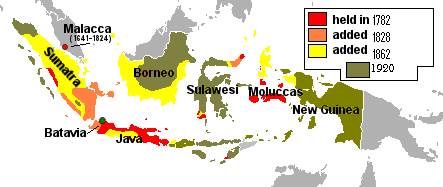
Dutch East Indies
Nineteenth-century Indonesia experienced not only the replacement of company rule by Dutch government rule but also the complete transformation of Java into a colonial society and the successful extension of colonial rule to Sumatra and the eastern archipelago. The modern state of Indonesia is in a real sense a nineteenth-century creation. It was during this century that most of its boundaries were defined and a process of generally exploitative political, military, and economic integration begun. Some analysts, such as Benedict R.O'G. Anderson, argue that the New Order state of Suharto is a direct descendant of the Dutch colonial state, with similar objectives as summarized in the Dutch phrase rust en orde (tranquillity and order). There was, at least, a natural historical continuity between the Dutch colonial and modern Indonesian state. [Source: Library of Congress *]
France occupied Holland during the Napoleonic Wars and in 1811 the British occupied parts of the Dutch East Indies, including Java. Control was restored to the Dutch in 1816 and a treaty was signed in 1824 under which the British exchanged Bengkulu in Sumatra for Dutch-controlled Melaka on the Malay Peninsula. While the two European powers may have settled their differences, the Indonesians were far from happy with European control. There were a number of wars and insurrections during this time; the most prolonged struggles were the Paderi War in Sumatra (1821–38) and the Java War (1825–30) led by Pangeran (Prince) Diponegoro. The eldest son of the sultan of Yogyakarta, Diponegoro had recently been passed over for succession to the throne, in favour of a younger claimant. Having bided his time, Diponegoro eventually vanished from court and in 1825 launched a guerrilla war against the Dutch. The courts of Yogyakarta and Solo largely remained loyal to the Dutch, but many members of the Javanese aristocracy supported the rebellion. Diponegoro had received mystical signs that convinced him he was the divinely appointed future king of Java. News spread among the people that he was the long-prophesied Ratu Adil (the Just King) who would free them from colonial oppression. *
The rebellion ended in 1830 when the Dutch tricked Diponegoro into a peace negotiation, arrested him and then exiled him to Sulawesi. The five-year war had cost the lives of 8000 European and 7000 Indonesian soldiers of the Dutch army. At least 200, 000 Javanese died, most from famine and disease. Diponegoro is commemorated throughout Indonesia by having a major street in most cities and towns named after him. *
RELATED ARTICLES:
EARLY DUTCH PERIOD IN INDONESIA AND THE DUTCH EAST INDIA COMPANY (VOC) factsanddetails.com
DUTCH EMPIRE: WEALTH, EXPLORATION AND HOW IT WAS CREATED factsanddetails.com
DUTCH, THE SPICE TRADE AND THE WEALTH GENERATED FROM IT factsanddetails.com
END OF THE DUTCH EAST INDIA COMPANY, BRITAIN IN INDONESIA AND THE JAVA WAR factsanddetails.com
INDONESIA UNDER DUTCH RULE IN THE EARLY 20TH CENTURY factsanddetails.com
RISE OF INDONESIAN NATIONALISM IN THE EARLY 20TH CENTURY factsanddetails.com
MATA HARI factsanddetails.com
SPICES, TRADE AND THE SPICE ISLANDS factsanddetails.com
CLOVES, MACE AND NUTMEG: THE SPICE ISLANDS SPICES factsanddetails.com
INDONESIA WHEN EUROPEANS FIRST ARRIVED: SPICES, POWERFUL STATES, DEALS, ISLAM factsanddetails.com
EARLY INDIANS, CHINESE AND ARABS IN INDONESIA: IBN BATTUTA, YIJING, ZHENG HE factsanddetails.com
EARLY EUROPEAN EXPLORERS IN INDONESIA: MARCO POLO, NICOLÒ DEI CONTI, MAGELLAN'S CREW factsanddetails.com
AGE OF EUROPEAN EXPLORATION factsanddetails.com
PORTUGUESE IN INDONESIA factsanddetails.com
PORTUGAL AND THE AGE OF DISCOVERY factsanddetails.com
PORTUGUESE TRADE EMPIRE IN ASIA factsanddetails.com
Dutch Colonial Government in Indonesia
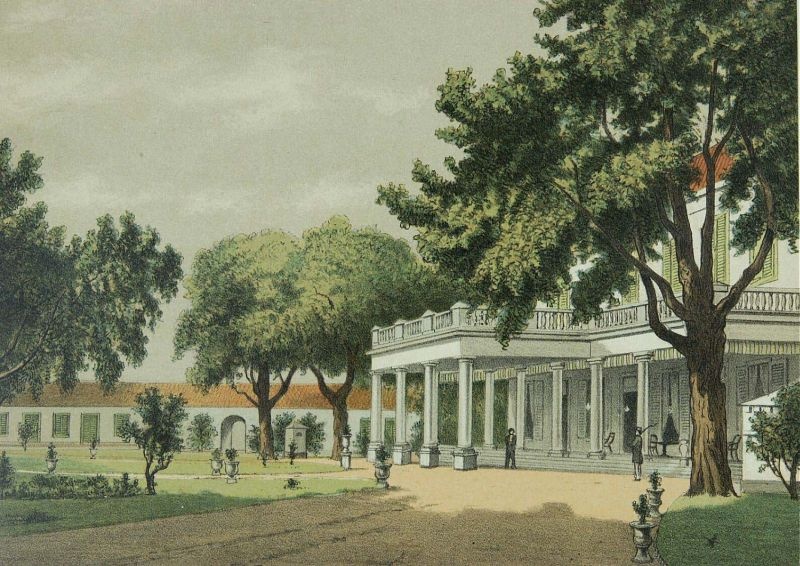
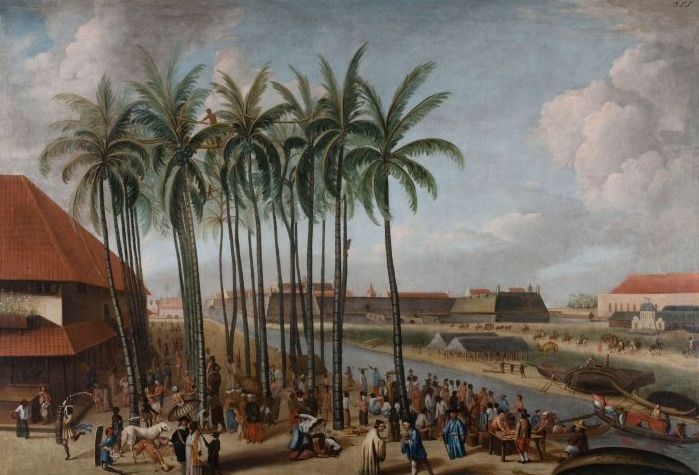
Things changed under the rule of colonial Dutch government, which was more intent on subduing and controlling the people than the Dutch East India Company (VOC), which was mostly interested in trade and profits. Except in areas where they set up agricultural monopolies like the Moluccas, the VOC had relatively little impact on the people it traded with throughout Indonesia except in matters of trade.
The colonial Dutch government entered areas of Indonesia that the Dutch East India Company left alone and employed indirect rule. Whenever possible it empowered a noble class and used them to carry out their wishes. This rigidified the existing class systems and encouraged the poor to go to colonial schools to get ahead in life.
Despite Dutch predominance in Java and islands crucial for the spice trade many areas of the archipelago—including Bali, Lombok, Aceh and Borneo—remained largely independent. Pirates operated with impunity until the mid 19th century. Southwestern Sulawesi and Bali were not occupied by the Dutch until 1906; Irian Jaya not until 1920.
Military Force and Dutch Colonial Government in Indonesia
The Dutch governor-general Bonifacius de Jong once boasted, “We have ruled here for 300 years—with the whip and the club.” Under Dutch colonial rule, Dutchmen in pith helmets ordered laborers around on plantations; land was appropriated from local people for sugar plantation; and men and women were required to do forced labor "as a kind of tax paid for the privilege of being ruled the Dutch. Indonesian women could be legally kidnapped by Dutch men. Numerous other injustice were committed against Indonesians, for which they had no recourse. Multatuli, a 19th century Dutch administrator who wrote against colonialism, said that the main duty of human beings was to be human—something his countrymen needed to be reminded of.
The Dutch colonial state had its foundation in conquest. Unlike the violence used earlier by the VOC, the military expansion of the nineteenth century was deliberately territorial and penetrated far beyond the coastal areas. It generally had as its goal fundamental regime change and—although in truth this was often beyond Batavia’s capability—the establishment of control by a centralized authority. Quite different from the eighteenth century, too, colonial forces enjoyed a degree of technological superiority over most of their adversaries, a result of the industrial revolution. And, whereas the VOC had fought with an assortment of indigenous allies, now the colonial state fought for its own interests, engaging indigenous men as soldiers. [Source: Library of Congress *]
The colonial government’s separate fighting force, known as the Royal Netherlands Indies Army (KNIL), was founded only a few weeks before Diponegoro’s surrender in 1830. Although assigned the task of maintaining “rust en orde “(tranquillity and order) throughout the colonial state’s territories, the KNIL became best known for its role in the colonial wars of expansion. Dominated by ethnic Dutch, and later Eurasian, officers, in the mid-nineteenth century about two-thirds of KNIL troops were Indonesians, predominantly Javanese and Ambonese, and the rest “European,” a confusing category that included not only white Europeans but also a small number of black Africans and others. *
Impact of Dutch Colonization on Indonesia
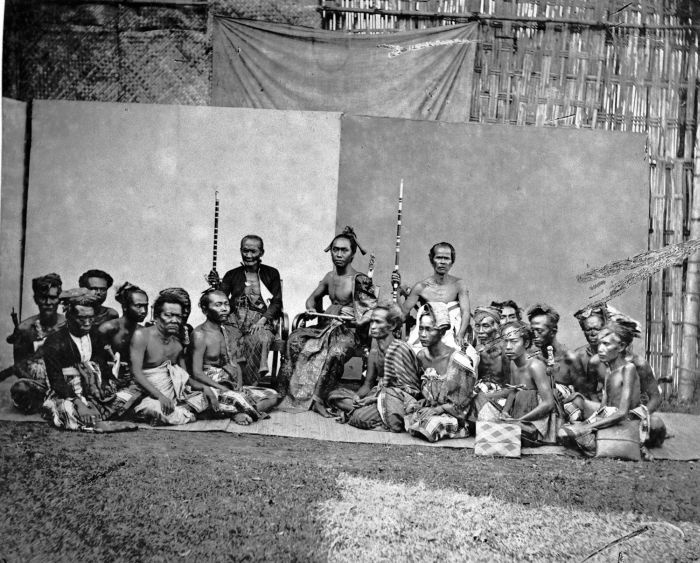
Dutch missionaries spread Protestant Christianity in non-Muslim regions—among the Batak of Sumatra, the Dayak of Kalimantan, communities in the Lesser Sunda Islands, and the Toraja and Manado peoples of Sulawesi, as well as in West Papua—places the Dutch classified as “heathen.” Christian missions, Catholic and Protestant alike, were funded from Europe and many continue to receive outside support today. [Source: “Culture and Customs of Indonesia” by Jill Forshee, Greenwood Press, 2006]
Colonial rule reshaped Indonesia through land seizures, forced or unpaid plantation labor, new cash-crop regimes (including coffee and rubber), taxation, and harsh penalties. Like other European colonial powers, the Dutch controlled what Indonesians could produce, fixing market systems for their own benefit. They also inadvertently stimulated a population boom in Java by introducing medical care that reduced infant mortality. Larger families became desirable for their potential earnings, contributing to Java’s status today as one of the world’s most densely populated regions.
Colonialism brought new technologies and materials, such as rubber, and helped disseminate Indonesian textiles and dyes globally. Many elite Indonesians received Dutch educations, gaining exposure to European political ideas. Crucially, Dutch rule reinforced the Javanese priyayi elite, a relationship sharply criticized in Max Havelaar, a groundbreaking 1860 novel by Douwes Dekker (writing as Multatuli). His account of corruption and exploitation profoundly influenced both Dutch reformers and emerging Indonesian nationalists.
Slavery-Like Practices in the Dutch East Indies
Although formal and rigid slavery like that in the Americas was not extensively practiced in the Dutch East Indies, slavery-like institutions were deeply embedded there from the 17th century, with the Dutch East India Company (VOC) heavily involved in both internal and external slave trades for labor in infrastructure, plantations, and households, eventually leading to forced labor systems like the Cultuurstelsel (Cultivation System) that treated workers like slaves. While the Dutch officially banned the slave trade in 1811 and slavery itself in 1860, its legacy, including exploitation and racial hierarchies, persisted, with severe coercive labor continuing until the early 20th century and even into the 1940s in some forms.
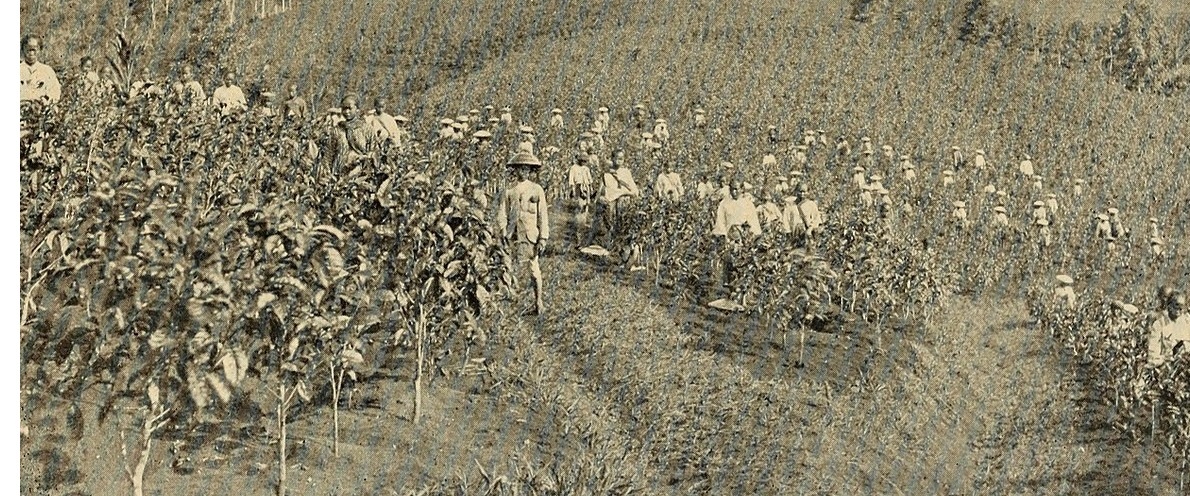
According to Lonely Planet: “Around 1830, Dutch control was at a crossroads. Trade profits were in decline, the cost of controlling conflicts continued, and when the Dutch lost Belgium in 1830, the home country itself faced bankruptcy. Any government investment in the East Indies now had to make quick returns, so the exploitation of Indonesian resources began. A new governor general, Johannes van den Bosch, fresh from experiences with slave labour in the West Indies, was appointed to make the East Indies pay their way. He succeeded by introducing an agricultural policy called the Culture System. This was a system of government-controlled agriculture or, as Indonesian historians refer to it, Tanam Paksa (Compulsory Planting).
Instead of paying land taxes, peasants had to either cultivate government-owned crops on 20 percent of their land or work in government plantations for nearly 60 days of the year. Much of Java became a Dutch plantation, generating great wealth for the Netherlands. For the Javanese peasantry, this forced-labour system brought hardship and resentment. They were forced to grow crops such as indigo and sugar instead of rice, and famine and epidemics swept through Java in the 1840s. In strong contrast, the Culture System was a boon for the Dutch and the Javanese aristocracy. In the ensuing years, Indonesia supplied most of the world’s quinine and pepper, over a third of its rubber, a quarter of its coconut products and almost a fifth of its tea, sugar, coffee and oil. The profits made Java a self-sufficient colony and saved the Netherlands from bankruptcy. [Source: Lonely Planet]
A skull from Indonesia’s Papua province analyzed in the early 2020s suggests that a woman—possibly enslaved or accused of sorcery —was executed with a sharp weapon, according to a recent study. Researchers determined from the skull alone that the woman was between 26 and 42 years old at the time of her death. Digital and ultraviolet imaging revealed multiple sharp-force wounds on the frontal, temporal, and occipital bones, indicating a violent killing, the team reported in the International Journal of Osteoarchaeology.[Source: Owen Jarus, Live Science, December 23, 2023]
The skull itself was recovered on Biak Island in 1935 by scientists from Airlangga University and is marked with the year and the word “Biak,” likely referencing the local Biak people. Although the woman may have been a victim of slave raiding, the exact circumstances of her death remain uncertain. “It is impossible to determine whether she died in inter- or intra-tribal conflict or was killed as a slave,” lead author Rizky Sugianto Putri, a forensic anthropologist at Airlangga University, told Live Science. Still, the execution-style placement of the wounds suggests that she was kneeling or sitting and unable to defend herself.
The study notes that women accused of sorcery—known as mon—were often targeted during raids, raising the possibility that the victim held such a role. Her killer or killers also remain unidentified, though the pattern of sharp-force trauma is consistent with blows from a parang, a blade commonly used by Papuan groups during this era, Sugianto Putri said. Because few colonial-period human remains from Indonesia have been studied, the researchers hope their findings will spur further work to better understand how people lived and died.
Revolts Against the Dutch Colonial Government in Indonesia
Indonesians began revolting against the Dutch in the early 19th century. Among the most serious struggles were the Paderi War in Sumtra (1821-38) and the Java War (1825-30) led by Prince Pangeran Dipanegoro (1785-1855). In both wars Islam was used as a unifier against the Dutch. In the Java War 8,000 European and 7,000 Indonesian soldiers were killed. An estimated 200,000 Javanese died as the result of famine and disease connected with the war. See Separate Article on the End of the Dutch East Company and the Java War.
The dashing Prince Dipanegoro is one of Indonesia’s greatest heros. He was the first member of the Javanese royal family to take up arms against the Dutch. After he had been passed over for succession for a younger claimant backed by the British he fled to the mountains and formed a guerilla force made up of peasants. He claimed to have received mystical signs to justify his claim to rule Indonesia. He was finally arrested in Magelang in the mountains near Borobudur after being tricked with promises of a peace treaty.
Fighting periodically flared up in Java and Sumatra. In the late 1840s, a major Dutch military campaign was carried out to subjugate Bali. Hundreds died in the Banjarmasin War in southeastern Borneo. Thousands died in a 35 year conflict in Aceh that began with a Dutch invasion in 1873 and ended with the surrender of Aceh leaders in 1908.
Modern military intrusions began at about the same time as the Java War and lasted into the early twentieth century. Their circumstances varied. In some instances, such as that of the Padri Wars (1821–37) in Minangkabau in western Sumatra, the military assistance of the colonial government was sought by indigenous factions, in this case members of the aristocracy and some village clan leaders beleaguered by Wahhabi-influenced Muslim reformers.
The reformers were defeated, but the aristocracy and clan leaders eventually surrendered their powers to the colonial state. In other examples, such as those of Banjarmasin (southern Kalimantan, 1857–59) and Palembang (southern Sumatra, 1823–49), the government imposed and then deposed rulers without invitation, but with similar results.
The war against the great power of Aceh (northern Sumatra, 1873–1903) was the most extensive and costly of all these conflicts. The Dutch pursued it because of the imperial designs of other Western powers, commercial and military competition from the Acehnese, and the spread from Aceh of anti-Western, anticolonial Muslim movements. For a time, Batavia appeared to take up the cause of the “uleëbalang”, or traditional and more secular elite, as had been the case in Minangkabau, but this was a temporary tactic, and in any case the “uleëbalang “too ended up subservient to the colonial state, which finally annexed Aceh outright. *
Among the last conflicts were those in Bali and Lombok, where the intervention of colonial forces after 1840 had been limited, in part by fierce Balinese resistance. After the mid- 1880s, however, warfare and rebellion in a number of Balinese kingdoms, and Dutch interest in controlling the important, ongoing local trade in slaves and opium, led the colonial state to apply increasing military pressure. It conquered Lombok in 1894, and, between 1906 and 1908, the last independent Balinese rulers submitted. In the kingdoms of Badung, Tabanan, Klungkung, and others, the rajas and their families and followers sacrificed themselves in dramatic frontal assaults on the KNIL guns. These “puputan”, or ritual suicides, killed hundreds of men, women, and children, decimating the aristocracy and obliterating all meaningful further resistance to the expansion of colonial rule in Bali. With smaller campaigns to establish claims of colonial sovereignty in Timor and Flores between 1908 and 1910, the Netherlands East Indies reached, at least in outline, its final extent, including far-off territories such as the Kai Islands (in southeastern Maluku) and Papua (on the island of New Guinea). *
Dutch Rule, Chinese and Economic Policy in Indonesia in the 1800s
At first the Dutch made money primarily from trading products produced by others. Later they began producing export crops on plantations, or estates, that they controlled. In most cases they leased the land from local rulers.
Indonesia was opened to private Dutch enterprise after 1850. After the Dutch left these enterprises developed into estates that dealt primarily with agriculture but expanded into industry and mining. This segment of the economy was highly capitalized and has traditionally been oriented for export.
While Dutch enterprises in Indonesia remained profitable, the cost of running the archipelago was becoming increasingly expensive, especially as money was poured into defeat various rebel movements. After the Dutch government lost Belgium in 1830 and teetered on the edge of bankruptcy it became increasingly vital for it to earn money in Indonesia somehow.
Starting in 1830, a set of policies known as the Cultivation System (cultuurstelsel in Dutch) was implemented as a means of covering the high cost of colonial administration in Java and bolstering the Netherlands' weak financial condition following the Napoleonic Wars and a civil war with Belgium, with which the Dutch had united in 1815. Governor General Johannes van den Bosch (served 1830-34), the system's proposer, argued that the Cultivation System would benefit both colonizer and colonized. In fact, it brought the Netherlands handsome profits, increased the conspicuous consumption of the indigenous elite, enriched European officials and Chinese middlemen, but was a terrible burden for Javanese villagers. [Source: Library of Congress]
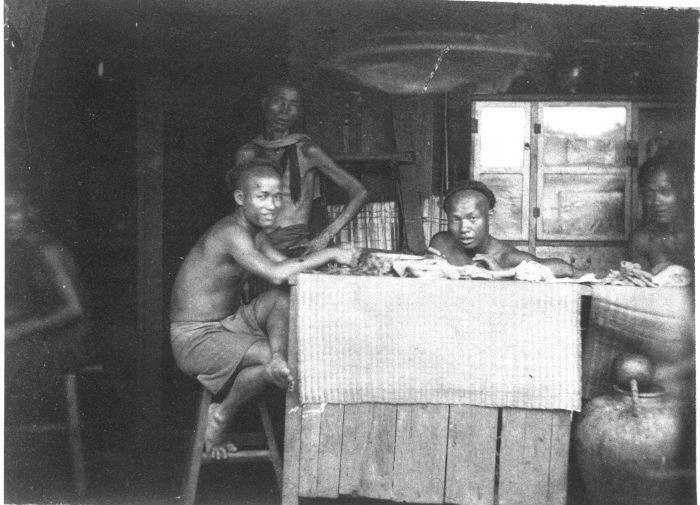
After the Dutch took over Jakarta large numbers of Chinese seeking to make their fortune emigrated there. The Dutch tried to stem the migration but with little success. As times passed the Chinese became more numerous and Chinese gangs made trouble.In October 1740, the local population had enough and decided it was payback time. More than 5,000 Chinese were massacred.
Cultivation System in Indonesia
Johannes Van des Bosch, the general-governor of the Dutch East Indies appointed in 1830, introduced an agricultural policy called the Cultivation System that was developed in part out of his experience with slave labor in the West Indies. Known to the Indonesians as Compulsory Planting, Indonesians were required to work on government plantations for 60 days a year or devote 20 percent of their land to growing government crops. Under this system much of Java became a Dutch plantation. The Dutch established plantations that were organized on the Western model of business organization. They produced crops that were in high demand at any given time. When spice trading became less profitable the plantations began producing coffee, tea, sugar, tobacco, sisal, and quinine. The system was quite profitable and it saved the Dutch government from bankruptcy.
A colonial state aimed at managing the territories and people acquired as a result of these conquests—or “pacifications,” as some preferred to describe them—emerged gradually and piecemeal. It first began to take shape around the time of Diponegoro’s defeat, with the inauguration in Java of policies that came to be known as the Cultivation System (Cultuurstelsel). [Source: Library of Congress *]
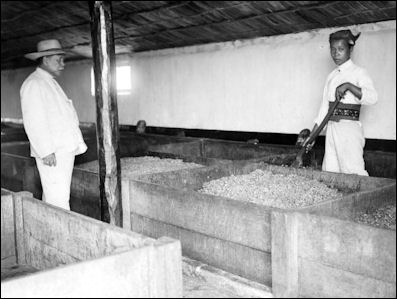
Fermenting cacao into chocolate in colonial Indonesia Van den Bosch was a military man and social reformer who became governor general (1830–34) and later minister of colonies (1834–39). He sought to solve the fiscal problems of Batavia and the Netherlands, both of which were on the brink of bankruptcy, as well as those of a populace devastated by warfare on Java. Van den Bosch believed that Java was a rich but underproductive land, primarily because Javanese farmers, even when their own prosperity was at stake, would not or could not produce beyond a subsistence level unless guided, even compelled, to do so. “Force,” he wrote, “is everywhere the basis of industry ... where it does not exist there is neither industry nor civilization.” Van den Bosch’s plan forced Java’s farmers either to use existing agricultural lands or open new ones in order to cultivate crops for export, deliver them to the government at fixed prices, and utilize the income to offset or pay the government taxes on their land. The crops first targeted were sugar and indigo, but coffee and pepper were soon added, followed by newer crops, such as tea, tobacco, and cinnamon. *
The Cultivation System (sometimes called the Culture System) in theory required that participating villages grow export crops to raise funds sufficient to meet their land-tax commitment, which was based on rice production. Export crops — the most profitable being coffee, sugar, indigo, tea, cinnamon, pepper, tobacco, cotton, silk, and cochineal — were sold to the government at fixed prices. A balance was supposed to be established between rice production and export crops and both the village and the colonial economy — and the Netherlands — would enjoy the benefits. *
Unlike the system that Raffles had contemplated, van den Bosch proposed dealing with whole villages rather than individuals, and using government officials and local authorities (who received a percentage of revenues their areas generated) to regulate which crops would be grown, on which and how much land, with which and how much labor, and at what prices. Bringing the produce to the world market through the Netherlands became the monopoly of the Netherlands Trading Association (NHM), a private company in which the Dutch king was a major stockholder. Entrepreneurs in general were locked out of the state-run system. This approach, van den Bosch argued, would assure production and profits great enough not only to subsidize the colonial administration and contribute handsomely to the treasury of the Netherlands but also to substantially improve the well-being of the Javanese. Scholars and politicians alike have been arguing ever since over what exactly the results were. *
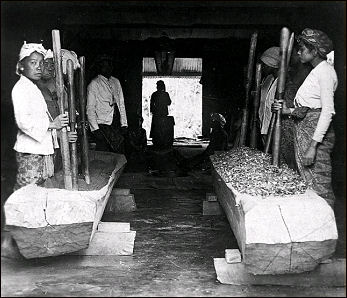
production of coca (the ingredient of cocaine) in colonial Java
The Cultivation System had not required an elaborate state apparatus. It was deliberately a form of indirect rule using an existing hierarchy of the Javanese “priyayi “elite, especially the upper ranks of traditional local officeholders known as the “pangreh praja “(rulers of the realm) and village heads. As late as the mid1850s, European officials and regional supervisors numbered fewer than 300 for an indigenous population of more than 10 million. A small number of freelance European engineers and locally requisitioned laborers undertook the construction of roads and irrigation works needed for the new plantations. This began to change, however, as the system grew, underwent reform, and then, especially after the Sugar Act and Agrarian Act of 1870, gradually gave way to private enterprise. The responsibilities of the colonial government burgeoned, and in order to meet them, it expanded “pangreh praja “ranks by dividing and standardizing their administrative territories and tightened control, by rescinding their traditional rights to symbols of status and access to villagers’ labor and services, tying them to government salaries and procedures. Alongside the “pangreh praja “now served a growing parallel hierarchy of European officials— ostensibly functioning as advisers or “elder brothers” of their native counterparts but increasingly directing them—whose reach, by 1882, extended as far down as the subdistrict level, just above the village head. In addition, more specialized government offices came into being: a Bureau of Public Works (with its own corps of engineers and an irrigation division), as well as departments of agriculture, education, finance, justice, and religion, all with their own structures and technical staffs. *
Costs and Benefits of the Cultivation System
The plantation system produced profits for people back home and revenues to run the East Indies government. For local people the system was less positive. Those that worked on the estates received low wages and had no opportunities to improve their lives. Local farmer were unable to make much money as they were required to sell the cash crops they grew at prices fixed by the Dutch government and Chinese traders. In some cases thousands of people died from famine because they grew sugar and indigo for the Dutch instead of rice to feed themselves.
There is little doubt that fiscally, and from a government perspective, the Cultivation System was an enormous success. Between 1830 and 1870, Java’s exports increased more than tenfold, and profits nearly sevenfold; the colonial government regained solvency almost immediately and between 1832 and 1877 remitted a budgetary surplus (“batig slot”) totaling 823 million Dutch guilders to the treasury of the Netherlands, on average about 18 million guilders annually, about a third of the national budget. It is no exaggeration to say that nineteenth- century Dutch prosperity rested very largely upon these funds. [Source: Library of Congress *]
Whether the Javanese benefited from or were impoverished by the Cultivation System, however, is much less clear. Generalization about this question is made particularly difficult by the fact that the system as actually implemented was not very systematic and varied considerably according to time, place, and circumstance. In some regions, for example, 40 percent of the adult population labored for the system and in others, 100 percent; in some areas, less than 4 percent of agricultural land was used and in others, 15 percent. Abuses of the system’s provisions, including official corruption, also varied sharply by locale. The principal criticisms were, and continue to be today, moral ones. *
The Cultivation System was portrayed as having been founded on greed and as being not only coercive and exploitative but also prone to a range of abuses, all of which produced, for the average villager, only impoverishment. This view was put forth most memorably in the 1860 Dutch novel “Max Havelaar “by Eduard Douwes Dekker (1820–77), an embittered former colonial official who wrote under the pseudonym Multatuli (“I have suffered much”). Douwes Dekker’s account was widely understood, probably not entirely accurately, as a thoroughgoing indictment of colonial rule in general and the Cultivation System in particular, which he accused of having created a uniformly desperate, destitute peasantry. This, or something much like it, became the received view. Recent studies, however, based on rereadings of old evidence as well as on archival information that became available only in the mid-twentieth century, suggest a far more complex picture. While acknowledging that the burdens of the Cultivation System fell on the laboring Javanese populace, they also argue that the majority probably saw at least limited economic improvement and took advantage of new economic opportunities, although at the cost of a more regimented and government-controlled existence, and with the added risk of dependency on world markets. This was a form of circumscribed change that shaped Java’s village world far into the future. *
In practice, however, as some historians have pointed out, there was not a "system." Wide local and regional variations in applying van den Bosch's theory occurred and, instead, colonial exploitation took place. The growth of export crops became compulsory. The crops themselves were shipped to the Netherlands by the Netherlands Trading Company (NHM), which held a monopoly over Cultivation System trade until 1872, and Amsterdam regained its seventeenth-century status as the primary European market for tropical products. Profits from the system constituted between 19 and 32 percent of the Netherlands' state revenues between the 1830s and 1860. These profits erased the colonial government's deficits, retired old VOC debts, financed the building of the Netherlands state railroad, funded the compensation of slaveholders after the abolition of slavery in the colony of Suriname, and paid for Dutch expansion into Sumatra and the eastern archipelago. The success attributed to the Cultivation System inspired a Briton, aptly named James William Bayley Money, to publish a book entitled Java, or, How to Manage a Colony in 1861. *
End of the Costs and Benefits of the Cultivation System
In the mid 16th century, public opinion in the Netherlands began to condemn the harsh treatment of Indonesians under the colonial government, ushering in the Liberal Period. In 1860, around the time the American Civil War was beginning and slaves were being freed, a former Dutch colonial official, Eduard Douwes Dekker, using the pen name Multatuli, wrote another book, Max Havelaar: or The Coffee Auctions of the Dutch Trading Company, that exposed the oppression of Javanese peasants by corrupt and greedy officials, both Dutch and Javanese. Max Havelaar eventually had an impact on liberal opinion in the Netherlands and, through translations, in other countries similar to that of Harriet Beecher Stowe's Uncle Tom's Cabin in the United States. [Source: Library of Congress *]
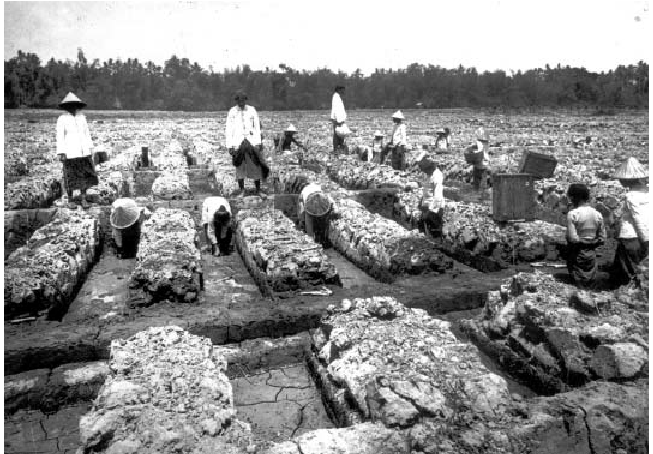
Some twentieth-century historians, such as Bernard Hubertus Maria Vlekke, claimed that the Cultivation System benefited rural Javanese, pointing to the rapid increase of the population from 7 to 16.2 million between 1830 and 1870. But most evidence supports Douwes Dekker's images of harsh exploitation. Even if the compulsory growing of export crops — particularly coffee, which remained the most profitable — did not divert much land from the cultivation of rice, the labor requirements were so great that farmers had little time or energy to devote to staple crops. Moreover, as the prices paid by the government for export crops increased, the Dutch used this as justification to raise the land tax assessment. More effort and organization had to be applied to export-crop production to offset the land-tax increases. By the 1840s, rice shortages appeared and famines and epidemics occurred, resulting in dislocation of some segments of the rural population seeking more profitable land. Nevertheless, profits increased but so too had the cost of maintaining the colonial military establishment, and that, in turn, applied pressure for more export- crop development. The colonial government did little to curb corruption and abuses, which made what was in fact a highly organized system of forced labor even more unendurable. *
During the early 1860s, a liberal Dutch government began dismantling the Cultivation System, abolishing government monopolies over spices, indigo, tea, tobacco, and cochineal (the spice monopoly had been in effect since the early seventeenth century). In 1870 the Sugar Law provided for government withdrawal from sugar cultivation over twelve years, beginning in 1878. The Agrarian Law, also passed in 1870, enabled foreigners to lease land from the government for as long as seventy-five years, opening Java up to foreign private enterprise. These developments marked the gradual replacement of the Cultivation System and the beginning of an era of relatively free trade, although compulsory cultivation of coffee continued until 1917. *
According to Lonely Planet: From 1870, farmers no longer had to provide export crops, and the Indies were opened to private enterprise, which developed large plantations. As the population increased, less land was available for rice production, thereby bringing further hardship. Meanwhile, Dutch profits grew dramatically. New products such as oil became a valuable export due to Europe’s industrial demands. As Dutch commercial interests expanded throughout the archipelago, so did the need to protect them. More and more territory was taken under direct control of the Dutch government. [Source: Lonely Planet]
Dutch Expansion in Sumatra
Both the British occupation of the archipelago during the Napoleonic Wars and the Java War seriously weakened Dutch authority outside of Java. Pirates flourished in the power vacuum, making Indonesian waters among the most dangerous in the world. In the 1840s, the British established a presence in northern Kalimantan (North Borneo), where James Brooke made himself the first "White Rajah" of Sarawak. Alarmed by such developments, the Dutch initiated policies of colonial expansion in the Outer Islands, which brought all the land area of modern Indonesia, with the exception of Portuguese Timor, under their control. [Source: Library of Congress *]
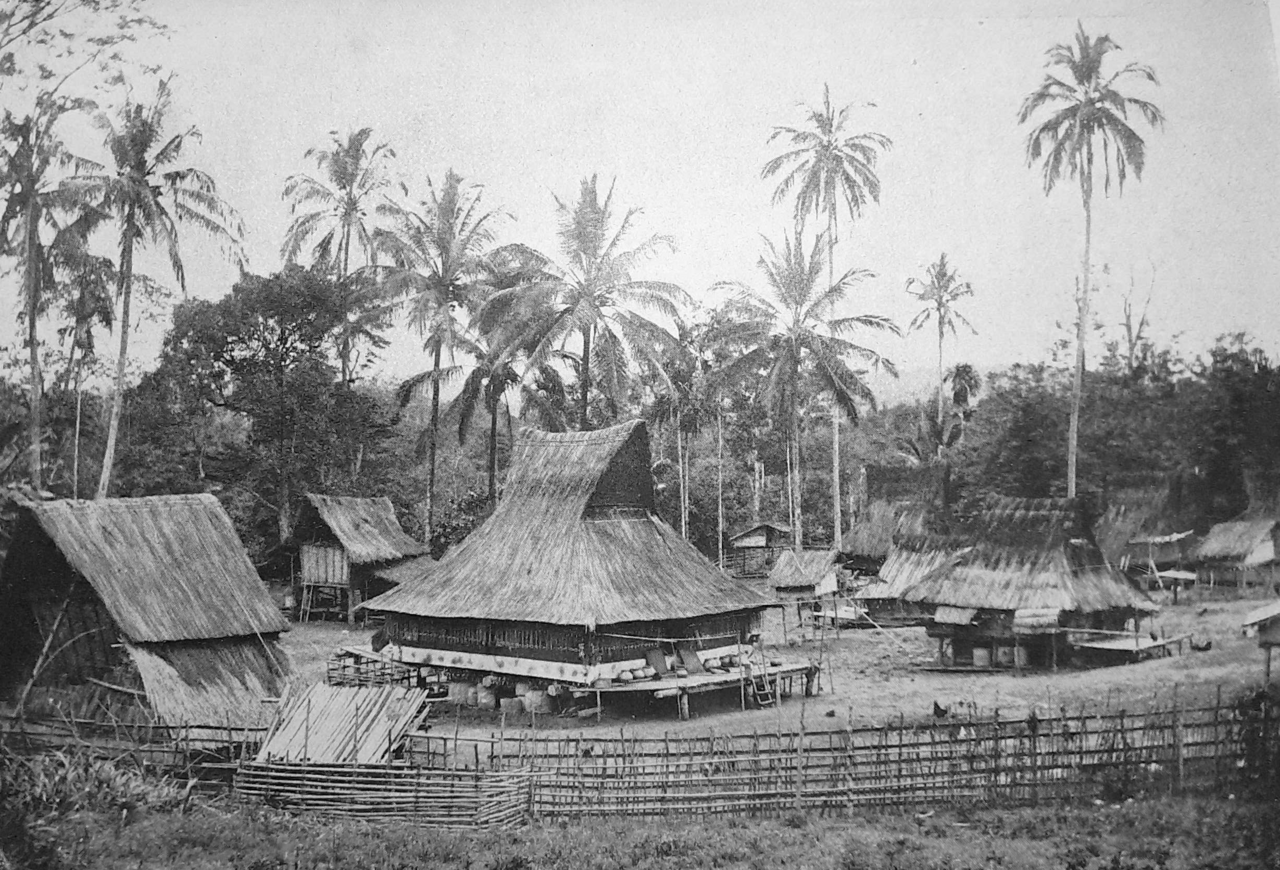
Dutch expansion began first in neighboring Sumatra. By 1823 the eastern part of the island, including Palembang, was under Dutch control. The Padri War (1821-38) pacified the Minangkabau region. The padri were religious teachers committed to the reform and propagation of Islam and were dominant in the region after the assassination of the Minangkabau royal family in 1815. Conflicts arose between them and secular adat leaders, and the latter called for Dutch intervention. Between the 1870s and the end of the century, colonial troops also defeated the fierce Batak ethnic group, living north of the Minangkabau, and the colonial government encouraged the populace to convert to Christianity. *
The 1824 Treaty of London defined a British sphere of influence on the Malay Peninsula and a Dutch sphere on Sumatra, although its provisions placed no restrictions on British trade on the island. Sumatran trade became an issue of contention, however, because the British resented what they saw as Dutch attempts to curtail their commercial activities. One provision of the Treaty of London was the independence of the north Sumatran state of Aceh. But Aceh controlled a large portion of the pepper trade and alarmed the Dutch by actively seeking relations with other Western countries. A new Anglo-Dutch treaty, signed in 1871, gave the Dutch a free hand in Sumatra concerning Aceh. Two years later, talks between the United States consul in Singapore and Acehnese representatives gave Batavia the pretext for opening hostilities. Dutch gunboats bombarded the sultanate's capital, Banda Aceh, and troops were landed. The capital fell under Dutch occupation the following year, but Acehnese forces undertook guerrilla resistance. The Aceh War (1873-1903) was one of the longest and bloodiest in DutchIndonesian history. *
Islamic Resistance and Dutch Subjugation of Eastern Indonesia
During the nineteenth century, militant or reformist Islam posed a major challenge to Dutch rule, especially in Sumatra. The padri of Minangkabau, for example, were returned pilgrims from Mecca who were inspired by Wahhabism — a Western term given to the strict form of Islam practiced in Arabia — that stressed the unitary nature of God. The padri were determined to purge their society of non-Islamic elements, such as the traditional system of matrilineal inheritance and consumption of alcohol and opium. The Acehnese, the most rigorously fundamentalist of Indonesian Muslims, also had close contacts with Mecca. [Source: Library of Congress *]
The principal architect of colonial Islamic policy was Christiaan Snouck Hurgronje, a scholar of Arabic who had gone to Mecca to study Indonesian pilgrims and served as adviser to the Netherlands Indies government from 1891 to 1904. His policy was one of cooptation rather than opposition: instead of promoting the spread of Christianity, he suggested, the government should maintain supportive relations with established Islamic authorities such as the qadi or judges of the royal courts. "Established" Islam was no threat, according to Snouck Hurgronje, but "fanatic" Muslim teachers who maintained independent Islamic schools were. He also advised that the government coopt local nonIslamic chiefs, whose source of authority was based on adat or local law and custom. This practice was, in fact, Dutch policy in Aceh after the war. Local Acehnese chiefs, the uleebalang, were given much the same role as the priyayi on Java. *
Farther east, the Dutch imposed rust en orde, the colonial system, on Madura, where local rulers were assimilated into the regency system in 1887; on Kalimantan, where in 1860 the sultanate of Banjarmasin had been dethroned and replaced by direct colonial rule; in Sulawesi, where wars between the Dutch and the Makassarese and Buginese states of Gowa and Bone continued until 1905-06 and where the headhunting Toraja people were also subjugated; and in the remote western half of New Guinea, which was brought under full control only after World War I. The Dutch had first built a fort at Lobo in West New Guinea in 1828, but abandoned it eight years later. *
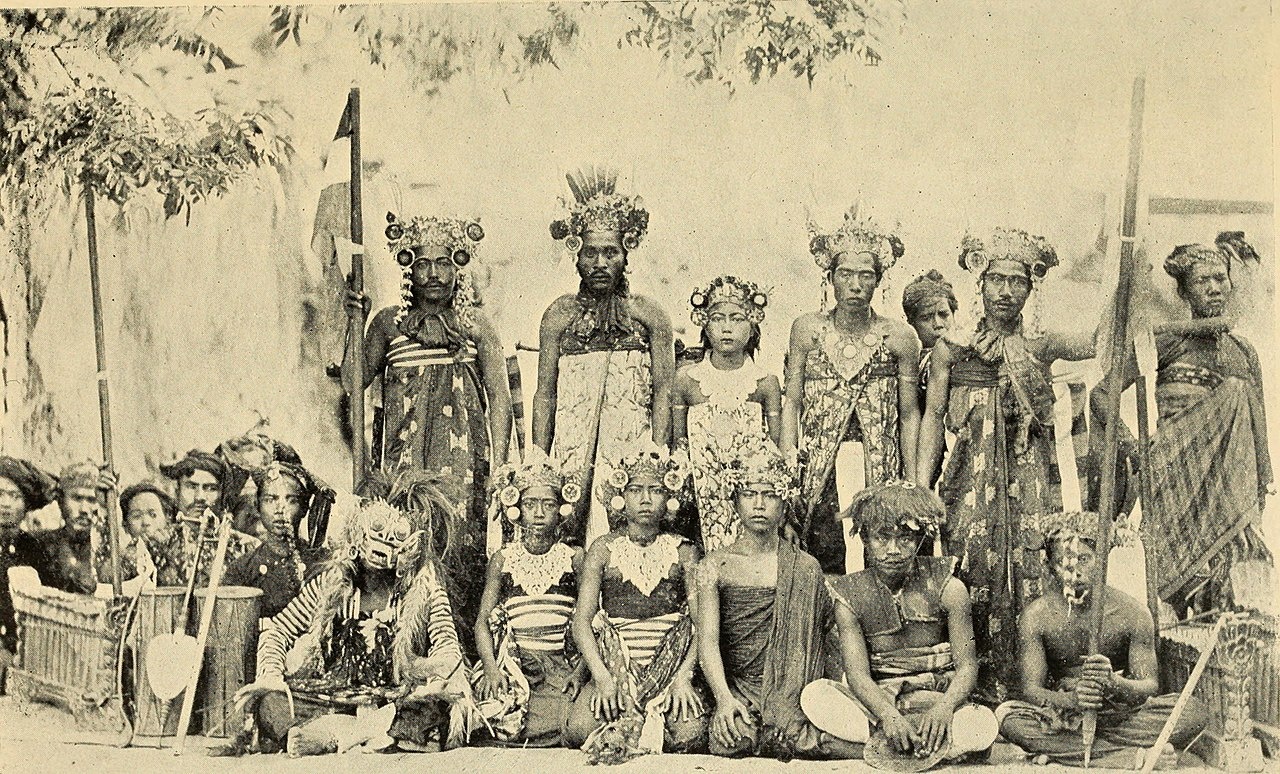
The Balinese stubbornly resisted Dutch attempts to subjugate them throughout the nineteenth century. This mountainous, volcanic island of great natural beauty, with its own Hindu-animist culture, art, and ways of life, was divided into a number of small kingdoms whose rulers saw no more reason to submit to Batavia than they had to Islamic states during the previous four centuries. Although the northern part of the island came under Dutch control by 1882 and was joined with the neighboring island of Lombok as a single residency, the southern and eastern rulers refused to accept full Dutch sovereignty. Between 1904 and 1908, military expeditions were sent to suppress them. Some of the kings and their royal families, including women and children, realizing that the independence and self-sufficiency of their ancient world were crumbling, committed suicide by marching in front of Dutch gunners during the height of battle. *
Krakatoa
Krakatoa, an island volcano west of Java, exploded on August 23, 1883. The blast was equal to 3,000 Hiroshima-size atom bombs, 26 times more powerful than the strongest hydrogen bomb, and 18 times more powerful than the Mt. St. Helens blast. Tsunamis as high as 100 feet were created. Eleven cubic miles of debris was sent flying into the atmosphere.
The most powerful explosion was twice as strong as the largest nuclear blast. It hurled pumice 34 miles into the air that fell 3,313 miles away 10 days later. Winds from the blast circled the earth seven times before they died down and waves escaped from the Indian Ocean below Cape Horn in the Atlantic and radiated into the English Channel, 11,500 miles away.
The noise was the loudest in recorded history. It was heard distinctly in central Australia 3000 kilometers away. Five thousand kilometers on the small island of Rodiguez "the roar of heavy guns" was heard and a captain ordered his ship out to sea. By some estimated the blast could be heard over one thirtieth of earth's surface. Some people in Texas claim they heard the sound.
See Separate Article: KRAKATOA factsanddetails.com
Image Sources: Wikimedia Commons
Text Sources: New York Times, Washington Post, Los Angeles Times, Lonely Planet Guides, Library of Congress, Compton’s Encyclopedia, The Guardian, National Geographic, Smithsonian magazine, The New Yorker, Time, Reuters, AP, AFP, Wikipedia, BBC, CNN, NBC News, Fox News and various books and other publications.
Last updated December 2025