
PORTUGUESE IN INDONESIA
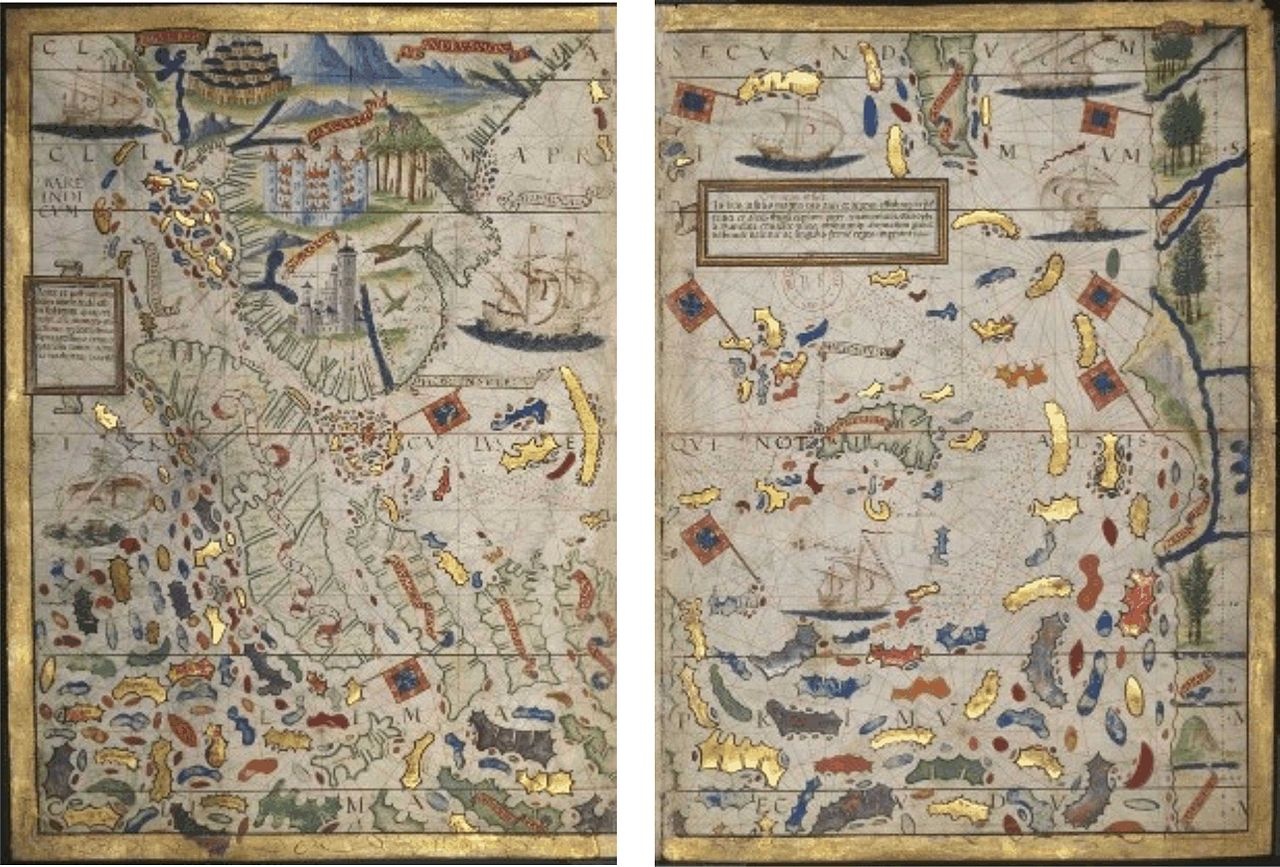
The Portuguese were the first Europeans to come in significant numbers to the Indonesian archipelago. Early in the sixteenth century, the Portuguese began establishing trading posts in Indonesia after capturing the strategic commercial center of Malacca (see Melaka) on the Malay Peninsula in 1511.The Dutch arrived in 1596, followed by the English in 1600. By 1610, the Dutch had ousted the Portuguese, who were only allowed to retain the eastern part of Timor.[Source: Columbia Encyclopedia, 6th ed., Columbia University Press.]
The golden age of Portuguese exploration and conquest in Asia began with Vasco da Gama's voyage to India in 1497-99 and continued through the first half of the sixteenth century. Faith and profit, nicely harmonized, motivated these early European explorers. [Source: Library of Congress *]
Portugal began expeditions in 1418. Vasco de Gama rounded Cape of Good Hope in 1497 and reached India in 1498. One of the important factors that led to Portugal's leadership in the Age of Discovery was its geographical location. Unlike Italy, Spain and Greece, it was isolated from the Mediterranean trade routes. Instead it faced the Atlantic and Africa. "The Portuguese people, then, naturally faced outward," wrote Daniel Boorstin in “The Discoverers”, "away from the classic centers of European civilization, westward toward the unfathomed ocean, and southward toward a continent that for the Europeans was also unfathomed.”
Another explanation why Portuguese were pioneering explorers is that most of Europe was embroiled in battles and civil strife for much of the 15th century when the Age of Discovery was launched. Spain was fighting the Moors, the Turks were attacking Italy and Austria and France and Britain were fighting each other in the Hundred Year War. Portugal, on the other hand, was a united kingdom with relatively few internal problems and enemies. [Source: Daniel Boorstin, "The Discoverers"]
The Spanish and Portuguese were able to establish their large empires in Asia because they encountered virtually no resistance. The Sultans in Malaysia and Indonesia were easy to overcome. The Portuguese had superior sea power, fought ruthlessly and operated out of fortified ports. They were able to control of much of the east west trade through a network of trading ports that extended from Maluku to Malaka, Macau, Goa, the Persian Gulf, Mozambique and Angola.
RELATED ARTICLES:
SPICES, TRADE AND THE SPICE ISLANDS factsanddetails.com
CLOVES, MACE AND NUTMEG: THE SPICE ISLANDS SPICES factsanddetails.com
INDONESIA WHEN EUROPEANS FIRST ARRIVED: SPICES, POWERFUL STATES, DEALS, ISLAM factsanddetails.com
EARLY INDIANS, CHINESE AND ARABS IN INDONESIA: IBN BATTUTA, YIJING, ZHENG HE factsanddetails.com
EARLY EUROPEAN EXPLORERS IN INDONESIA: MARCO POLO, NICOLÒ DEI CONTI, MAGELLAN'S CREW factsanddetails.com
AGE OF EUROPEAN EXPLORATION factsanddetails.com
PORTUGAL AND THE AGE OF DISCOVERY factsanddetails.com
MALACCA: HISTORY, SULTANATES, COLONIALISM factsanddetails.com
PORTUGUESE TRADE EMPIRE IN ASIA factsanddetails.com
EARLY DUTCH PERIOD IN INDONESIA AND THE DUTCH EAST INDIA COMPANY (VOC) factsanddetails.com
DUTCH EMPIRE: WEALTH, EXPLORATION AND HOW IT WAS CREATED factsanddetails.com
DUTCH, THE SPICE TRADE AND THE WEALTH GENERATED FROM IT factsanddetails.com
Portuguese Arrive in Indonesia
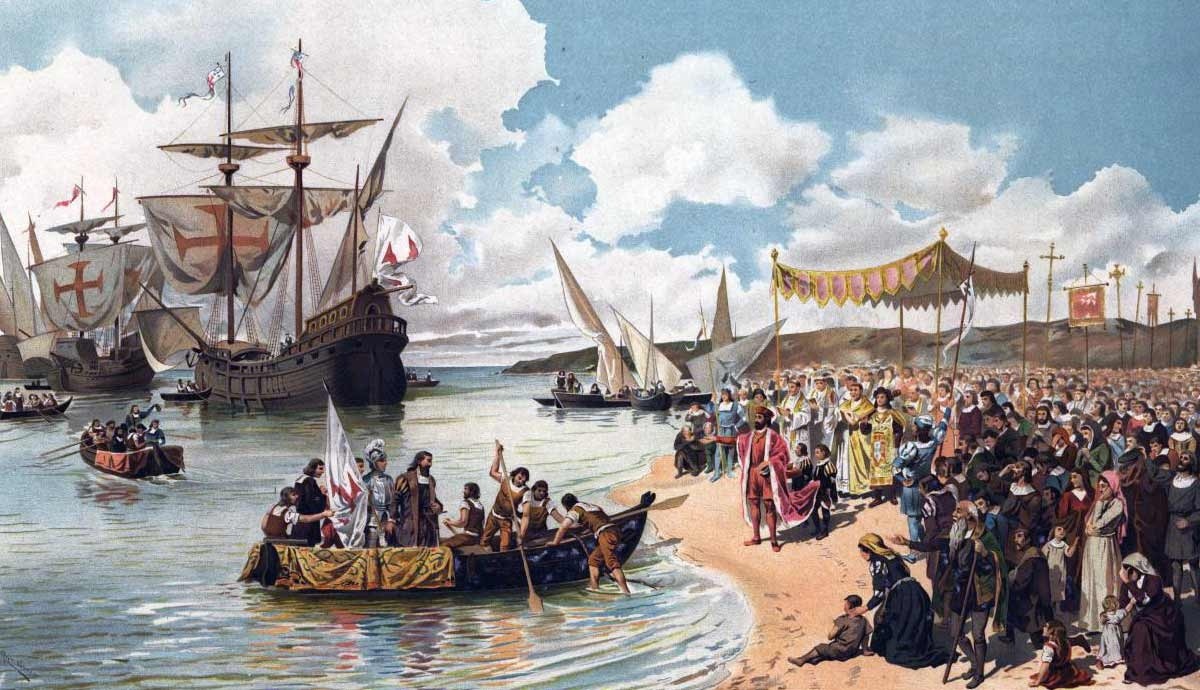
The papacy charged Portugal with converting Asia to Christianity. Equipped with superior navigational aids and sturdy ships, the Portuguese attempted to seize rich trade routes in the Indian Ocean from Muslim merchants. They established a network of forts and trading posts that at its height extended from Lisbon by way of the African coast to the Straits of Hormuz, Goa in India, Melaka, Macao on the South China coast, and Nagasaki in southwestern Japan.
The Portuguese reached the rich and expanding Melaka, on the Malay Peninsula, in 1509 and sought trading rights there. Some in Melaka’s cosmopolitan trading community wanted to accept them (perhaps as a counterweight against Sultan Mahmud’s controversial imperial policies), but others did not, heightening existing political tensions. *
Afonso de Albuquerque (14??-1515) was a Portuguese soldier and explorer who sailed to the Spice Islands in 1507-1511 and tried to monopolize trade in the area for Portugal. From Europe, he sailed around Africa to the Indian Ocean. He was appointed the Viceroy of India by King Emmanuel in 1509. He forcibly destroyed the Indian city of Calicut in January, 1510, and took Goa (in southern India) in March, 1510, claiming Goa for Portugal.
When the Portuguese returned in 1511 commanded by the more demanding Alfonso de Albuquerque, they defeated Melaka militarily, soon establishing themselves in the trading ports of Banten (western Java) and Ternate (Maluku), and contacting the much reduced Majapahit kingdom at Kediri in eastern Java. These events do not, as is sometimes suggested, mark the beginning of Western colonial rule, or even European primacy, in Indonesia; that lay far in the future. Rather, the “Western intrusion” was at this stage merely one dynamic bound up, in often unpredictable ways, with many others. Thus, the final days of Majapahit, weakened by internal division, were determined by Trenggana, the half-Chinese Muslim ruler of its former vassal port Demak, who in 1527 conquered Kediri for reasons that had as much to do with economic and political rivalry (with Banten, the Portuguese, and Majapahit’s remnants) as they did with religious struggle (with both Christianity and Hindu-Buddhist ideology). *
Portuguese and the Spice Trade
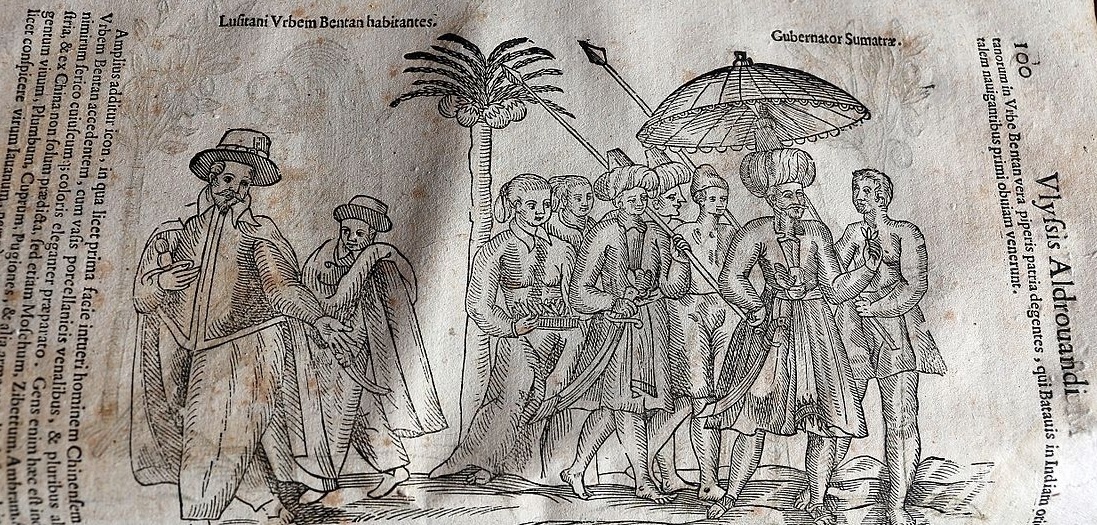
The Portuguese came to Indonesia to monopolize the spice trade of the eastern archipelago. Nutmeg, mace, and cloves were easily worth more than their weight in gold in European markets, but the trade had hitherto been dominated by Muslims and the Mediterranean city-state of Venice. Combining trade with piracy, the Portuguese, operating from their base at Melaka, established bases in the Maluku Islands at Ternate and on the island of Ambon but were unsuccessful in gaining control of the Banda Islands, a center of nutmeg and mace production. *
In 1511, the Portuguese, in pursuit of controlling the valuable spice trade, captured the strategic commercial center of Meleka on the Malay Peninsula. This opened the way for direct passage to the islands that produced spices. The Portuguese wrested control of the spice markets and trade route from seafaring Muslim merchants.
In 1512, Portuguese explorers under Afonso de Alburqueque reached the Moluccas and claimed them for Portugal. On the way back from Banda they were shipwrecked and made their way to Ambon and were subsequently invited to Ternate, where they came in contact with the sultan that controlled the source of nutmeg and cloves. He formed an alliance with the Portuguese against his rival in Tidore and the Portuguese loaded their hold with nutmeg and mace and made their way to Seville and made a fortune. The Portuguese restricted production of spice such as nutmeg and cloves to the islands of Banda and Ambon to conserve their monopoly.
In an effort to create a clove monopoly the Portuguese struck a deal with the sultan of Ternate in which they promised to help the Ternate sultan fight his enemy, the sultan of Tidore, in return for exclusive rights to cloves produced under the sultan. The sultan had no intention of complying with the terms but was forced to. The local Muslim resented the Portugese importation of pigs and their rough justice and rebelled when one sultan was executed and his head was displayed on a pike. In the meantime the Tidore responded by forming an alliance with the Spanish.
Portugal’s Short-Lived Presence in Indonesia
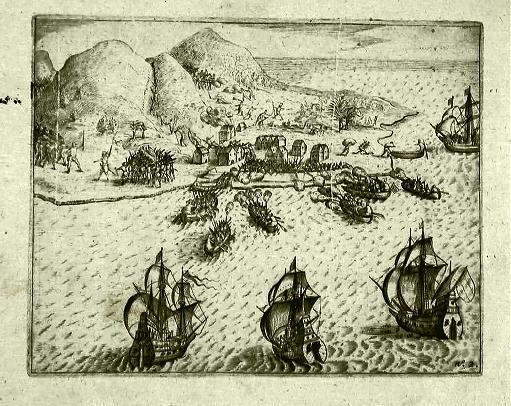
Indonesian Muslim states wasted no time in trying to oust the intruders. During the sixteenth century, the sturdy Portuguese fort of A Famosa (the Famous One) at Melaka withstood repeated attacks by the forces of the sultans of Johore (the descendants of the ruler of Melaka deposed by the Portuguese), Aceh, and the Javanese north coast state of Jepara, acting singly or in concert. The Portuguese were minimally involved in Java, although there were attempts to forge alliances with the remaining Hindu-Buddhist states against the Muslims. [Source: Library of Congress *]
The Portuguese goal of Christianizing Asia was largely unsuccessful. They introduced Catholicism to the area but didn’t win many converts. Saint Francis Xavier, a Spaniard who was an early member of the Society of Jesus (Jesuits), established a mission at Ambon in 1546 and won many converts whose lineal descendants in the early 1990s were Protestant Christians. The small enclave of Portuguese (East) Timor, which survived three centuries surrounded by Dutch colonialism only to be formally absorbed into Indonesia in 1976, was largely Roman Catholic. *
Given Portugal's small size, limited resources, and small labor pool, and its routinely brutal treatment of indigenous populations, Portugal's trading empire was short-lived, although remnants of it, like Portuguese Timor, survived into the late twentieth century. Although numerically superior Muslim forces failed to capture Melaka, they kept the intruders constantly on the defensive. Also, the dynastic union of the Portuguese and Spanish crowns in 1580 made for Portugal a new and increasingly dangerous enemy: the Dutch. *
The Portuguese suffered an embarrassing military defeat at Pulai Ternate and ultimately could not control trade in the region. Muslim-controlled Banten was the main port in the region. It attracted Arab, Persian and Indian traders and competed with and took business away from Melaka. The Portuguese remained in Indonesia until early 1700s when the Dutch move in.
Dutch Force Out the Portuguese in Indonesia
The Dutch later moved in and took possession of many of the Portuguese forts by force. Dutch trading ships were replaced by heavily armed fleets that were given orders to attack Portuguese forts. By 1605 the Dutch had defeated the Portuguese at Tidore and Ambon in the Spice Islands and outmaneuvered Spain by supporting Ternate against the Tidorese and claimed those territories for themselves.
By 1610, the Dutch had kicked out the Portuguese, who retained only the eastern half of Timor. In 1611, the United East India Company set up its capital in Jakarta (renamed Batavia by the Dutch). Jakarta was selected because its strategic location on the shipping on the Sundra and Melaka Straits. The local ruler of Jakarta gave trading rights to both the Dutch and the English. Tension arose and reached a head when the English and local Javanese laid siege to a Dutch fort. The Dutch retaliated and raised the town in 1619.
Image Sources: Wikimedia Commons
Text Sources: New York Times, Washington Post, Los Angeles Times, Times of London, Lonely Planet Guides, Library of Congress, Compton’s Encyclopedia, The Guardian, National Geographic, Smithsonian magazine, The New Yorker, Time, Reuters, AP, AFP, Wikipedia, BBC, CNN, NBC News, Fox News and various books and other publications.
Last updated December 2025