
NAMES AND CULTURE OF MALAYSIA
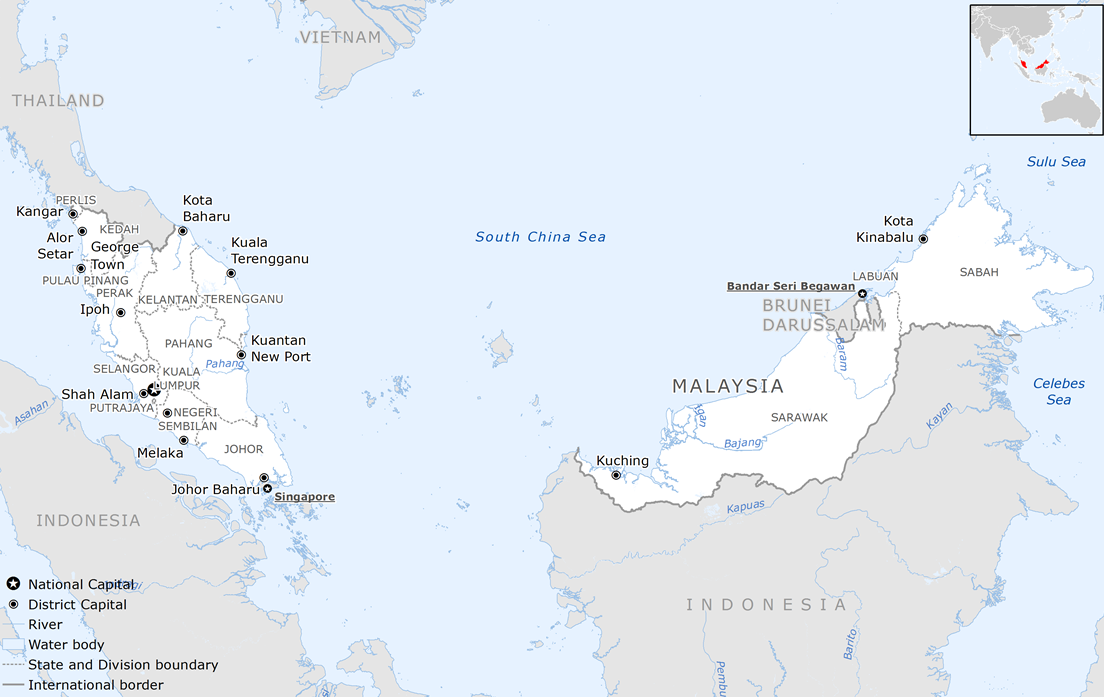
The official name of Malaysia is Malaysia. The people are called Malaysians. Malays are the largest ethnic group. The official language of Malaysia is the "Malay language" (Bahasa Melayu) which is sometimes used interchangeable with "Malaysian language" (Bahasa Malaysia). Initially after independence in 1957 and its formal creation in 1963 Malaysia was called the Federation of Malaysia. "Federation" was later dropped from the official name.
Malaysians refer to their national culture as kebudayaan Malaysia, which means "Malaysian culture" in the national language. The name Malaysia comes from an old term for the entire Malay archipelago, which in the past referred to mostly what is now Malaysia and Indonesia.. Geographically truncated, modern-day Malaysia emerged from the territories colonized by Britain in the late nineteenth and early twentieth centuries. [Source: Thomas Williamson, Countries and Their Cultures, Gale Group Inc., 2001].
Outsiders often mistakenly refer to Malaysian culture as simply 'Malay,' which reflects only one of the many ethnic groups in Malaysian society. Within Malaysian society, there are Malay, Chinese, Indian, and Eurasian cultures, as well as the cultures of the indigenous groups of the peninsula and North Borneo.
RELATED ARTICLES:
EARLY HISTORY OF MALAYSIA: HOMINIDS, FIRST PEOPLE, PROTO-MALAYS factsanddetails.com
AUSTRONESIAN PEOPLE OF THE PACIFIC, INDONESIA, MALAYSIA, TAIWAN AND THE PHILIPPINES: ORIGIN, HISTORY, EXPANSION factsanddetails.com
EARLY KINGDOMS, EMPIRES AND THE ARRIVAL OF ISLAM IN MALAYSIA factsanddetails.com
MALACCA SULTANATE: ORIGIN, HISTORY, PARAMESVARA factsanddetails.com
ARRIVAL OF EUROPEANS IN MALAYSIA: PORTUGUESE, DUTCH, CONQUESTS, FIGHTING factsanddetails.com
BRITISH IN MALAYSIA: TIN, RUBBER AND HOW THEY TOOK CONTROL factsanddetails.com
JAMES BROOKE AND MAKING NORTHERN BORNEO PART OF THE BRITISH EMPIRE factsanddetails.com
FIGHTING WITH BORNEO PIRATES factsanddetails.com
LIFE IN BRITISH COLONIAL IN MALAYSIA: HILL STATIONS, CHINESE, INDIANS factsanddetails.com
JAPANESE INVASION OF SOUTHEAST ASIA IN WORLD WAR II factsanddetails.com
JAPAN DEFEATS THE BRITISH IN WORLD WAR II AND TAKES MALAYA AND SINGAPORE factsanddetails.com
BRITISH IN MALAYSIA: TIN, RUBBER AND HOW THEY TOOK CONTROL factsanddetails.com
MALAYSIA AFTER WORLD WAR II factsanddetails.com
COMMUNIST INSURGENCY IN MALAYSIA (1946-1989): ORIGINS, ACTIVITIES, POLITICS, ENDING IT factsanddetails.com
THE EMERGENCY IN MALAYSIA: DRACONIAN LAWS, NEW VILLAGES, ATROCITIES factsanddetails.com
MALAYSIAN INDEPENDENCE AND THE CREATION OF MALAYSIA factsanddetails.com
SINGAPORE IN THE LATE 1950s, EARLY 1960s: PART OF MALAYSIA OR AN INDEPENDENT STATE factsanddetails.com
RISE OF MODERN MALAYSIA 1963-1990: DEVELOPMENT, ECONOMICS, POLITICS factsanddetails.com
RACIAL DISCORD IN MALAYSIA: RIOTS ON MAY 13, 1969, AFFIRMITIVE ACTION, BOAT PEOPLE factsanddetails.com
ELECTIONS IN MALAYSIA factsanddetails.com
POLITICS IN MALAYSIA: LEADERS, ETHNICTY, RELIGION, SYMBOLS, PROTESTS factsanddetails.com
POLITICAL PARTIES IN MALAYSIA factsanddetails.com
MAHATHIR MOHAMAD: HIS LIFE, VIEWS, CHARACTERS, OUTRAGEOUS STATEMENTS factsanddetails.com
MALAYSIA UNDER MAHATHIR MOHAMAD factsanddetails.com
ASIAN FINANCIAL CRISIS OF 1997-98 IN MALAYSIA factsanddetails.com
ABDULLAH AHMAD BADAWI: MALAYSIA PRIME MINISTER (2003-2009) factsanddetails.com
NAJIB RAZAK: LIFE, POLITICAL CAREER, SCANDALS factsanddetails.com
MALAYSIA UNDER PRIME MINISTER NAJIB RAZAK 2009-2018 factsanddetails.com
1MDB SCANDAL: BILLIONS, BIRKIN BAGS, CELEBRITIES, JHO LOW, JAILTIME FOR NAJIB factsanddetails.com
ANWAR IBRAHIM'S LIFE AND POLITICAL CAREER factsanddetails.com
ANWAR IBRAHIM'S TRIALS, LEGAL PROBLEMS AND TIME IN JAIL factsanddetails.com
ANWAR IBRAHIM FINALLY BECOMES PRIME MINISTER factsanddetails.com
Themes and Ideas in Malaysia’s History
The concept of Malaysia is modern one, having been created in the second half of the 20th century. However, contemporary Malaysia regards the entire history of Malaya and Borneo, which spans thousands of years back to prehistoric times, as its own history. Significant events in Malaysia's modern history include the formation of the federation, Singapore's separation, racial riots, Mahathir Mohamad's era of industrialization and privatization, and the nation's political upheavals of the late 20th and early 21st centuries. [Source: Wikipedia]
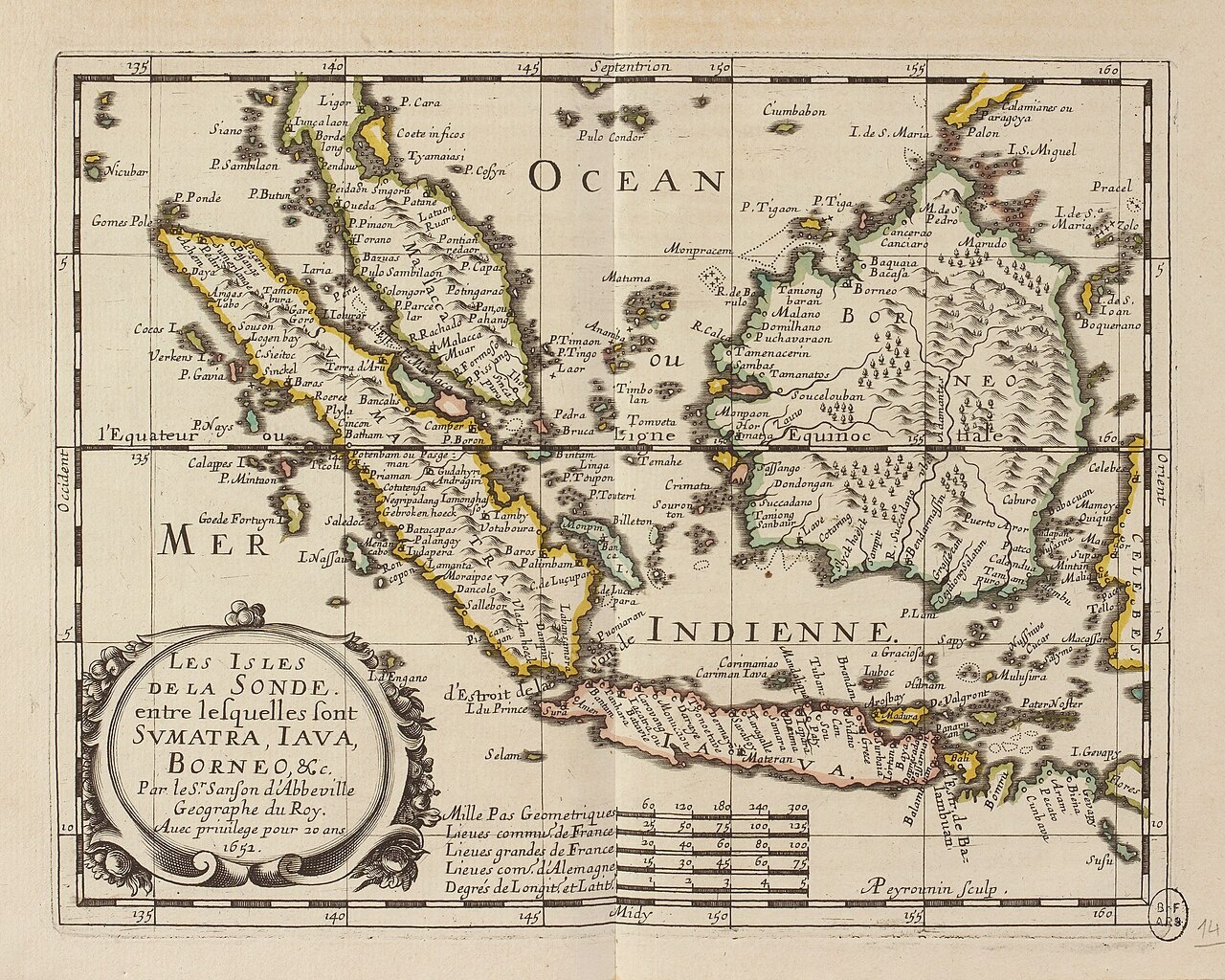
Historically, the Malay Peninsula was never politically unified but was divided into small kingdoms shaped by river systems and natural boundaries, each ruled by a sultan. Borneo was organized in a similar but even more fragmented manner. Of Malaysia’s thirteen present-day states, nine were once sultanates. [Source: Diane K. Mau, Governments of the World: A Global Guide to Citizens' Rights and Responsibilities, Thomson Gale, 2006]
A unified Malaysian culture is only emerging in the country, which only became independent in 1957. An important social distinction in this emerging national culture is the difference between Malay and non-Malay. This distinction is represented by two groups: the Malay elite, who dominate the country's politics; and the prosperous Chinese middle class, whose lifestyle is leading Malaysia's shift to a consumer society. These groups primarily reside in urban areas along the west coast of the Malay Peninsula, and their sometimes competing, sometimes parallel influences shape the lives of Malaysia's citizens. The two Malaysian states located in North Borneo, Sarawak and Sabah, tend to be less influential in the national culture, and their vibrant local cultures are overshadowed by the larger, wealthier peninsular society.
Impact of Malaysia’s Location and Geography on Its History
Malaysia consists of two main regions: a peninsula forming the southernmost extension of mainland Southeast Asia, and the northern quarter of the island of Borneo, excluding Brunei. The country stretches southward almost to the equator and has a tropical climate. Its nearest neighbors are Thailand to the north and Singapore and Indonesia to the south. [Source: Diane K. Mau, Governments of the World: A Global Guide to Citizens' Rights and Responsibilities, Thomson Gale, 2006]
The Strait of Malacca, linking the Indian Ocean with the South China Sea, is Malaysia’s most important geographical feature. For centuries, the Strait of Malacca has been a vital commercial and strategic waterway, drawing traders, settlers, and colonizers and shaping Malaysia’s multiethnic society. By the seventh A.D. century, early regional empires had established authority along the peninsular coast and exacted tribute from ships passing through Malayan waters.
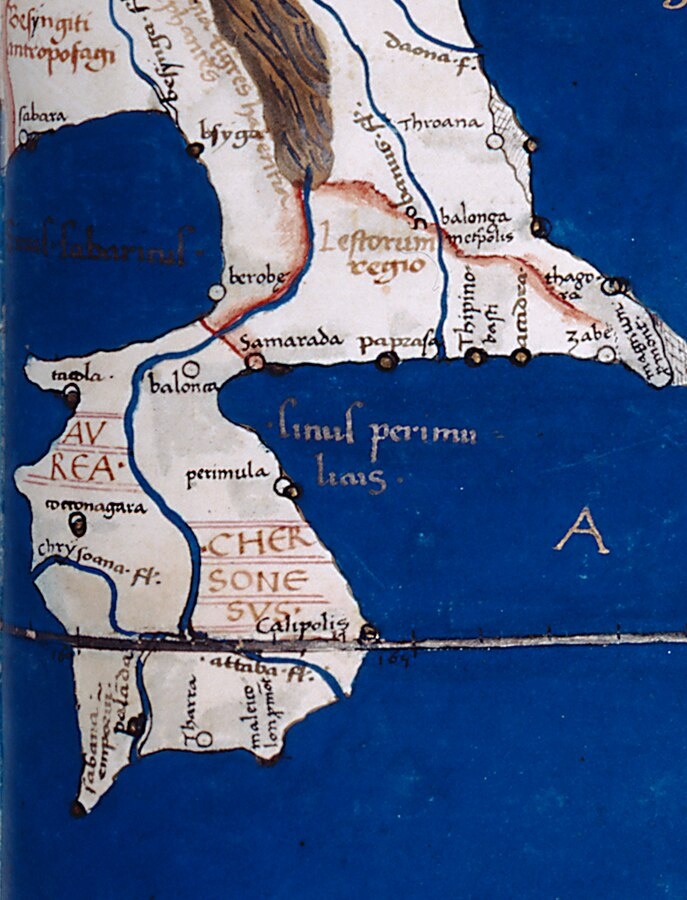
By the fourteenth century, the Strait of Malacca had become a key trading hub for commerce between China and India. Traders often exchanged goods in sheltered coastal coves rather than completing the entire journey. Through these contacts, elements of Hinduism from India and Buddhism from China reached the region and were gradually incorporated into local traditions. In the early fifteenth century, Muslim traders from India settled in the area, introducing Islam, which later became the dominant religion in Malaysia.
Early History of Malaysia
Present-day Malaysia is home to people from many Asian and Western countries, as well as numerous ethnic groups. This diversity is reflected in its economy, politics, social systems, and culture. Historically, the Malay Peninsula was sparsely populated. The land offered few agricultural opportunities, and its mineral deposits remained largely unexploited. The narrow northern neck of the peninsula was used for trade between the East and West. [Source: Lloyd Johnson, World Press Encyclopedia, Gale Group Inc., 2003]
The Malay people are of the same ethno-linguistic stock as the people of the Indonesian islands, but few settled in Malaya, preferring the fertile lands of Java instead. During the transmission of Indian culture to Southeast Asia, the people of Malaya adopted Hinduism and Buddhism. The tradition of Buddhist monks doubling as village schoolteachers began in the early centuries of the Common Era and continues to this day.
The indigenous groups on the peninsula can be divided into three ethnicities, the Negritos, the Senois, and the proto-Malays. The first inhabitants of the Malay Peninsula were most probably Negritos. These Mesolithic hunters were probably the ancestors of the Semang, an ethnic Negrito group who have a long history in the Malay Peninsula. [Source: Wikipedia]
The first Malays or proto-Malays migrated from southern China to what is now Malaysia around 2000 B.C.. Around A.D. 600, the Srivijaya Empire dominated both sides of the Strait of Malacca. In the 1300s, the empire fell, and the Java-centered Majapahit Empire controlled Malaysia. Muslims began to dominate the peninsula around 1400. [Source: D. R. Sar Desai, World Education Encyclopedia, Gale Group Inc., 2001]
Colonial Period in Malaysia
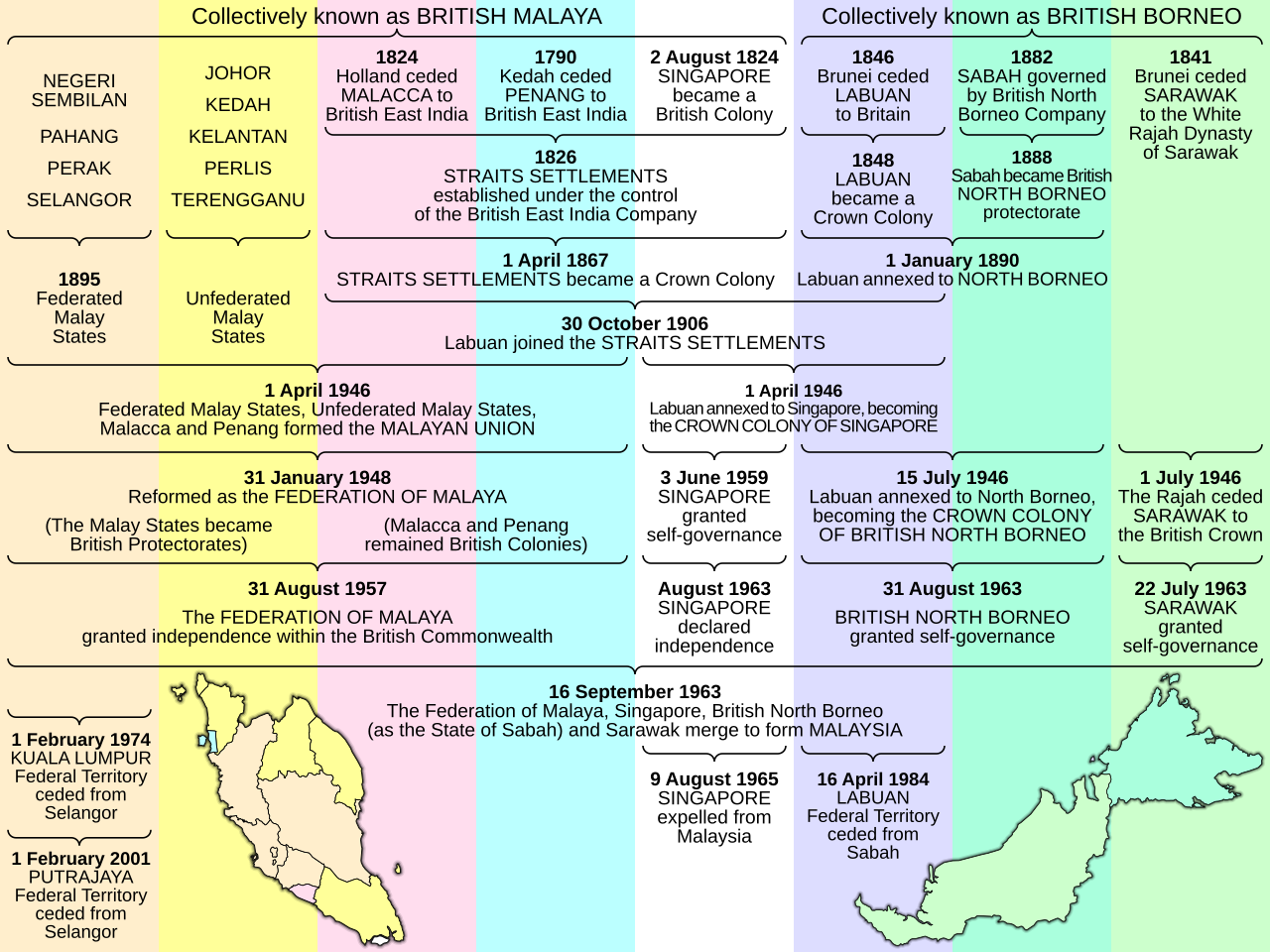
The Muslim principality of Malacca fell to Portugal in 1511. Then, in 1641, the Dutch took control from the Portuguese. The British East India Company arrived on the peninsula in 1786, and the British established a settlement in Singapore in 1819. In 1784, the British signed treaties that protected some areas. Four states became the Federated Malay States in 1895. In 1909, Thailand ceded four northern states (Kedah, Kelantan, Trengganu, and Perlis) to the British, as well as Johor in 1914. This whole area became known as the Unfederated Malay States. Separate British control was extended to North Borneo in 1892, and Sarawak became a separate British protectorate in 1898. [Source: D. R. Sar Desai, World Education Encyclopedia, Gale Group Inc., 2001]
Through agreements with the Malay rulers of the peninsular states, Britain's representatives gained varying degrees of control, often by deceit or force. Britain was attracted to the Malay Peninsula by its vast tin reserves, and later discovered that the rich soil was highly productive for growing rubber trees. Immigrants from southern China and southern India came to British Malaya as laborers, while the Malay population worked in small-scale rice cultivation.
East Malaysia had different colonial administrations: Sarawak was governed by the British Brooke family (styled as the "White Rajas"), and the British North Borneo Company ran Sabah. The cosmopolitan hub of British interests was Singapore, the central port and center of publishing, commerce, education, and administration.
History of Malaysia Since World War II
The Japanese occupation of Southeast Asia from 1942 to 1945 was a pivotal event in the formation of Malaysia. In December 1941, the Japanese conquered Malaya and Borneo during World War II and held them throughout the war. Following the war, the British established the Malayan Union, which included the nine peninsular states, Penang, and Malacca. In 1946, Singapore and the two Borneo protectorates became separate British protectorates. On February 1, 1948, the Federation of Malaya succeeded the Malayan Union.[Source: Thomas Williamson, Countries and Their Cultures, Gale Group Inc., 2001; D. R. Sar Desai, World Education Encyclopedia, Gale Group Inc., 2001]
Japanese rule invigorated a growing anti-colonial movement that flourished after the British returned following the war. When the British attempted to organize their administration of Malaya into one unit called the Malayan Union, strong protests from the Malays, who saw this as a usurpation of their historical claim to the territory, forced the British to modify the plan. Another crucial event was the Chinese communist rebellion of 1948, which persisted until the mid-1950s. In response to Malay criticism and to combat the rebellion, the British undertook a wide range of nation-building efforts. Local conservatives and radicals alike developed their own attempts to foster unity among the disparate Malayan population. These efforts culminated in the formation of the Federation of Malaya, which gained independence in 1957 as a member of the British Commonwealth. .
In 1962, Malaya and Great Britain agreed to form the new state of Malaysia, which would include Singapore and the British Borneo territories of Sarawak, Brunei, and North Borneo. However, Singapore voted not to join. The difficulties of integrating Singapore's predominantly Chinese population into Malaysia persisted, and Singapore became an independent republic under Malaysian directive in 1965. That same year, the "Federation" was dropped, and Malaysia became the official name of the newly independent British colonies. Malaysia has a combined land area of 329,760 square kilometers, similar in size to New Mexico in the United States.
The 1990s brought economic prosperity to Malaysia, which is now considered an upper-middle-income country. As of the 1990s the unemployment rate was around 4 percent and the literacy rate was 92 percent. All Malaysians are required to attend school until at least age 15. Many Malaysians obtain degrees from local and foreign universities. Some study in the United States, New Zealand, Australia, or the United Kingdom with government loans.
Timeline of Malaysian History
Malaysia During the Colonial Period
1400s: The Kingdom of Malacca is founded.
1511: Malacca is conquered by the Portuguese under Afonso de Albuquerque.
1641: The Dutch establish control in the region after the Portuguese surrender Malacca to them.
1786: The Sultan of Kedah leases the island of Pinang to the British East India Company.
1819: Singapore is founded by Sir Thomas Raffles.
1824: Malacca comes under British control.
1867: British East India Company rule ends, and the Malay Straits Settlements become a British crown colony.
1888: British North Borneo and Sarawak become British protectorates.
1896: The British form a federation comprising Perak, Selangor, Negri Sembilan, and Pahang.
1909: Britain acquires control of Kedah, Kelantan, Perlis, and Terengganu—the four northern states of Peninsular Malaysia—from Siam (now Thailand).
1921: Port Singapore becomes the principal base of the British Navy in East Asia. [Source:: Rafis Abazov, Worldmark Encyclopedia of National Economies, Gale Group Inc., 2002]
Malaysia During the Road to Independence Period
1942: The Malay Peninsula is occupied by the Japanese army.
1945: Malaya is liberated from Japanese occupation.
1946: The British impose the Malayan Union and grant political rights to immigrants.
1948: The Federation of Malaya is established.
1948: A state of emergency is declared in response to an armed campaign by the Malayan Communist Party.
1957: Malaya is granted independence within the British Commonwealth.
1963: Malaysia is formed as the Federation of Malaysia; Singapore joins the federation.
1965: Singapore leaves the federation.
1967: Malaysia becomes a founding member of the Association of Southeast Asian Nations (ASEAN).
1969: Serious rioting breaks out in Kuala Lumpur, leaving more than 200 people dead.
1970: The Malaysian government introduces the New Economic Policy (NEP).
Malaysia in Relatively Recent Times
1981: Dr. Mahathir bin Muhammad becomes prime minister of Malaysia.
1983: The prime minister imposes restrictions on the powers of the Yang di-Pertuan Agong and the Council of Rulers.
1995: The ruling coalition, Barisan Nasional, wins parliamentary elections in a landslide victory.
1997: In response to the Asian financial crisis, the government restricts currency trading and announces public spending cuts.
1998: The National Economic Action Council is established to advise the Malaysian Cabinet on the economic crisis.
1998: Prime Minister Mahathir bin Muhammad dismisses his apparent successor, Finance Minister and Deputy Prime Minister Anwar Ibrahim.
1999: The ruling coalition, Barisan Nasional, wins parliamentary elections while losing 14 seats in Parliament.
Major Political Leaders of Modern Malaysia
Tunku Abdul Rahman (1903–1990) was the first Prime Minister of Malaya (1957–1963) and Malaysia (1963–1970). Widely known as the "Father of Independence" (Bapa Kemerdekaan), he led the country to independence from Britain in 1957 and facilitated the formation of Malaysia in 1963. After becoming leader of UMNO, Tunku Abdul Rahman formed an electoral alliance with the Malayan Chinese Association (MCA) to contest municipal elections. The coalition won most pre-independence local elections in 1952 and 1953 and was later expanded and formalized into a broader alliance that included the Malayan Indian Congress (MIC). This UMNO–MCA–MIC Alliance represented the three major ethnic communities in Malaya.
Tunku Abdul Rahman remained prime minister until 1971. However, following the devastating ethnic clashes of May 1969 and the declaration of a state of emergency, effective authority shifted to his deputy, Tun Abdul Razak (1922–1976), who later succeeded him. Razak reshaped Malaysia’s political landscape by creating the broad Barisan Nasional (BN) coalition, led by UMNO, which continued to dominate national politics for decades. He also introduced the New Economic Policy (NEP), aimed at reducing economic disparities by granting Malays preferential opportunities and breaking the link between race and economic roles. The policy emphasized redistribution within a growing economy so that, while Malays advanced more rapidly, all communities would benefit from overall economic expansion. [Source: Countries of the World and Their Leaders Yearbook 2009, Gale 2008]
Another highly influential leader was Mahathir Mohamad (born 1925), who served as prime minister from 1981 to 2003. Known for his strong vision and determination, Mahathir promoted industrialization and sought to move Malaysia toward developed-nation status. During his tenure, the country experienced rapid economic growth, rising living standards, and significant modernization. He also pursued a moderate Islamization policy that helped reduce support for the fundamentalist Parti Islam Se-Malaysia (PAS). Critics, however, argued that Mahathir concentrated executive power, weakened judicial independence, tolerated widespread corruption, and undermined democratic institutions, the rule of law, and civil society.
Image Sources: Wikimedia Commons
Text Sources: “Encyclopedia of World Cultures Volume 5: East/Southeast Asia:” edited by Paul Hockings, 1993; National Geographic, Live Science, Metropolitan Museum of Art, Natural History magazine, New York Times, Washington Post, Los Angeles Times, Smithsonian magazine, Encyclopedia.com, Times of London, Library of Congress, The Conversation, The New Yorker, Time, BBC, CNN, Reuters, Associated Press, AFP, Lonely Planet Guides, Google AI, Wikipedia, The Guardian and various websites, books and other publications.
Last updated January 2026