
ANCIENT MAN IN MALAYSIA
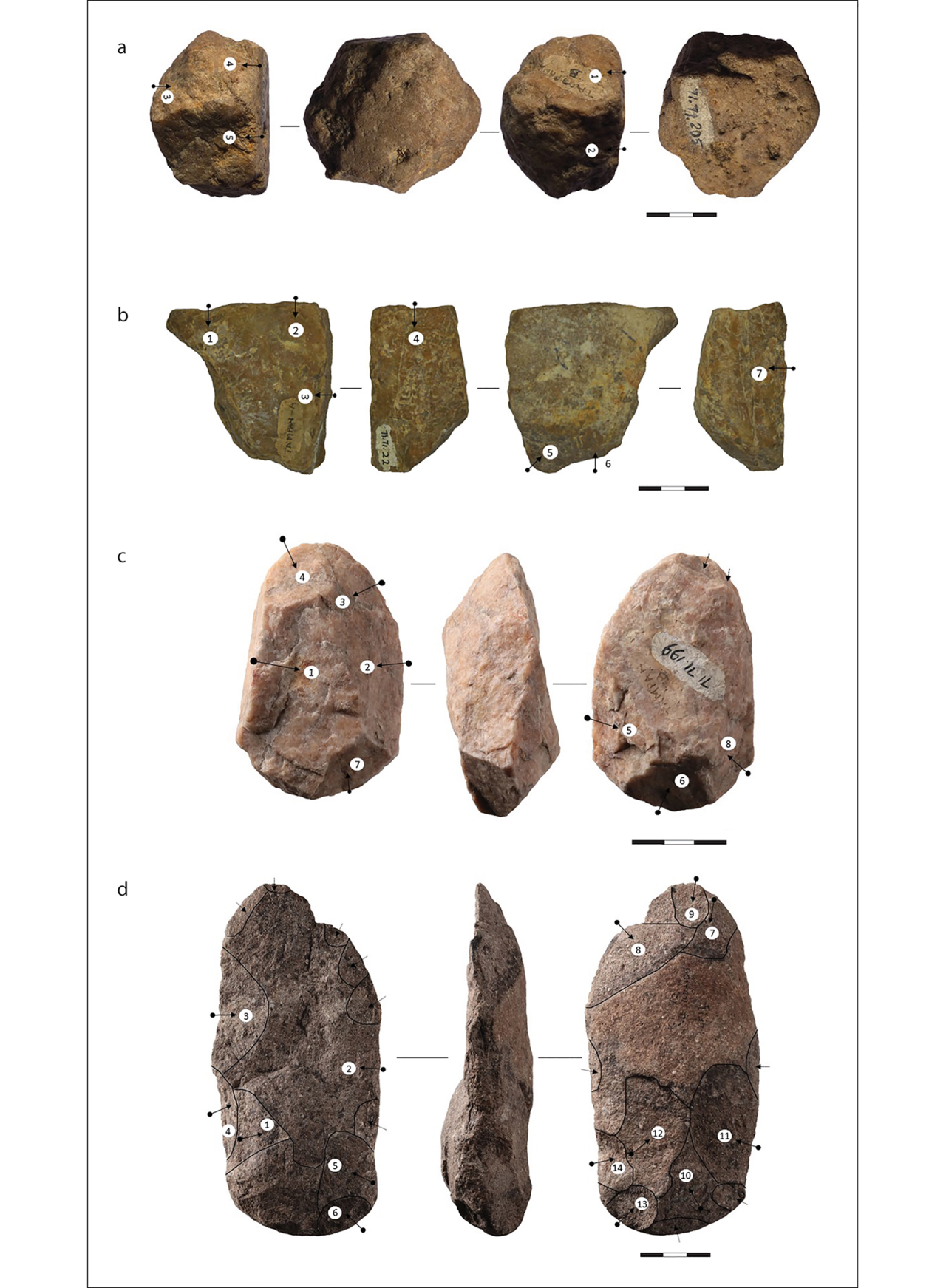
early stage reduction through freehand and bipolar percussion scispace
The earliest firm evidence of modern humans in Malaysia — 34,000–46,000 years before present — comes from Niah Cave in Sarawak, Borneo, where a human skull dating to that time was found. Archaeologists have claimed a date of 235,000 for stone tools found in the Mansuli valley, near Lahad Datu in Sabah, but it is not clear whether they were made by modern humans or another hominin species.
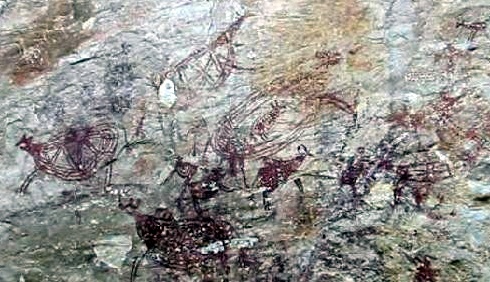
The oldest evidence of early hominin habitation in Malaysia was discovered in 2008 when stone hand-axes were unearthed in the historical site of Lenggong dating back 1.83 million years. The earliest anatomically modern humans skeleton in Peninsular Malaysia, Perak Man, dates back 11,000 years and Perak Woman dating back 8,000 years, were also discovered in Lenggong. The site has an undisturbed stone tool production area, created using equipment such as anvils and hammer stones. The Tambun Cave paintings are also situated in Perak. From East Malaysia, Sarawak's Niah Caves, there is evidence of the oldest human remains in Malaysia, dating back 40,000 years. [Source: Wikipedia]
Kota Tampan (5°63 318 north, 100°88 424 east) is an open-air site located in the UNESCO World Heritage Site of the Lenggong Valley, in northern Peninsular Malaysia. According to Hsiao Mei Goh et al.: “Lenggong Valley is exceptionally important for the archaeology of the Asia Pacific region as it possesses one of the longest archaeological records of early man in one single locality outside the African continent, spanning the last 1.8 million years. Archaeological investigations at the site in 1954 uncovered a large assemblage of stone tools sealed immediately beneath deposits of Young Toba Tuff from the Toba volcano . A super-eruption around 74,000 years ago triggered a‘volcanic winter’, resulting in a drastic decline in global temperatures (3–5°C), which must have affected the survival of human populations in Southeast Asia at that time. Their association with this eruption has led to assumptions of a date for the Kota Tampan stone tools before, or at least contemporaneous with, the super-eruption of Toba. [Source: “The Palaeolithic stone assemblage of Kota Tampan, West Malaysia”, Antiquity 2020, scispace
The ancestors of the Malays came down from South China and settled in the Malay Peninsula about 2000 B.C.. The Malays were part of the migration southward from Yunnan and eastward from the Malay Peninsula to the Pacific Islands, where Malayo-Polynesian languages still predominate. The Malays arrived in several waves, probably continuously, pushing aside the Orang Asli (aboriginals) and the pre-Islamic or proto-Malay peoples. Early Chinese and Indian visitors and voyagers, beginning around 600 BCE, reported on the farming villages and metalworking settlements of the Malays.[Source: Manning Nash, “Encyclopedia of World Cultures Volume 5: East / Southeast Asia:” edited by Paul Hockings, 1993 ~]
RELATED ARTICLES:
EARLY MAN IN SOUTHEAST ASIA factsanddetails.com ;
HOMO ERECTUS AND THE FIRST HOMININS IN ASIA factsanddetails.com
LENGGONG VALLEY ARCHAEOLOGICAL CAVE SITES IN MALAYSIA factsanddetails.com
AUSTRONESIAN PEOPLE OF THE PACIFIC, INDONESIA, MALAYSIA, TAIWAN AND THE PHILIPPINES: ORIGIN, HISTORY, EXPANSION factsanddetails.com
EARLY KINGDOMS, EMPIRES AND THE ARRIVAL OF ISLAM IN MALAYSIA factsanddetails.com
Homo Erectus in Southeast Asia
Homo erectus is believed to have migrated across the land bridges from Southeast Asia as far a Java 1.8 million years ago. There is also evidence that Homo erectus may have survived in Southeast Asia until 25,000 years ago.
Homo erectus had a considerably larger brain than its predecessor Homo habilis, fashioned more advanced tools (double-edged, teardrop-shaped "hand axes" and "cleavers" ) and controlled fire (based on the discovery of charcoal with erectus fossils). Better foraging and hunting skills, allowed it to exploit its environment better than Homo habilis Nickname: Peking Man, Java Man.
Homo erectus lived for 1.3 million years and spread from Africa to Europe and Asia. Paleontologist Alan Walker told National Geographic, Homo erectus "was the velociraptor of its day. If you could look one in the eyes, you wouldn't want to. It might appear to be human, but you wouldn't connect. You'd be prey."
1.83 Million-Year-Old Stone Tools Found in Malaysia
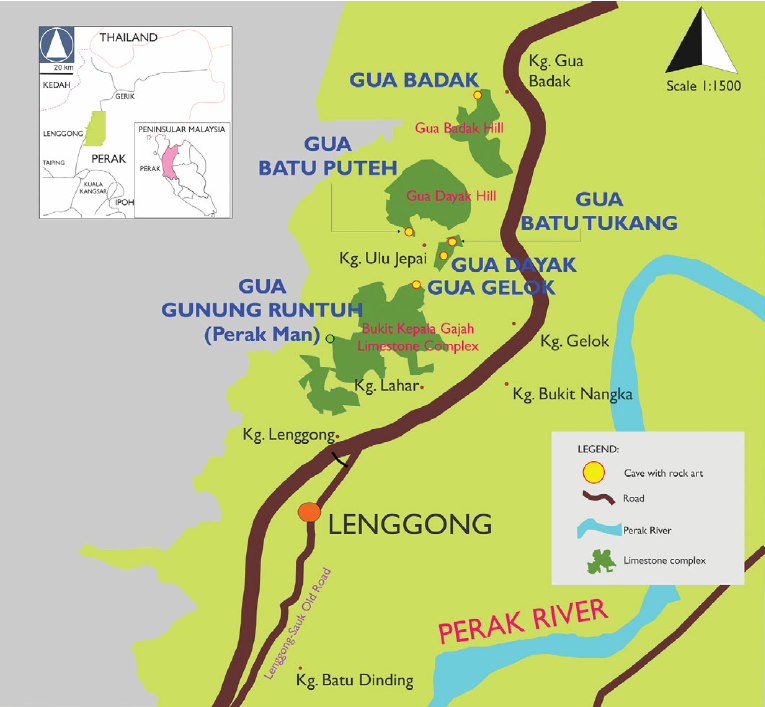
The oldest evidence of early human habitation in Southeast Asia was discovered in 2008 when stone hand-axes were unearthed in the historical site of Lenggong in Malaysia dating back 1.83 million years. Mokhtar Saidin of Universiti Sains Malaysia’s Centre for Archaeological Research and his team uncovered a suevite hand axe along with flake and chopping tools at Bukit Bunuh in the Lenggong Valley in 2008. The artifacts were found in rocks disturbed by plantation activity, and the hand-held axe showed clear suitability for tasks such as cutting meat or processing animal carcasses. [Source: Archeology News, New Straits Times, May 22, 2011, archaeologynewsnetwork.blogspot.jp ]
The Lenggong Valley contains numerous important prehistoric sites, including Kota Tampan, Bukit Jawa at Kampung Gelok, and Kampung Temelong. Its most famous discovery is the 11,000-year-old skeletal remains known as the Perak Man, found in 1991. Although the Stone Age record of Lenggong was already known to extend back about 200,000 years, the Bukit Bunuh discoveries proved far older. CT scans conducted at Universiti Sains Malaysia suggested the axe dated to between 1.7 and 1.8 million years ago. Subsequent fission-track dating by the Geochronology Laboratory in Tokyo produced an age of approximately 1.83 ± 0.61 million years, making the Bukit Bunuh tools older than the earliest known stone hand axes from Africa, which date to about 1.5 million years ago.
In 2010, Mokhtar’s team also discovered fragments of bone, including a long bone and a finger, embedded within suevite rock. Investigation of the site led to the conclusion that the rocks were formed by a meteor impact when the area was part of ancient Raban Lake near Kuala Kangsar. The impact is believed to have altered the course of the Perak River. Excavations, ongoing since 2001 and covering an area of roughly 400 square kilometers, revealed evidence of a Paleolithic culture associated with impact-generated suevite rocks—materials previously documented mainly in Europe, particularly Germany. The impact crater itself, about four kilometers in diameter, is now largely obscured by oil palm plantations.
Mokhtar argues that the ancient lake environment would have provided ideal conditions for early human settlement, offering food, water, and river gravels for toolmaking. The tools demonstrate deliberate design and skilled selection of raw materials, indicating sophisticated technological knowledge as early as 1.83 million years ago. He notes that comparable early hominin sites—including Java, Dmanisi in Georgia, Longgupo in China, and Olduvai Gorge in Tanzania—date to roughly the same period. Based on these findings, Mokhtar suggests that the Lenggong Valley represents one of the oldest known prehistoric settlements outside Africa and that it may play a significant role in understanding early human dispersal and evolution.
See Separate Article: PERAK: IPOH, BIRDS AND LENGGONG VALLEY UNESCO-DESIGNATED PREHISTORIC MAN SITE factsanddetails.com
235,000 Year Old Stone Tools in Sabah, Borneo

Stone tools discovered at an open-air site in the Mansuli Valley near Lahad Datu in eastern Sabah have been dated to approximately 235,000 years ago, making them the oldest known evidence of hominin habitation in Borneo. [Source: Malaysian government, Google AI]
Located about 30 kilometers from Lahad Datu township, the site was discovered by chance in 2003, when an archaeological team from the Sabah Museum Department and Universiti Sains Malaysia’s Global Archaeological Research Centre encountered stone tools on the ground while traveling to the nearby Gua Samang Buat cave site. Subsequent excavations uncovered more than 1,000 stone artifacts, including flakes, pebbles, and chunk tools, many of which indicate the presence of a Paleolithic stone-tool workshop. Most of the tools were made from locally available chert, a fine-grained, silica-rich sedimentary rock.
Optically stimulated luminescence (OSL) dating was used to establish the site’s age, placing the earliest and deepest layers at around 235,000 years old. Evidence suggests repeated, continuous, or intermittent human occupation of the Mansuli Valley from approximately 235,000 to 11,000 years ago.
Early Humans and Cave Paintings in Borneo
In 2018, scientists announced that modern humans or hominins had established themselves in Borneo — at Niah Caves — by 65,000 years ago, a figure that far exceeded the previous estimate of 35,000 to 40,000 years ago. This new timeline was determined after five pieces of microlithic tools dated to 65,000 years ago and a human skull dated to 55,000 years old were discovered in Trader Cave, part of the Niah Caves complex, during excavation work. The discovery makes Trader Cave the oldest archaeological site in Borneo and the oldest archaeological site with human remains in Malaysia. The cave also has provided the earliest reliably date arrival time for modern human – in Southeast Asia. [Source: Sam Chua, Borneo Post, October 22, 2018]
In 2018, Borneo was added to a growing list of places with some very old cave art sites. National Geographic reported: Countless caves perch atop the steep-sided mountains of East Kalimantan in Indonesian Borneo. Draped in stone sheets and spindles, these natural limestone cathedrals showcase geology at its best. But tucked within the outcrops is something even more spectacular: a vast and ancient gallery of cave art. Hundreds of hands wave in outline from the ceilings, fingers outstretched inside bursts of red-orange paint. Now, updated analysis of the cave walls suggests that these images stand among the earliest traces of human creativity, dating back between 52,000 and 40,000 years ago. That makes the cave art tens of thousands of years older than previously thought. [Source: Maya Wei-haas, National Geographic, November 7, 2018]
RELATED ARTICLES:
EARLY HUMANS IN BORNEO: NIAH CAVES 40,000-YEAR-OLD ROCK ART factsanddetails.com
Niah Caves
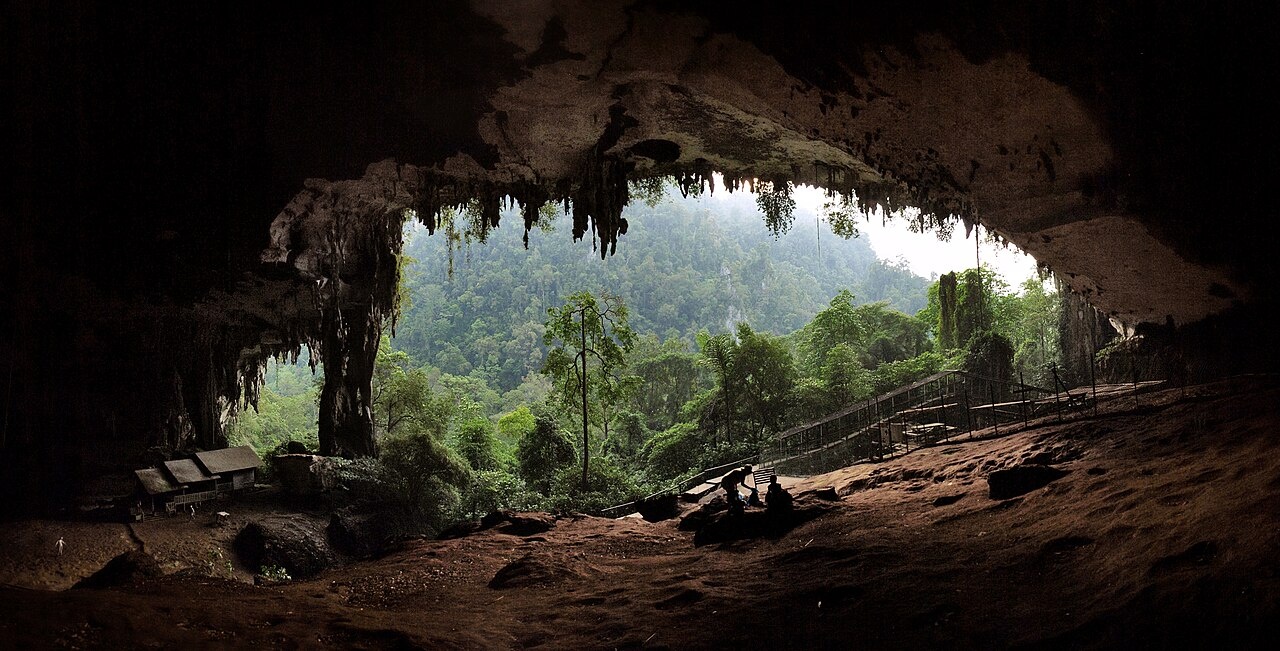
Niah Caves in Sarawak is an important prehistoric site where human remains dating to 40,000 years ago have been found. Archeologists have claimed a much earlier date for stone tools found in the Mansuli valley, near Lahad Datu in Sabah, but precise dating analysis has not yet been published.
The oldest evidence of human habitation in Southeast Asia is a Niah Cave in northern Borneo. Modern humans lived there 40,000 years ago and ate orangutans, based on the presence of charred bones found in the cave. A skull found in Niah Cave in the 1950s was first described as resembling Melanesians and native Australians. This supports the notion that earlier human species living in the region were absorbed via interbreeding as Homo sapiens spread out of Africa. Ancient genetic markers are found in indigenous groups in the Andaman Inlands, in Malaysia and Papua New Guinea and among Australian aborigines.
In the 1950s and 60s, Niah Cave was the focus of several intense and active archaeological field seasons led by Tom Harrisson, Curator of Sarawak Museum, who excavated a large area on the northern side of the West Mouth. The excavations were admirable for their time, particularly given the considerable logistical difficulties that had to be overcome because of the isolation of the site and the difficulties of working in tropical environments. [Source: ABC.net; Barker G, The Niah Caves Project: Preliminary report on the first (2000) season , The Sarawak Museum Journal, Vol 55(76), December 2000]
According to UNESCO: Niah Cave contains the oldest remains of Homo sapiens found in Borneo, excavated from layers dated to about 40,000 years. The 10-hectare cave also contained sequences of human occupation from the period around 40,000 years to 2,000 years ago. The cave was excavated by Tom Harrison from 1954 to 1962. The excavations, however, were never published in a comprehensive form. There are many doubts about the reliability of his stratigraphic interpretations and the age of the radiocarbon dated layers. Further excavations were done in 1976 to clarify the issues, but these remained unresolved. Succeedingly, a long term Niah Caves Project, a four year program of an interdisciplinary research, was started in 2000. Participating are universities from UK, Philippines, United States, Australia and Sarawak. The project was headed by Professor Graeme Barker of the University of Leicester. This new project is an inter-disciplinary thrust which will include not only archaeology but also, settlement history of Southeast Asia, rainforest reconstruction, strategies for living, development of farming, sediment analysis, studies in ceramics, lithics, organic remains, archeozoology, archeobotany, isotope studies, etc. [Source: UNESCO]
Deep Skull from Niah Cave
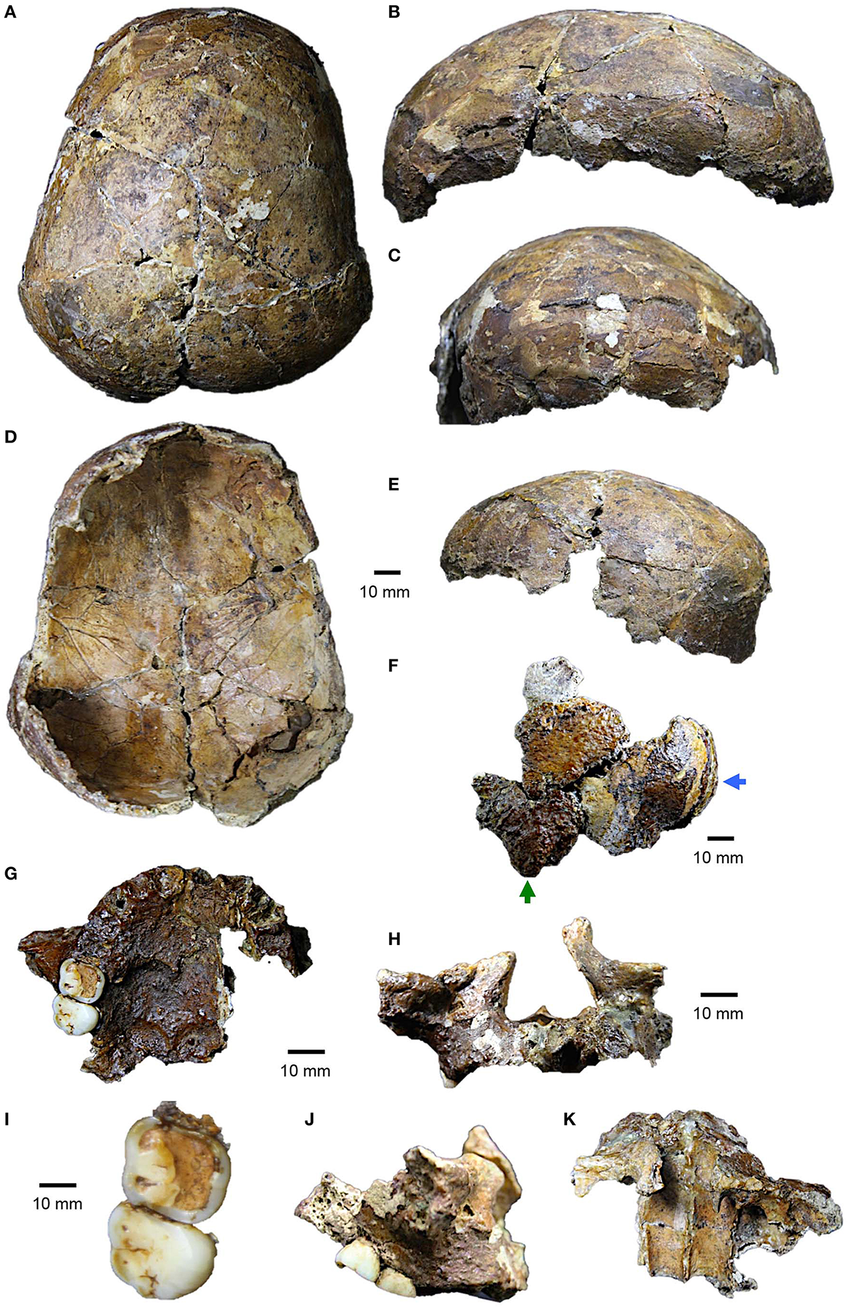
The most notable discovery by Harrison's team was a human skull (the so-called 'Deep Skull') uncovered in a deep trench dubbed 'Hell Trench' by Harrisson's excavators because of the heat and humidity in this particular part of the cave's entrance. The skull was approximately at a level where stone tools had been found previously together with charcoal that yielded a radiocarbon date of around 40,000 years ago. But there are doubts about the reliability of the data collected and recorded by Harrisson. [Source: ABC.net; Barker G, The Niah Caves Project: Preliminary report on the first (2000) season , The Sarawak Museum Journal, Vol 55(76), December 2000]
In 2016, Archaeology magazine reported: The “Deep Skull,” found in 1958, is still the earliest known remnant of a modern human in island Southeast Asia, at 37,000 years old. It had been thought that the skull, from Borneo, came from someone related to indigenous Australians, and that the islands were settled in two waves — first by ancestors to Australians and then by immigrants from Asia who became Borneo’s modern indigenous people. A new analysis, however, found that the skull appears to be more Asian than Australian in origin, suggesting there was just one major migration. [Source: Samir S. Patel Archaeology magazine, September-October 2016]
First People in Malaysia
The Malay peninsula was settled in prehistoric times. Archeological remains were found in several caves, some used for dwellings, and other as burial sites as well. The oldest remains were found in Lang Rongrien cave dating 38,000 to 27,000 years before present, and in the contemporary Moh Khiew cave.
Malays evolved from the migration of people southward from present-day Yunnan in China and eastward from the peninsula to the Pacific islands, where Malyo-Polynesian languages still predominate.
The Malays arrived in several, continuous waves and displaced the Orang Asli (aboriginals) and pre-Islamic or proto Malay. Early Chinese and Indian travelers that visited Malaysia reported village farming metal-using settlements.
Combination of the colonial Kambujas of Hindu-Buddhism faith, the Indo-Persian royalties and traders as well as traders from southern China and elsewhere along the ancient trade routes, these peoples together with the aborigine Negrito Orang Asli and native seafarers and Proto Malays intermarried each other's and thus a new group of peoples was formed and became to be known as the Deutero Malays, today they are commonly known as the Malays.
Early Indigenous People in Malaysia
The indigenous groups on the peninsula can be divided into three ethnicities, the Negritos, the Senois, and the proto-Malays. The first inhabitants of the Malay Peninsula were most probably Negritos. These Mesolithic hunters were probably the ancestors of the Semang, an ethnic Negrito group who have a long history in the Malay Peninsula. [Source: Wikipedia]
The Senoi appear to be a composite group, with approximately half of the maternal DNA lineages tracing back to the ancestors of the Semang and about half to later ancestral migrations from Indochina. Scholars suggest they are descendants of early Austroasiatic-speaking agriculturalists, who brought both their language and their technology to the southern part of the peninsula approximately 4,000 years ago. They united and coalesced with the indigenous population.
The Proto Malays have a more diverse origin, and were settled in Malaysia by 1000BC. Although they show some connections with other inhabitants in Maritime Southeast Asia, some also have an ancestry in Indochina around the time of the Last Glacial Maximum, about 20,000 years ago. Anthropologists support the notion that the Proto-Malays originated from what is today Yunnan, China. This was followed by an early-Holocene dispersal through the Malay Peninsula into the Malay Archipelago. Around 300 BC, they were pushed inland by the Deutero-Malays, an Iron Age or Bronze Age people descended partly from the Chams of Cambodia and Vietnam. The first group in the peninsula to use metal tools, the Deutero-Malays were the direct ancestors of today's Malaysian Malays, and brought with them advanced farming techniques. The Malays remained politically fragmented throughout the Malay archipelago, although a common culture and social structure was shared.
Anthropologists traced a group of newcomers Proto Malay seafarers who migrated from Yunnan to Malaysia. Negrito and other Aborigines were forced by late comers into the hills. In this period, people learned to dress, to cook, to hunt with advanced stone weapons. Communication techniques also improved.
Archaeological finds from the Lenggong valley in Perak. Dating to 10,000-5,000 years ago- Neolithic (New Stone Age), show that people were making stone tools and using jewellery. In the Bronze Age, 2,500 years ago, more people arrived, including new tribes and seafarers. The Malay Peninsula became the crossroads in maritime trades of the ancient age. Seafarers who came to Malaysia's shores included Indians, Egyptians, peoples of the Middle East, Javanese and Chinese. Ptolemy named the Malay Peninsula the Golden Chersonese.
RELATED ARTICLES:
ORANG ASLI: GROUPS, HISTORY, DEMOGRAPHY LANGUAGES factsanddetails.com
SEMANG (NEGRITOS OF MALAYSIA): LIFE, SOCIETY, HISTORY, GROUPS factsanddetails.com
SENOI: HISTORY, GROUPS, DREAM THEORY factsanddetails.com
TEMIAR: HISTORY, SOCIETY AND RICH RITUAL LIFE factsanddetails.com
ORANG LAUT— SEA NOMADS OF MALAYSIA AND SINGAPORE factsanddetails.com
Proto-Malays
Also known as Melayu asli (aboriginal Malays) or Melayu purba (ancient Malays), the Proto-Malays are of Austronesian origin and thought to have migrated to the Malay archipelago in a long series of migrations between 2500 and 1500 BC. The Encyclopedia of Malaysia: Early History, has pointed out a total of three theories of the origin of Malays: 1) The Yunnan theory, Mekong river migration (published in 1889) - The theory of Proto-Malays originating from Yunnan is supported by R.H Geldern, J.H.C Kern, J.R Foster, J.R Logen, Slamet Muljana and Asmah Haji Omar. Other evidences that support this theory include: stone tools found in Malay Archipelago are analogous to Central Asian tools, similarity of Malay customs and Assam customs. [Source: Wikipedia +]
2) The New Guinea theory (published in 1965) - The proto-Malays are believed to be seafarers knowledgeable in oceanography and possessing agricultural skills. They moved around from island to island in great distances between modern day New Zealand and Madagascar, and they served as navigation guides, crew and labour to Indian, Arab, Persian and Chinese traders for nearly 2000 years. Over the years they settled at various places and adopted various cultures and religions. +
3) The Taiwan theory (published in 1997) - The migration of a certain group of Southern Chinese occurred 6,000 years ago, some moved to Taiwan (today's Taiwanese aborigines are their descendents), then to the Philippines and later to Borneo (roughly 4,500 years ago) (today's Dayak and other groups). These ancient people also split with some heading to Sulawesi and others progressing into Java, and Sumatra, all of which now speaks languages that belongs to the Austronesian Language family. The final migration was to the Malay Peninsula roughly 3,000 years ago. A sub-group from Borneo moved to Champa in modern-day Central and South Vietnam roughly 4,500 years ago. There are also traces of the Dong Son and Hoabinhian migration from Vietnam and Cambodia. All these groups share DNA and linguistic origins traceable to the island that is today Taiwan, and the ancestors of these ancient people are traceable to southern China. +
The Deutero-Malays are Iron Age people descended partly from the subsequent Austronesian peoples who came equipped with more advanced farming techniques and new knowledge of metals. They are kindred but more Mongolised and greatly distinguished from the Proto-Malays which have shorter stature, darker skin, slightly higher frequency of wavy hair, much higher percentage of dolichocephaly and a markedly lower frequency of the epicanthic fold. The Deutero-Malay settlers were not nomadic compared to their predecessors, instead they settled and established kampungs which serve as the main units in the society. These kampungs were normally situated on the riverbanks or coastal areas and generally self-sufficient in food and other necessities. By the end of the last century BC, these kampungs beginning to engage in some trade with the outside world. The Deutero-Malays are considered the direct ancestors of present-day Malay people. Notable Proto-Malays of today are Moken, Jakun, Orang Kuala, Temuan and Orang Kanaq. +
See Separate Article: See Proo-Malays Under EARLIEST PEOPLE OF INDONESIA: NEGRITOS, PROTO-MALAYS, MALAYS AND AUSTRONESIAN SPEAKERS factsanddetails.com
Neolithic Pottery and Trade 3,600 Years Ago Between Borneo and the South Pacific
Bukit Tengkorak Archaeological Site is located at Jalan Tampi-Tampi, about 10 kilometers south of Semporna town in Sabah. Situated on a hill about 183 meters (600 feet) above sea level, it is a volcanic rock-shelter site and a part of volcano mouth that is two kilometers in diameter. Bukit Tengkorak Archaeological Site is the largest known pottery making factory in Southeast Asia during the Neolithic period. The hill slopes are littered with numerous pottery shards with various patterns dating 3,000 years ago. An ethno-archaeological study shows that pottery making is still practised by the Bajau of Semporna today.
Long-distance obsidian trade existed in ancient times between Borneo and Pacific islands. According to Robert H. Tykot and Stephen Chia: Long-distance trade in obsidian from sources in the southwest Pacific has been well-documented for the Lapita culture complex, beginning about 1600 B.C. Analyses of obsidian artifacts from recent excavations at Bukit Tengkorak in southeastern Sabah (Borneo, Malaysia) indicate the use of obsidian from multiple sources in Melanesia as early as the 5th millennium BC. The archaeological presence of obsidian, up to more than 3500 km from its source, is the surviving evidence of what was almost certainly the longest Neolithic trade route in the world. In addition, these results indicate that long-distance trade networks existed in Indonesia at least 2500 years prior to the Lapita culture, and strengthen hypotheses of its origins in southeast Asia. [Source: Robert H. Tykot and Stephen Chia, https://doi.org/10.1557/PROC-462-175 Published online: 26 February 2011
Science News reported: Excavations at Bukit Tengkorak, uncovered about 200 fragments of obsidian—highly valued in prehistory for making cutting tools—embedded in soil layers dating to around 4000 BCE. Because no natural obsidian sources exist near the site, researchers sought to identify where the material originated. [Source: Science News, December 4, 1996]
Chemical analysis of the obsidian fragments revealed distinct elemental signatures. Most of the samples matched known obsidian sources located roughly 3,500 kilometers away, near the island of New Britain and the Admiralty Islands, while a smaller number originated from sources closer to the Philippines. These results indicate the existence of an extensive maritime exchange network linking distant islands across the southwest Pacific.
Previously, scholars believed that large-scale sea trading in the region began around 1600 BCE with the emergence of the Lapita culture, renowned for its seafaring and long-distance trade. The Bukit Tengkorak evidence suggests instead that organized maritime exchange was already underway more than two millennia earlier, pointing to a far deeper and more complex history of Pacific navigation and trade.
Image Sources: Wikimedia Commons
Text Sources: New York Times, Washington Post, Los Angeles Times, Times of London, Lonely Planet Guides, Library of Congress, Malaysia Tourism Promotion Board, Compton’s Encyclopedia, The Guardian, National Geographic, Smithsonian magazine, The New Yorker, Time, Newsweek, Reuters, AP, AFP, Wall Street Journal, The Atlantic Monthly, The Economist, Foreign Policy, Wikipedia, BBC, CNN, and various books, websites and other publications.
Last updated January 2026