
ANWAR IBRAHIM FINALLY BECOMES PRIME MINISTER
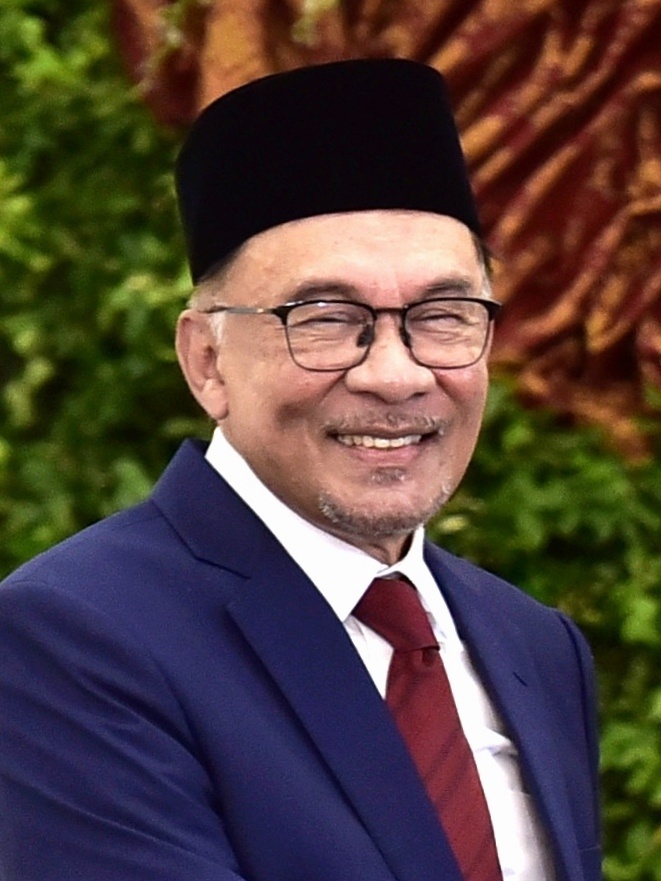
In November 2022, Anwar Ibrahim finally becomes Prime Minister of Malaysia, when the country’s king formally named him to the positions after days of uncertainty that followed divisive general elections that produced a hung parliament. The king, Sultan Abdullah Sultan Ahmad Shah, announced that 75-year-old Anwar, 75 was sworn in as the nation’s 10th leader at the royal palace in Kuala Lumpur. [Source: Eileen Ng, Associated Press, November 24, 2022]
Becoming prime minister capped Anwar’s tumultuous political journey, from a former deputy prime minister whose dismissal and imprisonment in the 1990s sparked massive street protests and a reform movement that grew into a major political force. It marked a second victory for his reformist bloc, which won the 2018 polls but lost power after 22 months because of a power struggle that fueled continuing political turmoil.
“His Royal Highness reminds all parties that the winners do not win all and the losers do not lose everything,” a palace statement said. The monarch urged Anwar and his government to remain humble and called on rival parties to reconcile in order to stabilize the country after years of political turmoil that had seen three prime ministers since the 2018 election. The palace added that the king was satisfied Anwar was the candidate most likely to command a majority, though it offered no details of the new government.
Police tightened security nationwide amid social media warnings of possible racial tensions if Anwar’s multiethnic coalition prevailed. His party urged supporters to avoid celebratory gatherings or sensitive statements that could provoke unrest. Many rural Malays feared they might lose longstanding privileges under Anwar’s more pluralistic agenda. Disillusioned by corruption and infighting within UMNO, many shifted their support to Muhyiddin’s coalition in the election.
RELATED ARTICLES:
ANWAR IBRAHIM'S LIFE AND POLITICAL CAREER factsanddetails.com
ANWAR IBRAHIM'S TRIALS, LEGAL PROBLEMS AND TIME IN JAIL factsanddetails.com
NAJIB RAZAK: LIFE, POLITICAL CAREER, SCANDALS factsanddetails.com
MALAYSIA UNDER PRIME MINISTER NAJIB RAZAK 2009-2018 factsanddetails.com
1MDB SCANDAL: BILLIONS, BIRKIN BAGS, CELEBRITIES, JHO LOW, JAILTIME FOR NAJIB factsanddetails.com
MAHATHIR MOHAMAD: HIS LIFE, VIEWS, CHARACTERS, OUTRAGEOUS STATEMENTS factsanddetails.com
MALAYSIA UNDER MAHATHIR MOHAMAD factsanddetails.com
ASIAN FINANCIAL CRISIS OF 1997-98 IN MALAYSIA factsanddetails.com
RISE OF MODERN MALAYSIA 1963-1990: DEVELOPMENT, ECONOMICS, POLITICS factsanddetails.com
ELECTIONS IN MALAYSIA factsanddetails.com
POLITICS IN MALAYSIA: LEADERS, ETHNICITY, RELIGION, SYMBOLS, PROTESTS factsanddetails.com
POLITICAL PARTIES IN MALAYSIA factsanddetails.com
How Anwar Became Prime Minister
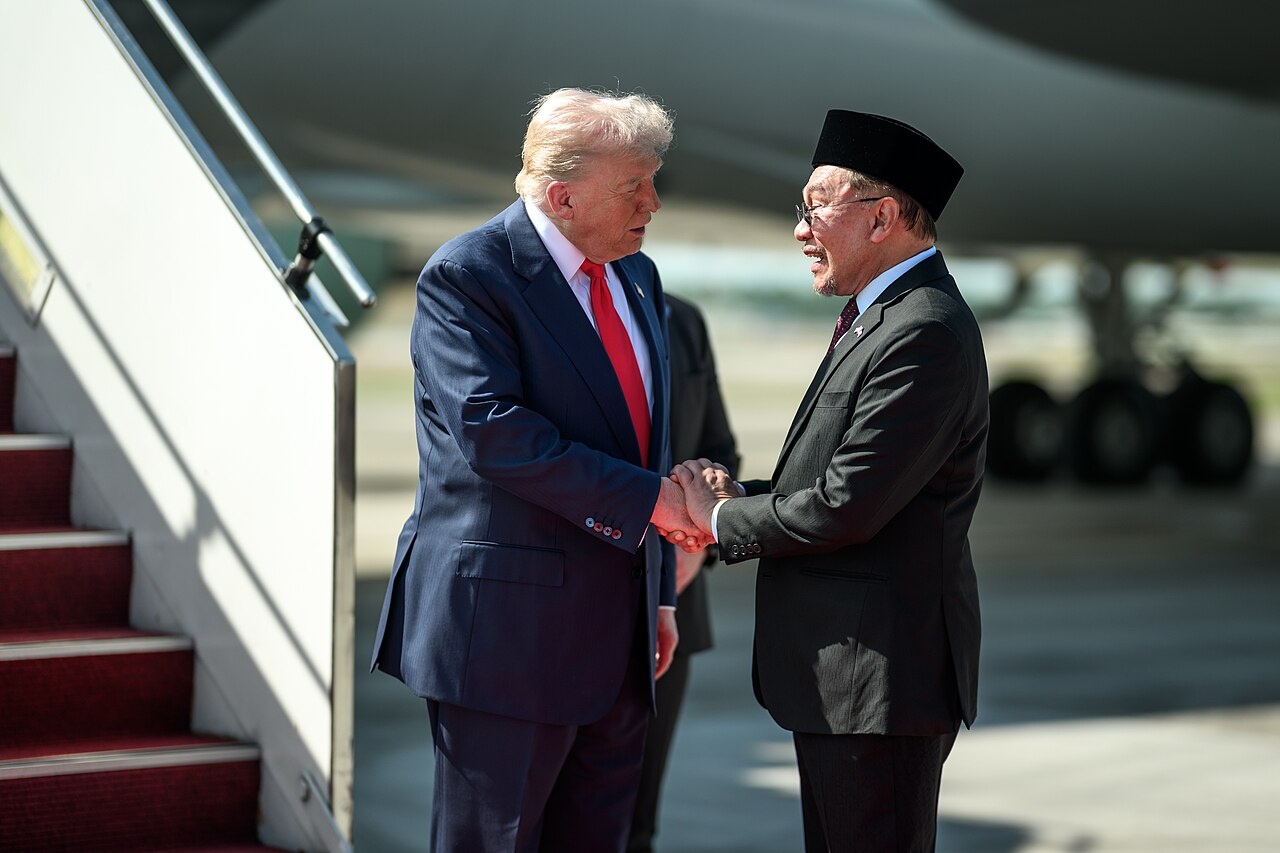
Anwar, a former deputy prime minister, had been dismissed and imprisoned in the 1990s, sparking mass protests and a reform movement that grew into a major political force. His appointment marked another milestone for the reformist bloc that achieved Malaysia’s first regime change in 2018. He had been in prison at the time on a sodomy charge he maintained was politically motivated. After receiving a pardon, he was expected to succeed Mahathir Mohamad, but the government collapsed when Muhyiddin defected and formed a new administration with UMNO. Muhyiddin later resigned amid internal rivalries after 17 months, and UMNO leader Ismail Sabri Yaakob was appointed prime minister. [Source: Eileen Ng, Associated Press, November 24, 2022]
Anwar’s Alliance of Hope led the 2022 election with 82 seats, short of the 112 needed for a majority. An unexpected surge of ethnic Malay support helped former Prime Minister Muhyiddin Yassin’s National Alliance secure 73 seats, while its ally, the Pan-Malaysian Islamic Party, emerged as the largest single party with 49 seats. The stalemate was resolved after the long-ruling bloc led by the United Malays National Organization agreed to support a unity government under Anwar—an alliance once considered unthinkable in Malaysian politics. Influential parties from Borneo also indicated they would follow the king’s decision.
Anwar campaigned on a multiracial platform, promising to end racial and religious bigotry and recover billions of dollars lost to entrenched corruption. He finally succeeded in his long quest after years of political struggle. The 2022 election, expected to end the instability that had produced three prime ministers since 2018, instead created fresh uncertainty when no party secured a clear mandate. Anwar’s multiethnic Alliance of Hope led with 82 seats, short of the 112 needed for a majority. Muhyiddin’s right-leaning National Alliance won 73 seats, with its ally, the Pan-Malaysian Islamic Party, emerging as the largest single party with 49 seats.
Anwar prevailed after smaller blocs agreed to support him in forming a unity government. Still, he faced the difficult task of bridging racial divisions that had deepened after the vote and reviving an economy strained by rising inflation and a weakened currency. Malays made up about two-thirds of Malaysia’s 33 million people, alongside large ethnic Chinese and Indian minorities.
Anwar's Long Road to Become Prime Minister
Anwar, 75 at the time he became Prime Minister, had come close to power twice before. Some analysts compared Anwar’s political struggle to that of Nelson Mandela, noting that both endured persecution while pushing for democratic change. Observers expressed hope that his leadership would guide Malaysia toward a more open and inclusive society and restore its global standing. [Source: Eileen Ng, Associated Press, November 24, 2022]
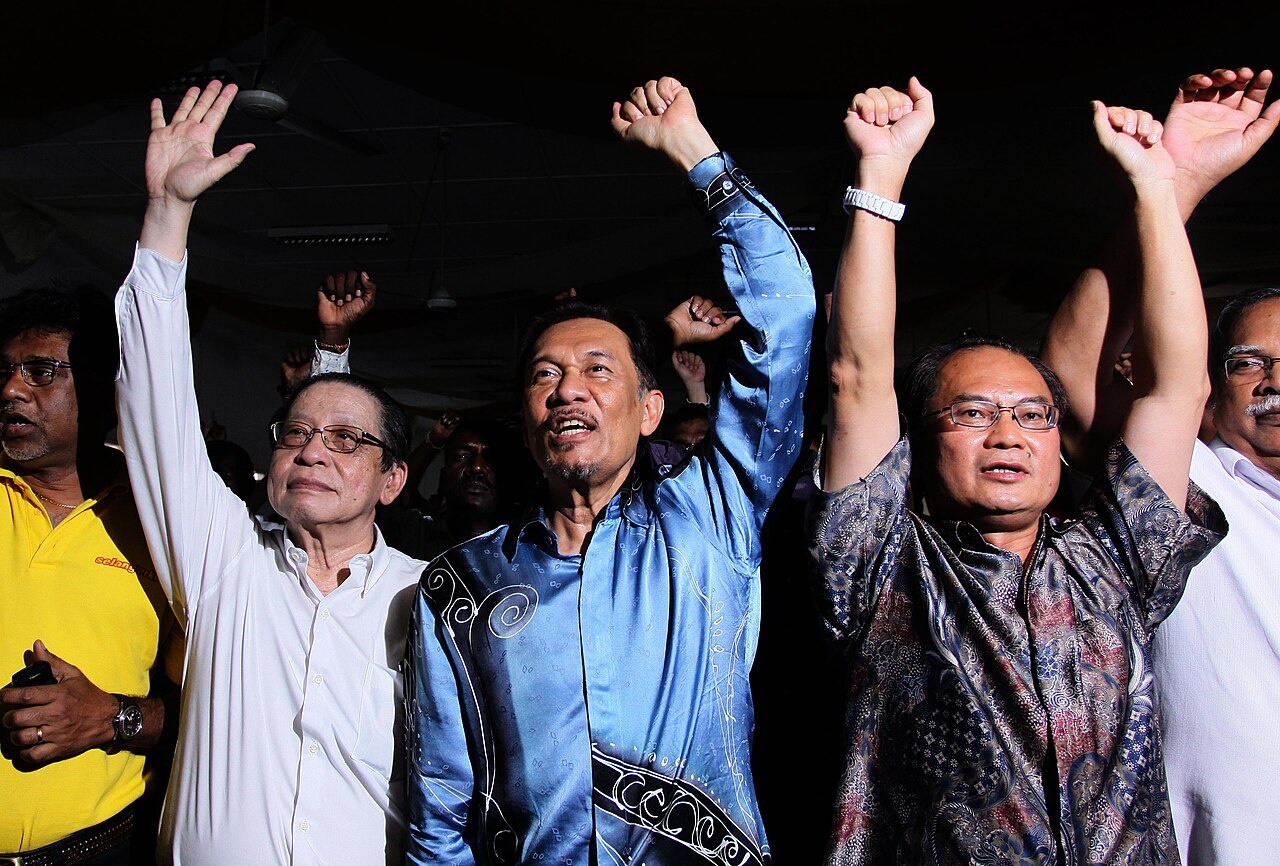
Once a fiery youth leader, he founded an Islamic youth movement before joining the then-ruling United Malays National Organization. He rose rapidly to become deputy prime minister and finance minister in the 1990s and was widely seen as Mahathir Mohamad’s successor. However, a bitter dispute over Malaysia’s response to the Asian financial crisis led to his dismissal in September 1998, followed by detention without trial and charges of sodomy and corruption.
Tens of thousands protested his treatment. When Anwar appeared in court with a black eye nine days after his arrest—caused by an assault in custody by the police chief—it became a powerful symbol for his People’s Justice Party and its call for reform. He was jailed for six years for sodomy in 1999 and received another nine-year sentence for corruption a year later, charges he said were politically motivated. His case drew global criticism, with Amnesty International labeling him a “prisoner of conscience.” He was released in 2004 after Malaysia’s top court overturned his sodomy conviction, a year after Mahathir stepped down following 22 years in power.
Anwar was imprisoned again for sodomy in 2015 in a case he said aimed to crush his opposition alliance as it gained strength against the UMNO-led government. Nevertheless, he persisted. From prison, Anwar reconciled with Mahathir, who returned to politics amid public anger over the multibillion-dollar 1MDB scandal. Their alliance produced the historic 2018 election that ousted the UMNO-led coalition, which had governed since independence in 1957.
Mahathir became the world’s oldest leader at 92 after the victory. Anwar was soon pardoned and expected to succeed him, but internal conflict caused the government to collapse after just 22 months. UMNO later returned as part of a fractious coalition with Muhyiddin’s National Alliance, which included a hardline Islamic partner. Even so, the brief rule of Anwar’s Pakatan Harapan triggered major political change as once-powerful UMNO leaders were jailed or charged with corruption. Former Prime Minister Najib Razak was imprisoned over the 1MDB scandal, while his wife, the party’s current chief, and several other leaders also faced separate graft charges.
Malaysia’s Elections in 2022
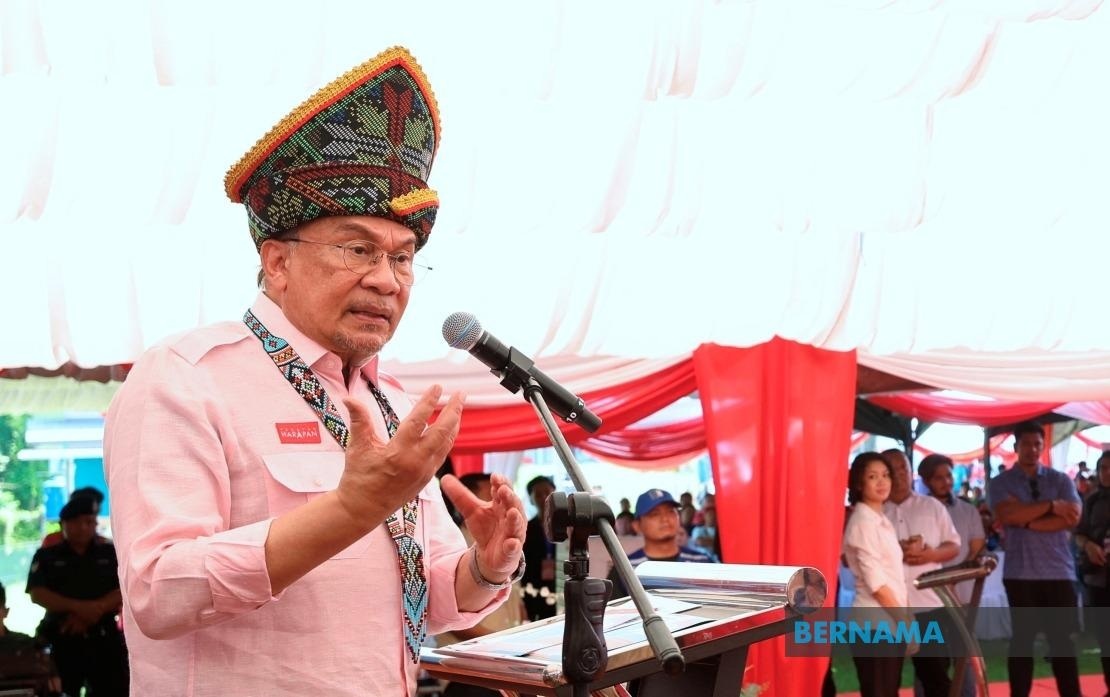
General elections were held in Malaysia on November, 19 2022 amid a political crisis that had persisted since 2020. Coalition shifts, party defections, and the effects of the COVID-19 pandemic contributed to the resignation of two prime ministers and the collapse of successive governments after the 2018 elections. Although the 14th Parliament was scheduled to expire in July 2023, King Abdullah dissolved it in October 2022 at the request of Prime Minister Ismail Sabri Yaakob. Elections were constitutionally required within 60 days.
The vote marked the first time 18- to 20-year-olds were eligible to participate after the voting age was lowered from 21 to 18. Automatic voter registration expanded the electorate by about six million people. Unlike past practice, most states did not hold elections at the same time, choosing instead to complete their terms after earlier instability had already disrupted electoral cycles in several states.
The Results announced on November 20 showed a hung parliament—the first in Malaysia’s history. Pakatan Harapan won the most seats but with reduced support, while Perikatan Nasional dominated the northern and east coast states in what became known as the “Green Wave.” The long-dominant Barisan Nasional fell to third place, and several prominent politicians, including former prime minister Mahathir Mohamad, lost their seats.
After securing backing from Barisan Nasional, Gabungan Parti Sarawak, and other parties and independents, Pakatan Harapan leader Anwar Ibrahim was appointed prime minister and sworn in on 24 November 2022. Perikatan Nasional became the official opposition.
Results of the 2022 Election for the three main parties: 1) PKR (People's Justice Party, Malay: Parti Keadilan Rakyat, or KEADILAN); 2) BERSATU (Malaysian United Indigenous Party, Malay: Parti Pribumi Bersatu Malaysia; abbrev: or PPBM); 3) UMNO (United Malays National Organization)
Leader— — Anwar Ibrahim— — Muhyiddin Yassin— — Ahmad Zahid Hamidie
Party— —PKR— — BERSATU— — UMNO
Alliance— — Pakatan Harapan— — Perikatan Nasional— — Barisan Nasional
Leader's seat— — Tambun— — Pagoh— — Bagan Datuk
Seats won— — 82— — 74— — 30
Seat change— — Decrease 18— — Increase 42— — Decrease 28
Popular vote— — 5,931,519— — 4,701,906— — 3,653,069
Percentage— — 38.00 percent— — 30.12 percent— — 23.40 percent
Results in 2018 election— — 41.29 percent, 100 seats— — 24.07 percent, 32 seats— — 27.79 percent, 58 seats
Swing— — Decrease 3.83pp— — Increase 6.28pp— — Decrease 5.43pp [Source: Wikipedia]
2020–2022 Malaysian Political Crisis
The 2022 elections in Malaysia took place after the 2020–2022 Malaysian political crisis, which began when several Members of Parliament switched party support, causing the ruling coalition to lose its majority. This led to the collapse of two coalition governments and the resignation of two prime ministers. The turmoil ended with a snap general election in 2022 and the formation of a coalition government, although unrest continued in Sabah until 2023 in what became known as the Kinabalu Move. [Source: Wikipedia]
In February 2020, the “Sheraton Move” brought down the Pakatan Harapan government, and Prime Minister Mahathir Mohamad resigned after 22 months in office. Muhyiddin Yassin then formed the Perikatan Nasional government, but instability continued through 2020 and 2021, worsened by the COVID-19 pandemic. Muhyiddin resigned in August 2021 after losing support, and Ismail Sabri Yaakob soon became the ninth prime minister. Several early state elections were held, followed by a snap national election in 2022.
The crisis grew out of divisions within Pakatan Harapan, partly linked to Mahathir’s planned transfer of power to Anwar Ibrahim. Some lawmakers sought to form a new government without holding an election. The situation escalated when BERSATU left the coalition and several PKR members defected. Mahathir’s resignation created a power vacuum, and the king, Yang di-Pertuan Agong Abdullah, interviewed political leaders before appointing Muhyiddin as prime minister.
Political shifts also changed state governments in Johor, Malacca, Perak, and Kedah. Sabah held a state election after its assembly was dissolved, and a new coalition government was formed there. Instability persisted as opposition leader Anwar Ibrahim claimed he had majority support, though he did not take power. A State of Emergency declared in 2021 further disrupted parliament, and debates were often blocked. After Muhyiddin resigned, Ismail Sabri formed a government and signed a cooperation agreement with the opposition to promote stability. Continued tensions triggered more state elections, and the 2022 general election produced a hung parliament. Anwar Ibrahim was then appointed prime minister to head a coalition government.
Challenges for Anwar as Prime Minister
Anwar’s ascent capped a turbulent political journey and eased concerns about increasing Islamization, but he faced the challenge of bridging deepened racial divides while reviving an economy strained by rising inflation and a weakened currency. Malays made up about two-thirds of Malaysia’s 33 million people, alongside large ethnic Chinese and Indian minorities. “He will have to make compromises with other actors in the government that means that the reform process will be a more inclusive one,” said Southeast Asia political expert Bridget Welsh. “Anwar is a globalist, which will assure international investors. He has been seen to be a bridge builder across communities, which will test his leadership moving forward but at the same juncture offers a reassuring hand for the challenges that Malaysia will face.” [Source: Eileen Ng, Associated Press,November 24, 2022]
In August 2023, Prime Minister Anwar Ibrahim urged Malaysians to unite and reject racial and religious bigotry as the nation marked National Day. In a televised address on the eve of the celebration, he warned that countries have collapsed not only from corruption or poor governance but also from “playing with the fires of ethnic and religious fanaticism.” Anwar called on citizens not to let differences divide the country. He said diversity could either strengthen Malaysia or tear apart the fabric of society, adding that people must choose between continuing political and racial hostility or declaring that “enough is enough.” [Source: Associated Press, August 31, 2023]
Racial and religious tensions deepened after the November 2022 general election, which saw the rise of a strong Islamic-Malay nationalist opposition bloc. Although Anwar’s coalition won the most seats, it fell short of a majority, prompting him, at age 76, to form a multi-coalition unity government with the support of former rivals. Islam remained Malaysia’s official religion, and Malays—who made up more than two-thirds of the country’s 33 million people—were legally required to confirm the faith and could not convert. Large Chinese and Indian minorities also formed a significant part of the population. The opposition Perikatan Nasional alliance, which included a powerful Islamic party, reinforced its position in subsequent local polls, making major gains in several states and portraying the results as tells of protest against Anwar’s government.
Despite holding a two-thirds parliamentary majority, Anwar struggled to win over many Malay voters, some of whom viewed him as too liberal and feared that their Islamic identity and economic privileges under longstanding affirmative-action policies might be weakened.
Anwar maintained his multiethnic stance, urging Malaysians to abandon narrow and outdated thinking. He stressed that Islam’s status and Malay privileges were protected by the constitution and would remain unchanged, while pledging that his government would also safeguard the rights of minorities and marginalized groups. Malay society, however, remained broadly conservative, including bans on LGBTQ activities. Anwar said Malaysia should be recognized not only for its modern skyline but also for guaranteeing justice for all citizens.
Anwar Reviews Predecessor's Billion-Dollar Projects
A few weeks after becoming, Prime Minister Anwar said that he was reviewing government projects worth billions of dollars approved by his predecessor, Muhyiddin Yassin, because they had not followed proper procedures. The remarks came as corruption remained a major issue, highlighted by the jailing of former prime minister Najib Razak over the theft of billions from the state fund 1MDB after his defeat in the 2018 election. The projects under review included flood mitigation efforts and COVID-19 aid programs. “They can say it was clean, but they weren’t clean,” Anwar told a news conference. “When we look at the approvals, they were done without following the regulations.” [Source: Reuters, December 6, 2022]
In Facebook posts that week, Muhyiddin—prime minister for 17 months from 2020 to 2021—denied wrongdoing related to COVID-19 relief funds and said he welcomed an investigation. “Not a single penny of this money went into my personal account,” he said. “I’m not afraid of being investigated because I know I’m not misusing public funds.”
Anwar also said that his government was reassessing a Muhyiddin-era plan for a state-owned 5G network because it had not been developed transparently. The following day, he ordered a review of flood mitigation projects worth 7 billion ringgit ($1.59 billion), according to the state news agency Bernama. He said the projects had been awarded through direct negotiations rather than open tenders. Former environment minister Tuan Ibrahim Tuan Man responded that such negotiations were not improper, adding in a statement that although some projects were expedited, they still complied with regulations. Corruption allegations also touched Anwar’s coalition. His deputy, Ahmad Zahid Hamidi, pleaded not guilty to 47 charges of bribery, money laundering, and criminal breach of trust. Zahid was a crucial coalition partner whose support enabled Anwar to form a government.
Anwar’s Corruption Probes Include Mahathir’s Sons
In 2024 Malaysian authorities stepped up investigations into former leaders and political rivals after Anwar came to power in 2022 on an anti-corruption platform. Those under scrutiny included former prime ministers Ismail Sabri Yaakob and Muhyiddin Yassin, as well as the head of an opposition-led state. [Source: Anisah Shukry, Bloomberg, February 17, 2024; Netty Ismail, Niluksi Koswanage and Tom Redmond, Bloomberg, March 26, 2024]
Former premier Mahathir Mohamad and his son were also targeted. Mahathir Mohamadsaid his son Mirzan was singled out because of their family ties and described the probe as politically motivated. Days later, the Malaysian Anti-Corruption Commission (MACC) revealed it had also issued an asset declaration notice to another son, Mokhzani.
Anwar sought to ease criticism of his reform agenda after former leader Najib Razak received a reduced sentence for crimes linked to the 1Malaysia Development Bhd. state fund. Najib belonged to the United Malays National Organisation (UMNO), a party that helped Anwar secure power. The reduction followed royal intervention and came less than a year after prosecutors withdrew 47 criminal charges against Deputy Prime Minister Ahmad Zahid Hamidi, UMNO’s president. Anwar denied interfering in either the court cases or MACC investigations.
Mahathir’s two eldest sons later said the anti-graft agency had ordered them to assist in an investigation into their father, revealing for the first time that the months-long probe targeted the 98-year-old statesman. “My father is the primary suspect,” Mokhzani Mahathir, 63, said in a March 23 interview in Kuala Lumpur. “We are witnesses to whatever it is that they’re investigating.”
In January, the MACC instructed Mokhzani and his older brother Mirzan, 65, to declare their assets dating back to 1981, when Mahathir first became prime minister. The agency said the orders were tied to investigations into offshore business records uncovered by a journalism consortium, though it did not initially name Mahathir as the main focus.
Anwar’s government also faced criticism from opposition parties and civil society after the attorney general dropped the charges against Zahid, a key coalition ally. Anwar again denied any involvement in the decision or in ongoing corruption probes.
Subsidies and Threats to the Anwar Government
In early 2024 Prime Minister Anwar Ibrahim dismissed alleged efforts to topple his government, including a reported “Dubai Move” involving opposition figures in the United Arab Emirates. According to Malaysiakini, Deputy Prime Minister Zahid Hamidi, a member of Anwar’s coalition, said the Dubai meeting also involved individuals from the ruling bloc. Leaders from the opposition Perikatan Nasional pact, as well as Zahid’s party, have denied being part of such a plot, The Star reports. [Source: Kok Leong Chan and Anisah Shukry, Bloomberg, January 2, 2024; Anisah Shukry and Kok Leong Chan, Bloomberg, February 26, 2024]
Answar also said his administration would remain focused on economic development. He launched the Central Database Hub (Padu) to better target subsidies and reduce Malaysia’s large budget deficit, as the country struggled with rising subsidy costs. Padu is key to his plans to reform Malaysia’s blanket subsidies and reduce the country's budget deficit, which is among the widest in Southeast Asia. Anwar said the data collated through Padu would help the government identify those qualified to receive federal aid.
Currently, all Malaysians enjoy subsidies on the retail price of RON-95 grade fuel, the cheapest gasoline available in the country, as well as on diesel and cooking oil. The government also cushions electricity prices, offering lower tariffs to most domestic users. This has left Malaysia grappling with a substantial subsidy bill, which was expected to exceed $17.6 billion in 2024 this year.
Malaysia’s king, Sultan Ibrahim, reinforced political stability by urging all parties to respect the unity government and wait for the next general election in 2028 rather than engage in political maneuvering. His remarks came amid renewed concerns about defections and instability, though Anwar maintained strong parliamentary support. The king also warned about growing national debt and called for fiscal reform, while analysts cautioned that continued political uncertainty could hurt Malaysia’s long-term economic competitiveness.
At the time Anwar still commanded a super-majority support in parliament and half a dozen lawmakers from the opposition coalition said they backed the current government while allies of the prime minister have also urged the nation’s politicians to stop undermining the government.
Image Sources: Wikimedia Commons
Text Sources: New York Times, Washington Post, Los Angeles Times, Times of London, The Guardian, National Geographic, Smithsonian magazine, The New Yorker, Time, Newsweek, Reuters, AP, AFP, Wall Street Journal, The Atlantic Monthly, The Economist, Foreign Policy, Wikipedia, BBC, CNN, and various books, websites and other publications.
Last updated January 2026