
SOCIAL LIFE IN THE PHILIPPINES
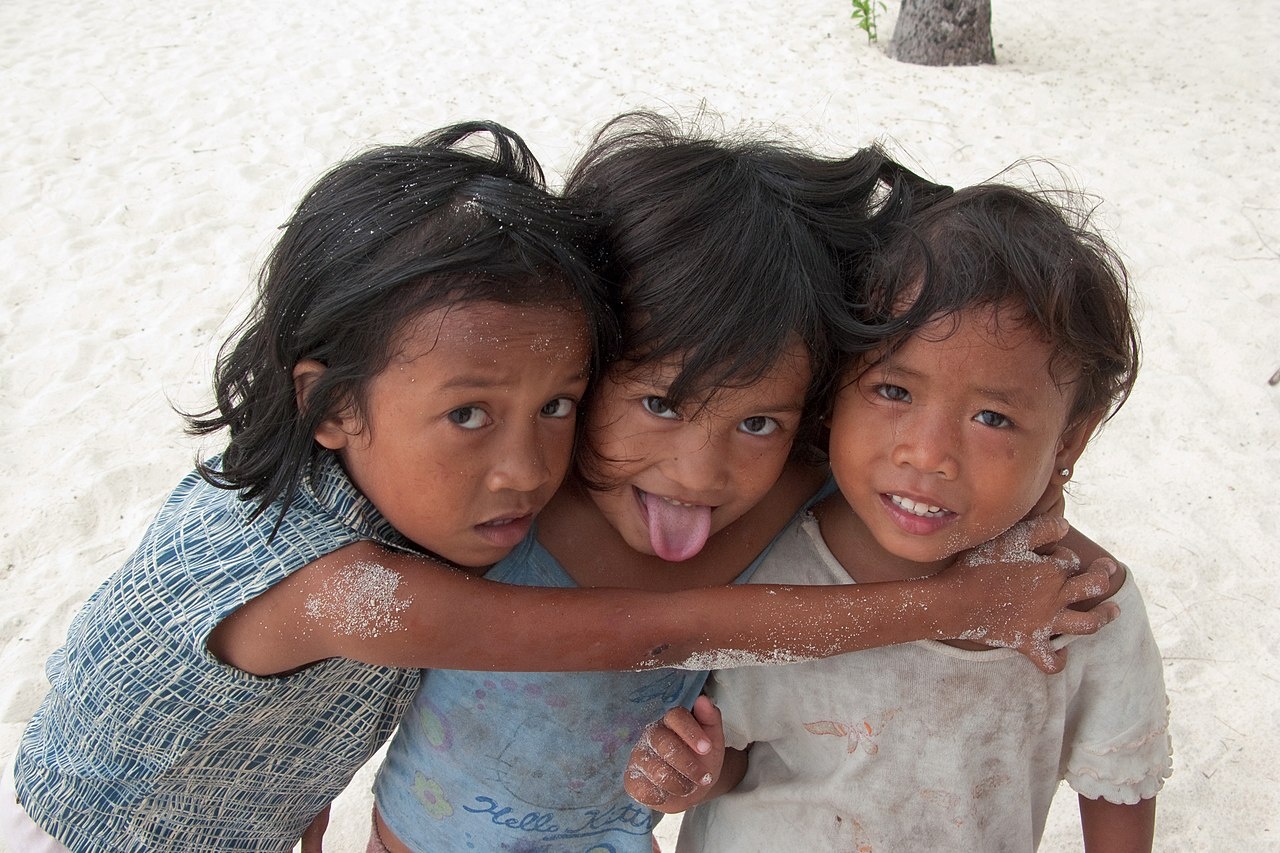
As is true with Latin Americans, Filipinos enjoy being with other people and are very sociable. People like to hang out and socialize on the street. Conversation is a major pastime and people enjoy joking around and teasing one another. There is relatively little segregation by age and gender at parties. Teenage boys dance with their mothers. Little girls dance with old men. Adults dance with each other.
Social relationships in the Philippines have been described as a “mosaic of personal alliances” molded out of “real kinship ties, ritual kinship relations, relationships based on special debts of gratitude, market-exchange partnerships, patron-client bonds, and friendships.” Things occur spontaneously without a set plan. People arrive unexpectedly or don't show when they are supposed. People may be a little annoyed by tardiness or perceived broken promises but they don’t get bent out of shape over rit. Whoever is missing usually shows up eventually. Because individuals are considered far more important than schedules, punctuality at meetings may be admired but not strictly observed.
Filipinos are extremely hospitable; they also like to eat and drink often. You are likely to be offered a drink (coffee, soft drink, juice or water) and a snack (biscuit cake etc.) almost immediately on first meeting. It is socially wise to accept the offer; at least of the coffee or soft drink. If you are the host you should also be prepared to offer and serve a coffee/soft drink and snack. If invited to a family or other social occasion it is Filipino practice to bring along a small gift for the host and/or hostess, typically a cake or other small gift of very modest value. [Source: Canadian Center for Intercultural Learning +++]
Filipinos have a knack for humour. They can always find something to laugh about. They even love to craft funny anecdotes about socio-economic-political situations and adversaries in life. Filipinos love to tell jokes in social settings, but less so in the context of business. Humour may be self-deprecating, often relies on puns, but is rarely dry or cynical. Irony is often not understood or is misinterpreted. +++
According to humanbreeds.com: “Filipinos are friendly and sweet. It is just true, they are so happy and friendly and sweet and they honestly remind me of the hobbits in the Lord of the Rings....Filipinos love to live and enjoy life and like to go out. This means that Filipino individuals with very little money in the bank or the wallet are more likely to go and spend a big chunk of this money on a Starbucks coffee, a movie or a night out with their friends rather than saving it for a time that the money is needed.” [Source: humanbreeds.com, February 7, 2014]
RELATED ARTICLES:
FILIPINO CHARACTER AND PERSONALITY: VALUES, EMOTIONS, FRIENDLINESS factsanddetails.com
FILIPINO HIYA (SHAME), AMOR PROPIO (SELF-ESTEEM) AND GO BETWEENS factsanddetails.com
CATHOLIC, ASIAN, SPANISH AND AMERICAN INFLUENCES ON FILIPINO IDENTITY AND CULTURE factsanddetails.com
POVERTY IN THE PHILIPPINES: POOR, HUNGRY, INEQUALITY, CAUSES factsanddetails.com
TONDO — MANILA’S LARGEST SLUM AND HOME TO SMOKY MOUNTAIN factsanddetails.com
EVERYDAY LIFE IN THE PHILIPPINES: URBAN, RURAL, BARRIOS, TWO KITCHENS factsanddetails.com
For Information in the Society and Social Life of Different Ethnic Group See the Ethnic Groups and Minorities listed Under the MINORITIES factsanddetails.com
FAMILIES IN THE PHILIPPINES: GODPARENTS, KINSHIP, TIES, STRUCTURE factsanddetails.com
FILIPINO SOCIETY factsanddetails.com
RICH AND POWERFUL FAMILIES IN THE PHILIPPINES factsanddetails.com
ETIQUETTE AND MANNERS IN THE PHILIPPINES: CUSTOMS, PUBLIC ACTIONS, RESPECT factsanddetails.com
FILIPINO COMMUNICATION STYLES: GESTURES, BODY LANGUAGE, EYEBROWS, SPACE factsanddetails.com
PEOPLE OF THE PHILIPPINES: FILIPINOS, IDENTITY, CHARACTERISTICS factsanddetails.com
AUSTRONESIAN PEOPLE OF THE PACIFIC, INDONESIA, MALAYSIA, TAIWAN AND THE PHILIPPINES: ORIGIN, HISTORY, EXPANSION factsanddetails.com
MALAYS AND MALAY-RELATED PEOPLE: HISTORY, DEFINITIONS, ORIGINS, LIFE, CULTURE factsanddetails.com
ETHNIC GROUPS AND MINORITIES IN THE PHILIPPINES factsanddetails.com
MAIN ETHNIC GROUPS OF LUZON: TAGALOGS, ILOCANO AND BICOL factsanddetails.com
ETHNIC GROUPS OF THE CENTRAL PHILIPPINES ISLANDS: VISAYANS, CEBUANO, WARAY factsanddetails.com
MOROS: MUSLIMS IN MINDANAO AND THE SOUTHERN PHILIPPINES factsanddetails.com
LANGUAGES IN THE PHILIPPINES factsanddetails.com
RELIGION IN THE PHILIPPINES factsanddetails.com
Interpersonal Relationships in the Philippines
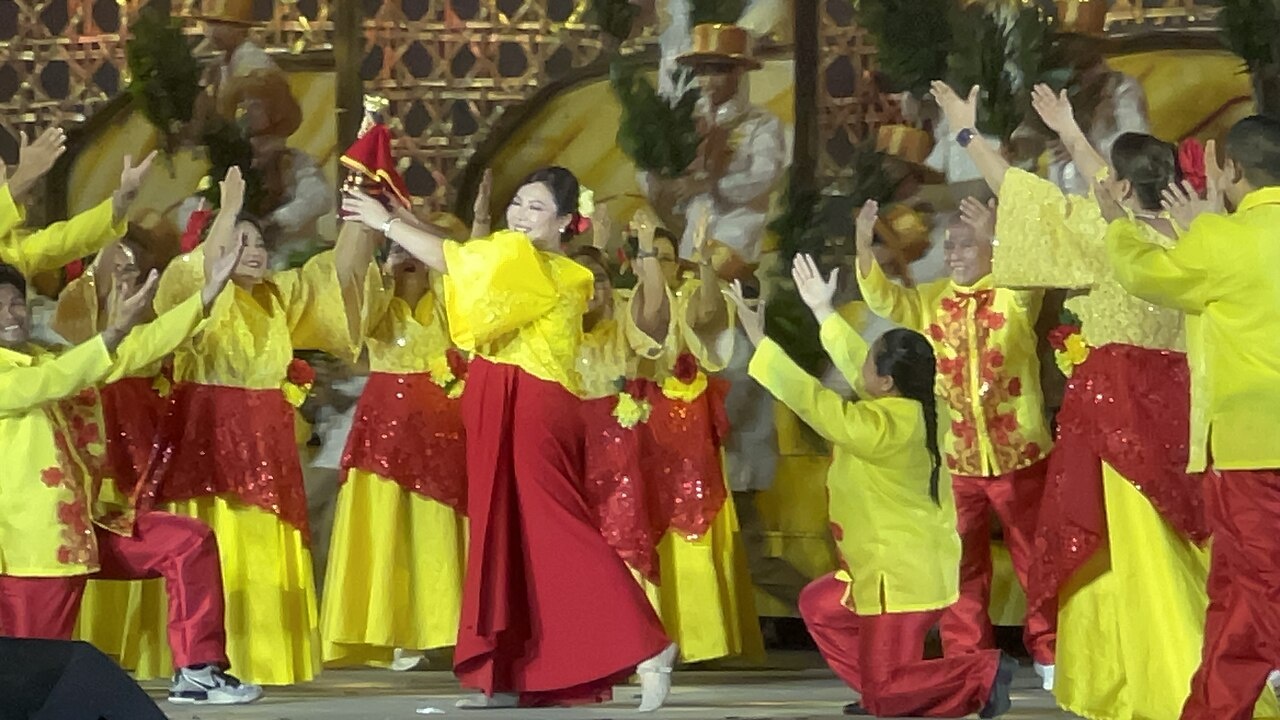
Social organization generally follows a single pattern, although variations do occur, reflecting the influence of local traditions. Among lowland Christian Filipinos, social organization continues to be marked primarily by personal alliance systems, that is, groupings composed of kin (real and ritual), grantors and recipients of favors, friends, and partners in commercial exchanges. *
Relational obligations are interpersonal or face-to-face relationships and their resulting obligations. This is relative to the personalism value in Filipino cultural orientation. The nature of interpersonal relationships are determined by pakikiramay, pakikisama, bayanihan, and galang. Pakikiramay means going out of the way to help, without being asked, i.e., unsolicited help. Pakikisama or smooth interpersonal relations (SIR) means going along with someone’s views, whether agreeing or not. This enhances camaraderie, trust, confidence, and loyalty. This is related to bayanihan or reciprocal labour and giving help without compensation. In turn, one can request help in time of need from those to whom you extended help. [Source:Philippines Australia Business Council ^^]
Galang or respect is part of most social encounters. It indicates deference to the opinions of elders, peers, or those in authority, during important deliberations. Any verbal clash with older people in public, or any sign of extreme familiarity with members of higher official status in public meetings, are signs of disrespect.
Anyone who receives an unexpected financial reward, such as from a bet, is cajoled into sharing some of it with family and friends in the form of balato. Another way to share a windfall or celebrate a happy event is to treat friends to a restaurant meal or a feast at home, called a "blow-out." Bayanihan is a traditional method of working together in rural areas for tasks that require a lot of people, such as planting and harvesting. When a villager needs to move their house, the community helps by literally carrying it on its main posts. In return, the homeowner offers refreshments and promises to provide similar assistance to others in need. The term symbolizes the Filipino capacity to work together for civic purposes. [Source: “Culture Shock!: Philippines” by Alfredo Roces and Grace Roces, Marshall Cavendish International, 2010]
Traditional forms of debate in the Philippines have often placed greater emphasis on style and delivery than on confrontation of ideas. Eloquence, vivid imagery, and graceful expression are valued qualities in speech. In the past, poetic contests and verbal exchanges were popular forms of entertainment, and they still survive in some older towns. Because maintaining harmony is important, sharp or aggressive debate is often avoided, and people may prefer language that creates goodwill rather than direct criticism. As a result, formal discussions or forums may sometimes focus more on preserving harmony than on openly challenging ideas. Leaders or moderators may try to soften disagreements rather than push them to a decisive conclusion. Participants may carefully soften their arguments to avoid offending others, which can sometimes leave important issues only partially addressed.
Friendship in the Philippines
Friendship often is placed on a par with kinship as the most central of Filipino relationships. Certainly ties among those within one's group of friends are an important factor in the development of personal alliance systems. Here, as in other categories, a willingness to help one another provides the prime rationale for the relationship. Filipinos usually make friends easily. They are warm and hospitable. They smile a lot, which makes it easier for strangers or foreigners to feel at ease with them. They can easily strike up a conversation with the person seated next to them, for example. Filipinos can communicate with peoples of other nations with ease because the majority of the population can fluently converse in English.[Source: Canadian Center for Intercultural Learning, Library of Congress]
Kathleen Nadeau wrote: Filipinos typically try to make their friendships into family-like relationships that are mutually supportive. They prefer to have smooth interpersonal relationships with one another and go out of their way to create an atmosphere in which the people around them feel comfortable and accepted. Filipinos generally try to avoid confrontations and make use of indirect speech and mediators in situations of potential conflict. As elsewhere in Asia, there is a strong concept of face in the Philippines. This means that Filipinos are taught to be sensitive to other people's feelings and, generally, do not say words that may embarrass or shame a fellow human. [Source: Kathleen Nadeau, International Encyclopedia of Marriage and Family, Gale Group Inc., 2003]
According to the blog casualsavant: “In Filipino, the word "barkada" means a group of friends. As with many things Filipino, the delineation of closeness is not exact. I've heard it described as a group of close-knit friends or simply a peer group. The best definition I can come up with is that to a Filipino, one's barkada is another form of family. This may sound frightening to foreigners, since surely one group of relatives is enough! While it must be admitted that our loyalties do beget corruption and nepotism, the upside is strong networks. The barkada has the best of both worlds, people who know you and love you anyway, but who will allow you to take them for granted... to a certain extent. This motley crew is my barkada. [Source: casualsavant.typepad.com]
According to humanbreeds.com: “Filipinos get friendly with each other so quickly but are so noisy when in a group. Filipinos are generally very friendly, so it is so easy for two Filipinos who have just met to turn into instant friends. The social experiment: If you bring 1 Filipino to a crowd of people, he/she is likely to blend in, be friendly and nice and sweet. But bring 10 individual Filipinos into a bigger crowd, these 10 individuals, who had never met before, are likely to greet each other, become instant friends and form their own mini gang. A group of Filipino people easily stands out of the crowd with its loud Tagalog dialect and even louder laughter.” [Source: humanbreeds.com, February 7, 2014]
Pakikisama
Pakikisama is an important concept in Filipino social life and generally means “getting along with others.” The term comes from the root word sama, meaning “to go with,” and suggests cooperation, companionship, and harmony within a group. The prefix paki-—which also functions as a polite marker similar to “please”—emphasizes the idea that individuals should politely adjust their behavior to maintain good relations with others. [Source:language.berkeley.edu; kevinlimbo.blogspot.jp, June 7, 2011]
This value is closely linked to the Filipino emphasis on maintaining Smooth Interpersonal Relationships (SIR). In everyday interactions, Filipinos often soften requests or commands with words like paki- or maki- to avoid sounding too direct or offensive. Even superiors may phrase instructions politely when speaking to subordinates. Someone who lacks pakikisama may be viewed negatively as overly individualistic or unwilling to cooperate with the group. In his studies of stevedore groups at the docks in Manila, Randolph David noted that, when given the choice, employers preferred an unskilled worker who understood pakikisama over a skilled worker who did not. Without pakikisama, a worker was considered worthless, even if skilled. [Source: “Culture Shock!: Philippines” by Alfredo Roces and Grace Roces, Marshall Cavendish International, 2010]
Pakikisama also reflects a broader cultural tendency toward cooperation and shared responsibility. It encourages people to share their time, talents, and resources with others, as seen in practices like bayanihan, the tradition of community members working together to achieve a common goal without expecting payment. The satisfaction of contributing to the welfare of the group is considered its own reward.
Scholars also connect pakikisama with related concepts such as pakikipagkapwa-tao (recognizing the shared humanity of others) and pakikiramay (showing empathy and sympathy, especially in times of hardship). These ideas stress treating others with respect, kindness, and understanding. In Filipino psychology, failing to acknowledge another person’s humanity—expressed in the criticism “wala kang kapwa-tao”—is considered a serious moral failing.
At the same time, pakikisama can sometimes create social pressure to conform. People may feel obliged to follow the wishes of the group, even when they personally disagree. In some cases, the concept may be invoked to persuade others to cooperate in questionable or inconvenient situations, making refusal difficult. Thus, while pakikisama promotes unity and harmony, it can also blur the line between genuine cooperation and social pressure.
Pakikisama, Group-Orientedness and Empathy
Even for simple errands—such as walking across the street to a small neighborhood sari-sari store—Filipinos often prefer to go with someone else. Sometimes the companion may even be a small child who cannot really help if needed, yet the presence of another person provides comfort. This preference for companionship can help explain why many Filipinos, especially those newly arriving in another country, may initially feel hesitant about doing things alone. [Source: Jeff Harvie, Perry Gamsby, D.Lit, M,A filipinawives.wordpress.com, August 26, 2014; September 2, 2014]
This tendency reflects a core cultural value known as kapwa, which emphasizes togetherness and shared identity with others. In Filipino culture, there is usually room for one more person in the group—much like the humorous saying about jeepneys always having space for “one more passenger.” In contrast, strong individualism—sometimes described as kanya-kanya or “each for oneself”—is often viewed as a more Western influence that entered Filipino society during the colonial period.
Another related concept is pakikisama, which stresses group harmony and getting along with others. Within this framework, maintaining good relationships and avoiding conflict can sometimes be considered more important than individual achievement. Activities are often approached collectively, with the emphasis on cooperation rather than personal recognition.
When Filipinos work abroad or migrate to other countries, however, the social environment changes. In these contexts, the pressure to maintain group harmony may lessen, and individuals often adapt to more individual-oriented systems. As a result, many Filipinos working overseas demonstrate strong independence, efficiency, and initiative in their jobs.
A further cultural trait is pakikiramdam, which refers to empathy and sensitivity to the feelings of others. It involves carefully reading emotional cues and adjusting one’s behavior to maintain harmony. This heightened awareness can help explain certain behaviors that may puzzle outsiders—such as smiling or laughing after making a mistake, or becoming sensitive when openly blamed for an error. In many cases, these reactions reflect an effort to manage embarrassment and preserve social harmony rather than disregard responsibility.
Bad Side of Filipino Social Relationships According to One ExPat
Winston posted in his blog happierabroad.com: “ “In the Philippines, you are constantly surrounded by people with a "give me, give me" look on their faces. And that's because the key to their survival has been in finding ways to GET things from others, taking advantage of them, and freeloading off them. They're always looking for free things and generous people to get things from. But of course, they never want to give anything for free, as nothing in their culture is free. It's obvious hypocrisy of course, but I guess in their position, they can't afford any ethics. This can get annoying and infuriating, as it makes you feel like a constant target, but some expats get used to it and just develop a firm stance against them, while others don't. Source:Winston, happierabroad.com, December 22, 2011 ]
“It is very difficult to find intelligent conversation in the Philippines. People there seem incapable of thinking and observing, or forming intelligent opinions and observations. You will mostly only have intelligent discussions with other expats and foreigners. While middle class educated Filipinos will only be able to speak English more fluently with you than average, they will still not usually be able to form intelligent opinions and observations.
“Most people's English is only at the basic level. They understand you if you ask simple questions like: "Where is the CR? (bathroom)" "What time is it?" "Where are you from?" Those they will understand and respond. But if you ask them: "Can I apply this retroactively?" or ask them things involving steps, details or specifics, they will struggle and look confused. They also are not accustomed to intellectualizing over concepts. For instance if you say to them, "The term 'pure Filipino' is an oxymoron because by definition a Filipino is a mix of different ethnicities, not a purebreed", most will not understand this statement, nor will they know what "oxymoron" means. Therefore, when travel guides such as Lonely Planet say that everyone in the Philippines speaks fluent English, it's more of a politically correct statement than the truth.”
“Communication skills are not articulate or skillful (which is true of Asia in general). Thus when you try to get directions, they will usually be vague, not exact or step-oriented, and get you lost often. So when you try to dig for information, you have to be patient, persistent and probing, because frankly speaking, communication skills in Asia tend to suck.
Utang na Loob (Debt Cycle)
Obligation and responsibility are often viewed in terms of reciprocity ("utang na loob"), which consists of debts ("utang") and free will of the inner self ("na loob"). The process begins with an unsolicited gift and often continues into the next generation. Utang na loob (pronounced "u-tang na lo-ob") is sometimes translated as "debt of gratitude." In the study of Filipino psychology, utang na loob is considered an important "accommodative surface value," alongside hiya (shame) and pakikisama (togetherness). In other words, it is one of the values by which Filipinos accommodate the demands of the world around them, as opposed to confrontational values such as "lakas ng loob" and "pakikibaka." [Source: Wikipedia]
The essence of utang na loob is the obligation to repay someone who has done you a favor appropriately. The favors that evoke the Filipino sense of utang na loob are usually those whose value is impossible to quantify or involve a deeply personal internal dimension, even if there is a quantifiable value. This internal dimension, loob, differentiates utang na loob from an ordinary debt ("utang"); as an internal phenomenon, utang na loob goes much deeper than an ordinary debt or the Western concept of owing a favor. Filipino psychology explains that this reflects the "kapwa" orientation of shared personhood or shared self, which is at the core of the Filipino value system. +
Mary R. Hollnsteiner wrote in “Reciprocity in the Lowland Philippines(1961): “Every Filipino is expected to possess utang na loob; that is, he should be aware of his obligation to those from whom he receives favours and should repay them in an acceptable manner. Since utang na loob invariably stems from a service rendered, even though a material gift may be involved, quantification is impossible. One cannot actually measure the repayment but can attempt to make it, nevertheless, either believing that it supersedes the original service in quality, or acknowledging that the reciprocal payment is partial and requires further payment.”
Manifestations of Utang na Loob
In a Filipino's circle of relationships, everyone has utang na loob to someone, and everyone has utang na loob to someone else. In effect, utang na loob binds the group together. Filipinos avoid placing themselves in debt to outside groups, especially rivals or opponents, as much as possible. Accepting a favor from someone in an opposing group would be disloyal because utang na loob creates deep personal and emotional obligations. With utang na loob, one is expected to repay the favor with interest. The fact that one’s obligation is not easily quantified creates an escalating cycle of utang na loob, weaving a highly complex fabric of interdependence based on utang na loob. [Source: “Culture Shock!: Philippines” by Alfredo Roces and Grace Roces, Marshall Cavendish International, 2010]
Alfredo Roces and Grace Roces wrote: A Westerner who gives a Filipino a job, or provides medicine for his hired help’s sick child, may receive modest gifts on special occasions such as Christmas, all tokens of recognition of utang na loob for service rendered. Professionals, especially doctors and lawyers, are showered with gifts by patients they may have treated free of charge or for a token fee in the past. Utang na loob relationships are entered into between parents and children who receive expensive education at some sacrifice from their parents, between poor relations and rich relatives who may provide material help or jobs, between landlord and tenant farmer for a loan of seed or for some personal needs, between civil servants and public officials, between colleagues for services rendered without charge, and so on. [Source: “Culture Shock!: Philippines” by Alfredo Roces and Grace Roces, Marshall Cavendish International, 2010]
Filipino politicians utilise political patronage in exchange for votes at election time, thus introducing the Filipino utang na loob element into a Western political system put into operation in the Philippines by the Americans. The political system, from barrio level to national machinery, functions largely on utang na loob, despite impinging contradictions from theoretical principles and tenets of the Western political model established in the Philippines.
Utang na Loob Viewed as Karma and Loyalty
Kevin Limbo wrote in his blog: “1.) In general, the concept of “utang na loob” is akin to “karma” because Filipinos value the idea of returning the favor to those who have done good deeds. There is also a saying in Tagalog, “Ang ‘di marunong tumingin sa pinanggalingan ay di makakarating sa paroroonan.” This proverb serves as a kind of reminder that one has to be thankful, grateful, and always remember those people who have helped them reach their goals in life. This is the basic context of “utang na loob”, where one has to have an attitude of gratitude and a commitment to return the favor of being the recipient of good deeds and moral support from his family, relatives, and community. [Source: kevinlimbo.blogspot.jp, June 7, 2011 \^/]
2) “Utang na loob” in the context of blind loyalty. Used in the context of blind loyalty, “utang na loob” has negative ramifications. This includes blind loyalty to one’s family (“blood is thicker than water”, “my family, right or wrong”), friends (“he is my best friend”, “he is my son’s ninong”), political leaders (“he has done so much for my family”, “he gave us money when we needed it”). Often this blind loyalty is invoked by those who have the power”and material resources to sustain a dependent relationship, and by those who have not been empowered to break from these ties or relationships. Thus, one finds many poor and uneducated people in the Philippines in this kind of dependent relationship, and “utang na loob” is a tie that binds them for a long while. \^/
3) “Utang na loob” in the context of enlightened loyalty. There are Filipinos who are able to look at “utang na loob” as a social concept without having to be blind to the limits of loyalty. They appreciate the meaning of “utang na loob” as a moral concept, but it does not mean that they will give up the higher set of principles that they value for the sake of family, friendships, and community loyalty. “Utang na loob” may be invoked by some people to demand favors from someone, for the right or wrong reasons. One is free to return the favor or not, but must take the risk of “burning his bridges”. Social conformity in Filipino culture is valued (the term “pakikisama” captures this virtue), and one has to face the possibility of being ostracized for not being loyal. This is the immediate drawback. In the end, it is a choice between social conformity and one’s valued principles. ”
“In Filipino culture, one way to avoid social conflict is to explain things with sincerity and honesty, without being confrontational. As in other Asian cultures, saving one’s face is very important, and this is also true in the context of fulfilling social obligations, even in the context of “utang na loob”. In our culture, “talu-talo na kapag nagkasubuan na. (No more pakikisama when things get too heated up).” Now, majority or almost all of the Filipinos use these two words as an excuse to reason with you when they want to get something from you. Pakikisama and pag tanaw ng utang na loob aren’t really bad. But just like other issues that become a problem in the society, It becomes bad when you take advantage of these words and manipulate them for your own gain. Even if it means using your relationship with other people to get what you want.
Tampo: Filipino Sulking
In Filipino culture, open displays of anger or resentment are often discouraged in order to preserve harmony. As a result, negative feelings may be expressed indirectly or repressed. Instead of confronting the person who caused the offense, someone who feels hurt may withdraw emotionally, becoming quiet and less cheerful — in other words, sulking. Such changes signal that something is wrong and invite the offender to show concern and restore goodwill. If the signals are ignored, the reaction may escalate into more visible signs such as muttering, stomping, or slamming doors—behavior sometimes described as nagdadabog. [Source: Center for Southeast Asian Studies Northern Illinois University, seasite.niu.edu; John Miele, liveinthephilippines.com, March 2, 2010 ^+^]
Tampo is a uniquely Filipino expression of hurt feelings that has no exact English equivalent. Although it is sometimes translated as “sulking,” tampo is not necessarily negative or hostile. Rather, it is a culturally accepted way of expressing emotional hurt in a society where direct confrontation is often avoided. A person showing tampo may withdraw from others, become unusually quiet, refuse affection, or avoid social activities.
Tampo appears in many kinds of relationships. Children may show it when they feel neglected or misunderstood, while adults may experience it in friendships or romantic relationships. Among couples, a tampuhan—a lovers’ quarrel—often involves silence or temporary emotional distance rather than open argument. The person experiencing tampo typically expects to be coaxed, comforted, or reassured before normal interaction resumes. Because tampo is usually expressed through nonverbal behavior, it can sometimes be difficult for outsiders to understand. The person who caused the offense may not immediately know what went wrong, but the expectation remains that he or she should recognize the hurt feelings and take steps to make amends. Apologies, kind gestures, or acts of attention are often used to restore the relationship.
Parties in the Philippines
Filipinos enjoy music and dancing, and many private parties end with lively dancing, sometimes in a disco style. Music—often played through a loud stereo system—adds to the festive atmosphere. One who is leaving for a long period is given a special party called a despedida (Spanish for farewell). Close friends are invited and the departing guest of honor may submit names of friends to be invited Friends of the close friends often also show up. At family celebrations such as birthday parties or wedding anniversaries, guests often group themselves by age. Young children, teenagers, unmarried adults, married couples, and older relatives may naturally form their own clusters. Children are generally expected to remain in the background and often spend their time playing together outside or in another room. [Source: “Culture Shock!: Philippines” by Alfredo Roces and Grace Roces, Marshall Cavendish International, 2010]
Food and entertaining in the Philippines generally involve few strict taboos because the society is largely Westernized. In the predominantly Muslim areas of the southern Philippines, pork is avoided, but elsewhere religious food restrictions are usually relaxed during social gatherings. Hosts typically serve a wide variety of dishes so that guests with dietary restrictionscan simply choose foods that suit them. In many upper-middle-class households, cooks are employed, so much of the food served at a party may not have been prepared by the hostess herself, although she might contribute a dessert. Compliments about the meal are appreciated, but praise directed at the décor, flowers, or overall presentation may be more meaningful, as these often reflect the hostess’s personal effort.
Conversation during social events often centers on people and relationships. In Filipino culture, identity is closely tied to family and social networks, so individuals are often understood within the context of their relatives, friends, and colleagues. Questions that might seem personal in other cultures—such as asking why someone is not married, what a person’s parents do, or how much something cost—are usually meant simply to place someone within a familiar social context. Filipinos may also ask foreigners about prices they paid for services or goods out of genuine concern that they might have been overcharged, and they are often quick to offer advice.
At gatherings where many guests are not closely related, family members may still sit or gather together while other guests find places nearby. Before the meal begins, it is also common for men and women to form separate conversational groups, chatting among themselves while waiting for the feast. Seating arrangements at Filipino gatherings are generally informal. Guests do not necessarily sit in alternating male and female positions, and people usually choose their own places. Hosts may gently encourage guests to mingle, but it is common for couples or familiar groups to sit together—for example, the host’s wife may sit with the guest’s wife, while the host and guest converse together. At some gatherings, elderly family members—such as parents or grandparents of the hosts—may be present but remain quietly in the background. Despite their low profile, they are treated with great respect. Guests are expected to greet them and say farewell before leaving. In Tagalog, the custom of formally taking leave from hosts and elders is known as magpapaalam, emphasizing respectful goodbyes.
Image Sources: Wikimedia Commons
Text Sources: “Encyclopedia of World Cultures Volume 5: East/Southeast Asia:” edited by Paul Hockings, 1993; “Culture Shock!: Philippines” by Alfredo Roces and Grace Roces, Marshall Cavendish International, 2010; National Geographic, Live Science, Philippines Department of Tourism, New York Times, Washington Post, Los Angeles Times, Smithsonian magazine, Encyclopedia.com, Library of Congress, The Conversation, The New Yorker, Time, BBC, CNN, Reuters, Associated Press, AFP, Lonely Planet Guides, Google AI, Wikipedia, The Guardian and various websites, books and other publications.
Last updated March 2026