
SAGADA
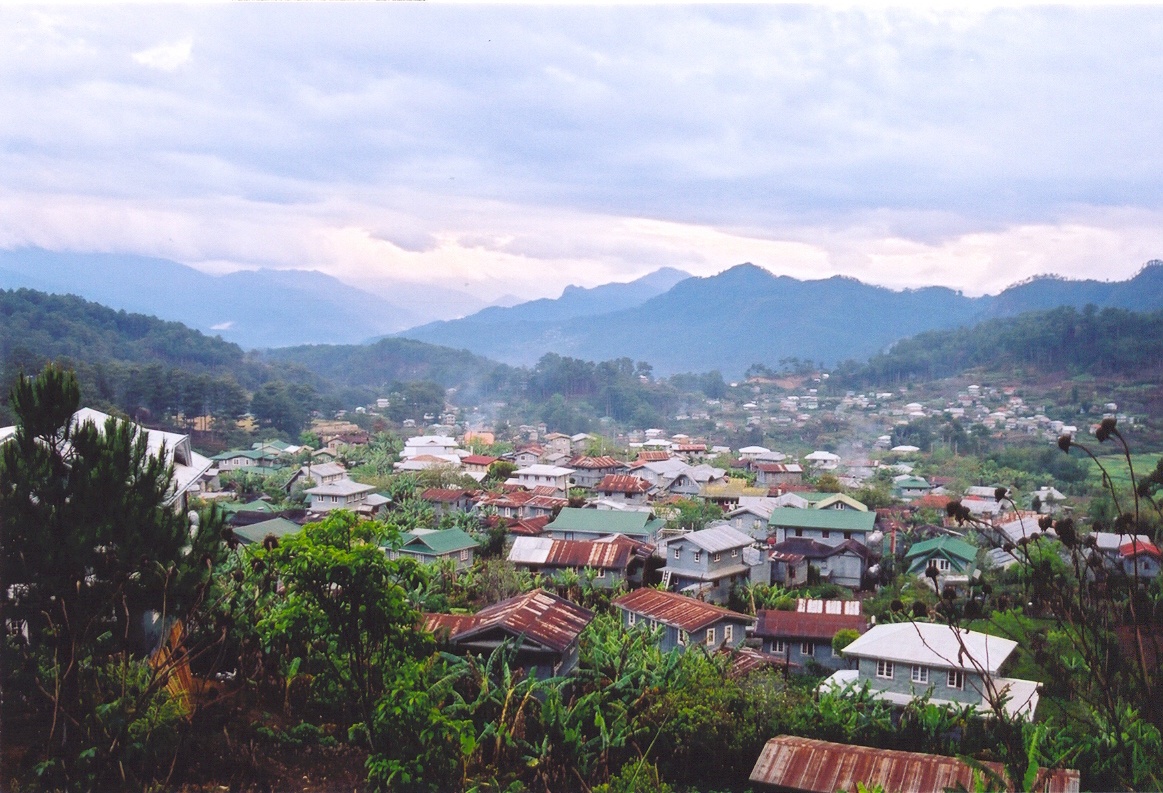
Sagada (9 hours from Manila) is a small town in Mountain Province in north-central Luzo. Its main draws are its relatively cool temperatures, interesting caves and hanging coffins set in an area of beautiful mountains. The town is fairly isolated. It has only has one ATM, which is not always working. Exchange rates are quite bad. Popular sights include: The Mission Compound, Kiltepan Rice Terraces, Echo Valley Cliffs, Sumaging (the Big Cave), Bokong and Bomod-ok Waterfalls, Burial Cave, Mount Ampakaw, Underground River and Lake Danum.
Sagada is located in central Mountain Province at an elevation of approximately 1,500 meters above sea level. The people of Sagada represent the northernmost extension of the Northern Kankanaey Igorots, historically inhabiting the former province of Lepanto, west and south of Bontok. Ethnic identity among the Sagada people is typically defined at the village or local settlement level rather than by a broader collective designation.
Sagada lies deep in the Cordillera Central mountains of northern Luzon. Reaching it requires a bumpy, winding journey of about 8.5 hours from Manila, but those who make the trek are rewarded with a glimpse of a haunting and extraordinary custom that has endured for centuries. In recent years, a steady trickle of curious travellers has begun making the journey to Sagada to see the hanging coffins. Ironically, this vertical cemetery has become a modest source of income for the Igorot people, providing a valuable economic boost to the village.
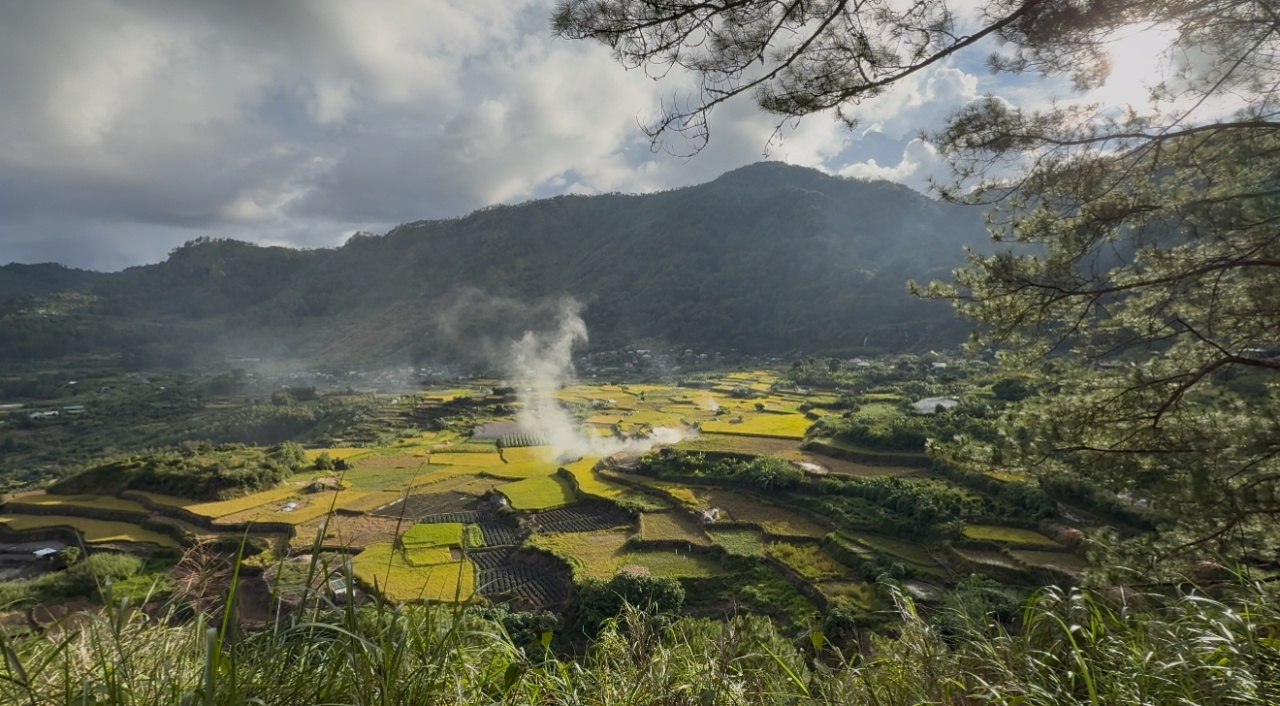
Albert Ernest Jenks wrote in 1905: Practically all the immediate territory on the right hand of the trail between Bagnen and Sagada is occupied by the beautifully terraced rice sementeras of Balugan; the valley contains more than a thousand acres so cultivated. At Sagada lime rocks—some eroded into gigantic, massive forms, others into fantastic spires and domes—everywhere crop out from the grassy hills. Up and down the mountains the trail leads, passing another small pine forest near Ankiling and Titipan, about four hours from Bontoc, and then creeps on and at last through the terraced entrance way into the mountain pocket where Bontoc village lies, about 100 miles from the western coast, and, by Government aneroid barometer, about 2,800 feet above the sea. [Source: “Bontoc Igorot” by Albert Ernest Jenks, 1905]
Caving is popular (See Below). Other activities including hiking to Bumud-ok Falls (Big Falls)., where you can jump from the ledge. You can go rock climbing, near Echo Valley. White Water rafting is available on the Upper Chico River. The best time is from July to early January, but that conditions vary according to to amount of rainfall that fallen recently. The sections of the river being rafted are downstream from Bontoc. Most sections have numerous class 3 to 3+ rapids and several class 4 rapids. Equipment is international standard and guides are trained by US rafting professionals. Cost ranges from 2500 to 3500 pesos/person depending on group size and section being rafted. Inquire at Sagada Outdoors, in the white commercial building across from the jeepney stop.
Sunrise at Kiltepan Peak is worth getting up early for.
310
Getting There: From Baguio: both Lizardo Trans and D'Rising Sun run several buses a day, starting at 06:00 and taking 5.5-6.5hrs depending on road conditions. Last bus is about 13:00. From Bontoc: local jeepneys ply this route throughout the day (first one 08.30 and last one 17.00). Tthe last return trip is at 1pm. From Manila: Coda Lines runs daily buses 21:00 for 730 pesos. Bring a jacket. The Bus terminal is located in Cubao near EDSA on Maryland street. From Vigan: Arrival at Sagada within a day is possible, but only if you leave at 6am. Take the Partas bus down towards La Union, stopping at Tagudin, then take a van to Cervantes. From Cervantes, take another van (last van departs 4pm) to Bauko. And finally, from Bauko, take a van towards Bontoc, dropping off at the Sagada junction. At this junction, just waive down any vehicle to get to Sagada Town. The entire journey will take approximately 7 hours.
RELATED ARTICLES:
IGOROT GROUPS — KANKANAEY, ISNEG, IBALOI — AND THEIR LIFE, CUSTOMS AND CULTURE factsanddetails.com
IGOROT — CORDILLERA PEOPLE OF NORTHERN LUZON — GROUPS AND HISTORY factsanddetails.com
IGOROT LIFE: CUSTOMS, FOOD, DRINKS, TRANSPORT factsanddetails.com
HEAD HUNTING TRIBES OF LUZON: PRACTICES, REASONS, WARS factsanddetails.com
IFUGAO: HISTORY, HEADHUNTING, CULTURE factsanddetails.com
IFUGAO RELIGION: GODS, RITUALS, FUNERALS factsanddetails.com
RICE TERRACES OF NORTHERN LUZON factsanddetails.com
IFUGAO RICE TERRACES OF BANAUE AND BATAD factsanddetails.com
KALINGA: HISTORY, LIFE, SOCIETY, CULTURE factsanddetails.com
KALINGA IN 1910 factsanddetails.com
BONTOC PEOPLE: LIFE. CULTURE, MARRIAGE factsanddetails.com
BONTOC REGION IN THE EARLY 1900s: GEOGRAPHY, HISTORY, DISEASES, FOOD factsanddetails.com
BONTOC RELIGION: GODS, ANITOS, FUNERALS factsanddetails.com
BONTOC PEOPLE IN THE EARLY 1900s: LIFE, LOVE, HOUSING, WEALTH factsanddetails.com
BONTOC HEAD HUNTING factsanddetails.com
Hanging Coffins of Sagada
Hanging coffins are an ancient funeral tradition in northern Luzon of the Kankanaey people an, Igorot tribe in which the elderly carve their own coffins and the dead are suspended from the sides of cliffs. In several areas, coffins of various shapes can be seen hanging from vertical mountain faces, in caves, or on natural rock projections. The coffins are small because the deceased are placed in the fetal position. This is because they believe that people should leave the world in the same position as they entered it. The coffins are high off the ground because the Kankanaey want the spirits of the dead to go up to Heaven, and the closer they are to heaven the better. [Source: Karl Grobl, CNN, May 5, 2012]

In her book Making An Exit, which is about how different cultures mourn, Sarah Murray describes participating in a funeral in Sagada that combines Christian rites with the pre-Christian practice of burying the dead wrapped in ceremonial blankets and compressed into the fetal position in compact wooden sarcophagi that are left hanging on cliff faces or lodged in the fissures and caverns of Sagada’s jagged cliffs and rock outcrops. The tradition is said to be over 2,000 year old but the coffins have not been studied by archaeologists, so their exact age is unknown, but they are believed to be centuries old. [Source: Rachel Newcomb, Washington Post]
The Kankanaeys' funeral rite is unique within the Philippines, but similar cliff burials were once practiced in parts of China and still are iamong the Toraja in Sulawesi Indonesia. An Igorot guide Siegrid Bangyay told the BBC in 2018, the most recent cliff burial took place in 2010. Bangyay notes that there are far fewer hanging-coffin burials today than in earlier generations, but she remains confident the tradition will survive. She herself hopes to one day be laid to rest this way — transforming, as she puts it, from “a tourist guide into a tourist attraction.” [Source: Mike Dilger and Rico Hizon, BBC, April 6, 2018]
Igorot Hanging Coffin Customs
The hand-carved wooden coffins are placed underneath natural overhangs. Some are tied or nailed to sheer cliff faces. Others are either placed onto brackets on mountain faces, or in caves sitting high up in cliffs. Their vertiginous burial ground is thought to bring the deceased closer to their ancestral spirits. [Source: Mike Dilger and Rico Hizon, BBC, April 6, 2018]
Traditionally, elderly Igorots hollow out their own coffins from local timber and paint their names on the sides. Before the body is placed inside, it is seated in a wooden “death chair,” bound with leaves and vines and covered with a blanket. Relatives then smoke the body to slow decomposition, allowing family members to pay their respects over several days.According Bangyay, in the past, relatives transferring the body from the death chair to the coffin would sometimes break the deceased’s bones to fit them into the short, one-meter-long coffins, arranging the body in a fetal position. Modern hanging coffins are typically larger, measuring about two metres in length. “It’s like returning to where you came from — in the fotal position, in the womb,” Bangyay told the BBC
Once wrapped in rattan leaves and placed inside the coffin, men hammer metal pegs into the cliff face to support the casket in its final resting place. Before the coffin is hoisted up the rock wall, mourners allow fluids from the decomposing body to drip onto their skin, believing this will bring good fortune.
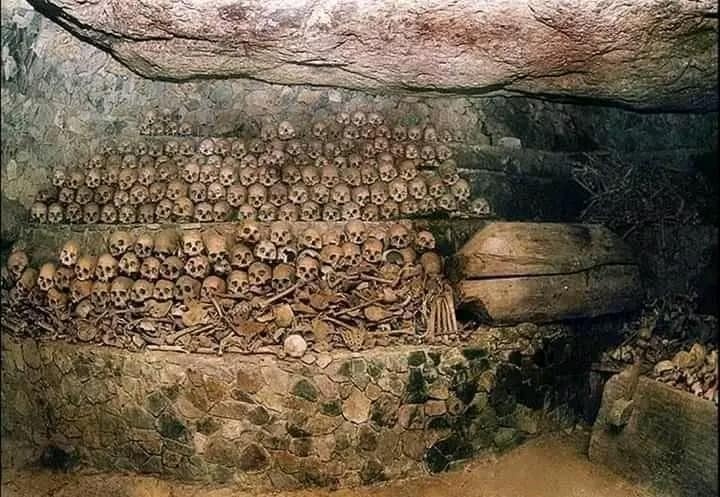
Studies note that once coffins are opened and bodies exposed to air after years of enclosure, decay accelerates, a process worsened by human interference. Picpican observed that disturbance of burial sites hastens deterioration, concluding that the best way to preserve the mummies and their associated prestige is simply to “leave them alone.” Disturbing the natural ecology of these sites, Picpican warned, does nothing to preserve the remains and instead pushes them into oblivion (Picpican, 2004). Destroying the mummies is tantamount to destroying tradition, gradually commodifying belief. This helps explain why locals forbid the opening of Sagada’s hanging coffins and why they are isolated on cliffs — to prevent disturbance and protect revered ancestors. [Source: Angel Bautista, University of Santo Tomas Graduate School, March 16, 2013]
Hanging coffins are not the primary burial practice of the Kankanaey people. They are reserved only for distinguished or honorable community leaders. These leaders must have performed acts of merit, made wise decisions, and led traditional rituals during their lifetimes. The height at which their coffins are placed reflects their social status. Most people interred in hanging coffins are prominent members of the amam-a, the council of male elders in the traditional dap-ay, the communal men's dormitory and civic center of the village. There is also one documented case of a woman who was given the honor of a hanging coffin interment. [Source: Wikipedia]
Sagada Hanging Coffin Funeral
When a death occurs, pigs and chickens are slaughtered for communal rites. For the elderly, custom calls for three pigs and two chickens, though families who cannot afford this may offer one pig and two chickens instead. Soledad Belingom, an elderly retired Igorot schoolteacher told Rough Guides the number must always total three or five.[Source: Kiki Deere. roughguides.com, 2014]
The body is then seated on a wooden sangadil, or death chair, bound with rattan and vines and covered with a blanket. Positioned facing the main doorway, the deceased remains there while relatives pay their respects. To slow decomposition and mask the smell, the body is smoked. After several days of vigil, the corpse is removed from the chair and prepared for burial. The legs are folded toward the chin into a foetal position, the body wrapped again in cloth and tied with rattan leaves, while a small group of men chips holes into the cliff face to anchor the coffin.
“The corpse is wrapped like a basketball,” Soledad says. “On the way there, mourners do their best to grab it and carry it because they believe it is good luck to be smeared with the dead’s blood.” These bodily fluids are believed to bring success and allow the deceased’s skills to pass to those who come into contact with them during the procession.
At the burial site, young men scale the cliff and place the body inside a hollowed wooden coffin. To fit the small space, the bones are cracked and the coffin sealed with vines. Modern coffins, Soledad notes, are usually around two meters long. “These days, coffins are long because the relatives of the deceased are afraid to break the bones of their loved ones. Very few choose to follow that tradition now.”
Today, Sagada’s elders are among the last to practise these rites. Younger generations have embraced modern lifestyles and are shaped by the Philippines’ strong Christian traditions. “Children want to remember their grandparents but they prefer to bury them in the cemetery and visit their tombs on All Saints Day. You can’t climb and visit the hanging coffins. It’s a tradition that is slowly coming to an end. It’s dying out.”
Why the Sagada Place Their Dead in Hanging Coffins
Angel Bautista, an archeology student at the University of Santo Tomas Graduate School, wrote: For the Kankanaey, the ethnic group to which the people of Sagada belong, death is both dreadful and mysterious. It is dreadful because it permanently removes a family member from the physical world, yet mysterious because it allows the spirit of the dead to continue social relations with the living. This belief is shaped by filial piety, faith in the power of ancestors, and a polytheistic worldview in which bodily decomposition and preservation are spiritually significant. Hanging or cave burials may also preserve remains longer than burial in the ground. [Source: Angel Bautista, University of Santo Tomas Graduate School, March 16, 2013]
Local guides also explain that the coffins are hung because of the belief that “the higher the body is placed, the closer to heaven.” This echoes research on the hanging coffins of the Bo people in China. Some of these coffins date back 2,500 years, roughly parallel to the beginnings of Sagada’s burial customs. Professor Lin Xiang of the University of Sichuan concluded that the Bo suspended their coffins for spiritual reasons — closeness to heaven — and practical ones, such as protection from animals and destruction. Guo Jing, director of the Yunnan Provincial Museum, further theorized that mountains served as stairways to heaven and coffins as bridges. These ideas closely align with Kankanaey beliefs, suggesting possible cultural influence, though this remains unproven. Locals also maintain that only the wealthy or highly respected are buried on the cliffs.
Belingom told Rough Guides the reason the dead go beyond spirituality. “The elderly feared being buried in the ground. When they died, they did not want to be buried because they knew water would eventually seep into the soil and they would quickly rot. They wanted a place where their corpse would be safe..There are two fears of being buried. The first is that dogs will eat the corpse, so the coffins are placed high up on a cliff, out of their reach. Secondly, years ago, during the headhunting days, savages from different parts of Kalinga and eastern Bontoc province – our enemies – would hunt for our heads, and take them home as a trophy. That’s another reason why the dead were buried high up – so nobody could reach them.” [Source: Kiki Deere. roughguides.com, 2014]
Social hierarchy in Sagada persists even in death. Burial on the cliffs marks wealth and status, preserving social standing beyond life. Geography also shaped the practice: ancestors fleeing Spanish rule settled in mountainous terrain with limited arable land. To preserve farmland, the dead were buried in caves or suspended from cliffs rather than interred in the soil.
In 1950, Eduardo Masferre described Sagada’s burial rites as “…rituals that Sagada has not lost despite modern times.” More than six decades later, the village remains faithful to these traditions, demonstrating that they are not performances for outsiders but a lived culture — a true “way of life.”
As Malanes (2003) observed, “Sagada folk, until now, still observe some of the burial customs and traditions of their ancestors.” The hanging coffins of Echo Valley stand as proof. Despite gradual changes, the people of Sagada have not forgotten who they are. Even today, Kankanaeys place their names on their coffins and choose to be buried as their ancestors were, reaffirming identity through death as much as through life.
Visiting the Hanging Coffins of Sagada
There are several places where you can find hanging coffins. The closest is downhill from the town, but they are not very impressive. The most impressive ones are in the north of the valley behind a Christian graveyard. To get there head north uphill from Sagada’s central main road. Turn right at the municipality hall, following main road, and after the basketball court, turn right again. Pass the church on your left and go up the stairs until you face a small gate. Turn left and on the Y-fork after 150 meters, turn right. Cross the graveyard straight ahead. Follow the small path for maybe 300 meters and still uphill, you should already see the coffins on the opposite side down in the little valley. Go downhill, keep right, and you run straight into the main coffin spot. Hidden around this area, you can find several other coffins decorated into some rocks. Best light for pictures is in the afternoon. No guide required.
A guide is not necessary but required because some tourists behave disrespectfully in the spiritual area and there is danger they may deface the coffin. The fee for the guide is not so high; often there is someone at the stairs to the collect the fee. You should have a guide with you when arrive. Ask for English speaking guide. Tourist Information can call for a guide (P200 for a guide) while you wait at the stairs.
Caving at Sagada
A two to three hour trip including a visit of the Sumaguing Cave, the burial cave, Lumiang Cave and the hanging coffins goes for about US$16 for first person, and US$8 for each additional person. The group goes in from Burial Cave and comes out from Sumaging cave. Book at the tourist information counter. Prepare to get wet and ziplock all the belongings. The "cave connection," is a rather extreme activity. Some of the crevices you have to squeeze through are very small. Much of the way you are hanging on the walls with steep drops beneath you. Most people just go down and up the Sumaguing cave; only a small number attempt the dangerous cave connection.
On his cave trip experience, Kim Ventura wrote: “Dark, cold, muddy, with thousands of bats...So down we went the slippery trail, carefully watching our step and holding on to rocks covered in bats’ droppings....I won’t lie to you. Caves aren't easy, and this one not the least. But your effort will be worth it once you get to the point the guide tells you to remove your footwear and go barefoot on the flow stone. The water cooled our feet and we started to relax. And from there, our guide pointed to interesting rock formations like “the elephant” and “the king’s curtain.” There were fossilized shells embedded on the rocks, too!
“The next part, with its tricky and tight crevices, called for some acrobatic skills! Good thing we had our very own “Alfred,” a guide from SAGGAS (Sagada Genuine Guides Association) who offered his knee so we could have a ladder for the hard-to-reach spots. The thrills got even better as we rappelled down into trenches. We found a deep pool of ice-cold water, and we chose to dive in. We were wet, anyway! But the best part was having to do everything all over again on our way out of the cave. We felt more confident with our footwork and the ascent back was easier. Once on dry land, we found ourselves wet, muddy, but definitely grinning from ear to ear. We did it! We survived Sumaging Cave!
Kabayan Mummy Burial Caves
Kabayan Mummy Burial Caves (320 kilometers north of Manila) feature Ibaloi mummies placed in caves in central Luzon between 10th and 18th centuries. Old or seriously ill Ibaloi who were believed to be on the verge of dying sometimes prepared their bodies for mummification by drinking a brine solution to cleanse their bodies. Thirty-two Ibaloi in four caves near Kabayan, are bring threatened by logging, vandalism and rodents. In 1998, the World Monuments Fund placed the Kabayan caves in their list of the World's 100 Most Endangered Sites. The caves are accessible from La Trinidad, a town with 130,000 people in an area of Benguet Province known as the “Strawberry Fields of the Philippines". Worried about preservation issues,
Kabayan Mummy Burial Caves were nominated to be a UNESCO World Heritage site in 2006. According to UNESCO: “Kabayan is one of the Municipality of Benguet Province in the Cordillera Mountain Ranges of northern Luzon. The municipality is recognized as a center of Ibaloi Culture. The Ibaloi, the dominant ethno-linguistic group, of Kabayan have a long traditional practice of mummifying their dead. Mummification began prior to the Spanish colonization. Individuals from the higher societal stratum of the Ibaloi of Kabayan used to be mummified through a long ritual process over a long period of time. The process of mummification using salt and herbs and set under fire may take up to two years. When the body is finally rid of body fluids, the mummy is placed inside a pinewood coffin and laid to rest in a man-made cave or in niche dug-out from solid rock. During the Spanish period, Christianity spread and took a foothold in the mountains of Benguet and the practice of mummification and cave burial was abandoned. The remains are then placed in wooden coffins and interred in man-made burial niches in rocks or rock shelters and/or natural caves. [Source: UNESCO]
“Strategically located in the mountain slopes of the municipality of Kabayan, more than 200 man-made burial caves have been identified and 15 of which contain preserved human mummies. Out of the several ethnolinguistic groups in the Philippines, only the Ibaloi practiced mummification in preserving their dead. There are also instances of mummification in the caves in Mountain Province which is inhabited by another ethno-linguistic group, the Bontoc. It is not certain however whether this is a practice by the Bontoc, or merely an extension from Kaayan, Benguet, to Alab, Mountain Province. There are also cases of mummies in the province of Ifugao, also in the Cordilleras, but this is probably due to population movements from the province of Benguet to the province of Ifugao. There are of course instances of mummification in Sulawesi among the Toraja and other parts of Southeast Asia. Well known are the sites in South America. Mummification in Southeast Asia, however, are from a different technology from that practiced in Egypt.”
Image Sources: Wikimedia Commons
Text Sources: Philippines Tourism websites, Philippines government websites, UNESCO, Wikipedia, Lonely Planet guides, New York Times, Washington Post, Los Angeles Times, National Geographic, The New Yorker, Bloomberg, Reuters, Associated Press, AFP, Japan News, Yomiuri Shimbun, Compton's Encyclopedia and various books and other publications.
Updated in February 2026