
MEGAWATI SUKARNOPURTI
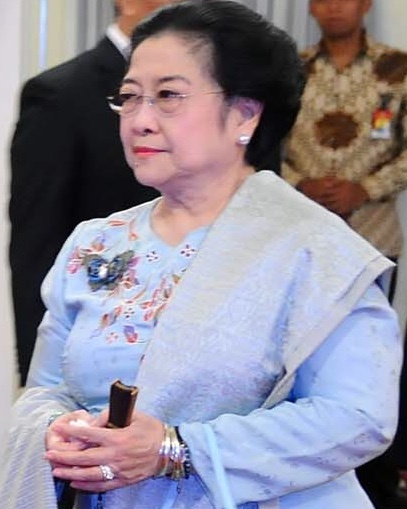
Megawati Sukarnopurti, Sukarno's eldest daughter, was the fifth president of Indonesia and a major figure in the pro-democracy movement that ousted Suharto. During the Suharto era, she was an opposition political leader of the Indonesia Democratic Party (PDI), one of Indonesia's two legitimate political parties. In early the post-Suharto era she was Indonesia’s most popular politician. Her full name is Dyah Permata Megawati Setiawati Sukarnopurti. "Purti" means "daughter of" in Indonesian. "Mega" means cloud.
Megawati was described by the New York Times as “an almost entirely symbolic leader—as bearer of the Sukarno name and as a representative victim of the abuses of...Suharto. She proved to be a convenient rallying point in efforts to oust Suharto. She had the love of support of the Indonesian masses because she was Sukarno's daughter but many Indonesians had doubts about her being president.”
As a leader Megawati was known for her aloofness, taciturn nature, with occasional displays of emotion and anger. Wahid called her “stupid.” Her being a woman and a less than enthusiastic Muslim were issues in Muslim Indonesia. But despite all this she demonstrated on a number of occasions that she had good political instincts and could be a shrewd operator with a deep sense of nationalism and respect for laws and procedures.
Megawati served three years as president and two years as vice president. She avoided political debates, showed few managerial skills and rarely gave speeches or spoke in public. When she did give a speech it was usually short and lacking in substance or indications on what she stood for. She once said, "For me, silence is a political act." She often sat through major meetings and gatherings of parliament without saying a single word, instead keeping busy fanning herself and wiping her glasses with a small cloth.
Megawati’s performance as president was lackluster at best. Her three years in power suggested to many that, whatever reformasi was going to amount to would be limited and slow in coming. Some declared it dead altogether, for not only did Megawati lack her father’s charisma (which might have been harnessed to promote change), she possessed—irony of ironies— more of a New Order outlook than many of her supporters suspected, and was little inclined to challenge the status quo. She was also much influenced by conservative military leaders who argued that revived separatist movements of the OPM and GAM could successfully be met with force. Jakarta declared martial law in Aceh and deployed 50,000 troops, which predictably only served to alienate more Acehnese than ever before. The economy began to recover (with an annual growth rate of more than 7 percent), but corruption flourished, and many of the financial practices and business networks continued to operate as before, at least in part because the tainted judicial system remained unchanged. [Source: Library of Congress]
RELATED ARTICLES:
REFORMASI AND THE POST–SUHARTO ERA factsanddetails.com
B.J. HABIBIE (PRESIDENT OF INDONESIA 1998-1999) factsanddetails.com
ABDURRAHMAN WAHID (PRESIDENT 1999-2001) AND RETURN OF DEMOCRACY IN INDONESIA factsanddetails.com
SUHARTO: HIS LIFE, PERSONALITY AND RISE TO POWER factsanddetails.com
INDONESIA UNDER SUHARTO: NEW ORDER, DEVELOPMENT, FOREIGN POLICY factsanddetails.com
CORRUPTION AND FAMILY WEALTH UNDER SUHARTO factsanddetails.com
OUSTER OF SUHARTO IN 1998: PRESSURES, EVENTS, RESIGNATION factsanddetails.com
SUHARTO AFTER HIS RESIGNATION: TRIALS, DEATH, LEGACY, VIEWS, FAMILY factsanddetails.com
INDONESIAN ELECTIONS IN 2004 AND 2009 factsanddetails.com
SUSILO BAMBANG YUDHOYONO (PRESIDENT OF INDONESIA 2004-2014): LIFE, CAREER, INTERESTS factsanddetails.com
INDONESIA UNDER YUDHOYONO (2004-2014) factsanddetails.com
2014 ELECTION IN INDONESIA: ROCK STARS, RALLIES AND SMEAR CAMPAIGNS factsanddetails.com
JOKO WIDODO: HIS LIFE. CAREER, FAMILY, INTERESTS AND RISE TO POWER factsanddetails.com
JOKO WIDODO AS PRESIDENT: HIS FOLKSY STYLE, ACHIEVEMENTS AND CRITICS factsanddetails.com
2024 ELECTIONS IN INDONESIA factsanddetails.com
Megawati's Life
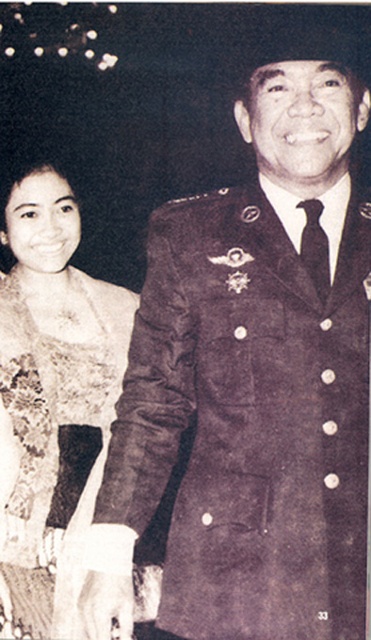
Megawati was born on January 23, 1947. The daughter of Sukarno and his first wife, Fatmawati. She was raised in the Presidential palace in Jakarta and enjoyed an upper-class life of privilege. As a child she liked to dance and perform before heads of state that visited here father. She was with her father when his convoy was the target of a grenade attack.
Megawati dropped out of two colleges: Padjadjaraan University in West Java, where she studied agriculture, and the University of Indonesia, where she studied psychology. In 1966, when her father was being driven from power, she was expelled from a university in Bandung and never returned. She was 19 at the time. The ouster of her father and violence and events afterwards reportedly had a deep impact on her.
Megawati was married three times. Her first husband, an air force lieutenant, died in a plane crash when she was pregnant with her second son. The plane went down in West Papua (New Guinea, Irian Jaya). His body was never found. her second marriage, to an Egyptian diplomat, was annulled two weeks after they eloped. Her current husband, Taufik Kiemas, is a well-connected businessman who owns a chain of gas stations and has served in parliament. She has three children from her first marriage.
Before entering politics Megawati was a housewife who spent most of her life within the political establishment. She lives in a comfortable garden house in a rich Jakarta suburb near the United States embassy. Her house has a tropical garden full of cooing doves. On the eve of becoming president she said, “It appears that I am considered to be a housewife, I saw to those people who belittle housewives: What’s wrong with that? It doesn’t mean a housewife doesn’t understand politics.”
See Separate Articles:
SUKARNO: HIS LIFE, CHARACTER AND IDEOLOGY factsanddetails.com
SUKARNO AS PRESIDENT: CHALLENGES, AUTHORITARIANISM, GUIDED DEMOCRACY factsanddetails.com
Megawati's Political Career
Megawati became a member of the Indonesian Democracy Party (PDI)—the traditionally nationalist and Christian-based and Suharto-sanctioned political party— and was elected as legislator in 1987. In 1993 she was chosen to lead the PDI. The position allowed her to run for president in 1998. In the 1992 election, the PDI won 15 percent of the popular vote, compared to 68 percent for Suharto's Golkar party but that was before Megawati was chosen as the leader. After 1992 then the PDI attracted more voters, including young people, a few military men and Indonesia's largest Muslim group (the 35 million member Nadhlatul Ulama).
Megawati addressed policy is broad, moralistic terms, leaving the details to her advisors. Not a radical like her father, she is regarded as conservative and has always operated within legal boundaries and has preferred consensus and compromise to confrontation and horse trading. In the 1990s she relatively little political experience, her intentions were vague and her ideology was unclear. She believed in the rule of law but had conservative views about foreign investment and economic reforms.
Megawati was loved by the Indonesian masses, based more on her ancestry that anything she did herself. She was especially popular among the poor who viewed her as a symbol of hope and a victim like themselves. Her supporters, the so-called "little guys", included laborers, shop owners, drivers and construction workers as well as students. Megawati's base was in eastern Java where Sukarno was still idolized. Many called her “Mother Mega.”
Megawati and Anti-Suharto Riots in 1996
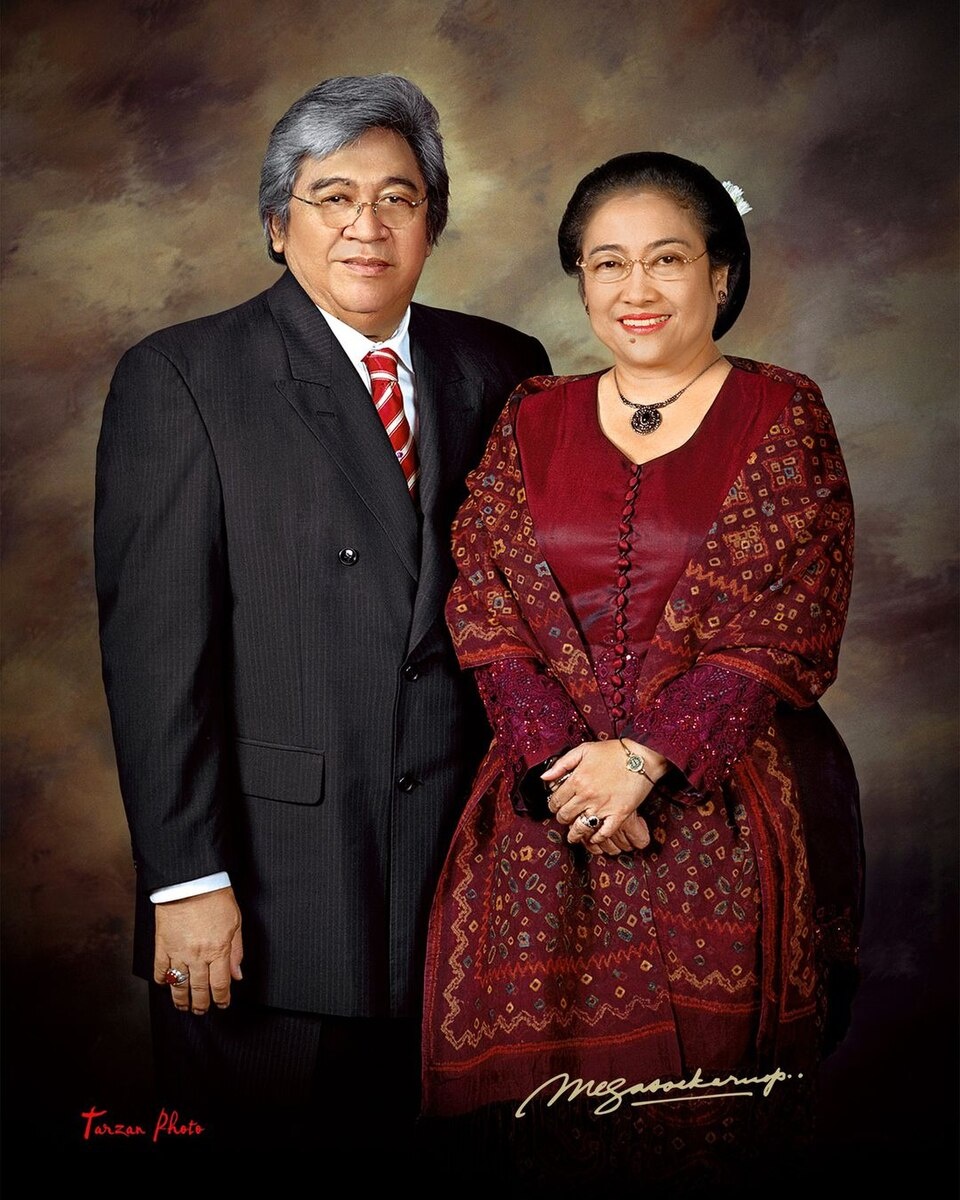
Megawati was a symbol of democracy during the final years of Suharto’s rule. After Suharto resigned her public support grew quickly. She formed the PDI-P (Democratic Party of Struggle). In the mid-1990s, Megawati became a powerful opposition figure, so much so that the Suharto government felt threatened and ousted her. In August 1996, she was stripped of her leadership in the Indonesian Democratic Party (PDI)— one of the two state-approved parties— and thugs ousted her supporters from the party headquarters. Afterwards large numbers of students and protestors took to the streets to protest the move and overnight Megawati became the rallying point of the democratic movement against Suharto and symbol of oppression for Indonesia's have nots. Five people were killed and more than a 100 were injure in the violence.
Describing the riots in Jakarta, Ron Moreau wrote in Time, "The first wave of attacks came from about 100 young thugs, bused in for the job by the Indonesian government. Early Saturday morning, they began hurling rocks at supporters of Megawati...Then members of a rival faction opposed to Megawati joined in, followed by the heavy assault team: hundred of riot police, and soldiers in green camouflage."
"Armed with rattan canes, wooden truncheons and electric cattle prods, they stormed PDI headquarters. After breaking through the iron gate, they set upon about 150 Megawati supporters inside the courtyard, beating them with sticks." When the tide began to turn in the favor of Megawati' supporters, "hundreds of army troops emerged from the side streets, and from behind the police lines. They moved into the crowd, flailing canes and sticks at anybody they could reach.”
The government banned meetings of Megawati's supporters and encouraged divisions within the PDI. Megawati's "illegal" branch of the PDI was allowed to hold a congress in Bali in November 1998.
Megawati Loses Chance to Become President After the June 1999 Election
Before and after the June 1999 elections Megawati was vague about her political beliefs and many Indonesians were disappointed she did little to push reforms. Even though she won a third of the vote and her party won only 153 seats in the 700-seat parliament. Even so Megawati was regarded as a shoo in for the presidency, Few gave Wahid any kind of chance. He placed forth in the election with only 11 percent of the vote and earlier said he wasn't even interested in the job. After the election, Megawati did not do what was expected of her to firm up her position as president. She didn't meet with her potential allies and gave the impression that politicking was below her. Instead of working to form a coalition she took a regal air and acted as though parties that joined her should considered themselves privileged.
In November 1999, Wahid became the president of Indonesia by outmaneuvering Megawati in voting in the People’s Consultative Assembly (MPR). Before the voting Megawati was the odds on favorite. Wahid originally said he would support Megawati but changed his mind at the last minute when he saw an opportunity to win. All Megawati had to do was engage in a little horse trading and assemble a coalition of parties. In what many regard as unexplainable political ineptitude, she refused to do this and expected the parties to come to her and hand her the presidency on a platter. That didn’t happen. After Habibie withdrew his candidacy most of his supporters, who didn't like Megawati, decided to back Wahid along with Muslim conservatives, Wahid defeated Megawati by a vote of 373 to 313, with 5 abstentions, and wahid became president.
One political analyst told the Washington Post, Megawati “lost it more than Gus Dur achieved it. She had it in front of her. If she had just taken the lead in trying to bring Amien Rais and Gus Dur with her, she would be president." The defeat was a humiliation for Megawati, who was named vice president by Wahid. Although she was enormously popular among Indonesians, she had little experience in tough and tumble politics and making policy. After Wahid was selected, Megawati supporters rioted in Bali and set fire to the Jakarta Convention Center.
Under Wahid, Megawati became vice president. She was put in charge of ending sectarian violence in the Moluccas but she failed to make much of an impact there. On New Years Day 2000, she was criticized for attending a big party in Hong Kong rather than dealing with problems in the Moluccas. She also left meetings after 15 minutes, went shopping during political crises, and failed to read briefing papers, preferring to watch animated movies or do gardening instead.
Megawati Becomes President
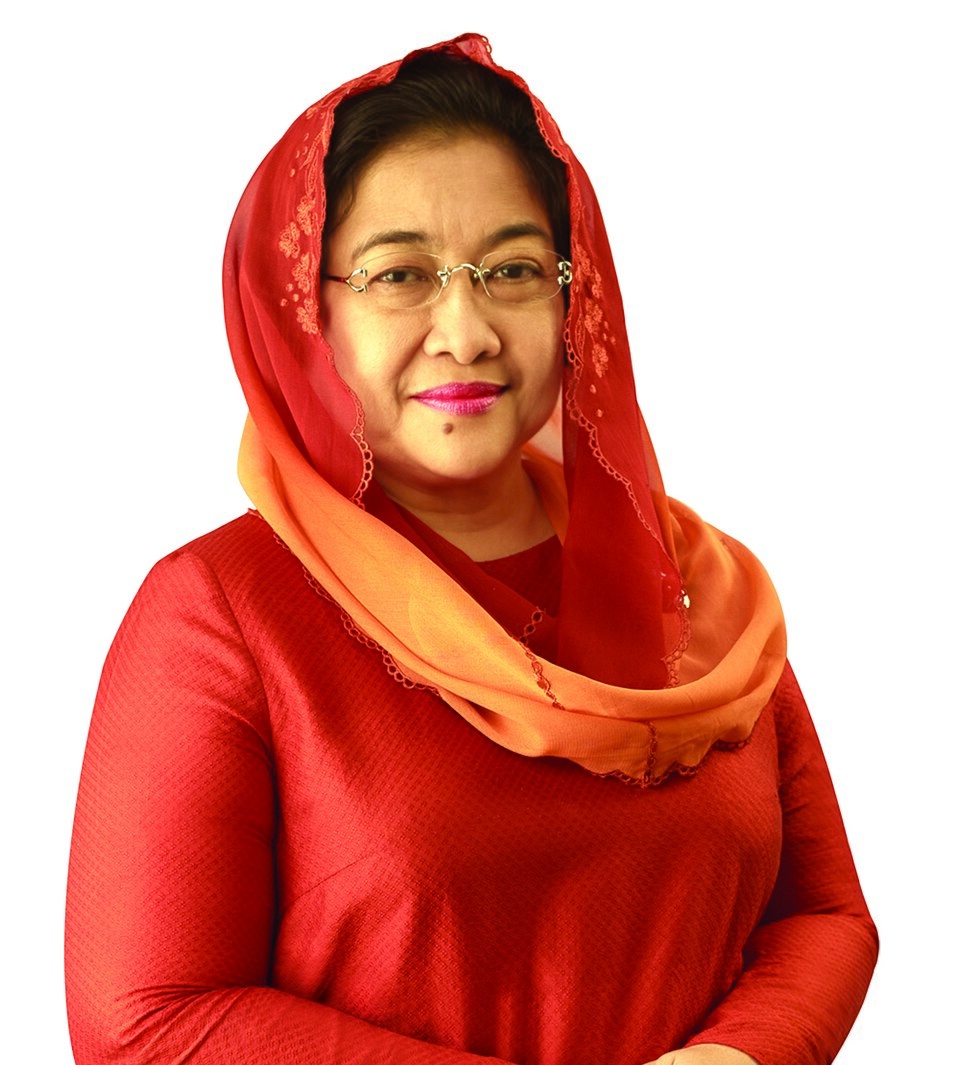
In July 2001, Megawati became president after Wahid was ousted. She was the vice president under Wahid and according to Indonesian Constitution the vice president replaces the president if he or she leaves office. She was sworn in minutes after Wahid was dismissed by the Indonesian parliament.
According to Lonely Planet: “With a unanimous vote in parliament, Megawati Sukarnoputri was sworn in as the fifth president on 23 July 2001. Although stability was restored at the presidential level, her strategy of not rocking the boat meant corruption, human rights abuses and abuse of military power remained widespread. This, along with the threat to security reflected in the Bali, Marriott, and embassy bombings, hindered the prospect of foreign support and investment. [Source: Lonely Planet]
After Wahid was ousted the generals promised to support Megawati because she promised to give them a free hand. She established a “rainbow Caberet” that included about every political party and interest group in parliament. Megawati chose Hamzah Haz, the head of the United Development Party, Indonesia’s largest Islamic party, as her vice president.
After Wahid was ousted, Seth Mydans wrote in The New York Times, “After three years of conflict and uncertainty under two weak and quirky presidents, it may be that the nature of a post-Suharto Indonesia will begin to take shape. The financial markets, for whom stability is the first commandment, were thrilled at the prospect of what they hoped would be a stolid, take-no-risks administration. The stock market leapt and the currency, the rupiah, soared in value. Civil libertarians shuddered, though. They had their chance under the outgoing president, Abdurrahman Wahid, whose tolerant philosophy they mostly shared. But he was a philosopher, not a leader or a manager, and in his hands the country became more fractious and tormented. Many Indonesians, seasick after his stormy tenure, are longing for firm land. "The pendulum is swinging to the center," said Juwono Sudarsono, a Cabinet minister in the last three governments. "There is a feeling among the public that there has to be a clear sense of direction and even firmness in handling problems of security." [Source: Seth Mydans The New York Times, July 25, 2001]
“It is possible that stability and reform can go hand in hand, said Donald K. Emmerson, an expert on Indonesia at Stanford University. As Wahid's presidency demonstrated, liberal reforms can make little headway in an atmosphere of conflict and uncertainty. "The hope for the Megawati administration would be to arrive at a proper balance between stability and change," Emmerson said. But like other political analysts, he said it was likely that human rights would suffer, at least in areas of the nation with separatist conflicts, such as the province of Aceh, as Megawati turns the military loose to crush unrest. "What you may get is a relatively stable regime maintaining procedural democracy at the expense of human life in Aceh," he said.”
Megawati as President
Megawati was credited with bringing some stability and calmness to restive Indonesia. But as president she was regarded as aloof and out of touch and was accused of not having the mental capacity to run the country. She was blamed for abandoning her promises to help the poor and not doing enough to combat unemployment and corruption and bring down prices of necessities like fuel, electricity and basic foods.
Megawati filled her cabinet with elite allies to consolidate her position. While her presidency represented an important symbolic milestone for Indonesian women, it proved largely ineffective in practice. Distant and aristocratic in style, she appeared disengaged from the daily struggles of ordinary Indonesians. As one political scientist observed, “The entire government, not just the presidency, appeared to be on auto-pilot.” [Source: “Culture and Customs of Indonesia” by Jill Forshee, Greenwood Press, 2006]
Megawati joined in the standing ovation given Malaysian Prime Minister Mathahir when he called on Muslims to consider Jews as their enemy” and said the French ban on headscarves was an examples of “injustices” by Western countries towards Muslims. Although she did not mention Iraq by name Megawati spoke out against war there but she said she would send Indonesian soldiers to Iraq as part of a Saudi Arabian force. Megawati expressed support for the US-led war on terrorism following the 11 September 2001 terrorist attacks, and she visited the United States the week after the event.
Megawati's Failures
Megawati’s cozy relationship with the military and her willingness to use force to keep Indonesia together was more reminiscent of Suharto than her father. She was blamed for not making the generals accountable for what they had done in the past and failing to make reforms for the future. Her credibility as corruption fighter and friend of the poor was undermined by her husband’s shady business ties with Suharto cronies and her failure to launch anti-poverty programs. Her economic teams was composed of some smart people with different philosophies and they never developed a coherent policy.
Political parties splintered, violence spread, infrastructure deteriorated, and promised reforms faded. Conflicts worsened in Aceh, Maluku, West Papua, and Sulawesi; crime increased nationwide; and vigilantism became common. Even Jakarta’s basic services faltered, with clogged drainage canals contributing to devastating floods. Only the military retained any semblance of cohesion. [Source: “Culture and Customs of Indonesia” by Jill Forshee, Greenwood Press, 2006]
Megawati’s aloof leadership-style angered many. When hundreds of thousands of migrants workers were expelled from Malaysia, did she visit the squalid camps they were forced to live in. No. She embarked on a two week trip to Africa and Europe. Megawati seemed especially tolerant of military corruption because she wanted the support of the military in effort to subdue separatist movements. Megawati’s approval rating dropped from around 70 percent in October 2001 to 30 percent in January 2003. In many ways it seemed like she accomplished more in the four months she was running for re-election than she did in the previous three years,
During Megawati’s presidency, the military became increasingly fragmented and underfunded, with some elements turning to organized crime, including drug trafficking and prostitution. Public disillusionment deepened. Although Megawati had campaigned as a “people’s candidate,” rice prices continued to rise, rural clinics closed for lack of funding, and regional conflicts persisted. As one woman from eastern Indonesia lamented, “Maybe under Suharto things were not good, but they were better than this. Now we have chaos and decay all around us.”
Islamism and Terrorism in the Early 2000s
One issue not directly addressed by the reformasi movement concerned the rise of Islamic politics and, increasingly since 1998, of the use of violence by extremist Muslims, some of them seeking to recreate Indonesia as an Islamic state. The best-known group was Jemaah Islamiyah (Congregation of Islam), one of whose founders appears to have been the Javanese cleric Abu Bakar Ba’asyir (born 1938), believed to have ties to Al Qaeda and other terrorist organizations.
Between 2000 and 2005, members of Jemaah Islamiyah were responsible for a number of bombings, the most infamous being the October 12, 2002, explosions in Bali, which killed 202 people and injured more than 300, including many foreign visitors. Attacks in Jakarta (2003, 2004, and 2009) and Bali (2005) killed 49 people and wounded 458, mostly Indonesians.
In part because of what was perceived as hype and hatred behind the American “global war on terrorism” after the September 11, 2001, attacks in the United States, and in part because of a reluctance to criticize fellow Muslims professing to act on behalf of their religion, most Indonesians initially refused to believe that Islamist terror had come to their nation or that it might be of any genuine political importance. Many subscribed to fantastic conspiracy theories to explain events, and some public figures, including Megawati’s vice president, Hamzah Haz (born 1940), attempted to make political use of such ideas. As a proliferation of Islamist parties jostled for position in the more open political arena, many worried that the new democratization might end up benefiting precisely those who, intolerant of religious diversity, sought to curtail it. *
Megawati did little to rein in Muslim extremism. Only after the Bali bombing did she start endorsing crackdowns on the Muslim extrmeists. She balanced this by speaking out against the poor treatment of Muslims abroad and the “double standard” applied by some unnamed countries towards Muslims.
Megawati’s Poor Showing in the 2004 Indonesian Election
Megawati ran for re-election in presidential elections in 2004. In general election in April 2004, Megawati’s Democratic Party of Struggle (PDI-P) came in second with 18.6 percent of the vote (down from 33.7 percent it won in 1999) and 109 seats (down from 153 in 1999). The Golkar Party, led by former president Suharto, won the most votes.
In July 2004, Gen. Susilo Bambang Yudhoyono won the presidential election with 33.6 percent of the vote, just shy of the majority he needed to claim outright victory. He was forced into runoff with Megawati, who was second with 26.6 percent of the vote. Gen. Wiranto of Suharto’s Golkar Party was third with 23 percent. Megawati did much better than expected. Wiranto did more poorly than expected. In September 2004, Yudhoyono won the runoff with Megawati He took 62 percent of the vote to Megawati’s 38 percent.
Before the election there was talk that Megawati wouldn’t even make the run off. Many Indonesians had grown disillusioned with President Megawati Sukarnoputri’s uninspiring record on corruption and her failure to revive a stagnant economy. Her electoral defeat marked a dramatic reversal for a leader who was not only the daughter of Indonesia’s first president, Sukarno, but also a symbol of the nation’s democratic hopes. At the same time, her loss represented an important milestone for democracy in Southeast Asia, where in recent decades only Thailand had seen a leader removed through the ballot box. [Source: Alan Sipress, Washington Post, July 5, 2004]
As the election approached, Megawati attempted to revive her faltering campaign by venturing into crowded markets and bus terminals, a sharp contrast to the aloof style that had defined much of her presidency. The effort faltered during a televised debate in which she appeared uncomfortable and poorly prepared. In Semarang, the provincial capital of Central Java, Agung Priyono, a 25-year-old security guard, recalled being a devoted supporter during the 1999 parliamentary campaign, wearing his party’s red colors and riding his motorcycle in mass rallies. “I was hoping Mega could bring about changes in Indonesia,” he said. By 2004, however, he had shifted his support to Susilo Bambang Yudhoyono, a former general who had resigned from Megawati’s cabinet earlier that year. “Megawati is a weak leader and doesn’t stand up for the little people,” Priyono said. “She has ignored our trust.”
In central Jakarta, Sunaryono, a 63-year-old retired navy officer, offered a more sympathetic view. He said his neighborhood had once overwhelmingly supported Megawati, but that he now stood almost alone, remaining loyal largely because of her lineage. Megawati, he argued, failed to communicate her accomplishments to the public and, as the incumbent, was blamed for problems beyond her control. Even so, Sunaryono acknowledged that Yudhoyono had become the clear favorite in his area.
Megawati’s “Ignorant and Spiteful” Goodbye
After losing the 2004 presidential election, Megawati Sukarnoputri initially refused to concede defeat and did not attend the inauguration of her successor, Susilo Bambang Yudhoyono. Her party argued that no regulation required an outgoing president to attend the swearing-in ceremony, but her behavior drew widespread criticism. Media outlets and political analysts portrayed her as aloof and a poor loser, suggesting voters rejected her because she failed to address Indonesia’s economic and social problems. [Source: VOA News, October 18, 2004; [Source: Paul Dillon, Al Jazeera, October 18, 2004]
Commentators noted that Megawati avoided meeting Yudhoyono during the transition period and made a series of controversial last-minute decisions, including approving generous lifelong benefits for herself, pushing legislation aimed at disadvantaging her successors, and making contentious military appointments. Editorials in major newspapers condemned her post-election conduct as damaging to her legacy, which might otherwise have been defined by political stability and a peaceful electoral transition. These actions complicated the incoming administration and reinforced public frustration with her leadership at the close of her term.
Paul Dillon of Al Jazeera wrote: “She rode into office on a wave of public adoration and high expectations, but as the sun sets on her troubled administration, Megawati is being publicly derided as "ignorant and spiteful". With just two days to go before Yudhoyono is sworn in as Indonesia's sixth president, the camera-shy Megawati has yet to concede defeat. She is refusing to meet with her successor and now appears unlikely to attend his swearing-in ceremony. More disturbing for many observers have been the costly and politically troublesome decisions and appointments she has made in the weeks before the official inauguration ceremony. “In a stinging editorial the normally restrained Jakarta Post newspaper said Indonesians were "dumbfounded" by Megawati's post-election behaviour, which it went on to describe as "ignorant and spiteful", and her recent appointments, "malodorous".
Image Sources: Wikimedia Commons
Text Sources: New York Times, Washington Post, Los Angeles Times, Lonely Planet Guides, Library of Congress, The Guardian, National Geographic, Smithsonian magazine, The New Yorker, Time, Reuters, AP, AFP, , Wikipedia, BBC, CNN, and various books and other publications.
Last updated December 2025