
JOKO WIDODO AS PRESIDENT
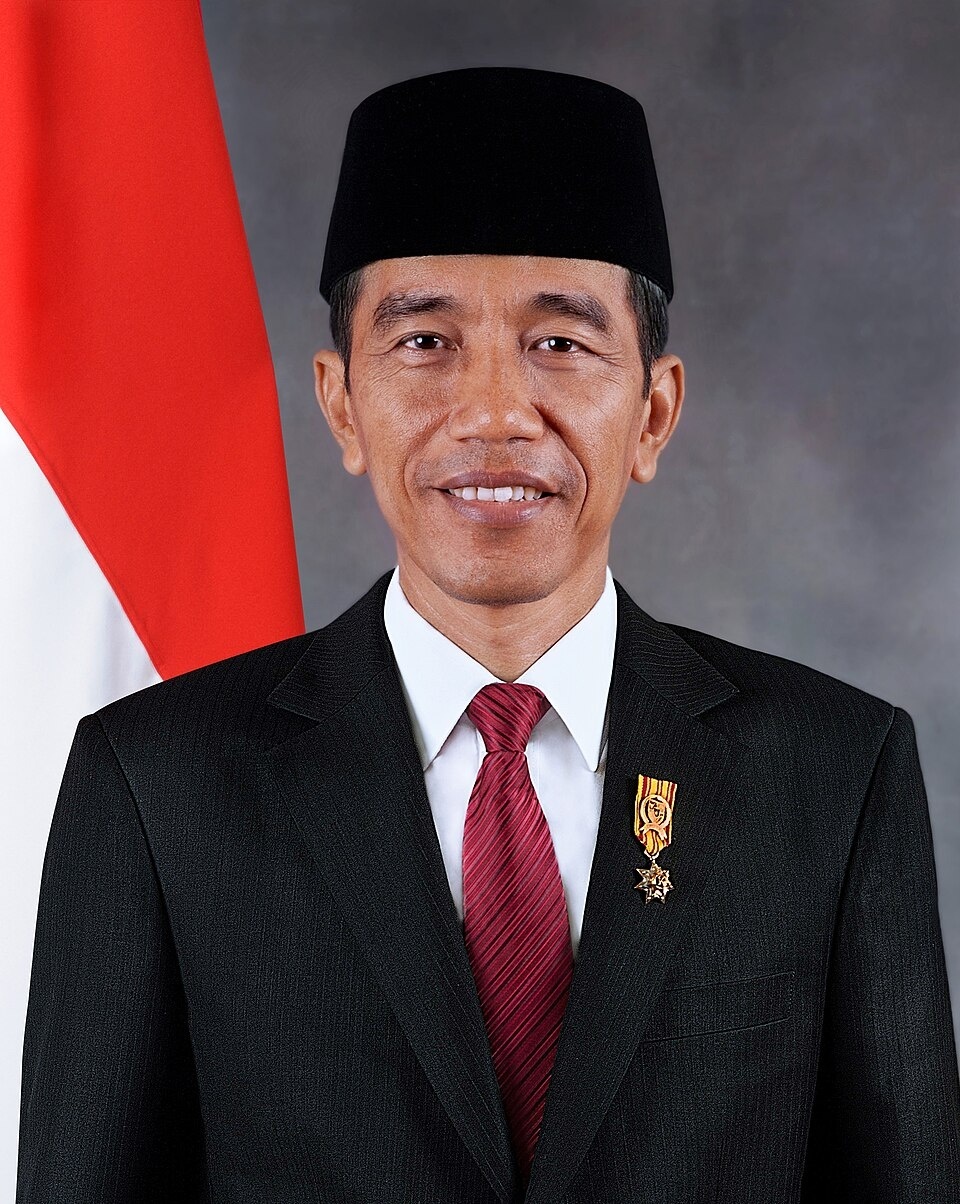
Joko Widodo (born 1961), widely known as Jokowi, is an Indonesian politician and former businessman who served as Indonesia’s seventh president from 2014 to 2024. A former member of the Indonesian Democratic Party of Struggle (PDI-P), he was the country’s first president to emerge from outside the traditional political and military elite. Before assuming the presidency, he served as mayor of Surakarta from 2005 to 2012 and as governor of Jakarta from 2012 to 2014. [Source: Wikipedia]
In 2014, Jokowi was nominated as PDI-P’s presidential candidate, selecting Jusuf Kalla as his running mate. He defeated former general Prabowo Subianto in a closely contested election and was inaugurated on 20 October 2014. As president, Jokowi prioritized infrastructure development, economic growth, and expanded health and education programs. His administration oversaw extensive nationwide infrastructure projects, earning him the nickname “Father of Indonesian Infrastructure.” In foreign policy, he emphasized national sovereignty, notably through the destruction of illegal foreign fishing vessels and the continued enforcement of capital punishment for drug traffickers, policies that drew diplomatic protests from several countries. Jokowi was re-elected in 2019, again defeating Prabowo.
According to Associated Press: Joko Widodo’s phenomenal rise from a riverside slum, where he grew up, to the presidency of Indonesia spotlighted how far the world’s third-largest democracy had veered from a brutal authoritarian era a decade ago. He was regarded by some as Asia’s Barack Obama. [Source: Niniek Karmini, Associated Press, February 11, 2024]
Jokowi left office with approval ratings of around 75 percent and a mixed legacy. Supporters credit him with transforming Indonesia’s infrastructure, maintaining steady economic growth, and expanding social welfare, as well as launching ambitious initiatives such as relocating the national capital to Nusantara and promoting the “Golden Indonesia 2045” vision. Critics, however, argue that his presidency was marked by democratic backsliding, weakened anti-corruption institutions, environmental degradation, and the rise of political dynasticism, particularly during his second term.
RELATED ARTICLES:
2014 ELECTION IN INDONESIA: ROCK STARS, RALLIES AND SMEAR CAMPAIGNS factsanddetails.com
JOKO WIDODO: HIS LIFE. CAREER, FAMILY, INTERESTS AND RISE TO POWER factsanddetails.com
2024 ELECTIONS IN INDONESIA factsanddetails.com
REFORMASI AND THE POST–SUHARTO ERA factsanddetails.com
MEGAWATI SUKARNOPURTI (PRESIDENT OF INDONESIA 2001-2004): LIFE, POLITICAL CAREER, FAILURES factsanddetails.com
SUHARTO: HIS LIFE, PERSONALITY AND RISE TO POWER factsanddetails.com
INDONESIA UNDER SUHARTO: NEW ORDER, DEVELOPMENT, FOREIGN POLICY factsanddetails.com
REPRESSION UNDER SUHARTO factsanddetails.com
VIOLENT CRACKDOWN ON COMMUNISTS IN INDONESIA IN 1965-66: KILLERS, VICTIMS, REASONS factsanddetails.com
CORRUPTION AND FAMILY WEALTH UNDER SUHARTO factsanddetails.com
OUSTER OF SUHARTO IN 1998: PRESSURES, EVENTS, RESIGNATION factsanddetails.com
INDONESIAN ELECTIONS IN 2004 AND 2009 factsanddetails.com
SUSILO BAMBANG YUDHOYONO (PRESIDENT OF INDONESIA 2004-2014): LIFE, CAREER, INTERESTS factsanddetails.com
INDONESIA UNDER YUDHOYONO (2004-2014) factsanddetails.com
Joko Widodo’s Appeal
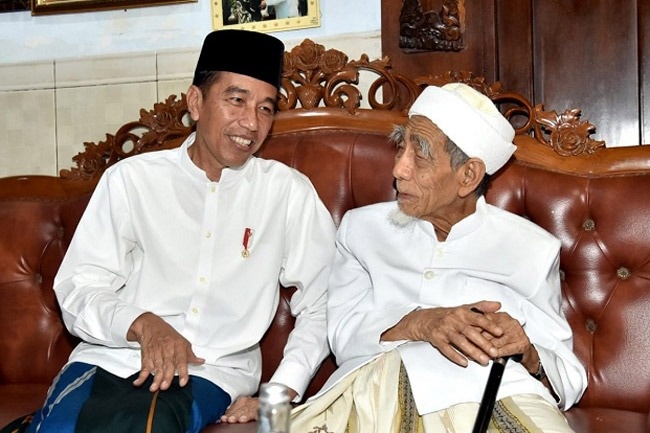
Joko Widodo was well-known for his charisma and fondness for the heavy metal band Metallica. Tom Pepinsky wrote in the Washington Post in 2014: “Part of what makes Jokowi so exciting to many Indonesians is his political story: even though he is the governor of Jakarta, he came to this position relatively” shortly before becoming president,” having made his political career as mayor of Solo, a smaller city in Central Java. Before that he was a local businessman. As mayor, Jokowi was widely credited for overseeing a range of local governance reforms in Solo, resisting corruption and streamlining the local business environment without alienating the masses (he won reelection with 90 percent of the vote in 2010). His folksy demeanor charms many Indonesians and foreigners alike, and he can be credibly portrayed as a relative outsider to national politics. [Source:Tom Pepinsky, Washington Post, March 17 2014]
According to The Economist: Many were drawn to Jokowi’s plainspoken, service-oriented image, which resonated not only with young Indonesians but also with the growing middle class and the poor, among whom roughly 40 percent of the population still lived in or near extreme poverty. A former furniture manufacturer, Jokowi had in little more than a year as Jakarta governor transformed his unpretentious “I am here to serve you” approach into a powerful political brand, offering a sharp contrast to Indonesia’s long-dominant authoritarian elites. Yet those old forces remained influential. Both PDI-P and the pro-business Golkar Party, expected to dominate the parliamentary elections, continued to draw heavily on the legacies of their autocratic founders. [Source: The Economist, March 22, 2014]
“Jokowi’s style in Jakarta, as it was in his previous job as mayor of the central Javanese city of Solo, has been to take a hands-on approach to fixing the problems that blight ordinary people’s lives: seasonal flooding, poor housing and traffic jams, for example. Above all, Jokowi makes a point of moving among the people and listening to their concerns. Not so much charismatic as practical, his approach is as different as could be from the usual aloofness shown by Indonesian leaders. As president, however, Jokowi could hardly govern Indonesia the same way.
“It is clear he owes at least part of his success in Jakarta to his hard-working deputy, Basuki Tjahaja Purnama, known as Ahok. Extraordinarily for such a prominent Indonesian, Ahok is both ethnic Chinese and a Christian. Now, finding the right person to work alongside Jokowi as vice-president will be critical. With the election itself seemingly in the bag, this has become a chief focus of the PDI-P. An obvious choice would be to balance Jokowi’s relative youth and inexperience by picking a seasoned politician, or even a former or active general, from somewhere other than Java, the political and cultural heartland.
Joko Widodo, Wins the 2014 Presidential Elections
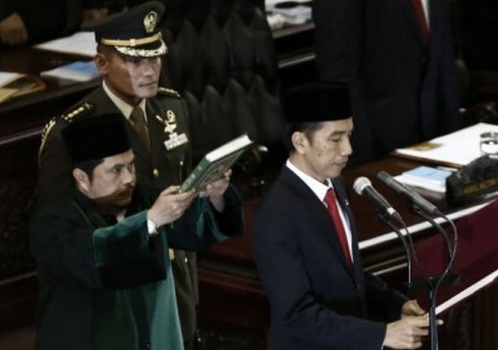
The outlook for the 2014 presidential election shifted shifted dramatically when the Indonesian Democratic Party of Struggle (PDI-P) nominated then Jakarta governor, Joko Widodo, as its candidate. His nomination significantly boosted the party’s prospects. Opinion polls at the time showed the presidency was Widodo’s to lose, with more traditional figures such as former general Prabowo Subianto and tycoon Aburizal Bakrie trailing well behind. The enthusiasm surrounding Widodo was reflected in a sharp rise in market confidence, with Jakarta share prices jumping more than 3 percent following the announcement. Analysts attributed the optimism to expectations that Jokowi would bring decisive and clean leadership. As one market strategist observed, investors believed Indonesia might finally gain a president willing to take difficult decisions, with a strong reputation for integrity and the promise of a smooth transfer of power. At the end of the campaign Widodo was fighting to hold on to his slim lead in the polls, down from a substantial margin several before months. On the eve of the election pollsters said the race was too close to call .[Source: Jonathan Thatcher, Reuters, March 15, 2014]
When it was announced that Joko Widodo was going to run The Economist reported: “It was what many Indonesians had waited months to hear. On March 14th Megawati Sukarnoputri, a former president and head of Indonesia’s main opposition party, the Indonesian Democratic Party of Struggle (PDI-P), at last anointed Jakarta’s popular governor, Joko Widodo, as her candidate for president...Perhaps the only surprise is that it took Ms Megawati so long to anoint Jokowi....For all the Javanese deference Jokowi has bestowed on her, she may instinctively have regarded him as a usurping upstart, thwarting yet another tilt at the presidency. Or perhaps he was the chosen one all along and delaying the announcement of his candidacy was just tactical. As Jakarta’s governor, he has never had to answer hard questions about foreign policy, the economy or other big national issues. [Source: The Economist, March 22, 2014]
Widodo was seen as a break from the era of dictator Suharto. He won praise for his common touch and for being a clean leader in a country plagued by corruption. In contrast, Prabowo was a top military figure during the Suharto era who admitted to ordering the abduction of democracy activists. However, he has won over many voters by pledging to be a strong leader.
Joko Widodo ran as an anti-corruption reformer and defeated Prabowo in the July 2014 presidential election with 53 percent of the vote, despite leading a smaller parliamentary coalition. Widodo’s victory underscored the growing appeal of reformist leadership in Indonesia, even as the country continued to face persistent challenges from corruption and periodic attacks by Islamic extremist groups.
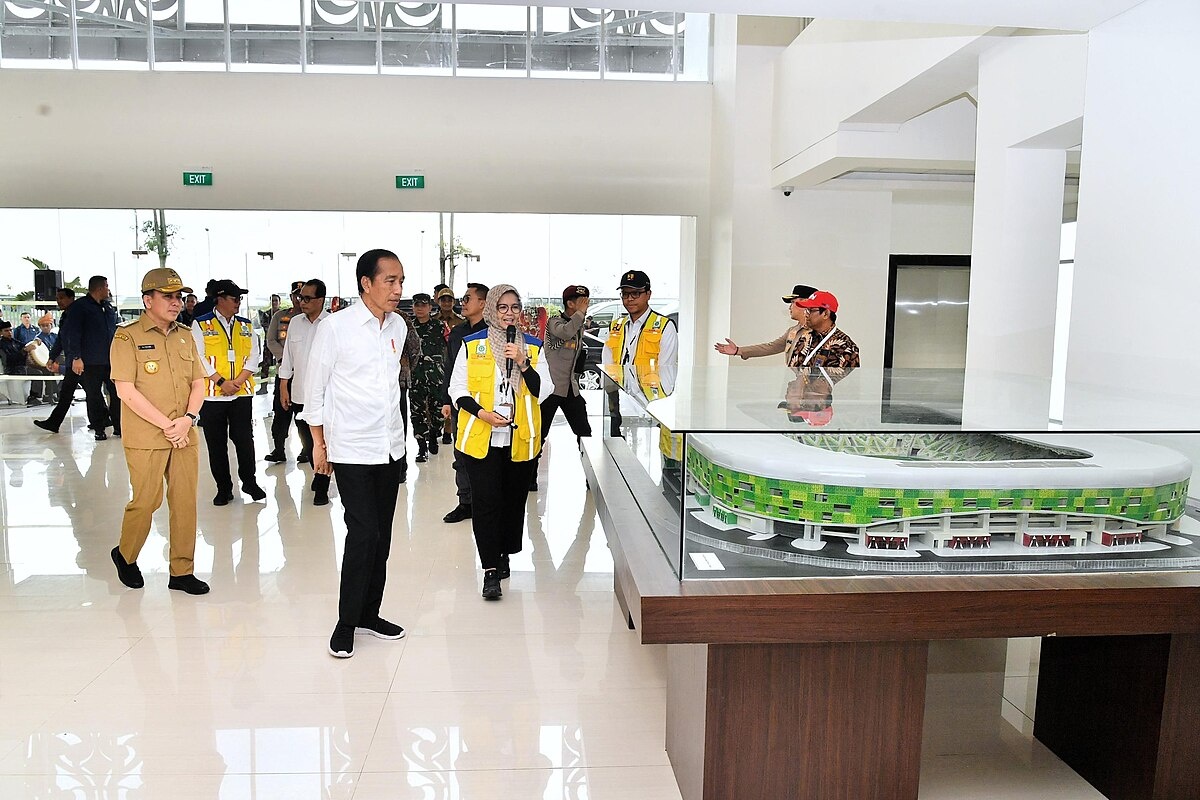
Tom Pepinsky wrote in the Washington Post:“Jokowi’s supporters are on the whole more likely to be rural and less educated than Prabowo’s supporters, and also were more likely to be employed in lower skill occupations (farmers, fishermen, workers) or to be women working at home. This probably reflects urban middle class frustrations with Indonesia’s rampant corruption, and the belief that only Prabowo’s decisive leadership can bring it under control. Muslims are roughly divided between Jokowi and Prabowo, with a slight edge to Prabowo, but non-Muslims massively favor Jokowi, by a roughly 4-to-1 margin. [Source: Tom Pepinsky, Washington Post, July 18, 2014]
2014 Indonesia Presidential Election Result
Candidate — Joko Widodo — Prabowo Subianto
Party — PDI-P — Gerindra
Alliance — Great Indonesia — Red-White
Running mate — Jusuf Kalla — Hatta Rajasa
Popular vote — 70,997,833 — 62,576,444
Percentage — 53.15 percent — 46.85 percent
Registered voters— 193,944,150 (Increase 9.97 percent)
Turnout — 69.58 percent (Decrease 2.99pp) [Source: Wikipedia]
See Separate Article: 2014 ELECTION IN INDONESIA factsanddetails.com
Joko Widodo’s Style and Growth as President
Widodo, who was 52 when he was elected president, was the first Indonesian president to emerge outside the political and military elite, After the 2014 election Joe Cochrane wrote in the New York Times: A thin, unassuming figure with what he has described as a typical “village face,” Joko Widodo is Indonesia’s seventh president and the first not to have emerged from the country’s political elite or to have been an army general. Sitting barefoot inside a small rented house in central Jakarta, he said in an interview that Indonesia’s continuing democratic transition had broken the grip of the entrenched political elite on the government. Of crucial importance to this, he said, was the introduction of direct elections from president all the way down to town mayor a decade ago, as part of a national decentralization policy that replaced Suharto’s centralized system of governance. [Source: Joe Cochrane, New York Times, July 22, 2014]
Niniek Karmini of Associated Press wrote: Dismissed as a political lightweight by rivals when he first won the presidency in 2014, Widodo built a reputation as a soft-spoken reformer who promised to fight poverty and inequalities by exploiting Indonesia’s abundant resources and tourism draw to propel its economy, the largest in Southeast Asia." Political compromises were a hallmark of his leadership. "Forging political compromises in the world’s largest archipelago nation with deep religious, ethnic and economic divides has been a constant struggle in Indonesia. [Source: Niniek Karmini, Associated Press, February 11, 2024]
Widodo nurtured an image of an Indonesian everyman with a soft spot for the underclass and down-to-earth lifestyle that resonated with a wide base of ordinary voters. He often mingled with working-class crowds in cheap sneakers and rolled-up sleeves to check on their concerns. He took selfies with hordes of journalists and is one of the biggest fans of Metallica, the American heavy metal band whose concerts in the Indonesian capital he watched when he was the Jakarta governor.
Widodo enjoyed consistently high approval ratings of over 70 percent in recent months, an impressive feat in the final years of a decadelong presidency. It also makes him a powerful election endorser, a kingmaker, despite legal restrictions against the practice. Opponents have accused him of covertly using his clout to back his son and Subianto to create a new political dynasty. He has laughed off the accusations and called on Indonesians to help the next leaders press on with reforms to foster economic growth.
Joko Widodo's Shaky First Year as President
Joko Widodo won early praise for a strong start to his presidency, particularly for bold economic reforms and decisive leadership. He quickly cut costly fuel subsidies—raising prices and later scrapping petrol subsidies entirely—to free up $20 billion in funds for infrastructure, a move widely credited with improving fiscal space and investor confidence. He was also commended for his handling of the AirAsia crash and for reasserting control over an initially hostile parliament, which reversed a move to end direct local elections. [Source: AFP, 25 January 2015]
Despite these achievements, Widodo’s image as a reformer and champion of clean governance was dented by controversies. He has appointed ministers and advisors dogged by allegations of human rights abuses. His nomination of a police chief later named a corruption suspect undermined his anti-graft pledges. Critics also argued that old-style political bargaining persisted, with perceptions that party leader Megawati Sukarnoputri wielded behind-the-scenes influence over cabinet appointments. Widodo provoked international criticism by vowing to execute convicted drug traffickers, including several foreigners. “"We want to send a strong message to drug smugglers that Indonesia is firm and serious in tackling the drug problem, and one of the consequences is execution if the court sentences them to death," Joko told Al Jazeera,
Widodo’s first year was marked by other policy missteps, rushed decisions later reversed, questionable appointments, and slowing economic growth, prompting criticism of weak leadership and muddled governance. Critics said early missteps by Joko, who previously served as mayor of his hometown, Solo, and governor of the Jakarta region, have exposed his inexperience at the national level and a vulnerability to entrenched political elites, Widodo’s humble background and outsider image initially proved to be political liabilities, leaving him weak in Jakarta and vulnerable to pressure from party leaders and coalition partners. His early agenda was dominated by populist but controversial measures such sinking illegal foreign fishing vessels, disappointing supporters who had hoped for a more progressive presidency. [Source: Jon Emont, Time August 31, 2016; BBC , September 28 2015] .
Widodo drew on figures from previous administrations and executives from state-owned enterprises when forming his new cabinet, appointing Bambang Brodjonegoro as finance minister. Brodjonegoro, who had served as deputy finance minister under the previous government, joined Coordinating Economic Affairs Minister Sofyan Djalil, a former state-owned enterprises minister, in leading economic policy in Southeast Asia’s largest economy. Eight os his initial selections for the 34-member cabinetwere rejected by the Corruption Eradication Commission (KPK). [Source: Ben Bland, Financial Times, October 23, 2014]
Joko Widodo on Firmer Footing His Second Year
Widodo’s second year in office marked a clear recovery from a troubled start. He became more politically confident, reshuffled his cabinet, advanced long-delayed reforms such as cutting fuel subsidies, expanded infrastructure spending, introduced stimulus measures, and took firmer action on forest fires and haze. Despite controversy over executions and policing appointments, he remained personally seen as clean and retained strong public support. [Source: John Chalmers, Reuters, Aug 31, 2016]
By late in his second year, Jokowi appeared politically stronger than ever, buoyed by rising approval ratings, improving economic conditions, and the backing of a broad parliamentary coalition. Rather than pushing bold reform, however, he consolidated power through pragmatic alliance-building and cabinet dealmaking, prioritizing political survival and stability over sweeping change. Analysts noted that instead of reshaping Indonesia’s political system as promised, Jokowi learned to master it—resulting in cautious, incremental reform, inconsistent economic direction, and compromises on issues such as corruption and human rights, even as his control over government steadily increased.
Jokowi took office at an especially difficult moment. Indonesia’s economy was weakened by falling demand for natural resources, ISIS-inspired extremism was spreading globally, and annual forest fires highlighted the state’s limited capacity to protect its environment. Politically, he faced stiff resistance from Prabowo Subianto, the former general he had defeated, who threatened to rally an opposition coalition against him. Lacking a strong base in parliament, Jokowi was forced to rely on oligarchs within his own coalition, many of whom treated the political outsider with thinly veiled disdain. His first year in power was marked by a series of largely avoidable crises. [Source: Jonathan Emont, Time, Oct 20, 2016]
As Jokowi learned the mechanics of Indonesia’s patronage-driven politics, he exploited rivalries within the opposition and drew key parties into government with the promise of cabinet posts. Two years after his election, he presided over a broad governing coalition and enjoyed solid approval ratings. Once awkward in public communication, he had become a media-savvy figure, even sharing lighthearted videos online. His appointment of Tito Karnavian, former head of the national counterterrorism agency, as police chief signaled growing independence from entrenched elites. He also rolled out 12 economic reform packages aimed at cutting red tape and attracting investment.
Still, critics question whether these incremental reforms are enough. Economic growth remained below expectations, unemployment was rising, and intolerance—especially toward LGBT Indonesians—was intensifying, tarnishing the country’s image as a tolerant Muslim-majority democracy. Analysts increasingly portray Jokowi as a pragmatist or “tinkerer,” rather than a visionary leader willing to confront structural problems. His lack of a clear strategy to protect minorities, and his revival of the death penalty for drug offenses, have further damaged Indonesia’s human-rights record.
Economically, Jokowi fell short of his campaign promise of 7 percent growth. By early 2016, growth was under 5 percent, hurt by the Chinese slowdown and the slow rollout of infrastructure spending. Foreign investment rose only modestly, and efforts to simplify investment procedures through a “one-stop shop” disappointed. While a tax amnesty generated a short-term fiscal windfall, its long-term impact on compliance and investment remained uncertain.
On social issues, Jokowi spoke consistently against intolerance and promoted “Islam Nusantara” as a moderate tradition. Yet reports of Islamist violence increased during his first full year, and protections for minorities were uneven. While his government intervened in some sectarian conflicts, it largely failed to defend LGBT Indonesians, as ministers echoed hostile rhetoric and lawmakers pushed to criminalize same-sex relations. Rights groups warned that Jokowi’s transactional politics risked sacrificing human rights.
Environmental policy posed another severe test. The catastrophic forest fires of 2015 burned millions of hectares, caused widespread illness, and blanketed Southeast Asia in haze. Jokowi responded by warning local officials they would be punished for fires in their jurisdictions, improving enforcement in some areas. Still, recurring blazes raised doubts about whether reforms would be sufficient.
Rock Stars, Drug Dealers and Joko Widodo
Jon Emont wrote in Time: The mood was tense in this capital city on July 6, 2014, the last day of the presidential campaign. Indonesian progressives, in particular, were frantic. For months their preferred candidate, Widodo, had been leading in the polls. But with campaigning winding down, polls showed Prabowo Subianto, his right-wing mega-rich opponent, pulling even.[Source: Jon Emont, August 31, 2016]
“Enter Abdee Slank, the long-haired guitarist of Slank, Indonesia's biggest rock band. The musician feared Prabowo was about to become president and knew other prominent artists had similar concerns. There was Ian Antono, the legendary guitarist, who had donated his guitars to the Jokowi campaign. Glenn Fredly, the R&B sensation from far-Eastern Ambon, who was inspired by Jokowi's pledge to develop neglected parts of the country. Mohammed Marzuki, a rap artist from central Java who released a powerful rap video in support of Jokowi.
“Led by Abdee, Indonesia's biggest stars staged a concert with an estimated 100,000 people in Jakarta's biggest stadium to mark the end of the campaign. The concert was so successful that all of the major television stations, even the ones whose owners supported Prabowo, covered it. "It was really crazy, I've never performed in front of that large of a crowd," says Pandji Pragiwaksono, a rapper and stand-up comedian.
“Two years later, Indonesia's artistic community still looks at Jokowi with favor, albeit no longer through rose-colored glasses. Artists acknowledge Jokowi has made his share of mistakes, but he remains the best option for a country beset with widespread poverty, corruption within its government and business circles and a very recent authoritarian past. "I still support Jokowi," says Mohammed Marzuki, the rap artist who had released a popular video in support of the president, adding that whatever his flaws, Jokowi was not returning his country to the old dictatorship.
“According to Fredly, when the nearly 200 artists met for rehearsal they had a joke. "If all of us gathered together like this during the Suharto years, we'd be immediately disappeared." It was a joke, but it wasn't funny, because they feared that if Suharto's son-in-law would became president, Indonesia's hard-won democratic freedoms would disappear. Slank headlined with their pro-Jokowi anthem before the candidate took the stage. "I think the concert really ignited the hope in politics, the idea is that we finally have someone on the inside to root for," says Pragiwaksono.
“Jokowi cruised to a decisive seven percentage-point victory. Artists and celebrities who participated in the concert are reluctant to claim credit, but there is little question among academics that their massive and unprecedented concert for Jokowi played a role in swinging the election his way. Fredly, the R&B singer, says he was proud of the result. "The Indonesian people are so much more advanced than before. They want open leadership."
Two years into his tenure, celebrities are critical of decisions Jokowi has made, but none regret their decision to support the candidate. "He's still making mistakes, and I think he's still going to make more mistakes, but I think he's learning so there is still hope," says Pragiwaksono, the musician and comedian.
“Abdee Slank, the musician who planned the concert and remains a close friend of Jokowi, is frustrated the president did not do more to defend the anti-corruption commission when angry police officers began arresting its members. "Whoever is against the anti-corruption commission will face the people." Slank scheduled a concert earlier this year outside of the Commission's office to protest legislation designed to defang the Commission, which Jokowi has vacillated over. Abdee insists that Jokowi is a force for good in Indonesian politics. "If we think that all problems will disappear with Jokowi, that's very silly...He has a baby-step approach to getting things done. There is a lot of politics between the president and his parties." But the artists also say they may change their minds about Jokowi. Marzuki says he has written a song that translates roughly to, "Pulling the President by his ear" — in other words, to discipline him like a child and yank him in another direction. Marzuki says he doubts he'll ever have to release the song.
In July 2017, Widodo ordered law enforcement officers to shoot drug traffickers in an effort to address the country's narcotics emergency. "Be firm, especially with foreign drug dealers who enter the country and resist arrest. Shoot them because we are indeed in a state of emergency now,” he said in a speech. His remarks drew comparisons to those of Philippine President Rodrigo Duterte, who launched a brutal anti-drug crackdown about a year ago that resulted in the deaths of many alleged drug dealers. Indonesia also has strict anti-drug laws. Widodo has previously been criticized for ordering the execution of convicted drug traffickers who were sentenced to death by a court. Widodo's 2017 order to shoot came a week after Indonesian police shot and killed a Taiwanese man in a town near the capital, Jakarta. Police said the man was killed for resisting arrest while trying to smuggle one ton of crystal methamphetamine into the country. Following the incident, Indonesian National Police Chief Tito Karnavian told the media that he had ordered officers not to hesitate to shoot drug dealers who resist arrest. [Source: Reuters, July 22, 2017]
Widodo Re-Elected as President in 2019
Joko Widodo has secured a second term as Indonesia’s president, defeating former general Prabowo Subianto in elections held in April 2019. The result was announced a month later, a day earlier than scheduled, amid fears of unrest, with about 32,000 security personnel deployed across Jakarta. Widodo won 55.5 percent of the vote to Prabowo’s 44.5 percent, according to the election commission. Prabowo rejected the outcome, alleging widespread fraud and vowing to pursue legal challenges, though he urged his supporters to remain calm. As in 2014, when he unsuccessfully contested his defeat in the constitutional court, his campaign team refused to endorse the official results. [Source: BBC, May 21, 2019]
The campaign was bitter and highly polarized, with religion playing a prominent role, though independent observers said the vote was free and fair. More than 192 million Indonesians were eligible to vote in the April 17 election, which also chose around 20,000 national and local lawmakers. Authorities tightened security around the election commission and appealed for calm. Police reported arresting dozens of suspected Islamic State-linked militants accused of plotting attacks around the announcement of the results, and the U.S. embassy issued a travel warning advising citizens to avoid political gatherings. Economic management, infrastructure development, and corruption dominated the campaign, alongside religious issues. While Indonesia is a Muslim-majority country, it has no official state religion. Widodo, a religious moderate, selected senior cleric Ma’ruf Amin as his running mate, while Prabowo courted conservative Muslim groups and pledged greater support for religious schools.
According to the New York Times: “Mr. Joko’s re-election to a second and final term as president of the world’s fourth most populous nation is a powerful counterweight to the democratic weakening and strongman politics that have recently dominated the global electoral landscape.” In his inaguration speech, Widodo laid out ambitious targets to help Indonesia join the ranks of the world's developed nations by the time it marks a century of independence in 2045. “For the continued existence of our country,” he said, “we have to rely on Indonesia’s culture, which is diverse and tolerant. [Source: Hannah Beech and Muktita Suhartono, New York Times, May 21, 2019]
“I’m president of all of Indonesia, and democracy protects pluralism,” Mr. Joko told The New York Times in an interview. “My government is about harmony and opposing extremism...Islam and democracy are compatible,” Mr. Joko said. “But let others come and see with their own eyes. I cannot tell them.” Instead, he began listing the finer points of cutting red tape to acquire business permits. Focusing on a lagging infrastructure that has hobbled the nation’s economic growth, he spent nearly 10 minutes talking about the more than 1,100 miles of new roads built during his first five-year term. “Transportation maybe is not sexy,” he said. “But if we don’t have good infrastructure, we cannot be a developed country. We are behind in building roads and airports.”
Widodo Names Rival Prabowo as Defense Minister After Student Protests
In 2019, after being inaguarted for his second term, President Joko Widodo named his former election rival, ex-general Prabowo Subianto, as defense minister in his new cabinet, a move aimed at promoting post-election unity but criticized by human rights groups. The cabinet blends political allies from Widodo’s governing coalition with technocrats and business figures to address slowing economic growth.
Widodo pledged tougher action against corruption and warned ministers they would be dismissed if they failed to perform. Prabowo, who lost two presidential elections to Widodo and has been linked to human rights abuses during the Suharto era, had initially rejected the election results before reconciling with the president. His appointment drew sharp criticism from rights activists, who saw it as a setback for accountability.
[Source: Niniek Karmini, Associated Press, October 23, 2019]
Prabowo’s appointment came after Indonesia’s largest student protests in decades challenged Widodo’s ability to push through ambitious economic reforms in his second term. Tens of thousands of students have protested laws seen as weakening the anti-corruption commission, proposed changes to the criminal code, and other controversial measures, forcing Widodo to delay or reconsider key legislation. [Source: Gayatri Suroyo and Maikel Jefriando, Reuters, October 1, 2019]
Analysts and former officials warn the unrest is eroding the political capital Widodo needs to advance structural reforms such as labor-law changes, subsidy cuts, and efforts to attract foreign investment. The protests, along with tensions in Papua, deadly clashes involving students, and severe forest fires, have further complicated his agenda as economic growth slows and foreign direct investment declines.
Widodo also appointed 35-year-old Nadiem Makarim, Internet tycoon and co-founder of ride-hailing giant Gojek, to his new cabinet, underscoring the growing importance of Indonesia’s digital economy. Makarim resigned as Gojek’s CEO to take up the role, leaving day-to-day leadership to the company’s co-CEOs as it continues competing with regional rival Grab. The move aligns with Widodo’s aim to bring professionals and younger leaders into his second-term cabinet and reflects confidence in Gojek’s management depth. Founded in 2010, Gojek has grown into a $10 billion “unicorn” with millions of drivers and merchants, major international investors, and a central role in Indonesia’s booming internet sector. Makarim said his cabinet role was a continuation of his mission to showcase Indonesia globally, now on a larger, national scale. [Source: Yoolim Lee and Viriya Singgih, Bloomberg Mon, October 21, 2019]
Joko Widodo’s Achievements
Widodo left behind a a legacy of impressive economic growth and an ambitious array of infrastructure projects capped by a $33 billion plan to relocate Indonesia’s congested capital to Borneo. According to Associated Press: Widodo's flagship projects centered on linking the nation of more than 17,000 islands with bridges, a high-speed train, toll roads, ports and airports. [Source: Niniek Karmini, Associated Press, February 11, 2024]
Under Widodo, Indonesia saw a period of remarkable growth averaging 5 percent annually, except in 2020, when the economy contracted due to the coronavirus pandemic. His economic roadmap, called “Golden Indonesia 2045,” projects Indonesia becoming one of the world’s top five economies with GDP of up to $9 trillion, exactly a century after it won independence from Dutch colonizers. That could be achieved if future leaders would muster the courage to make “difficult and unpopular decisions” and gain the support of different sectors, Widodo said in his speech last year. He warned that squandering the opportunity could bring Indonesia back to instability.
Aiming to generate more revenues and job opportunities, Widodo banned the export of selected raw materials like nickel ore and encouraged their local processing to get better prices in foreign markets. In a bid to lure investors and tourists and spur growth and employment beyond traffic-choked and overcrowded destinations like Jakarta, he launched one of the most ambitious and controversial projects of his presidency: relocating the capital about 2,000 kilometers (1,240 miles) away to Borneo, a vast region of lush tropical rainforests where orangutans roam. In mid-2022, despite warnings from environmental activists of massive deforestation and protests by Indigenous communities, construction of the new capital began. It is envisioned as a futuristic green city about twice the size of New York. A grand inauguration is planned on August 17 coinciding with Indonesia’s Independence Day, but authorities say the final stages of the city won’t likely be completed until 2045.
According to the New York Times in 2019: “In a Muslim-dominated society, Mr. Joko called for greater female participation in the work force. Eight of his 34 ministers are women, and they handle important portfolios like the foreign and finance ministries. “It’s very important for our economy to empower women,” Mr. Joko said. Walking through a food market on the tourist island of Bali, Mr. Joko noted that more than 90 percent of the stall owners were female. He talked up microfinancing initiatives for women.“The market was spotless. Hillocks of guavas, avocados and hairy rambutan fruit were perfectly placed. A few years ago, the space was filthy, slick with fish guts and rotting produce underfoot, stall owners said. This year, Bali banned the use of single-use plastics, like plastic bags and straws, to tackle the tsunami of waste washing up on Indonesia’s once pristine beaches. The country is the second-largest producer of plastic waste in the world. [Source: Hannah Beech and Muktita Suhartono, New York Times, May 21, 2019]
Largely focused on domestic issues, the Bahasa-speaking Widodo also played a role on the world stage, where he often spoke through an interpreter and at times appeared uncomfortable with formalities and protocol. In 2022, he became the first Asian leader to visit Ukrainian President Volodymyr Zelenskyy in Kyiv and later Russian leader Vladimir Putin in Moscow to help encourage the two enemies to start a dialogue. Later in 2022, he hosted a summit of the G20 leading rich and developing nations. In a delicate balancing act, he met President Joe Biden in the White House for talks on boosting defense cooperation after meeting Chinese President Xi Jingping in China to expand trade and investment. In security policy, Jokowi pledged to make Indonesia a “global maritime fulcrum” and gained attention by destroying foreign fishing vessels caught illegally. But tensions with China near the Natuna Islands exposed the limits of symbolic toughness and forced a delicate balancing act. Meanwhile, terrorism resurfaced, with ISIS-linked attacks and fears of returning fighters. Experts criticized Jokowi for lacking a coherent counterterrorism strategy and relying too heavily on policing rather than prevention. [Source: Jonathan Emont, Time, Oct 20, 2016]
Criticism of Joko Widodo
According to Associated Press: Critics say Widodo thrived on political compromises, became beholden to political party supporters and accommodated ex-generals who served under the late authoritarian leader Suharto. His pragmatic deals cushioned opposition to his leadership but also threatened Indonesia's fragile democracy that sprang a commoner like him to power. [Source: Niniek Karmini, Associated Press, February 11, 2024]
Widodo was widely criticized when he appointed Prabowo Subianto — his main challenger in two presidential elections — as defense minister in 2019, after winning his second term. A special forces general accused of committing human rights atrocities in the Suharto era, Subianto became President of Indonesia in 2024. His vice president is Widodo’s eldest son, Gibran Rakabuming Raka, who is the mayor of Surakarta, Widodo’s hometown in Central Java province.
Widodo's son did not meet the age requirement of 40 for his candidacy but the Constitutional Court — headed by the president’s brother-in-law — made an exception in a ruling in 2023 year. A group of critics was considering an impeachment complaint against Widodo but legal experts said the chances of it succeeding are slim. He's still popular and parliament is dominated by his allies.
“I am aware that there are people calling me stupid, dumb, ignorant, a pharaoh, a fool,” Widodo said in his state of the nation address in 2023. “What breaks my heart is that the polite culture and noble character of this nation seem to have ebbed away. Freedom and democracy are used to vent malice and slander."
During the 2024 presidential election, Jokowi was widely perceived as favoring Prabowo, who ran with Jokowi’s son, Gibran Rakabuming Raka. Although Jokowi did not formally endorse the ticket, he appeared publicly with the pair. Allegations that state resources were used to benefit their campaign were denied by the presidential office and later rejected by Indonesia’s Constitutional Court. The episode strained Jokowi’s relationship with PDI-P, which formally expelled him, along with Gibran and Jokowi’s son-in-law Bobby Nasution, in December 2024. [Source: Wikipedia]
Does Widodo’s Planned New Capital Represents a Darker Side of His Rule
Some critics have argued that Widodo’s legacy may be defined less by development gains than by democratic backsliding, symbolized by the planned new capital, Nusantara. Announced in 2019 as a solution to Jakarta’s congestion, pollution, and sinking land, the project has faced criticism over weak public consultation, land disputes with indigenous communities, foreign investment concerns, and its undemocratic design. [Source: Koh Ewe, Time, October 30, 2023]
Observers warn that Nusantara, located far from Jakarta and governed by presidential appointees rather than elected leaders, risks distancing the government from civil society and protest, weakening democratic accountability. Critics see the project as an avoidance of Jakarta’s unresolved urban crises rather than a solution, and draw parallels with new capitals in Myanmar and Egypt that insulated rulers from public dissent.
Concerns are heightened by broader trends under Jokowi, including increased censorship, crackdowns on critics, controversial laws restricting protest, and the emergence of a political dynasty involving his children and relatives. The prospect that Jokowi’s successor could be Prabowo Subianto—a former general long associated with authoritarian views—has deepened fears of further democratic erosion.
Although Jokowi remains highly popular, analysts argue that Indonesia’s democracy has shown increasingly autocratic tendencies during his presidency. Nusantara, they contend, should be understood as part of this wider pattern rather than merely a development project. Jokowi’s election represented “the height of democracy in Indonesia,” Vishnu Juwono, associate professor in public governance at the University of Indonesia, told TIME. “He was seen as an outsider, and he’s benefited from the democracy system.”
Image Sources: Wikimedia Commons
Text Sources: New York Times, Washington Post, Los Angeles Times, Lonely Planet Guides, Library of Congress, The Guardian, National Geographic, Smithsonian magazine, The New Yorker, Time, Reuters, AP, AFP, , Wikipedia, BBC, CNN, and various books and other publications.
Last updated December 2025