
INITIAL PERIOD OF UPHEAVAL AFTER SUHARTO RESIGNED
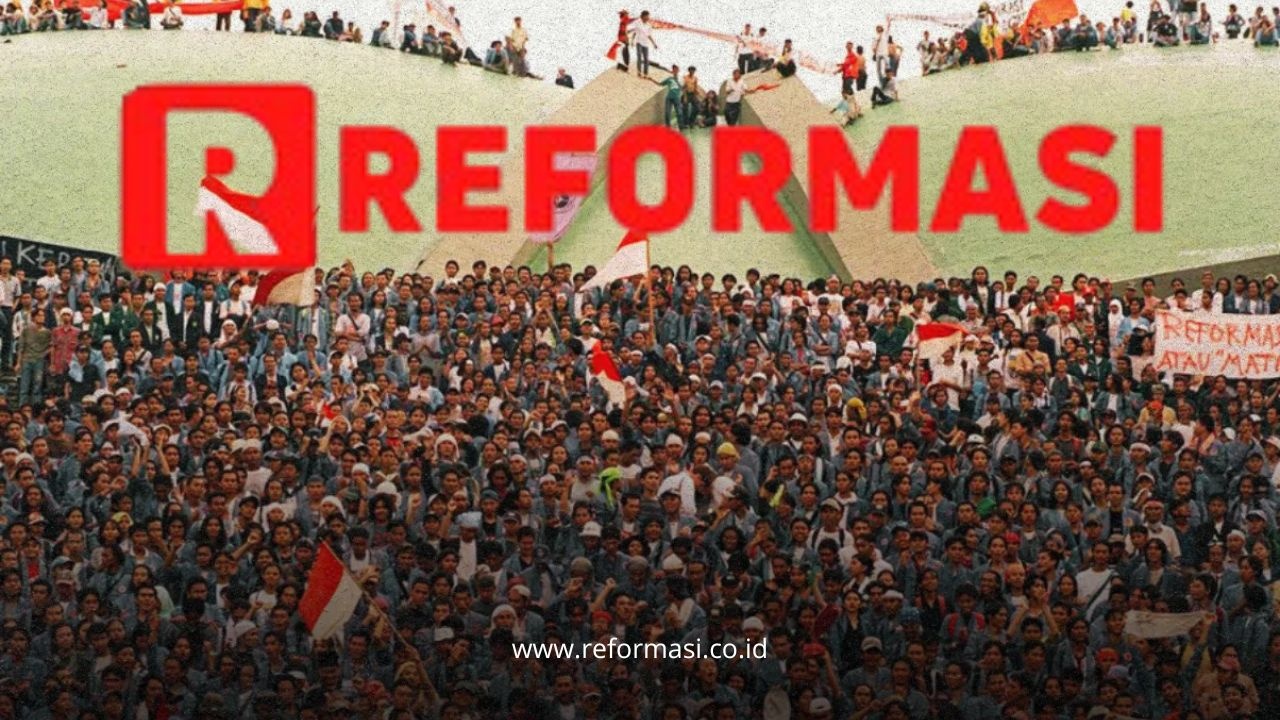
The initial post-Suharto era in Indonesia was characterized by economic chaos, upheaval, ethnic violence, terrorism and uncertainty. Stability and security had been hallmarks of the Suharto era. As time went by many Indonesians began looking back on Suharto’s rule, with its relative security and stability, with fondness and nostalgia. Other saw the upheaval after Suharto as growing pains and phase that Indonesia had to through on the road to mature democracy. When asked if he thought Indonesia was returning to a period of unrest, Singapore’s Lee Kuan Yew said, “I don’t think so. It now has a middle class, a consumer society and the basic structure of continued progress. The Indonesian people will have to that good times again in their scramble back to growth.”
The post-Suharto era began with the military playing a more limited role than it had in the past. According to Lonely Planet: “The army’s reputation was severely tarnished. Not only had it started the riots by shooting students, then failed to contain the rioting, evidence emerged that military factions had indeed incited the rioting. The newly vocal press also exposed army killings in Aceh and the abduction and murder of opposition activists.” [Source: Lonely Planet]
The extended period of upheaval and escalating violence after Suharto resigned took many forms—interethnic, interreligious, political, both neighborhood and military-organized vigilantism, and even bizarre mob attacks on “ninjas” and sorcerers—and was spread throughout the country, most notably in Kalimantan, Maluku, central Sulawesi, and eastern Java. Everywhere sensational examples of savagery were recorded in the media: piles of human heads in Kalimantan, suspected sorcerers dragged through the streets by motorcycles in eastern Java, petty thieves beaten and burned alive in many places, and killers in Kalimantan and Ambon reportedly drinking their victims’ blood and eating their organs. As many as 20,000 people may have been killed between 1998 and 2001 and more than 200,000 displaced from their homes. There was vigorous debate over the causes of the violence, and widespread talk of revolution, civil war, and the disintegration of the nation as it descended into a surreal and barbarous chaos. [Source: Library of Congress *]
These paroxysms did not deter, and remarkably indeed may have done much to propel, movement in the direction of dismantling the political structure built by the New Order. Even before it began, the post-Suharto era had been called a time of reformasi by a broad spectrum of activists, and the name stuck despite uncertainty over exactly what it might mean. Perhaps the greatest surprise in the early days of this reformasi proved to be Habibie, Suharto’s constitutional successor and by virtually all sides considered politically suspect, incompetent, or both. During his brief interim presidency (May 1998 to October 1999), however, Habibie oversaw the start of fundamental change in Indonesia’s political and economic structure and attempted conciliatory solutions to the conflicts in Papua, Aceh, and most notably East Timor, to which he offered the option of voting for independence. He reduced many powers of ABRI (which was separated from the police in April 1999 and became known again as the TNI); began decentralizing civilian government; and countermanded discriminatory laws aimed at Chinese Indonesians. *
RELATED ARTICLES:
B.J. HABIBIE (PRESIDENT OF INDONESIA 1998-1999) factsanddetails.com
ABDURRAHMAN WAHID (PRESIDENT 1999-2001) AND RETURN OF DEMOCRACY IN INDONESIA factsanddetails.com
MEGAWATI SUKARNOPURTI (PRESIDENT OF INDONESIA 2001-2004): LIFE, POLITICAL CAREER, FAILURES factsanddetails.com
SUHARTO: HIS LIFE, PERSONALITY AND RISE TO POWER factsanddetails.com
INDONESIA UNDER SUHARTO: NEW ORDER, DEVELOPMENT, FOREIGN POLICY factsanddetails.com
REPRESSION UNDER SUHARTO factsanddetails.com
VIOLENT CRACKDOWN ON COMMUNISTS IN INDONESIA IN 1965-66: KILLERS, VICTIMS, REASONS factsanddetails.com
CORRUPTION AND FAMILY WEALTH UNDER SUHARTO factsanddetails.com
1997-98 ASIAN FINANCIAL CRISIS IN INDONESIA factsanddetails.com
OUSTER OF SUHARTO IN 1998: PRESSURES, EVENTS, RESIGNATION factsanddetails.com
SUHARTO AFTER HIS RESIGNATION: TRIALS, DEATH, LEGACY, VIEWS, FAMILY factsanddetails.com
INDONESIAN ELECTIONS IN 2004 AND 2009 factsanddetails.com
SUSILO BAMBANG YUDHOYONO (PRESIDENT OF INDONESIA 2004-2014): LIFE, CAREER, INTERESTS factsanddetails.com
INDONESIA UNDER YUDHOYONO (2004-2014) factsanddetails.com
2014 ELECTION IN INDONESIA: ROCK STARS, RALLIES AND SMEAR CAMPAIGNS factsanddetails.com
JOKO WIDODO: HIS LIFE. CAREER, FAMILY, INTERESTS AND RISE TO POWER factsanddetails.com
JOKO WIDODO AS PRESIDENT: HIS FOLKSY STYLE, ACHIEVEMENTS AND CRITICS factsanddetails.com
2024 ELECTIONS IN INDONESIA factsanddetails.com
Transition from Suharto Authoritarian to Reformasi Democracy
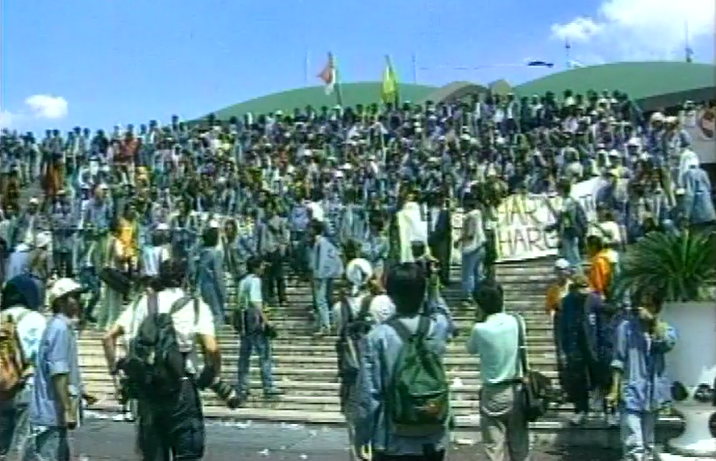
Since the late 1990s, Indonesia has shifted politically from being the world’s largest military- dominated authoritarian state to being the world’s third-largest civilian democracy (after India and the United States) and the largest Muslim-majority democracy, holding the world’s largest direct presidential elections. [Source: William H. Frederick, Library of Congress, 2009 *]
Contrary to the expectations of many careful observers, both foreign and domestic, Indonesia has succeeded in the past decade in preserving the territorial state virtually intact against the considerable forces of separatist movements. The exception is East Timor—now the Democratic Republic of Timor-Leste—acquired by force in 1976 and relinquished under pressure in 1999. Indonesia has also faced severe ethnic and religious violence, growing internationally influenced Islamic terrorism, tension over—and within—the armed services, and a series of natural disasters of which the most devastating was the 2004 tsunami that killed more than 166,500 Indonesians, mostly in the troubled region of Aceh, in northern Sumatra. *
None of these fundamental changes was completed without difficulty. East Timor, for example, passed through an agony of civil conflict and military-backed violence after voting to separate from Indonesia in August 1999; independence as Timor-Leste finally came in May 2002 after a long and difficult transition under UN auspices. Genuine reform measures had been launched, however, and, for the most part, the nation responded positively to them. The scheduled general elections from June to October 1999 occurred amidst conflict, but under the circumstances it was remarkable that they could be held at all. In the end, a politically intricate but reasonably peaceful transition was made to the presidency of Nahdlatul Ulama leader and prominent intellectual figure Abdurrahman Wahid (1940–2009), who maneuvered to have his main opponent, Sukarno’s daughter Megawati Sukarnoputri (born 1948), selected as his vice president. *
Elections and Political Parties During the Transition from Suharto to Prime Democracy
Suharto was succeeded by his vice president, B. J. Habibie, who was born in 1936. A transition to democratic rule was then initiated. Laws on association and organization were liberalized. Political parties were permitted to form freely. However, transitional elections in 1999 produced no clear winner, so the parties in parliament negotiated and selected Abdurrahman Wahid (b. 1940) as president. Wahid was the leader of Indonesia's largest Muslim organization, Nahdlatul Ulama (the Rise of the Islamic Scholars). [Source: Paige Johnson Tan, Governments of the World: A Global Guide to Citizens' Rights and Responsibilities, Thomson Gale, 2006]
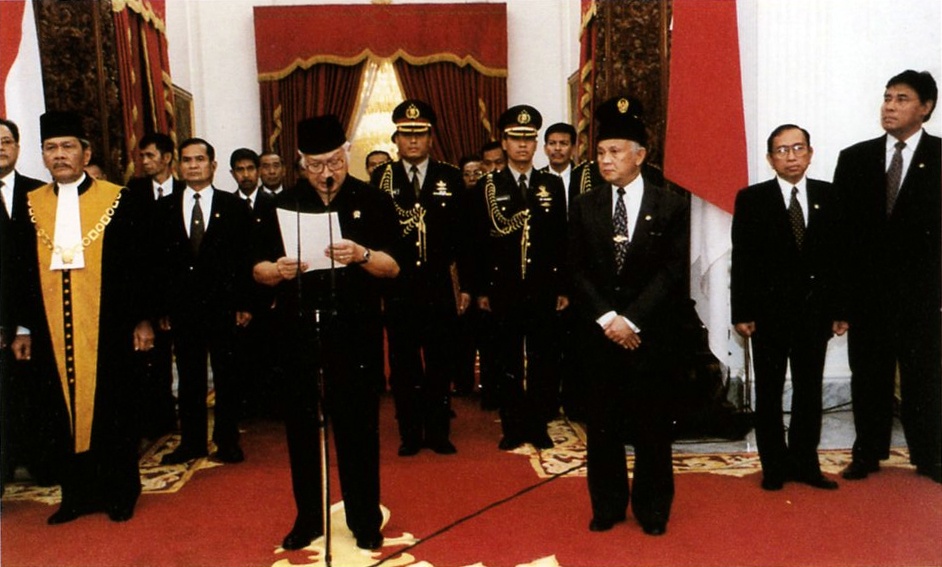
However, Wahid’s presidency was tumultuous, and he was impeached in 2001. He was replaced by Megawati Sukarnoputri (b. 1947), the daughter of founding president Sukarno and leader of the Indonesian Democratic Party–Struggle. In 2004, for the first time, Indonesians were allowed to elect their president directly. Susilo Bambang Yudhoyono (b. 1949) won in a second-round runoff, defeating the incumbent president, Megawati.
Political parties were among the most conspicuous features of Indonesia's new democracy. Many of the top parties are personalistic, relying on the charisma of a single individual. Several Muslim-based political parties were among the top finishers in 1999 and 2004, including the National Awakening Party, the United Development Party, the Prosperous Justice Party, the National Mandate Party, and the Crescent Star Party. Of these parties, only two—the United Development Party and the Crescent Star Party—jointly earned 14.2 percent of the vote in 2004, and have agitated for the rapid enforcement of Islamic law, or Shari'a. Among mainstream political actors, there is a broad recognition that the country, home to large Christian, Hindu, and Buddhist populations, is too pluralistic to Islamize the state.
Perspectives on Indonesia’s Transition to Democracy
Analysis of Indonesia’s transition to democracy tends to fall into four main types, with each having its own strengths as well as obvious weak points, but none being able to stand entirely on their own. Most Indonesians probably borrow from all of them in assembling their own conclusions. The first takes a long-term view. According to this explanation, Indonesia’s dramatic shift to a successful democratic political process confirms what some had argued all along: democracy began to take root in the years immediately following the National Revolution (1945–49), but this natural, often disorderly development was nipped in the bud by the imposition of Sukarno’s Guided Democracy (1957–65) and further suppressed by Suharto’s military- backed New Order (1966–98). Proponents of this view dismiss arguments that newly independent Indonesians in the early 1950s were not “ready” for representative democracy, or that democracy along Western lines (what Sukarno called “free-fight liberalism” and “50 percent + 1 democracy”) is somehow antithetical to both Indonesia’s needs and its traditions. They also suggest that previous governments’ attempts to deal with the specter of ethnic and religious conflict by smothering the expression and discussion of differences rather than channeling and protecting them only made matters worse. The fall of the New Order, and with it the fall from favor of the old political elite and the military, made possible what was in fact a kind of “back-to-thefuture” movement: returning to what began so promisingly nearly two generations earlier, and this time doing it right. Indonesia’s achievement since 1998, then, was as possible 40 years ago as it has now proven to be. [Source: William H. Frederick, Library of Congress, 2009 *]
A second explanation looks at matters from a mid-range perspective, focusing on the previous 20 years or so. The success of Indonesia’s transformation thus appears due largely to the influence of internal dissidents and progressives—particularly educated young people—during the last half of the New Order and the subsequent period of “reformasi”, coupled with pressure from both a general globalization and specific outside sources. Advocates credit this combination of forces not only with weakening and eventually bringing an end to Suharto’s rule, but also, even more important, with persisting during the subsequent period of upheaval in championing and providing the ideas and manpower necessary for genuinely democratic reforms. Seen in this way, Indonesia’s post–New Order achievement is to a very large degree a generational one, which, as many reformers are quick to point out, is very much in the tradition of Indonesia’s original struggle for independence. *
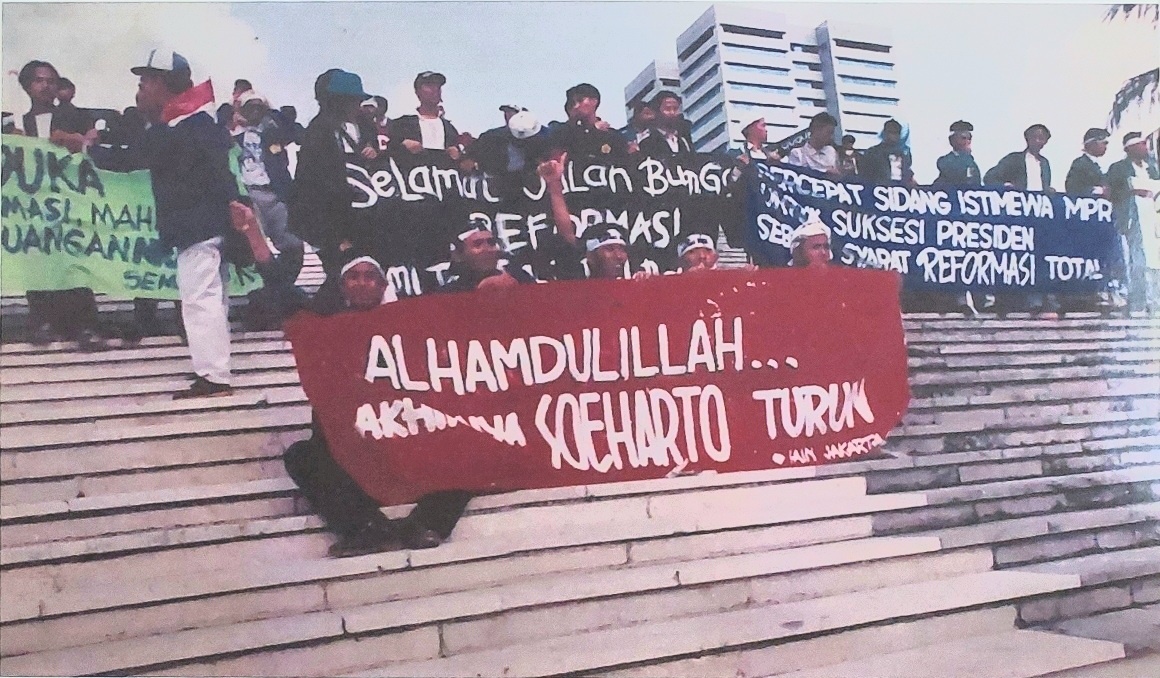
A still shorter field of vision defines a third perspective, which focuses for the most part on the past decade. This view emphasizes the importance of the political and military leadership after the resignation of Suharto in May 1998, arguing that without it Indonesia might easily have continued as previously, under the sway of an authoritarian figure. Instead, as it happened, the individuals who followed the New Order president had neither the inclination nor the opportunity to attempt to reassemble the strongman pattern. Military leaders made conscious decisions to forego any thoughts of reinstating—by force or other means—the armed forces’ self-declared dual responsibilities as both governors and enforcers. However great a role the architects of reform may have played, according to this argument, their efforts could have been derailed by powerful civilians and soldiers if they had been so inclined. But they were not derailed, and it is therefore to current military and political leaders, with all their strengths and weaknesses, that the success of the past decade must ultimately be attributed. *
A final theory suggests that the great transformation at issue has not (or at least not yet) taken place, and that the changes that have occurred are in many respects superficial. For example, a prominent analyst of Indonesian affairs examined the three pairs of candidates in the 2009 presidential election and found they were all “creatures of Indonesia’s past.” Yusuf Kalla, a “classic Suharto-esque businessman” and conservative political supporter, was allied with Wiranto, a retired general who was Suharto’s former adjutant and was indicted by the United Nations for crimes against humanity in East Timor. Megawati, a “woman longing for a return to the glory days of her father,” had as a running mate Prabowo Subianto, another general (and former son-in-law of Suharto), who was dismissed by the military for brutal treatment of political activists. Susilo Bambang Yudhoyono, yet another former general, although one with a reputation for liberal tendencies and indecisiveness, chose as his vice presidential candidate a career government economist—Budiono—who had most recently headed Bank Indonesia. All of this suggests that at best modest and largely cosmetic change has taken place since 1998, and that, furthermore, the prospects for deep, meaningful reforms in the immediate future are perhaps considerably dimmer than most enthusiasts are willing to admit. *
Contribution of Suharto’s New Order to Democracy in Indonesia?
In recent years a handful of commentators have quietly begun to raise the possibility that a powerful explanation of the undeniably rapid, and apparently successful, transformation since 1998 may lie precisely where least suspected: in the policies and realities of the New Order itself. The basic notion is that the “amazing” transformation after 1998 is not quite as amazing as has generally been suggested because the New Order regime was never as powerful and monolithic, in some views even totalitarian, as many believed, and that its ability to control the way people thought and behaved was overestimated. (In the same vein, the military was never as unified or free to assert its will as most assumed.) From this perspective, for example, the New Order censorship about which critics constantly complained was on the whole much milder than portrayed, and at best erratic and incomplete; it certainly did not entirely smother public debate or expressions of discontent. Similarly, the regime’s signature efforts to inculcate the ideology of Pancasila, which critics decried as so much self- interested, statist propagandizing, were surprisingly ineffective, producing more cynicism and questioning than acquiescence, and certainly not blind adherence. Individuals’ ability to think or act independently in political matters, although indeed limited under the New Order regime, was far less severely damaged than imagined, and did not require a miracle to revive. [Source: William H. Frederick, Library of Congress, 2009 *]
This explanation also suggests that the New Order may have contributed to the post-1998 transformation in a more positive manner. It is not, for example, quite so astonishing that Indonesia was able to hold complex and reasonably peaceful elections in 1999, 2004, and 2009 if we recall that, in fact, the nation had practice doing so for a quarter of a century under New Order auspices in 1971, 1977, 1982, 1987, 1992, and 1997. This notion may be repellent to critics who spent years pointing out how the New Order political process was anything but free, manipulated as it was by numerous means, including dishonest management of elections, curtailment of party independence, manipulation of parliament through large appointed memberships, and the like. Nevertheless, elections were routinely held and order maintained until the process became familiar, even taken for granted; it was by no means new in 1999, even though the all-important political context had changed. Furthermore, it seems likely that the millions of Indonesians who participated in those New Order elections came to understand that process’s shortcomings and to develop ideas about how it could be improved. There was no dearth of ideas when the time came to make changes, and the journey to democracy required modest hops rather than great leaps.
The larger implication of this fifth sort of explanation is that what took place between roughly 1998 and 2004 in Indonesia was on the one hand not the revolution or near-revolution some saw or wished for, and on the other hand not the ephemeral, surface phenomenon others feared. There was neither miracle nor mirage but rather a complex transition in which continuity figured as importantly as change, and the two were often very closely intertwined. This insight is useful in understanding other aspects of contemporary Indonesia beyond elections and democratic procedure. *
One illustration concerns the promotion of Pancasila ideology, a widely criticized hallmark of the New Order that appeared to have been summarily abandoned in 1998. Beginning in about 2002, however, there was a revival of interest in Pancasila and in honoring it as a kind of national creed and summation of national identity. Even prominent intellectuals who had considered New Order leaders’ interest in a national ideology an anathema, and the Pancasila itself as shallow and outdated, appeared at symposia and on op- ed pages as advocates of a “revitalization,” emphasizing the ways in which the message of the Pancasila is not only appropriate for post–New Order Indonesia, but indeed even necessary. In 2006 President Yudhoyono made a point of giving a major national speech on the then-neglected Birth of Pancasila Day (June 1), recommending that politicized niggling over the historical origins and other details surrounding the Pancasila—which he described as the “state ideology”—cease and that greater attention be paid to its precepts. There were numerous calls for making June 1 a national holiday, and the minister of education said that the Pancasila would remain part of the curriculum. It looked very much as if a key element of the New Order was about to be reinstated. *
The president made a special effort, however, to emphasize that he did not intend to return to the past. The authoritarian Suharto government had, he said, “twisted the ideology to promote conformity and stifle dissent” with what he termed “Pancasila brainwashing,” which caused the populace to turn against it and its sponsors. But in reality, he said, the Pancasila is “not an absolute doctrine but a compromise reached by the nation’s founding fathers,” and it should be accepted as such, not as a sacred document used to enforce uniformity. It is a compromise that sees all Indonesians as equal and protects pluralism and tolerance; it supports democratic reform and human rights, at the same time as it promotes a sense of unity under a common sense of social justice.
Decentralization of the Indonesian Government
During the late 1990s and early 2000s two fundamental reforms quietly took hold. The first was a Decentralization Law that went into effect in early January 2001. This sweeping legislation (with some revisions in 2004) made the Indonesian state system one of the world’s most decentralized, with budgetary and most other bureaucratic and electoral matters being turned over to local authorities down to the district level. This dramatic change carried risks, as it left plenty of room for misuse, but it represented real movement toward transparency and away from the accumulation of centralized power. [Source: Library of Congress *]
The second important reform, a major overhaul of the nation’s constitution undertaken in four stages between 1999 and 2002, called for, among other things, the direct election of the president and vice president; a limitation of the president to two terms in office; free and secret elections of regional legislatures and a two-house MPR consisting entirely of elected members; establishment of the Constitutional Court; and a much expanded delineation of human rights. Only slightly more than 10 percent of the original constitution of 1945, the cornerstone of New Order legal thought, remained unchanged. Together, these developments laid the groundwork for a thorough refashioning of the way the Indonesian state functioned. *
Pankaj Mishra wrote: “The country’s innate centrifugal forces have been strengthened by the abrupt decision, in 1999, to devolve political power from Java to the provinces. As Elizabeth Pisani puts it, “In the space of just eighteen months, the world’s fourth most populous nation and one of its most centralized burst apart to become one of its most decentralized. The center still takes care of defence, fiscal policy, foreign relations, religious affairs, justice and planning. But everything else—health, education, investment policy, fisheries and a whole lot more—was handed over to close to 300 district ‘governments.’ Many of the new administrators in the provinces—popularly known as “mini Suhartos”—are adept at siphoning off the funds and resources at their disposal. The country’s old problems of poverty, inequality, and environmental despoliation have become more daunting amid the euphoria generated by faster economic growth and the enrichment of a tiny minority. [Source: Pankaj Mishra, The New Yorker, August 4, 2014]
In recent years, a fast-growing economy and a decentralized administrative structure have empowered such figures as bupatis (regents) and walikotas (mayors), who were previously nominated to their posts by the central government in Jakarta. Plundering generous budgets and selling off national resources, many of these autonomous officials have confirmed Indonesia’s reputation as one of the world’s most-corrupt countries. [Source: Pankaj Mishra. Bloomberg, November 4, 2012]
Culture Changes in Post-Suharto Indonesia
Contemporary Indonesian public culture also provides some useful illustrations of how Indonesia has changed since Suharto was ousted. By mid-2009, after a comparatively short period of growth beginning around 2006, by far the most popular television genre in the nation was the reality show—dating shows, talent contests, extreme home makeovers, and the like—which are widely seen as being Amer ican in origin (although in fact British and Dutch producers were the true pioneers); nearly 80 different shows of this type were being produced by local companies. To both outsiders and many Indonesians, this seemed to be a sign of an abrupt change. [Source: William H. Frederick, Library of Congress, 2009 *]
The Indonesian scholar and public intellectual Ariel Heryanto, for example, suggested that the pendulum had swung away from a post- 1998 interest in Islamic popular culture, and he talked about American culture being suddenly “in” among Indonesians at all economic and social levels. One reality-show producer even suggested that what viewers consider American values are in fact universal ones, and that Indonesians are now part of a world in which everyone shares “the same dream, no matter who you are and what nationality you are.” Not surprisingly, some Western commentators took this as another confirmation that Indonesia had moved definitively into the liberal democratic camp. *
There is an important “continuity” side to this story as well. For one thing, as New York Times reporter Norimitsu Onishi pointed out, the reality show is not the first American genre to attract attention. American sitcoms ranging from “I Love Lucy” to “The Golden Girls,” as well as series such as “McGyver,” filled Indonesian television schedules beginning in the mid-1970s but then lost ground to shows with Islamic themes and to telenovelas from Latin America and soap operas from Asia; the current fascination with televised reality shows is thus part of a longer evolution and should be interpreted in that light.*
The careful foreign viewer might also notice that a number of the most popular Indonesian reality shows focus on themes markedly “not” found in America—for example, transplanting wealthy or upper-middleclass Indonesians into poor, rural settings, and vice versa, focusing on the tribulations each group faces in making adjustments and attempting to understand an altogether different way of life. These productions tend to validate the values of modern, urban middle-class Indonesians at the same time as they highlight the importance of empathy for others, reflecting in part a longstanding mainstream nationalist populism and in part a Muslim morality and sensitivity to the plight of the poor. The analysis that the popularity of such reality shows is evidence of a recent and dramatic social change—“Americanization,” even—is neither as accurate nor, truth be told, as interesting as the more complicated view that notices a more complex story of adaptation. *
Image Sources: Wikimedia Commons
Text Sources: New York Times, Washington Post, Los Angeles Times, Lonely Planet Guides, Library of Congress, The Guardian, National Geographic, Smithsonian magazine, The New Yorker, Time, Reuters, AP, AFP, , Wikipedia, BBC, CNN, and various books and other publications.
Last updated December 2025