
B.J. HABIBIE
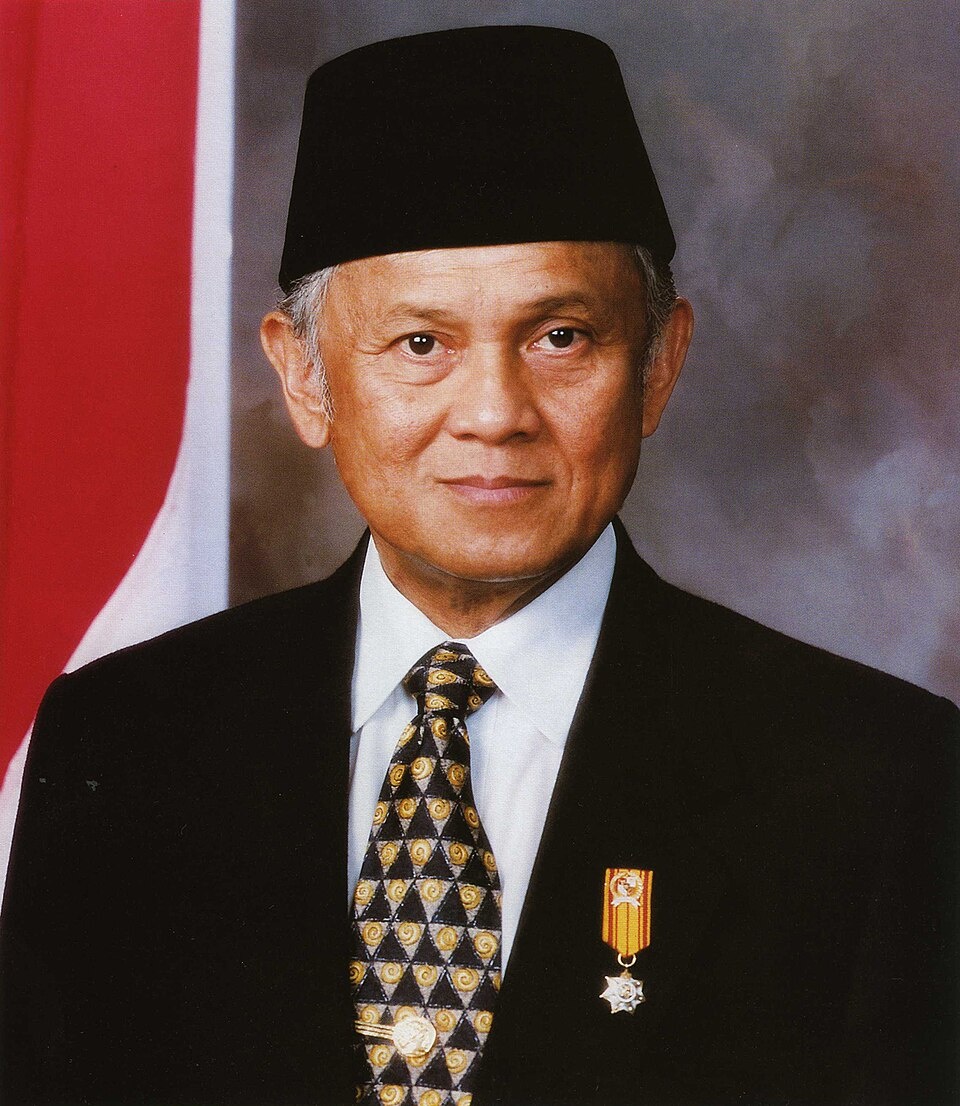
Bacharuddin Jusuf (B.J.) Habibie was born on June 25, 1936 in South Sulawesi. He was trained as an aeronautical engineer and spent 20 years in Germany studying and working in the aerospace industry. When he returned home he put forth the idea that Indonesia could "leap frog" over unskilled, job-producing low-tech industries that were the backbone of development in poor countries and move straight into high tech industries like aviation.
Habibie was a small animated man. People who met him said was difficult to shut up once he got going. He had a shrill voice and a photographic memory and the habit of gesturing in excitable, frantic way. He was variously described as a hummingbird and the "busiest man in Indonesia" because of his many projects. On his website, Habibie said he was it was the “dream of all parents, who wished their offspring to become another Habibie."
Habibie was known to his friends as Rudy. He liked motorcycles and Beethoven. A devout Muslim, he fasted on Mondays and founded the Indonesian Association of Muslim Intellectuals. Habibie was known for his strange ideas. There was a joke that Sukarno was crazy about women, Suharto was crazy about money and Habibie, well, he was just crazy. One of his craziest ideas was his "zig-zag theory" the notion that reducing interest rates and then doubling them could reduce inflation. An American businessman told the New York Times, Habibie "always has ideas. It seems like they are hitting him like electric shocks."
RELATED ARTICLES:
REFORMASI AND THE POST–SUHARTO ERA factsanddetails.com
ABDURRAHMAN WAHID (PRESIDENT 1999-2001) AND RETURN OF DEMOCRACY IN INDONESIA factsanddetails.com
MEGAWATI SUKARNOPURTI (PRESIDENT OF INDONESIA 2001-2004): LIFE, POLITICAL CAREER, FAILURES factsanddetails.com
SUHARTO: HIS LIFE, PERSONALITY AND RISE TO POWER factsanddetails.com
INDONESIA UNDER SUHARTO: NEW ORDER, DEVELOPMENT, FOREIGN POLICY factsanddetails.com
REPRESSION UNDER SUHARTO factsanddetails.com
VIOLENT CRACKDOWN ON COMMUNISTS IN INDONESIA IN 1965-66: KILLERS, VICTIMS, REASONS factsanddetails.com
CORRUPTION AND FAMILY WEALTH UNDER SUHARTO factsanddetails.com
1997-98 ASIAN FINANCIAL CRISIS IN INDONESIA factsanddetails.com
OUSTER OF SUHARTO IN 1998: PRESSURES, EVENTS, RESIGNATION factsanddetails.com
SUHARTO AFTER HIS RESIGNATION: TRIALS, DEATH, LEGACY, VIEWS, FAMILY factsanddetails.com
INDONESIAN ELECTIONS IN 2004 AND 2009 factsanddetails.com
SUSILO BAMBANG YUDHOYONO (PRESIDENT OF INDONESIA 2004-2014): LIFE, CAREER, INTERESTS factsanddetails.com
INDONESIA UNDER YUDHOYONO (2004-2014) factsanddetails.com
2014 ELECTION IN INDONESIA: ROCK STARS, RALLIES AND SMEAR CAMPAIGNS factsanddetails.com
JOKO WIDODO: HIS LIFE. CAREER, FAMILY, INTERESTS AND RISE TO POWER factsanddetails.com
JOKO WIDODO AS PRESIDENT: HIS FOLKSY STYLE, ACHIEVEMENTS AND CRITICS factsanddetails.com
2024 ELECTIONS IN INDONESIA factsanddetails.com
Habibie and Suharto
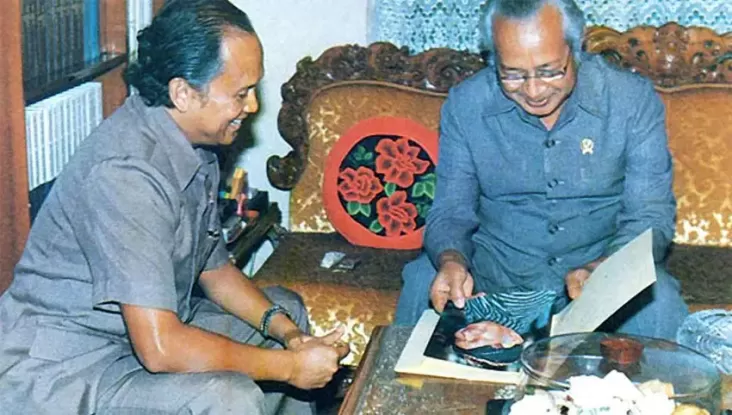
Habibie sometimes referred to Suharto as S.G.S. (Super Genius Suharto). At the presidential palace he drove around in the sidecar of Suharto's motorcycle. When Habibie greeted Suharto he sometimes kissed his hand three times. Habibie was like a son to Suharto. When Habibie was 13 his father died and Suharto, then a local military commander, closed the eyes of dead man and effectively adopted the young Habibie. In his autobiography, Suharto wrote, Habibie "regards me as his own parent. He always asks for my guidance and takes notes on [my] philosophy."
Habibie was not untainted by Suharto crony capitalism. He and his family controlled 66 companies under two conglomerate, the Timsci Group, named after his younger brother, and Repindo Panca, headed by his second son. Habibie spent 20 years in the Suharto cabinet and was perhaps most comfortable in the position of minister of Research and Technology. His most memorable decision was buying 100 former East German naval vessels without consulting the military. The ships needed more than $1 billion in repairs to make them seaworthy.
A few months before Suharto resigned he appointed Habibie as his vice president. According to the Indonesian constitution if the president resigns, the vice president takes over. Suharto originally had doubts that Habibie could handle the job as president but in a meeting before Suharto's resignation, Habibie assured him that he could.
Habibie Becomes President After Suharto
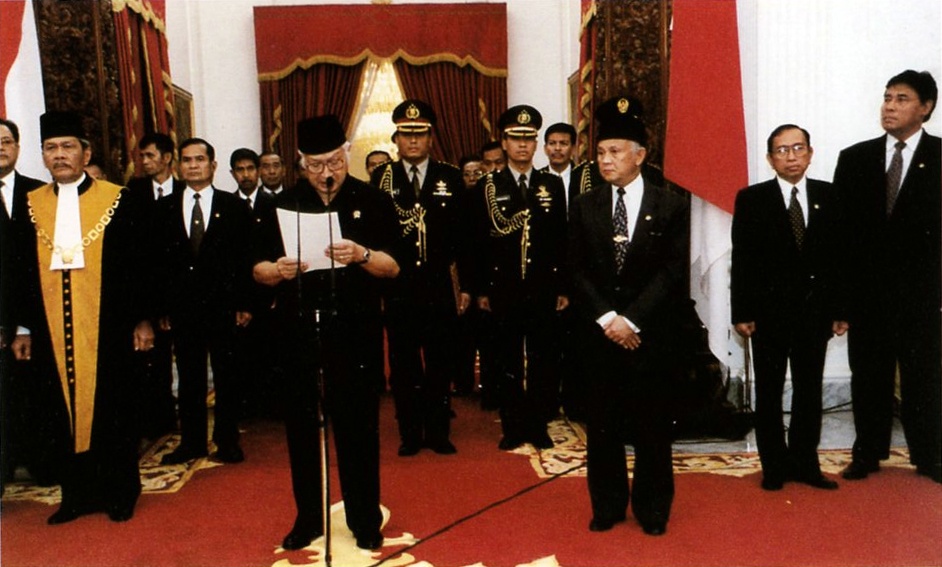
In May 1998, immediately after Suharto resigned, his recently appointed vice president B.J. Habibie was sworn as president. Describing the transition Time reported, "Habibie appeared to hesitate. His mentor gestured with his hand, like a father to a nervous child, and Habibie stepped forward to take the oath of office." He had only been vice president for 10 weeks. After taking the office Habibie quickly promised reforms, the release of political prisoners and elections. He tried to portray himself as a man of the people, but his close association with Suharto raised too many eyebrows for that to happen.
When Habibie took over the economy was still in tatters and the rupiah plummeted to new depths, but Indonesia embraced a new era of political openness. According to Lonely Planet: “The government talked about reformasi (reform), but at the same time tried to ban demonstrations and reaffirmed the role of the army in Indonesian politics. IMF money flowed into Indonesia but hardship ensued. Some people sold their meagre possessions to buy food while others simply stole what they needed. Old grudges resurfaced during these uncertain times and the Chinese continued to suffer as scapegoats. [Source: Lonely Planet]
Habibie as President
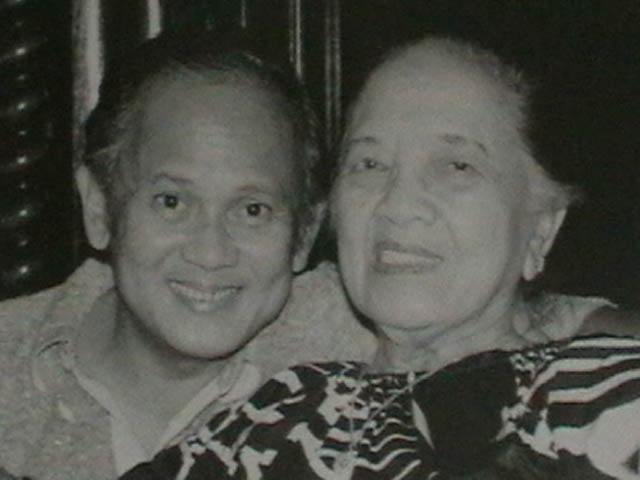
Habibie served about 17 months as president. His administration was a mix of reformers and leftovers from the Suharto era. He had little support. The military didn't like him. Ordinary Indonesians viewed him as Suharto's lap dog. International financiers viewed him as a crackpot with strange ideas about development and economics.
Habibie championed himself as a reformer. He released several prominent political and labor prisoners, initiated investigations into the unrest, and lifted controls on the press, political parties, and labor unions. Students were allowed to hold sit in; and political parties and unions were allowed to form. He began removing the military from politics; gave the judiciary more independence; and eased restrictions on the press, Habibie reestablished International Monetary Fund (IMF) and donor community support for an economic stabilization program.
In January 1999, Habibie announced a cancellation of his own aerospace project. He also scheduled elections and initiated the referendum in East Timor (See East Timor). However, Habibie was unable to halt the sectarian violence that ripped apart Indonesia at the seams and failed to take necessary actions to avert the bloodbath that followed East Timor’s referendum on independence.
Habibie and East Timor
In early 1999, President B. J. Habibie made a decisive break from the policies of his predecessor, Suharto, by agreeing to allow the people of East Timor to determine their political future. In January 1999, Indonesia and Portugal, with United Nations involvement, reached an agreement to hold a direct ballot offering a choice between limited autonomy within Indonesia and full independence. The referendum was scheduled for August 30, 1999, after years in which autonomy or independence had been repeatedly denied. [Sources: Lonely Planet; Countries of the World and Their Leaders Yearbook 2009, Gale, 2008; Junior Worldmark Encyclopedia of the Nations, Thomson Gale, 2007]
Despite this shift in policy, pro-Indonesian militias—often operating with the tacit support of elements within the Indonesian military—launched a campaign of intimidation and violence in the months leading up to the vote. Nevertheless, turnout was extraordinarily high, with about 98 percent of registered voters casting ballots, and 78.5 percent voting in favor of independence.
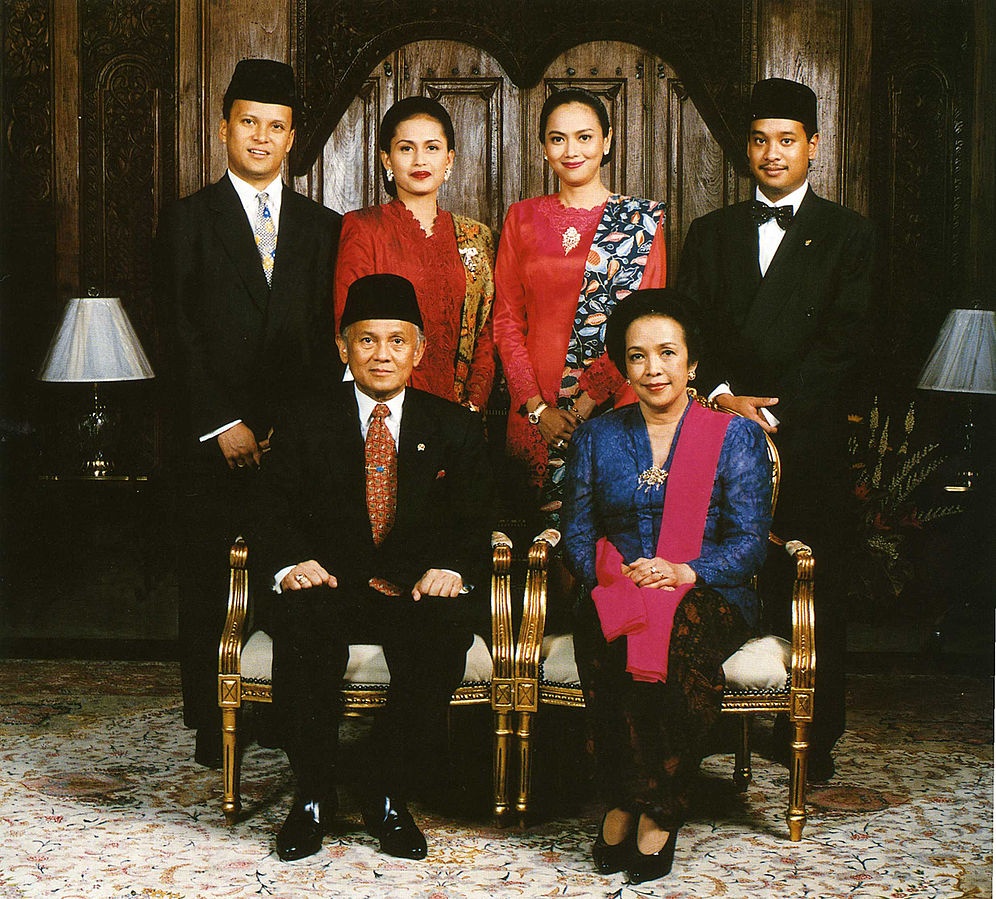
The announcement of the result triggered a wave of orchestrated violence. Militias and sections of the security forces killed up to 2,000 unarmed civilians, displaced much of the population, and destroyed an estimated 80 percent of East Timor’s infrastructure, creating a massive humanitarian and refugee crisis. What had begun as celebrations of independence quickly turned into despair.
Under intense international pressure, Habibie requested United Nations intervention. In September 1999, an international peacekeeping force—supported prominently by Australian troops—entered East Timor to restore order, followed in October by the establishment of the United Nations Transitional Administration in East Timor (UNTAET), which assumed full governing authority. Thousands of international advisers and soldiers arrived as the UN worked to stabilize the territory and rebuild basic institutions.
UNTAET governed East Timor during a transitional period, assisted by a National Consultative Council. In April 2002, José Alexandre “Xanana” Gusmão was elected president, and on May 20, 2002, East Timor formally became an independent nation. The East Timor crisis, however, contributed to the rapid decline of Habibie’s political support at home, and amid mounting pressure, he resigned in October 1999. Even as East Timor moved toward independence, demands for autonomy and secession intensified elsewhere in Indonesia, particularly in Aceh and Papua.
Anti-Habibie Protests in November 1998
In early November 1998, students fought with soldiers and government toughs outside the Parliament building in Jakarta. Mobs looted shops, burned cars, threw rocks and ransacked police stations. One soldiers was beaten to death by a mob and another was run down by a car. The military retaliated with a vengeance. Six people were killed and dozens more were injured. Some students were killed by plastic bullet and assault wounds.
According to Lonely Planet: “In November 1998 the Indonesian parliament met to discuss a new election. Student demands for immediate elections and the abolition of military appointees to parliament were ignored. Three days of skirmishes peaked on 13 November when students marched on parliament. Clashes with the army left 12 dead and hundreds injured. Then disturbances took on an even more worrying trend: a local dispute involving Christians and Muslims resulted in churches being burned in Jakarta. Throughout Indonesia Christians were outraged, and in eastern Indonesia Christians attacked mosques and the minority Islamic community. Riots in West Timor were followed by prolonged Muslim-Christian violence in Maluku and Kalimantan. Instability was also renewed in the separatist-minded regions of Aceh, Irian Jaya and East Timor. [Source: Lonely Planet]
Michael Vatikiotis, wrote in the International Herald Tribune, “I recall walking toward Semanggi— a concrete overpass in Jakarta— late one afternoon in mid- November 1998, on another chaotic day in Indonesia's messy democratic transition. Up ahead, students were protesting new emergency powers for the army, their anger directed at a political elite that had failed in the months since the end of the Suharto dictatorship to realize that democracy was at hand. Calls for reform, which had helped oust President Suharto in May, had turned into furious demands for revolution. Not quite in the shadow of the overpass stood a phalanx of troops, with shields and plated body armor that made them shine like beetles in the sunlight. Just in front of them, untidy rows of students waving fists and banners stood their ground. I could barely make out their chants — something like "revolution or death." [Source: Michael Vatikiotis, International Herald Tribune, August 5, 2005 ==]
“Alongside me were office workers, shop assistants and residents from nearby neighborhoods, curious to see the outcome of this confrontation. Suddenly shots rang out. They sounded like innocent firecrackers. Ahead of me I saw the students first heave then scatter. There was more firing. People around me hit the ground to take cover. I crouched behind a granite pillar that was part of a modern office tower that suddenly seemed incongruous — for surely Indonesia had just taken a step back in time...as many as 16 students died. , only the memories of people who live near Semanggi. ==
“Ahmad and his friends at an open-air coffee stall recall the day the soldiers charged the students. "They were supposed to be using plastic bullets, but I saw the holes they made in people," Ahmad said. He described how the students came pouring into the market area after the troops opened fire, and found ready shelter among the people as soldiers roamed the era hunting down and beating the demonstrators. Students roamed the streets in rowdy bands, or atop great cavalcades of city buses; there was always a march or convoy streaming across Semanggi in one direction or other. ==
“Parliament sits near by. Just a stone's throw away is the dusty Atma Jaya University campus, where troops lobbed tear gas and shot at students later that night on Nov. 13, 1998. There was more to come the following year when students again massed around the intersection's sharp-angled arches to oppose the nomination of B.J. Habibie as president, and troops again fired on them. Ten more students died. These incidents have gone down in history as "Semanggi One" and "Semanggi Two." ==
There have been attempts to bring the army to justice; Indonesia's human rights commission set up an inquiry in 2001. More than a dozen army and police officers were cited for abuses, but the military refused to acknowledge any violation of human rights, arguing that its soldiers acted to prevent mass unrest. Parliament agreed and the case was dropped. Semanggi itself is now as busy as ever. But the memories are vivid. There is the spot where a soldier leveled his gun at me as I hurried to join the students at the Atma Jaya campus; there is the place I saw the lifeless body of a student lying in a dark pool of blood. I feel a surge of pride because it was here that autocracy died and democracy, however imperfect, was born.
End of Habibie
Habibie biggest problem was his link with Suharto. Many Indonesian called him "old wine in a new bottle." Habibie did take some action to break the binds between Suharto and his families and cronies and business and industry in Indonesia. But many of his actions were weak and hlaf-hearted. Habibie opened and then closed an investigation into Suharto's wealth. His government was filled with Suharto loyalists who stalled and did whatever they could o protect their former boss.
Habibie was brought down in part by scandals. The Bali Bank gave an unauthorized loan of $70 million to the Golkar Party and Habibie's personal masseur was investigated for embezzling $4.7 million for the state rice-distribution agency. Habibie abandoned his campaign to be president after his October 1999 "accountability speech" was rejected by Parliament by a vote of 355 to 322. After stepping down, Habibie told the New York Times, "I am not a politician; I am not even interested in politics. And suddenly I had to take over.”
Image Sources: Wikimedia Commons
Text Sources: New York Times, Washington Post, Los Angeles Times, Lonely Planet Guides, Library of Congress, The Guardian, National Geographic, Smithsonian magazine, The New Yorker, Time, Reuters, AP, AFP, , Wikipedia, BBC, CNN, and various books and other publications.
Last updated December 2025