
NEW ECONOMIC POLICY: MALAYSIA’S AFFIRMATIVE ACTION PLAN
The New Economic Policy (NEP) is an affirmative action plan implemented in the 1970s in response to the ethic riots of 1969 to counter the economic dominance of the country's ethnic Chinese minority and improve economic position of naive Malays. The policy has helped indigenous Bumiputras (native Malays, literally "sons of the soil") improve their positions by giving them preferential treatment in education, business and government, and setting quotas that limited the number of Chinese and Indians in universities and public jobs. Malays were given preferences in housing, bank loans, business contracts and government licenses.
The policy is backed by a special clause in the Constitution guaranteeing preferential treatment for Malays. It imposes a 30-percent bumiputra equity quota for publicly listed companies and gives bumiputras discounts on such things as houses and cars. Money is provided by banks and investment firms to Malays and indigenous people to start businesses. Businesses are required to have a bumiputra partner, who would hold at least a 30 percent equity stake.
The policy was introduced under Prime Minister Abdul Razak, the father of disgraced Prime Minister Najib Razak. It emerged in the aftermath of the 1969 racial riots, which were driven in part by Malay perceptions that ethnic Chinese dominated the economy. To address these imbalances, Razak designed an affirmative-action program aimed at raising the share of national wealth held by Malays and other indigenous groups to at least 30 percent. The policy provided Malays with preferential access to housing, university admissions, government contracts, and shares in publicly listed companies. [Source: Shamim Adam, Bloomberg, September 09, 2010]
According to Bloomberg, the pro-Malay policy largely succeeded in stabilizing the country by reducing economic disparities without dismantling existing Chinese businesses. By the 1990s, Malays had come to control many of the nation’s largest companies and enjoyed greater prosperity, while resentment among Chinese and Indian communities appeared relatively limited. A cabinet minister of Chinese descent later acknowledged that although there were cases of unfair treatment, the extreme inequality of the late 1960s had been unsustainable. He argued that the policy reduced racial tensions and helped foster a broader sense of national identity as Malaysians.
Supporters credit the policy with contributing significantly to Malaysia’s political stability and economic development, though critics warn it may hinder long-term competitiveness. The privileges granted to Malays are rooted in a “national social contract” established at independence in 1957, which elevated the majority community in exchange for political power-sharing and citizenship for minorities. Today, the policy is widely viewed by Malays as a birthright, and no major political figure has called for its abolition, fearing a strong political backlash.[Source: Associated Press, August 6, 2005]
RELATED ARTICLES:
ETHNIC GROUPS IN MALAYSIA: HARMONY, DISHARMONY, GOVERNMENT POLICIES factsanddetails.com
CHINESE IN MALAYSIA: HISTORY, GROUPS, BUSINESS, CULTURE factsanddetails.com
INDIANS IN MALAYSIA: HISTORY, WORK, DISCRIMINATION, PROTESTS factsanddetails.com
ORANG ASLI: GROUPS, HISTORY, DEMOGRAPHY LANGUAGES factsanddetails.com
SEMANG (NEGRITOS OF MALAYSIA): LIFE, SOCIETY, HISTORY, GROUPS factsanddetails.com
SENOI: HISTORY, GROUPS, DREAM THEORY factsanddetails.com
TEMIAR: HISTORY, SOCIETY AND RICH RITUAL LIFE factsanddetails.com
ORANG LAUT— SEA NOMADS OF MALAYSIA AND SINGAPORE factsanddetails.com
MINANGKABAU PEOPLE: HISTORY, RELIGION, CHARACTERISTICS factsanddetails.com
TRIBAL PEOPLE OF BORNEO: LONGHOUSES, SAGO, ART factsanddetails.com
BORNEO ETHNIC GROUPS AND INDIGENOUS PEOPLES factsanddetails.com
DAYAKS: HISTORY, LANGUAGE, RELIGION factsanddetails.com
IBAN PEOPLE: HISTORY, RELGION, CULTURE, HEADHUNTING factsanddetails.com
PENAN: RELIGION, CULTURE, HISTORY factsanddetails.com
DUSUN PEOPLE: LIFE, CULTURE, SOCIETY, HISTORY, RELIGION factsanddetails.com
SAMA-BAJUA SEA PEOPLE: ORIGIN, HISTORY, LANGUAGE, RELIGION factsanddetails.com
Criticism of the New Economic Policy
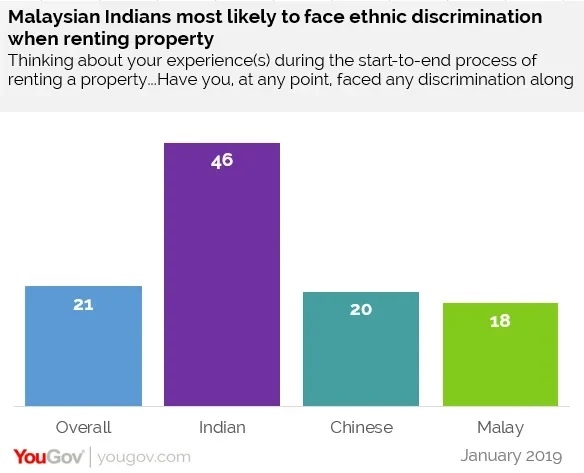
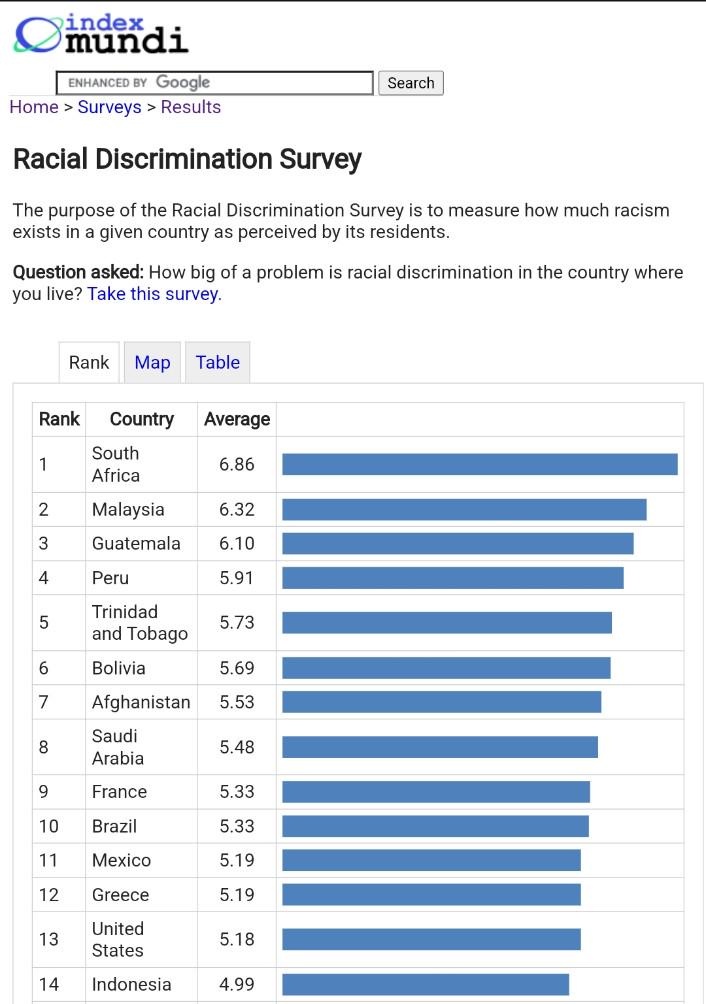
Many people feel the New Economic Policy has outlived its usefulness. The Malays have made great advances and are no longer a marginalized people like they were when the policy was adopted in 1970. According to Associated Press : “The policy is widely acknowledged to be only a moderate success, benefiting largely a few Malay elite and taking away from others the incentive to excel. Although Malays form 60 percent of the country's 26 million population, they control only 19 percent of the corporate equity and most of the country's wealth is in the hands of the Chinese. Indians are about 7 percent and are at the bottom rung of the economic ladder.
The government’s move to extend indefinitely its affirmative action program for Malays—a policy in place since 1971—has fueled growing frustration among Malaysia’s Chinese and Indian communities. Terence Gomez, a Malaysian political scientist at the United Nations Research Institute for Social Development in Geneva, argues that race-based privilege has become outdated in a society where ethnic identity plays a diminishing role in everyday life. He says most Malaysians do not define themselves primarily by race, while the political elite remains “caught in a time warp.” [Source: Thomas Fuller, New York Times, December 13, 2006]
The government maintains that affirmative action is still necessary to reduce income disparities between Malays and Chinese, the policy’s original justification. However, debate has intensified over how economic ownership should be measured, with conflicting calculations producing different conclusions about which groups control the most wealth.
Critics also argue that the policy undermines Malaysia’s international competitiveness. A study by a local think tank found that Malays had already surpassed the government’s long-standing target of owning 30 percent of domestic businesses, raising questions about the need for continued preferential treatment. In response, the government released its own figures, stating that Malays owned 37 percent of publicly listed companies but only 24 percent of all registered firms. [Source: By John Burton, Financial Times, November 9, 2006]
Economists warn that the New Economic Policy (NEP) may now hinder efficiency and deter foreign investment, especially as Malaysia faces growing competition from regional rivals such as Vietnam. Former Prime Minister Abdullah Ahmad Badawi sought to relax some affirmative action rules, but his efforts met resistance from hardliners within the ruling United Malays National Organisation. That opposition was evident when he announced exemptions for a new economic zone near Singapore and faced strong internal criticism.
Schools, Dayaks and Ethnic Separation in Malaysia
Malay, Chinese and Indian students attend schools where the primary medium of instruction is the language of their ethnic group. This means that for the most part there are separate schools for Malays, Chinese and Indians.
As of the early 2000s, there were 5,407 Malay primary schools with 2.2 million students, 1,284 Chinese primary schools with 623,000 students, and 526 Tamil primary schools with 90,000 students. English and Malay are compulsory subjects in all primary schools but the primary language of instruction varies. Mother-tongue education is protected under the 1996 Education Act.
Each school is free to accept children of any ethnic group. About 95 percent of Chinese children attend Chinese schools (1,291 SRJKs and 60 independent schools). This means only 9 percent of Chinese students attend national schools. Most go to private schools oriented for the Chinese community. Around 60,000 non-Chinese attend Chinese schools
The Malaysian government announced plans to open “vision schools” to encourage racial mixing. Students will be educated separately in their own languages but share facilities such as canteens, assembly halls and sports fields. Many Chinese and Indians have objected to the plan because they fear it threaten their Chinese and Indian language schools. They believe the system will ultimately make the Malay language the primary medium of instruction.
While Chinese schools have a shortage of about 4,000 teacher there is an excess of 20,000 teachers for Malay schools. Textbooks don’t say much about the racial riots in 1969.
After the 1987 state elections, the rise of Dayak nationalism in Sarawak was also considered a threat to political stability, but it had been diffused by the 1991 elections. In 1991, the Sarawak Native People’s Party (PBDS, Parti Bansa Dayak Sarawak) retained only seven of the fifteen seats it had won in 1987. [Source: Junior Worldmark Encyclopedia of the Nations, Thomson Gale, 2007]
Is the New Economic Policy A Kind of Apartheid?
John Burton wrote in the Financial Times, The policy succeeded in eradicating poverty among Malays but has been blamed for leading to an informal apartheid. The adoption of the Malay language rather than English as the language of instruction in state schools in the 1970s led Chinese and Indian families to enrol their children in private schools to preserve their native language. The overwhelming majority of students in state primary schools now are Malays. The belief among ethnic Chinese and Indians that they are being denied opportunities has led many to emigrate, while others who do not have enough funds to start a new life abroad express frustration with the system. “I was born and raised in Malaysia and I consider myself as much a bumiputra as a Malay. But I’m treated like a second-class citizen,” says Anand, an ethnic Indian taxi driver. [Source: John Burton, Financial Times, January 9, 2008]
Ian Buruma wrote in The New Yorker, By the late 1990s the consequences of the NEP “had become too blatant to ignore: a bloated (in all senses of the word) Malay elite was raking in more and more of the country’s wealth; educated young Chinese and Indians were leaving the country in droves; and poor Malays were being kept in a state of fear by the propaganda in public schools and in the state controlled press. Without their special status, the Malays were told, they would be at the mercy of those rapacious, dominating Chinese “immigrants.” [Source: Ian Buruma, The New Yorker, May 19, 2009 ]
“To challenge UMNO’s ethnic policies is still to court serious trouble. I met Professor Lim Teck Ghee, a former World Bank social scientist, at a restaurant in Brickfields, a largely Indian section near the central station of Kuala Lumpur. A soft-spoken man, peering sadly through his glasses, Lim was the director of a leading economic think tank until he published, in 2006, a careful analysis showing that Malays, far from being dominated by the Chinese, actually owned more than 45 percent of corporate equity in publicly-listed companies. He was quickly vilified for being “anti-national,” and he resigned his post.
“Lim was one of several people I spoke to in Malaysia who used the word “apartheid” in describing his country. “The ethnic situation has become much worse,” he said, especially since Malay nationalism took a strong Islamic turn in the late 1980s, when UMNO was challenged by PAS. The Islamists got a boost from the Iranian Revolution, and actually took power in Kelantan in 1990. To pre-empt the Islamists, UMNO, ostensibly a secular party, wedded its ethnic nationalism (which was decidedly not a feature of PAS) to religion: Muslims were no longer supposed to drink alcohol; women were encouraged to wear head scarves (tudung); easygoing Malay Islam took on the harsher tone of Wahhabi purism.
“Lim’s children have already left the country; a daughter is in Seattle, a son in Sydney. He sighed. “Even young Malays are leaving,” he went on. “They can’t stomach the hypocrisy, the dishonesty.” Then he said something that I would hear, over and over, from many others: “The sad thing is that Malaysia could have been so good “” we could have been a model of multi-ethnic harmony.” A sense of disappointment was palpable in most conversations I had with Chinese and Indian Malaysians, not least among those who once supported the privileging of Malays, in order to redress colonial imbalances and raise the prospects of the rural Bumiputera, the “sons of the soil.” It was also clear that such disillusionment can easily turn to hostility.”
Efforts to Reform the New Economic Policy
In October 2010, Prime Minister Najib Razak sought to curb rifts between the Malay majority and ethnic minorities, saying the country could end up in tatters like Bosnia or Rwanda if races quarrel over economic rights. In a nationwide broadcast, Najib Razak tried to please his main Malay constituency by assuring them that an affirmative action program would continue to support them. However, he also acknowledged the contributions of the ethnic Chinese and Indian minorities, knowing their votes would be crucial in the next election. "Malaysians are confronted with ceaseless assaults on the main foundations of race relations," Najib said in a speech at the annual national convention of his United Malays National Organization party, the core of the ruling National Front coalition. [Source: Sean Yoong, Associated Press, October 21, 2010]
As long as the National Front remains in power, any significant retreat from the NEP is unlikely. "Despite the complaints about the NEP, the fact is that the policy has ensured this country’s stability, and abandoning it would destroy that stability," says Jawhar Hassan, head of the Institute of Strategic and International Studies in Kuala Lumpur. "The NEP was originally intended to eliminate poverty among all ethnic groups, not just Malays," says Mr. Navaratnam. "But it has since evolved into a policy that promotes the interests of Malays. If it can regain its original intention, the NEP can still play a useful role.” Some have suggested basing affirmative action policies on class rather than race. Ian Buruma wrote in The New Yorker, "One advantage of replacing the rhetoric of race with that of class is that all opposition parties can agree on the ideal of equality." [Source: John Burton, Financial Times, January 9, 2008]
In 2009, Prime Minister Najib moved to streamline the government, made it easier for foreigners to invest, backed cutting-edge industries, and promoted a productive, educated workforce. Najib’s most controversial reforms aimed to roll back long-standing policies that favored ethnic Malays, arguing that this would level the economic playing field, attract investment, and improve ethnic relations. He had already relaxed affirmative-action rules for foreign investors, IPOs, and property purchases, earning praise from some international investors. [Source: Shamim Adam, Bloomberg, September 09, 2010]
However, the reforms faced strong resistance from Malay nationalists, including former Prime Minister Mahathir Mohamad, who argued that Malays had not yet achieved promised economic targets and that Najib was undermining the constitution. Critics questioned whether Najib had enough political support within the ruling UMNO party to fully implement the changes. Ongoing uncertainty led some Malaysians, particularly from minority groups, to leave the country in search of better opportunities elsewhere.
Protests by Indians Raise Questions About Malaysia’s Ethnic Policies
The disenchantment of Indian Malaysians exploded in November 2007 when about 20,000 Indians demonstrated in Kuala Lumpur. The protest was seen as a watershed in the country's politics, emboldening Malaysians unhappy with the government and boosting opposition parties to spectacular gains in general elections in March. Several smaller demonstrations have taken place since. [Source: Associated Press, October 16 2008]
The 2007 and 2008 protests unsettled Malaysia’s government and raised fears of renewed racial tensions among Malays, Chinese, and Indians. The demonstrations were significant because they openly challenged both a ban on public rallies and Malaysia’s long-standing policy of preferential treatment for the Malay Muslim majority. [Source: John Burton, Financial Times, January 9, 2008]
The government reacted strongly. Prime Minister Abdullah Badawi used the Internal Security Act to detain five Indian protest leaders without trial and considered restricting migrant workers from India. The protests exposed deep grievances in a country often viewed as a model of peaceful multi-ethnic coexistence and economic openness.
Observers were especially surprised because ethnic Indians—Malaysia’s smallest and traditionally most loyal minority—led the protests. Growing discontent stemmed from issues such as the demolition of Hindu temples and legal rulings limiting religious conversion. While the protests reflected Abdullah’s earlier push for greater openness, critics suggest the harsh response was aimed at reassuring powerful figures within the ruling party who feared challenges to their authority and potential ethnic backlash.
Malaysia Bars Catholic Paper from Using Tribal Language
In November 2009, the Associated Press reported that the Malaysian government barred a Roman Catholic newspaper from publishing a supplement in an indigenous language spoken on the island of Borneo. The decision prevented the Herald, the Catholic Church’s main publication in Malaysia, from adding a regular page in Kadazandusun, a language used by more than 500,000 people in Sabah state. While the newspaper was allowed to continue publishing in English, Malay, Chinese, and Tamil, the Home Ministry rejected its request to include Kadazandusun. A ministry official, speaking anonymously, declined to explain the reason for the decision. [Source: Associated Press, November 13, 2009]
Most Kadazandusun people are Christians, though they made up only a small portion of the Herald’s readership. At the time, the paper printed about 12,000 copies a week for Malaysia’s estimated 900,000 Catholics. The editor, Rev. Lawrence Andrew, declined to comment publicly, saying he planned to meet with ministry officials to discuss concerns about whether the paper’s annual publishing permit—required for all Malaysian publications—would be renewed. The ministry later indicated that a new permit would be approved.
The dispute occurred against the backdrop of the Herald’s ongoing conflicts with authorities over its use of the word “Allah” to refer to God in the Malay language. The government maintained that “Allah” was exclusive to Islam, while Church leaders argued that its use in other religions predated Islam. The newspaper’s difficulties highlighted broader complaints of religious discrimination by Malaysia’s Christian, Buddhist, and Hindu minorities, including legal disputes over religious conversion in which courts generally ruled in favor of Muslims, who then made up about two-thirds of the country’s 28 million people.
Malaysian Court Backs Land Rights of Indigenous Peoples
In May 2009, Malaysia’s highest court affirmed a landmark ruling recognizing land rights for indigenous peoples, strengthening their ability to resist oil and logging companies encroaching on ancestral forests. A three-judge panel of the Federal Court unanimously ruled that indigenous communities have customary ownership of land they have occupied for generations and that state governments cannot take such land without compensation, according to prominent land rights lawyer See Chee How. He described the decision as unprecedented at the Federal Court level and expressed hope that it would positively influence more than 100 similar cases still pending. [Source: Associated Press, May 11, 2009]
Land rights had long been a central concern for Malaysia’s indigenous peoples, many of whom had been displaced without compensation as state governments cleared land for development. While state authorities claimed that ancestral lands were legally owned by the state, indigenous communities—many living in impoverished settlements in the forests of Borneo—argued that generations of occupation gave them rightful ownership.
The ruling followed an earlier 2007 Federal Court decision recognizing the land rights of a Kedayan family in Sarawak, whose land had been taken in the 1990s for oil exploration. After the state government sought a final review, another Federal Court panel upheld the earlier decision in favor of the family.
Activists warned that indigenous livelihoods continued to be threatened by logging and oil palm projects, as well as by laws that failed to recognize or protect customary land rights. In a rare policy shift the previous year, the federal government announced plans to grant ownership of farmland to about 20,000 indigenous families in an effort to improve their living conditions.
Image Sources: Wikimedia Common
Text Sources: New York Times, Washington Post, Los Angeles Times, Times of London, Lonely Planet Guides, Library of Congress, Malaysia Tourism Promotion Board, Compton’s Encyclopedia, The Guardian, National Geographic, Smithsonian magazine, The New Yorker, Time, Newsweek, Reuters, AP, AFP, Wall Street Journal, The Atlantic Monthly, The Economist, Foreign Policy, Wikipedia, BBC, CNN, and various books, websites and other publications.
Last updated January 2026