
SMOKING IN THE PHILIPPINES
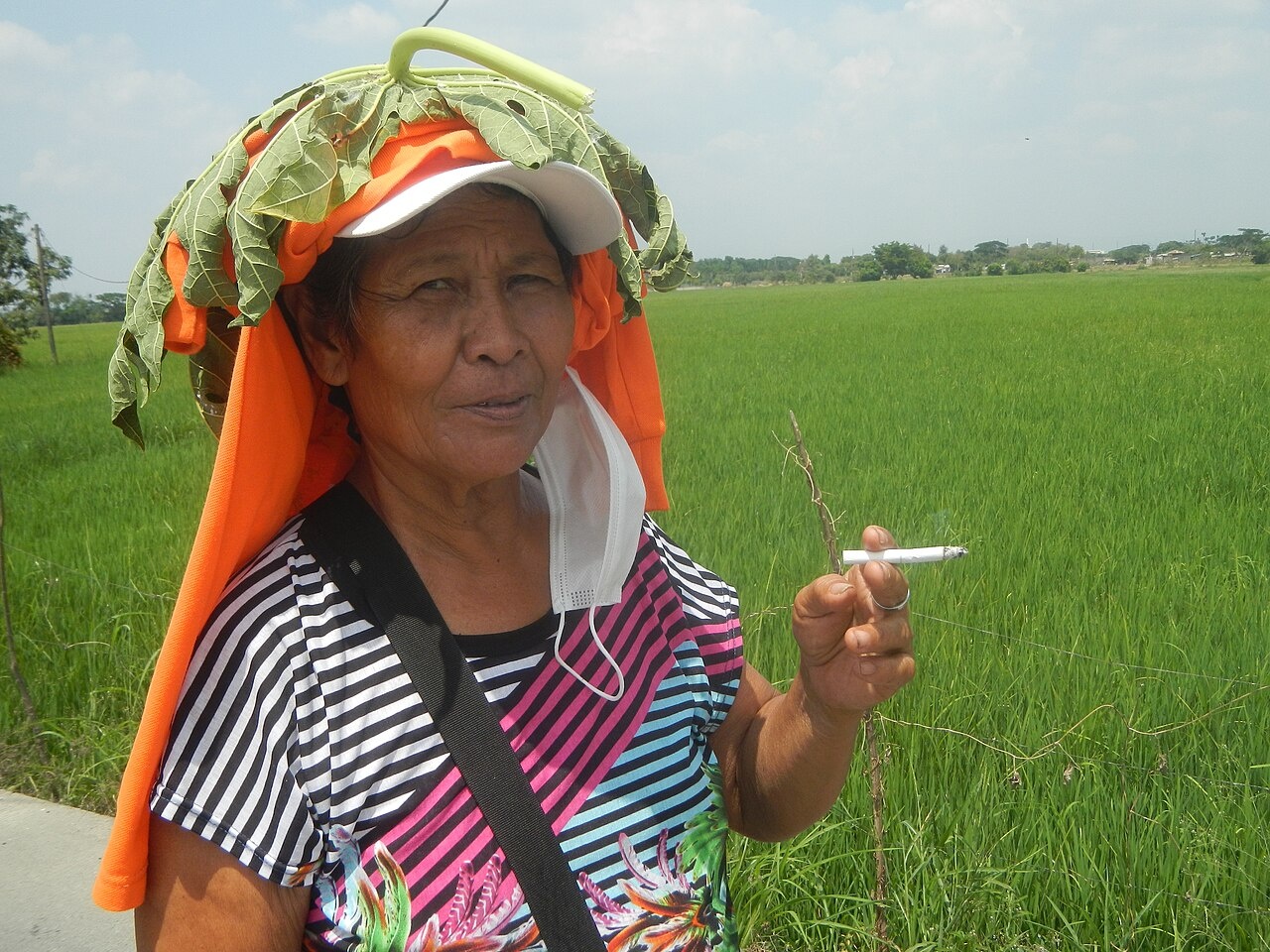
Smoking in the Philippines remains a major public health concern despite declining rates and stronger government regulation. The country has implemented nationwide policies that restrict smoking in many public spaces, yet tobacco use is still widespread, particularly among men. Public health advocates and international organizations continue to highlight smoking as one of the leading preventable causes of disease and death in the country. [Sources: Campaign for Tobacco-Free Kids; Global State of Tobacco Harm Reduction]
Recent data show that smoking rates have fallen over the past decade but remain significant. In 2021 about 19.5 percent of adult Filipinos—roughly 15.1 million people—were current tobacco users, down from 29.7 percent in 2009. Estimates for 2024 place the prevalence rate at about 19.7 percent. Smoking is far more common among men than women: approximately 34.7 percent of men smoke compared with 4.2 percent of women. Tobacco use causes serious health consequences, with more than 112,000 Filipinos dying each year from tobacco-related diseases. Youth smoking also remains a concern. In 2019 about 12.5 percent of teenagers aged 13 to 15 reported using tobacco products, and the use of e-cigarettes among this group exceeded conventional cigarette use, with more than 14 percent reporting vaping.
Around 17 million people, or nearly a third of the adult population, smoked in the Philippines in 2014, according to a report by Southeast Asia Tobacco Control Alliance at that time — the second highest in Southeast Asia after Indonesia. Nearly half of all Filipino men and 9 percent of women smoked and experts said the habit costs the economy nearly $4 billion in healthcare and productivity losses every year. [Source: Kanupriya Kapoor and Enrico Dela Cruz, Reuters, October 12, 2016]
According to one survey in the 2000s, 73 percent of the adults in the Philippines smoked. The number of cigarettes smoked a year increased from 2,010 in 1972 to 2,190 in 1982 and decreased to 1,760 in 1992, when the Philippines ranked 37th in the world in cigarette consumption. In the 2000s, more than half the Filipino children between the ages of 7 and 17 smokes, an increase of 150 percent from 1987. At that time there were no laws prohibiting minors from smoking and many of people who sold cigarettes in the streets were children. Time reported a six-year-old boy that smoked half a pack of cigarettes a day. His mother said he needed a little discipline,
RELATED ARTICLES:
DRINKS IN THE PHILIPPINES: BEER, TUBA, COCKTAILS, CIVET COFFEE factsanddetails.com
DRINKING IN THE PHILIPPINES: CUSTOMS, HOBBIT BAR, WINE PARTIES, TAXES factsanddetails.com
ILLEGAL DRUG USE IN THE PHILIPPINES: MAINLY CANNABIS AND METH factsanddetails.com
ILLEGAL DRUG TRADE IN THE PHILIPPINES factsanddetails.com
FILIPINO RESTAURANTS AND PLACES TO EAT IN THE PHILIPPINES factsanddetails.com
JOLLIBEE: HISTORY, TONY TAN CAKTIONG, SUCCESS factsanddetails.com
FOOD AND THE PHILIPPINES: DIET, STAPLES, AND COOKING FOR U.S. PRESIDENTS factsanddetails.com
EATING AND DRINKING CUSTOMS IN THE PHILIPPINES factsanddetails.com
FILIPINO CUISINE: CHARACTERISTICS, REGIONAL VARIATIONS, FUSION, DEFENDING IT factsanddetails.com
FILIPINO DISHES: EATING, COOKING AND ENJOYING THEM factsanddetails.com
FILIPINO SNACKS AND DESSERTS: SWEETS, FRUITS, STREET FOOD factsanddetails.com
FILIPINO FOOD RECIPES factsanddetails.com
EXOTIC AND WEIRD FOODS IN THE PHILIPPINES factsanddetails.com
Tobacco Industry in the Philippines
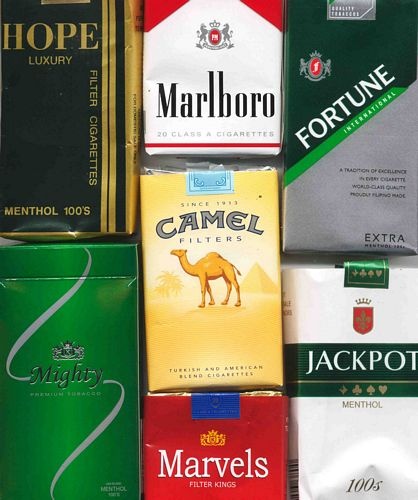
Marlboro is the most popular cigarette brand in the Philippines, commanding a dominant 57 percent market share. The market is led by Philip Morris Fortune Tobacco Corporation (PMFTC), which plays a central role in shaping the country’s tobacco industry. Other major brands include products from Japan Tobacco International (JTI), with Fortune and Jackpot among the popular choices, alongside a growing market for flavor capsule cigarettes. [Source: Yahoo Finance UK]
Key market trends in the Philippines highlight the dominance of PMFTC Inc., a joint venture between Philip Morris International and Fortune Tobacco Corp, which continues to lead the industry. Japan Tobacco International remains the primary competitor, holding a significant share of the market. Marlboro is consistently the top-selling brand and is widely regarded as the premier cigarette in the country, while other brands such as Jackpot and various Fortune variants are also commonly available.
A notable trend is the rising popularity of flavor capsule cigarettes, with multiple brands introducing these options to attract consumers. Overall, the market is characterized by high cigarette consumption, with an estimated 15 million adult smokers in the Philippines, reflecting the continued strength and scale of the tobacco industry in the country.
Policies focus on consumer awareness and pricing. Republic Act No. 10643, the Graphic Health Warnings Law, requires cigarette packages to display large rotating graphic warnings covering 50 percent of both the front and back of tobacco packaging. Meanwhile, the Sin Tax Reform Law significantly increased taxes on tobacco products to discourage smoking while generating revenue for the country’s universal health care program. The sale of tobacco products to individuals under 18 years old is illegal, although the continued legal sale of single cigarette sticks has drawn criticism because it makes cigarettes more affordable and accessible to minors.
History of Tobacco in the Philippines
The tobacco industry is fairly big and powerful. There were 62,000 tobacco farmers in the 2000s. Philippine Tabacalera Cigars were made famous by the Clinton-Monica Lewinsky scandal. At that time Manila did have rules banning public smoking and tobacco advertising was allowed in all media. The government has encouraged the tobacco industry to turn their product into food supplements, antibiotic ointments and skin materials, building materials, paints and pesticides as a cushion as the smoking rates drops.
Marlboro owner Philip Morris International is estimated to hold more than 70 percent of the Philippines market through its joint venture with Fortune Tobacco. In 2015, the Philippines accounted for almost 1 in every 13 cigarettes sold by Philip Morris globally, though analysts estimated it was worth a far smaller 2 percent of profit. [Source: Kanupriya Kapoor and Enrico Dela Cruz, Reuters, October 12, 2016]
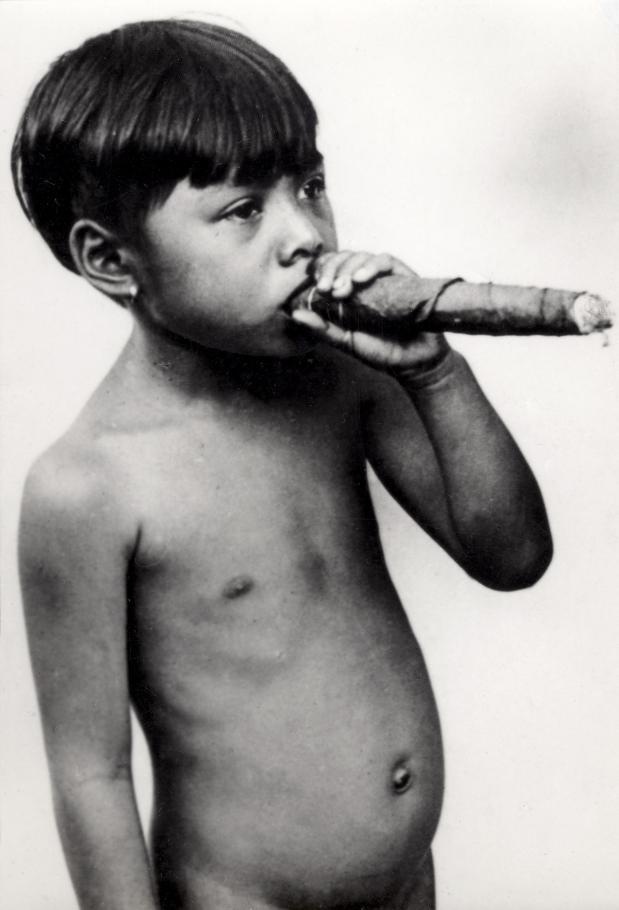
The tobacco industry maintains a strong lobbying presence in the region, which critics say complicates the full implementation of the World Health Organization Framework Convention on Tobacco Control (WHO FCTC) guidelines. Illicit tobacco trade is also a persistent issue, with cheaper, unregulated cigarettes undermining public health goals and tax policies. In addition, smoking cessation support remains limited, as fewer than 60 percent of health facilities in the Philippines currently offer comprehensive services to help smokers quit. [Sources: National Institutes of Health; Global State of Tobacco Harm Reduction]
Smoking Laws in the Philippines
The Philippine government has enacted several major laws to curb tobacco consumption. Executive Order No. 26, issued in 2017, established a nationwide ban on smoking in enclosed public places and public transportation, allowing smoking only in designated smoking areas that meet strict ventilation and location requirements. The Vaporized Nicotine and Non-Nicotine Products Regulation Act, enacted in July 2022, regulates e-cigarettes and heated tobacco products, restricting their sale to individuals 18 years old and above and applying many of the same public-use restrictions as conventional cigarettes. [Sources: Global State of Tobacco Harm Reduction; Oxford Academic]
The physical geography of the Philippines played an important role in shaping the development of tobacco cultivation in the islands. In the lowland areas where tobacco is typically grown, water is abundant and temperature variations are minimal, conditions that favor the plant’s growth. Fertile soils and a tropical climate also made the Philippines well suited for tobacco cultivation as well as other agricultural crops. [Source: George Bryan Souza, Tobacco in History and Culture: An Encyclopedia, Gale Group, Inc., 2005]
By the twenty-first century, tobacco was still cultivated in the Philippines, but it had become a relatively minor export compared with its importance in earlier periods. The decline of the industry is reflected in employment trends: between 1975 and 1997 the share of the labor force working in the tobacco sector fell from about 4 percent to roughly 1 percent of the total employed population.
Historically, tobacco was often produced on plantations—large agricultural estates devoted to growing a cash crop and worked by laborers who lived on the property. In many regions of the world plantations relied on coerced labor; for example, before 1865 plantations in the American South were commonly worked by enslaved people.
See Tobacco Under TRADE AND PLANTATIONS IN THE PHILIPPINES UNDER THE SPANISH factsanddetails.com
Introduction of Tobacco to the Philippines
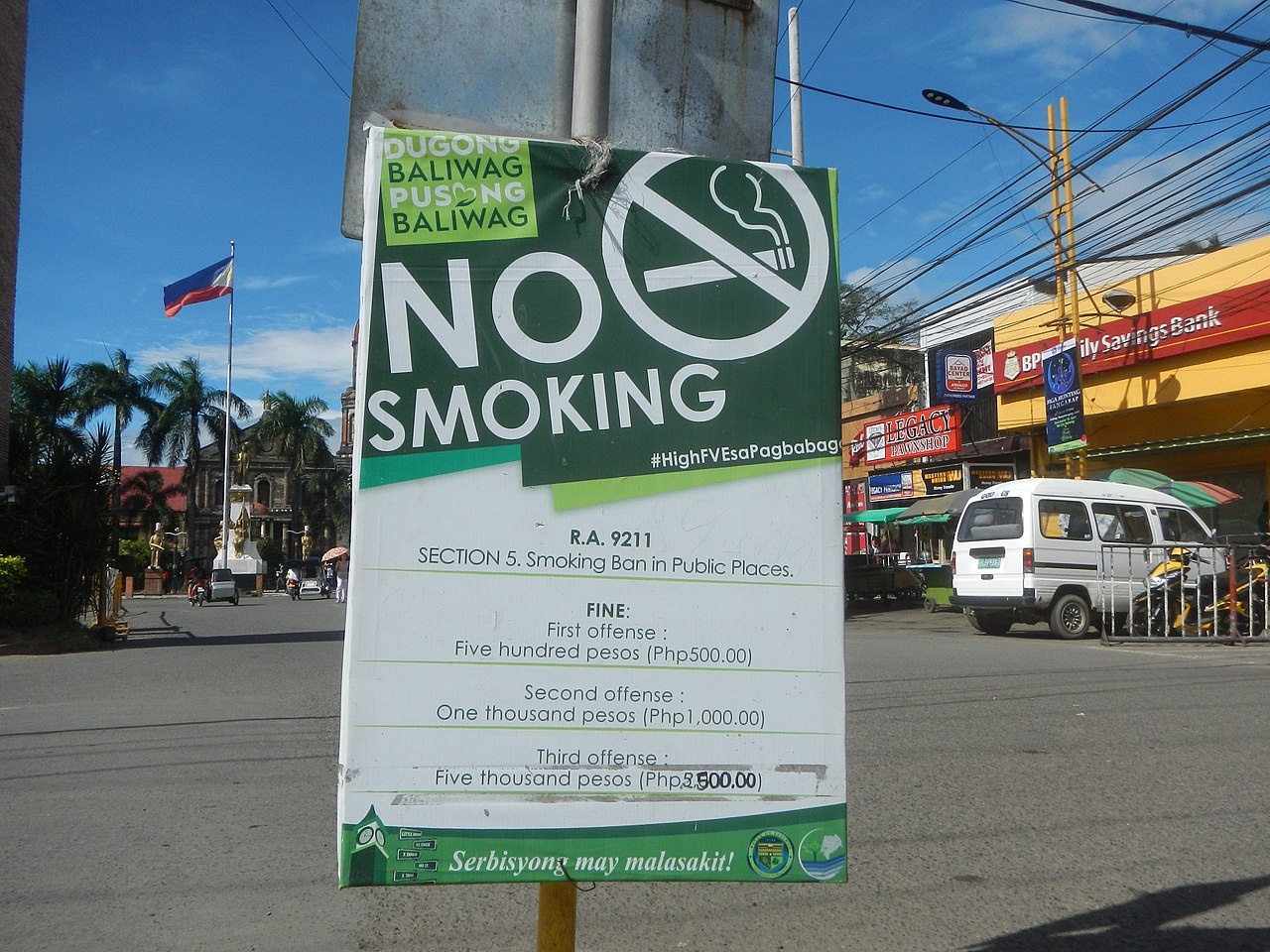
Tobacco was introduced to the Philippines by the Spanish during the last quarter of the sixteenth century, when several species of the genus Nicotiana were brought from the Americas. The introduction likely occurred after the Spanish established the city of Manila on the island of Luzon in 1571. [Source: George Bryan Souza, Tobacco in History and Culture: An Encyclopedia, Gale Group, Inc., 2005]
Two principal species were introduced: Nicotiana rustica and Nicotiana tabacum. Over time N. tabacum—the typical American tobacco plant—became the more widely cultivated and accepted species, spreading from Luzon to other parts of Asia, including China. Spanish colonial officials and Catholic missionaries have both been suggested as agents of tobacco’s introduction, but missionaries were probably especially influential because of their experience organizing agricultural production and using crop cultivation to support missionary activities.
Betel Nut in the Philippines
Betel net is widely used among some groups in the Philippines. It is a mildly narcotic seed that comes from the areca nut palm (“Areca catechu”, or A. catechu L.), which some believe originated in the Philippines. Some of the earliest evidence of betel nut consmptions comes from the Philippines, Betel-stained teeth were first documented in the Philippines in 3000 B.C.
Betel nut use makes the users mouth all red. It is used by many women, which makes sense because they are the ones that do most of the work and they need an energy boost. I asked one Ifugao tribesman why he chewed betel nut. Smiling through mere chips for teeth and spitting the red juice in a fashion reminiscent of baseball players spitting out chewing tobacco he said without irony that it was good for his teeth.
Thomas J. Zumbroich wrote: The oldest evidence of betel nut use from dentitions comes from a burial site in the Duyong Cave on Palawan island in the southern Philippines that contained skeletal remains with visible stains on teeth compatible with those observed after betel chewing. The skeletons were accompanied by six Anadara shells that appeared to be lime containers as one was still filled with lime. This burial pit was dated to about 2660 B.C., with evidence pointing to the occupation of the cave by an indigenous community of hunter-gatherers at least one thousand years prior. Stained teeth and containers for lime were also found in other caves in the area corroborating the suggestion that betel chewing was practiced. Other evidence for the Philippines dates from the considerably later Metal Age (first millennium C.E.). Teeth from a burial site on the island of Bohol (Central Visayas region of the Philippines) were found to have the characteristic reddish stain associated with betel chewing. At the expansive neolithic site of Beinan on the East Coast of Taiwan numerous skeletal remains in the over fifteen hundred excavated burial sites had dentitions with stained teeth. [Source: Thomas J. Zumbroich, “The origin and diffusion of betel chewing: a synthesis of evidence from South Asia, Southeast Asia and beyond,” Journal of Indian Medicine, 2008]
See Separate Article BETEL NUT: HISTORY, USE, BUZZ, BOTANY, PRODUCTION AND HEALTH factsanddetails.com
Tobacco and Betel Nut Use in the Philippines
The rapid spread of tobacco use among Filipinos was likely aided by existing cultural practices. Indigenous communities already engaged in social rituals and exchange relationships that facilitated the adoption of new habits. One of the most widespread traditions was the chewing of betel, a mixture made from the nut of the areca palm and the leaf of the betel pepper plant, combined with lime and sometimes spices such as cardamom. [Source: George Bryan Souza, Tobacco in History and Culture: An Encyclopedia, Gale Group, Inc., 2005]
Chewing betel produced a distinctive brick-red saliva that stained the mouth and lips and was common throughout the Philippines and much of Asia. This established custom of chewing stimulants may have helped pave the way for the rapid acceptance of tobacco smoking and the exchange of tobacco during social interactions, such as welcoming visitors or passing time.
Another form of tobacco use was snuff, a powdered and often flavored tobacco that was either inhaled through the nose or placed between the cheek and gum. Snuff became popular in the eighteenth century but gradually declined and had largely faded from common use by the twentieth century.
In the Philippines, chewing the areca nut and betel leaf was a very widespread tradition in the past. Now, though, this tradition is almost dead among the urban people in the cities and big towns, and has largely been replaced by gum and tobacco. Nowadays, older people are the only ones chewing betel nuts in urban areas. But in rural areas, betel nut chewing is very much alive. [Source: Wikipedia]
Tough Anti-Smoking Laws Passed by Duterte
During his presidency from 2016 to 2022, Rodrigo Duterte introduced some of the strictest anti-smoking policies in Southeast Asia. The measures were modeled on the comprehensive smoking ban he had previously implemented while serving as mayor of Davao City. Duterte’s policies aimed to reduce tobacco use, protect the public from secondhand smoke and expand regulations to include newer nicotine products such as e-cigarettes. [Sources: Reuters; Wikipedia]
A key measure was Executive Order No. 26, signed on May 16, 2017 which imposed a nationwide ban on smoking in public places and restricted smoking to designated smoking areas (DSAs) that meet strict standards. The smoking ban prohibits smoking in all public outdoor areas, enclosed and partially enclosed public spaces, workplaces, accommodation and entertainment establishments and all locations where people gather, including parks, markets and transportation terminals. . It also applies to drivers, conductors and passengers of public utility vehicles. Smoking is permitted only in designated smoking areas where the public is not exposed to secondhand smoke. [Source: CNN, March 7, 2017]
Some wondered why the law was necessary. The Philippines already had a law restricting smoking in public places—Republic Act 9211, the Tobacco Regulation Act of 2003—the executive order was introduced to clarify gaps in the law. Public health advocates said the new law helped define what qualifies as a “public place” and expanded the types of tobacco products covered, potentially including shishas, electronic smoking devices and e-cigarettes.
The policy was expanded through Executive Order No. 106, signed on February 26, 2020. This amendment brought electronic cigarettes, vaping and heated tobacco products under the same restrictions as traditional cigarettes. It prohibited the use of vaping devices in public places and strengthened rules governing their sale and distribution. The amendments also raised the minimum legal age for purchasing tobacco products, including vapes, from 18 to 21 years old.
The regulations broadened the scope of the smoking ban to include both indoor and outdoor public areas, including casinos and entertainment venues. They also required designated smoking areas to be located at least 10 meters (about 33 feet) from building entrances and exits to reduce public exposure to smoke. The Department of Health (Philippines) supported the policy and proposed additional restrictions, including banning the sale of single cigarette sticks to make tobacco less accessible to minors.
Taxes See Separate Article: DRINKING IN THE PHILIPPINES: CUSTOMS, HOBBIT BAR, WINE PARTIES, TAXES factsanddetails.com
The Duterte administration paired the regulations with strict penalties and enforcement measures. Individuals who violated the smoking ban could face fines of up to US$90 and possible jail terms of up to four months. Police-led enforcement teams were created to monitor compliance, and authorities encouraged citizens to report violations in order to strengthen enforcement of the nationwide anti-smoking rules.
Duterte’s Anti-Smoking Laws When he was Mayor of Davao
Duterte implemented strict law-and-order policies, including limits on alcohol sales, reduced speed limits, anti-smoking regulations, and a firecracker ban when he was maypor of Davao before he became president. In 2015, Duterte drew criticism after confronting a tourist who violated Davao’s anti-smoking ordinance, with the Commission on Human Rights among those condemning his actions. His tough rhetoric on crime further defined his leadership style. [Source: Wikipedia]
According to the Washington Post: By Philippines standards it is an orderly place. A curfew keeps unaccompanied minors off the streets after 10:00pm. The sale of liquor after 2:00am is prohibited. And, as that unlucky tourist learned, you may smoke only in designated places — or else. Around town, banners remind people whom to thank for city rules. “President Duterte: Thank you for making Davao City smoke-free,” reads an apparent favorite.One time, when a tourist ignored no-smoking rules, our mayor stormed a restaurant with a revolver and forced him to eat the cigarette butt. [Source: Emily Rauhala, Washington Post, September 28, 2016]
The World Health Organization recognized the Davao City law as an effective smoke-free policy. The WHO cited Davao’s experience as evidence that comprehensive smoke-free regulations can be successfully enforced in the Philippines. Duterte's 2017 national smoking laws were "effectively a scaling up of the Davao City plan," said Ralph Degollacion of Health Justice Philippines, a local NGO. "Certainly in Davao, the sentiment and business establishments support a smoke-free Davao. The president sees it as something that's not ideal for health... and this is part of the public well-being," Ernesto Abella said.
Duterte is a former smoker who has called vaping was “toxic” and should only be done only in private. Duterte often claims that in Davao, “nobody, but nobody” can be seen smoking on the streets. “As you know, nicotine is an addictive devil,” he said. “And if you have to have a fix, well, you have to find some latrine there anywhere, but not in the madding crowd.”
Image Sources: Wikimedia Commons
Text Sources: “Encyclopedia of World Cultures Volume 5: East/Southeast Asia:” edited by Paul Hockings, 1993; “Culture Shock!: Philippines” by Alfredo Roces and Grace Roces, Marshall Cavendish International, 2010; Metropolitan Museum of Art; National Geographic, Live Science, Philippines Department of Tourism, New York Times, Washington Post, Los Angeles Times, Smithsonian magazine, Encyclopedia.com, Library of Congress, The Conversation, The New Yorker, Time, BBC, CNN, Reuters, Associated Press, AFP, Lonely Planet Guides, Google AI, Wikipedia, The Guardian and various websites, books and other publications.
Last updated March 2026