
RESTAURANTS IN THE PHILIPPINES
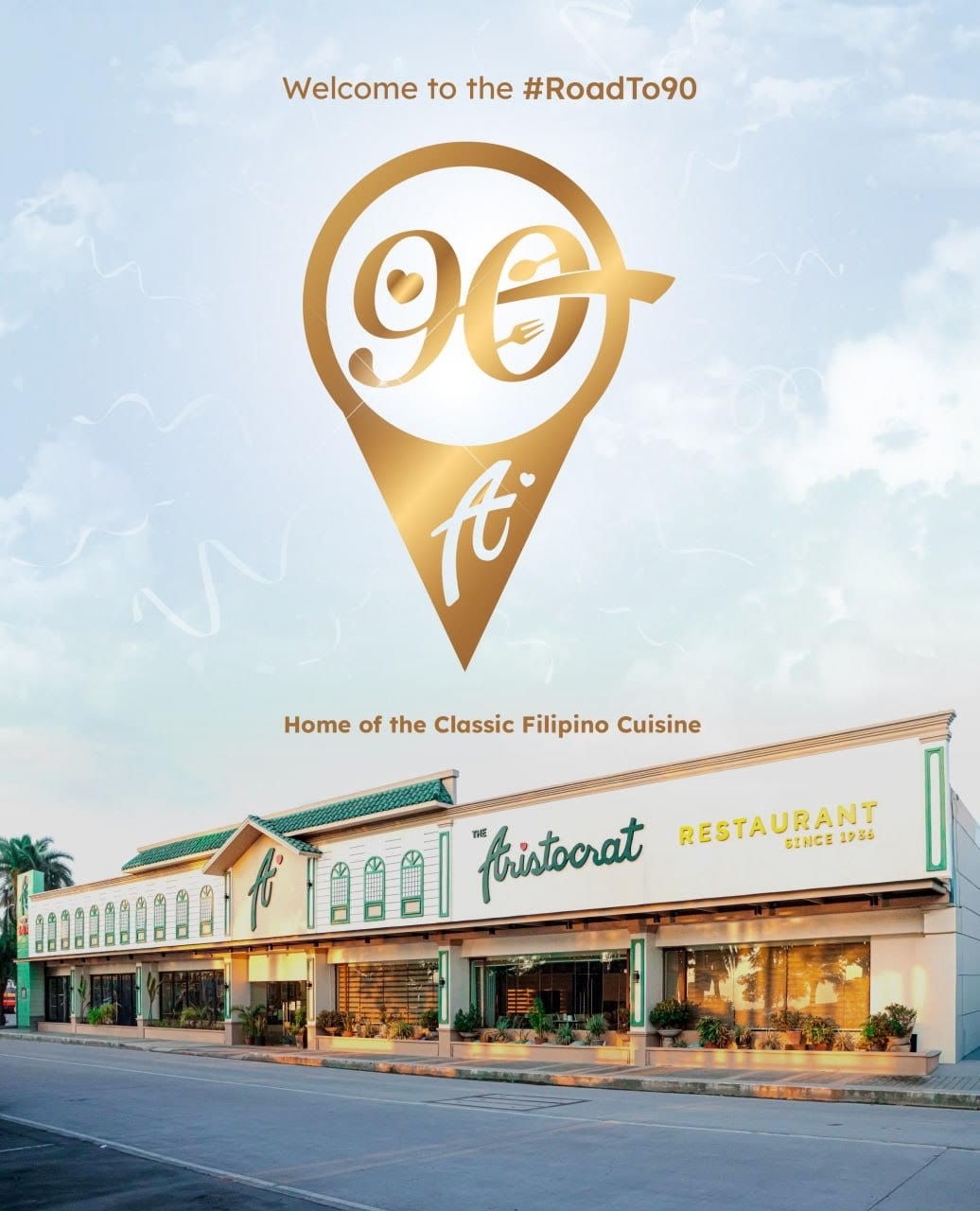
Cities throughout the Philippines offer a wide variety of restaurants serving European, Asian, and fusion cuisine. The finest hotels are known for their excellent dining facilities, and many hotels and restaurants offer all-you-can-eat buffet services. At these buffets, however, diners are usually charged extra if they leave significant amounts of food uneaten. The sensible approach is to take only what you can finish—enjoying the abundance without wasting food. [Source: “Culture Shock!: Philippines” by Alfredo Roces and Grace Roces, Marshall Cavendish International, 2010]
Local Filipino restaurants serve a variety of stew-like dishes, which are usually displayed so that you can choose the ones you want by simply pointing at them. Many restaurants in the Philippines are run by Chinese. They offer Chinese food as well as Filipino food. Kinds of restaurants include: 1) first class restaurants with world-class chefs, often in hotels; 2) world family-style dining places; 3) simple grilleries; 4) “carinderias”; 5) cafeterias; and 6) food court stalls. 7) At dressed-down dampas, you can order fresh crustaceans by the kilo, straight from the market stalls, and then place your order with the restaurant kitchen. “Halal’ and kosher food are available. There are also organic markets to eat-all-you-can buffets.
For wealthier and more cosmopolitan diners, a newer trend is the food strip, where a row of restaurants offering different cuisines lines a street or pedestrian walkway. These areas are usually more upscale and provide ample parking as well as easy access by public transport or on foot. The range of restaurants can vary from five-star establishments to more modest eateries, and the food offered ranges from international and fusion cuisine to simple sandwiches. The atmosphere may be lively and imaginative or calm and minimalist, depending on the restaurant.
In Metro Manila, food strips can be found in many major districts, from the more affluent neighborhoods of Alabang, Fort Bonifacio, and Makati to the busy commercial areas of Greenhills and Eastwood City. One well-known example is Manila Bay Walk along Roxas Boulevard, stretching from the Manila Yacht Club to the United States Embassy. Although the development has altered the historic view of Manila Bay, it has become a popular place for visitors who wish to dine while watching the sunset.
RELATED ARTICLES:
JOLLIBEE: HISTORY, TONY TAN CAKTIONG, SUCCESS factsanddetails.com
FOOD AND THE PHILIPPINES: DIET, STAPLES, AND COOKING FOR U.S. PRESIDENTS factsanddetails.com
EATING AND DRINKING CUSTOMS IN THE PHILIPPINES factsanddetails.com
FILIPINO CUISINE: CHARACTERISTICS, REGIONAL VARIATIONS, FUSION, DEFENDING IT factsanddetails.com
FILIPINO DISHES: EATING, COOKING AND ENJOYING THEM factsanddetails.com
FILIPINO SNACKS AND DESSERTS: SWEETS, FRUITS, STREET FOOD factsanddetails.com
FILIPINO FOOD RECIPES factsanddetails.com
EXOTIC AND WEIRD FOODS IN THE PHILIPPINES factsanddetails.com
DRINKS IN THE PHILIPPINES: BEER, TUBA, COCKTAILS, CIVET COFFEE factsanddetails.com
DRINKING IN THE PHILIPPINES: CUSTOMS, HOBBIT BAR, WINE PARTIES, TAXES factsanddetails.com
TOBACCO AND BETEL NUT IN THE PHILIPPINES: SMOKING, HISTORY, STRICT LAWS factsanddetails.com
ILLEGAL DRUG USE IN THE PHILIPPINES: MAINLY CANNABIS AND METH factsanddetails.com
ILLEGAL DRUG TRADE IN THE PHILIPPINES factsanddetails.com
Restaurant Etiquette in the Philippines
Hygiene-wise and selection-wise the best places to eat are the restaurants at upscale hotels and good restaurants frequented by tourists or rich Filipinos. Manila and the other large cities have restaurants serving American-style fast food, pizza, Italian food, Indian food, Japanese food, Korean food, Chinese food and other kinds of international cuisine. Resorts along the ocean are famous for fish, prawns and other kinds of seafood. Off the beaten path the choice is usually more limited: usually one-room restaurants with a variety of stews. In tourist towns and beach areas, you can find backpacker restaurants serving thing live pizza, sandwiches, omelettes, muesili, pancakes and fried rice.
In most places Filipinos eat with a fork and spoon. In some places people eat with their hands. On the tables of traditional Filipino restaurants are water containers or a small sink that patrons use to wash their hands before they eat. Some restaurants filled with cigarette smoke. At crowded, busy restaurants, sharing tables with strangers is common. Restaurants generally serve water or tea for free. Sometimes no napkins are available. When dining with Filipinos do not begin to eat or drink until the oldest man at the table has been served and has begun. It is appropriate to thank the host at the end of the meal for the fine food.
See Separate Article: EATING CUSTOMS IN THE THE PHILIPPINES factsanddetails.com
Street Stalls and Karinderia in the Philippines
The pavements of many Philippine cities are dotted with small makeshift food stalls, often sending up smoke from grills cooking fish balls, pork, or chicken entrails. These barbecue stands have developed their own playful terminology. Chicken feet are called “Adidas,” pig’s ears are known as “Walkman,” and chicken intestines are sometimes referred to as “IUD.” For those who prefer more familiar fare, these stalls also sell popular snacks such as barbecued pork or banana-que, deep-fried bananas coated in caramelized sugar. [Source: “Culture Shock!: Philippines” by Alfredo Roces and Grace Roces, Marshall Cavendish International, 2010]
Slightly more established are fixed stalls known locally as turo-turo, a name derived from the Filipino word meaning “to point.” Customers simply point to the dishes they want from the food displayed. These stalls usually serve simple Filipino fast foods such as tapa (cured beef), tocino (sweet cured pork), garlic fried rice, longganisa (local sausage), and lugaw (rice porridge). Turo-turo eateries also have their own food combinations and names. Tapsilog refers to a meal of tapa, sinangag (garlic fried rice), and itlog (fried egg), while longsilog combines longganisa, garlic rice, and egg. The eateries themselves often carry imaginative names such as “Topsi-Turbi,” referring to tapa and rice cooked in a turbo broiler, or “Goto Heaven,” named after the popular tripe rice porridge.
In cockpits, public markets, and vacant lots, small eateries known as karinderia offer a wider variety of home-style dishes. Diners who are concerned about sanitation sometimes wipe their spoons and forks with a paper napkin and dip them briefly into the bowl of hot soup provided at the table before eating. A common rule when dining at these modest establishments is to choose dishes that are freshly cooked and served piping hot. Raw vegetables and uncooked greens are sometimes avoided by cautious customers.
The names of these eateries can be colorful and humorous. Examples include “Cooking ng Ina Mo” (literally “Your Mother’s Cooking,” though the phrase can carry a cheeky double meaning), “The Fried of Marikina,” specializing in fried chicken, and “Wrap & Roll,” known for its lumpia or egg rolls.
Food Vendors and Food Delivery in the Philippines
In the past, ambulant food vendors roaming from door to door were a common sight in the Philippines. Even today, in smaller neighborhoods, their distinctive calls can still be heard. The drawn-out cry of “Baluuut!” announces the vendor selling balut, the well-known boiled duck egg with a partially developed embryo. Another call of “Mais!” signals a seller offering boiled corn. [Source: “Culture Shock!: Philippines” by Alfredo Roces and Grace Roces, Marshall Cavendish International, 2010]
Similar cries advertise other snacks such as roasted peanuts and taho, a sweet treat made from soft tofu. Delivering lunch meals to office workers also has a long tradition, dating back to the days when meals arrived in enamel-lined tin containers. Today, however, fast food meals are quickly delivered to office staff in plastic containers by young motorcycle riders—sometimes jokingly referred to as “kamikaze” because of their daring rides through traffic.
In the commercial centers of most cities, “cafeterias on wheels” provide quick meals for clerks, messengers, and drivers working nearby. Wherever traffic is heavy, ambulant vendors weave among cars selling snacks and drinks to passengers. Bottled water, peanuts, and other small food items are commonly offered to motorists stuck in traffic on crowded city avenues.
Fast Food in the Philippines
In recent decades, fast food has become an important part of urban Filipino food culture. Both domestic and international fast-food chains operate in many towns and cities. Unlike most Western fast-food meals, Filipino fast-food menus commonly include rice as a standard accompaniment, although French fries are also available. Banana ketchup—a sweet, banana-based condiment—is often preferred locally, though international chains also serve tomato ketchup. One of the country’s most prominent fast-food companies, Jollibee, has expanded internationally and opened restaurants in areas with large Filipino immigrant populations, including in the U.S. state of California, with plans for further expansion in other cities with significant Filipino communities. [Source: Sally E. Baringer, Countries and Their Cultures, Gale Group Inc., 2001]
Fast food has become part of the culture, with national and international chains in many towns. All meals at fast-food restaurant include rice, although French fries also tend to be on the menu. Banana ketchup is preferred, although the international chains serve tomato ketchup. [Source: everyculture.com /=/]
A survey by A.C, Nielsen in the 2010s found that 54 percent of Filipino interviewed eat at a fast food restaurant at least once a week, compared to 35 percent in the United States. McDonald’s, Kentucky Fried Chicken and Pizza Hut all operate in the Philippines but they only have a small share of the Philippines fast food market. They receive stiff competition from local favorites: Chow King, the top Chinese food chain, Greenwich, the leading pizza and pasta chain, and Jollibbes.
The Philippines fast food industry is dominated by Jolibees, a Philippine-owned company that controls 46 percent of the quick service restaurant market and 80 percent of the burger-based meals market. The Jollibee Company owns Chow King and Greenwich. As of 2001 the company had 722 restaurants and planned to open 175 more in 2002. It also runs restaurants in California, Hong Kong and Dubai, places where there are large Filipino communities. As of 2013, it boasted 2,581 Jollibees and other fast-food restaurants under various brands.
Max’s Fried Chicken
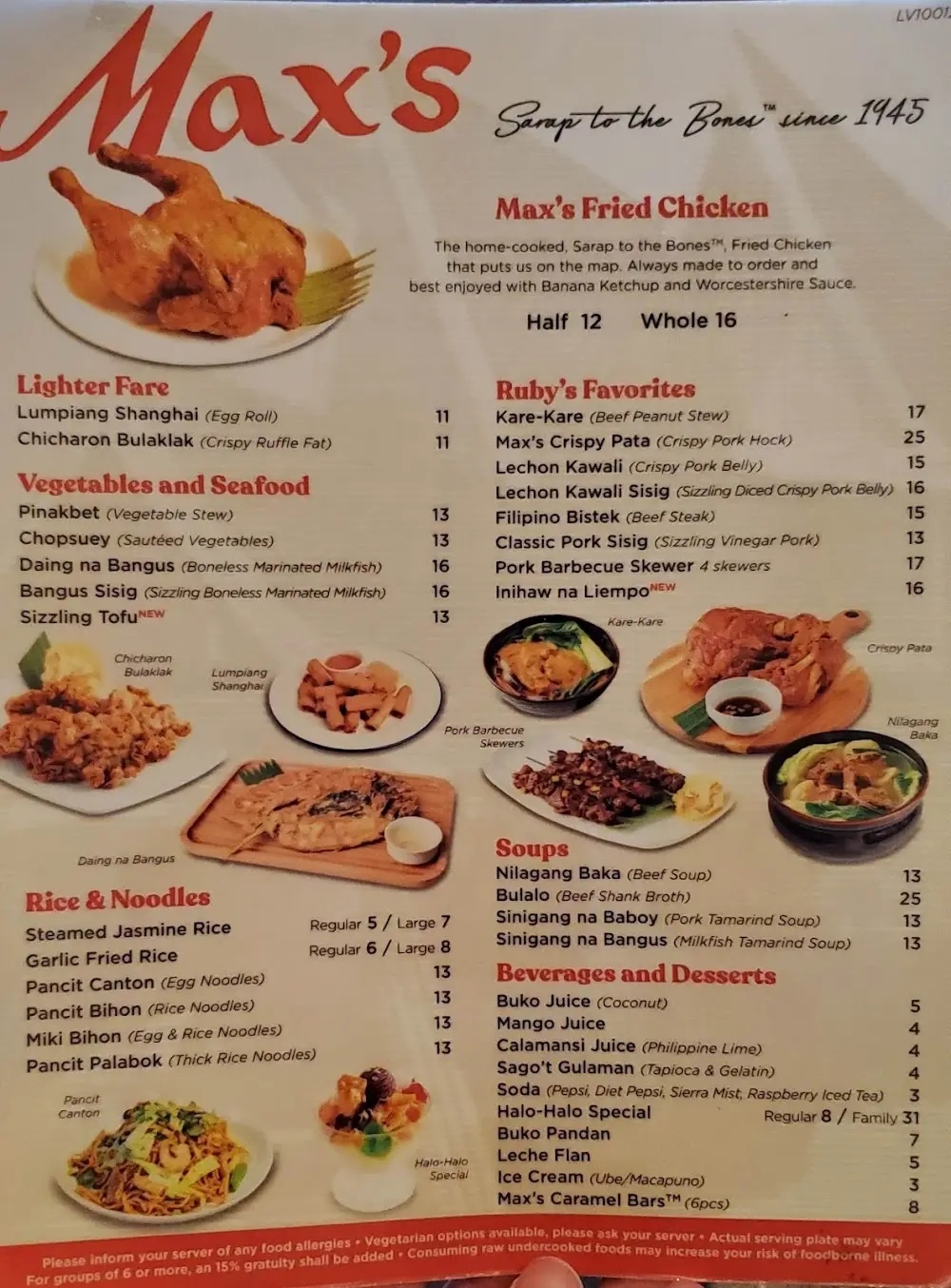
Max's Restaurant has long been one of the most recognizable names in Filipino dining. Founded in 1945 in Quezon City, the restaurant grew from a small family establishment into an international chain with more than 160 outlets across the Philippines and overseas. Known affectionately as “The House That Fried Chicken Built,” Max’s has become an institution for Filipinos at home and abroad. Its expansion has carried the brand far beyond the Philippines, with branches in countries with large Filipino communities and even a location in Las Vegas. [Source: Sue Halpern and Bill McKibben, Smithsonian magazine, May, 2015]
The restaurant’s reputation rests largely on its signature dish: Filipino-style fried chicken. Unlike many Western versions, the chicken is not breaded. Instead, it is marinated with ingredients such as fish sauce and ginger before being deep-fried until the skin turns a deep reddish-brown and crisp. Beneath the crunchy exterior, the meat remains tender and juicy, easily slipping from the bone. The chicken is typically served with banana ketchup or a light dipping sauce, making it both simple and distinctive.
A meal at Max’s usually includes a range of classic Filipino comfort dishes. Diners often order pancit, a noodle dish made from thin rice noodles stir-fried with shrimp and sometimes mixed with chicken or pork. Another staple is garlic rice, a fragrant accompaniment that pairs well with fried meats and savory stews. Chicken adobo is also a frequent choice. This traditional dish features meat simmered with garlic, onions, soy sauce, and vinegar, producing a flavor that balances saltiness, tanginess, and a hint of sweetness.
The name adobo comes from the Spanish word for marinade, a legacy of the Spanish colonial period. Yet the dish itself predates Spanish rule in the Philippines. Long before the arrival of the colonizers in the 16th century, Filipinos were already cooking meat in vinegar as a way to preserve it in the tropical climate. The Spanish gave the dish its name, but the distinctive flavor comes from the local method of combining vinegar with spices and seasonings.
For many Filipinos, the food served at Max’s evokes memories of home and family gatherings. A plate filled with fried chicken, pancit, garlic rice, and adobo represents the kind of comforting, familiar meal that has made the restaurant so beloved for generations. As one diner remarked while piling adobo alongside fried chicken and noodles, it is simply “comfort food.”
Lechón Restaurants
Lechón—whole pig roasted slowly over charcoal—is one of the most celebrated dishes in the Philippines and a centerpiece at major gatherings such as birthdays, weddings, and Christmas feasts. The dish is particularly famous in Cebu, where restaurants specializing in lechón attract both locals and visitors eager to taste what many consider the country’s best roast pork. Cebuano lechón is prized for its salty, aromatic flavor, crisp skin, and juicy meat.[Source: Marielle Descalsota, Business Insider, August 31, 2023]
Lechón preparation requires careful attention at every stage. The pigs are sourced from local farms, often from nearby islands such as Bohol or from family farms in Mindanao. According to Batoon, younger pigs are preferred because their meat is more tender and flavorful. Before roasting, the pigs are cleaned, seasoned, and stuffed with aromatic ingredients such as lemongrass and spices. The body is then secured on a long metal spit and rotated slowly over glowing charcoal for several hours. Throughout the roasting process the skin is brushed with oil to ensure it becomes crisp and golden.
Lechón businesses also supply whole roasted pigs to customers celebrating special occasions. Restaurants and cookhouses deliver lechón across the city and sometimes ship roasted pork belly to other parts of the Philippines, including Manila. A whole lechón can feed dozens of people, making it a traditional centerpiece at family gatherings and festive events. Because demand rises sharply during holidays, many customers place their orders months in advance to ensure they have a roast pig for Christmas or New Year celebrations.
Despite the popularity of the dish, maintaining quality is a constant challenge for lechón restaurants. The roasting process requires skill, careful timing, and close monitoring of the charcoal fire. Owners often emphasize that every pig must meet the same high standard—crisp skin, juicy meat, and balanced seasoning. For many Cebuano cooks, the reputation of their restaurant depends on delivering perfectly roasted lechón every time.
Lechón Restaurants in Cebu
Across Cebu, numerous restaurants and cookhouses prepare lechón daily, supplying families, businesses, and celebratory events. Among them are establishments like Mag’s Special Lechón Belly, an artisanal cookhouse run by Marjurie Zanoria and Ariel Batoon. The couple began their business modestly in 2012, roasting pigs in the backyard of their home and filling only a handful of orders each week. As demand grew, they moved to a larger cookhouse where pigs could be roasted over charcoal pits and staff could prepare hundreds of servings for customers across the region. Today their operation produces thousands of pounds of pork belly and dozens of whole roasted pigs each week, with even greater demand during festive seasons. [Source: Marielle Descalsota, Business Insider, August 31, 2023]
Inside Cebu cookhouses, the air fills with the rich smell of roasting pork as workers tend the charcoal fires. The pigs rotate slowly above the heat until the skin turns evenly browned. To finish the process, some cooks briefly apply a blowtorch to the skin to achieve the signature crunch that diners expect. The result is a whole roasted pig with crackling skin and tender meat infused with herbs and seasonings.
Cebuano lechón differs noticeably from versions served elsewhere in the Philippines. In many places, particularly in Manila, roast pigs are seasoned more simply with salt and pepper and served with dipping sauces. In Cebu, however, the meat itself is intensely flavored, often stuffed with herbs such as lemongrass, garlic, and spices before roasting. Locals pride themselves on the bold taste and crisp texture of their lechón and are known for having high standards when it comes to judging its quality.
Specialized lechón restaurants throughout Cebu allow visitors to enjoy the dish without ordering an entire pig. Popular establishments slice the roasted pork into portions and serve it with rice and dipping sauces, often featuring a tangy mixture of vinegar and chilies that balances the richness of the meat. Restaurants such as CnT Lechon and House of Lechon are well-known destinations where diners can sample freshly roasted pork prepared in the Cebuano style.
For visitors to Cebu, dining at a lechón restaurant is considered an essential culinary experience. When the roasted pig is carved, the knife breaks through the brittle skin with a satisfying crackle, revealing succulent meat inside. Served with rice and a sharp vinegar-chili sauce, the dish offers a combination of savory, crispy, and aromatic flavors that has made Cebuano lechón famous throughout the Philippines.
Tsismis — a Filipino Restaurant on Orchard Street in New York City
Tsismis is a drinking-oriented Filipino restaurant on Orchard Street in New York City. Pete Wells wrote in the New York Times: Kinilaw, a Filipino ceviche in a piercingly sour calamansi and cane vinegar marinade with a jab of bird’s-eye chile, is worth sticking around for, especially on those nights when it’s made with bay scallops instead of fish. After that, you might look into the fried pork-and-carrot won tons called pinsec frito (or, as the menu has them, pinsit frito). They are typically folded into triangles, but the ones at Tsismis are twisted into little cones that look like Hershey’s kisses, though slightly bigger and golden-brown. Once they stop steaming, you can hold them by the cowlick of fried wrapper at the top and swish them around in the sweet chile sauce. [Source: Pete Wells, New York Times, October 22, 2019]
Won tons with the same filling flop around in the soup called pancit molo, although these are boiled. There is almost as much ground pork inside them as outside in the broth, which is thick with garlic and chopped scallions. Even if it’s well after 5:thirsty and you’re not sitting at the bar, Jappy’s wings are worth considering. Jappy is the chef, Jappy Afzelius, and he fries those wings with thinly sliced garlic and sends them out to the dining room with a salsa of raw mangoes, charred onions and chiles. The heat of the salsa will not cause your shirt to burst into flames, but it is hot enough to make your memory of Jappy’s wings a lasting one.
From time to time, it can lean toward sloppiness. One night the fried milkfish in pritong isda was so overdone that even topping it with calamansi juice, fish sauce and a crisp, juicy spoonful of marinated chayote on top didn’t revive it. A version of adobong manok, which Mr. Afzelius makes as a roasted chicken plus a soy-turmeric sauce rather than an all-in-one stew, would have been more successful if the smoked eggplant hadn’t been so undercooked it squeaked.
But the grilled eggplant on top of the kare-kare was as soft as warm marrow, and the other vegetables — crisp green beans, bok choy, enoki mushrooms — made a refreshing counterpoint to the stewed oxtails in thick peanut sauce. Already pungent with shrimp paste, the kare-kare comes with extra on the side that you can add to your heart’s content.
As they do at Bad Saint in Washington, probably the country’s most talked-about Filipino restaurant, Tsismis makes its laing by simmering local kale, rather than the more traditional taro leaves, in coconut milk. And if this version doesn’t have the perspective-altering funk of Bad Saint’s, it still draws plenty of depth from the shrimp paste and smoked fish in the milk and the big handful of dried baby shrimp dropped on top.
Filipino Food in Las Vegas
Sue Halpern and Bill McKibben wrote in Smithsonian magazine: If you are a typical American, especially one who was born and raised here as we were, you probably believe — know — as we did that, Americans have a lock on fried chicken” But a visit to Max’s Restaurant, a Manila institution, in Las Vegas, in a strip mall, a few miles past Caesars Palace, changed our minds. See Max’s Under Filipino Fast Food. [Source: Sue Halpern and Bill McKibben, Smithsonian magazine, May, 2015]
Max’s isn’t the only place. Seafood City, a colossal supermarket not far from the Las Vegas Strip, was bustling on a Sunday morning as shoppers young, old and mostly Filipino snacked on siopao and lumpia (fried spring rolls filled with ground pork, onions and carrots) as they pushed carts along aisles filled with foods whose names were as exotic to us as the items themselves. There was bibingka, a deep purple, sweet rice-based dessert; and ginataan, a dessert made from coconut milk, potatoes, bananas and tapioca. There were duck eggs whose shells were crayon red, kaong (palm fruit in syrup), taro leaves in coconut cream, cheesy corn crunch and racks of shrimp paste, dried herring in oil, dried salted rabbitfish, quail eggs in brine and bottles of banana sauce. And that was before we got to the frozen food case, filled with birch flower, frozen banana leaves, squash flower, horseradish fruit, grated cassava, macapuno ice cream and cheese ice cream. And then there was the fish — moonfish, mudfish, pony fish, Bombay duck fish, belt fish, blue runner, redtail fusilier, Japanese amberjack, cabria bass, yellow stripe, tupig, milkfish. We could go on but won’t, since milkfish is the national fish of the Philippines.
Milkfish is also the centerpiece of bangus, a dish that has spawned its own festival, in Dagupan City, where people compete in deboning contests and costumed street dancers re-enact the milkfish harvest. The way it is served at Salo-Salo — wrapped in banana leaves and steamed with onions, ginger and tomatoes — is the way it’s prepared in Manila and by islanders in Negros Occidental. In other regions it may be grilled or broiled. Pinaputock na bangus — what we are having — is meaty and mildly piquant; the banana leaves have permeated the fish.
Now we are sampling laing — taro leaves cooked in coconut milk with grilled shrimp and chilies that are as green a vegetable as we’re likely to see. Amie Belmonte, who runs Fil-Am Power, an organization she started with her husband, Lee, and other community leaders to translate the Filipinos population surge into nonpartisan political clout, recalled how when she first moved to Las Vegas to run the city’s department of senior services, she used foods she’d grown up with to introduce herself. “The people I worked with thought I was Hawaiian. I had to explain that though I grew up in Hawaii, I was Filipino, from the Philippines. So I brought in lumpia and pancit and shared it. Food is the avenue into a culture.”
Image Sources: Wikimedia Commons
Text Sources: “Encyclopedia of World Cultures Volume 5: East/Southeast Asia:” edited by Paul Hockings, 1993; “Culture Shock!: Philippines” by Alfredo Roces and Grace Roces, Marshall Cavendish International, 2010; Metropolitan Museum of Art; National Geographic, Live Science, Philippines Department of Tourism, New York Times, Washington Post, Los Angeles Times, Smithsonian magazine, Encyclopedia.com, Library of Congress, The Conversation, The New Yorker, Time, BBC, CNN, Reuters, Associated Press, AFP, Lonely Planet Guides, Google AI, Wikipedia, The Guardian and various websites, books and other publications.
Last updated March 2026