
ILLEGAL DRUG USE IN THE PHILIPPINES
Illegal drug use — particularly methamphetamines, locally known as “shabu,” and cannabis (marijuana)— are issues in the Philippines. The country has historically recorded some of the highest rates of methamphetamine use in East Asia. Although prevalence rates have fluctuated over time, the government continues to pursue aggressive anti-drug campaigns, resulting in large drug seizures and thousands of arrests each year. [Sources: Wikipedia; UN Office on Drugs and Crime]
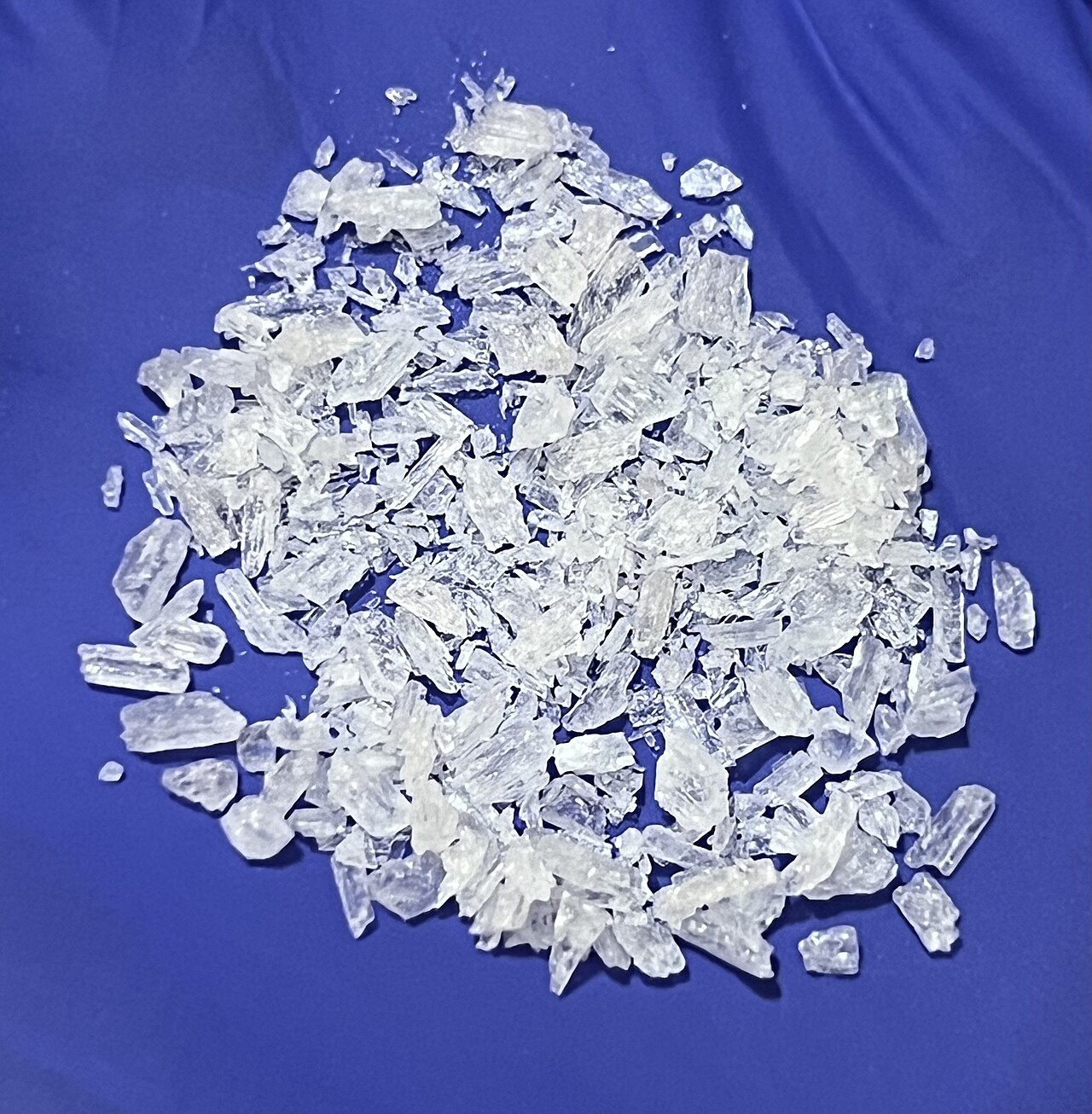
The most widely used illegal drug in the Philippines is methamphetamines or shabu, which has dominated the country’s illicit drug market for decades. Cannabis ranks as the second most common illegal drug. Reports have indicated that while overall drug use in the Philippines may be lower than the global average, methamphetamine use in particular has remained relatively high compared with other countries in East Asia.
According to the United Nations Office on Drugs and Crime (UNODC) 2025 drug report methamphetamine ("shabu") as the primary drug of abuse, comprising over 92 percent of drug-related admissions. The 2023 National Survey on Drug Abuse showed a decrease in drug users, from approximately 1.67 million in 2019 to 1.47 million in 2023. [Source: UNODC]
Ecstasy is also used on the Philippines. Rates of usage of heroin, morphine, fentynal and cocaine are relatively low in the Philippines in part because they are too expensive for most drug users and they are not extensively shipped to the Philippines. Some wealthy people use cocaine. The current President Bongbong Marcos has allegedly used a lot of cocaine according to his sister.
RELATED ARTICLES:
ILLEGAL DRUG TRADE IN THE PHILIPPINES factsanddetails.com
DRINKS IN THE PHILIPPINES: BEER, TUBA, COCKTAILS, CIVET COFFEE factsanddetails.com
DRINKING IN THE PHILIPPINES: CUSTOMS, HOBBIT BAR, WINE PARTIES, TAXES factsanddetails.com
TOBACCO AND BETEL NUT IN THE PHILIPPINES: SMOKING, HISTORY, STRICT LAWS factsanddetails.com
FOOD AND THE PHILIPPINES: DIET, STAPLES, AND COOKING FOR U.S. PRESIDENTS factsanddetails.com
EATING AND DRINKING CUSTOMS IN THE PHILIPPINES factsanddetails.com
EXOTIC AND WEIRD FOODS IN THE PHILIPPINES factsanddetails.com
Illegal Drug Laws in the Philippines
The Philippines has very tough drug laws. Possession of small amounts of drugs carries a 13 year maximum sentences, Selling as little as 50 grams of drugs can land someone in jail for life. On average there about 800 drug-related arrests a month. According to the PDEA about 65 to 70 percent of all people in prison are there because of drug-related offenses,
Japanese national Hideshi Suzuki was convicted and sentenced to death in 1995 when he was 38 for possession of 1.5 kilograms of marijuana at the Bacolod City airport in the central Philippines a year earlier. He asserted his innocence, maintaining he was set up after negotiations with a Japanese acquaintance in the Philippines who owed him money turned sour. He was releases from prison in 2010 after President Gloria Macapagal-Arroyo granted him a pardon.[Source: Kyodo, December 20, 2010]
Philippines prisons are notoriously overcrowded with many inmates there on drug chargers.The judicial system to be very slow and people arrested on drug charges can wait years for a trial during which time they are imprisoned. During the drug wars of Philippines President Rodrigo Duterte beginning in 2016 government forces went door to door to more than 3.57 million residences, according to the police. More than 727,600 drug users and 56,500 pushers surrendered, the police said, overcrowding prisons. At the Quezon City Jail, inmates had to take turns sleeping in any available space, including a basketball court.
Illegal Drug Users in the Philippines
Illicit drugs are found throughout the archipelago but are more common in the Manila area and the tourist centers. There are an estimated 3.4 million illegal drug users and 1.8 million regular drug users in the Philippines. By some counts one in every four Filipino families has a drug user according to the Philippine Drug Enforcement Agency (PDEA). This quite a contrast to 1972 when it was estimated there were only 20,000 drug users in the whole country. Testing of people arrested at major rally against the Arroyo government in the 2000s found that one fourth had been taking drugs ,mostly marijuana and amphetamines, and one fifth had been drinking gin.
There is some disagreement about how widespread drug use actually is in the Philippines . An official survey conducted in 2015 by the Dangerous Drugs Board (DDB), found that about 1.8 million Filipinos used illegal drugs.[Source: Joseph Hincks, Al Jazeera, September 8, 2016]
However, in his state of the nation address in 2016, Philippines President Rodrigo Duterte said that, based on data from the Philippines Drug Enforcement Agency, there were “three million drug addicts” in the country two or three years earlier, and possibly 3.7 million at the time of his speech. In an interview the following Thursday, Senator Alan Cayetano, a Duterte ally, said: “We have three to seven million Filipinos who are hooked on drugs.”
The terms “pandemic” and “narco state” were frequently used in public debate, but some statistics pointed instead to a decline in illegal drug use. In 2004, the DDB estimated that there were 6.7 million illegal drug users. If the 2015 estimate was accurate, that would represent a reduction of 4.9 million users — or about 73 percent — between 2004 and 2015.
Children and Illegal Drugs in the Philippines
Police data from the mid 2010s showed that among the 800,000 drug users and dealers who had registered with authorities, about 24,000 were minors. However, fewer than two percent of those minors — roughly 400 children — were involved in delivering or selling drugs. Only 12 percent, or 2,815, were aged 15 or younger. Most of the 24,000 minors were listed as drug users rather than dealers. [Source: Clare Baldwin and Andrew R.C. Marshall, Reuters, February 14, 2017]
The number of minors involved in the drug trade was “just a small portion,” said Noel Sandoval, deputy head of the Women and Children’s Protection Center (WCPC), the police unit that compiled the data. The WCPC was not advocating lowering the minimum age of criminal responsibility, Sandoval said. However, if the age were to be reduced, his department recommended setting the minimum at 12 rather than 9.
Between January 2011 and July 2016, 956 children aged six to 17 were “rescued nationwide from illegal drug activity,” according to PDEA. Most had been involved with marijuana and shabu. and were turned over to the Department of Social Welfare and Development (DSWD). Of those cases, only 80 involved children under the age of 15.
Methamphetamines in the Philippines
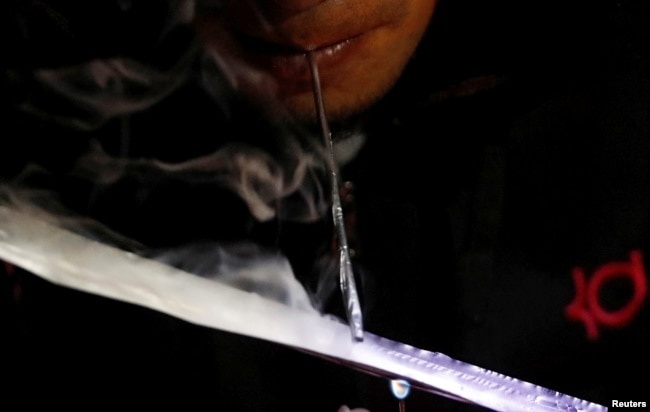
Methamphetamine,s locally known as “shabu,” is the most widely used illicit drug in the Philippines and has long been a major social and public health problem. The Philippines has the highest usage rates of the drug in East Asia. Use is driven by a combination of social, economic and geographic factors, and it has serious health, economic and social consequences. [ScienceDirect; Dangerous Drugs Board (DDB]
The health impacts of methamphetamine use are severe. Long-term use has been linked to paranoia, hallucinations, extreme weight loss and other psychological and physical problems. Medical researchers have also reported a growing number of cases of methamphetamine-associated intracerebral hemorrhage (Meth-ICH), a type of stroke linked to heavy meth use, which has increased significantly in recent years.
The Philippines’ geographic location in Southeast Asia has also made it an important transit point for international drug trafficking networks, contributing to the availability and relatively low cost of methamphetamine in the country. According to the United Nations’s top drug group in 2021: There are indications of a possible decline in the availability of methamphetamine in the Philippines. The retail purity of methamphetamine hydrochloride in that country was reported to have fallen, from 74 percent in 2014 to 68 percent in 2019, while methamphetamine prices increased from an already high level in comparison with other Asian countries, from about $140 per gram in 2014 (range: $56–$223) to about $177 per gram in 2019 (range: $25–$329), and the quantity of methamphetamine seized fell from a peak of 2.2 tons in 2016 to 0.8 tons in 2018, before increasing again in 2019 (2.1 tons). The authorities reported that this reflected an actual increase in methamphetamine trafficking activities compared with the previous year as the country was increasingly targeted by both Chinese and Philippine-Chinese drug syndicates and African (mostly Nigerian) drug trafficking groups. [Source: United Nations Office on Drugs and Crime (UNODC), World Drug Report 2021]
See Separate Articles:
METHAMPHETAMINES (METH): USE, EFFECTS AND DANGERS factsanddetails.com ;
HISTORY OF AMPHETAMINES AND METHAMPHETAMINES factsanddetails.com ;
METHAMPHETAMINE PRODUCTION AND TRAFFICKING factsanddetails.com
METHAMPHETAMINES, MYANMAR AND SOUTHEAST ASIA factsanddetails.com
Methamphetamine Users in the Philippines
In many urban poor communities, methamphetamine use is tied to economic pressures. Some young men use the drug as a perceived “performance enhancer,” locally referred to as pampagilas, believing it increases stamina and energy and allows them to work longer hours in the informal economy. In environments where employment opportunities are limited, these perceived benefits can outweigh the known health risks.
Of the estimated 1.8 million regular drug users in the Philippines a good portion of them are shabu users. DDB figures indicate that shabu users are predominantly male and that three out of four of them earn less than 11,000 Philippine pesos (about $235) per month. Shabu is popular among the Philippines' poor as a way to increase energy and suppress hunger. There have been reports of companies forcing their workers to take amphetamines so they stay awake and work harder.
MJ is a 36-year-old drug use who talked to Al Jazeera. He had experimented with shabu in college, but he managed to quit after graduating. He worked for HSBC for five years before launching his own business. After his company failed and he experienced a period of depression and unemployment, MJ took a night-shift job at a call center to support his wife and children. Many of his colleagues at the call center used shabu, "probably for the same reason—to endure the time," he said. However, his use became increasingly frequent. His weight dropped from 210 pounds to 155 pounds in a year, and around 70 percent of his salary went to supporting his drug habit. [Source: Joseph Hincks, Al Jazeera, September 8, 2016]
Cannabis Use in the Philippines
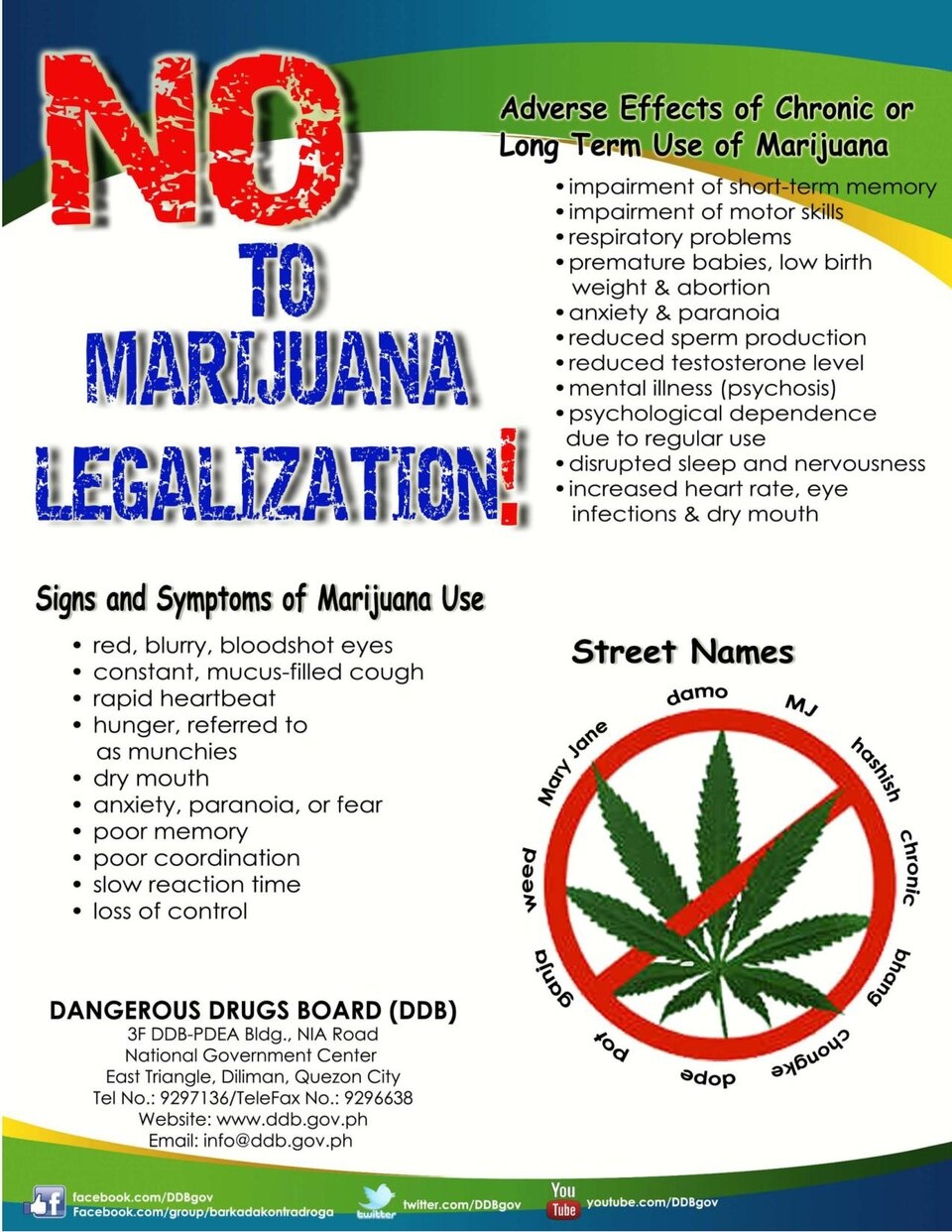
Cannabis remains illegal in the Philippines under Republic Act 9165, the Comprehensive Dangerous Drugs Act of 2002, which classifies marijuana as a prohibited substance. The law imposes strict penalties for the possession, use, cultivation and trafficking of cannabis. Although several proposals have been introduced to legalize or regulate medical cannabis, no such legislation had been enacted as of 2026. [Source: Wikipedia]
Under Philippine drug law, cannabis is treated as a Schedule I–type prohibited drug, meaning its use is generally banned except for limited, government-authorized medical or scientific research. Violations can carry severe penalties, including lengthy prison sentences depending on the amount involved and the nature of the offense.
Despite these strict laws, cannabis remains widely used and is generally considered the second most commonly used illegal drug in the Philippines, after methamphetamine (shabu). Its continued use reflects broader patterns of illicit drug consumption in the country. In November 2004, the Philippines lower houses proposed legalizing marijuana.
Cannabis cultivation in the Philippines typically occurs in remote mountainous areas, particularly in parts of northern Luzon where the terrain and climate allow the plant to grow. Authorities regularly conduct eradication operations in these regions to destroy illegal marijuana plantations and disrupt local trafficking networks.
Duterte’s War on Drugs
Drug enforcement intensified dramatically after July 2016, when the government launched a nationwide “war on drugs.” The campaign led to widespread police operations targeting drug dealers and users and resulted in large numbers of arrests and controversial fatalities linked to anti-drug operations.
After taking office on June 30, 2016, Philippine President Rodrigo Duterte has launched a “war on drugs” that led to the deaths of over 12,000 Filipinos, mostly urban poor. According to Human Rights Watch” At least 2,555 of the killings have been attributed to the Philippine National Police. Duterte and other senior officials have instigated and incited the killings in a campaign that could amount to crimes against humanity. Human Rights Watch research has found that police are falsifying evidence to justify the unlawful killings. [Source: Human Rights Watch]
Dubbed “Duterte Harry,” a reference to Dirty Harry, the film featuring the vigilante detective played by Clint Eastwood, Duterte openly encouraged citizens and police officers to shoot and kill suspected drug dealers and users. Citing an estimated three million addicts in the Philippines, he said he would be “happy to slaughter them.” Extra-judicial killings of suspected drug dealers was a hallmark of Duterte's presidency, and it was his track record in Davao that won him nationwide support when he ran for president. He knew it, too: "If I make it to the presidential palace, I will do just what I did as mayor. You drug pushers, hold-up men, and good-for-nothings better get out of town. Because I'll kill you," he said at his final campaign rally. In a televised debate, he said that he would kill his own children if they took drugs. When his son and son-in-law were accused of drug smuggling, he promised to resign if they were guilty. [Source: BBC, May 10, 2022]
See Separate Articles:
DUTERTE’S WAR ON DRUGS: DEATHS, TACTICS, RHETORIC, FAILURES factsanddetails.com
VICTIMS AND KILLERS IN DUTERTE’S WAR ON DRUGS: factsanddetails.com
Drug Treatment in the Philippines
Alongside aggressive law-enforcement efforts, the Philippine government has promoted rehabilitation and treatment programs for drug users. During the Duterte war on drugs thousands of people voluntarily surrendered through government initiatives and were referred either to rehabilitation centers or to community-based programs aimed at addressing addiction and helping participants reintegrate into society. Officials have framed these initiatives as a complement to anti-drug enforcement, combining efforts to reduce the supply of illegal drugs with treatment for those struggling with substance abuse. [Source: Joseph Hincks, Al Jazeera, September 8, 2016]
Individuals who registered under the Tokhang program were often placed in local rehabilitation activities that included exercise sessions such as Zumba, livelihood training like soap-making, and “value formation” seminars intended to promote behavioral change. According to Benjamin Reyes, chairman of the Dangerous Drugs Board (DDB), the quality and consistency of these programs varied widely from one region to another. The DDB sought to introduce new regulations requiring local governments to follow community-based treatment guidelines developed by the United Nations Office on Drugs and Crime (UNODC). However, Reyes said implementation was slow because there were still no unified national guidelines. “The confusion right now is because there’s a gap, there is no guidelines on what to do, where to go, who will handle whom,” he said.
Some of those who surrendered were sent to inpatient facilities such as the Department of Health Treatment and Rehabilitation Center in Bicutan, the country’s largest public drug treatment facility. Nationwide, the Philippines had a combined public and private inpatient treatment capacity of roughly 10,000 patients, far below demand. The Bicutan center alone had an official capacity of 550 but was housing about 1,500 patients. Admissions rose sharply during the anti-drug campaign, increasing from about seven or eight per day before the crackdown to as many as 15 to 30 daily, according to Dr. Bien Leabres, who oversaw treatment programs there. The center offered therapy and structured rehabilitation activities based on UNODC guidelines, but overcrowding and staff shortages posed serious challenges.
Medical staff warned that the surge in patients was straining resources. Bicutan had only 12 doctors, including four specialists in addiction medicine, raising concerns about staff burnout and the quality of care. The Duterte administration announced plans to build five additional public rehabilitation facilities, some to be located on military bases, with medical personnel from the Philippine National Police working under the supervision of the Department of Health. Critics, including some NGOs and politicians advocating harm-reduction approaches, questioned whether the planned facilities would adequately address the needs of drug users. Senator Risa Hontiveros argued that treatment programs should involve the voices of drug dependents themselves in shaping solutions, while President Rodrigo Duterte suggested isolating users in remote rehabilitation centers away from cities.
Image Sources: Wikimedia Commons
Text Sources: “Encyclopedia of World Cultures Volume 5: East/Southeast Asia:” edited by Paul Hockings, 1993; “Culture Shock!: Philippines” by Alfredo Roces and Grace Roces, Marshall Cavendish International, 2010; Metropolitan Museum of Art; National Geographic, Live Science, Philippines Department of Tourism, New York Times, Washington Post, Los Angeles Times, Smithsonian magazine, Encyclopedia.com, Library of Congress, The Conversation, The New Yorker, Time, BBC, CNN, Reuters, Associated Press, AFP, Lonely Planet Guides, Google AI, Wikipedia, The Guardian and various websites, books and other publications.
Last updated March 2026