
BEER IN THE PHILIPPINES
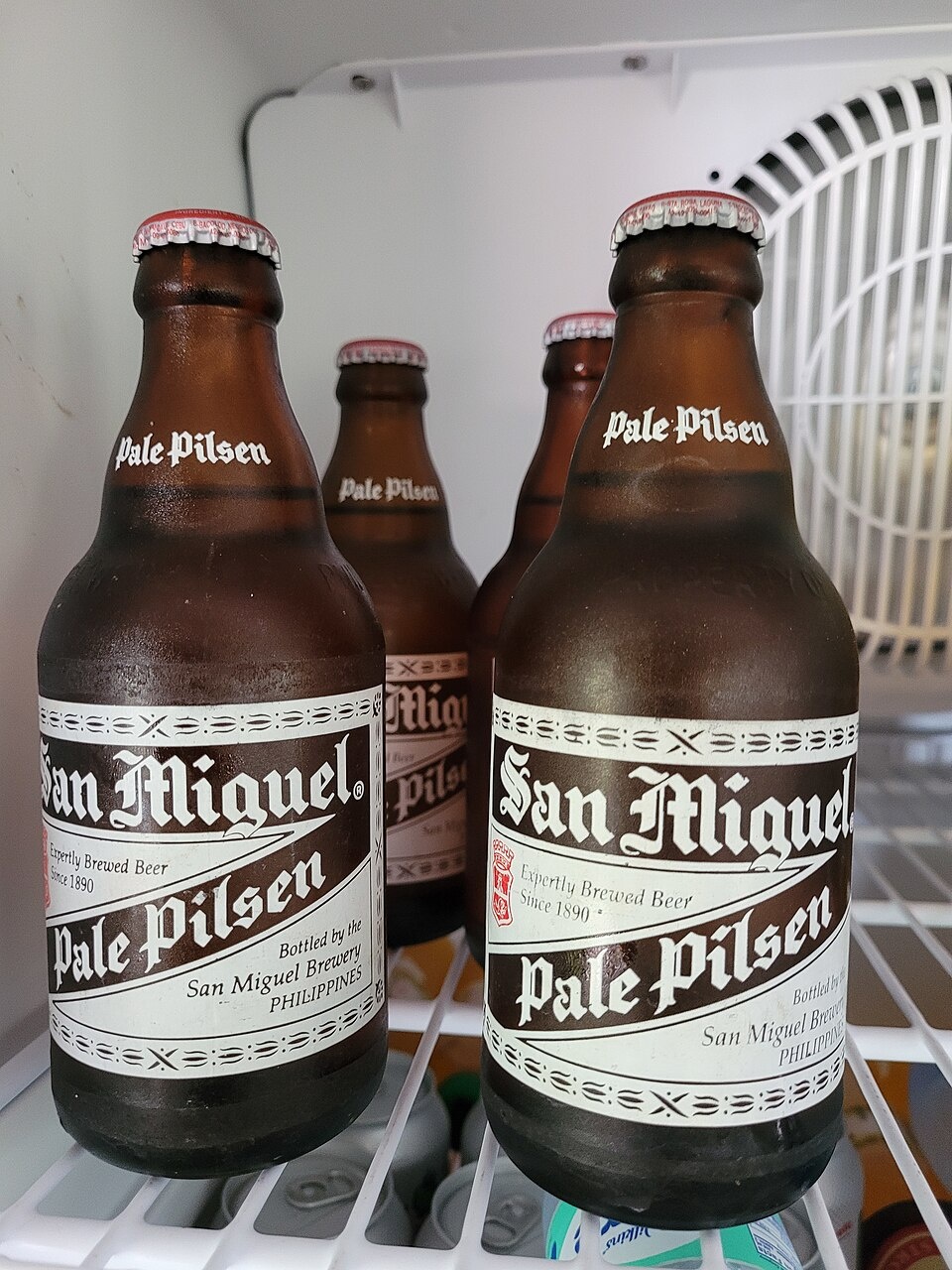
The most common alcoholic beverage is beer, generally served cold. Local alcoholic drinks include “tuba” (coconut wine, sometimes very strong) and potent moonshine-like clear liquors made from sugar or fruit. Imported beer, wine and whiskey are available but expensive.
The most popular brand of beer is San Miguel (cheap and sometimes called “San Mig” by locals). San Miguel is a light Pilsner-style made with 80 percent malt and is lagered for a month. The San Miguel brewery also makes Cerveza nega, a black beer with a 5.2 percent alcohol content and a roasted, malty taste, and Red Horse, a bock-style, pale-gold lager with a 6.8 percent alcohol content and a full bodied flavor.
San Miguel is one of the top three selling brands of beer in Asia and is sold at over 250,000 outlets throughout Asia. San Miguel was the first brewer in Southeast Asia. It was founded in 1890 as a small brewery, called La Fabrica Cerveza de San Miguel, and was located next to the seat of the Spanish governor general in Manila. San Miguel one person said is his favorite Filipino saint.
According to 3stars-sun.blogspot.jp: “Beer is the most preferred Alcoholic drink in the Philippines. (Gin is a very close 2nd) The most famous and widely known brand is San Miguel Pale Pilsen. San Mig Light, is also popular, mostly preferred by the Yuppies and the younger drinkers. Beer na Beer is a close competitor for San Miguel. Gold Eagle Beer is more common to the Rural Areas of the Philippines. Colt 45 and Red Horse beer is favored by hard drinkers. The local slang for Beer is “Kalawang” which is the Tagalog word for “Rust” since beer seem to take the color of rust. Other beer labels include Lone Star, Lone Star Light, Lone Star Ultra, Carlsberg, , San Miguel Superdry, San Mig Strong Ice, and just recently, Coors Light. [Source:3stars-sun.blogspot.jp]
Puto Bumbong Ale is a uniquely Filipino inspiration. The brew is based on puto bumbong, a purple glutinous rice cake traditionally eaten during the Christmas season. Created by Allan Agala at his small home brewery, the 5.7-percent alcohol ale is released seasonally in 750-milliliter bottles. Agala has also produced other inventive brews such as 7107 City Ale—named after the number of islands in the Philippines—and Halo-Halo Ale, a summer beer inspired by the country’s famous mixed dessert.
RELATED ARTICLES:
DRINKING IN THE PHILIPPINES: CUSTOMS, HOBBIT BAR, WINE PARTIES, TAXES factsanddetails.com
SAN MIGUEL AND EDUARDO COJUANGCO factsanddetails.com
TOBACCO AND BETEL NUT IN THE PHILIPPINES: SMOKING, HISTORY, STRICT LAWS factsanddetails.com
ILLEGAL DRUG USE IN THE PHILIPPINES: MAINLY CANNABIS AND METH factsanddetails.com
ILLEGAL DRUG TRADE IN THE PHILIPPINES factsanddetails.com
FILIPINO RESTAURANTS AND PLACES TO EAT IN THE PHILIPPINES factsanddetails.com
JOLLIBEE: HISTORY, TONY TAN CAKTIONG, SUCCESS factsanddetails.com
FOOD AND THE PHILIPPINES: DIET, STAPLES, AND COOKING FOR U.S. PRESIDENTS factsanddetails.com
EATING AND DRINKING CUSTOMS IN THE PHILIPPINES factsanddetails.com
FILIPINO CUISINE: CHARACTERISTICS, REGIONAL VARIATIONS, FUSION, DEFENDING IT factsanddetails.com
FILIPINO DISHES: EATING, COOKING AND ENJOYING THEM factsanddetails.com
FILIPINO SNACKS AND DESSERTS: SWEETS, FRUITS, STREET FOOD factsanddetails.com
FILIPINO FOOD RECIPES factsanddetails.com
EXOTIC AND WEIRD FOODS IN THE PHILIPPINES factsanddetails.com
Gin and Other Hard Alcohol Drinks in the Philippines
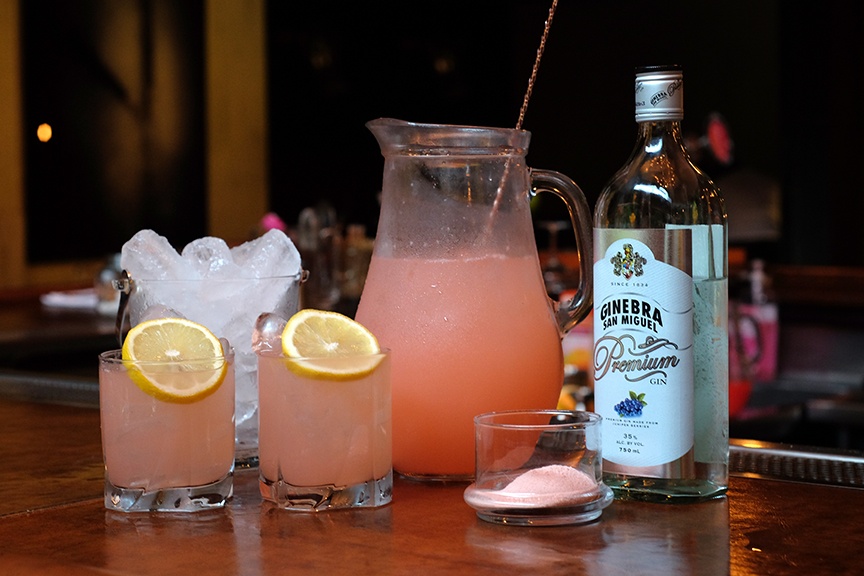
According to 3stars-sun.blogspot.jp: If beer is “Kalawang” or rust, then Gin is called “Stainless”. The Ginebra San Miguel brand is the most well known brand. It’s the most selling gin brand in the world, although it is mainly sold in the Philippines. The Ginebra San Miguel brand even earned some monikers for their Gin products. The small round bottle is called “Bilog” (round) for its shape, and the bigger square shaped bottle is called “Kwadro Kantos” (Four Corners). GSM Blue is a variant of Ginebra San Miguel gin which is said to be smoother in taste. Gin Kapitan and London Gin brands are also sold in the market, but nowhere near the sales of Ginebra San Miguel. Gin has also come to be known as “Gin-Bulag” (Bulag is Tagalog for “blind”) since it is said that drinking too much Gin would make you go blind. [Source: 3stars-sun.blogspot.jp \^/]
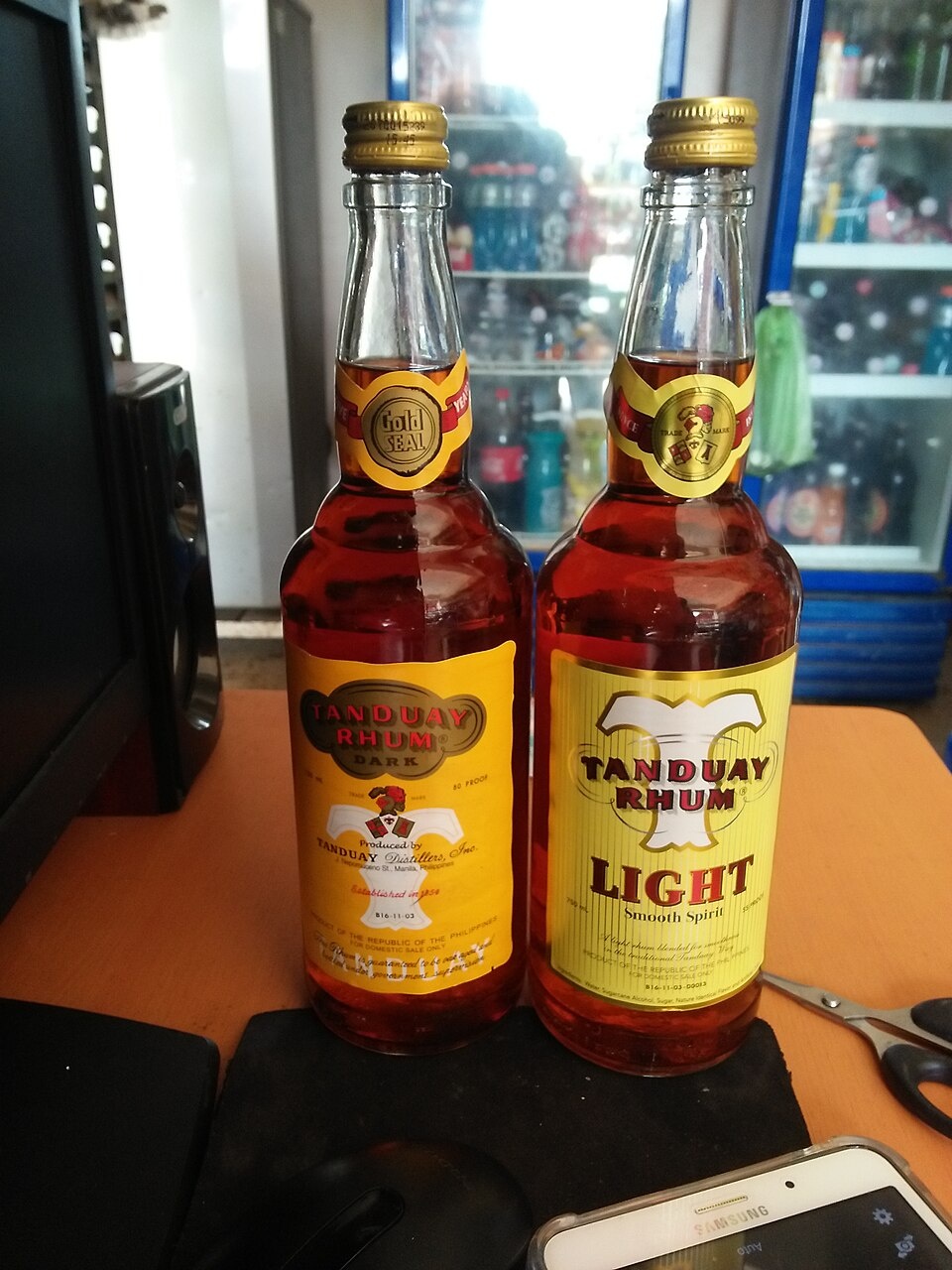
Rum and Brandy: Tanduay is the most popular brand of Rum. As with the Gin, the Tanduay bottles have also earned monikers of their own. The smaller bottle is called “Lapad” (wide) because of their distinctive wide-bodied bottles. The tall round bottles are often called “Tore” (Tower). Emperador is a close second to the Tanduay brand. The Tondenia Premium Rum and Anejo 65 Rum brands are also sold but is not as commonly known as Tanduay nor Emperador. Barcelona, Genoroso, and Gran Matador are the popular brands of brandy. \^/
Other liquors are also sold here in the Philippines, but Gin, Beer, Rum, and Brandy are the most popular drinks. Cossack Vodka and Antonov Vodka are a local Vodka brands. Don Enrique Mixkila is supposedly a combination of Tequila and distilled spirits. Erg is as brand of Alcotonic, which only has 5.5 proof alcohol content. Q-Shandy and Cali are brands of NABs (Non-Alcoholic Beer). Vino Kulafu and Siok Tong are brands of some sort of Chinese wine and is popular among the older drinkers (55 years old and up) specially in the Rural areas. \^/
Original Filipino Alcoholic Concoctions
Gin Pomelo, or Gin Pom, is a cocktail made out of Gin, Pomelo Juice Powder, and crushed ice. It became the drink of choice for the younger drinkers back in the late 1990’s when Tang introduced its “Litro Pack” line of powdered Juices.[Source: 3stars-sun.blogspot.jp \^/]
Expired is a simple concoction that is made up of two 500ml bottles of Red Horse beer mixed with one small bottle of gin. It is then poured into a large pitcher and a big chunk of ice is added into it. Some put two “Storck” brand menthol candies into the mix. It was called expired since drinkers say it tastes like “expired beer”. \^/
Kagatan is the Tagalog word for “Biting”. But biting has nothing to do with this cocktail. It was called “Kagatan” because the ingredients for this drink are KApe (kape, coffee), GAtas (gatas, milk) and TANduay (the Tanduay brand of Rum). \^/
Boracay is so-named because this drink was apparently invented in the Island of Boracay. It is the said to be the Filipino version of Bailey’s Irish Cream. It is made up of Rum, beer, chocolate malt powder, evaporated milk, gin, and finely ground peanuts. \^/
Calibog has made quite a stir from its name alone since “Libog” mean “Libido” in Tagalog. Rumor has it that this drink acts like an aphrodisiac, hence the name. But the truth is that it got the name from its ingredients: CALI for the Cali brand of non alcoholic beer, B for Beer, and OG comes from lambanog. \^/
Cocktails Served in the Philippines
Mojito de Mayon was created in honor of the famous cone-shaped Mayon Volcano in the Philippine province of Albay. The drink combines vodka, sugar syrup, and muddled lime and is topped with a cone of shaved ice that resembles the volcano’s peak. It comes in several flavors—including strawberry, cherry, passion fruit, and mango—but the strawberry version is especially popular because it makes the drink look as if lava is erupting from the “volcano.” [Source: Cheryl Tiu, CNN, July 8, 2014]
Halo-Halo takes its inspiration from the famous Filipino dessert whose name means “mix mix.” The cocktail version blends ube (purple yam), jackfruit, beans, jellies, and condensed milk. What distinguishes it from the traditional dessert is the addition of lambanog, a strong coconut wine, which gives the colorful drink both sweetness and a mild buzz.
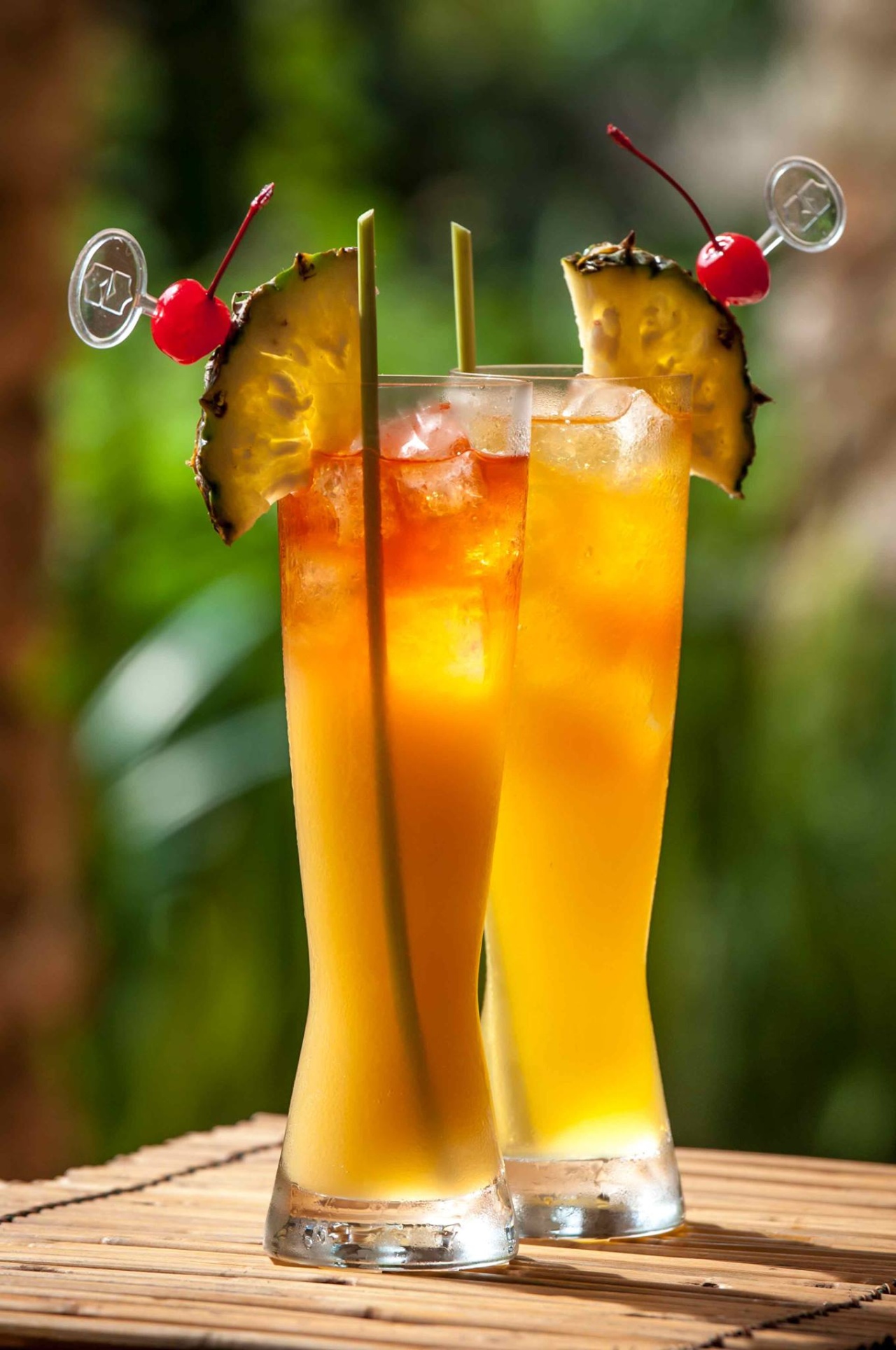
Manila Sunshine was created after the Philippine Department of Tourism asked the Shangri-La Hotel to develop a signature drink representing Manila. The cocktail features lambanog as its base—an ingredient commonly produced in the province of Quezon—along with tropical pineapple and mango flavors, plus hints of triple sec and dark Tanduay rum. Garnished with tanglad (lemongrass) and slices of pineapple, the thick, frothy drink is particularly refreshing by the pool or the beach and is also served at Shangri-La properties in Cebu and Boracay.
Spiked Sago’t Gulaman transforms the classic Filipino refreshment of tapioca pearls (sago) and gelatin (gulaman) into a cocktail. At Fresh, the dessert-like drink is enhanced with rum and amaretto, while brown sugar syrup provides sweetness. Beverage manager Lee Watson also adds a hint of lemon or citrus so the drink doesn’t taste simply like sweetened water. It is best enjoyed with a spoon so the tapioca pearls and gelatin can be scooped up.
Calamantini highlights calamansi, the small local citrus fruit often called Philippine lime. Served at the Mandarin Oriental Manila, the cocktail has a tart, citrusy flavor reminiscent of the calamansi juice that Filipinos often drink when they are sick, giving it a refreshing and slightly medicinal brightness.
Philippine Myth is Sofitel’s tribute to the flavors of the Philippines. The cocktail combines coconut, pandan, and lychee, and it can be spiked with either rum or vodka. The bar also offers a non-alcoholic version that captures the same tropical taste.
Isaac of the Bay and The Noli are two cocktails served at The Curator, a café and bar that treats coffee and cocktails as both art and craft. Isaac of the Bay blends locally sourced coffee beans from Hineleban in Bukidnon—roasted by co-owner Sly Samonte—with Don Papa rum, butterscotch liqueur, local honey, lemon, sarsaparilla bitters, egg white, and a mist of vanilla. The flavor evolves with each sip, beginning with lemon foam and butterscotch before revealing deeper notes of coffee, vanilla, and citrus. The Noli, named after José Rizal’s novel “Noli Me Tangere,” replaces rum with bourbon, highlighting the chocolate notes in the coffee. Isaac of the Bay tends to appeal to those with a sweeter palate, while The Noli suits drinkers who prefer richer, earthier flavors.
Weng Weng takes its name from Filipino slang for someone who is completely intoxicated, which makes sense considering the number of spirits in the drink. The cocktail typically includes rum, gin, vodka, tequila, brandy, and scotch, mixed with orange juice, pineapple juice, and grenadine. Popular among adventurous younger drinkers, it is widely available in bars across the Philippines.
Ube Martini highlights the distinctive purple yam known as ube. At Salon de Ning, the yam is blended into a light, slightly creamy liquid before being mixed with cranberry juice and vodka, creating a cocktail that is both colorful and subtly sweet.
Tuba
Tuba, a palm wine, is the local alcoholic drink of the barrios. Slashes are made in palm trees and the sap that drips out of them is collected in bamboo tubes. The sap is fermented and the result is a sweet liquor with a strong jolt. Tuba is also made from fermented coconut sap.
Wayblima.com reports: Perhaps you've heard of tuba. Cebuanos will often mention this native alcoholic drink when in conversations with foreigners. Chances are, though, that you've never seen it, because it's not sold in any stores or served in any restaurants or eateries. [Source: a wayblima.com]]
“That's a great pity, because tuba is the drink of the gods. Long before Western multinational corporations invented alcopop, the Visayans were blessed with tuba. Contrary to what one expects from the description - that tuba is a homemade alcoholic beverage found in rural villages - it ain't no moonshine. While in the West, I frequently - a bit too frequently, I must admit - savored the delights of the best champagne, and I can state without reservations that good tuba is more than equal to the most expensive Dom Perignon. Now, snooty sommeliers may sneer at this suggestion, but just because tuba comes straight from the coconut tree does not mean that it is inherently inferior to something that comes out of a French bottle.
“In fact, what tuba does is make one realize how ingenious these Europeans are. Confined by malicious gods to a cold and infertile terrain, and consequently deprived of that wondrous nectar which flows freely from the coconut tree, the Europeans had no recourse but to ferment grape juice in oak barrels until, after many years and extensive labor, it - incredibly - delivered a degree of the wealth of flavor found in tuba. But only a degree, and only in a good year.
“So what does tuba actually taste like? It is sweeeeeeeeet! And naturally carbonated. At first, it is barely alcoholic but this changes over time as the sugar is broken down into alcohol. The thing about tuba is, it has a limited shelf life, even when refridgerated (and refridgerate it you should, for it's best downed ice cold). It stays fresh and delectable for perhaps 24 hours; after that, it gradually turns into vinegar. For about a fortnight it is a substance known as bahal; sour and strongly alcoholic, favored by drunkards. After three weeks, the conversion to suka bisaya (native vinegar) is complete.”
Tuba Manananggut
According to wayblima.com: “Tuba is as cheap as it is sweet. Just 20 pesos will get you a galon. But since it's not sold in stores or restaurants, how do you get ahold of it? You have to go on a quest fit for a National Geographic program, and find yourself a manananggut, i.e. someone who specializes in the art of climbing up coconut trees and making tuba and suka bisaya. [Source: wayblima.com]
Here's what the manananggut does. He climbs up the coconut tree, and uses twine to bend a premature fruit stalk, called a daol, until it faces downward. This has to be done gradually; otherwise, the stalk will snap. Next, a special curved knife known as a sanggut - the term manananggut means "he who uses a sanggut" - is used to etch the daol. A bamboo container called a sugong is left attached overnight, to catch the sap draining from the daol. The sugong is carefully wrapped and covered with leaves to keep out the rain.
“The next morning the gods will have rewarded the manananggut with a jar-full of fresh tuba. The container is emptied, the stalk is shortened, and the process is repeated. Now, the sap is initially tuba, but it becomes vinegar over the course of a few days. Sometimes a mysterious substance called tungog is used to color the liquid red. Since tuba doesn't come in a bottle with a label attached, I have no reliable data regarding the alcohol content, but I would guess it's about the same as, or perhaps slightly stronger than, beer.
“After accompanying the manananggut we relaxed over a quart of freshly gathered tuba while discussing his work. The manananggut's name is Melsie, and he is a carpenter by day. He's almost fifty and has six children, which is about average. The haul that day had not been plentiful, with three trees yielding only about a liter. One reason was the weather; it hadn't rained in about a week.
Climbing up four-storey-high palm trees without a harness is dangerous work. I personally was surprised to discover that fear is a factor for me when I climbed up the tree to take pictures of Melsie at work - once you realize that you are very high up and that your immunity from gravity is only as good as your grip on the tree, you tend to climb down in a hurry, which I did. I asked Melsie if he knew anyone who had fallen off a palm tree recently. It turns out that, yes indeed, a few years back somebody did. "Was he a manananggut?" Yes, of course. "Did he survive?" Melsie laughs. One doesn't survive a fall from a 20-meter high palm tree. /*/
As Melsie sheathed his sanggut which I had been admiring, I wondered whether it is a coincidence that Melsie is one of the very few religious men in this rural village, and whether he would be undertaking the hour-long trek to the church in the city every Sunday if it were not for his line of work. Suddenly, every drop of tuba seemed more precious to me.
Tuba Palm Rats
According to wayblima.com: “The main problem was with rats. In Bisaya, the word for "mouse" and "rat" is the same. "Little ones or big ones?" I asked. "Rats as big cats," Melsie assured me. [Source: wayblima.com]
“The rats climb up the palm tree, gnaw a hole through the cover of the bamboo container, and lick the tuba. Apparently, rats can hold their liquor well, for they don't get drunk on tuba - at least not drunk enough to fall off the tree. Some palm trees have metal casings about a foot wide around their stems, to prevent the rats from climbing up. Melsie told me that it was pointless to attach these, as the rats can dig a furrow underneath the metal sheaths. Additionally, dead serious, he told me "they'll put a curse on you."
I squinted with incredulity. Melsie explained that not only will the rats damage a coconut tree out of spite, they will literally put a curse on he who deprives them of their tuba. Melsie told me how his father, who also had been a manananggut, would attribute problems in the house - whether health-related or economic - to a curse of the rats. While wild bees also drink the tuba - sometimes drowning in it - the number one enemy of the manananggut is, by far, the rat. Melsie's solution is to not attach any metal sheath, and to let the rats have their share - rather like a tax.”
Eleven Dead, 300 Treated after Drinking Coconut Wine in Philippines
At least 11 people died and more than 300 others were treated in hospitals after drinking coconut wine in the Philippines, including several who had been celebrating at a Christmas party, health officials and local authorities said. Reuters reported that the poisoning occurred in the provinces of Laguna and Quezon, south of Manila. All those affected had consumed lambanog, a coconut-based liquor that is popular in rural areas and widely served during holidays and celebrations. [Source: Reuters December 23, 2019]
Many of the victims sought hospital treatment after Rizal, Laguna Mayor Vener Muñoz urged residents to do so. The deaths occurred between Thursday and Sunday. Muñoz told local radio that two people who had been in critical condition were showing signs of improvement. He also said the coconut wine involved had been produced in his town.
The Department of Health said blood samples from victims and leftover lambanog would be collected and analyzed. “All had a sad history of lambanog ingestion,” the department said, referring to those who had been poisoned. “Some bought [it] for leisure drinking and a birthday party, while others received it from local officials during their Christmas party.”
Unregulated production and sale of lambanog are common in the Philippines, where the drink is often made illegally and sometimes mixed with dangerous additives. The country’s Food and Drug Administration (FDA) has previously warned about the prohibited and hazardous use of methanol in homemade brews.
In 2018, the FDA and police were deployed to track down and confiscate unregistered lambanog that was being openly sold, warning that sellers could face prosecution. Media reports said 21 people died after consuming lambanog the previous year.
Non-Alcoholic Drinks in the Philippines
Fruit drinks are plentiful and delicious. On the street they are often served in plastic bags. Fresh coconut water are also widely available and good. Fresh coconuts are refreshing and hygienic. Drink it with a straw straight from the coconut. Don't let the vendor pour it into a glass, which may be unclean. Sugar cane juice is also good but sometimes unhygienic.
Coffee has become popular in recent years. Manila has its share of Starbucks. Water is usually boiled and served at room temperature’ Soft drinks such as Coke, Pepsi, Orange Crush and Fanta are widely available and cheap. Some coastal areas serve toddy (palm sap) drinks. Also worth trying is “buko” (a cold drink made from a young coconut) and “kalamansi” (juice made from small lemons). The Filipinos are not big coffee or tea drinkers.
In the early 2000s, the Philippines was the world's eighth largest consumer of carbonated soft drinks. Pepsi has a major presence in the country and has run a popular numbers game. Coca-cola arrived in 1924. Consumption of carbonated soft drinks (gallons in 2000): 9.1, compared to 55.8 in the United States. Consumption of bottled water (gallons in 2000): 2.1 compared to 9.5 in the United States. [Source: Euromonitor International]
Tablea tsokolate is hot chocolate drink that dates back to colonial times. It is made from tablea de cacao — bittersweet, thick flat chocolate disks. The traditional version is available at Adarna Food and Culture in Manila. [Source: Maida Pineda, Candice Lopez-Quimpo, CNN March 6, 2012]
Tsokolate Recipe
Ingredients
1 pound chocolate (or 2 cups chocolate chips)
6 cups milk
6 eggs, separated
Instructions
Separate the egg yolks from the egg whites one at a time and put the yolks in a medium mixing bowl. (Discard the egg whites or reserve them for another use.) Beat the yolks with a whisk.
Cut chocolate bar into small pieces.
Pour milk into saucepan and add chocolate. Heat to boiling, stirring constantly, until chocolate is melted.
Add the egg yolks to the saucepan. With a whisk, beat the whole mixture until foamy, about 5 minutes. Serve immediately.
Makes 6 servings.
[Source: Junior Worldmark Encyclopedia of Foods and Recipes of the World, Gale Group, Inc., 2002]
Filipino Civet Coffee
Civet coffee that sells for $700 a kilogram is produced in the Philippines. Reporting from Indang in the Philippines, Oliver Teves of Associated Press wrote: “Its origins might put off some coffee drinkers, but an exotic bean that draws top dollar from connoisseurs is plucked from animal droppings. Not just any animal. The coffee comes from beans eaten but undigested by the palm civet, a nocturnal, fruit-eating cousin of the mongoose that roams tropical forests. Civet coffee, which some aficionados consider among the world's best, sells for as much as $300 a pound in the United States. Only 550 pounds are produced worldwide each year, said Antonio Reyes, executive director of the International Coffee Organization Certifying Agency. [Source: Oliver Teves, Associated Press, January 02, 2005 \~/]
Civets normally feed on sugar palm nuts, but during the harvest season—from December to March—they prefer the ripest coffee cherries. After the cherries are eaten, the beans pass through the animals’ digestive systems undigested and are later deposited on the forest floor in sausage-like clumps. Reyes says the civet’s digestive process, particularly the enzymes in its stomach, likely gives the coffee its distinctive flavor and aroma. “It's a special type of post-harvest processing. It has been processed in a very natural way,” he said.
“Civet coffee in the cup has a ‘chocolaty aroma and the taste is bold and nutty,’” said Alvira “Vie” Reyes, a businesswoman who sells the exotic beans. Other enthusiasts describe civet coffee as full-bodied, with medium acidity and no bitter aftertaste. Reyes and her husband, Basil—who are not related to Antonio Reyes—have been trying to revive local interest in producing civet coffee around Indang, a coffee- and sugar palm-producing town in Cavite province south of Manila. Elders in the area say people once collected civet droppings so their families could still drink coffee even after selling all their conventionally harvested beans.
Reyes said her company, which mainly produces vinegar from sugar palm sap, had made only about 55 pounds of civet coffee in two years and had sold nearly all of it, keeping a small amount for their own use. “If we can make a systematic collection of these droppings and produce them on a more systematic basis, maybe we can have a quantity available that we can produce for the export market,” Antonio Reyes said. He added that the Philippines—while a coffee-drinking nation—is a relatively small producer and should focus on “small volume but high value” coffee. “We've been looking for types of coffee that we could sell in a niche market abroad because we don't have the quantity,” he said. “But if these are coffees that are unique and different in taste, then we can get value for it.”
Eleuterio Balidio, a farmer who gathers sugar palm sap to make vinegar for the Reyes company, said he sells a kilogram of dried civet beans for about $18—roughly 45 times what he earns for conventional coffee beans. A kilogram is about 2.2 pounds. The roasted beans are sold locally in 1.8- and 3.5-ounce bottles for $4.50 and $9, respectively. Balidio said he searches the forest floor and riverbanks near his home in Indang for civet droppings. “It's very difficult to look for it. It's like digging for gold.” Back home, he washes the clumps, separates the beans and dries them in the sun. “Some are smelly; others are not,” he said. “If you are lucky, you can gather up to a kilo in a day. You just have to be hardworking.”
See Separate Article: CIVETS: TYPES, PERFUME, COFFEE, SARS, FARMS factsanddetails.com
Image Sources: Wikimedia Commons
Text Sources: “Encyclopedia of World Cultures Volume 5: East/Southeast Asia:” edited by Paul Hockings, 1993; “Culture Shock!: Philippines” by Alfredo Roces and Grace Roces, Marshall Cavendish International, 2010; Metropolitan Museum of Art; National Geographic, Live Science, Philippines Department of Tourism, New York Times, Washington Post, Los Angeles Times, Smithsonian magazine, Encyclopedia.com, Library of Congress, The Conversation, The New Yorker, Time, BBC, CNN, Reuters, Associated Press, AFP, Lonely Planet Guides, Google AI, Wikipedia, The Guardian and various websites, books and other publications.
Last updated March 2026