
FILIPINO STREET FOOD
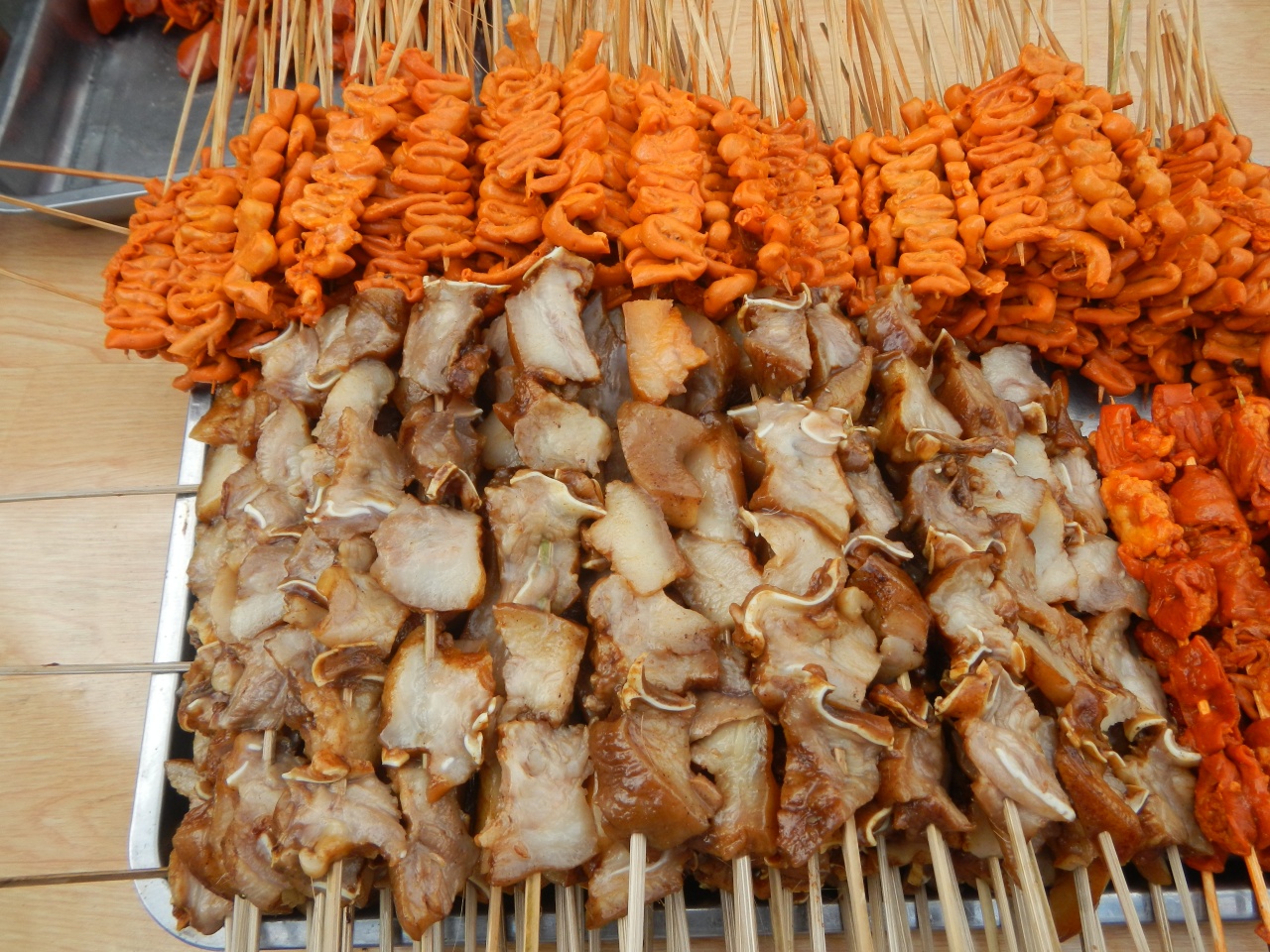
Among the snacks available on the streets are “mongos” (chick pea spread similar to Lebanese humus), “lechon manok” (barbecued chicken), “lumpia “(spring rolls made with pork, vegetables and chilies), “pangsit” (dumplings), “mami” (noodle soup similar to mee soup in Indonesia or Malaysia), “balut” (a duck egg with a partially formed embryo inside), empanadas, skewered grilled chicken dipped in garlic vinegar, “longanisa” sausages, fried pork chips dipped in vinegar and pork and chicken adobo served on banana leaves.
Bagnet is a celebrated pork dish known for its exceptionally crisp skin and tender meat. Similar to lechon kawali and originating from the northern province of Ilocos, it consists of pork belly that is boiled and then deep-fried until the skin becomes crackling crisp. Bagnet is typically served with sukang Iloko, a distinctive sugarcane vinegar from the region that provides a sweet–sour contrast to the rich meat. It is especially popular in local markets throughout the Ilocos region. [Source: Maida Pineda, Candice Lopez-Quimpo, CNN March 6, 2012 ]
Pancit habhab is a distinctive noodle dish from the town of Lucban in Quezon Province. Unlike most noodle dishes, it is traditionally served on a banana leaf and eaten without utensils, with diners lifting the leaf to their mouths to slurp the noodles. The dish is usually garnished with vegetables such as carrots and chayote along with small pieces of meat. Affordable and filling, pancit habhab is a popular snack or quick meal, particularly among students and jeepney drivers.
Laing is a well-known dish from the Bicol region made from dried taro leaves slowly simmered in rich coconut milk. The dish is typically flavored with chili peppers and small pieces of pork or fish to enhance its taste. Known for its creamy texture and mild heat, laing is commonly eaten with steamed rice. Authentic versions from Bicolano cities such as Naga and Albay are especially prized.
RELATED ARTICLES:
FOOD AND THE PHILIPPINES: DIET, STAPLES, AND COOKING FOR U.S. PRESIDENTS factsanddetails.com
EATING AND DRINKING CUSTOMS IN THE PHILIPPINES factsanddetails.com
FILIPINO CUISINE: CHARACTERISTICS, REGIONAL VARIATIONS, FUSION, DEFENDING IT factsanddetails.com
FILIPINO DISHES: EATING, COOKING AND ENJOYING THEM factsanddetails.com
FILIPINO FOOD RECIPES factsanddetails.com
EXOTIC AND WEIRD FOODS IN THE PHILIPPINES factsanddetails.com
FILIPINO RESTAURANTS AND PLACES TO EAT IN THE PHILIPPINES factsanddetails.com
JOLLIBEE: HISTORY, TONY TAN CAKTIONG, SUCCESS factsanddetails.com
DRINKS IN THE PHILIPPINES: BEER, TUBA, COCKTAILS, CIVET COFFEE factsanddetails.com
DRINKING IN THE PHILIPPINES: CUSTOMS, HOBBIT BAR, WINE PARTIES, TAXES factsanddetails.com
TOBACCO AND BETEL NUT IN THE PHILIPPINES: SMOKING, HISTORY, STRICT LAWS factsanddetails.com
ILLEGAL DRUG USE IN THE PHILIPPINES: MAINLY CANNABIS AND METH factsanddetails.com
ILLEGAL DRUG TRADE IN THE PHILIPPINES factsanddetails.com
Filipino Street Sweets
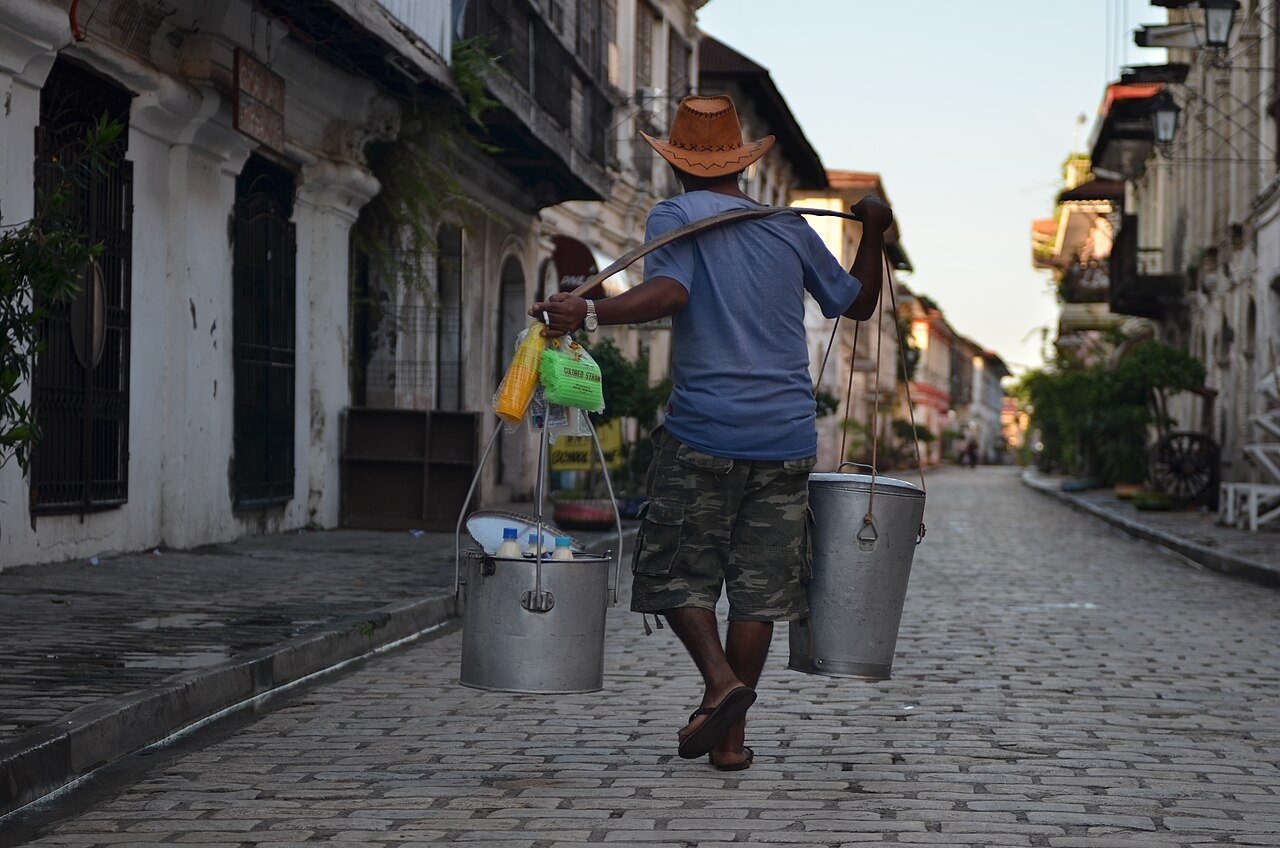
Sorbetes are a popular street dessert that dates back to the early 1920s, a time where a single centavo could buy you almost anything. The process of this ice cream making and selling it in carts with colorful designs is still the same. Back in the old days, these ice cream dealers bred their own cows and milked them with their own hands to ensure the freshness and sanitation of the milk needed to make the "dirty ice cream". [Source: Maida Pineda, Candice Lopez-Quimpo, CNN March 6, 2012 ]
Puto bumbong is a distinctive purple rice cake traditionally eaten during the Christmas season in the Philippines. It is made from purple glutinous rice that is steamed in bamboo tubes, giving the snack its name. Once cooked, the soft rice cake is served with butter, grated coconut, and panutsa, a type of brown sugar. It is commonly sold at roadside stalls and markets during the holiday season.
Turon is a popular Filipino snack consisting of sliced bananas and sometimes langka (jackfruit) wrapped in a thin pastry similar to a lumpia wrapper. The roll is coated with sugar and deep-fried until crisp and caramelized. Often sold by street vendors, turon is a favorite merienda, or mid-morning and afternoon snack, throughout cities and towns across the Philippines.
Taho is a warm snack made from soft soybean custard topped with brown sugar syrup and sago pearls. It is traditionally sold in the early morning by street vendors who walk through neighborhoods calling out to customers. The simple but comforting dessert is also widely available in markets and restaurants.
Pancit Habhab (Lucban) is a sweet noodle dish made from rice flour. It acquired its name and developed its unique attraction by the way it is eaten. Otherwise known as Pancit Lucban, these noodles are hawked in the streets and served on a piece of banana leaf, sans fork or any other utensils. Thus, it is eaten straight from the leaf, licking permitted... "habhab"-style.
Fruits in the Philippines
Fruits are abundant throughout the year in the Philippines due to the country’s tropical climate. Pineapples, strawberries, cantaloupe, melon, kiwi, bananas, guapple (a cross between a guava and an apple) and coconut are just a few examples. Several varieties of bananas are widely consumed, including both red and green types. Fruit salads made with condensed milk and coconut milk are popular desserts and are often served during festive occasions and family gatherings. [Source: everyculture.com]
Mangoes—regarded as the national fruit—are particularly prized for their sweetness and juiciness. Mango season is joyous time when it seems like everyone is eating mangoes. Among the locally consumed fruits are lansones, santols, jackfruits, guavas, lychees (red, wiry-skined fruit), rambutans (lychee-like fruit), custard apple (zurzat), bread fruit, passion fruit, jerek (pomelo), star apple, pineapples, oranges, bananas, tangerines, coconuts, papaya, watermelons, cantaloupes and wide variety of local fruits and vegetables.
One Canadian with a Filipina wife posted: Our favourite tropical fruits are: Lanzones, (a white soft white skinned fruit); Santol (large orange fruit with a delightfully sweet meet inside the hard orange shell); Atis (custard apple); Chiku (an oval fruit the size of a large grape); Rambutan (a round plum sized fruit covered in soft red and yellow spikes); and of course Mangos! We grow our own calamansi (a small cherry tomato sized lime) but use them mainly as a fruit juice drink. Papaya is a great breakfast fruit. Bananas and pineapples are excellent, but choose one of the local varieties—the small but fat Latundan, the small and slender Senorita bananas, or the small brown pineapples, almost weather beaten in appearance—they taste so much better than the export varieties. [Source: Canadian Center for Intercultural Learning+++]
Coconuts in the Philippines
Coconuts are abundant in the Philippines and are used in many dishes. The white meat inside the shell can be eaten fresh, while coconut milk—known as gata—is extracted from the grated flesh and used in both drinks and cooking. Coconut milk often forms the base of sauces for fruits, vegetables, and seafood, including dishes such as adobong hipon sa gata (shrimp adobo cooked in coconut milk). Coconut is also widely used in desserts, where it may be grated, cooked in syrup, or baked into sweets like maja blanca, a soft coconut-based pudding or cake. [Source: Junior Worldmark Encyclopedia of Foods and Recipes of the World, Gale Group, Inc., 2002]
A fresh coconut can usually be identified by shaking it and listening for the liquid sloshing inside. If the coconut is cracked, old, or dried out, it will contain little or no liquid. To open a coconut, locate the three brown eye-like spots at one end and pierce one with a sharp object to drain the liquid.
Making grated coconut: Once the meat has been removed, it can be grated with a hand grater, shredded in a food processor, or sliced finely with a knife. A single coconut typically yields about four cups of shredded coconut. Preheat an oven to about 400°F (200°C). Place the coconut on a baking sheet and heat it for about 15 minutes. Remove it from the oven, wrap it in a clean kitchen towel, and carefully crack the shell with a hammer. The coconut meat should then separate from the shell; if it does not come away easily, return the coconut to the oven for a few more minutes.
Halo-Halo
Halo-halo is a popular dessert that consists of layers of various ingredients such as corn kernels, ice cream, small gelatin pieces, cornflakes and shaved ice. “ Halo-halo literally means, "mix-mix". And its is just that: a mixture of sweetened fruits and beans, lavished with pinipig (crisp flattened rice flakes), sugar and milk, topped by crushed ice and ice cream. The dish consists can contain a variety of sweet ingredients such as leche flan, gulaman (gelatin cubes), ube (purple yam), bananas, kaong (sugar palm fruit), beans, garbanzos, milk, and often a scoop of ube ice cream. The combination of textures and flavors makes halo-halo a refreshing and colorful treat. [Source: Maida Pineda, Candice Lopez-Quimpo, CNN March 6, 2012 ]
Halo-halo is especially popular during the country’s hot tropical weather. When the hot season arrives, Manila’s streets fill with small stands serving it. You know summertime is in full swing when halo-halo stand start sprouting by the roadside and by the beach, all whipping up their heavenly concoctions of such a refreshingly divine dessert. You can make your own by selecting and mixing your ingredients to make a perfect Halo-Halo. Halo-Halo is uniquely, unforgettably Filipino!”
The most famous version is halo-halo—an icy mixture of red beans, coconut gel, purple yam, flan, candied fruit, and sometimes ice cream. The late Anthony Bourdain once described the fast-food chain Jollibee version as “oddly beautiful,” referring to its colorful jumble of ingredients. Nearly every restaurant has its own interpretation, occasionally adding sweet potato or jackfruit. A well-known version comes from Razon's of Guagua, which serves a “minimalist halo-halo” made with just bananas, macapuno coconut, milk, and flan layered over finely shaved ice—simple but still rich in flavor. [Source: Don Jaucian and Michelle Ayuyao, CNN Philippines Life, April 22, 2016]
Favorite Filipino Snacks
Some places are noted for their snacks and special foods: Ojaldres biscuits from the Visayas, pastillas from Bulacan, turron from Pampanga, espasol (rice cake cooked in coconut milk) from Laguna, a province south of Manila; strawberries from Baguio; pineapple from Tagaytay; sapin-sapin (multi-coloured sticky rice cake) from Malabon, a city north of Manila; bagnet (deep-fried crispy pork belly) from the northern Philippines’ Ilocos region; [Source: Rina Diane Caballar, BBC, July 11, 2017]
Ilocos empanada is a regional variation of the empanada found in the northern cities of Vigan and Laoag. Although the name reflects Spanish influence, the ingredients are distinctly local. The pastry shell, often made from rice flour and tinted orange with annatto, is filled with grated green papaya or bean sprouts, egg, and longganisa (a garlicky pork sausage). The filled pastry is then deep-fried and typically served with a spicy vinegar dipping sauce. [Source: Maida Pineda, Candice Lopez-Quimpo, CNN March 6, 2012 ]
Empanada de kaliskis, which literally means “scaly pie,” is a traditional meat pastry from the city of Malolos in Bulacan Province. The name refers to the flaky, layered crust that resembles fish scales. Similar in texture to croissant pastry, it is filled with seasoned chicken and then deep-fried. The snack is best enjoyed freshly made and is commonly available in bakeries and specialty restaurants in Malolos.
Lumpiang Ubod is a fresh spring roll filled with the tender pith of the coconut palm known as ubod. The filling typically includes shrimp, pork, onions, and seasonings, wrapped in a thin egg crêpe wrapper. It is served with a sweet garlic sauce and sometimes crushed peanuts. The dish illustrates the Filipino practice of using many parts of the coconut tree in cooking.
Suman at manga is a popular snack consisting of sticky rice cakes served with ripe mangoes. The sticky rice, known as suman, is wrapped in banana or coconut leaves and steamed, giving it a soft, slightly sweet flavor. Many variations exist depending on the ingredients and wrapping leaves used. This portable snack is often sold by roadside vendors and is a common treat for travelers.
Lumpia — Hand-Wrapped Filipino Spring Rolls
Lumpia, the Filipino version of fried spring rolls, are a beloved staple at gatherings and celebrations. Filled with a mixture of vegetables and often ground meat, poultry, or shrimp, the rolls are wrapped in thin pastry and fried until golden and crisp. They are typically served with a garlic-vinegar dipping sauce and are known for disappearing quickly once placed on the table. As one observer noted, lumpia are “the high school musicals of finger food: no easy feat, but a definite crowd pleaser.” Preparing them requires time and practice, bringing together large quantities of ingredients that must be chopped, mixed, and carefully wrapped before frying. [Source: Bonnie S. Benwick, Washington Post, December 23, 2009 ^^]
The fillings vary widely, reflecting the flexibility of the dish. Common ingredients include garlic, green beans, carrots, cabbage, and onions, while mushrooms and mung bean sprouts are also frequently used. The goal is a roll with a delicate, shatteringly crisp exterior and a savory interior. Although lumpia can resemble fresh spring rolls in appearance, the fried version—often called lumpiang shanghai—is the most familiar and widely enjoyed.
Because they are labor-intensive, lumpia are often made in large batches. A single session may produce 200 to 300 rolls, which can then be frozen and fried as needed. The rolls are usually assembled at a table, where the filling is placed onto thin spring-roll wrappers, rolled tightly into uniform cylinders, and stacked in layers separated by plastic wrap to prevent them from drying out before cooking.
The wrappers themselves are extremely delicate. Many cooks use very thin store-bought spring-roll shells rather than traditional lumpia wrappers, which can tear easily during preparation. Using a food processor to chop the filling ingredients can also speed up the process, making it possible to assemble dozens of rolls in a relatively short time.
Despite the effort required, lumpia remain one of the most popular and versatile foods in Filipino cuisine. They can be served as appetizers, snacks, or even as part of a main meal, and they appear at birthdays, family gatherings, and community events. Crisp, savory, and easy to share, lumpia have become one of the defining finger foods of the Philippines.
Filipino Desserts
Dessert holds a special place in Filipino cuisine, and many consider it the highlight of a meal. While stir-frying is seen as relatively simple, mastering desserts is viewed as a true culinary skill, and a cook’s reputation often depends on it. Popular sweets include polvoron candies and bibingka, a rice-flour cake topped with cheese and shredded coconut, commonly eaten as snacks. [Source: Junior Worldmark Encyclopedia of Foods and Recipes of the World, Gale Group, Inc., 2002]
Popular sweets include fritters, cakes and tarts made with palm sugar and coconut milk,”bibingka” (pancakes made with rice, cassava, eggs and coconut milk cooked in a pan lined with banana leaves), “suman” (rice, palm sugar and coconut milk steamed with banana leave), “halo halo” (a popular refresher made with ice cream, crushed ice, coconut milk and crushed fruit), “tsampurado” (rice and chocolate), “san rival” (egg whites, cream and coconut) and “queso puti” (water buffalo cheese). Sticky rice prepared with coconut milk and sugarcane syrup is wrapped in banana leaves. Glutinous rice is grown especially for use in this traditional dessert.
Pancit Palabok is a richly flavored noodle dish commonly served at celebrations such as birthdays and family gatherings. The dish features rice noodles topped with a thick orange sauce made from shrimp broth and annatto, and is garnished with pork, shrimp, hard-boiled eggs, and crispy pork rinds (chicharon). In some versions, oysters or squid are also added, giving the dish a complex combination of flavors and textures.
Halayang Ube is a dessert made from ube, or purple yam, which is widely used in Filipino sweets. The yam is cooked with milk, sugar, and butter to create a smooth, thick jam-like dessert with a vibrant purple color and rich flavor. Halayang ube is often enjoyed on its own or used as a filling in pastries and cakes.
Leche flan is a classic Filipino custard dessert made from eggs, milk, and sugar. It is steamed rather than baked, resulting in a smooth, dense texture, and is topped with a layer of caramelized sugar syrup. The dessert is commonly served during holidays, celebrations, and family gatherings.
Ilocano desserts highlight local agricultural products such as glutinous rice, coconut, root crops, and sugarcane. Sticky rice cakes, known collectively as kakanin, are especially popular. Examples include tupig, a grilled rice cake wrapped in banana leaves and made with coconut milk and sugar, and tinubong, a similar mixture cooked inside bamboo tubes. Other sweets include patupat, sticky rice cooked in woven palm leaves with sugarcane juice; dudol, a chewy dessert made from rice flour and coconut milk; and balikutsa, a candy-like confection made from sugarcane molasses. These desserts illustrate the blend of indigenous ingredients and historical influences that characterize Ilocano cuisine. [Source: Wikipedia]
The northern Philippines town of La Trinidad made an 11,146 kilogram strawberry buttercake. La Trinidad bills its itself as the strawberry capital of the Philippines. It has been making giant cakes for a number of years. The Guinness Book of Records said it had no entry for strawberry buttercakes. Organizers of the cake baking event tried to convince the Guinness people to make a new category..
Filipino Pies Confections and Sweet Breads
Ensaymada is a soft, sweet bread of Spanish origin that has become a beloved Filipino pastry. The bread is typically topped with butter, sugar, and grated cheese, creating a distinctive sweet-and-salty flavor. It is often served with tsokolate, a thick Filipino hot chocolate traditionally made from ground cacao tablets, making the combination a popular choice for breakfast or afternoon snacks.
Buko Pie is a well-known dessert made from young coconut, often called the “king of coastal fruits” in the Philippines. The pie has a flaky crust filled with tender coconut meat in a creamy, slightly sweet custard. It is especially associated with the province of Laguna, where numerous bakeries compete for the title of producing the best version of this regional specialty. Buko pie is often associated with road trips and homecoming gifts. Known as a traditional pasalubong from the province of Laguna, the pie features a dense filling made from young coconut and sweetened condensed milk rather than cream. Roadside stalls selling buko pie are a common sight throughout the region. The ideal pie has a delicate crust and evenly distributed coconut filling. One notable version is served at Wildflour Cafe + Bakery, where slices feature a thick layer of tender coconut beneath a crisp, multi-layered crust, highlighting the dessert’s simple but satisfying flavor.
Pastillas de leche is a delicate confection made from fresh carabao milk and sugar. The mixture is cooked until thick and then shaped into small cylindrical candies that melt easily in the mouth. Each piece is traditionally wrapped in decorative paper, especially in the province of Bulacan, where artisans sometimes cut intricate patterns into the wrappers.
Recipes for Filipino Desserts
Coconut Rice Dessert
Ingredients
Rice, washed and drained
6 cups coconut milk
Corn kernels
Salt to taste
Sugar to taste
Thick coconut milk (for serving)
[Source: “Culture Shock!: Philippines” by Alfredo Roces and Grace Roces, Marshall Cavendish International, 2010]
Instructions
1) Wash and drain the rice.
2) Bring the rice to a boil with six cups of coconut milk.
3) Reduce the heat and simmer for about 30 minutes, or until the rice is cooked.
4) Add the corn and salt, then bring the mixture back to a boil.
5) Lower the heat and cook, stirring occasionally, for about 5 minutes.
6) Add the sugar and stir until completely dissolved.
7) Serve with thick coconut milk on the side if desired.
Polvoron (Powdered Milk Candy)
Ingredients
3 cups flour, sifted
1 cup powdered milk
¾ cup confectioners sugar
½ pound (2 sticks) butter, melted
1 teaspoon lemon or vanilla extract
¼ cup water, measured 1 Tablespoon at a time
[Source: Junior Worldmark Encyclopedia of Foods and Recipes of the World, Gale Group, Inc., 2002]
Instructions
1) Place sifted flour in a saucepan and toast over medium heat until light brown, stirring constantly. Remove from heat and cool.
2) Add powdered milk, sugar, melted butter, and lemon or vanilla extract.
3) Add water, 1 Tablespoon at a time, until the mixture holds together and can be molded into balls.
4) With your hands, flatten into little cakes the size of a silver dollar.
5) Wrap individually in wax paper.
6) Makes about 60 candies.
Bibingka (Coconut Rice Cakes With Banana Leaves)
Ingredients
2 cups rice flour
1 cup coconut milk
½ cup sugar
2 eggs
2 tablespoons melted butter
Banana leaves for lining
2 salted duck eggs, sliced
[Source: Angela Dimayuga and Ligaya Mishan, New York Times, October 7, 2019]
Instructions
1) Preheat the oven to 350°F and line a baking pan with banana leaves.
2) In a bowl, combine rice flour, coconut milk, sugar, eggs, and melted butter.
3) Mix until the batter becomes smooth.
4) Pour the batter into the prepared pan.
5) Bake for about 20 minutes, then place slices of salted duck egg on top.
6) Continue baking until the cake is set and lightly browned.
7) Serve warm.
Leche Flan (Caramel Custard) Recipe
Caramel Ingredients
1 cup sugar
1 cup water
Caramel Instructions
1) Pour the water in a saucepan and bring to a boil.
2) Add the sugar and stir constantly over medium heat until sugar is melted and it forms the consistency of syrup.
3) Pour the syrup evenly into any ovenware dish that is about 2 inches deep, such as a square brownie pan. Tilt the dish so the syrup coats all of the sides. Refrigerate while preparing the custard. [Source: Junior Worldmark Encyclopedia of Foods and Recipes of the World, Gale Group, Inc., 2002]
Custard Ingredients
12 eggs
2 (13-ounce) cans evaporated milk
1 (14-ounce) can sweetened condensed milk
1 teaspoon vanilla
Instructions
1) Separate the egg yolks from the egg whites, placing the yolks in a large mixing bowl. (The egg whites may be discarded or saved for another use.)
2) Add the remaining custard ingredients to the bowl with the egg yolks.
3) Mix gently to avoid creating bubbles or foam. Remove the caramel-lined dish from the refrigerator and slowly pour the custard mixture into it.
4) Preheat the oven to 325°F.
5) Cover the custard dish with aluminum foil and place it inside a large, shallow pan, such as a cake pan. Pour water into the outer pan until it reaches about one inch in depth, creating a water bath.
6) Bake for about 1 hour, or until the custard has set and is firm. Allow it to cool to serving temperature. It may be served either warm or chilled.
Serves 8 to 10.
Image Sources: Wikimedia Commons
Text Sources: “Encyclopedia of World Cultures Volume 5: East/Southeast Asia:” edited by Paul Hockings, 1993; “Culture Shock!: Philippines” by Alfredo Roces and Grace Roces, Marshall Cavendish International, 2010; Metropolitan Museum of Art; National Geographic, Live Science, Philippines Department of Tourism, New York Times, Washington Post, Los Angeles Times, Smithsonian magazine, Encyclopedia.com, Library of Congress, The Conversation, The New Yorker, Time, BBC, CNN, Reuters, Associated Press, AFP, Lonely Planet Guides, Google AI, Wikipedia, The Guardian and various websites, books and other publications.
Last updated March 2026