
TRADE AND THE SPANISH PHILIPPINES
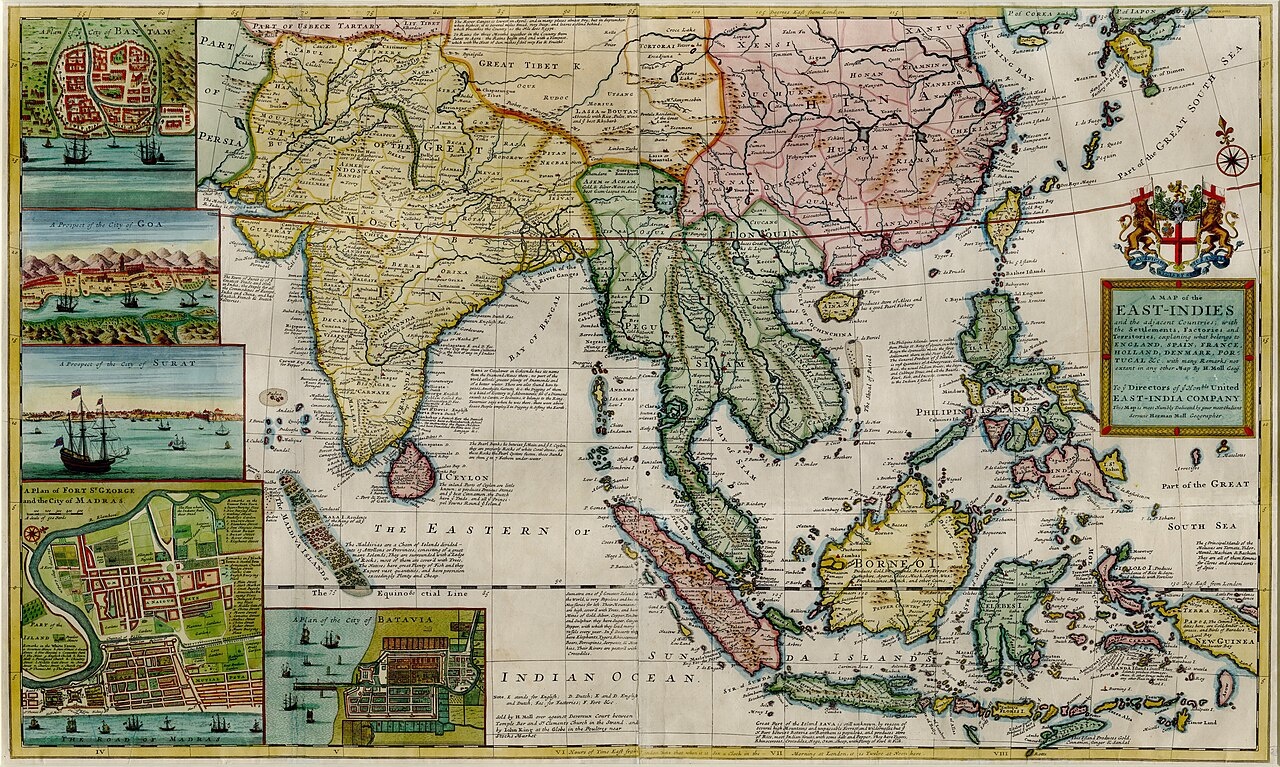
The Spanish had initially hoped to turn the Philippines into another Spice Island but they soon found that the island’s soil, terrain and climate were not suited for growing spices. Mining opportunities did not present themselves as they did in Latin America. Trade was stumbled upon sort of by accident.
The Spanish conquest disrupted and reshaped the Philippines’ earlier trade connections with the rest of Asia. Beginning in 1593, Spain limited Philippine commerce as part of its imperial policy. Trade was restricted by law to two large ships each year that sailed between Manila and Acapulco under the Manila Galleon system. These ships carried missionaries and large amounts of silver from Mexico to Manila. At the same time, Chinese junks from Fujian and Guangdong brought silk and other luxury goods to Manila, which were then shipped to the Americas. This trading system continued until the early nineteenth century. [Source: Norman G. Owen, History of World Trade Since 1450, Thomson Gale, 2006]
Although this route played an important role in linking Asia and the Americas—especially in the global exchange of silver—it had little direct benefit for most Filipinos. Local products were usually not valuable enough to earn space on the limited galleon cargo. What was in demand was Filipino labor, particularly for cutting timber, building ships, and serving as crew members. Outside Manila, the colony imported very little and exported almost nothing.
The colonial government relied heavily on profits from the galleon trade. It also received regular financial support from Mexico, funded largely by customs duties collected in Acapulco. Without this subsidy, the colony would likely have been abandoned because it was not economically profitable on its own. While some historians see this payment as a return of earnings generated by Philippine trade, Spanish officials considered it financial assistance from the viceroyalty of Mexico to sustain the Philippines.
RELATED ARTICLES:
MANILA GALLEONS: SPANISH TRADE BETWEEN THE PHILIPPINES AND MEXICO factsanddetails.com
SPANISH ARRIVE IN THE PHILIPPINES: EXPEDITIONS, LEGAZPI, TAKING CONTROL factsanddetails.com
CHRISTIANIZATION OF THE PHILIPPINES: MISSIONARIES, SUCCESS, FRIAROCRACY factsanddetails.com
PHILIPPINES UNDER SPANISH RULE: LIFE, COLONIZATION, CHINESE factsanddetails.com
MOROS: MUSLIMS IN MINDANAO AND THE SOUTHERN PHILIPPINES factsanddetails.com
HISTORY OF MUSLIMS IN THE SOUTHERN PHILIPPINES factsanddetails.com
PHILIPPINES BEFORE THE ARRIVAL OF THE SPANISH factsanddetails.com
PRE-COLONIAL FILIPINO STATES factsanddetails.com
MAGELLAN IN THE PHILIPPINES factsanddetails.com
China and Spanish Philippines Trade
In 1571, the Spaniards rescued some Chinese sailors whose sampans sunk off the Philippines and helped them get back to China. The next year the grateful Chinese returned the favor in the form of a trading vessel filled with gifts of silk, porcelain and other Chinese goods. This ship was sent eastward and arrived in Mexico in 1573, and its cargo ultimately made it to Spain, where people liked what they saw and a demand for Chinese goods was born.
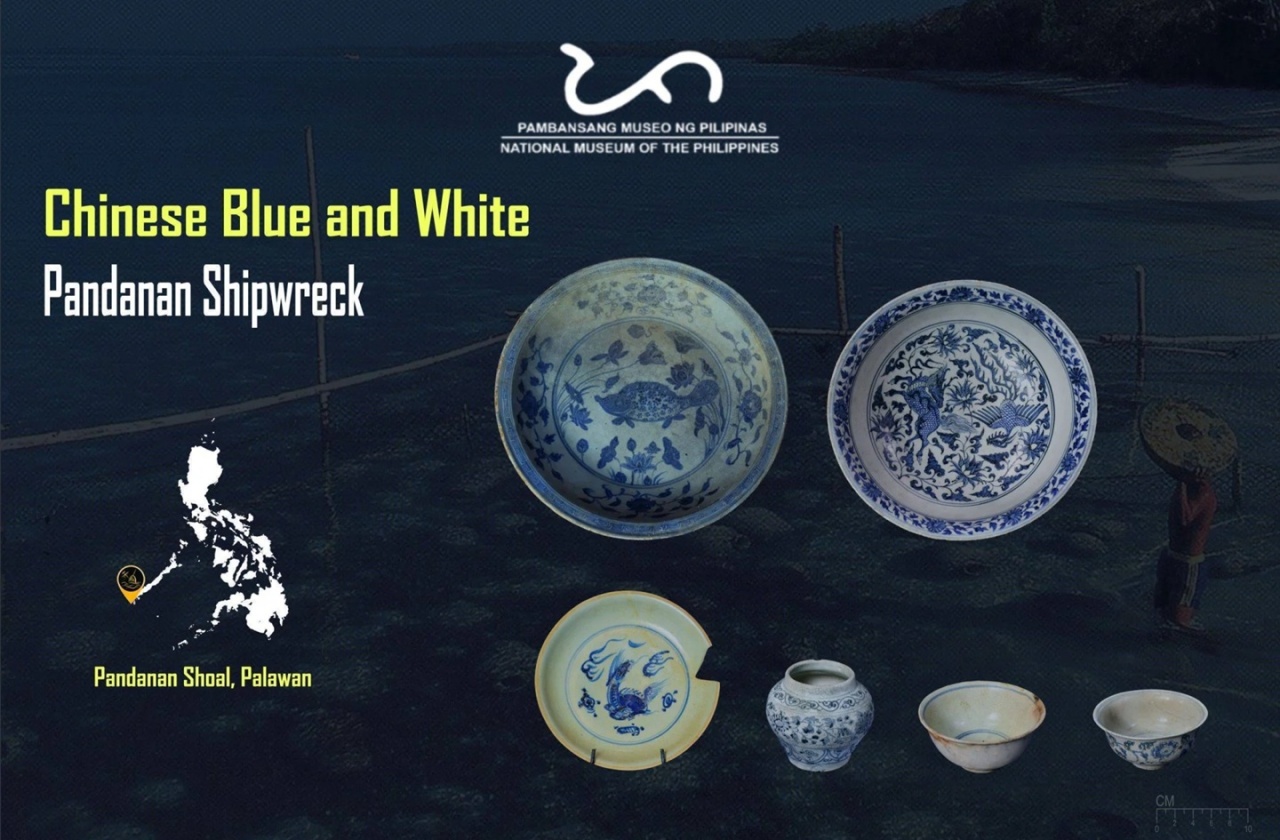
Manila became the center of a major trade network that funneled goods from Southeast Asia, Japan, Indonesia, India and especially China to Europe. Spain developed and maintained a monopoly over the transpacific trade route. The trade became the primary reason for the existence of the Philippines. Development of the archipelago was largely neglected.
The most important source of goods for the Spanish in the Philippines was China. For a while the Spaniards maintained a trading post on China but for the most part they relied on Chinese intermediaries to bring goods to Manila. About 30 or 40 junks, laden with goods arrived in the Philippines from China a year. Over time the Chinese not only dominated trade but also dominated many of the trades, such as shipbuilding, on which trade was based, and outnumbered the Spanish.
Chinese and Spanish Philippines Trade
nese merchants were already active in regional trade. The Spaniards referred to them as “Sangley,” derived from the Hokkien term seng-li, meaning business. Early Chinese immigrants formed significant communities by the 16th century, centered in Binondo, Manila (the world's oldest Chinatown). Primarily Hokkien-speaking, these settlers were drawn to the Manila-Acapulco galleon trade, working as artisans and merchants despite facing Spanish restrictions and violence.
By the late nineteenth century, the Chinese population in the Philippines had grown to between 50,000 and 100,000. Many specialized in retail trade and played a key role in the international rice market. For about twenty years after 1855, rice from Pangasinan in Luzon was exported to southern China. However, increasing demand for food within the Philippines eventually reversed this trade. The country became a net importer of rice—mainly from Vietnam—for the next century, and Chinese merchants were central participants in this commerce on both ends. [Source: Norman G. Owen, History of World Trade Since 1450, Thomson Gale, 2006]
Manila Galleons
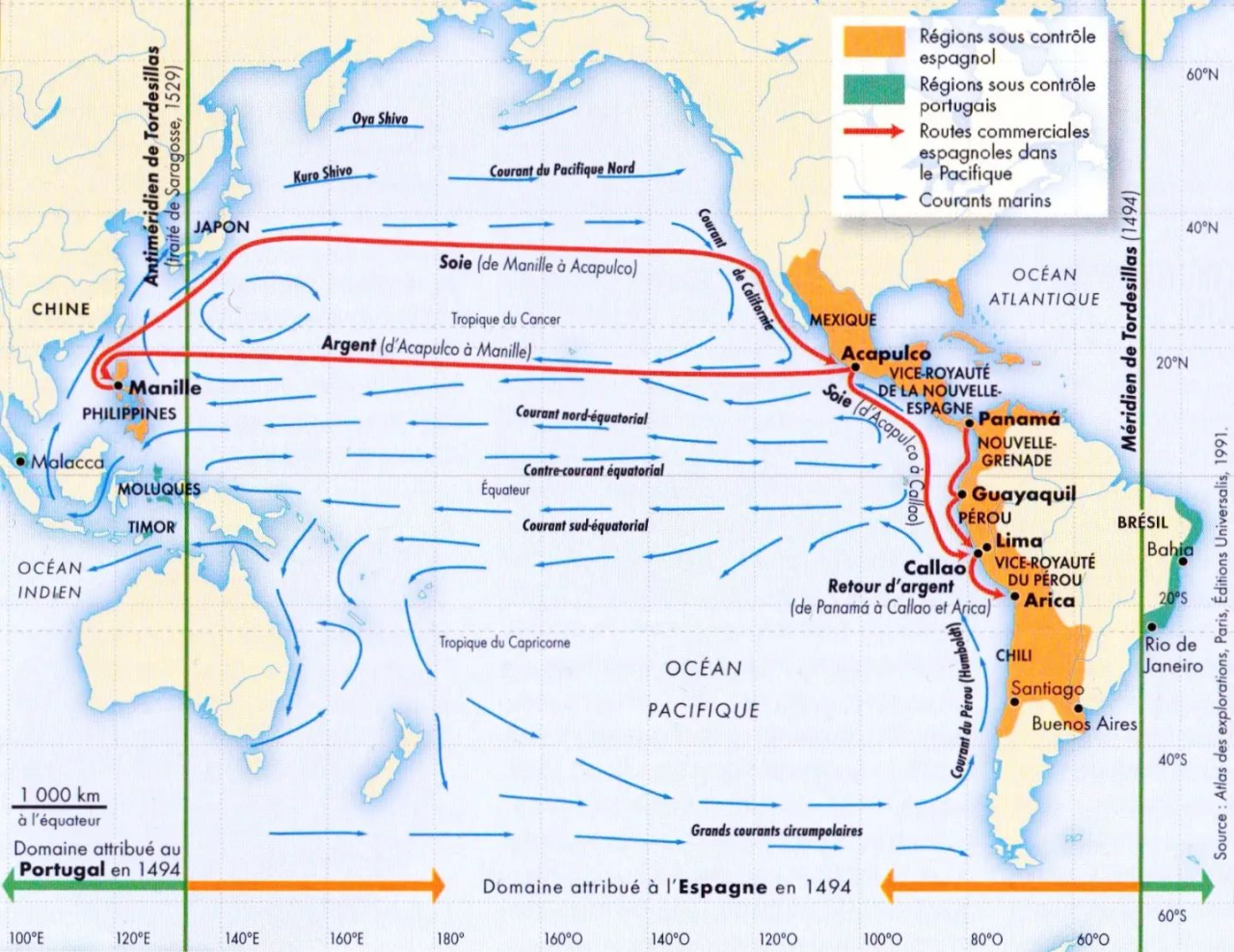
Trade in the Philippines centered around the “Manila galleons,” which sailed from Acapulco on the west coast of Mexico (New Spain) with shipments of silver bullion and minted coinage that were exchanged for return cargoes of Chinese goods, mainly silk textiles and porcelain. There was no direct trade with Spain and little exploitation of indigenous natural resources. Most investment was in the galleon trade. But, as this trade thrived, another unwelcome element was introduced—sojourning Chinese entrepreneurs and service providers.
For 250 years, from 1565 to 1815, Spanish galleons shuttled between Acapulco and Manila, exchanging treasures of the West for those the East, making huge profits for the Spaniards. The trade has been described as “one of the most persistent, perilous and profitable commercial enterprises in European colonial history.” For a long period of time it was the “most significant pathway for commerce and cultural interchange between Europe and Asia.” [Source: Eugene Lyon, National Geographic, September 1990 ]
The galleons sailed once or twice. Sometimes they traveled in convoys but more often than not a single ship made the journey. A few vessels sailed from Manila directly to Spain rounding the cape of Good Hope, but these voyages were soon stopped by their enemy the Dutch, who controlled this sea route.
See Separate Article: SPANISH MANILA GALLEON TRADE BETWEEN THE PHILIPPINES AND MEXICO factsanddetails.com
Colonial Philippines Export Economy
In the late eighteenth century, Spain introduced the Bourbon Reforms under the House of Bourbon to transform the Philippines into an export-oriented economy. Government initiatives included the creation of a tobacco monopoly, the promotion of direct trade with Spain through the Royal Philippine Company, efforts to stimulate economic “development,” and the official opening of Manila to Asian traders. However, these early reforms had limited success. The tobacco monopoly mainly served to raise internal revenue, and the Philippines produced few goods that Spain could not obtain more cheaply from the Caribbean. Many development projects, such as iron mining and silkworm production, failed. Only sugar and indigo began to gain ground in Manila’s modest export trade, which still largely consisted of traditional goods—rare woods, edible bird’s nests, and sea cucumbers—sold mainly to China. [Source: Norman G. Owen, History of World Trade Since 1450, Thomson Gale, 2006]
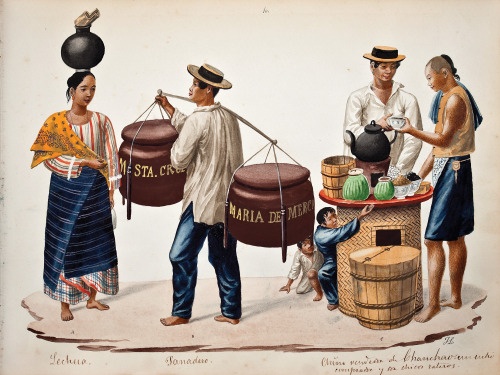
Around 1820, global conditions changed. After the Napoleonic Wars, the industrializing West saw economic opportunities in the Philippines. As restrictions on foreign merchants eased, British and American trading firms expanded commerce in the islands. Growing global demand for sugar and abaca (Manila hemp) fueled rapid export growth, increasing from less than two million pesos in the 1820s to more than thirty-six million pesos by the mid-1890s. The tobacco monopoly also began exporting surplus tobacco to Spain.
Most exports were transported by Western ships and sold in Western markets through Western merchants. Abaca was used for ship rigging and agricultural binder twine; sugar, tobacco, and coffee satisfied European consumers; and indigo even dyed the blue uniforms worn during the American Civil War. In return, the Philippines imported machine-made textiles and manufactured goods—especially from Britain—including nails, matches, corrugated iron, kerosene lamps, steamships, and sugar mills. As a result, the Philippine economy became closely tied to the industrial West. By the mid-nineteenth century, economic trends in the United States affected local conditions in abaca-producing regions such as Bikol, influencing wages, land values, and even marriage rates.
Growth of Plantation Agriculture in the Philippines
In the late eighteenth century, under the House of Bourbon, Spain attempted to strengthen the colonial economy by promoting agriculture and mining. During the nineteenth century, foreign trade expanded significantly, fueled by capital growth, increased imports of raw materials, and population growth. British and American ships began arriving with manufactured goods such as wine, copper, nails, and oil, while exporting Philippine products including hemp, sugar, tobacco, and rice. [Source: Nicholas P. Cushnerm Europe, 1450 to 1789: Encyclopedia of the Early Modern World. Gale Group Inc., 2004]
Three crops — tobacco, abaca, and sugar — dominated Philippine exports. The government monopoly on tobacco had been abolished in 1880, but Philippine cigars maintained their high reputation, popular throughout Victorian parlors in Britain, the European continent, and North America. Because of the growth of worldwide shipping, Philippine abaca, which was considered the best material for ropes and cordage, grew in importance and after 1850 alternated with sugar as the islands' most important export. Americans dominated the abaca trade; raw material was made into rope, first at plants in New England and then in the Philippines. Principal regions for the growing of abaca were the Bicol areas of southeastern Luzon and the eastern portions of the Visayan Islands. [Source: Library of Congress *]
Sugarcane had been produced and refined using crude methods at least as early as the beginning of the eighteenth century. The opening of the port of Iloilo on Panay in 1855 and the encouragement of the British vice consul in that town, Nicholas Loney (described by a modern writer as "a one-man whirlwind of entrepreneurial and technical innovation"), led to the development of the previously unsettled island of Negros as the center of the Philippine sugar industry, exporting its product to Britain and Australia. Loney arranged liberal credit terms for local landlords to invest in the new crop, encouraged the migration of labor from the neighboring and overpopulated island of Panay, and introduced stream-driven sugar refineries that replaced the traditional method of producing low-grade sugar in loaves. The population of Negros tripled. Local "sugar barons" — - the owners of the sugar plantations — became a potent political and economic force by the end of the nineteenth century. *
Tobacco in Colonial Philippines
Tobacco was likely introduced to the Philippines after the Spanish founded Manila on Luzon in 1571. Two species were brought: Nicotiana rustica and Nicotiana tabacum. Of the two, tabacum—the American variety—became more widely cultivated and later spread from Luzon to China. Spanish officials and Catholic missionaries are both credited with introducing tobacco, but missionaries were probably more influential because of their experience in organizing large-scale cultivation in the Americas and using its profits to fund church activities. [Source: George Bryan Souza, Tobacco in History and Culture: An Encyclopedia, Gale Group, Inc., 2005]
Tobacco quickly became highly valued in Philippine society. It was sometimes used as partial payment to indigenous auxiliaries—Christian or non-Muslim troops who assisted Spanish campaigns against Muslim communities in the south. Because copper coins were scarce and often debased, cigars even circulated as a form of money in rural areas into the early nineteenth century. Spanish accounts suggest that smoking was popular among men and women of all ages. Before the government established a tobacco monopoly in the eighteenth century, one Spanish official estimated that about one million people consumed tobacco; four decades later, the estimate rose to three million, a remarkably large share of the population.
Spanish observers in the sixteenth and eighteenth centuries praised the Philippines’ soil and climate for producing high-quality tobacco suitable for cigars, cigarettes, and snuff. However, Spain’s control over production varied by region. On Luzon, where Spanish presence was strongest, tobacco was grown on large landed estates owned by entrepreneurs and religious orders. In mountainous regions beyond firm Spanish control, smaller lowland producers traded with upland communities. In Mindanao—where Islam had been established before Spanish arrival and resistance to colonization remained strong—local farmers produced tobacco that rivaled the quality of Luzon’s output. However, Mindanao lacked the large trading fleets and access to silver that made Manila a major commercial hub.
Philippine tobacco supplied local markets and competed in regional trade with tobacco from China and Java, particularly in the South China Sea. These varied systems of production and trade continued until the mid- to late eighteenth century, when Spanish authorities began tightening control through monopoly policies.
Not everyone welcomed tobacco. In 1628, after a fire destroyed the Convent of San Nicolas in Manila, Father Juan de Medina blamed the blaze on a lit pipe, condemning tobacco as an “infernal plant” that had brought harm and destruction.
Philippines Tobacco Monopoly
In the early seventeenth century, Spanish authorities attempted to establish a tobacco monopoly on Luzon, but strong public opposition forced them to abandon the plan within seven months. By the mid-eighteenth century, however, tobacco monopolies had proven profitable in other Spanish colonies in the Americas. Reformers within the Spanish Empire identified tobacco as the only Philippine product with enough demand to justify strict government control. They hoped monopoly revenues would help offset the heavy financial burden of maintaining the colony, which relied on subsidies from the Spanish Crown. [Source: George Bryan Souza, Tobacco in History and Culture: An Encyclopedia, Gale Group, Inc., 2005]
The tobacco monopoly was officially established in 1781. It gave the government exclusive control over the sale, manufacture, and distribution of tobacco. Farmers were required to sell their entire crop to the state at fixed contract prices. Later governors worked to expand tobacco-growing areas, improve plantation management, reduce fraud, and suppress resistance. For a time, the monopoly became the colony’s most important source of revenue and helped ease Spain’s fiscal difficulties.
However, the monopoly placed heavy restrictions on local communities. Filipinos, who had long grown and consumed tobacco freely, were no longer allowed to cultivate it without government approval. Consumers were also forced to pay higher prices for a product that had once been inexpensive. Although the monopoly lasted for about a century, it was widely unpopular. Over time, its profitability declined as administrative costs rose and smuggling, corruption, and evasion increased. As other sources of revenue expanded—such as the opium monopoly and the growing export trade in sugar and abaca—critics successfully pushed for the repeal of the tobacco monopoly.
During the nineteenth and early twentieth centuries, tobacco production continued to grow even after the monopoly ended. Philippine cigars and leaf tobacco found expanding markets in China, Japan, the East Indies, the United Kingdom, Spain, and Australia. After sugar and abaca (Manila hemp), tobacco became the third largest export of the Philippines. Tobacco manufacturing also emerged as an early source of industrial employment. Many workers were women, and by the mid-nineteenth century, around 30,000 people in the province of Manila were employed in cigar and cigarette production.
Image Sources: Wikimedia Commons
Text Sources: Library of Congress, Philippines Department of Tourism, Philippines government websites, Encyclopedia.com, New York Times, Washington Post, Los Angeles Times, Wikipedia, “Encyclopedia of World Cultures Volume 5: East/Southeast Asia:” edited by Paul Hockings, 1993, UNESCO, National Commission for Culture and the Arts (NCCA) the official government agency for culture in the Philippines), Lonely Planet Guides, The Guardian, National Geographic, Smithsonian magazine, The New Yorker, Time, The Conversation, BBC, CNN, Reuters, Associated Press, AFP, Google AI, and various websites, books and other publications.
Last updated February 2026