
PHILIPPINES UNDER SPANISH RULE
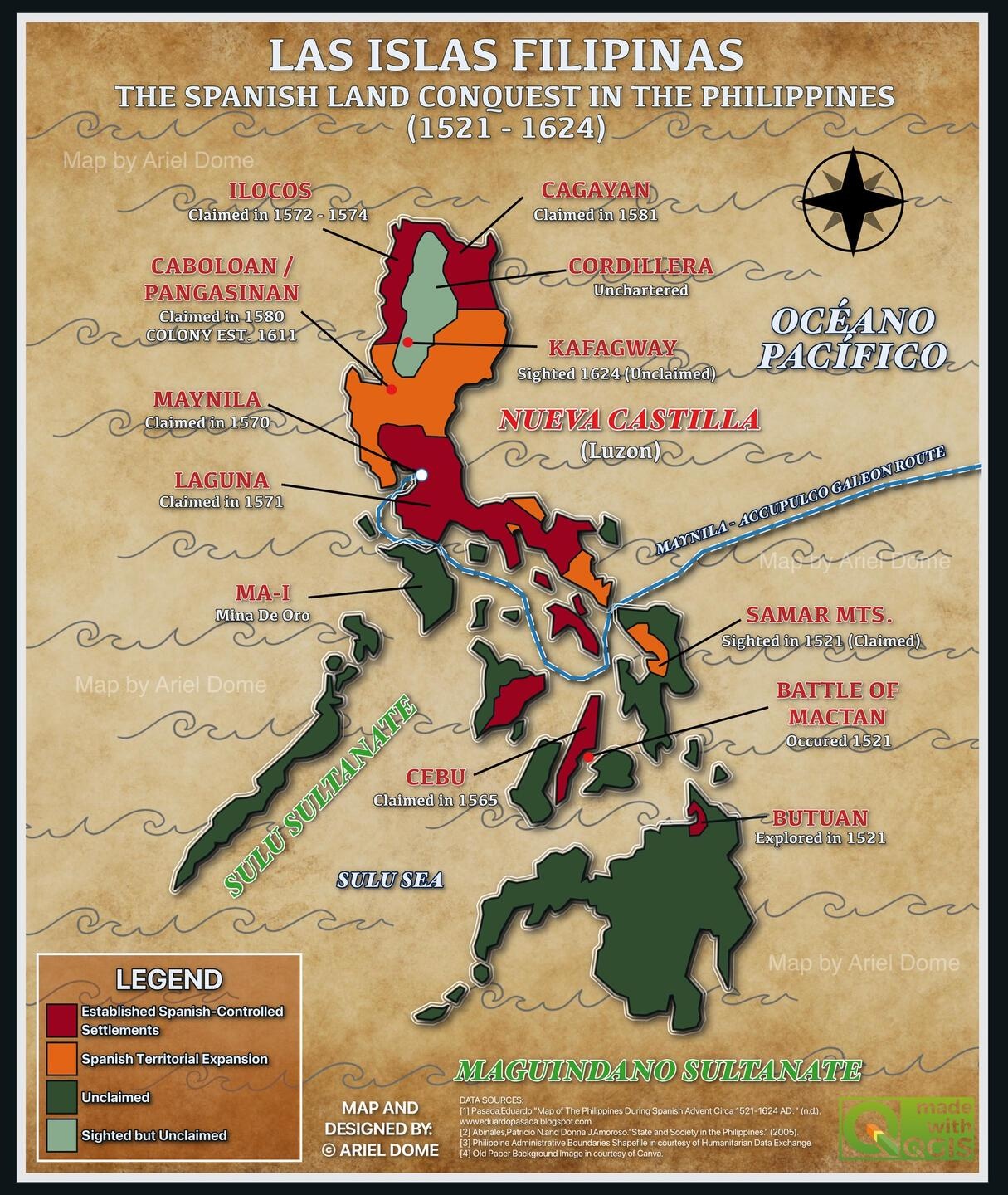
During the seventeenth and eighteenth centuries Manila was one of the major seaports of the world. It was the transshipment point in the famous Manila galleon trade that exchanged silver from Mexico for silks and other luxury wares of China and Japan. But by the middle of the nineteenth century, strong resistance to Spanish rule had developed in the Philippines, especially in the Tagalog area. [Source: “Encyclopedia of World Cultures Volume 5: East / Southeast Asia:” edited by Paul Hockings, 1993]
By some reckonings the Spanish accomplished little in the Philippines. They introduced Catholicism, established a Walled City in Manila but ultimately they were disappointed because they couldn't find spices or gold (gold was only discovered in large quantities after the Americans arrived). The primary purpose of the Philippines was to trade New World silver for Chinese silk.
The Spanish were able to gain control of the coastal areas of the northern and central islands, but not Mindanao, and the southern islands, where Islam was deeply rooted, and the jungle interior and highlands, where indigenous tribes, including headhunters, were able to repel Spanish incursions. The most high-status and affluent groups of people were Chinese entrepreneurs, lured by business opportunities, and Spanish officials. They intermarried with the local population, producing a new and distinctive culture. Roman Catholic religious orders had success Christianizing the populace of central and northern Philippines, but the Sulu Islands and Mindanao remained Muslim. A Spanish colonial social system was developed with a local government centered in Manila and with considerable clerical influence.
Over more than three centuries of colonial rule, Spain brought profound changes to Philippine society. Christianity reshaped belief systems, foreign commerce altered economic patterns, and new political and land systems transformed social structures. Concepts of land ownership and distribution shifted, and native institutions adapted to fit within the colonial framework, leaving lasting effects on Philippine culture and society. Today most Filipinos are aware of their Spanish heritage but few speak Spanish. [Source: Nicholas P. Cushnerm Europe, 1450 to 1789: Encyclopedia of the Early Modern World. Gale Group Inc., 2004]
RELATED ARTICLES:
SPANISH ARRIVE IN THE PHILIPPINES: EXPEDITIONS, LEGAZPI, TAKING CONTROL factsanddetails.com
CHRISTIANIZATION OF THE PHILIPPINES: MISSIONARIES, SUCCESS, FRIAROCRACY factsanddetails.com
TRADE AND PLANTATIONS IN THE PHILIPPINES UNDER THE SPANISH factsanddetails.com
MANILA GALLEONS: SPANISH TRADE BETWEEN THE PHILIPPINES AND MEXICO factsanddetails.com
MOROS: MUSLIMS IN MINDANAO AND THE SOUTHERN PHILIPPINES factsanddetails.com
HISTORY OF MUSLIMS IN THE SOUTHERN PHILIPPINES factsanddetails.com
PHILIPPINES BEFORE THE ARRIVAL OF THE SPANISH factsanddetails.com
PRE-COLONIAL FILIPINO STATES factsanddetails.com
MAGELLAN IN THE PHILIPPINES factsanddetails.com
Administration of the Spanish Philippines
The Philippines was administered by the Viceroyalty of New Spain in present-day Mexico but in many ways the Philippines was ruled by Catholic church. Most Filipinos had little contact with the Spanish other than through the church. Their acceptance of Christianity acted both to pacify the population and bond them with the Spaniards. The church also acted as an administrative body.
Like the Americas, the Philippines had a governor-general, an audiencia ('advisors and court'), and a cabildo ('town council') for the city of Manila. In the areas outside of Manila, alcaldías ('provinces') were organized, with an alcalde mayor ('provincial governor') as head.Spanish rule of the Philippines from Mexico endured until 1810 when Mexico proclaimed independence from Spain. [Source: Countries of the World and Their Leaders Yearbook 2009, Gale, 2008; Nicholas P. Cushnerm Europe, 1450 to 1789: Encyclopedia of the Early Modern World. Gale Group Inc., 2004]
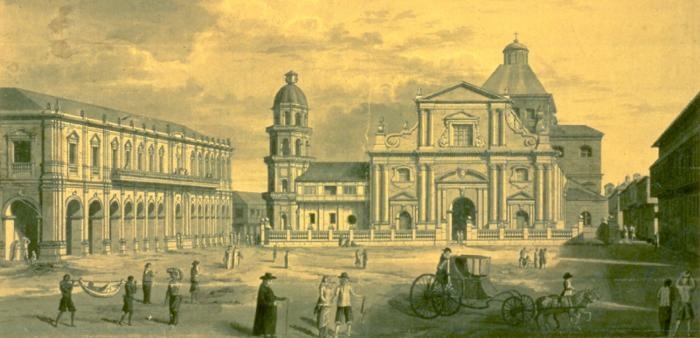
The most powerful cultural influence in the Philippine archipelago during Spanish rule came from the religious orders. The Order of Saint Augustine, Society of Jesus, Order of Preachers, and Order of Friars Minor served as the primary agents of Western culture. They led missionary efforts, converted local populations to Christianity, and introduced European religious teachings and social values. Over time, the secular clergy assumed responsibility for maintaining Christian orthodoxy and preventing converts from returning to earlier beliefs. Although the archipelago includes nearly seven thousand islands, not all were fully colonized. The southern regions, particularly Muslim areas, largely resisted Spanish control and retained Islam throughout the colonial period. The Spanish governed the Muslim areas of the Sulu Islands and Mindanao through a treaty with the sultan of Mindanao. Otherwise, , as Christianity spread across much of the islands, Western religious and cultural values became integrated into indigenous Malay society.
Financially, the colony brought limited direct revenue to Spain. Tribute taxes collected from the local population were insufficient to sustain the colony, making the Philippines a financial burden on the Spanish Empire. As a result, its importance shifted toward serving as Spain’s sole Christian outpost in Asia. The colony’s economy revolved around the Manila Galleon trade. Each year, merchants loaded a galleon with Asian luxury goods in Manila and shipped them to Acapulco, Mexico. In return, the vessels brought back silver pesos, linking the Philippines to global trade between Asia and the Americas.
Leadership in Spanish Philippines
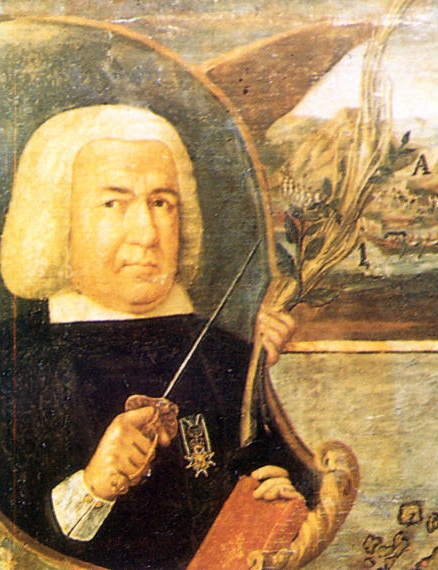
During Spanish rule, the Philippine colony was governed by a governor (captain-general) who answered to the viceroy of Mexico. The captain-general held extensive powers, combining legislative and administrative authority with judicial influence as president of the Real Audiencia, the colony’s high court and advisory body. He also served as commander of the military when forces were present, enforced Spanish laws, acted as vice patron of the Church, and supervised colonial finances until the intendant system was introduced in the late eighteenth century. [Source: Nicholas P. Cushner, Encyclopedia of Latin American History and Culture, Gale, 2008]
The Spanish governor, made a viceroy in 1589, ruled with the advice of the powerful royal audiencia. Many governors used their positions to enrich themselves. However, in the latter half of the eighteenth century, a number of capable administrators significantly improved the colony’s economic condition. Among them were Pedro Manuel de Arandía (1754–1759), Simón de Anda y Salazar (1770–1776), and José Basco y Vargas (1778–1787), whose reforms helped strengthen governance and promote economic development in the Philippines.
There were frequent uprisings by the Filipinos, who resented the encomienda system. The encomienda system was a 16th-century Spanish colonial labor institution where the Crown "entrusted" conquered indigenous populations to Spanish settlers (encomenderos). Nominally designed to provide protection and Christian education in exchange for labor or tribute, it functioned in practice as a brutal, often deadly, system of forced labor, agricultural exploitation, and slavery in the Americas and Philippines.
Revenues and Financial Support of the Spanish Philippines
From the time it was established as a Spanish colony, the Philippines depended on financial support from Spain. This support was delivered annually via the remittance of New World silver on the Acapulco-to-Manila galleon. Consequently, Spain's colonial administrators sought to control, diminish, or eliminate this financial drain on the crown's treasury.[Source: George Bryan Souza, Tobacco in History and Culture: An Encyclopedia, Gale Group,
Filipinos were required to pay tribute, either in money or in goods, to help cover the costs of Spanish colonization and to show their loyalty to the king of Spain. This tribute was collected by an encomendero, who was assigned to oversee a specific town or group of villages. In return, the encomendero was expected to protect the people and ensure they received instruction in Christian teachings. Certain individuals were exempt based on age and sex. In 1779, records from the Roman Catholic Archdiocese of Manila show that about 68,000 people paid tribute, while around 178,000 were exempt. [Source: Nicholas P. Cushner, Encyclopedia of Latin American History and Culture, Gale, 2008]
Filipinos were also required to provide labor, particularly in the shipyards of Cavite, where warships were built. Although the famous Manila Galleon trade connected the Philippines to Mexico, only a small number of these galleons were actually constructed in the Philippines; most were built in Mexico.
Life in the Spanish Philippines
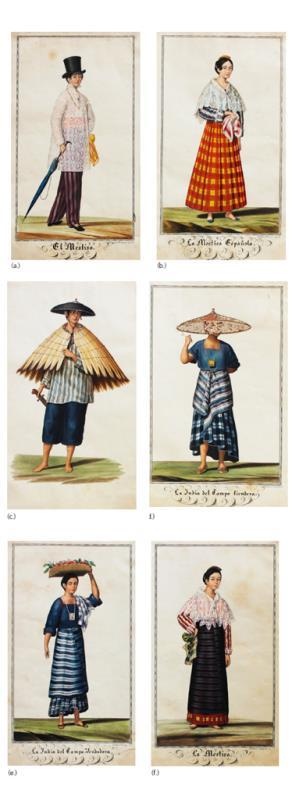
Filipinos during the Spanish era
Manila was the heart of the Spanish colony in the Philippines. Much of the international trade conducted by Spain in Asia was linked to Manila somehow and most of the rich and powerful had their homes here. The Spaniards in Manila lived in the walled city of Intramuros. The governor, administartors, friars, merchants, military officials, priests and soldiers from Spain and some of their families all resided within the walls. Outside the walls was a a polyglot community of Filipinos, Chinese, Japanese and other foreigners. Those that profited the most from trade and other economic activities, primarily the Spanish elite, wore fine silks, traveled around un elegant coaches, wore gold chains and gem-stubbed rings and were looked after by an army of servants.
The Spanish introduced the idea of land holding to native people—many of whom previously had limited notions about private property—and took control of large swaths of land owned for centuries by native groups. This way many native Philippine people came to live on land that was owned by the Spanish or people with close ties to the Spanish and they became tenants or paid laborers.
What went on the Philippines was similar to what happened in Latin America. The Spanish seized land and established huge plantations which made rich men out of landowners. Some of the indigenous people mixed with the Spanish, some were overwhelmed by them. Both groups adopted Catholicism.
The Spanish were not as harsh on the local people of the Philippines as they were in Latin America but they did make an effort to stamp out traditions and customs they regarded as “works of the devil.” Large Numbers of people were untouched by the Spanish occupation. Some groups like the Igorot in the mountains of Luzon resisted. The Spanish burned Igorot villages, destroyed their crops and raped their women, yet in 350 years of Spanish occupation the Igorot were never conquered.
There was significant migration between the America and the Philippines. Interactions between native Filipinos, immigrant Spaniards, Latin-Americans and their Spanish-Mestizo descendants eventually caused the formation of a new language, Chavacano, a creole of Mexican Spanish.[
Chinese in Spanish Philippines
Chinese contact with the Philippines began as early as the 9th century during the Tang dynasty, when traders from China interacted with local communities. Trade expanded significantly during the Song dynasty (960–1277), as Chinese merchants exchanged ceramics, silk, and other goods for Philippine products such as gold, forest items, and local produce. But during this time for the most part Chinese traded with the Filipinos but few settled there permanently until after the Spanish arrived. Manila repulsed the attack of the Chinese pirate Limahong in 1574.
When Spain colonized Manila in 1571, Chinese merchants were already active in regional trade. The Spaniards referred to them as “Sangley,” derived from the Hokkien term seng-li, meaning business. Early Chinese immigrants formed significant communities by the 16th century, centered in Binondo, Manila (the world's oldest Chinatown). Primarily Hokkien-speaking, these settlers were drawn to the Manila-Acapulco galleon trade, working as artisans and merchants despite facing Spanish restrictions and violence.
Chinese in the Spanish Philippines were very enterprising, sometimes too much for their own good. A Spanish trader named Diego de Bobadilla wrote: “A Spaniard who lost his nose through a certain illness, sent for a Chinaman to make him one wood, in order to hide the deformity. The workman made him so good a nose that the Spaniard in great delight paid him munificently, giving him 20 escudos. The Chinaman, attracted by the ease with which he made that gain, loaded a fine boatload of wooden noses the next year and returned to Manila.”

Chinese migrants became vital to the colonial economy as traders, artisans, laborers and suppliers so much so the Chinese came to be feared and hated because of their increasing numbers. Despite their economic importance, Chinese faced discrimination and were forced to live in a segregated district known as the Parian. Spanish authorities, fearing their growing numbers and influence, carried out periodic persecutions and massacres, most notably in 1603, when the Spanish murdered thousands Chinese. Later, there were lesser massacres of the Chinese. [Source: Columbia Encyclopedia, 6th ed., Columbia University Press]
Over time, despite facing prejudice and restrictions, Chinese settlers established lasting roots in Philippine society. In the 19th century, Chinese migration to the Philippines increased further, largely due to economic hardship and instability during the late Qing dynasty. Many new arrivals sought better opportunities in Southeast Asia, including the Philippines. Many married indigenous Filipinos, giving rise to a large Chinese mestizo population. This group would later play an important role in commerce, politics, and social leadership. Today, the influence of early Chinese immigrants remains deeply embedded in Philippine culture, especially in food, trade networks, and family ancestry.
Chinese and Chinese Mestizos in the Philippines
In the late eighteenth and early nineteenth centuries, deep-seated Spanish suspicion of the Chinese gave way to recognition of their potentially constructive role in economic development. Chinese expulsion orders issued in 1755 and 1766 were repealed in 1788. Nevertheless, the Chinese remained concentrated in towns around Manila, particularly Binondo and Santa Cruz. In 1839 the government issued a decree granting them freedom of occupation and residence. [Source: Library of Congress *]
In the latter half of the nineteenth century, immigration into the archipelago, largely from the maritime province of Fujian on the southeastern coast of China, increased, and a growing proportion of Chinese settled in outlying areas. In 1849 more than 90 percent of the approximately 6,000 Chinese lived in or around Manila, whereas in 1886 this proportion decreased to 77 percent of the 66,000 Chinese in the Philippines at that time, declining still further in the 1890s. The Chinese presence in the hinterland went hand in hand with the transformation of the insular economy. Spanish policy encouraged immigrants to become agricultural laborers. Some became gardeners, supplying vegetables to the towns, but most shunned the fields and set themselves up as small retailers and moneylenders. The Chinese soon gained a central position in the cash-crop economy on the provincial and local levels. *

Of equal, if not greater, significance for subsequent political, cultural, and economic developments were the Chinese mestizos. At the beginning of the nineteenth century, they composed about 5 percent of the total population of around 2.5 million and were concentrated in the most developed provinces of Central Luzon and in Manila and its environs. A much smaller number lived in the more important towns of the Visayan Islands, such as Cebu and Iloilo, and on Mindanao. Converts to Catholicism and speakers of Filipino languages or Spanish rather than Chinese dialects, the mestizos enjoyed a legal status as subjects of Spain that was denied the Chinese. In the words of historian Edgar Vickberg, they were considered, unlike the mixed-Chinese of other Southeast Asian countries, not "a special kind of local Chinese" but "a special kind of Filipino."
The eighteenth-century expulsion edicts had given the Chinese mestizos the opportunity to enter retailing and the skilled craft occupations formerly dominated by the Chinese. The removal of legal restrictions on Chinese economic activity and the competition of new Chinese immigrants, however, drove a large number of mestizos out of the commercial sector in mid-nineteenth century. As a result, many Chinese mestizos invested in land, particularly in Central Luzon. The estates of the religious orders were concentrated in this region, and mestizos became inquilinos (lessees) of these lands, subletting them to cultivators; a portion of the rent was given by the inquilino to the friary estate. Like the Chinese, the mestizos were moneylenders and acquired land when debtors defaulted. *
By the late nineteenth century, prominent mestizo families, despite the inroads of the Chinese, were noted for their wealth and formed the major component of a Filipino elite. As the export economy grew and foreign contact increased, the mestizos and other members of this Filipino elite, known collectively as ilustrados, obtained higher education (in some cases abroad), entered professions such as law or medicine, and were particularly receptive to the liberal and democratic ideas that were beginning to reach the Philippines despite the efforts of the generally reactionary — and friar-dominated — Spanish establishment. *
Threats and Conflict in Colonial Philippines
Spain’s control was frequently challenged throughout its rule in the Philippines. Although Spain governed the islands until the late nineteenth century, its authority faced repeated threats from foreign rivals and local resistance. The Portuguese, the Dutch, and the English all sought influence in the region. The English even captured Manila in 1762 during the Seven Years' War and occupied the city for two years. Spain also contended with unrest from Chinese communities and periodic uprisings by Filipinos themselves. [Source: Columbia Encyclopedia, 6th ed., Columbia University Press; Worldmark Encyclopedia of Nations, Thomson Gale, 2007]
The lucrative galleon trade between the Philippines and New Spain was not without risks. Richly laden ships crossing the Pacific were targets of English freebooters and privateers. From 1600 to 1663, Spain endured continuous warfare with the Dutch, who were consolidating their power in the East Indies. At the same time, Moro raiders launched attacks that disrupted Spanish settlements and shipping. Subduing the Moros proved to be one of Spain’s most persistent challenges. Despite intermittent military campaigns, decisive control was not achieved until the mid-nineteenth century.
As the Spanish Empire declined in global power, religious orders—particularly the Society of Jesus—grew increasingly influential in the Philippines. The Jesuits accumulated substantial property and exercised considerable social and political influence.
After the 1820s, inspired in part by the successful revolutions in Spain’s American colonies, Filipinos began to protest more openly against colonial policies. They opposed the government trade monopoly, the heavy exactions of the clergy, and the system of forced labor. Growing agitation led to reforms and a loosening of government controls. Colonial authorities opened Philippine ports to international shipping, and export industries expanded, particularly in sugar, coconuts, and hemp.
Chinese Rebellion in the Philippines
Spanish rule was punctuated by periodic revolts, many of them involving Chinese who lived outside the walls of Manila in a place called the Parian. In 1574, a Chinese pirate named Lin Tao Kien unsuccessfully attacked Manila. In 1574, the governor of Manila was assassinated by Chinese mutineers on his galley. Even though 12,000 Chinese were expelled in 1596, settlers continued to arrive from the mainland.
There were anti-Chinese riots in 1603, 1639, 1662, 1686, 1762 and 1819. The one in 1603 was particularly nasty: some 6,000 armed Chinese set fire to Spanish settlement outside Manila and began marching on Manila itself. A Spanish attack was quickly repelled and Spanish leaders were beheaded and had their heads displayed on stakes. Spanish reinforcements from the south saved for the Spaniards. The rebels were turned back and Parian was set on fire. The Spaniards and their Filipino and Japanese allies then took their revenge and massacred 20,000 Chinese.
The Chinese remained afterwards because the Spaniards couldn’t conduct trade without them.
Muslims Under Spanish Rule
Philippine Muslims regard themselves as descendants of the Royal Sultanate of Sulu. The Royal Sultanate of Sulu was an Islamic kingdom that ruled the islands and seas in the southern Philippines and northern Borneo long before the arrival of the Spanish. The Muslim sultanate of Brunei was a very powerful kingdom in the16th century. It ruled over all of Sarawak, Sabah and Borneo as well as part of the Sulu Islands and the Philippines.
By the 14th century, Islam had gained a foothold in much of coastal Philippines after being introduced by way of Indonesia and Malaysia. The Spanish viewed the Muslims as natural enemies, identified with their Muslim rivals at home, the Moors of Morocco. There was some Muslim-Christian elements to the early conflicts with the Spanish. The “Moro Wars” continued off and on for 300 years after the Spanish arrived. The Spanish has some presence in some coastal towns in Mindanao and other places and governed the Muslim areas of the Sulu Islands and Mindanao where they had some influences through a treaty with the sultan of Mindanao.
Alfredo Roces and Grace Roces wrote: The Spanish referred to Muslims in the Philippines as Moros, identifying them as the Moorish infidels who conquered and ruled Spain for centuries until the Reconquest...Throughout the Spanish period, Muslims launched raids on Christianised coastal areas, terrorising inhabitants, pillaging and plundering and capturing victims for Dutch slave markets. Christian Filipinos looked to saints for protection, the favourite being Santiago Apostol, known to the Spaniards as Santiago Matamoros (‘Killer of Moors’). Tall, mute watchtowers still stand on some Philippine coastlines as relics of turbulent days when the threat of Muslim raids was ever present, and the alarm cry “Hay Moros en la costa” (“The Moors are coming”) entered Philippine colloquial expression. The Spanish reinforced antagonism against the Muslims by popularising and disseminating their own Islamophobia. Moro-moro (plays) were part of Philippine fiestas and depicted the battle between Christians and Moors in Spanish history. [Source: “Culture Shock!: Philippines” by Alfredo Roces and Grace Roces, Marshall Cavendish International, 2010]
Spain’s Battle with Muslims in the Philippines
Mindanao and other predominately Muslim islands in the southern Philippines were never conquered during 381 years of Spanish and American rule. One Muslim told the Los Angeles Times, “We do not consider ourselves Filipinos. Filipinos are those who surrendered to the Spaniards. We never surrendered.”
The Spanish were unsuccessful in converting Muslim Sultanates to Christianity, and in fact warred with Muslim Filipinos throughout their 300 year colonial rule from 1521 - 1898. Legaspi conquered a Muslim Filipino settlement in Manila in 1570. Islam had been present in the southern Philippines since some time between the 10th and 12th century. It slowly spread north throughout the archipelago, particularly in coastal areas. Had it not been for Spanish intervention, the Philippines would likely have been a mostly Muslim area. [Source: Professor Susan Russell, Department of Anthropology, Center for Southeast Asian Studies Northern Illinois University, seasite.niu.edu]
According to Lonely Planet: ““The indigenous islanders - who by tradition were loath to work together anyway - were no match for the Spanish and their firearms. Spain's greatest challenge came from an old enemy - Islam. To Spain's horror (having recently booted out the Moors at home), the Muslims had a big head start: Islamic missionaries from Malacca had established towns in Mindoro and Luzon almost a century before the Spanish arrived. Legazpi finally succeeded in taking the strategic Muslim settlement of Maynilad (now Manila) in 1571, hastily proclaiming it the capital and building over the kuta (fort) of Rajah Sulayman. This was eventually to become Fort Santiago. [Source: Lonely Planet =]
So began a 300-year-long religious war that still smoulders in Mindanao, the spiritual home of Islam in the Philippines. The Spanish recruited newly Christianised Filipinos to help fight the Moros (as Muslim Filipinos were dubbed), many of whom earned a violent living as pirates. Meanwhile, Spain was courting the Chinese through trade. Throughout the 16th and 17th centuries, Spain's galleons - many of them built in Cavite near Manila - also specialised in taking spices, silk, porcelain and gold to the New World, and returning with Mexican silver. Moro pirates dodged many a cannonball to claim a share of these riches. “
Image Sources: Wikimedia Commons
Text Sources: Library of Congress, Philippines Department of Tourism, Philippines government websites, Encyclopedia.com, New York Times, Washington Post, Los Angeles Times, Wikipedia, “Encyclopedia of World Cultures Volume 5: East/Southeast Asia:” edited by Paul Hockings, 1993, UNESCO, National Commission for Culture and the Arts (NCCA) the official government agency for culture in the Philippines), Lonely Planet Guides, The Guardian, National Geographic, Smithsonian magazine, The New Yorker, Time, The Conversation, BBC, CNN, Reuters, Associated Press, AFP, Google AI, and various websites, books and other publications.
Last updated February 2026