
PHILIPPINES BEFORE THE ARRIVAL OF THE SPANISH
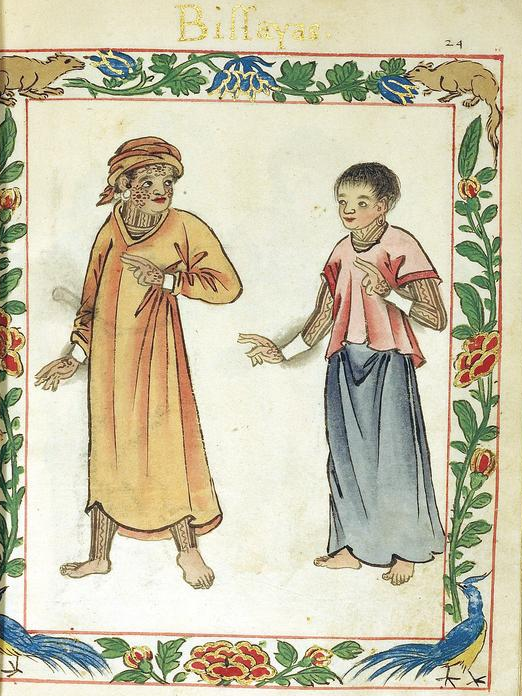
Recorded Philippine history began in the 13th century when 10 datus from Borneo, each with a hundred of his kinsmen, landed in what is now Panay Island in the Visayas. The Laguna Copperplate Inscription, the oldest Philippine document found so far, dates to A.D. 900. Written in Kawi script, it details how the debtor, Namwaran, and his children, Lady Angkatan and Bukah, were cleared of a debt by the ruler of Tondo. During the period of the South Indian Pallava dynasty (A.D. 275 to 897) and the North Indian Gupta Empire (A.D. 320 to 550), Indian culture spread to Southeast Asia — and making it as far east as the Philippines — leading to the establishment of Indianized kingdoms.
Before European colonization, different parts of the Philippines at different times, were parts of or outposts for Southeast Asian kingdoms, most notably the powerful Majapahit Kingdom in East Java, which ruled over the islands of what is now Indonesian from 1294 to the 15th century. The Philippines was influenced by the Indian-influenced Java-based Majapahit and Sumatra-based Srivjaya Kingdoms. The latter thrived from the 8th to 13th centuries and was centered in present-day Palembang, Sumatra. Trade between the tenth and the sixteenth centuries mostly involved Chinese and Islamic people. Both groups have remained and continue to influence the Filipino culture, including the educational system.
The Tagalog are the largest ethnic ground in the modern Philippines. It can be argued the history of the Tagalog is the history of the Philippines itself. The great Indonesian empires of Srivijaya and Majapahit left lasting marks on Tagalog language, religion, and technology through trade and settlement. For centuries, Chinese traders used ports along Luzon’s western coast as stopovers in their commerce with the Spice Islands and local markets. By the time the Spanish arrived, Islamic sultanates had already been established around Manila Bay, signaling the region’s deep integration into wider Asian trading and religious networks. [Source: “Encyclopedia of World Cultures Volume 5: East / Southeast Asia:” edited by Paul Hockings, 1993 |~|]
Before the arrival of the Spanish the Tagalogs had a writing system based on Sanskrit and an advanced metallurgy technology and lived in loose “confederations” under a complicated social system with hierarchical ranking and religion system that varied regionally. Chinese traders passed through the region with some regularity and Islamic sultanates had been established in area. Under the Spanish, the Tagalogs converted to Christianity and adopted more Western ways.
RELATED ARTICLES:
FIRST HOMININS IN THE PHILIPPINES: 709,000-YEAR-OLD TOOLS, HOMO LUZONENSIS TABON MAN factsanddetails.com
AUSTRONESIAN PEOPLE OF THE PACIFIC, INDONESIA, MALAYSIA, TAIWAN AND THE PHILIPPINES: ORIGIN, HISTORY, EXPANSION factsanddetails.com
MALAYS AND MALAY-RELATED PEOPLE: HISTORY, DEFINITIONS, ORIGINS, LIFE, CULTURE factsanddetails.com
EARLY HISTORY OF THE PHILIPPINES: MIGRATIONS, DISPLACEMENTS, DNA, factsanddetails.com
PRE-COLONIAL FILIPINO STATES factsanddetails.com
PHILIPPINES HISTORY: NAMES, THEMES, TIMELINE, HIGHLIGHTS factsanddetails.com
Ancient Trade with China
The people in the Philippines had been trading with the Chinese over a long period of time long before the Spanish arrived. Chinese merchants and traders arrived in the ninth century, sometimes traveling on Arab trading ships. Chinese traders from what is now Fujian province began arriving in the Philippines in the 10th century. Natural resources from the jungle interior of the Philippines were traded for goods from China and Southeast Asia. By the 14th century, various parts of the Philippines had steady commercial and political ties with Indonesia, Southeast Asia, India, China, Japan and the Middle East. Arabs traders helped introduced Islam in the south as early as the 13th century and extended their influence as far as Luzon. However, the Malays remained the dominant group until the Spanish arrived in the 16th century. [Source: Countries of the World and Their Leaders Yearbook 2009, Gale, 2008]
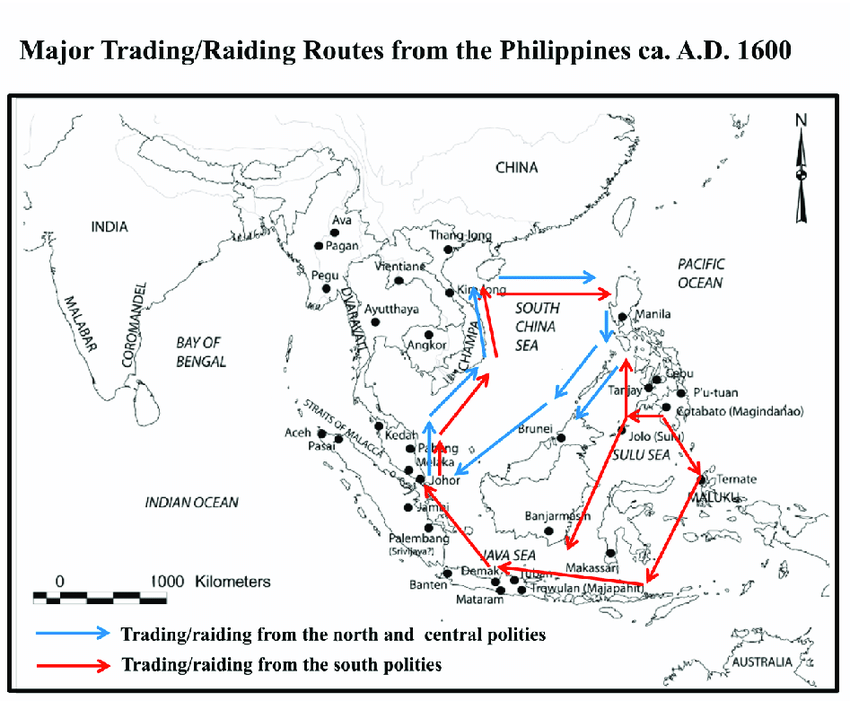
Alfredo Roces and Grace Roces Foreign wrote: Traders made their way to the archipelago between the 10th and the 16th centuries in a period known as the Age of Trade and Contacts. At this time, the Chinese sailed in their junks, bringing porcelain and silk in exchange for deer horn, trepang and beeswax. Chinese trade was so extensive that porcelainware has been found in every nook and cranny of the archipelago, inside inaccessible caves in Palawan, among the Kalinga and other tribal groups in the Mountain Province, beneath coconut groves in Laguna, and other ancient gravesites on countless islands—even under the main street, church grounds and basketball courts in Santa Ana, Manila. Hundreds of thousands of porcelain pieces have been found, some going as far back as the Tang dynasty (10th century), but mostly Sung and Ming ware (12th to 16th centuries), which suggests extensive contact over hundreds of years. [Source: “Culture Shock!: Philippines” by Alfredo Roces and Grace Roces, Marshall Cavendish International, 2010]
According to Lonely Planet: “The Chinese became the first foreigners to do business with the islands they called MaI as early as the 2nd century AD, although the first recorded Chinese expedition to the Philippines was in AD 982. Within a few decades, Chinese traders were regular visitors to towns along the coasts of Luzon, Mindoro and Sulu, and by around AD 1100 travellers from India, Borneo, Sumatra, Java, Siam (Thailand) and Japan were also including the islands on their trade runs. Gold was by then big business in Butuan (on the northern coast of Mindanao), Chinese settlements had sprung up in Manila and on Jolo, and Japanese merchants were buying shop space in Manila and North Luzon. For several centuries this peaceful trade arrangement thrived. Despite the island's well-known riches, the inhabitants were never directly threatened by their powerful Asian trading partners. The key, particularly in the case of China, was diplomacy. Throughout the 14th and 15th centuries, the tribal leaders of the Philippines would make regular visits to Peking (Beijing) to honour the Chinese emperor.” [Source: Lonely Planet]
Phil Greco, a Los-Angeles-based entrepreneur, has salvaged more than 10,000 pieces of Chinese porcelain—some of them 2,000 years old and others from the Song and Ming dynasties— from 16 ship wreck sites off the Philippine islands of Panay, Mindanao and the Calamian Group, and auctioned them off in New York. Many of the pieces are in surprisingly good condition. Greco has insured his collection of porcelain at $20 million but their value is unknown. He found the sites with the help of local fisherman and harvested the pottery using divers with weights and lines rather than tanks. In many cases the shipwrecks were embedded in coral reefs and required a considerably amount of work to extract. Archeologists and the Philippine government accuse Greco of plunder.
Chinese in Pre-Colonial Philippines
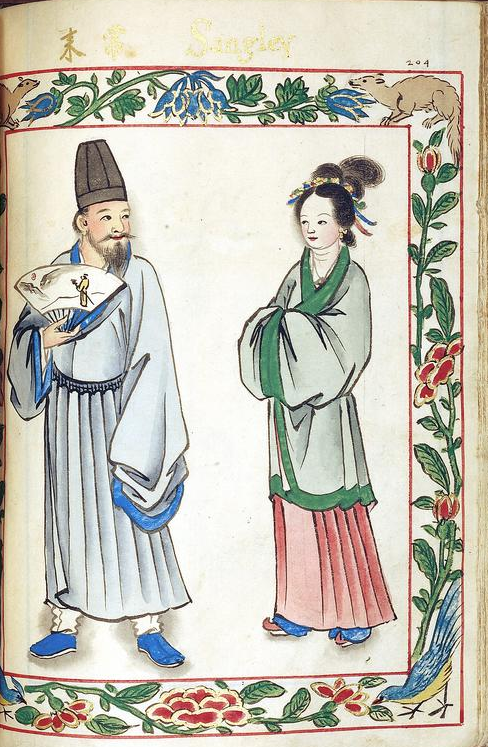
From the 9th century onward, ethnic Han Chinese—primarily from the Hokkien group of eastern China—sailed to and around the Philippines, engaging in barter trade with local Austronesian communities. Archaeological evidence, including Chinese ceramics found in sites such as Santa Ana in Manila, confirms sustained commercial contact since at least the 10th century, particularly during the Song dynasty.
Chinese records mention Ma-i (generally identified with Mindoro) as early as 972 AD, noting trade missions to Canton. By the 11th century, other Philippine polities such as Butuan and Sanmalan were recorded as tribute-bearing trading partners of China. Later accounts also listed places corresponding to the Babuyan Islands, Palawan, Calamian, and areas near Manila. These exchanges were often conducted by local elites, and travel to China was prestigious enough that returning traders were highly respected in their communities. In 1007, a chief from Butuan even sought diplomatic recognition equal to Champa, though this request was declined.
However, some historians, including William Henry Scott and Isabelo de los Reyes, argue that Chinese presence in certain areas like the Visayas before the 16th century was limited or sporadic. They suggest that significant Chinese migration and activity became more prominent only during the early Spanish colonial period, with Manila (under leaders such as Lakan Dula) later monopolizing much of the Chinese trade in Luzon.
Chinese and Filipino Influence on Each Other
The Chinese introduced numerous cultural contributions to the Philippines, particularly in cuisine. These included cooking techniques such as sautéing, as well as various rice cakes and noodle dishes. Their impact is also evident in Filipino culinary vocabulary—for example, the term kawa (wok) reflects Chinese influence. The presence of Chinese communities can further be seen in the neighborhood corner store and in vegetable gardening practices. [Source: “Culture Shock!: Philippines” by Alfredo Roces and Grace Roces, Marshall Cavendish International, 2010]
Chinese traditions also reinforced aspects of the Filipino family structure, especially through a more formal and authoritarian style. Many traditional Filipino families continue to use a Chinese-derived system of address. The eldest son is called kuya by younger siblings, and the eldest daughter is called ate. Both are recognized as having defined authority and responsibility over their younger brothers and sisters.
At the same time, Chinese migrants in the Philippines were influenced by Filipino society. Those who married Filipinas had to adapt to a family structure that recognized both maternal and paternal lines. Whereas Chinese kinship is traditionally patrilineal, Filipino kinship is bilateral. For many Chinese men who migrated alone and had limited relatives in their new homeland, the authority and influence of their Filipina wife’s family often became dominant.
Philippines at the Time of the Arrival of the Spanish

Japanese in the Philippines in the Boxer Codex (1590)
When the Spanish arrived in earnest in 1565, the Philippines did not have a national identity. Instead, the archipelago were comprised of hundred of territories occupied by different tribal groups who fought and traded with one another. It was already a major cultural and trade crossroads. For hundreds years, Chinese, Japanese, Malays and even Hindus traded here.
In pre-colonial Philippines the Tagalogs had a writing system based on Sanskrit and an advanced metallurgy technology. They lived in loose “confederations” under a complicated social system with hierarchical ranking and a religion system that varied regionally. Chinese traders passed through the region with some regularity and Islamic sultanates were established in some areas, mainly in the south. Under the Spanish, the Tagalogs converted to Christianity and adopted more Western ways
The Portuguese were the first Europeans to arrive in the region. Magellan was Portuguese. They built trading bases in the Moluccas, or Spice Islands, to the south of the Philippines in present-day Indonesia to exploit supplies of cloves, pepper, cinnamon and nutmeg found there.
In 1508, Spain began maneuvering for a stake in the spice trade. King Ferdinand, the leader of Spain at the time, held a meeting with the leading Spanish navigators of the time, including Amerigo Vespucci, and developed a plan to claim part of the spice trade. Conquistadors, including Hernan Cortes and Pedro de Alvarado, who had great success in Latin America, set off on expedition across the Pacific that ultimately was unsuccessful.
Baybayin Language
Juanita Villena-Alvarez and Victoria Villena wrote in the World Education Encyclopedia: Prior to the arrival of the Europeans, the inhabitants of the archipelago were literate and had their own system of writing that they used for communication. This writing system is often erroneously referred to as Alibata (the first three letters of the Maguindanao version of the Arabian alphabet: alif, ba, ta). It is more properly named Baybayin, which in Filipino means "to spell." Baybayin has seventeen basic symbols, three of which are vowel sounds. This writing system was used extensively by the inhabitants of the islands, as witnessed by the Spanish upon their arrival. Father Pedro Chirino, a Jesuit chronicler and historian for Miguel de Legazpi (an explorer and the first royal governor of the islands), reports in Relaciones de las Islas Filipinas that when he arrived in the islands in 1565, all the islanders, both men and women, were reading and writing. Another witness and recorder of this fact was Antonio Morga, the Senior Judge Advocate of the High Court of Justice and Commander of the galleon warship San Diego. He noted in Sucesos de las Islas Filipinas that almost all the natives, men and women alike, wrote in the Baybayin language and that there were few who did not write it excellently or correctly. [Source:Juanita Villena-Alvarez and Victoria Villena, World Education Encyclopedia, Gale Group Inc., 2001]
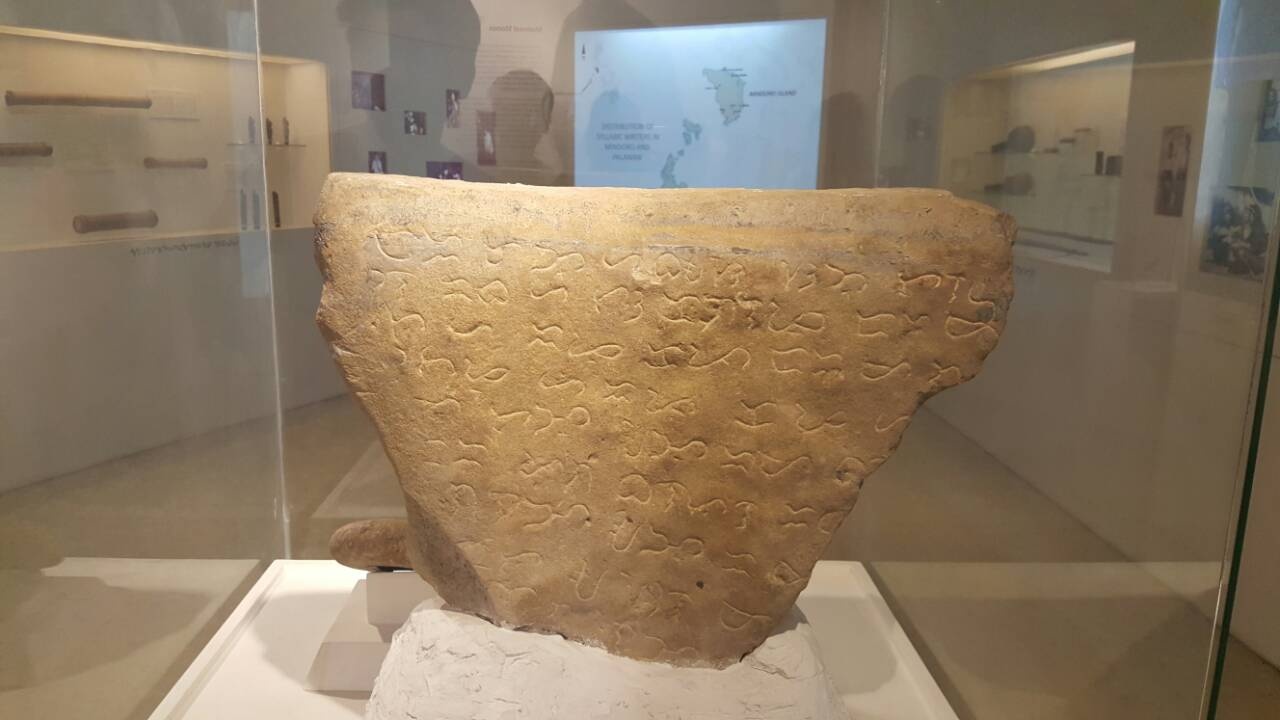
When the Spanish found that the islanders were educated and literate, the missionaries among them published several books to propagate the Catholic religion among the islanders. The Tagalog Doctrina Christiana (1593) and its Chinese version, based on the catechism teachings of Cardinal Bellarmino, were released a couple of months apart. In 1610, the first Filipino author Tomas Pinpin published a book in Baybayin entitled Librong pagaaralan nang mga Tagalog ng uicang Castila (Book for Tagalogs to Study the Castillian Language). Clearly, the title of the book indicates that education, whether formal or informal, was taking place during this period. In 1620, a fourth book was published. Father Francisco Lopez produced an Ilocano version of the Doctrina Cristiana (spelling changed from the 1593 version) using the Baybayin language. Between 1620 and 1895, this book was reprinted several times. The Baybayin language can still be observed since a form of it is still in use by two indigenous Filipino groups, the Mangyans of the island of Mindoro and the Tagbanuas in the island of Palawan.
The origins of the Baybayin language are unknown, but various theories abound. The Mainland Origin Hypothesis by Peter Belwood stipulates that the language originated from South China and Taiwan. The Island Origin Hypothesis by Wilhelm Solheim suggests that the language originated in the islands of northern Indonesia and Mindanao and then spread northwards. Another theory by David Diringer states that the language derived from Kavi or old Javanese. Fletcher Gardner suggests that the writings came directly from Indian priests who were familiar with the Brahms scripts.
Islam Introduced to the Philippines
Islam came to the southern Philippines in the 14th century from Malaysia and Sumatra via Brunei and Borneo. The religion spread to Palawan to other islands not long afterwards. Islamic sultanates were established around Manila Bay at the time the Spanish arrived in the 16th century. The Spanish halted the advance of Islam but it has endured on the southern island of Mindanao and the Sulu archipelago between Borneo and Mindanao.
In 1380, the "Propagation of Islam" began in the Sulu Islands and Mindanao. It was brought to the Philippines by traders, proselytizers and representatives of sultanates from Malaysia and the Indonesian islands. By 1500 Islam had gained a foothold in much of coastal Philippines. Islam was first established in the Sulu Archipelago and spread from there to Mindanao; it had reached the Manila area by 1565. Muslim immigrants introduced a political concept of territorial states ruled by rajas or sultans who exercised suzerainty over the datu. Neither the political state concept of the Muslim rulers nor the limited territorial concept of the sedentary rice farmers of Luzon, however, spread beyond the areas where they originated. When the Spanish arrived in the sixteenth century, the majority of the estimated 500,000 people in the islands still lived in barangay settlements. [Source: Library of Congress]
Philippine Muslims regard themselves as descendants of the Royal Sultanate of Sulu. The Royal Sultanate of Sulu was an Islamic kingdom that ruled the islands and seas in the southern Philippines and northern Borneo long before the arrival of the Spanish. The Muslim sultanate of Brunei was a very powerful kingdom in the16th century. It ruled over all of Sarawak, Sabah and Borneo as well as part of the Sulu Islands and the Philippines.
The Spanish viewed the Muslims as natural enemies, identified with their Muslim rivals at home, the Moors of Morocco. There was some Muslim-Christian elements to the early conflicts with the Spanish. The “Moro Wars” continued off and on for 300 years after the Spanish arrived. The Christian Spanish had drove Muslims off the northern islands by the early 1600s. Later the Spanish attacked Muslim city-states on Mindanao and established a Jesuit base in eastern Mindanao in Zamboanga. The Muslims were excellent boatmen. After declaring “jihad” (holy war) against the Christians, they were able to defend their Islamic territories and raid Christian outposts. It wasn’t until the introduction of steamships in the 1800s that the power of the southern Muslim sultanate was brought under control by the Spanish.
Luzones
The Luzones (Luções) — the people of Luzon — rose to prominence in the 15th and 16th centuries by establishing overseas communities across Southeast Asia. They maintained commercial and diplomatic links with South and East Asia and took part in major trading ventures, maritime expeditions, and military campaigns. Luzones served as merchants, navigators, and mercenaries in places such as Japan, Brunei, Malacca, East Timor, Sri Lanka, and mainland Southeast Asia. One of the most notable among them was Regimo de Raja, a powerful spice trader and Temenggung (governor and chief general) in Portuguese Malacca, who led an international fleet protecting trade routes across the Indian Ocean, the Strait of Malacca, and the South China Sea. [Source: Wikipedia]
Luzones were deeply involved in regional warfare. In 1547, Lucoes warriors supported the Burmese king in his invasion of Siam, yet at other times they fought alongside the Siamese against Burmese forces, demonstrating their role as professional soldiers for hire. Portuguese accounts also describe Luzones serving in Islamic fleets resisting Portuguese expansion in the Philippines. In Aceh, some were appointed to defend strategic territories, and one, Sapetu Diraja, was assigned to hold Aru in Sumatra. Others commanded fleets in Brunei or led Malay forces in the Moluccas after the Portuguese conquest of 1511.
Despite their service in Muslim polities, the Luzones did not fight exclusively for one side. Portuguese chronicler Fernão Mendes Pinto noted that some Luzones also joined native Philippine forces opposing Muslim groups in 1538. Their shifting alliances reflect their identity as maritime adventurers and mercenaries whose loyalties were often tied to opportunity, commerce, and regional power dynamics rather than religion alone.
Commercially, the Luzones were renowned as skilled seafarers and merchants. Many made Malacca their operational base due to its strategic location. Even after the Portuguese conquest in 1512, Luzones retained influential administrative positions and controlled large trading ventures. They exported pepper, gold, cotton, tortoiseshell, and resins, regularly dispatching ships to China, Brunei, Sumatra, and Siam. According to the Boxer Codex, “The Luções, called Lequios, bring gold and cotton from their land, and trade Chinese silk and porcelain.” Portuguese writers praised them as leading merchants of pepper and gold in Malacca’s international markets.
The Portuguese increasingly relied on Luzones as bureaucrats, shipowners, pilots, and military allies. Through their regular voyages to China, the Portuguese learned of Canton’s ports in 1514 and later sent their first diplomatic mission to China aboard Luzon ships in 1517. Their collaboration eventually contributed to the Portuguese establishment of a base in Macao. Luzones thus played a pivotal intermediary role in linking Iberian expansion with established Asian trade networks.
Luzon navigators were also instrumental in guiding Portuguese ships to Japan. In 1540, Portuguese officials in Brunei recommended employing Lusung pilots because of their reputation as skilled “discoverers.” With their assistance, Portuguese vessels reached Japan in 1543, marking Europe’s first direct contact with the archipelago. Portuguese observers described the Luzones as among the most valiant and capable warriors and traders of the region, respected for their maritime skill, military strength, and far-reaching influence across Southeast and East Asia.
Image Sources: Wikimedia Commons
Text Sources: Library of Congress, Philippines Department of Tourism, Philippines government websites, Encyclopedia.com, New York Times, Washington Post, Los Angeles Times, Wikipedia, “Encyclopedia of World Cultures Volume 5: East/Southeast Asia:” edited by Paul Hockings, 1993, UNESCO, National Commission for Culture and the Arts (NCCA) the official government agency for culture in the Philippines), Lonely Planet Guides, The Guardian, National Geographic, Smithsonian magazine, The New Yorker, Time, The Conversation, BBC, CNN, Reuters, Associated Press, AFP, Google AI, and various websites, books and other publications.
Last updated February 2026