
FAMILIES IN THE PHILIPPINES
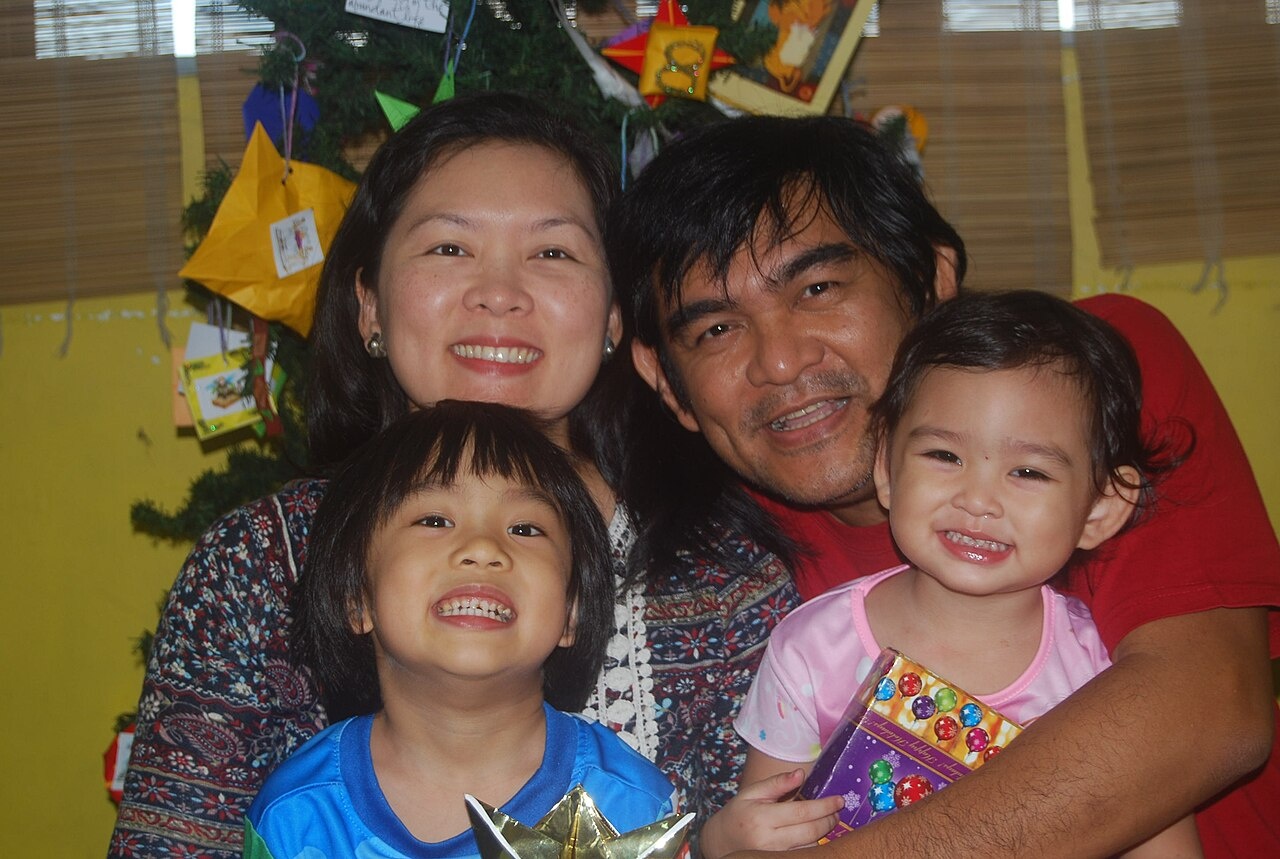
The nuclear family, one’s kin and personal alliances are all important in the Philippines. The extended family is the most important social unit in the Philippines, particularly for women. Large extended families often live in the same house. In many cases nuclear families would prefer to live on their own but are forced by space and money constraints to live together. In the Philippines often men like to hang out with men and women like to hang out with women. Within households it not uncommon for a half dozen children or family members to sleep in the same room or even the same bed. Middle- and upper-class Filipino families elect to have fewer children, two on average, as compared to three or more for the less educated and low-income families.
Women's closest friendships are within the family. Mothers and daughters who live together make household decisions without consulting male family members. One child typically remains in the family home to care for the parents and grandparents. This child is usually a daughter and is not necessarily unmarried. The home may include assorted children from the extended family and single aunts and uncles. Social relationships are often molded out of real kinship ties, ritual kinship relations and relationships based on special debts of gratitude. Family relationships also shape other relations in business and the community. [Source: “Encyclopedia of World Cultures Volume 5: East / Southeast Asia:” edited by Paul Hockings|]
Several houses may be built on the same lot to keep the family together. Childcare is shared. Fathers carry and play with the children, but they are unlikely to change diapers. Since both parents generally work, grandparents who live in the home are the primary caregivers for the children. Preschool-aged grandchildren who live in other communities may be brought home to be raised by their grandparents. Poor relatives live in the family circle and provide household and childcare assistance. Young people may work their way through college by exchanging labor for room and board. Family bonds are so strong that nieces and nephews are referred to as one's own children, and cousins are referred to as siblings. Unmarried adult women can legally adopt a sibling's child.
Filipinos have traditionally had large, close families but family size is shrinking as birth control has become more readily available. Men usually hold positions of authority at both work and home. Many women, however, work in professional fields, and the country has had women presidents. “Compadrazgo” (god parenthood) is an important feature of Philippines family life. Non-relatives are accepted into families as godfathers (“padrinos”) and godmothers (“madrinas”). godfather and godmother, who serve as allies to parents in martial matters of the natural parents’ children. There are sometimes special terms for first born and last born and the children in between.
RELATED ARTICLES:
FILIPINO MEN: MACHISMO, HENPECKED HUSBANDS AND SUDDEN UNEXPECTED DEATH factsanddetails.com
WOMEN IN THE PHILIPPINES: STATUS, STEREOTYPES, MARIA CLARA AND ABUSE factsanddetails.com
ROLES OF WOMEN IN THE PHILIPPINES: MOTHER, DAUGHTER factsanddetails.com
FILIPINA WIVES, NON-FILIPINO MEN AND MAIL-ORDER BRIDES factsanddetails.com
PREGNANCY, CHILDBIRTH AND INFANTS IN THE PHILIPPINES factsanddetails.com
CHILDREN IN THE PHILIPPINES: RAISING THEM, RITES OF PASSAGE, STREET KIDS factsanddetails.com
MARRIAGE IN THE PHILIPPINES factsanddetails.com
COURTSHIP, DATING AND LOVE IN THE PHILIPPINES factsanddetails.com
DIVORCE IN THE PHILIPPINES: BAN, LAWS, ANNULMENTS, IMPACTS factsanddetails.com
WEDDINGS IN THE PHILIPPINES factsanddetails.com
Family Codes in the Philippines
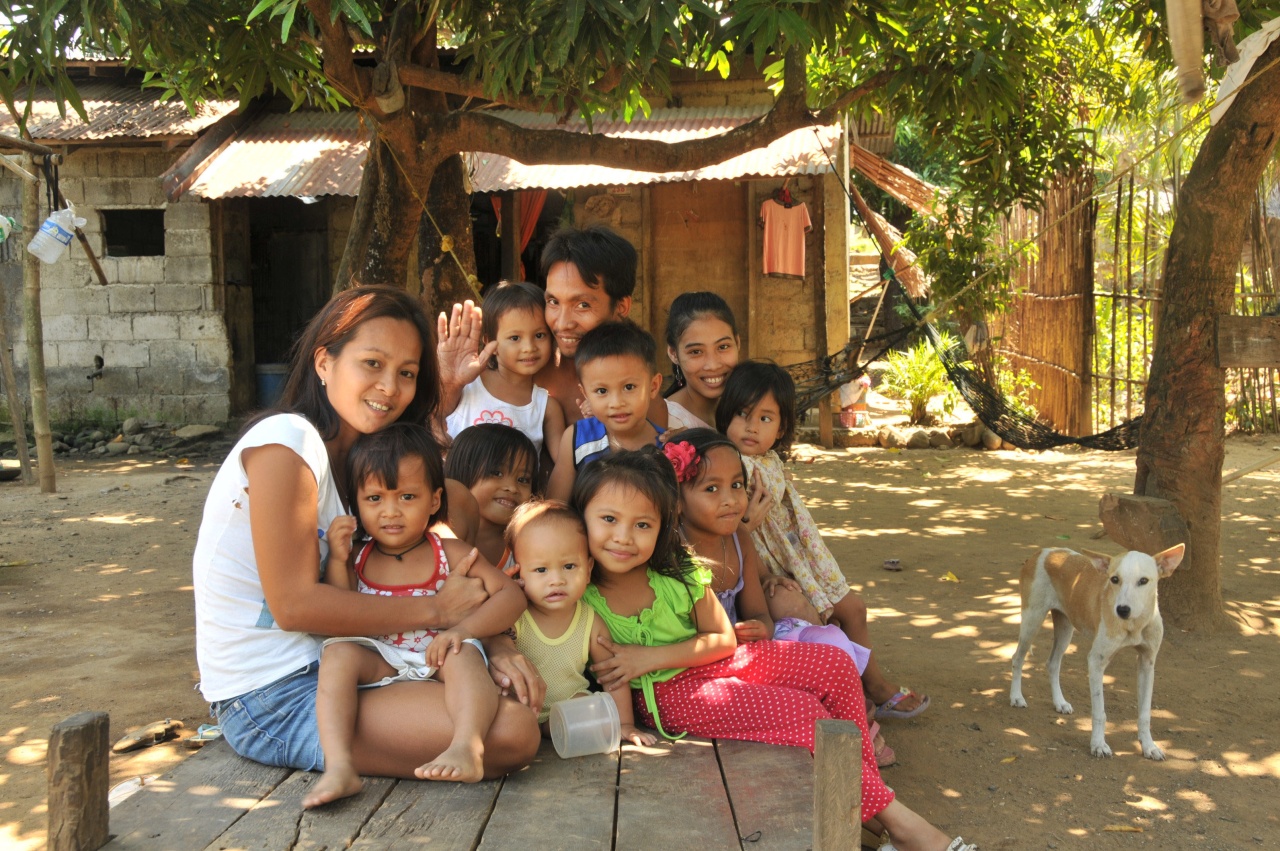
The 1953 civil code enshrines the family as the basic social unit and mandates that it be cherished and protected. In 1973, the Constitution reaffirmed that one of the duties of the State was to make the family strong. Inheritance laws are based on those in the United States. These laws provide that all children acknowledged by a father, whether born in or out of wedlock, share equally in the estate. Females share equally with males.
1987 Family Code states that: 1) The husband and wife are obliged to live together, observe mutual love, respect and fidelity, and render mutual help and support. (Art. 68), 2) The husband and wife shall fix the family domicile. In case of disagreement, the court shall decide. The court may exempt one spouse from living with the other if the latter should live abroad or there are other valid and compelling reasons for the exemption. However, such exemption shall not apply if the same is not compatible with the solidarity of the family. (Art. 69). 3) The spouses are jointly responsible for the support of the family. The expenses for such support and other conjugal obligations shall be paid from the community property and, in the absence thereof, from the income or fruits of their separate properties. In case of insufficiency or absence of said income or fruits, such obligations shall be satisfied from the separate properties. (Art. 70) [Source: kasal.com ^]
4) The management of the household shall be the right and the duty of both spouses. The expenses for such management shall be paid in accordance with the provisions of Article 70. (Art. 71). 5) When one of the spouses neglects his or her duties to the conjugal union or commits acts which tend to bring danger, dishonor or injury to the other or to the family, the aggrieved party may apply to the court for relief. (Art. 72) 6) Either spouse may exercise any legitimate profession, occupation, business or activity without the consent of the other. The latter may object only on valid, serious, and moral grounds. ^
7) In case of disagreement, the court shall decide whether or not: a) The objection is proper; and b) Benefit has occurred to the family prior to the objection or thereafter. If the benefit accrued prior to the objection, the resulting obligation shall be enforced against the separate property of the spouse who has not obtained consent. The foregoing provisions shall not prejudice the rights of creditors who acted in good faith. (Art. 73)
Strong Filipino Family Ties
Family ties are very strong in the Philippines and traditionally greater emphasis has been put on the family than individuals. Families have traditionally been bound together by loyalty, respect and affection. Family members are expected to follow rules set by the head of the household rather than pursuing their own individual agenda. Extended families often live together, and often one child is expected to live with the parents. All children have traditionally inherited property equally with the house going to the child who took care of the parents.
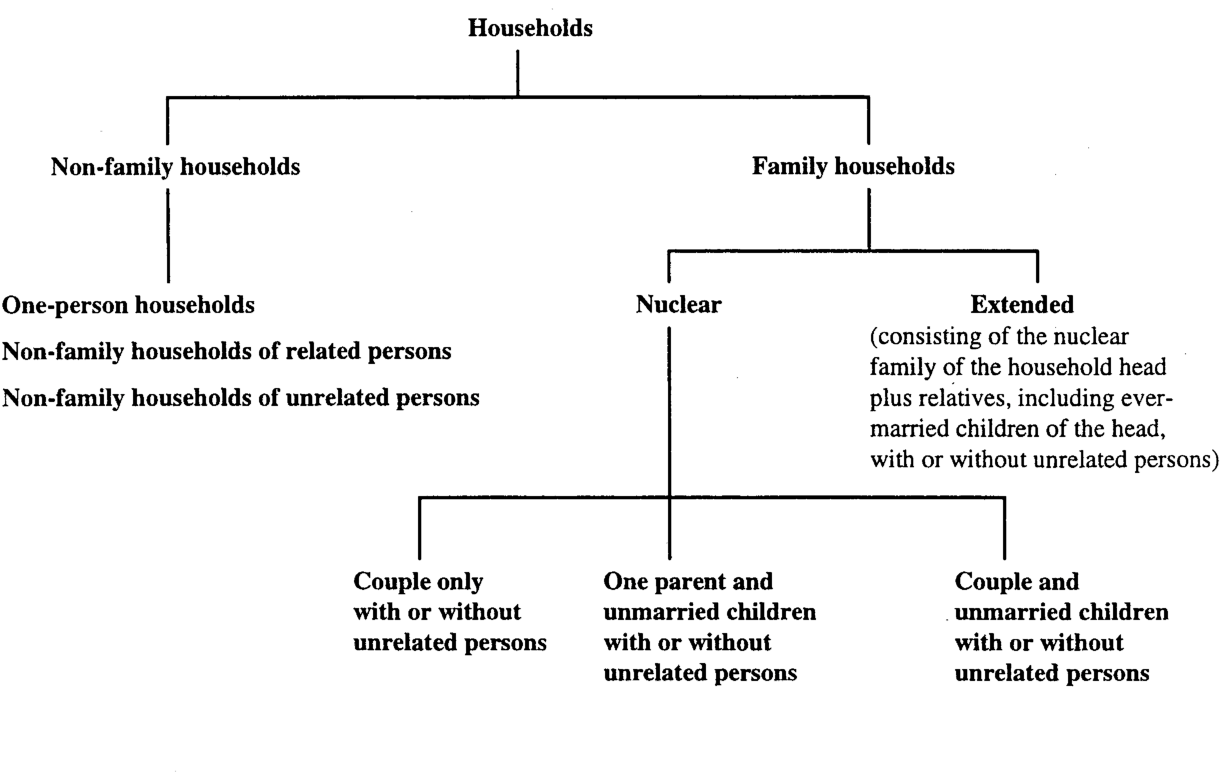
According to Thank God I'm Filipino: “In the country the people put family ties and relations as one of their top priorities. Filipinos would do all they could to provide and sustain their respective families. This is present in Filipino festivals where they invite the whole family and in Sundays where they would make time to use it to spend the whole day for their families. [Source: Thank God I'm Filipino - TGIF, Facebook, October 8, 2010 +++]
“You will find that it is common in the country to include the extended members not just the normal nuclear family. It is not unusual that in a single household it would reach up to ten members of a family living under the same roof. They value each other’s company, and everyone strives to provide for the whole and not just for them. +++
“Even grandparents still have an active role in the family. It is now the norm in the society that both parents are out working, leaving the care of their children to the lolos and lolas, especially if the family cannot afford to hire a nanny. Grandparents therefore become responsible for instilling into their grandchildren the values and morals they taught to their own children, further increasing the importance of the elderly in our society.” +
Filipino Family Unity, Pride and Power
The Filipino family is known for its strong sense of unity and loyalty. Family members often place great importance on supporting their relatives, sometimes even more than broader social institutions such as the town, the nation, or the legal system. The nuclear family, made up of mother, father, and children, but this unit is closely connected to a wider extended family that includes relatives from both the mother’s and father’s sides. [Source:laonlaan.blogspot.jp, June 19, 2010 |::| ]
Family influence reaches into many aspects of Philippine life. Social, economic, and religious activities often revolve around the family. Religious practices frequently center on the home and family gatherings. Economic work—such as farming, fishing, or small household industries—often involves cooperation among all adult family members, with children helping when they are able. Many businesses in the Philippines, including large companies, are family-owned, and strong family loyalty sometimes leads to practices such as favoritism or nepotism in business and government.
In many villages, political organization has traditionally been shaped by family alliances. Leadership often rests with powerful families whose influence is based on wealth, reputation, and the number of relatives they have in the community. During local elections, a candidate from a large or dominant family may receive strong support simply because of family ties, sometimes outweighing other factors such as qualifications or experience.
The strength of family solidarity also affects relationships with people outside the family. An insult or conflict involving one family member may be seen as affecting the entire family, prompting relatives to defend one another whether or not they are objectively right. At the same time, the family offers its members security, emotional support, and protection in contrast to the more uncertain relationships that may exist with non-relatives.
Evolution of the Filipino Family
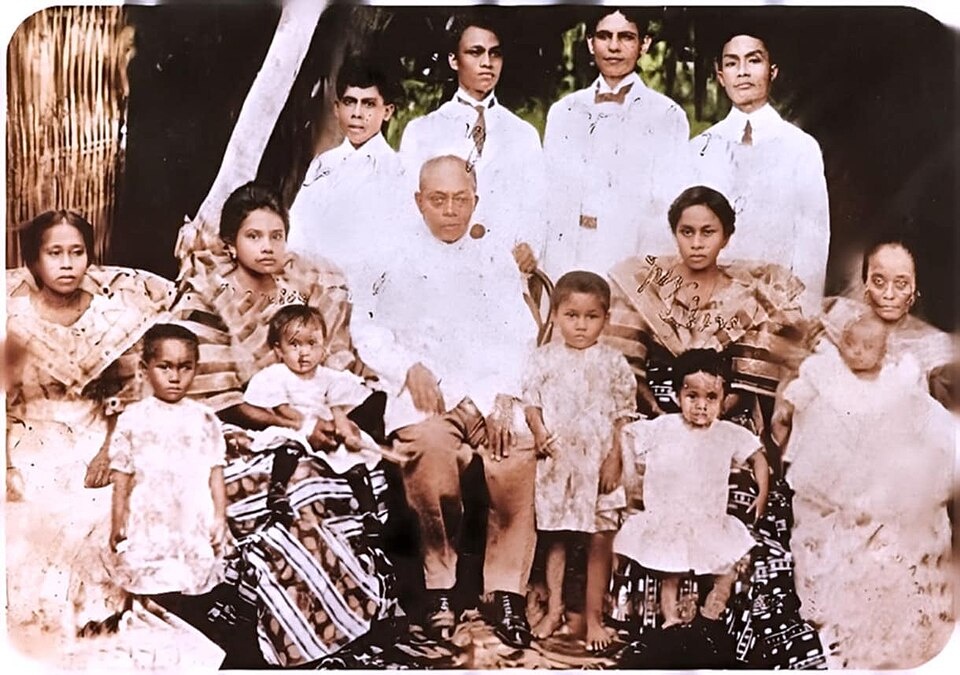
The traditional Filipino family system has been discussed by many scholars. In the Philippines, family relationships are traced through both the mother’s and father’s sides of the family. Relationships between husband and wife, and between men and women generally, have often been more equal than in many other societies. Some scholars believe this is partly because early Philippine societies had matrilineal features before Spanish and American colonial rule. In precolonial times, family identity was often traced through the female line, and political authority sometimes passed through a mother’s brother. Because of these traditions, relationships between brothers and sisters, husbands and wives, and other relatives were usually based on mutual respect, protection, and dignity. Even after colonial influences introduced more male-centered systems, Filipino women continued to hold relatively high social status. [Source: Kathleen Nadeau, International Encyclopedia of Marriage and Family, Gale Group Inc., 2003]
Researchers Paz Policarpio Mendez and F. Landa Jocano noted that Filipino families recognize both blood relations and relations by marriage. Ritual kinship through godparents is also important in Filipino culture, although this practice was introduced during Spanish rule. However, blood ties remain the strongest family bonds. Even distant relatives are often recognized and treated as part of the family. In some rural areas, people carefully examine family backgrounds when choosing friends or possible spouses, believing that character and reputation can be influenced by family heritage. Strong parent–child relationships are also central to Filipino culture, marked by affection, respect, and a strong sense of duty toward elders.
Scholars have described the Filipino family as “residentially nuclear but functionally extended.” This means that the household often consists of parents and their children, but family members still maintain strong ties with the wider extended family. Relatives help one another in times of need, share responsibilities, and participate in important family activities even if they do not live in the same home.
In many cases, however, Filipino households are actually extended families. A home may include grandparents, an aunt, uncle, cousin, niece, or nephew living together with the nuclear family. This arrangement is common both in the Philippines and among Filipino communities abroad. Extended households often develop because relatives support each other financially and socially, especially when families migrate or move to new places. Housing patterns also influence family structure. In cities, housing is expensive, so people who move there for work or education often stay with relatives, which increases the size of the household. In rural areas, it is easier to build simple homes from local materials such as bamboo, and family members can build houses close to one another. This makes it easier for extended families to live near each other and maintain strong daily connections.
Beginning in the 1970s, the Philippine government implemented an overseas employment program to address the growing number of Filipino workers. This led to new conceptualizations of the Filipino family and changing gender roles. Many married women decided to migrate abroad for work, leaving their husbands at home to care for the children. Today, most Filipino families maintain and reproduce transnational household connections and networks. The Filipino family continues to adapt and function in these new and changing circumstances.
Even as Philippine society modernizes, family ties remain strong. Western theories of modernization predicted that social relationships would become more impersonal and less centered on family and religion. However, studies show that Filipino society still places great importance on close family relationships. Even when relatives live far apart, they continue to maintain strong emotional ties and a sense of mutual responsibility within the extended family.
Family Stories from the Philippines
Edilberto Alegre wrote in his From Pinoy na Pinoy column in Businessworld: "These are stories from my hometown, Victoria in the province of Tarlac (Central Luzon). True-to-life love stories. There are many such stories there. The first has to do with the parents of my closest friend, Ely. His father, Apo Sinti, was taciturn. Ely feared him. He knew he could whip a guava branch to pulp on an offending son's butt. During his entire life Ely remembers only one event — the father made a top for him using only a bolo (sword). He does not remember him talking to him at all. In contrast, the mother — Apo La Paz — was always talking. They had a huge house on our Calle Real (now Rizal St.) and they had always a slew of maids. She inherited quite a large mass of riceland so she was used to ordering people about. [Source: Edilberto Alegre, From Pinoy na Pinoy column, Businessworld February 14, 2002, Center for Southeast Asian Studies Northern Illinois University, seasite.niu.edu]
“Apo Sinti found eating at the family table a bother. Perhaps he could not stand Apo La Paz's incessant yakking which became worse during meals. So, Apo Sinti had his special table in the kitchen. A rather small one. He always ate ahead of everybody. Apo La Paz herself, not a maid, would set the table. Then she'd have him called. He'd come, sit down, and eat silently. She'd be bustling in the kitchen — checking the food a-cooking on the stoves, the setting of their huge family table, the gradual filling up of the dining room with people, food, and the drinks and sweets which were on another table ready for serving. During all this she would check on Apo Sinti — saw to his glass of iced water which had to be replenished always, and the banana which was his preferred fruit. They did not speak with each other. He ate all that was served him. She knew exactly how much rice he ate and what viands he preferred and how much of these he consumed. Then as silently as he came in, he'd leave. Apo La Paz would then call one of the maids to clean the table and place it in one corner of the kitchen.
“One Sunday morning, Apo Sinti staggered to a traysikad, a bicycle with a side car, even before the mass ended in our one Catholic Church proximate to the town plaza. He didn't make it back to their house. He had a heart attack. Apo La Paz cried, but she didn't wail. She saw to all the funeral arrangements. She was the overseer of the wake. After the funeral she retired to her room. She had to be called for the family meals. She receded into silence. After a month, she died.
“The second story, has to do with the old couple across our house. I don't remember their names. They were a very quiet, self-contained husband-and-wife. They married late, it seems. Their only child was a loquacious tall male who since childhood manifested strong signs of effeminateness. The son was away for high school. And then a terribly extended medical schooling. They didn't seem to mind. The old man hardly went out of the house. The old woman we hardly saw. All that I remember of them is her standing around as he watered the many plants their son loved. Their yard was a veritable garden. Every few days a young boy would sweep the yard. The old couple would be seated in their veranda. I have no recollection of their voices. But they did talk with each other. I could see them from our own second-floor veranda.
“One day the old man fell ill. The young boy called my father, who was a medical doctor. My father said it was serious. After three days he died. The effeminate son came back and made quite a scene in his wailing and flailing about. He returned to his medical school after the funeral. We only got news of the old woman from the young boy who stayed with her. He was the son of one of their tenants. He said that she refused to go out of her room. He served her her meals there. She receded into silence. After two weeks, she died.
Filipino Kinship
Because of the closeness of the immediate family, all familial ties are recognized. Anyone who is remotely related is known as a cousin. Indigenous tribes live in clan groups. Marriage into another clan may mean that the individual is considered dead to his or her clan. Tagalogs are the largest ethnic group in the Philippines, making up about 28 percent of the country’s population. The fundamental Tagalog kin unit is the sibling group, kamagkapatid (kapatid = sibling). Special terms distinguish birth order, such as panganay (firstborn) and bunso (youngest), and in some families Chinese-derived terms indicate numerical rank. Each marriage forms a nuclear family, kamaganakan (anak = child), embedded within an extended network tracing descent from recognized ancestors or sibling groups. These extended families connect through marriage into broader groupings known as angkan or pamilia, typically identified by patrilineally inherited surnames that women may retain after marriage.
Kin ties stretch widely, and even strangers may compare relatives’ names to uncover connections; relationships are reinforced through reciprocity, expressed in utang na loob—a “debt of inner will”—created by unsolicited gifts and strongest toward God and parents, the givers of life. Ritual sponsorship at baptism (binyag), confirmation (kumpil), and marriage (kasal) further extends or intensifies kinship bonds beyond blood ties. [Source: Charles Kaut, “Encyclopedia of World Cultures Volume 5: East / Southeast Asia:” edited by Paul Hockings, 1993 |~|]
The Filipino family system is bilateral, meaning that relatives on both the husband’s and wife’s sides are considered equally important. This differs from societies that emphasize only the father’s or the mother’s lineage. In the Filipino kinship system, family ties spread outward through both sides of the family. Children play a central role in maintaining these kinship connections. Through a child, the relatives of both parents—such as grandparents, uncles, and aunts—become part of a shared family network. Because children link the two sides of the family together, they are highly valued within the kinship group and are seen as strengthening family unity. [Source:laonlaan.blogspot.jp, June 19, 2010 |::| ]
How Filipino Kinship Structure Can Get a Foreigner Into Trouble
According to laonlaan.blogspot.jp: “Why is it important for a foreigner to understand the Filipino kinship structure? You are driving along the motorway when suddenly a boy dashes in front of you and you hit him. What would you do? Foreigners would say, you get out and find help and apologize the boys parents. WRONG! Not in the Philippines! In instances like this it is better to pick the boy up immediately and take him to the nearest hospital. It would be very risky to linger in the site because as more village folk gather at the scene the emotional atmosphere builds up; a mob of the injured boy’s relatives could get physical. Should one find himself involved in a road accident, where a mob has started to grumble, it may be better to drive off quickly and report to the nearest police station. Village and town folks in the Philippines are of one or two kin groups’, they will definitely sympathize with the victim, who is a kin, and resent the outsider. [Source: laonlaan.blogspot.jp, June 19, 2010 |::|]
“Kinship structure motivates the Filipino’s behavior . The Filipino values “”hiya””, “”amor-propio””, “utang na loob” and “ “pakikisama” ” very often apply only within each kinship grouping rather than in universal fashion. An outsider is viewed as fair game and a different set of values is applied to deal with such persons or groups. For example, it is to be expected that a tourist will be charged more than others, but once the ‘tourist’ has been identified as a guest or friend of someone within the group, the tourist gets a fair price because he is no longer seen as a passing outsider.” |::|
Here are some other instances: “Example 1: An American Peace Corps worker assigned to a rural area loves to bathe in the river in a skimpy bikini and walk about the village in tight shorts. While hiking by herself in the forest she is sexually assaulted by two men and when she runs back to the village for help, in place of sympathy, the village response is that she had provoked the situation by being a ‘Sexy American’. |::|
Example 2: An American scientist has worked out a program to improve the poultry stock in the Philippines by introducing a fine breed from the United States. At great expense, the exotic roosters are distributed to selected farmers in several barrios. The scientist then takes to the field to inspect the progress of the poultry improvement project. Having been informed of the coming visit of so important a personage, one farmer, in keeping with Filipino hospitality, makes preparations to welcome the VIP with the best he could offer. On his arrival at the farmer’s house, the American scientist is treated to a small feast-and on his dinner plate is the prize chicken, fried. The Filipino host feels only the best will suffice for his honored guest and, of course, the exotic bird is the best he has to offer.” |::|
Kinship Terminology in the Philippines
Tagalog kin terms combine Tagalog, Spanish, and Chinese influences and vary regionally. Referential terminology resembles the Eskimo system, while vocative usage can resemble Hawaiian patterns, with no strong unilateral emphasis. Grandparents, great-grandparents, and parents’ siblings are distinguished by gender; cousins are vocatively equated with siblings, though referentially distinguished up to the third degree, beyond which they are considered malayo (distant). Basic terms include kapatid (sibling) and pinsan (cousin), modifiable by gender markers. The prefix mag- denotes reciprocal relationships (e.g., mag-ama, father and child; magkapatid, siblings). Affinal and ritual terms are extensive, including asawa (spouse), biyenan (parent-in-law), manugang (child-in-law), kumari/kumpari (co-godparent), and inaan-ak (godchild), with honorifics such as po, ho, and oh signaling respect based on age or status. [Source: “Encyclopedia of World Cultures Volume 5: East / Southeast Asia:” edited by Paul Hockings, 1993 |~|]
In his 1919 study “Kinship Terminology in the Philippines,” A. L. Kroeber examined family terms used in Philippine and Malay languages. Father and Mother: He noted that the most common word for father was ama, while ina was widely used for mother. Among Magindanao speakers the term hapa could refer to either father or uncle. The word anak was used broadly for son, daughter, or child, while asawa served as a general term for husband or wife, referring simply to a spouse. [Source: A. L. Kroeber, Anthropological Papers, The American Museum Of Natural History, 1919]
Brother and Sister: Terms for brother and sister varied greatly among Philippine languages. Many groups used a single general term for any sibling, though some languages distinguished between older brother, older sister, younger brother, or younger sister. Gender distinctions were uncommon except in more culturally complex societies such as Tagalog and Malay. Words such as agi, ari, ali, adik, and kaka appeared widely and could refer to siblings generally or to older or younger ones. Kroeber suggested that simpler societies tended to use fewer and more generalized kinship terms.
Uncle, Aunt, Nephew, and Niece: Terms for uncle, aunt, nephew, and niece were relatively limited and often derived from more basic family words. Many languages lacked specific words for nephew or niece, instead using the general term for child or a modified version of it. In some communities, uncle and aunt were referred to with words related to father or mother. Only a few languages distinguished between a father’s brother and a mother’s brother, indicating that these relationships were not always linguistically separated.
Grandparent and Grandchild: The most common term used for both grandparent and grandchild was apo. This word also functioned as a respectful form of address for elders, suggesting that it originally referred broadly to older family members and later extended to younger generations in a reciprocal sense. Another root appeared in Tagalog nuno and Malay nenek, both meaning grandparent. In most languages there was no distinction between grandfather and grandmother.
Cousin: Kroeber noted that there was generally no universal word for cousin in many Philippine languages. Instead, people often used broader terms meaning relative, companion, or friend. More specific terms for cousin sometimes appeared later in communities influenced by European languages and social systems.
Parent-in-Law and Child-in-Law: Words for parent-in-law and child-in-law differed widely among languages. Some communities simply used the same terms as father, mother, or child, while others developed special terms. Tagalog used manugang for child-in-law and possibly hianan for parent-in-law, while Malay used mentua for parent-in-law and menantu for child-in-law.
Brother-in-Law and Sister-in-Law: Terms for brother-in-law and sister-in-law were usually specific to each language. Some languages distinguished between brother-in-law and sister-in-law, while others used a single general term for any sibling-in-law. Malay followed a different pattern, using terms that depended on whether the relationship came through one’s spouse or one’s sibling rather than on gender.
Step-Relatives: Special words for stepfather, stepmother, and other step-relatives were relatively uncommon. In Tagalog, a stepfather or stepmother might simply be called uncle or aunt, while Magindanao sometimes used a term that could refer to both father and uncle. Malay languages sometimes added the word tiri, similar to the English prefix “step-,” though Kroeber suggested this usage may have developed through outside cultural influence rather than being originally Filipino.
Compradrazco (God Parenthood) in the Philippines
Susan Russell of Northern Illinois University wrote: “The Roman Catholic emphasis on godparents became known as compadrazgo, which celebrates the alliance of two families in marriage. The godparent institution is a common and important institution in countries like the Philippines (and Malaysia) where marriages traditionally were arranged between families. In these areas, long before the advent of Islam or Christianity, it was considered customary and desirable for the heads of two friendly families to cement their 'alliance' by arranging an appropriate marriage for their children — in many cases while their children were still very young. The goal of such arrangements was to ensure that each family's child (and eventual married couple) would always have concerned advice and support from all of their affinal (or in-law) relatives as well as blood relatives so as to enable them to establish themselves firmly in the future. [Source: Professor Susan Russell, Department of Anthropology, Northern Illinois University, Center for Southeast Asian Studies Northern Illinois University, seasite.niu.edu \^/]
Friendly relations are materialized during Christian rituals of baptism and marriage when parents of baptized and married children socialize with their neighbor-friends. Roughly the same age group/set as the parents of the baptized and married children, friends — usually non-consanguinous kin and those that they have known intimately in the workplace — are taken in as ritual sponsors. Thus, interdependent social relations among the parties concerned are initiated/constructed and maintained in the said ritualized events. They assume the roles of patrons and clients. Patrons appropriate their status and role as their clients seek their spiritual godparenthood guidance. This comes — of course — with material motivations. Ritual sponsors, the patrons, are addressed ninong/maninoy and ninang/maninay by the baptized and married couples whom the godparents reciprocally call ina-anak.
Patrons are sought for by their prospective kumpares and kumares (clients), the parents of the baptized and married children, because sponsors/patrons are perceived to be helpful in the clients’ lives as well as in their children’s in the future, guaranteeing emotional support, job placements, recommendations, source of loans in times of need and crises. In addition, ritual sponsors also find the patron-client arrangement beneficial because their clients give them deference and loyalty. Given the personalism that is so pervasive in the Philippines, compadrazgo creates interpersonal networks. Anyone doing a transaction in the Philippines would know how important these connections are in getting things done. With this in mind, patrons can be construed as some kind of a social capital. \^/
See Godparents and Baptisms Under CATHOLIC PRACTICES IN THE PHILIPPINES: PRAYER LADIES, SANTOS, BAPTISMS factsanddetails.com
Filipino Godparent Obligations and Blood Rituals
In Filipino Christian tradition, the act of serving as godfather or godmother during a child’s baptism creates a special relationship between the godparents and the godchild. Traditionally, the godfather and godmother are regarded as second parents who are expected to care for the child if anything happens to the biological parents. This ritual establishes a form of spiritual kinship that extends the child’s family network. [Source: “Culture Shock!: Philippines” by Alfredo Roces and Grace Roces, Marshall Cavendish International, 2010]
It is customary for godparents to give gifts to their godchild during important occasions such as Christmas and the child’s birthday. When the child grows older, the godfather or godmother is also expected to offer guidance or assistance, such as helping the young person find employment or advance in life. In everyday practice, however, these expectations are not always fully carried out, although the idea that godparents should provide some form of support remains part of the tradition. In Filipino terms, a godfather is called ninong and a godmother ninang, while the godchild is called inaanak, meaning a child created through ritual.
Traditionally, the responsibilities of godparents are considered lifelong. The godchild’s main duty in return is to show respect and maintain the relationship. While financial support is not strictly required, godparents are often expected to help in practical ways, such as writing recommendation letters or offering opportunities when possible. For this reason, influential people, including public officials who can offer patronage or assistance, are sometimes chosen as godparents.
The Filipino concept of compadre also reflects this ritual kinship system. The term refers to the special relationship formed between the parents of a child and the godparents. Some historians believe this idea developed from earlier precolonial practices that created alliances through ritual bonds, such as the “blood compact,” in which two individuals sealed a friendship by mixing and drinking each other’s blood.
Today, the compadre relationship is still taken seriously in many smaller towns where traditional customs remain strong. In large cities, however, the bond is often treated more casually. The shortened term pare—derived from compadre—has even become a common informal way of addressing friends or acquaintances, and in some cases it is used loosely even with strangers.
Compadre System in the Philippines
John Miele wrote in liveinthephilippines.com: The Compadre System, or the “Extended Family” is the basis of Filipino social structure. When they say “Extended Family” that doesn’t mean that there is a blood relationship, or even a marital relationship. Some “family members” are chosen, rather than being truly related. The Compadre System is a kinship system which extends one’s relationships beyond one’s immediate family to include up to about 400 people. Can you imagine? 400 people! One thing that I often hear from foreigners who marry in the Philippines is that their wife (or husband!) has so much family, and they probably will not even meet all of them, much less remember them all. While it is true, some of these people that are called “cousins” or “uncles or aunts” may not actually be blood relatives at all, but rather “adopted” extended family. [Source: John Miele, , liveinthephilippines.com, January 13, 2009 ^=^]
“Basically, the way that Filipino society is structured starts out with the individual himself. The individual person is really not the focus, as the group or barkada is much stronger, and the individual is expected to conform to the others, and not really show individualism like we we westerns do. The next layer of the society, in relation to the individual is the blood relationship. This would include immediate family (parents, brothers, sisters), and extend out to cousins, aunts, uncles, nephews, nieces and such. Anybody who has a blood relationship with that individual would be part of this layer of that person’s kinship system. The blood relationship would usually extend out to around 100 people, although that number would certainly vary. ^=^
“The next layer of this system is the marital relationship. As one family member marries another person, then the two families join into each other’s kinship system. In the USA, where I come from, the families of two people who marry generally do not form a relationship with each other, unless they are very, very close to the people who marry. Of course, the groom would become close with the bride’s family, and vice versa. Here, though, the ties between families of people who marry become much closer and go much deeper. This layer of the kinship system extends the “family circle” up to around 200 or 300 people. That extended family is starting to get kind of big, don’t you think? ^=^
“OK, we still have one more layer to look at. That layer is the Ritual Kin. This generally consists of people whom you choose to be kin, instead of them being chooses by blood or by others who decide to marry. As an example, if a couple has a baby, when the baby is baptised, the couple chooses “Ninongs” and “Ninangs” for the child. The English equivalent of this would be Godfathers and Godmothers. In my society, though, usually there is one Godfather and one Godmother. Here, there can be many of each. I suppose any number can be chosen, but in general 3 or 4 of each will probably be chosen.
Basically, once you have served as a Ninong, you become a relation to each of the other Ninongs, each of the Ninangs, and the family of the child. Recently, I served as Ninong for a child of a friend. The photo you see above in this article was taken at a lunch that we all enjoyed together after the Church service. The friend who’s child was baptised is a very good friend, and a reader of this site. I am not going to identify her, because I don’t know if she wants to be publicly identified. If she wants to, she can do so in the comments. While we were having lunch, one of the other Ninongs came to me and said “we are Kompare now” which means that we are sort of “family” to each other, or at least very close friends. Probably more than just friends, though, it’s a special relationship. Now, this not only includes baptisms, but weddings, and such too. Imagine how the extended family can grow when these relationships are added! The Ritual Kin extends the Kinship system of the individual out to around 400 people, although there is not set rule, and it can be more or less than the number I gave. ^=^
Blood Feuds in Mindanao
Blood feuds persist in Muslim Mindanao, in the southern Philippines. Longstanding blood feuds are known as "rido." Studies funded by the Asia Foundation and the U.S. Agency for International Development found there had been more than 1,200 clan feuds in the south since the 1930s. Muslim clans in the southern Philippines have long been known for engaging in extended feuds, often over land disputes, political power, or local influence. These conflicts, known locally as rido, frequently involve armed followers and retaliatory attacks between rival families. According to the Asia Foundation, such feuds caused more than 5,500 deaths and displaced thousands of people between the 1930s and 2005. In many cases, the government and military have responded by attempting to mediate peace between rival clans rather than arresting those involved. [Source: AFP, July 12, 2013; Simone Orendain, PRI, July 25, 2011]
Rido can appear similar to famous family feuds like the Hatfields and McCoys, but in reality it often resembles organized gang warfare. Conflicts may begin with relatively small disputes but quickly escalate into violent confrontations. For example, peace mediator Fatmawati Salapuddin recalled a feud in her hometown in western Mindanao during the 1990s in which members of her father’s family fought her mother’s relatives over valuable farmland. The conflict involved heavy weapons, including mortars and landmines, and resulted in about twenty deaths on each side.
One reason these conflicts escalate so quickly is the structure of families in Muslim Mindanao. Families are not limited to parents and children but consist of large clans that may include hundreds of relatives—siblings, cousins, aunts, uncles, and grandparents. Because so many people are involved, even a personal dispute can expand into a large-scale confrontation. Feuds may arise from land disputes, struggles for authority, or efforts to defend family honor, and they often result in deaths, displacement, and the destruction of property.
See Separate Article: MINDANAO BLOOD FEUDS AND JURAMENTADO (FILIPINO RUNNING AMOK) factsanddetails.com
Image Sources: Wikimedia Commons
Text Sources: “Encyclopedia of World Cultures Volume 5: East/Southeast Asia:” edited by Paul Hockings, 1993; “Culture Shock!: Philippines” by Alfredo Roces and Grace Roces, Marshall Cavendish International, 2010; National Geographic, Live Science, Philippines Department of Tourism, New York Times, Washington Post, Los Angeles Times, Smithsonian magazine, Encyclopedia.com, Library of Congress, The Conversation, The New Yorker, Time, BBC, CNN, Reuters, Associated Press, AFP, Lonely Planet Guides, Google AI, Wikipedia, The Guardian and various websites, books and other publications.
Last updated March 2026