
JURAMENTADO: FILIPINO RUNNING AMOK?
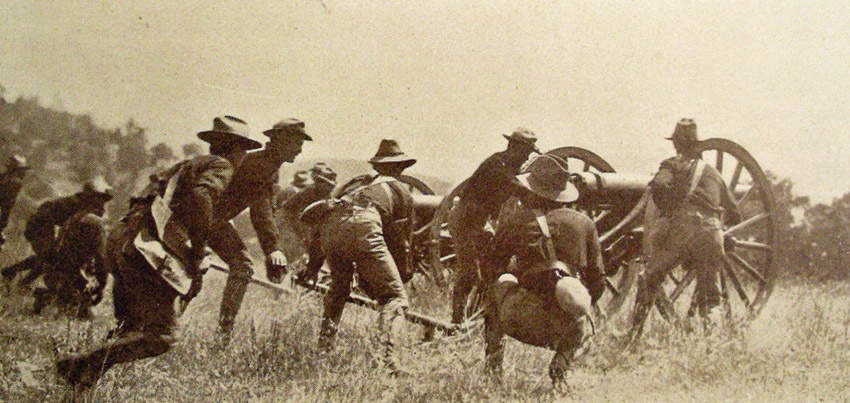
In the Philippines, amok also means unreasoning murderous rage by an individual. In 1876, the Spanish governor-general of the Philippines José Malcampo coined the term juramentado for the behavior (from juramentar - "to take an oath"), surviving into modern Filipino languages as huramentado. It has historically been linked with the Moro people of Mindanao, particularly in the island of Jolo in connection with societal and cultural pressures. [Source: Wikipedia +]
Juramentado, in Philippine history, refers to a male Moro swordsman who attacked and killed targeted Christian police and soldiers, expecting to be killed himself, the martyrdom undertaken as an unorthodox form of personal jihad. Unlike an amok, who commits acts of random violence against Muslims and non-Muslims alike, a juramentado was a dedicated, premeditated, and sometimes highly skilled killer who prepared himself through a ritual of binding, shaving, and prayer in order to accomplish brazen public religious murder armed only with edged weapons. +
For generations warlike Moro tribes had successfully prevented Spain from fully controlling the areas around Mindanao and the Sulu Archipelago, developing a well-earned reputation as notorious seafaring raiders, adept naval tacticians, and ferocious warriors who frequently demonstrated extraordinary personal bravery in combat. While Moro forces could never match opponents' firepower or armor, such bands used intelligence, audacity and mobility to raid strongly defended targets and quickly defeat more vulnerable ones. One extreme asymmetric warfare tactic was the Moro juramentado. +
History of Juramentado
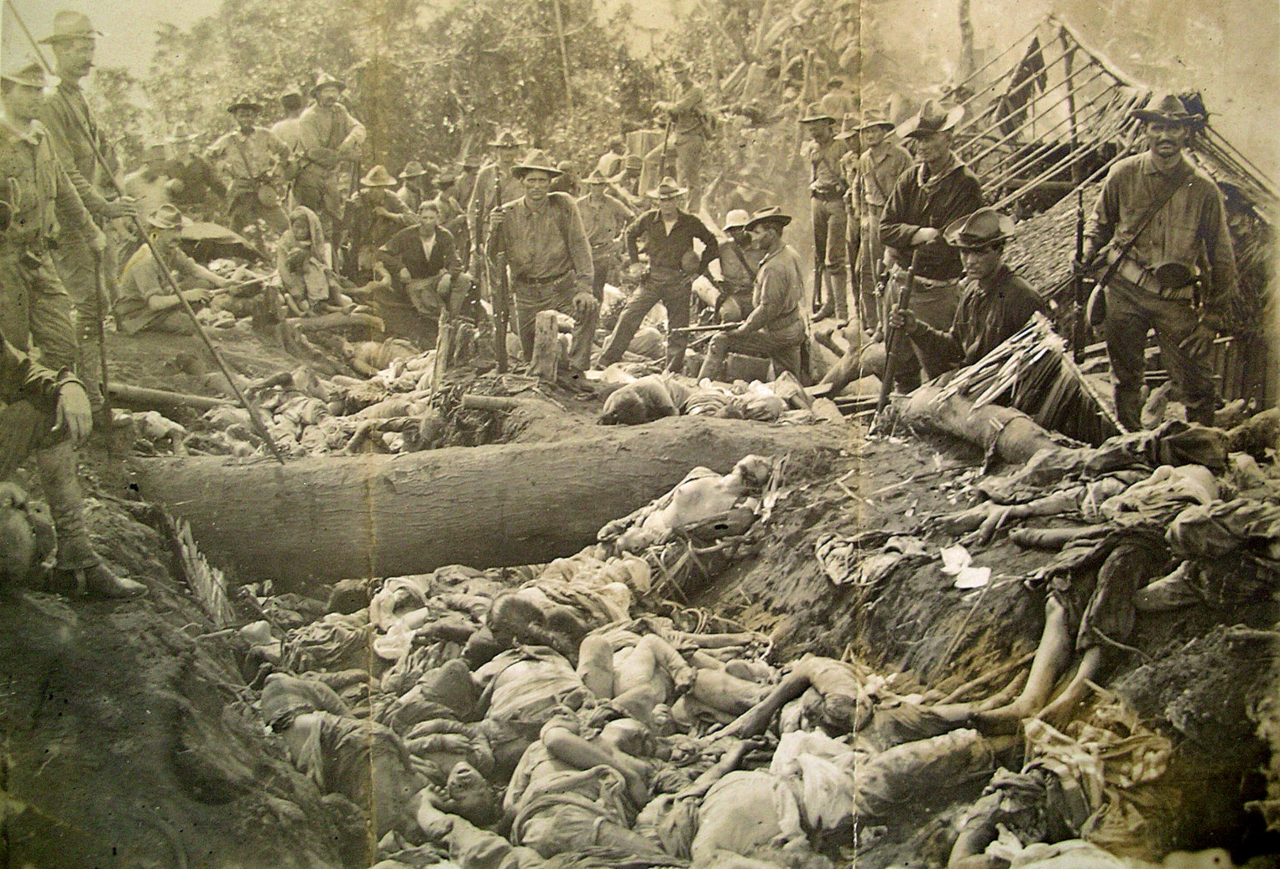
Juramentado is an archaic term derived from the Spanish word juramentar, meaning one who takes an oath. Some sources link amoks (from the Malayan term for "out of control") and juramentados as similar culture-specific syndromes while others draw distinctions of religious preparation and state of mind. A Moro might be said to have "gone juramentado" or be "running juramentado." [Source: Wikipedia +]
U.S. Army officers who had served in Moroland incorporated the idiom into their own vocabulary, but often simply equated it with the Moro people as a whole. In his memoirs, Army Air Service advocate Benjamin D. Foulois said of volatile rival Army Air Service officer Billy Mitchell, "He had become fanatic much in the way the Moros were in the Philippines. He had become a juramentado and was ready to run amok." +
The term juramentado was coined by José Malcampo, in command during the Spanish occupation of Jolo Island in 1876, but Moros had been making such personal attacks for many years. By the time of the Spanish–American War juramentados were being discussed in the American media, some official sources finding few documented cases. By 1903, local United States Army commander Leonard Wood sent a report to Governor of the Philippines William Howard Taft indicating juramentados were "an oft repeated offense." Almost forty years later, on the eve of the Japanese invasion of the Philippine Islands beginning the Second World War, Time Magazine was reporting juramentado attacks in Jolo occurring "once every other day". +
The Moro juramentados performed suicide attacks against Japanese troops. The Japanese were among several enemies the Moros juramentados launched suicide attacks against, the others being the Spanish, Americans and Filipinos, while the Moros did not ever attack the Chinese since the Chinese were not considered enemies of the Moro people. The Japanese responded to these suicide attacks by massacring all the relatives of the attacker. +
Juramentado Attacks
Candidates, known as mag-sabil, "who endure the pangs of death," were selected from Muslim youth inspired to martyrdom by the teaching of Imams. Parents were consulted before the young men were permitted by the sultan to undergo training and preparation for Parang-sabil (the path to Paradise). After an oath taken, hand on the Qur'an, the chosen took a ritual bath, all body hair was shaved, and the eyebrows trimmed to resemble "a moon two days old." A strong band was wrapped firmly around the waist, and cords wrapped tightly around the genitals, ankles, knees, upper thighs, wrists, elbows, and shoulders, restricting blood flow and preventing the mag-sabil from losing too much blood from injury before accomplishing his gruesome task. Clad in white robe and turban, the chosen youth would polish and sharpen his weapons before action. [Source: Wikipedia +]
At the moment of attack, the mag-sabil would approach a large group of Christians, shout "La ilaha il-la'l-lahu" ("There is no god but Allah"), draw kris or barong and then rush into the group swinging his sword, killing and maiming as many victims as possible in the time he had left. The true believer, however, faced a theologic conundrum. If the observant Juramentado believed that his murders pleased Allah, he could not admit that the inevitable consequences of his attacks constituted suicide, per se, as their Qur'an forbids it.
To reconcile the inconsistency, they fashioned themselves as martyrs of their own making, coaxing their way into Paradise with the spilled blood of numerous enemies of the faith on their hands. In effect, however, the tactic more closely resembles murder/suicide. The Juramentado—acting neither in self-defense nor through selfless altruism—commits to murder, and his own self-destruction, solely for the promise of his perception of personal gain. After death, the mag-sabil's body would be washed and again wrapped in white for burial. In the unlikely event the mag-sabil survived his attack, it was believed his body would ascend to Paradise after 40 years had passed. +
Peter Gowing wrote: “ With the possible exception of Japan's kamikaze pilots in the closing days of World War II, warfare has rarely known a more frightening phenomenon than the juramentados.” The Moros' use of local intelligence to mark target situations, coupled with a keen understanding of the tactical element of surprise made combating juramentado warriors difficult for Spanish troops during its long attempt to occupy the Sulu Archipelago. In an era of warfare where body armor had become anachronistic, an unexpected melee attack with razor-sharp blades was a devastating tactic against veteran soldiers. Even when colonizers had time to draw weapons and fire on the charging attacker, the small caliber weapons commonly in use possessed no stopping power, bullets passing though limbs and torso, the juramentados' ritual binding working as a set of tourniquets to prevent the swordsman from bleeding out from wounds before accomplishing his purpose. +
The phenomenon has been documented as recently as 2011, but the introduction of more potent, higher-caliber cartridges of consequence in the hands of intended victims markedly reduced the allure, and subsequently the incidence, of this peculiar method of self-annihilation. The United States occupation is claimed by some to have seen the use of burial of Juramentados with pig remains as a psychologic deterrent to continued suicidal aggression. This purported action by Americans is apparently thought, by those who hold that Juramentado is a legitimate path to heaven, to be abhorent to the "guardians of heaven."
Dr. Frank E. Vandiver, professor of history at Texas A&M University and author of Black Jack: The Life and Times of John J. Pershing said about the burial of Juramentados with pig remains that he never found any indication that it was true in extensive research on his Moro experiences. He has also been unable to find any evidence corroborating the claim that Muslims believe that "eating or touching a pig, its meat, its blood, etc., is to be instantly barred from paradise and doomed to hell." It is true that Islamic dietary restrictions, like those of Judaism, forbid the eating or handling of pork because pigs are considered unclean. But according to Raeed Tayeh of the American Muslim Association in North America, the notion that a Muslim would be denied entrance to heaven for touching a pig is "ridiculous." A statement from the Anti-Defamation League characterizes the claim as an "offensive caricature of Muslim beliefs." +
Juramentado Versus the American Colt 45
Barry C Jacobsen wrote in the deadliestblogpage.wordpress.com: “Some scholars consider the origin of this strange and deadly practice to lie in the Islamic prohibition against suicide. When “dishonored” a Muslim man could regain his honor (manhood!) by going amok, and dying with sword in hand; forcing others to kill him and thus accomplish his suicide. At the turn of the 20th Century in the Philippines, the practice took a new and unique turn; as Moro insurgents against American rule “ran amok”, attacking and assassinating American administrators or army officers. [Source: Barry C Jacobsen, deadliestblogpage.wordpress.com, March 8, 2012 /-/]
“The juramentado would prepare for his mission by having his TESTICLES TIED OFF WITH COPPER WIRE! In a state of intense agony, the juramentado would spend the night working himself into a killing frenzy. By the next day, the juramentado would be in such agony; in such an altered state of consciousness, that his mind would no longer register additional external pain. The juramentado would be led to where his target was expected (usually in public places). Just before being unleashed against the victim, his arms and legs were tied with occluding ligatures; reducing blood loss from expected wounds to these extremities.
At that moment the juramentado would charge forward (often out of a crowd) and assault the victim with the distinctive Moro sword, the Kris; or the equally nasty-looking hacking knife, the barong. Despite being shot multiple times by the victim and his escort or comrades-in-arms, the juramentado would not stop hacking till the target was slain. After which, the juramentado would collapse and die; likely contented. /-/
“The problem was exacerbated by the fact that sidearm of the American Army in the PI was a .38 caliber revolver. This small caliber proved utterly incapable of stopping the juramentado. For this reason the US Army adapted the .45 caliber colt pistol: the heavier bullet of the .45 could knock the charging juramentado onto his back, stopping his frenzied “amok” dead! The Colt .45 revolver (not the later automatic pistol) was issued to the Philippine Constabulary (the American-led Philippino force created to fight the Moros and keep the peace throughout the archipeligo) in 1903. It proved much superior to the standard .38 caliber pistols used by the regulary American Army. That, and the Winchester pump-action shotgun, then coming into service in both the Marines and Army, are the weapons that stopped the rampaging Moros! /-/
“There has been much discussion about the veracity of this bit of history; wither or not the .45 caliber could have made a difference. But in his Annual Report of June, 1904, General Leonard Wood (commanding American forces engaged against the Moros in the PI, stated his opinion on the subject: “It is thought that the .45 caliber revolver (Constabulary Model 1902) is the one which should be issued to troops throughout the Army…. Instances have repeatedly been reported during the past year where native have been shot through and through several time with a .38 caliber revolver, and have come on, cutting up the unfortunate individual armed with it… The .45 caliber revolver stops a man in his tracks, usually knocking him down… It is also recommended that each company …. be furnished with … 12-guage Winchester repeating shotguns.. There is no weapon in our possession equal to the shotgun loaded with buckshot.” /-/
Blood Feuds in Mindanao
Blood feuds persist in Muslim Mindanao, in the southern Philippines. Longstanding blood feuds are known as "rido." Studies funded by the Asia Foundation and the U.S. Agency for International Development found there had been more than 1,200 clan feuds in the south since the 1930s. Muslim clans in the southern Philippines have long been known for engaging in extended feuds, often over land disputes, political power, or local influence. These conflicts, known locally as rido, frequently involve armed followers and retaliatory attacks between rival families. According to the Asia Foundation, such feuds caused more than 5,500 deaths and displaced thousands of people between the 1930s and 2005. In many cases, the government and military have responded by attempting to mediate peace between rival clans rather than arresting those involved. [Source: AFP, July 12, 2013; Simone Orendain, PRI, July 25, 2011]
Rido can appear similar to famous family feuds like the Hatfields and McCoys, but in reality it often resembles organized gang warfare. Conflicts may begin with relatively small disputes but quickly escalate into violent confrontations. For example, peace mediator Fatmawati Salapuddin recalled a feud in her hometown in western Mindanao during the 1990s in which members of her father’s family fought her mother’s relatives over valuable farmland. The conflict involved heavy weapons, including mortars and landmines, and resulted in about twenty deaths on each side.
One reason these conflicts escalate so quickly is the structure of families in Muslim Mindanao. Families are not limited to parents and children but consist of large clans that may include hundreds of relatives—siblings, cousins, aunts, uncles, and grandparents. Because so many people are involved, even a personal dispute can expand into a large-scale confrontation. Feuds may arise from land disputes, struggles for authority, or efforts to defend family honor, and they often result in deaths, displacement, and the destruction of property.
Rido can also persist for generations. Anthropologist Francisco Lara noted that clan members often join conflicts out of a sense of obligation to protect their relatives from potential threats. Young men may grow up being trained to participate in clan conflicts, and the situation is worsened by the availability of weapons. Some clan members belong to separatist groups or private militias, giving them easier access to firearms and other arms.
Historical and political factors have also contributed to the persistence of rido. Before the formation of the Philippine state, parts of Mindanao operated under systems resembling feudal structures in which powerful families controlled land and resources. Because the region remained geographically and politically distant from the central government, colonial and later national authorities often relied on influential clan leaders to maintain order, rewarding them with political influence and economic benefits.
Socioeconomic problems further sustain the cycle of conflict. Many communities in the region lack adequate schools, infrastructure, and economic opportunities. Peace advocates argue that poverty, limited education, and weak government presence encourage people to rely on clan protection or armed groups for survival. Some observers also claim that powerful clan leaders have become deeply involved in politics, delivering votes for national candidates while benefiting from patronage and financial rewards, making the system difficult to reform.
Study of Blood Feuds in the Southern Philippines
Carlos H. Conde wrote in the New York Times, a 2007 Asian Foundation study “said "rido" is a "type of conflict characterized by sporadic outbursts of retaliatory violence between families and kinship groups as well as between communities. It can occur in areas where government or a central authority is weak and in areas where there is a perceived lack of justice and security." Two common causes of this type of conflict are political disputes and quarrels over land. [Source: Carlos H. Conde, New York Times, October 26, 2007 )*(]
“The project's researchers, which included Islamic scholars and anthropologists, found that, from the 1930s to 2005, there had been 1,266 cases of clan violence in Mindanao, in which 5,500 people were killed and thousands were displaced. Of these cases, 64 percent have not been solved, the perpetrators never identified nor brought to justice. )*(
“Clan violence in Mindanao, it said, has caused death and suffering, destroying of property, crippling the local economy, displacing communities, and sowing fear among communities. Gutierrez Mangansakan 2nd, a Muslim Filipino film maker, knows only too well the impact of clan violence: his family battled another for years. He was only eight in 1985 when his family and the other clan began a conflict that lasted for more than two decades. He said he saw shootings in his village that triggered it, and the situation worsened, he said, until family was forced to leave. )*(
“The Asia Foundation intends to use its study to try to resolve more cases of clan violence and deal with it constructively. "The Asia Foundation published this book to empower communities to break the cycle of violence," said Wilfredo Torres, who coordinated the research and edited the book. In doing the study, he said, "we have already seen the positive results of fresh, constructive dialogue through a better understanding of 'rido.' " )*(
Blood Feud Attacks in Mindanao
In July 2013, AFP reported: “Armed Muslim clans in the strife-torn southern Philippines are holding 11 people, including several children captive, as part of a decades-long feud, the military said. The tit-for-tat kidnappings are part of a battle for land between two clans that began 30 years ago on Basilan, a small, remote island dominated by Islamic militants and separatist rebels, said Colonel Rodrigo Gregorio. The feud has previously led to exchanges of gunfire and claimed about 20 lives from both sides, according to Gregorio, the regional military spokesman. "Hopefully, there won't be any violence. The two sides are still talking," he told AFP. [Source: AFP, July 12, 2013]
“The latest hostilities began when three daughters of clan leader "Commander Hassan" were abducted by a rival family on Basilan, said Gregorio. Hassan's armed followers retaliated by abducting 12 members of the rival clan, including seven children. Gregorio said the local government and military were negotiating with both sides and had successfully obtained the release of four children. The ages of the kidnapped children ranged from five months to 15 years, the military said. But it was not clear which of them were released. They are still trying to get the two rivals to release the rest of the captives while preventing any new outbreak of fighting, Gregorio added. Commander Hassan is a member of the Moro National Liberation Front, a former Muslim separatist rebel group, but the feud does not involve his organisation, the military said. In March 2006, Reuters reported: “Three people were killed and four others wounded when two rival families exchanged gunfire in the restive southern Philippines, a military spokesman said. Major Gamal Hayudini said the gunbattle erupted when members of a local Muslim clan attacked a rival family on Panglima Sugala island in the Tawi-Tawi chain, the southernmost part of the Philippines. "We've rushed troops to the area to prevent fighting from escalating," Hayudini told reporters, saying the rival clans have been quarreling over farmland. "We're trying to prevent the conflict from spilling to other areas." [Source: Reuters, March 18, 2006]
Clan Feuds Fuel Separatist Violence in Philippines
In 2007, Carlos H. Conde wrote in the New York Times, “Clan violence has contributed greatly to bloodshed in the southern Philippines, with government forces and Islamic separatists often drawn into the violence unnecessarily, complicating the decade-long search for peace there, a new study shows. The study released by the Asia Foundation said that the peace process in Mindanao, the region in the southern Philippines where Islamic separatists have been fighting for self-determination since the 1970s, would have a better chance of succeeding if clan violence - called "rido" by Filipino Muslims - were addressed. [Source: Carlos H. Conde, New York Times, October 26, 2007 )*(]
“While clan conflict is common in many societies around the world, "rido" is unique in that it has, according to the study, "wider implications for conflict in Mindanao, primarily because it tends to interact in unfortunate ways with separatist conflict and other forms of armed violence." The government and the Moro Islamic Liberation Front, the main Islamic separatist group, have been engaged in peace negotiations since 1997 but no substantial agreement has been reached. According to the study, half of the clan violence documented occurred between 2000 and 2004. During this period, the cease-fire between the government and the Islamic front was broken many times by fighting caused by clan feuds. )*(
"Most of the hostilities during this period were complicated by 'rido,' " said Teresita Quintos-Deles, who was President Gloria Macapagal Arroyo's presidential adviser on the peace process from 2003 to 2005. In fact, Deles said Wednesday, fighting between the government and the Moro Islamic Liberation Front decreased in 2004 and 2005 and most of the hostilities during that period were triggered by clan violence. Typically, according to the study, two warring families would petition either the Islamic front or the military for help. In many instances, feuding families were also members of the front or had connections with the military. "At times, local conflicts trigger large-scale armed confrontations between government and rebel forces," said the study, which cited several incidents of such confrontations. "In these events, parties to localized conflicts are able to exploit, deliberately or not, the military resources of both forces." )*(
Image Sources: Wikimedia Commons
Text Sources: “Encyclopedia of World Cultures Volume 5: East/Southeast Asia:” edited by Paul Hockings, 1993; National Geographic, Live Science, Philippines Department of Tourism, Metropolitan Museum of Art, Natural History magazine, New York Times, Washington Post, Los Angeles Times, Smithsonian magazine, Encyclopedia.com, Times of London, Library of Congress, The Conversation, The New Yorker, Time, BBC, CNN, Reuters, Associated Press, AFP, Lonely Planet Guides, Google AI, Wikipedia, The Guardian and various websites, books and other publications.
Last updated February 2026