
CHILDREN IN THE PHILIPPINES
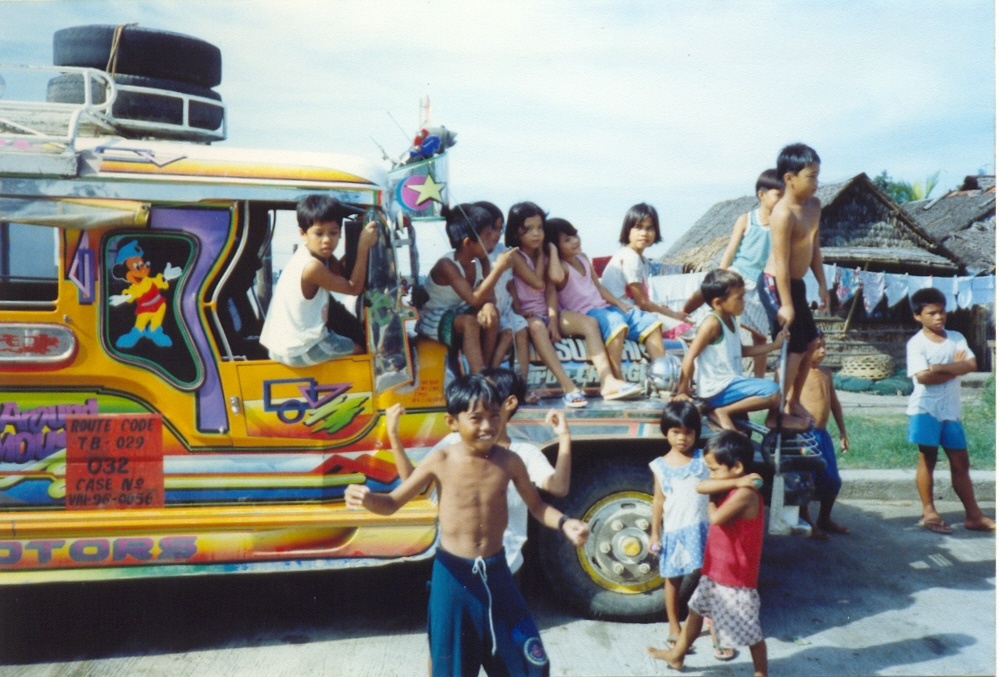
Children hold a central place in family-oriented Philippine culture. They strengthen the bond between the husband’s and wife’s families and help extend kinship ties through the compadrazco (godparent) system. Filipino parents consider it their duty to provide for the material and educational needs of their children. Children, in turn, are expected to obey and respect their parents and to take care of their parents when they grow old. Also, older children, until they marry and have families of their own, are expected to help younger siblings with school, and to assist them in getting a job after graduation. [Source: Kathleen Nadeau, International Encyclopedia of Marriage and Family, Gale Group Inc., 2003]
Children are considered a blessing from God for a marriage. Filipinos look upon childless couples with much sympathy and are never lacking in advice on how to have children. They cite personal examples of formerly childless couples who had children, offer medical theories and names of specialists, and suggest religious novenas to saints associated with fertility. They even recommend dancing at the Obando fiesta, where an ancient fertility dance in honor of San Pascual Baylon is performed. [Source: “Culture Shock!: Philippines” by Alfredo Roces and Grace Roces, Marshall Cavendish International, 2010]
Because family occupies a central place in Filipino culture, children learn from an early age that they owe their parents a lifelong debt of gratitude for bringing them into the world. At the same time, cultural tradition holds that parents must make sacrifices for their children precisely because they chose to have them. Obedience to parents and to older siblings is taught in childhood and reinforced throughout life until it becomes a deeply rooted sense of personal obligation.
Children never reach equal standing with their parents; respect for them remains constant throughout adulthood. The debt of gratitude toward parents is considered lifelong, and adult children are expected to care for their parents until death. This system ensures that older family members receive support within the household. Nursing homes or institutions for the elderly are rarely seen as appropriate solutions. Placing parents in such facilities may bring hiya, or shame, and could cause others to view the individual as an unloving or irresponsible son or daughter—one of the most serious social criticisms in Philippine society.
RELATED ARTICLES:
CHILDREN IN THE PHILIPPINES: RAISING THEM, RITES OF PASSAGE, STREET KIDS factsanddetails.com
FAMILIES IN THE PHILIPPINES: GODPARENTS, KINSHIP, TIES, STRUCTURE factsanddetails.com
WOMEN IN THE PHILIPPINES: STATUS, STEREOTYPES, MARIA CLARA AND ABUSE factsanddetails.com
ROLES OF WOMEN IN THE PHILIPPINES: MOTHER, DAUGHTER factsanddetails.com
FILIPINA WIVES, NON-FILIPINO MEN AND MAIL-ORDER BRIDES factsanddetails.com
FILIPINO MEN: MACHISMO, HENPECKED HUSBANDS AND SUDDEN UNEXPECTED DEATH factsanddetails.com
MARRIAGE IN THE PHILIPPINES factsanddetails.com
COURTSHIP, DATING AND LOVE IN THE PHILIPPINES factsanddetails.com
DIVORCE IN THE PHILIPPINES: BAN, LAWS, ANNULMENTS, IMPACTS factsanddetails.com
WEDDINGS IN THE PHILIPPINES factsanddetails.com
Child Rearing in the Philippines
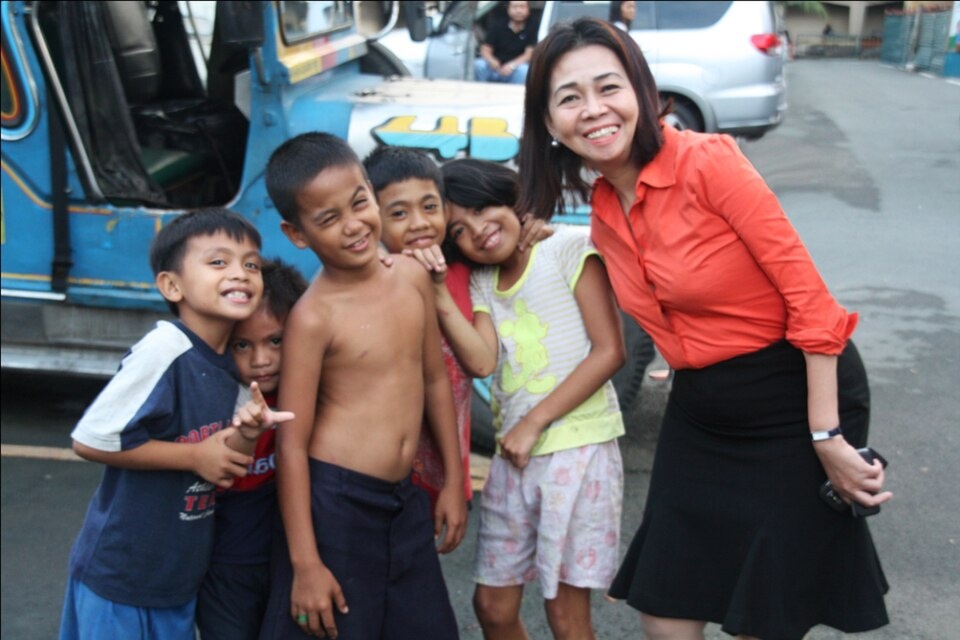
Childrearing is a collective effort involving household members, extended kin, and neighbors (mga kapitbahay or paligid). A pivotal experience in growing up is assuming responsibility for a younger sibling or relative, reinforcing maturity and obligation. The extended residential family provides emotional support and daily interaction, fostering deep networks of reciprocity. Through these experiences, individuals accumulate utang na loob, strengthening bonds within the kin group and the broader community.[Source: Charles Kaut, “Encyclopedia of World Cultures Volume 5: East / Southeast Asia:” edited by Paul Hockings, 1993~]
Children are often take on responsibility at an early age. Girls especially are expected to help with cooking and household chores and look after younger siblings. This is especially true if the wife in a family is engaged in economic activity. Filipinos are typically highly indulgent of their children, especially boys, so may well tolerate children’s anti-social behavior in public. In contrast, public displays of anger towards children, even just overt chastising or reprimanding, are not well regarded. [Source: Canadian Center for Intercultural Learning]
Young children are often sent to live with their grandparents or aunts for extended periods. People who live outside the country leave their children with the family for the preschool years. Children are seldom alone in a system in which adults desire company and do not understand the need for privacy. Children have no pressure to become toilet trained or to learn to eat at the table. They are spoon fed or eat from a parent's plate until the age of six. They must learn respect for authority, obedience, and religious faith. Self-esteem is fostered. ~
In “Child Rearing and Personality Development in the Philippines. (1967), George M. Guthrie and Pepita Jimenez Jacobs wrote: ‘The Filipino child is never alone. In a one-room house with many siblings and other relatives the child may be several years old before he has his first experience of being out of sight of others. In addition, he is carried, handled and touched a great deal, and, of course, he may possibly never sleep alone throughout his whole life span. Since he is in such continuing contact with others, he develops a good many techniques for handling the variety of stresses which inevitably arise. With the fundamental importance to him of activities in this domain, his personality in formation and structure is oriented to his relationships with others.”
The role of mother is regarded as the most fulfilling for Filipinas. At this stage, the Filipino life cycle becomes matriarchal. Children are considered the force that binds the family together. The mother supervises the children and administers the household. She mothers her husband and manages the finances. The male is expected to be only a breadwinner, a role outside the home. At this point, he may start to stray. Filipino standards tend to tolerate the husband's extramarital activities while severely disapproving of any sign of infidelity by the wife. After all, she is the symbol of motherhood. Nannies are called yayas in the Philippines. Yayas are a common feature of upper class Filipino families, and they often live in the same house as their employers. [Source: “Culture Shock!: Philippines” by Alfredo Roces and Grace Roces, Marshall Cavendish International, 2010]
Teasing as a Means of Controlling Filipino Children
Filipino children are often guided and disciplined through teasing. Both elders and other children use teasing to point out shortcomings or inappropriate behavior, allowing criticism to be expressed indirectly. Through this practice, children learn to cope with limitations and to respond to criticism without open confrontation. At the same time, teasing allows them to voice objections or defend themselves while disguising aggression or disrespect as humor. In this way it becomes an important social tool that fosters sensitivity to hiya (a sense of shame) and amor propio (self-respect), and it continues throughout life as a way to test reactions or communicate delicate feelings. [Source: “Culture Shock!: Philippines” by Alfredo Roces and Grace Roces, Marshall Cavendish International, 2010]
Teasing also reveals family attitudes toward issues that might otherwise be difficult to discuss openly. Matters such as grooming, school performance, laziness, greed, or even a child’s romantic interests may be addressed through jokes and playful remarks rather than direct criticism. This indirect communication helps maintain harmony within the family while still conveying expectations.
Within the close-knit Filipino kinship system, children are taught to think of the needs of the family as a whole rather than acting independently. Interdependence is emphasized, and children frequently hear that their needs must be balanced with those of others. In large families, where competing desires are common, children often learn to compromise and yield. Over time they develop a keen sensitivity to the moods and feelings of others in order to maintain harmony within the household.
Teasing also plays a role in shaping gender behavior. Girls, for example, may be gently teased into observing modest behavior such as sitting properly or behaving gracefully. Social events can also reinforce these expectations. A girl might be chosen as a reina during the religious festival Flores de Mayo, a role that highlights ideals of beauty, poise, and femininity within the community.
Parents generally provide little formal sex education, leaving young people to learn about relationships, courtship, and sexuality through conversations and jokes with their peers. Adolescents often form close friendship groups—known in cities as a barkada—where they socialize and exchange information. School also introduces children to a wider world beyond the family, offering new friendships and knowledge and serving as a pathway to upward mobility and improved opportunities in life.
Impact of Filipino Child Rearing Practices
A Filipino child receives an abundance of love and affection from all members of the extended family and is seldom chastised. He will have a tendency not to do things alone, and this remains all his life. The child is almost kept young for as long as possible. However, certain norms of conduct expected of the child reflect values held by the extended family. The primary value is karangalan (dignity) which encompasses puri (honour); katapatan (trustworthiness), pananagutan (extended responsibility). Safeguarding karangalan, by pagkamasunurin (obedience, compliance) is vital. Loss of karangalan by a family member results in hiya (shame) for the whole family. [Source: Philippines Australia Business Council ^^]
As a result, Filipinos develop a delicate sense of personal worth, and peer group acceptance and pakikipagkapwa-tao (concern for fellow-beings) become primary values. These require SIR and include: avoiding direct disagreements, using intermediaries, using euphemisms and metaphors, keeping feelings to oneself, and helping members of the extended family find employment, dressing correctly for the occasion, and smiling at disappointments and failures. ^^
Filipinos also have an obligation to support erring family members in public and chastise in private, i.e., he can disagree in private, but must publicly agree with a family member, for utang na loob and family indebtedness are obligatory for all members of the extended family. Criticism of one family member is criticism of all, and honour to one is honour to all. Family obligations mean that the eldest child often goes to work, so that younger family members can be educated. This occurs regardless of sex, for Filipino women have been liberated for centuries. The number of Filipino businesswomen is large. ^^
In the Philippines, decisions are made by consensus and on the basis of anticipated benefit to the family. Filipinos must consult with other family members, especially elders, before making decisions. Filipinos have special forms of address for older members of the family, older relatives, and even older siblings, for they all have authority over the child. Space limitations and hierarchical family situation often motivate younger family members to spend leisure time on community affairs. Sometimes they are directed by the family into community projects. This satisfies the goals for the well-being of the extended family, and provides a means for self development. ^^
Reference to the authority of older family members is reinforced by the authority of the church. The church also helps build the high values placed on SIR, compassion, and tolerance. Religion dominates Filipinos far more than Australians. Religion is all-pervading in Filipino’s life, whether he practices his faith or not ‘ he tends to do the right thing and lives by the dictates and teachings of the church. He will do this even if operating under two sets of values which has been called ‘split-level christianity’. This appears very contradictory to foreigners, but is very reconcilable from the Filipino point of view. This explains the graft-taker never failing to go to church on Sunday, or a businessman giving equally to his parish church and his mistress. ^^
Rites of Passage of Children in the Philippines
Rites of passage in the Philippines blend of Western religious traditions and long-standing kinship customs. These ceremonies mark important stages in a person’s life while reinforcing the strong family and social networks that characterize Filipino society. One tradition in the Philippines, is for people to eat pancit (noodles) during one’s birthday under the belief that eating long noodles will give them long life. [Source: Kathleen M. Nadeau, Worldmark Encyclopedia of Religious Practices, Thomson Gale, 2006; [Source: “Culture Shock!: Philippines” by Alfredo Roces and Grace Roces, Marshall Cavendish International, 2010]
One of the earliest and most significant rites of passage is baptism. In a predominantly Roman Catholic country, baptism formally introduces an infant or a converted believer into the Christian faith. During this ceremony the child receives a Christian name and is welcomed into the religious community. Parents carefully select godparents—known as ninong and ninang—because the role creates a lifelong bond between the child, the godparents, and their families. Through this relationship, the child gains additional sources of guidance, support, and social security. In the Philippines it is common for parents to invite several sets of godparents to participate in a baptism. These godparents are regarded as extended members of the family and are expected to maintain a lasting relationship with the child. Their role goes beyond the ceremony itself, as they may offer advice, assistance, and encouragement throughout the child’s life.
Other religious and educational milestones also serve as important rites of passage. A child’s First Communion and the sacrament of Confirmation are significant events within Catholic life, and godparents often take part in these ceremonies as well. In addition, families celebrate academic achievements such as graduation from elementary school, high school, and university.In recent years, some observers have noted that celebrations surrounding these milestones can become costly, as families host large gatherings and parties. While some people criticize the expense involved, others embrace the celebrations enthusiastically, even organizing ceremonies for younger children, such as kindergarten graduations.
Circumcision in the Philippines
Circumcision practices in the Philippines vary according to region and religion. Among Christians, circumcision is a widely practiced rite marking a boy’s transition toward manhood. The procedure may be performed by a medical doctor or by a traditional healer who learned the practice from earlier generations. Urban families, especially among the middle and upper classes, often have their sons circumcised as newborns in hospitals. In poorer or rural families, however, boys are more commonly circumcised at ages eight to ten, usually while they are in elementary school. [Source: Jose Florante J. Leyson, M.D., Encyclopedia of Sexuality, 2001 |~|]
Two main techniques are used. Doctors typically perform a modern surgical circumcision similar to the procedure used in Europe and North America, removing the foreskin and closing the incision with sutures while prescribing antibiotics to prevent infection. Traditional circumcision, however, involves a simpler dorsal slit made with a sharpened knife or small machete. The healer generally uses neither anesthesia nor sterilized equipment, relying instead on traditional knowledge passed down within the community.
In many rural areas, the ritual traditionally takes place during the summer school break in May or June. Boys, often in groups, walk together to the healer’s house and are then led to a secluded clearing or farm. The boy sits on a rock or tree stump while the knife is prepared. To show courage and readiness for adulthood, he is expected to remain calm throughout the procedure. At the moment of the cut, the healer may distract him—telling him to look for a bird or airplane—before quickly striking the knife to create the slit.
Afterward, traditional remedies may be used to control bleeding. Juice from the nipa palm may be applied to the wound, while cobwebs or fibers from coconut palm leaves sometimes serve as makeshift bandages. In some areas, mixtures made from guava leaves are used because they are believed to reduce swelling and help stop bleeding. These methods rely on local knowledge of natural substances thought to aid healing.
Following the procedure, boys usually walk home silently to demonstrate bravery. Their return is marked by a distinctive “frog-like” gait, with knees spread apart to avoid contact with the sensitive wound. For several days they remain at home, sometimes wearing loose clothing such as skirts to prevent irritation. Healing may take six to eight weeks. Although infections were once common with traditional methods, the practice has gradually shifted toward medical procedures as modern healthcare has become more widely available.
Philippine City Holds Mass Circumcision for Youths
In May 2011, hundreds of boys in a Philippine city outside Manila participated in a daylong "circumcision party" to provide a safe, free procedure for a rite of passage that most local males undergo as preteens. Associated Press reported”Some boys cried in their mothers' arms while others bit their shirts to stifle sobs as doctors carried out the surgery on dozens of makeshift operating tables inside a sports stadium in Marikina city east of Manila. Outside, other boys lined up to await their turn. "I'm a big boy now," one boy who had just finished the surgery bragged. [Source: Associated Press, May 7, 2011 /*]
“Officials said the event — touted in a press statement as a "circumcision party" — aims to promote safe circumcision and to offer to poor residents free surgery that would otherwise cost at least $40 (£25) in private hospitals. As of mid-afternoon, nearly 1,500 boys aged 9 years and up had been circumcised while many were still waiting in line, city health officer Dr. Alberto Herrera said. /*\
“In the Philippines, preadolescent and adolescent boys traditionally are circumcised during summer school break from March to May. In rural areas, the surgery is sometimes performed by non-doctors using crude methods. The city also hopes to establish a world record for the number of people attending a mass circumcision. "We applied for the Guinness Book of World Records and we are recording everything so we can send all the data to them and hopefully it will be recognized," Vice Mayor Jose Fabian Cadiz said.” /*\
Come of Age Rites for Girls in the Philippines
Among Christian Filipinos, girls traditionally pass through two symbolic stages marking their social transition to womanhood: ear piercing and the debutante’s ball. Ear piercing is not a religious or puberty rite but a longstanding custom that publicly identifies a child as a girl. It is usually performed when the child is between one month and three years old, though in some regions it may occur later. The procedure may be done by a hairstylist, a traditional healer, or medical personnel. While doctors use sterilized equipment, piercings performed by non-medical practitioners often involve little or no anesthesia or antibiotics. Despite this, infections are relatively uncommon compared with traditional male circumcision. [Source: Jose Florante J. Leyson, M.D., Encyclopedia of Sexuality, 2001]
Among Muslim Filipinos, who make up roughly 10 percent of the population, ear piercing is also common. Earlier generations of Muslim girls sometimes wore veils, particularly in the mid-20th century, but today many young women do not cover their faces. Some Muslim families incorporate debut-style celebrations, though others discourage dancing or parties for religious reasons.
Among indigenous groups such as the Ifugao, Kalinga, and Igorot peoples, ear piercing is also practiced from an early age. In some communities, family wealth and status may be displayed through the number of earrings or layers of necklaces worn. Unlike in some other parts of the world, there is no tradition of female circumcision in these cultures. Historical accounts suggest that in earlier times some women wore elaborate body ornaments such as nose or lip rings, but these groups generally do not observe debutante-style social introductions.
Debutante’s Ball (Cotillion) in the Philippines
The debutante’s ball, or cotillion, formally introduces young women—usually at age eighteen—to society. This elaborate celebration often takes the form of a formal dinner or dance and is typically hosted by families with the resources to organize such events. The tradition dates back to the Spanish colonial period, when daughters of prominent families were formally presented to eligible bachelors as part of the social world of the colonial elite.
Among the wealthy, when a girl turns 18, she is considered ready for marriage. She is formally introduced to society at a social dance called a debut. This big event is attended by relatives and friends of the girl and her parents. Since dancing is popular among Filipinos, countless hours are spent practicing for these events. For weeks, a group of the celebrant’s close friends rehearse the cotillion. [Source: “Culture Shock!: Philippines” by Alfredo Roces and Grace Roces, Marshall Cavendish International, 2010]
The debutante dinner is usually catered, and guests are assigned to tables. The family and their prominent friends are assigned one group of tables, and the young unmarrieds are assigned another. It is an honor to be chosen to dance in the cotillion. Single young people are invited with their dates. Among this group of young people, the male guest picks up his date at her home and gives her a corsage. The celebrant and her father open the dance with a waltz, after which the other guests may join. Formal dress is required for this occasion.
Initiation Rituals Among Philippine Ethnic Groups
In the Philippines there is a general absence of initiation rites that officially mark the entrance of an individual into active adult life except thos associated with the Catholic church. In the old days, at the onset of puberty, a young Filipino girls, were subjected to restrictions and underwent certain rituals that were designed to prevent them from becoming too talkative. One chronicler wrote: Their eyes were blindfolded for four days and four nights; and, in the meantime, the friends and relatives were all invited to partake of food and drink. At the end of this period, the catolonan took the young girl to the water, bathed her and washed her head, and removed the bandage from her eyes. The old man said that they did this in order that the girls might bear children, and have fortune in finding husbands to their taste, who will not leave them widows in their youth. [Source: Teresita R. Infante, [Source: kasal.com ^]
The Ilongot have their teeth filed when they are in their middle teens. Wilson wrote: Sometime in their middle teens, the maidens and youths have their teeth filed down. A group of her boyfriends will rally round a girl in her house and hold her down tight while one cuts her teeth down - no matter how much she screams from the excruciating pain. After the operation, one lad will take a pencil-sized twig from a guava tree or the stem of a batac plant, heat it in the fire, and rub the warm bark on the teeth: thus, stopping the blood and easing the pain. Thereafter the shortened teeth are strong for chewing - even bones, and picking the teeth after eating is unnecessary. When it is all over, wreaths are hung up and a gala time is had with basi [fermented wine], chicken, and rice. ^
For Information on Different Ethnic Group See the Ethnic Groups and Minorities listed Under the MINORITIES factsanddetails.com
Street Children of the Philippines
The Philippines has a problem with abandoned children. According to the United Nations’ Children's Rights & Emergency Relief Organization, about 1.8 million children in the country—more than 1 percent of its entire population—are “abandoned or neglected.” Some are victims of extreme poverty, while others are affected by natural disasters and armed conflicts in the country's southern regions.The Department of Social Welfare and Development is responsible for finding homes for many of these children. They are understaffed with few resources. In addition, orphanages in the Philippines are scarce and poorly staffed. [Source: Jonathan Kaiman and Sunshine de Leon, Los Angeles Times, May 28, 2016]
Street children are a serious social issue in the Philippines, particularly in large urban centers. An estimated 220,000 children live and work on the streets of major cities. Many of them spend their days begging for money or selling small items in order to buy food and help support their families. Poverty often forces these children to become breadwinners at a very young age, and many are unable to attend school as a result. [Source: UNICEF, Lucille Talusan and Charlene Israel, Cbnnews.com, November 17, 2006]
Life on the streets can begin very early. Some children, like those described in humanitarian reports, start begging when they are only toddlers. They approach passengers in public transportation vehicles or pedestrians at busy intersections, hoping to earn small amounts of money. These earnings are usually given to their families and used to buy basic necessities such as rice or noodles. Older siblings frequently take on adult responsibilities, caring for younger brothers and sisters and working to keep the family from going hungry.
Many street children leave school because their families cannot afford the costs of education. In some cases, parents are unemployed or unable to find steady work, leaving children to contribute to the family income. Although parents may recognize the dangers their children face, economic hardship often leaves them with few alternatives. Some families also fear that social welfare authorities might remove their children and place them in shelters.
Children end up living on the streets for a variety of reasons. Some run away from homes where they experience physical or sexual abuse, while others are pushed onto the streets by extreme poverty. Peer pressure and the attraction of street gangs also play a role, especially for boys. Many become involved in risky activities such as solvent sniffing, alcohol use, drug trafficking, or petty crime, exposing them to violence, exploitation, and encounters with law enforcement.
Street children are frequently denied basic rights such as education, healthcare, and protection. They are vulnerable to illness, hunger, and abuse, and often face discrimination from the wider public. Despite these hardships, outreach programs and social workers attempt to help them rebuild their lives by offering education, counseling, and support. Former street children who have managed to leave this life sometimes return as mentors or educators, hoping to guide younger children away from the dangers of the street.
Helping Street Children of the Philippines
Faith-based and humanitarian groups in the Philippines are working to help street children find alternatives to life on the streets. One such effort is the sidewalk ministry of the Lighthouse Christian Community Church, led by social worker Joan Luciano. She believes that both children and their parents need to move beyond a “quick fix” mentality focused only on immediate survival. Instead, she encourages children to imagine a better future and to develop goals that could lead them away from scavenging and begging. Through these outreach efforts, thousands of street children have participated in informal Bible classes held in the places where they live—sidewalks, railways, rooftops, and other public spaces. [Source: UNICEF, Lucille Talusan and Charlene Israel, Cbnnews.com, November 17, 2006]
These sidewalk classes provide more than religious instruction. For many children, they offer a rare opportunity to relax, learn, and experience a sense of normal childhood. Volunteers organize lessons, games, and discussions that create a safe environment where children can gather. Some participants initially attend because food is provided, but over time the classes also encourage them to reflect on their lives and consider new possibilities for the future.
Several volunteers involved in these programs are themselves former street children. One example is Paquito Grama, who once lived on the streets and engaged in theft and gambling as a young boy. After joining a sidewalk Bible class, his life gradually changed. Today he serves as an area coordinator for the program and is pursuing a degree in Christian education. His experience allows him to connect with the children and inspire them to believe that their lives can also improve.
International and local organizations also support efforts to assist street children. Programs backed by UNICEF work at multiple levels: outreach workers meet children directly on the streets, community centers provide safe places where they can study and stay temporarily, and local communities are encouraged to address the problems affecting vulnerable children. One partner organization, Childhope Asia Philippines, sends street educators into urban areas to provide counseling, alternative education, and access to social services.
These outreach efforts often focus on long-term personal support. Street educators help children discuss their experiences, build confidence, and consider leaving street life. In some cases they assist in reconciling children with their families or placing them in shelters and schools. With guidance and education, some children rediscover their ambitions and begin planning for the future—for example, hoping to return to school and pursue careers that will allow them to help others in their communities.
In 2012, Filipino street child Cris “Kesz” Valdez, then 13, received the US$130,000 International Children’s Peace Prize in The Hague for his charity, Championing Community Children, which helps other street children. Having suffered severe abuse and forced to scavenge in a garbage dump to support his father’s drug and alcohol addiction, he ran away from home at age four and was later badly burned in a landfill fire. After a Christian aid group helped treat his injuries and took him in, he dedicated himself to helping other vulnerable children. Beginning on his seventh birthday, he organized drives distributing flip-flops, toys, clothing, and hygiene supplies to children living in dumpsites. With the help of volunteers, his efforts have assisted more than 10,000 Filipino children while also educating them about hygiene, treating wounds, and encouraging hope for a better future. [Source: Good News Network, September 24, 2012 ==]
Image Sources: Wikimedia Commons
Text Sources: “Encyclopedia of World Cultures Volume 5: East/Southeast Asia:” edited by Paul Hockings, 1993; “Culture Shock!: Philippines” by Alfredo Roces and Grace Roces, Marshall Cavendish International, 2010; National Geographic, Live Science, Philippines Department of Tourism, New York Times, Washington Post, Los Angeles Times, Smithsonian magazine, Encyclopedia.com, Library of Congress, The Conversation, The New Yorker, Time, BBC, CNN, Reuters, Associated Press, AFP, Lonely Planet Guides, Google AI, Wikipedia, The Guardian and various websites, books and other publications.
Last updated March 2026