
SINGAPORE NAMES
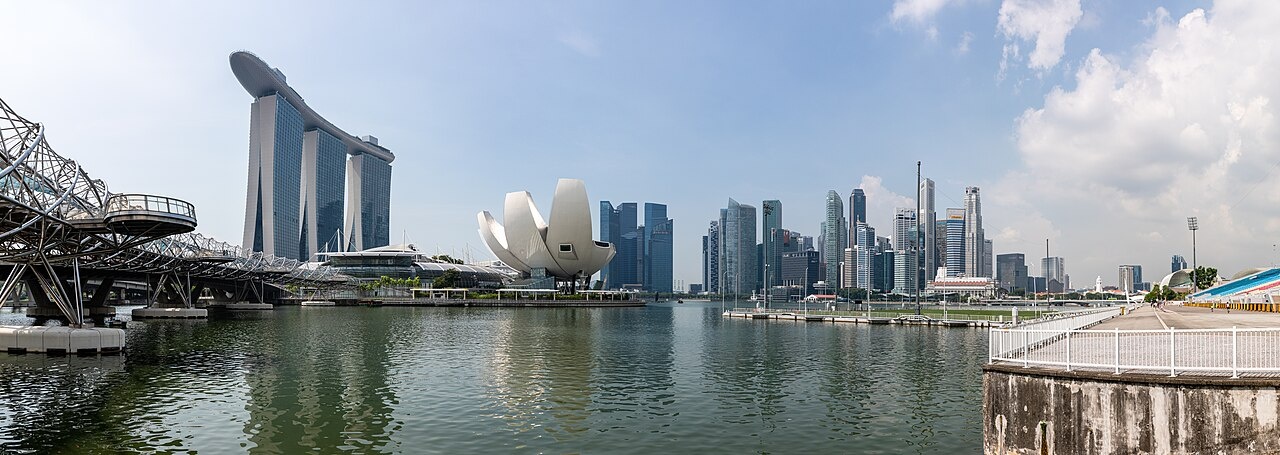
Formal Name: Republic of Singapore (English-language name), in other official languages: Republik Singapura (Malay), Xinjiapo Gongheguo (Chinese), and Cingkappãr. Short Form: Singapore. Term for Citizen(s): Singaporean(s).
The name Singapore was adopted on February 23, 1819 by Sir Stamford Raffles to designate the town he founded. It was derived from “Simhapura”, Sanskrit for “Lion City,” the name of a trading town in the area that had been used at least since the 14th century when it had been established by Malay or Javanese settlers.
Singaporeans are not an ethnic group; they are simply citizens of the Republic of Singapore, which was established in 1959." Before that, Singapore was part of Malaysia, a single island at the southern tip of the peninsula. The term 'Singaporean' was rarely used before independence." [Source: Paul Hockings, Encyclopedia of World Cultures, Gale Group, Inc., 1996]
The main cultural traditions are Malay, Indian, Chinese, and, to a lesser extent, Western (British). The different communities do not consider themselves part of a shared culture; rather, they see themselves as parts of a whole. This concept is illustrated by a popular local dish called rojak, a salad in which the various ingredients are covered by the same peanut sauce. The sauce brings the distinct ingredients together to form a whole, while still allowing each ingredient to be clearly discernible. The peanut sauce represents Singaporean identity, and the other ingredients represent the different cultural traditions. [Source: Benedicte Brøgger, Countries and Their Cultures, Gale Group Inc., 2001.
RELATED ARTICLES:
EARLY HISTORY OF SINGAPORE: LEGENDS, ARCHAEOLOGY AND 14TH CENTURY TRADE factsanddetails.com
ORANG LAUT— SEA NOMADS OF MALAYSIA AND SINGAPORE factsanddetails.com
SINGAPORE IN THE EARLY 1800s: BRITAIN, RAFFLES AND HIS PLAN factsanddetails.com
SINGAPORE GROWS AND PROSPERS IN THE 19TH CENTURY: TRADE, THE BRITISH, IMMIGRANTS factsanddetails.com
CHINESE, MALAYS AND INDIANS IN EARLY SINGAPORE factsanddetails.com
SINGAPORE IN THE EARLY 20TH CENTURY factsanddetails.com
JAPAN'S MALAYA CAMPAIGN AND DEFEAT OF THE BRITISH IN WORLD WAR II factsanddetails.com
JAPANESE INVASION OF SINGAPORE factsanddetails.com
SINGAPORE DURING WORLD WAR II: POOR BRITISH DEFENSE, HARSH JAPANESE OCCUPATION factsanddetails.com
SINGAPORE AFTER WORLD WAR II factsanddetails.com
POLITICAL ACTIVITY IN PRE-INDEPENDENCE SINGAPORE: PAP, LEE KUAN YEW, COMMUNISTS, LABOUR FRONT factsanddetails.com
SINGAPORE INDEPENDENCE: SELF RULE, UNION THEN SPLIT WITH MALAYSIA, CHALLENGES factsanddetails.com
LEE KUAN YEW — SINGAPORE'S FOUNDER-MENTOR — AND HIS LIFE, VIEWS AND DEATH factsanddetails.com
SINGAPORE UNDER LEE KUAN YEW factsanddetails.com
GOH CHOK TONG: SINGAPORE'S PRIME MINISTER FOR 14 YEARS AFTER LEE KUAN YEW factsanddetails.com
LEE HSIEN LOONG: SINGAPORE'S PRIME MINISTER FROM 2004 TO 2024 factsanddetails.com
Short Description of Singapore
Date of Independence: August 31, 1963, from Britain; August 9, 1965, from the Federation of Malaysia. Singapore joined the Malaysian Federation in 1963 but separated two years later and became independent. Singapore subsequently became one of the world''s most prosperous countries with strong international trading links (its port is one of the world''s busiest in terms of tonnage handled) and with per capita GDP equal to that of the leading nations of Western Europe. [Source: CIA World Factbook]
The modern nation of the Republic of Singapore, was founded as a British trading post on the Strait of Malacca in 1819. Singapore's location on the major sea route between India and China, its excellent harbor, and the free trade status conferred on it by its visionary founder, Sir Thomas Stamford Raffles, made the port an overnight success. By 1990 the multiethnic population attracted to the island had grown from a few thousand to 2.6 million Singaporeans, frequently referred to by Prime Minister Lee Kuan Yew as his nation's greatest resource. If Raffles had set the tone for the island's early success, Lee had safeguarded the founder's vision through the first quarter-century of Singapore's existence as an independent nation, providing the leadership that turned it into a global city that offered trading and financial services to the region and to the world. [Source: Library of Congress *]
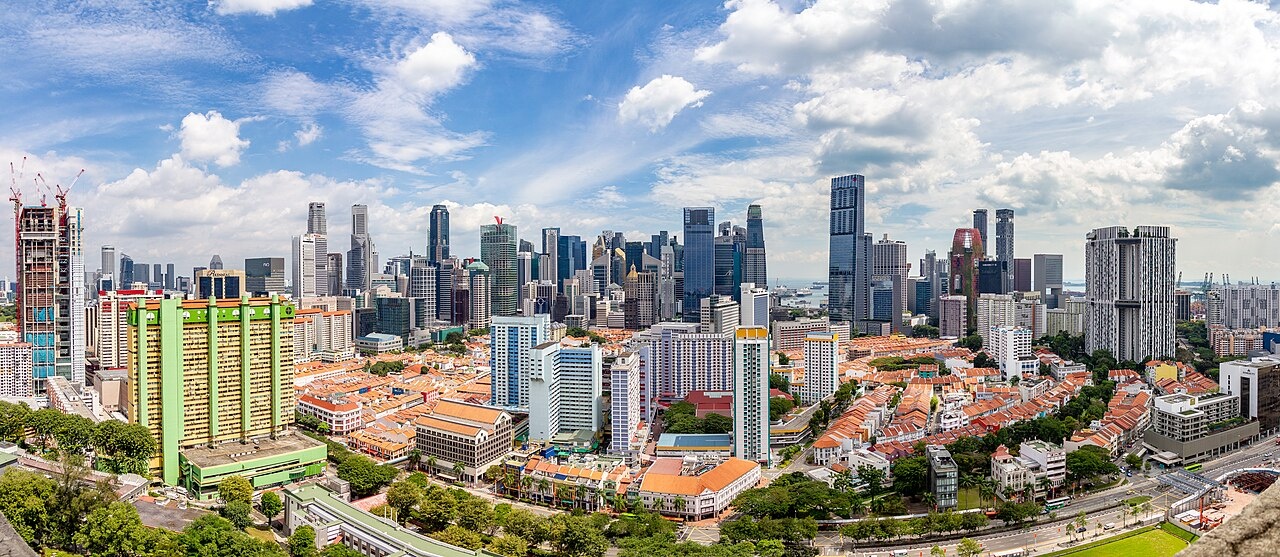
Modern Singapore would be scarcely recognizable to Raffles, who established his trading center on an island covered with tropical forests and ringed with mangrove swamps. Towering skyscrapers replace the colonial town he designed, and modern expressways cover the tracks of bullock carts that once led from the harbor to the commercial district and the countryside beyond. Hills have been leveled, swamps filled, and the island itself expanded in size through extensive land reclamation projects. Offshore islands are used for recreation parks, oil refineries, and military training bases. Despite the scarcity of land for real estate, the government has worked to maintain and expand the island's parks, gardens, and other green spaces. By housing 88 percent of its population in mostly multistoried public housing, Singapore has kept a rein on suburban sprawl. Probably the world's only ex-colony to have independence forced upon it, Singapore responded to its unanticipated expulsion from Malaysia in August 1965 by concentrating on economic development and by fostering a sense of nationhood. Though the survival of the miniature state was in doubt for a time, it not only survived but also managed to achieve the highest standard of living in Southeast Asia. The country also enjoyed a rare political continuity; its ruling party and prime minister triumphed in every election from 1959 to 1988. *
Location and Geography of Singapore
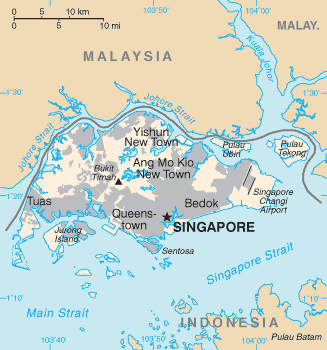
Situated just north of the equator in Southeast Asia at the southern tip of the Malay Peninsula, the Republic of Singapore consists of Singapore Island and 58 smaller, largely uninhabited islands. Singapore straddles the Strait of Malacca, one of the world's busiest shipping lanes, which separates Singapore from the Indonesian island of Sumatra to the west. To the north of Singapore Island, beyond the narrow Johor Strait, lies Malaysia. A substantial amount of global shipping passes through the Straits, which serve as a passage between the Indian Ocean and the Pacific Ocean. [Source: William Peterson, Worldmark Encyclopedia of Religious Practices, Thomson Gale, 2006]
Sir Thomas Stamford Raffles established a new trading station at what is now Singapore in 1819 to provide a secure base for the company’s trade with China. Located between China and India, Singapore commanded three convenient sea channels leading from the Strait of Malacca to the South China Sea. Today, Singapore’s port facilities are crucial to the economic well-being of many nearby countries, notably Japan, and the nation is well connected by sea and air to most parts of the world. [Source: Gale Encyclopedia of World History: Governments, Thomson Gale, 2008]
Singapore has a total area of about 581 square kilometers (224.5 square miles) and the main island measures roughly 42 by 23 kilometers (26 by 14 miles). The Republic of Singapore contains the main island and 58 islets and at the end of the Straits of Malacca. Singapore is connected to Johor, a state of Malaysia, by a 0.8-kilometer (0.5-mile) causeway. Its historic ties with Malaya account for a significant portion of its ethnic Malay population, elements of Malay culture, investments in Malaysia’s industries. Singapore is a principal port for Malaysia’s exports and imports and Singapore depends on Johor for water and some food supplies. [Source: D. R. SarDesai, World Education Encyclopedia, Gale Group Inc., 2001]
Ethnic Groups in Singapore
The population consisted primarily of three major ethnic communities: Chinese (about 78 percent), Malays (around 14 percent), and Indians (approximately 7 percent). The Chinese community traces its origins to many parts of mainland China as well as Hong Kong and Taiwan. While several Chinese dialects are spoken, Mandarin has become the shared language for education and official use. Malays, largely from the Malay Peninsula, also include immigrants from Indonesia’s many islands. Among Indians, the largest group is Tamil-speaking people from South India.[Source: D. R. SarDesai, World Education Encyclopedia, Gale Group Inc., 2001 +]
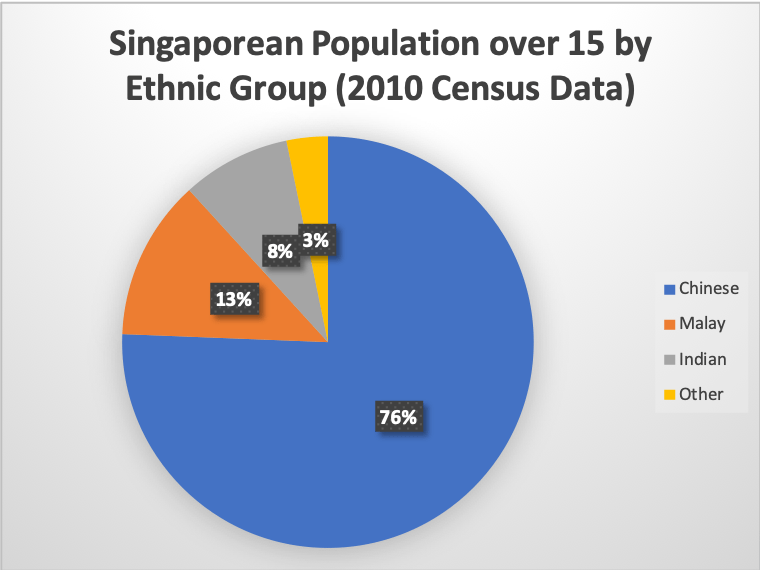
In Raffles's town plan, separate areas were set aside for the various ethnic groups of the time: Malays, Chinese, Arabs, Bugis, and Europeans. Government resettlement programs begun in the 1960s broke up the former ethnic enclaves by requiring that the public housing projects — called housing estates — that replaced them reflect the ethnic composition of the country as a whole. As a result, modern Singapore's three main ethnic groups — Chinese, Malays, and Indians — live next door to each other and share the same housing development facilities, shops, and transportation. [Source: Library of Congress]
Singapore recognizes Chinese (Mandarin), Bahasa Malaysia, Tamil, and English as official languages for education, with English serving as the primary language of government and business. Census figures account only for citizens and permanent residents; however, the transient population—such as ship crews, passengers, tourists, and travelers in transit—is enormous, at times approaching twice the number of regular inhabitants. Since independence, Singapore has sought to balance national integration and a shared identity with the preservation of each community’s cultural heritage. Education, particularly at the primary and secondary levels, has been viewed as a key instrument for promoting social harmony while allowing distinct ethnic traditions to endure. +
Origins and Early History of Singapore
The origins of what became Singapore are unclear. A third century Chinese account describes it as "Pu-luo-chung", or the "island at the end of a peninsula". Later, the city was known as Temasek ("Sea Town"), when the first settlements were established from AD 1298-1299. For a time it was a small Malay fishing village that belonged to the Sultan of Johor.[Source: YourSingapore.com, Singapore Tourism Board; N. Prabha Unnithan, World Press Encyclopedia, Gale Group Inc., 2003]
What is now Singapore was the site of some trading between the 11th and 16th centuries. During the 14th century, this small but strategically located island earned a new name. According to the legend, Sang Nila Utama, a Prince from Palembang (the capital of Srivijaya), was out on a hunting trip when he caught sight of an animal he had never seen before. Taking it to be a good sign, he founded a city where the animal had been spotted, naming it “The Lion City” or Singapura, from the Sanskrit words “simha” (lion) and “pura” (city).
At this time, the island was ruled by the five kings of ancient Singapura. Located at the tip of the Malay Peninsula, the natural meeting point of sea routes, the city served as a flourishing trading post for a wide variety of sea crafts, from Chinese junks, Indian vessels, Arab dhows and Portuguese battleships to Buginese schooners.
Establishment of Singapore by Raffles
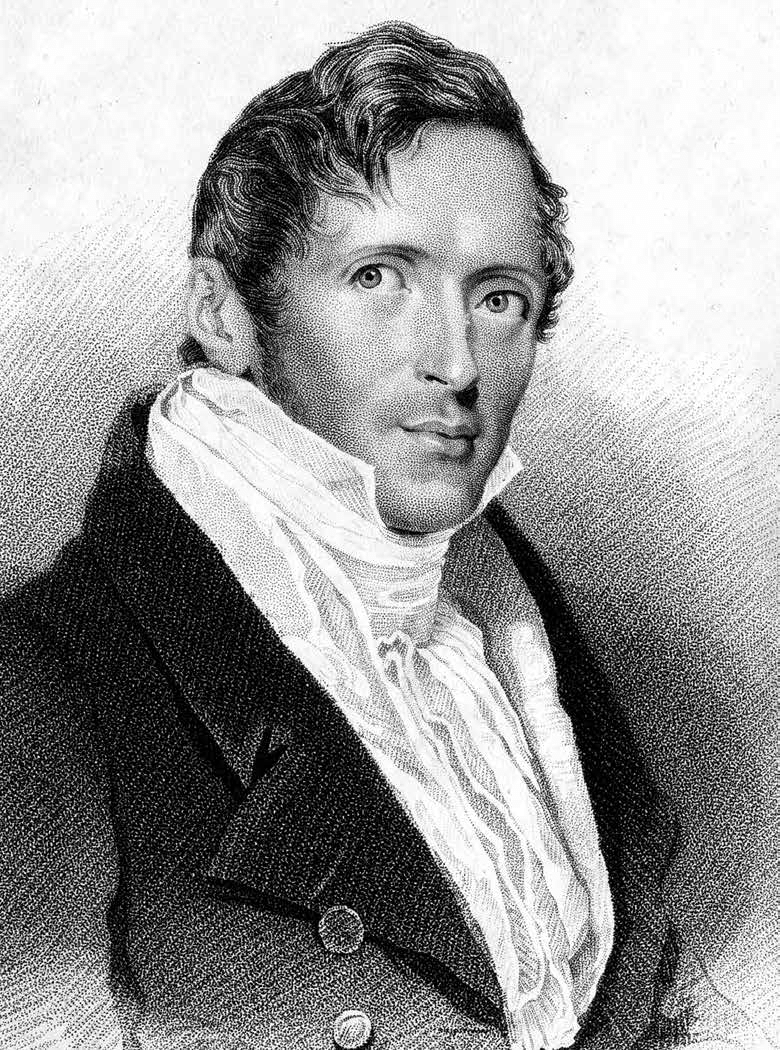
On January 29, 1819 Sir Thomas Stamford Raffles (1781–1826) — an official with the British East India Company and Lieutenant-Governor of Bencoolen (now Bengkulu) in Sumatra — landed in Singapore after a survey of the neighbouring islands. He was searching for a trading site along the Straits of Melaka that would be free from Dutch influence. Recognizing Singapore’s strategic importance for East–West trade and shipping, he reported to his superiors in England: “Our object is not territory but trade: a great commercial emporium and a fulcrum whence we may extend our influence politically as circumstances may hereafter require....One free port in these seas must eventually destroy the spell of Dutch monopoly; and what Malta is in the West, that may Singapore be in the East.” [Source: YourSingapore.com, Singapore Tourism Board; Gale Encyclopedia of World History: Governments, Thomson Gale, 2008]
Raffles established the new trading station at what is now Singapore to provide a secure base for the company’s trade with China. Located between China and India, Singapore commanded three convenient sea channels leading from the Strait of Malacca to the South China Sea. In 1824 the sultan, or ruler, of the southern Malayan kingdom of Johore ceded the offshore island to the East India Company, which governed the island with assistance from the British Crown government in India. [Source: Gale Encyclopedia of World History: Governments, Thomson Gale, 2008]
Raffles purchased Singapore on behalf of the East India Company and began the course of its contemporary development. Raffles saw potential for setting up a trading post on the island given Singapore's deep, natural harbor. Before 1819, Singapore was a fishing village with a population of barely 500. Within a year of its establishment as a free port, the population surged to about 5,000. Its growth continued rapidly and, in the process, attracted migrants from many regions, particularly China, Malaya, and South India.
Singapore as a British Colony
Recognising the immense potential of the swamp covered island, Raffles helped negotiate a treaty with the local rulers, establishing Singapore as a trading station. Soon, the island’s policy of free trade attracted merchants from all over Asia and from as far away as the US and the Middle East. [Source: YourSingapore.com, Singapore Tourism Board; N. Prabha Unnithan, World Press Encyclopedia, Gale Group Inc., 2003]
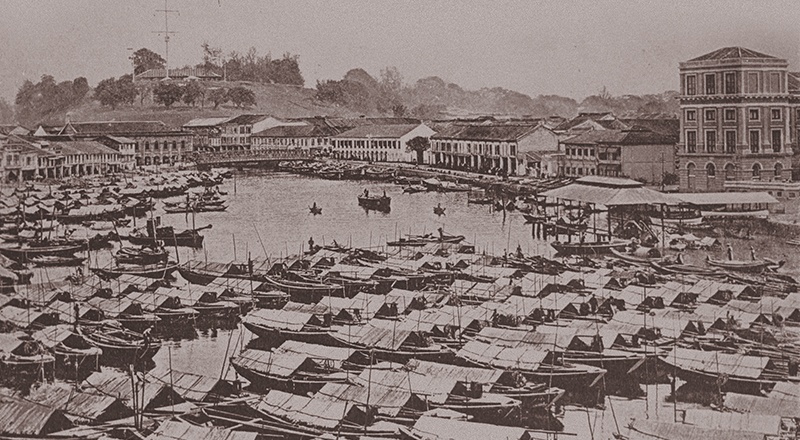
At the time it was founded,, Singapore was already an up and coming trading post along the Malacca Straits, and Britain realised the need for a port of call in the region. British traders needed a strategic venue to refresh and protect the merchant fleet of the growing empire, as well as forestall any advance made by the Dutch in the region.
In 1832, Singapore became the centre of government for the Straits Settlements of Penang, Malacca and Singapore. With the opening of the Suez Canal in 1869 and the advent of the telegraph and steamship, Singapore's importance as a centre of the expanding trade between the East and West increased tremendously. By 1860, the thriving country had a population that had grown from a mere 150 in 1819 to 80,792, comprising mainly Chinese, Indians and Malays.
Following increased immigration (primarily from China, and India) and the expansion of trade, Singapore became a Crown Colony, administered directly by the British government in 1867. It developed with the exploitation of south-east Asian rubber, tin, and oil and was made a major naval base in 1921.
Timeline:
1819 – Sir Thomas Stamford Raffles of the British East India Company leases a small territory from the Sultan of Johore and establishes Singapore
1821 – The first large group of Chinese migrants arrives from Xiamen
1826 – Singapore is incorporated into the Straits Settlements, a British colony
1860 – The first census records a population of 80,792 in Singapore
1858 – The Straits Settlements become a British Crown colony under the jurisdiction of the Colonial Office in London
1914 – The indentured labor system is abolished
1921 – Singapore becomes a principal naval base for the British Navy in East Asia [Source: Rafis Abazov, Worldmark Encyclopedia of National Economies, Gale Group Inc., 2002]
History of Trade in Singapore
Strategically located along the China-India trade route, Singapore sits at the intersection of the Straits of Malacca. Thus, it was a natural meeting place for Chinese, Arab, and Indian merchants who traded a variety of Asian goods, including cotton and silk fabrics, rice, and ceramics. Although there are few records of its early history, Singapore clearly played a significant role as an outpost of the Srivijaya and Majapahit empires until the 14th century. Though the region fell under the control of European maritime empires following the Portuguese acquisition of Malacca in 1511, Singapore's rapid development beginning in the nineteenth century must be viewed as an expansion of existing Asian internal and external trade. After Guangdong, China, was opened to European trade in 1757, the British East India Company's tea trade with China increased. [Source: History of World Trade Since 1450, Thomson Gale, 2006. D. R. SarDesai, World Education Encyclopedia, Gale Group Inc., 2001]
Raffles established a trading station in Singapore. Following the liberal economic philosophy of Adam Smith, the free-port status offered facilities to ships of all nations, a tradition that Singapore has maintained. This status became the foundation of the island’s prosperity. In 1826, Singapore joined the Straits Settlements—together with two other British port acquisitions on the Malay Peninsula (Melaka [Malacca] and Penang)—with Singapore as the capital. In 1867, the Straits Settlements were transformed, like Hong Kong, into a “crown colony,” meaning it served special imperial interests and would progress more slowly toward self-government than other colonies.
The acquisition of Hong Kong in 1842 expanded Britain’s China trade. This development, combined with the arrival of steamships and the opening of the Suez Canal in 1869, further enhanced Singapore’s importance as a free financial and trading entrepôt and as a coaling station for Southeast and East Asian shipping as well as the British navy. European commercial banks opened branches in Singapore, while Chinese moneylenders and Hindu Chettiars (moneylenders) played an active role in financing local trade, providing capital and a strong commercial foundation for Asian merchants.
Between 1830 and 1931 Singapore’s population grew from 16,000 to 557,000. Between 1971 and 2000 it grew from 2.1 million to 3 million. Exports (U.S. dollars) increased from 29 million in 1870 to 728 million in 1926 to 137,805 million in 2000. Imports (U.S. dollars) grew from 35 million in 1870 to 815 million in 1925 to 134,545 million in 2000.
History of Modern Singapore
Singapore’s peace and prosperity were shattered during World War II. On December 8, 1941, Japanese aircraft attacked Singapore, and soon afterward the city was overwhelmed by land forces. What had been regarded as an impregnable British fortress surrendered to Japan on February 15, 1942. Singapore remained under Japanese occupation for the next three and a half years, a period marked by severe oppression and heavy loss of life. Following Japan’s surrender in 1945, the island was placed under British Military Administration, which governed until the dissolution of the Straits Settlements comprising Penang, Melaka, and Singapore. In March 1946, Singapore became a Crown Colony. [Source: YourSingapore.com, Singapore Tourism Board; N. Prabha Unnithan, World Press Encyclopedia, Gale Group Inc., 2003]
After the British return, demands for local self-government grew steadily. In 1959, an elected government led by the People’s Action Party (PAP) under Lee Kuan Yew achieved internal self-rule, although responsibility for defense and external affairs remained with the British government. In 1963, Singapore joined the newly formed Federation of Malaysia together with Sabah and Sarawak, former British colonies on the island of Borneo. After a brief and troubled association, Singapore left the Federation in 1965 by mutual agreement and became an independent nation.
The rise of nationalism culminated in self-government and the first general election in 1959. The PAP won a majority of 43 seats, and Lee Kuan Yew became Singapore’s first prime minister. In 1963, Singapore merged with Malaya, Sarawak, and North Borneo to form Malaysia. The merger, however, proved unsuccessful, and on 9 August 1965—less than two years later—Singapore separated from Malaysia to become an independent and sovereign democratic state. On 22 December 1965, Singapore formally became an independent republic.
Singapore’s transformation from an obscure Southeast Asian island dependent on entrepôt trade with neighboring economies—primarily Malaysia and Indonesia—into a globally recognized economic hub within just three decades has been remarkable. Geoffrey Murray and Audrey Perera, in Singapore: The Global City-State, trace what is often described as Singapore’s economic miracle to “a five-pronged policy—free trade, high savings, full employment and an equitable wage policy, a foreign-investment-friendly environment, and a development-oriented government.” Beginning with rapid industrialization in the late 1960s and early 1970s, Singapore successfully shifted its economy and workforce toward highly skilled manufacturing, business and financial services, high technology, and information technology—key features of a post-industrial economy. Its major trading partners span the globe and include the United States, Japan, Malaysia, Hong Kong, Thailand, Australia, and Germany. As a result, Singapore is consistently classified in international economic and human development rankings as an affluent developed country, with per capita gross national product in 2000 estimated at US$21,828.
Modern Singapore People Timeline
After World War II
1942 – Singapore is occupied by Japan during World War II
1945 – Allied forces liberate Singapore from Japanese occupation
1946 – Singapore becomes a Crown colony, separate from Malaysia
1955 – A new constitution is adopted, introducing a measure of self-government
1959 – Singapore attains full self-government under Prime Minister Lee Kuan Yew
1961 – The Economic Development Board is established as a government agency responsible for formulating and implementing economic and industrial development strategies [Source: Rafis Abazov, Worldmark Encyclopedia of National Economies, Gale Group Inc., 2002]
Independence and Afterwards:
1963 – Singapore joins the Federation of Malaysia
1965 – Singapore withdraws from the Federation of Malaysia and becomes independent
1965 – Singapore joins the United Nations
1967 – Singapore becomes a founding member of the Association of Southeast Asian Nations (ASEAN)
1970 – The independent Monetary Authority of Singapore is established
1971 – The final withdrawal of British troops from Singapore takes place
1973 – The last major ties with Malaysia are renounced
1979 – The government begins a program of economic restructuring in response to the oil crisis
1987 – English is designated as the language of instruction in schools
1990 –Lee Kuan Yew resigns as prime minister
Post Lee Kuan Yew Era:
1991 – The constitution is amended to allow Singapore citizens to directly elect their president
1995 – Heavy losses incurred by a Singapore-based derivatives trader lead to the collapse of Barings, the oldest British banking group
1997 – The ruling People’s Action Party wins parliamentary elections, capturing 81 of 83 seats
1998 – In response to the 1997 Asian financial crisis, the government announces financial reforms to strengthen international competitiveness
1999 – The “Industry 21” Programme, a new economic blueprint for Singapore’s development in the 21st century, is launched
Major Events in Singapore in Recent Decades
In 1967, Singapore joined Malaysia, Indonesia, the Philippines, and Thailand to form the Association of Southeast Asian Nations (ASEAN). Later joined by Brunei in 1984 and by Vietnam, Laos, Cambodia, and Myanmar in the 1990s, ASEAN aims to reduce regional tensions and promote cooperation among its members. The organization works to accelerate economic growth, cultural exchange, and social development. In 1999, ASEAN members agreed to pursue the creation of a Southeast Asian free trade area by gradually removing tariffs on most regional trade. Expected to take effect around 2010 or later, the proposed zone would become the world’s largest free trade area, covering about 1.7 billion people and trade worth roughly $1.2 trillion. Following the September 11, 2001 terrorist attacks in the United States, ASEAN’s ten members pledged in May 2002 to cooperate more closely against terrorism, establishing a regional security framework that included intelligence sharing, joint training, and coordinated legal measures. [Source: Gale Encyclopedia of World History: Governments, Thomson Gale, 2008]
Southeast Asian financial markets suffered a sharp downturn in 1997 as investor confidence in regional currencies and securities collapsed. Singapore entered its first recession in thirteen years in 1998, but by 2000 the government reported renewed economic growth, signaling that the economy had largely recovered from the crisis.
Singapore faced another major challenge in 2003 with the outbreak of severe acute respiratory syndrome (SARS), which had serious medical and economic consequences. Strict containment measures—such as quarantines, market closures, and airport screening—helped limit the outbreak, which claimed thirty-three lives in Singapore, but tourism and domestic activity declined sharply, triggering an economic slowdown.
Between 1998 and 2005, international piracy surged in the Strait of Malacca and the Strait of Singapore, disrupting shipping and threatening smaller vessels. Although piracy had long plagued the region, Singapore helped curb this resurgence through coordinated naval and air patrols with Malaysia and Indonesia.
Image Sources: Wikimedia Commons
Text Sources: “Encyclopedia of World Cultures Volume 5: East/Southeast Asia:” edited by Paul Hockings, 1993; National Geographic, Live Science, Metropolitan Museum of Art, Natural History magazine, New York Times, Washington Post, Los Angeles Times, Smithsonian magazine, Encyclopedia.com, Times of London, Library of Congress, The Conversation, The New Yorker, Time, BBC, CNN, Reuters, Associated Press, AFP, Lonely Planet Guides, Google AI, Wikipedia, The Guardian and various websites, books and other publications.
Last updated January 2026