
LEE HSIEN LOONG
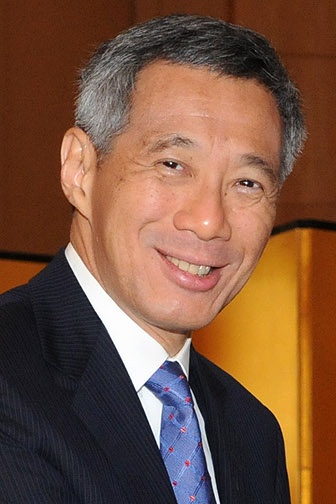
Lee Hsien Loong, the son of Lee Kuan Yew, became Singapore’s third prime minister in August 2004 when he was 52. The Straits Times described his takeover of power as a “non-event” and a “typical Singaporean-style succession...dignified and equable. No surprises, no intrigues, no coups, no in-fighting and certainly no histrionics.” Lee Kuan Yew insisted that Lee Hsien Loong rose to his position through merit rather than nepotism.
Lee Hsien Loong achieved the rank of Brigadier General in the Singapore military and served in the cabinet as minister for trade and industry and second minister for defence. His meteoric rise in the late 1980s through the ranks of bureaucratic and political responsibility was regarded with interest by both foreign and domestic observers. Lee Hsien Loong was confirmed in office in a democratic election held on May 6, 2006.
After taking power, Lee reshuffled his cabinet a little but kept many old faces. Goh stayed on as senior mister. Lee Kuan Yew became “senior mentor.” Lee Hsien Loong’s goal was to continue delivering material success while opening up Singapore and allowing more personal freedoms. In a survey, eight of ten Singaporeans said that Lee was the best person for the job. On growing up as the son of the most famous man in Singapore, Lee told the Washington Post: “I did not choose my father, but I am proud of him.”
RELATED ARTICLES:
LEE KUAN YEW — SINGAPORE'S FOUNDER-MENTOR — AND HIS LIFE, VIEWS AND DEATH factsanddetails.com
SINGAPORE UNDER LEE KUAN YEW factsanddetails.com
GOH CHOK TONG: SINGAPORE'S PRIME MINISTER FOR 14 YEARS AFTER LEE KUAN YEW factsanddetails.com
SINGAPORE AFTER WORLD WAR II factsanddetails.com
POLITICAL ACTIVITY IN PRE-INDEPENDENCE SINGAPORE: PAP, LEE KUAN YEW, COMMUNISTS, LABOUR FRONT factsanddetails.com
SINGAPORE INDEPENDENCE: SELF RULE, UNION THEN SPLIT WITH MALAYSIA, CHALLENGES factsanddetails.com
SINGAPORE HISTORY: NAMES, TIMELINE, HIGHLIGHTS factsanddetails.com
Lee Hsien Loong’s Life
Lee Hsien Loong was born in Singapore on February 10, 1952. He had been viewed as the future prime minister ever since he was named deputy prime minister under Goh Chok Tong in 1990. His wife is Ho Ching. They have one daughter and three sons. His hobbies are reading, walking, listening to classical music, and working with computers. In regards to his father and his political career, Lee has said being his son has made his career more difficult because everyone thinks he got where he did based on nepotism and connections rather than merit.
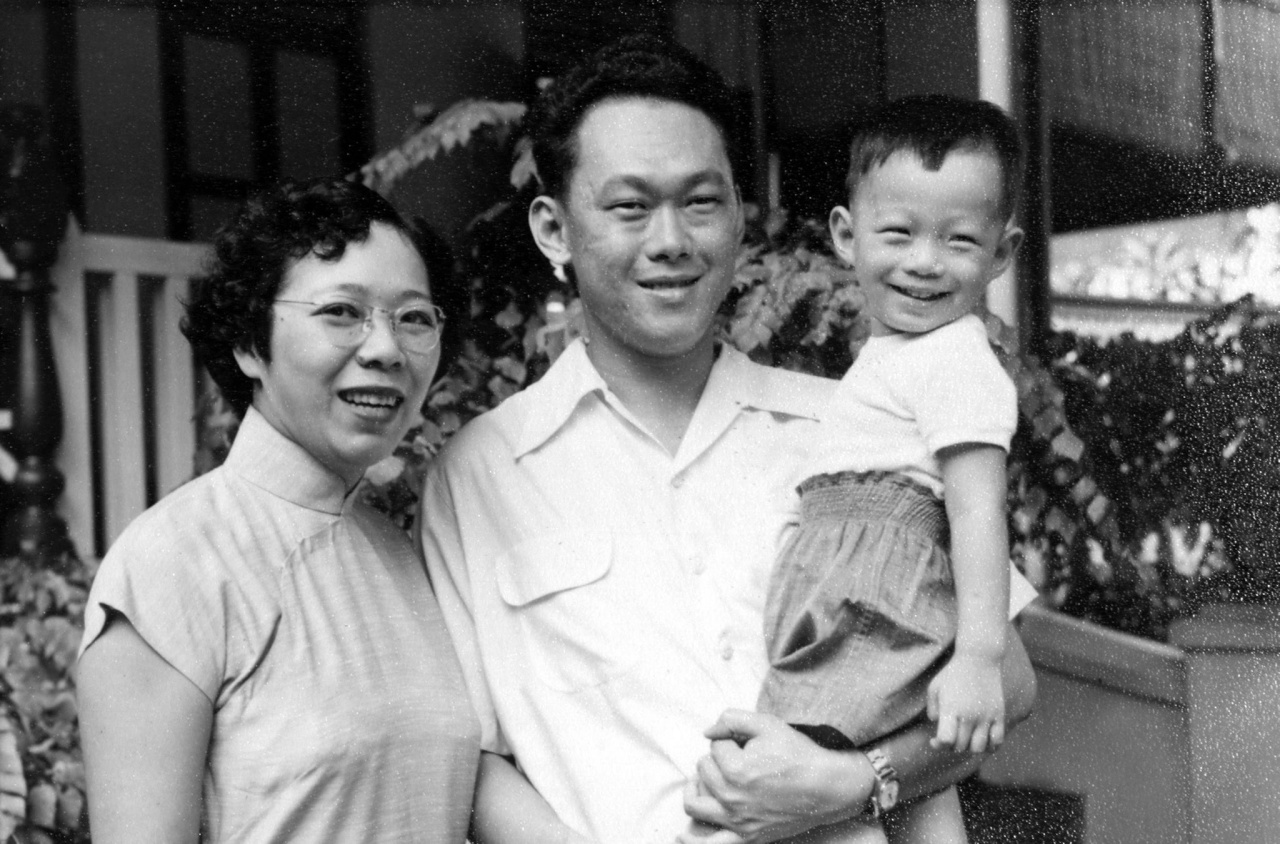
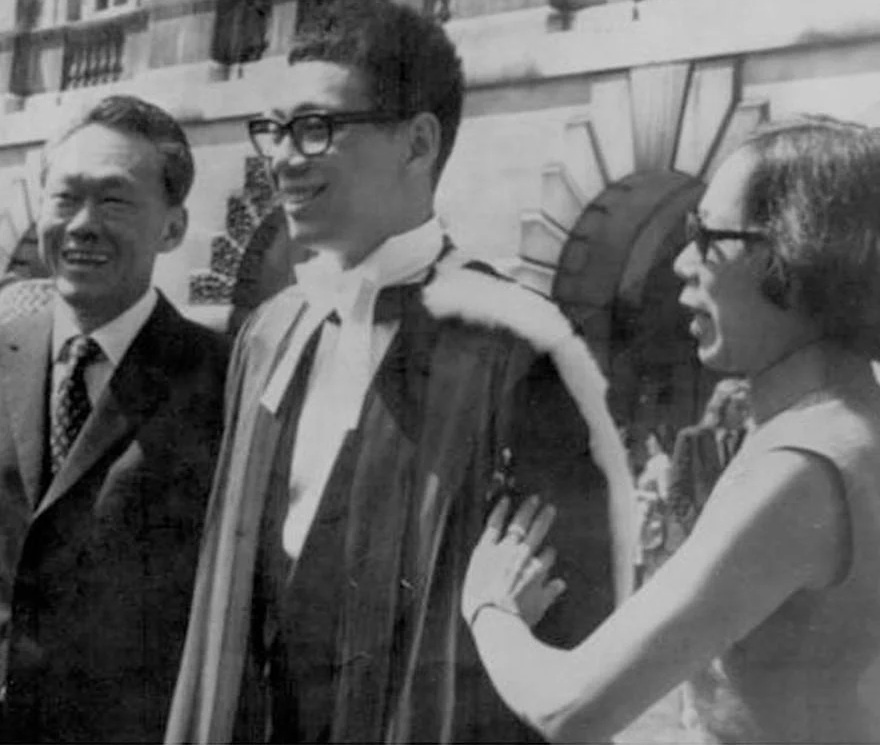
Lee career’s has been marked by over-achievement. He speaks three of Singapore’s official languages, plus Russian. He earned a first in mathematics and computer science at Cambridge and holds a masters in public administration from Harvard. Like his father he is both a micromanager and a long range planner. He had attained the rank of brigadier general in the Singapore army at the age of 32, served as governor of Singapore’s central bank. He has held all the top economic posts in the government, including Finance Minister, a position he claimed in 2001 and continued to hold after he was named Prime Minister. He is regarded as conservative and a serious, no-nonsense politician.
Seah Chiang Nee wrote in The Star, In 2012, “Ever since I can remember, during my reporting days, I had been hearing about former prime minister Lee Kuan Yew grooming his son for political office. As a student, Hsien Loong learned the Russian language in anticipation of the Soviet Union emerging as a global economic (and political) power. That would have benefited any Asian leader who could speak the language, it was thought. It didn’t happen that way, of course, which shows that history can put paid to man’s best-laid plans. Instead of winning the Cold War and continuing to lead half of Europe, the Soviet Union disintegrated. [Source: Seah Chiang Nee, The Star, November 3, 2012 ==]
Lee’s wife, Ho Ching, is a senior official at Temasek Holding Company, Singapore’s powerful domestic investment arm, which owns stakes in nearly all of Singapore’s largest companies. His younger brother, Lee Hsien Yang, is the chief executive of Singapore Telecommunications. See Temasek. Lee battled lymphoma in the early 1990s and appears to be free of the disease. His first wife died while bearing his second child. The experiences mellowed him out a bit. Before then he was known as brilliant but also for being impatient and not suffering fools very well.
Lee Hsien Loong’s First Years in Office
Lee Hsien Loong’ became prime minister of Singapore in August 2004. In September 2005, Singapore's President S.R. Nathan was sworn in for a second term without running for reelection. The Presidential Election Committee ruled that he was the only fit candidate for the presidency. Three rivals submitted candidacy papers to the committee but were disqualified as ineligible, thus canceling the elections that would have been held on August 27. [Source: Worldmark Encyclopedia of Nations, Thomson Gale, 2007]
In May 2006, PAP led by Prime Minister Lee Hsien Loong and supported by Lee Kuan Yew, won a landslide victory in Singapore’s general election, securing 82 of 84 parliamentary seats, including 37 uncontested constituencies. Although the outcome was widely expected, the PAP’s share of the popular vote fell to 66.6 percent from 75.3 percent in 2001, suggesting a growing desire among some voters for alternative voices. [Source: Associated Press, May 6, 2006]
The election marked the first electoral test of Lee Hsien Loong since he became prime minister in 2004. While Lee pledged to encourage more open debate and campaigned on addressing rising costs and social inequality, critics argued that political conditions remained largely unchanged from his father’s era. The opposition remained weak, constrained by strict limits on speech and assembly and by defamation suits that had sidelined key figures. Despite some calls—especially from younger Singaporeans—for greater openness and debate, many voters continued to view the PAP as the safest and most reliable choice, a narrative strongly reinforced by overwhelmingly supportive local media coverage.
Under Lee Hsien Loong the Singapore government maintained strict controls on public speech, demonstrations, and online political activity, requiring permits for gatherings and proposing registration for political content posted on websites. These restrictions drew international attention during the September 2006 IMF–World Bank meetings, when police stopped opposition politician Chee Soon Juan and other activists from marching near the conference venue, allowing them to rally only at the designated Speakers’ Corner. [Source: Fayen Wong, Reuters, September 16, 2006]
Singapore’s handling of the meetings, intended to showcase its economic success, instead attracted criticism from the IMF, the World Bank, and non-governmental organizations after authorities blacklisted and detained accredited activists. Although the government later allowed some barred individuals to enter the country, others were detained, interrogated, or deported. Officials defended the measures as necessary for security, citing terrorism concerns, but critics argued that the actions highlighted Singapore’s unusually tight restrictions on freedom of expression and assembly.
2011 Elections in Singapore
By early 2009, the global recession had severely affected Singapore's economy, leading to a significant drop in exports. However, the economy recovered as the year progressed. In the 2011 elections, nearly all constituencies were contested, and the opposition garnered 40 percent of the vote; however, the People's Action Party (PAP) won more than 90 percent of the seats. After the elections, the elder Lee and Goh stepped down. Later that year, Tony Tan, a former deputy prime minister, was elected president in a closely contested election. [Source: Columbia Encyclopedia, 6th ed., Columbia University Press]
In the May 2011 general election, PAP won about 60 percent of the vote, a sharp decline from previous elections, though it retained a strong parliamentary majority. The opposition Workers’ Party secured six seats, its best performance since independence, while the PAP won 81 seats overall. Although the PAP kept its two-thirds majority and constitutional power, the reduced vote share signaled growing voter dissatisfaction. The election was dominated by economic concerns, particularly the rising cost of living, housing prices, and the influx of low-wage foreign workers. PAP leaders later acknowledged surprise at the level of public resentment toward the government. [Source: Associated Press, May 14, 2011; CNN, May 8, 2011; BBC, May 9, 2011; Shamim Adam & Weiyi Lim, AFP, May 18, 2011]
The 2011 election also saw record political participation, with about 2.2 million eligible voters and very high turnout under compulsory voting. Many first-time voters took part, reflecting a broader engagement with politics. The opposition benefited from better coordination among parties, allowing them to contest nearly all seats. New media platforms played a growing role, enabling Singaporeans to bypass state-aligned traditional media and express criticism more openly. This contributed to a more assertive and critical public discourse than in earlier elections.
Prime Minister Lee Hsien Loong described the results as a “watershed election” and acknowledged a clear shift in Singapore’s political landscape. He noted that many citizens wanted a different governing style and more opposition voices in Parliament to check the PAP. The opposition characterized its gains, including the loss of a seat held by the foreign minister, as a political landmark. Lee expressed willingness to work with opposition lawmakers and said the outcome would prompt reflection within the ruling party. Despite the setback, the PAP avoided its worst-case electoral scenario from the early 1990s.
Analysts attributed the opposition’s strong showing partly to frustration over inequality, housing costs, and foreign labor, but also to deeper changes in society. As Singapore became one of the world’s wealthiest countries, more citizens resisted unquestioned one-party dominance. Observers noted the emergence of a stronger political consciousness and a growing willingness to challenge authority. The opposition’s capture of all seats in Aljunied, despite warnings from Lee Kuan Yew, symbolized this shift. Overall, the election marked the opposition’s most significant advance since 1965.
After the election, Prime Minister Lee reshuffled his cabinet, with several senior ministers stepping down and new appointments signaling renewal. Former prime ministers Lee Kuan Yew and Goh Chok Tong resigned from cabinet roles to make way for younger leaders, though policy continuity was expected. Lee pledged to review policies, adjust governing approaches, and better engage younger Singaporeans. The PAP had won its smallest popular-vote margin since independence, reinforcing the need for change. Issues such as high ministerial salaries and widening income gaps became prominent political flashpoints in the post-election debate.
Cracks in PAP Dominance
In Singapore’s 2011 presidential election, former deputy prime minister Tony Tan won a narrow victory, becoming the country’s seventh president. He secured about 35 percent of the vote, defeating Tan Cheng Bock by just over 7,000 ballots in the first contested presidential race since 1993. Although the presidency was largely ceremonial, the close result was widely interpreted as a sign of declining support for the ruling People’s Action Party (PAP). Tony Tan pledged to serve all Singaporeans and stressed that the presidency stood above party politics. Analysts viewed the outcome as a key indicator of growing voter discontent with the political establishment. [Source: Alex Kennedy, Associated Press, August 26 and 27, 2011; Associated Press, January 26, 2013]
Tony Tan was widely seen as the preferred candidate of the PAP, even though the party did not formally endorse him. His background as a former senior minister and head of major state-linked institutions reinforced that perception. More than 60 percent of voters supported other candidates, suggesting a desire for greater checks and balances. Rival candidates argued for a more active presidency, while Tan and government leaders emphasized that real power rested with the elected government. The debate highlighted tensions over how far the presidency should act as a counterweight to the PAP.
The campaign atmosphere reflected a broader political awakening among Singaporeans. Large and vocal rallies, including those critical of the PAP, drew tens of thousands of participants. Many voters openly expressed frustration with long-standing political controls and the dominance of the ruling party. New forms of political expression and sharper public exchanges signaled a shift from earlier decades of restraint. Observers noted that such confrontations and activism would have been unlikely years earlier.
This heightened political engagement carried over into subsequent elections and by-elections. In January 2013, the opposition Workers’ Party won the Punggol East by-election, capturing another parliamentary seat. The victory gave the Workers’ Party seven seats in Parliament and marked the PAP’s second by-election defeat in eight months. The loss followed a series of scandals and added to public unease over immigration and income inequality. Analysts described the result as a shock that forced the PAP to reassess its policies and approach.
Together, the 2011 presidential election and the 2013 by-election underscored a changing political landscape in Singapore. While the PAP remained firmly in power, its dominance faced more open and sustained challenges. Voters increasingly sought alternative voices and stronger representation in Parliament. Political debate became more visible, contentious, and participatory than in the past. These developments suggested a gradual but significant shift away from unquestioned one-party dominance.
Challenges Faced Lee Hsien Loong Faces in Modern Singapore
In 2012, commentators observed that Prime Minister Lee Hsien Loong was governing a Singapore very different from the one shaped by his father, particularly because of the Internet’s impact on social values and behavior. Online culture exposed and amplified issues such as sexual permissiveness, racial insensitivity, and public controversy, challenging the city-state’s traditionally conservative norms. High-profile incidents, including explicit sex videos posted by students andracially offensive comments on social media by a senior union official, shocked the public and drew swift official responses. While such cases did not represent most Singaporeans, they highlighted growing social tensions and changing attitudes in a highly connected society. [Source: Seah Chiang Nee, The Star, November 3, 2012 ==]
The government struggled to manage these shifts, as online anonymity made it easier to spread offensive or hateful content and harder to regulate behavior across borders. Lee Hsien Loong and other leaders urged restraint and mutual respect, but the Internet continued to complicate social governance. Observers argued that Singapore was undergoing intense social transformation, marked by friction among locals and between locals and foreigners. Compared with the more controlled environment of Lee Kuan Yew’s era, the prime minister faced a far more complex and unpredictable landscape. The debate raised questions about whether new Internet regulations could gain public acceptance or would prove ineffective in a rapidly evolving digital world.
Protests in Singapore in the 2010s
In June 2014, Singapore saw one of its largest protests in years as about 2,000 people rallied at Hong Lim Park over concerns about the S$265 billion Central Provident Fund (CPF), the country’s mandatory pension savings scheme. The protest highlighted deep anxieties about retirement security in an aging, high-cost society, alongside broader frustrations over immigration, living costs, and social freedoms. Critics argued that CPF investments lacked transparency and delivered returns too low to keep pace with inflation, while the government defended the scheme as safe and offering competitive risk-free returns. The controversy intensified after Prime Minister Lee Hsien Loong sued a blogger over allegations related to the CPF, drawing criticism that the legal action itself undermined public trust. The episode underscored growing public dissent in a tightly controlled political environment and raised questions about governance, accountability, and freedom of expression.[Source: Reuters, June 9, 2014]
Two Singaporean activists, Roy Ngerng Yi Ling and Han Hui Hui, were charged with staging an illegal march after leading the June 2014 protest described above. According to the charges they exceeded the permit they had for a stationary rally. The activists also faced charges of causing a public nuisance by marching into an area where a charity event was underway. If convicted, they could face fines for both offenses, while Ngerng was already facing a separate defamation suit by Prime Minister Lee Hsien Loong over CPF-related allegations. The case reflected the growing use of Hong Lim Park for protests and ongoing tensions over dissent and political control in Singapore. [Source: AFP, October 27, 2014]
In December 2013, violent protests broke out in Singapore’s Little India following the death of an Indian migrant worker struck by a bus. The unrest, involving about 400 foreign workers, saw police vehicles set on fire and marked the city-state’s first riot in more than 30 years. Around 40 people—mostly police officers—were injured, and about 25 vehicles were damaged or burned. Singapore charged 24 Indian nationals with rioting They faced possible sentences of up to seven years in prison and caning. The bus driver was charged with causing death by negligence. The government set up a special committee to investigate the riot, highlighting tensions surrounding Singapore’s heavy reliance on migrant labor. [Source: BBC, 10 December 2013]
Malaysia’s Mahathir Mohamad criticized Singapore for its handling of alleged money laundering linked to Malaysia’s 1MDB fund, accusing Singapore of failing to pursue key individuals involved and thereby harming its reputation as a financial center. He argued that Singapore targeted money laundering processes rather than those who allegedly accepted bribes, even as the scandal exposed weaknesses in global banking controls. Singaporean authorities responded by tightening oversight, closing a Swiss bank’s local branch, seizing assets linked to financier Jho Low, charging individuals with related offenses, and cooperating in international investigations. [Source: Jeevan Vasagar, Financial Times, August 1, 2016]
Poor Election Results and Issues Involving Lee Hsien Loong and His Family
In August 2016, Lee Hsien Loong became ill while delivering a National Day rally speech and had to stop speaking but returned to the stage after about an hour’s break. Television footage showed Lee, 64 at the time, physically shaken and holding onto the stand for support. His official Twitter account said he felt “unsteady” because of prolonged standing, heat and dehydration. “His heart is fine and he did not have a stroke,” it said. Lee has twice survived cancer. He was diagnosed with lymphoma in 1992 but the cancer went into remission after successful chemotherapy. He had his prostate gland removed in February 2015. [Source: Anshuman Daga, Marius Zaharia, Reuters, August 21, 2016]
In the summer of 2017, Singapore’s government pressured Li Shengwu, a Harvard economist and grandson of Lee Kuan Yew, to apologize for a private Facebook post criticizing Singapore’s leadership and media climate. The attorney general’s office even drafted an apology letter demanding he admit contempt of court and retract what it called false statements, but Li refused to sign. In the Facebook post viewable only to friends, Li referred to the Singapore government practice of using the courts to limit free speech by filing costly defamation lawsuits against citizens and international news outlets and included a link to a 2010 commentary in The New York Times on the government’s use of the law to limit criticism. After someone took a screenshot of the post and circulated it, state-run news media picked up on it and published it widely. [Source: Richard C. Paddock, New York Times, August 4, 2017]
Li said his remarks targeted the government’s litigious approach and its chilling effect on press freedom, not the judiciary. The dispute unfolded amid a wider public family feud over Lee Kuan Yew’s wish to demolish his longtime home (See Below). The episode highlighted continuing tensions over governance, press freedom, and the legacy of Singapore’s founding family under decades of one-party rule.
In July 2020, Singapore’s ruling People’s Action Party suffered its weakest electoral performance despite retaining a large parliamentary majority, winning 83 of 93 seats while the opposition secured a record 10 and the popular vote fell near a historic low. Prime Minister Lee Hsien Loong acknowledged voters’ desire for more diverse voices, particularly among younger Singaporeans, even as they continued to support PAP governance. The results raised the possibility of delays to the party’s leadership succession plans. Analysts said the setback could prompt policy shifts, including tighter controls on foreign labour and stronger measures to support lower-income groups. The outcome marked a notable moment in a political system long defined by stability and PAP dominance since independence. [Source: Aradhana Aravindan and Anshuman Daga, Reuters, July 11, 2020]
Family Feud Over Lee Kuan Yew’s Former House
In July 2017, a bitter public dispute within the Lee family over the fate of Lee Kuan Yew’s former home shattered Singapore’s carefully managed image of order and unity. Two of his children accused their elder brother, Prime Minister Lee Hsien Loong, of abusing power to block their father’s wish that the house be demolished. They alleged he sought to preserve the property to bolster his political legitimacy and entrench a family dynasty. What began as an estate dispute quickly escalated into a national controversy. It raised deeper questions about governance, power, and succession in a one-party state. [Source: Richard C. Paddock, New York Times, July 4, 2017]
The accusations were extraordinary in a country where public criticism of the government was tightly constrained. Commentators and activists described the claims as involving abuse of power, cronyism, and nepotism. If true, they argued, the allegations undermined Singapore’s cultivated reputation for clean and impartial government. The public airing of grievances by members of the revered founding family intensified their impact. The dispute exposed vulnerabilities beneath decades of political stability.
Prime Minister Lee Hsien Loong denied the accusations as baseless and addressed them in special parliamentary sessions. He insisted that no evidence of wrongdoing existed and emphasized that the rule of law applied even to his father’s estate. He portrayed the controversy as a distraction and urged the country to move on. Despite this, the crisis deepened when his younger brother, Lee Hsien Yang, said he would leave Singapore fearing government retaliation. Lee Hsien Yang accused the prime minister of orchestrating a coordinated effort against him and their sister.
The dispute centered on the modest house at 38 Oxley Road, where Lee Kuan Yew had lived for nearly 70 years. Although historically significant as the birthplace of the People’s Action Party, the house symbolized Lee Kuan Yew’s frugal lifestyle and clean governance. He had explicitly instructed in his will that it be demolished, rejecting the idea of it becoming a museum. His daughter was allowed to live there as long as she wished, delaying any final decision. The disagreement over the house thus became inseparable from politics and legacy. Lee firmly denied accusations by his siblings of abuse of power and dynasty-building, insisting his children have no political ambitions and rejecting allegations of persecution.
Public opinion was divided over whether the house should be preserved or demolished, and whether the dispute should have remained private. Analysts argued that preserving the house would reinforce the ruling party’s symbolic connection to Lee Kuan Yew and its claim to legitimacy. Critics said the episode highlighted the lack of checks and balances in Singapore’s political system. Questions of legitimacy and abuse of power, they warned, risked eroding public trust. Ultimately, the controversy tested whether the government could reassure citizens that it remained transparent, fair, and accountable.
Lee Kuan Yew’s house at 38 Oxley Road was demolished. In late 2025 to early 2026, the Singapore government announced plans to gazette the site as a national monument to preserve its historical significance. The Singapore Land Authority and National Heritage Board moved to acquire the property, preventing redevelopment and overriding the demolition request. Officials emphasized that the site was being preserved for its national importance rather than as a personal memorial to Lee Kuan Yew. The decision left open options for reconfiguring the site, such as conserving key spaces or turning it into a heritage park.
Lee Hsien Loong’s Legacy
In May 2024, after 20 years as prime minister ,Lee Hsien Loong handed over power to Deputy Prime Minister and Finance Minister Lawrence Wong. Since independence in 1965, Singapore has had only four prime ministers, all from the ruling People’s Action Party. Analysts viewed the transition as a step away from the Lee family’s dominance, although Lee Hsien Loong did remain in cabinet as a senior minister. In his final interview, he thanked Singaporeans and said he had led by bringing people along with him, while governing in a different style from his father and predecessor Goh Chok Tong. His career was long shadowed by accusations of nepotism and dynasty-building, claims the family consistently denied.[Source: Tessa Wong, BBC News, May 15, 2024]
Under his leadership, Singapore’s economy broadened and expanded, with the city-state emerging as a global financial hub and major tourist destination. GDP per capita more than doubled over two decades, and his government was widely credited with steady stewardship through multiple recessions, the global financial crisis, and the Covid-19 pandemic.
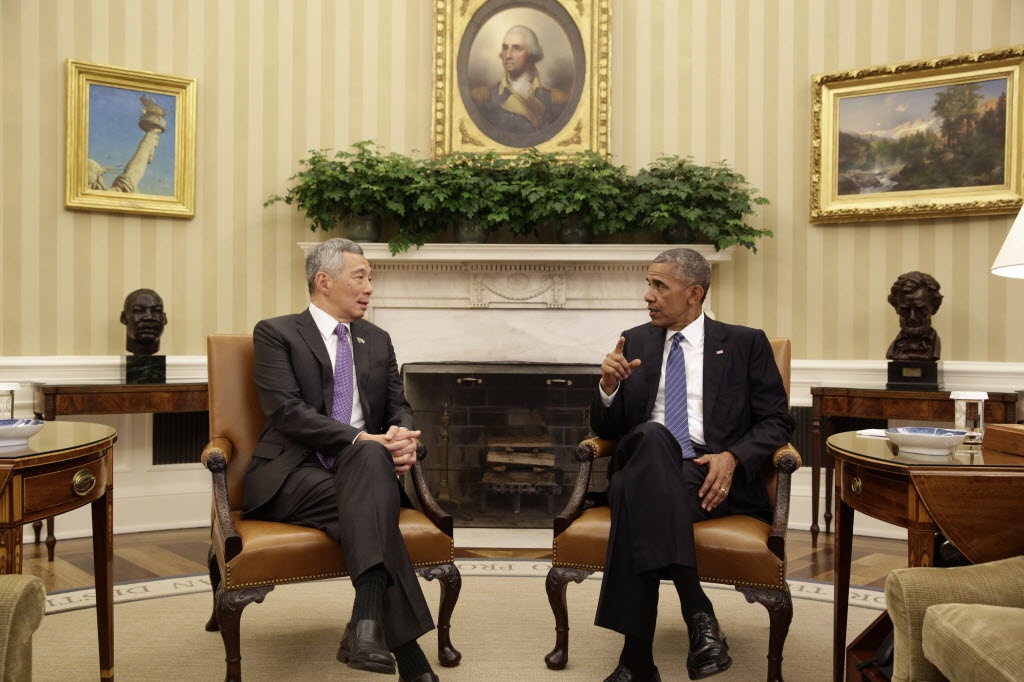
In foreign affairs, Mr Lee navigated Singapore’s ties with both the United States and China, maintaining a careful balance as rivalry between the two powers intensified. Domestically, his administration repealed a long-standing law criminalising sex between men after years of activism, though political expression and speech remained tightly controlled.
Bolstered by his political lineage and a measured, scholarly public persona, Mr Lee has generally enjoyed strong popular support. He frequently topped polls of Singapore’s most popular politicians, and his constituency consistently delivered the highest vote shares at elections.
Yet his tenure also drew criticism and controversy. Large-scale immigration in the late 2000s, intended to ease labour shortages, sparked public unease, while rising prosperity was accompanied by widening inequality and social strains. The People’s Action Party recorded its lowest electoral support under his leadership in 2011 and again in 2020.
Observers have argued that rapid economic expansion came at the cost of social cohesion, with concerns over inequality, congestion, competition for jobs and national identity. Critics say the government underestimated the social impact of high immigration, contributing to lingering racial tensions, while long-term issues such as the depreciation of 99-year public housing leases remain unresolved despite policy adjustments.
Image Sources: Wikimedia Commons
Text Sources: New York Times, Washington Post, Los Angeles Times, Times of London, Lonely Planet Guides, Library of Congress, Singapore Tourism Board, Compton’s Encyclopedia, The Guardian, National Geographic, Smithsonian magazine, The New Yorker, Time, Newsweek, Reuters, AP, AFP, Wall Street Journal, The Atlantic Monthly, The Economist, Foreign Policy, Wikipedia, BBC, CNN, and various books, websites and other publications.
Last updated February 2026