
CREATION OF BALI AS AN ARTIST COLONY
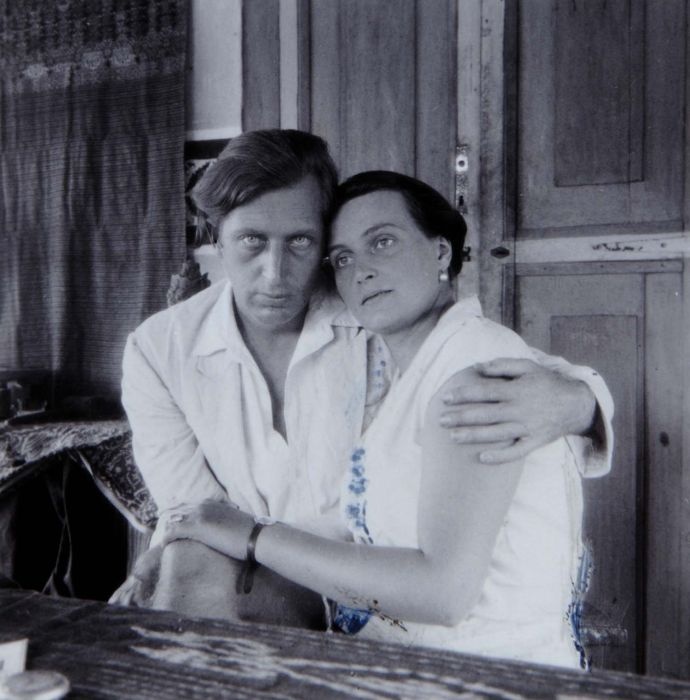
Date circa 1930
In 1906 the Dutch conquered Bali by force. Most members of the island’s eight royal families chose ritual suicide (puputan), leaving only a few children as survivors and stripping the courts of their political power and wealth. As royal patronage collapsed, court artists found support within village communities. Bali’s villages, long governed through local councils (banjar), absorbed the courts’ musical instruments, masks, costumes, and performance traditions. Theatre, dance, and music that once belonged to royal courts became part of shared village culture. [Source: Dr. Jukka O. Miettinen, Asian Traditional Theater and Dance website, Theatre Academy Helsinki **]
During the 1920s and 1930s, Western writers and travelers created the enduring image of Bali as a tropical paradise. Improved shipping links helped spread this image, and the island soon attracted artists, intellectuals, and tourists seeking the “exotic.” Western contact encouraged new forms of artistic expression, and modern Balinese art began to develop alongside traditional forms. Hotels staged performances for visitors, laying the groundwork for today’s tourist shows, while Balinese gamelan and dance gained international attention through tours in Europe.
Western individuals also played influential roles in shaping modern Balinese arts. I Nyoman Mario, a key creator of the dynamic kebyar style, was admired by both Balinese and foreigners. Dutch officials sometimes supported theatrical revivals in North Bali, while the German artist Walter Spies, based in Ubud, was especially influential in transforming Balinese painting, music, and performance. Other notable figures included Mexican artist Miguel Covarrubias and his wife Rose, who documented Balinese dance and theatre, and American composer Colin McPhee, whose writings helped introduce gamelan music to Western audiences.
Under Western influence, Balinese painting shifted away from religious epics toward scenes of everyday life, as seen in the work of Spies and Rudolf Bonnet. Further changes followed with the emergence of the “Young Artists” style in the 1950s. Balinese art has continued to evolve, with many contemporary artists producing innovative work.
At the same time, some critics argue that Bali’s reputation as a global art center has been exaggerated. While a few foreign residents made lasting contributions, others, drawn by the island’s beauty and lifestyle, saw their artistic ambitions fade. In this view, Bali has inspired creativity for some, but for others it proved a seductive setting that stalled rather than advanced their artistic development. [Source: Bruce W Carpenter, Indonesia Expat, June 8, 2012]
RELATED ARTICLES:
BALI: GEOGRAPHY, LIFESTYLE, REPUTATION, GETTING THERE factsanddetails.com
HISTORY OF BALI: ORIGIN, KINGDOMS, MASS ROYAL SUICIDES factsanddetails.com
MODERN HISTORY OF BALI: VOLCANIC ERUPTIONS, TERRORISM, RECOVERY factsanddetails.com
BALI BOMBING IN 2002 factsanddetails.com
NEGATIVE SIDE OF TOURISM IN BALI: OVERDEVELOPMENT, BAD BEHAVIOR DONALD TRUMP factsanddetails.com
BALINESE: LANGUAGE, CUSTOMS, BEHAVIOR factsanddetails.com
BALINESE SOCIETY: GROUPS, CASTE, THE SUBAK SYSTEM factsanddetails.com
BALINESE FAMILY: MARRIAGE, WOMEN, RITES OF PASSAGE factsanddetails.com
LIFE IN BALI: VILLAGES, FOOD, CLOTHES, WORK, AGRICULTURE factsanddetails.com
FOOD IN BALI: DISHES, ROASTED PIG, DRAGONFLIES factsanddetails.com
BALINESE RELIGION: HINDUISM, SPIRITS, TEMPLE LIFE, PRIESTS factsanddetails.com
FUNERALS AND DEATH IN BALI factsanddetails.com
BALINESE CALENDAR factsanddetails.com
BALINESE HOLIDAYS, FESTIVALS, RITUALS, CEREMONIES AND OFFERINGS factsanddetails.com
BALINESE CULTURE AND ARTS factsanddetails.com
Creation of Bali as a Tourism Center
Tourism in Bali began in the 1920s, when the Royal Dutch Steam Packet Company added the island to its cruise itinerary. In the early 1930s about a 100 visitors came each year. By the late 1930s the figure had risen to 250. At that time a few Dutch enjoyed the island as a colonial playground for the Netherlands Indies, which extended from Indonesia to Malaysia.
The first foreign visitors to Bali were mostly wealthy Americans and Europeans. Their ship pulled into Bali’s north coast, where they were ferried to shore on small boats and then carried on the back of local men through the surf. Most were taken by motor car to Denpesar on the south coast and stayed there in the luxurious Bali hotel, which opened in 1927. [Source: Jamie James, Atlantic magazine, August 1999]
Over time many visitors became enchanted with Ubud, a small princedom surrounded by rice terraces in the interior of Bali. At first there was no hotel there and many people stayed as guest in bugloss owned by Prince Gide Agung.
In the 1930s, the painter Walter Spies was visited by a wide range of Western artists and scholars from Charlie Chaplin to Margaret Mead, and he assisted European film-makers in planning the first documentary on Bali. For this film a new type of dance was created, the kecak, which has found an established place in the Balinese standard repertoire. These early Western admirers of Balinese culture were instrumental in organising the first visits of Balinese artists to the West. [Source: Dr. Jukka O. Miettinen, Asian Traditional Theater and Dance website, Theatre Academy Helsinki]
Balinese indigenous culture has been impact by tourism in the form of things like abbreviated dance shows and an economy oriented towards tourist consumption. The complex situation is manifested in the preparation of daily offerings to the gods and demons in the cities has become a rushed affair, with women and girls often buying offerings at the market before heading to work. At the same time, garment workers' productivity is lowered by the time and energy they spend on traditional rituals, which causes them to ignore workplace rules. [Source: A. J. Abalahin,“Worldmark Encyclopedia of Cultures and Daily Life,” Cengage Learning, 2009]
Creation of Bali as a Mass Tourism Mecca
The beginning of mass tourism was heralded by the opening of an international airport in the late 1960s. Suharto's New Order regime (1966–1998) promoted Bali as a destination for international tourism. The regime saw the resulting income as essential to achieving its development goals for Indonesia as a whole. At the same time, the government sought to minimize the erosive effects of tourism on traditional Balinese culture by confining large-scale tourist infrastructure, especially high-class hotels, to a zone on Bali's southern peninsula. [Source: A. J. Abalahin,“Worldmark Encyclopedia of Cultures and Daily Life,” Cengage Learning, 2009]
Towns there, such as Kuta, resemble beach resort areas in other parts of the world, including the practice of nude bathing, which is common in Europe. Cheap guesthouses catering to foreign "hippies" and other budget travelers have proliferated beyond the official tourist zone. Domestic tourism to Bali has grown massively, particularly among urban middle-class Javanese and Chinese Indonesians who are discouraged from traveling abroad due to heavy airport departure taxes.
The tourism boom on Bali began in the 1970s and gained momentum through the 1980s and 1990s and was not slowed until the Asian financial crisis in the late 1990s and the Bali Bombing in 2002. In the early 1990s, dozens of new roads were built. resorts were developed and the economy was converted to rely more heavily on tourism. Many of the developers were friends or cronies of President Suharto and much of the profits from the 300,000 visitors a years ended up in the pockets of non-Balinese. Taxes from hotels, restaurants and souvenir shop still go to Jakarta.
Ups and Downs of Modern Tourism in Bali
Tourism is one of Bali’s most important sources of foreign exchange for Indonesia and has long been the backbone of the island’s economy. Traditionally, many visitors have been young backpackers drawn to the beaches south of Denpasar and to cultural centers such as Ubud, but in recent decades an increasing number of high-end resorts have also been developed and wealthy tourists now make up a significant portion of the tourism sector in Bali.
Before the 2002 bombing, about one million tourists visited Bali annually, and the tourism industry was valued at roughly US$1.3 billion, employing nearly two out of every three Balinese. In 2009, about 2.4 million visitors flew into Bali, nearly double the number in 2005. Government figures show arrivals in the first half of 2010 rose 10 percent compared with the same period a year earlier. Almost 7 million foreign tourists visited Bali in 2025, generating over $6.5 billion in tourism revenue
Tourism proved highly vulnerable to shocks. The economy was hit hard after the 2002 Bali bombing, although the sector rebounded relatively quickly. Prior to the attack, Bali received about 90,000 visitors per month; this fell to 35,000 in November 2002, before recovering to 68,000 in December and 61,000 in January. Discounts and targeted marketing to visitors from Russia and other Asian countries helped speed the recovery. Even so, tourism remained subdued for several years, slipping again after the Jakarta bombing and during the early stages of the Iraq War and the SARS outbreak. By 2004, arrivals had recovered to roughly two-thirds of pre-bombing levels. Bali was hurt badly by the Covid-19 pandemic from 2019 to 2021.
Today, many foreign tourists to Bali come from Australia, Europe and Japan, with visitors from mainland China now forming a large and growing segment. After the Covid-19 pandemic ended and the Ukraine War started the the number of Russian arrivals rose rose sharply. In January 2023, more than 22,000 Russians visited Bali, second only to Australians. From late 2022 to early 2023, Russians accounted for over five percent of nearly one million foreign visitors—higher than before the pandemic. [Source: Natalie B. Compton and Gabe Hiatt, Washington Post, April 13, 2023]
Recovery After the Bali Bombing and the Rise of High End Tourism in Bali
The tourist industry has grown steadily since the Bali bombings. By 2005, number of visitors reached about two million a year. This has had both positive and negative effects on Balinese theatre and dance. While tourism provides welcome revenue, it can also erode the standards of performances when the local repertoire is adapted to foreign tastes.
Bali’s recovery after the Bali bombing brought a shift toward high-end tourism. Luxury hotels, upscale restaurants, spas, and nightlife venues expanded rapidly. New airline routes opened, reconnecting Bali with Australia, Japan, and South Korea. Tourism experts noted that while terrorist attacks can cause short-term damage, destinations often recover quickly. Compared with other cities affected by terrorism, Bali’s rebound was swift, and a full recovery had occurred by the late 2000s.
Bali has also become a favored venue for international conferences and large-scale events, many hosted in the Nusa Dua resort complex south of the airport. Global hotel chains such as Westin and Marriott have established a strong presence there. The influx of conference-related revenue—often accompanied by soaring room rates—has fueled further resort development, including the bulldozing of hillsides, in what critics say is an already overcrowded island with little regard for environmental limits. [Source: Olivia Rondonuwu, Reuters Life! August 12, 2011]
Walter Spies and Bali
Most of the art that you see today has been developed for tourists. The process began when Walter Spies, a Moscow-born German artist and international socialite, moved to Bali in 1927 and opened an artist colony in Ubud. Jamie James wrote in Atlantic magazine that Balinese painting as we known it was virtually invented Spies. "Traditionally, the Balinese considered painting to be among the lowest of the arts," he wrote. "Such painting as was done before Spies came was comparatively unsophisticated, consisting mainly of astrological calendars and scenes from the “wayang”...Spies...introduced Balinese artists to the wider range of colors of Western painting, and the possibility of affects with ready-made brushes." [Source: Hildred Geertz, Natural History, February 1995; Jamie James, Atlantic magazine, August 1999]
Spies started an artist colony there in Ubud. Among his guests were Noel Coward, Charlie Chaplin (who was reportedly upset none of the made-up little girls accepted his advances), Buckminister Fuller, Margaret Mead (who got married on her way to Bali), and the Woolworth heiress Barbara Hutton who fell madly in love with Spies. Spies it turns out was gay. He was arrested on morality charges in 1938 for having sex with a boy. During the trial the boy's father said, "He is our best friend, and it was an honor for my son to be in his company. If both are in agreement why fuss?" Spies spent about a year in jail. In 1942, in the World War II, he was arrested by Dutch authorities because he was German. He was placed with other prisoners on Ceylon-bound boat that was shot by a Japanese torpedo. He and most of the people on the boat drowned.
Spies and Dutch artist Rudolf Bonnet also "introduced Western techniques like perspective and encouraged their students to venture beyond the traditional mythological subjects and paint scenes from everyday life” and create art for arts sake. The result was east tropical landscapes of rice paddies and volcanoes, tropical forests, Hindu festivals, stylized dances and crowds village. Foreigners loved the work and Margaret Mead and her husband Gregory Bateson wrote a book about it.
Describing a painting that came from this period, Hildred Geertz wrote in Natural History, "The paintings of the 1930s have agile figures moving about in a naturalistic settings...Most of these drawings are highly detailed and have repeated, rhythmic patterns of levels and human forms spread over the entire paper. This style mirrors the strong patterning in Balinese textiles and temple wall carvings. Surrounded by tormented souls, the mythic Hindu hero Bima battles the demon guardian of Hell for permission to free his parents's spirits. His mother and father suffer in a caldron of boiling oil. The father's crime, as a hunter, was to have killed a Brahman priest disguised as a deer."
In the 1960s, a Dutch painter named Arie Smit, who had lived in Bali for several years, came across some boys making Matisse-like figure in the sand. Struck by their talent and skill, he encouraged them to paint and the result became known as the Young Artists movement. Smit is credited with injecting new life into the Spies style which had devolved into simply copying. Paintings from the Young Artists movement are mostly genre scenes know for their use of flat colors, and broad stylistic and often humorous figures.
Celebrities in Bali
Bali has long been a favored retreat for international celebrities seeking privacy, luxury, and natural beauty. Stars from Hollywood, India, music, sports, and the arts have visited—or returned regularly—to relax, honeymoon, marry, or simply escape public attention. Many stay in secluded villas or high-end resorts in places such as Ubud, Uluwatu, Canggu, and Nusa Dua, where anonymity is easy to maintain. [Source: Google AI]
Celebrities are drawn to Bali for its combination of dramatic landscapes, quiet spirituality, and discreet luxury. Cliffside views, beaches, rice terraces, and wellness retreats offer an appealing contrast to busy public lives. Private villas and exclusive resorts cater to elite guests, making Bali especially attractive for long stays and special occasions.
Well-known visitors have included actors such as Brad Pitt, Demi Moore, Julia Roberts, and George Clooney; Indian film stars like Alia Bhatt and Hrithik Roshan; musicians including Mick Jagger and Michael Jackson; athletes such as Cristiano Ronaldo; and artists like painter Antonio Blanco, who lived and worked in Ubud.
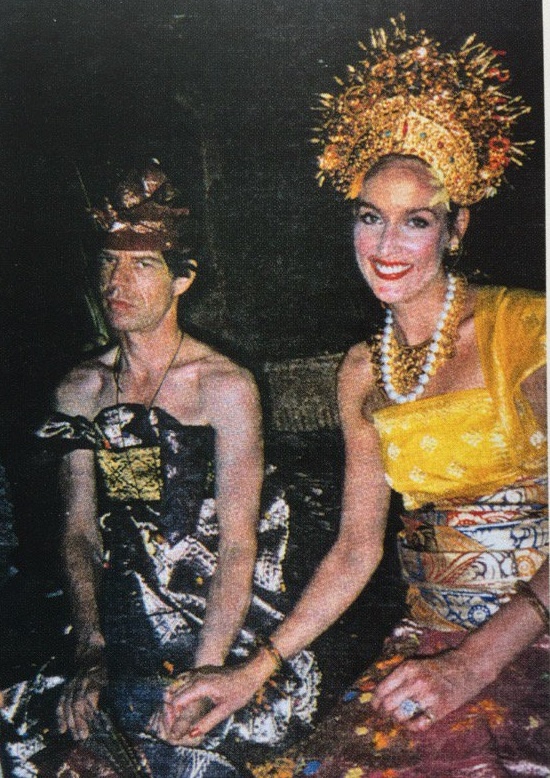
Mick Jagger and Jerry Hall held a lavish Hindu wedding ceremony in Bali in 1990 that was later declared "null and void" in 1999 by an English court because it was never legally registered in Indonesia or recognized under English law, effectively making it a symbolic, not a legal, union. A significant Hindu ceremony performed by a priest, which included traditional purification rituals. Attendees included their children, Elizabeth and James, and Mick's friend Alan Dunn. In 1999, A High Court judge in England declared the marriage legally invalid in August 1999, following their separation. The ruling meant Jerry Hall could not divorce Jagger, but they settled their separation financially through a separate agreement, with Hall receiving a substantial settlement.
Michael Jackson visited Bali, Indonesia, likely in the late 1980s or early 1990s, staying at the exclusive Batu Jimbar estate in Sanur, known for hosting celebrities, and visiting the home of painter Antonio Blanco in Ubud, forming connections with the island's artistic scene and enjoying its privacy, though details are scarce as he sought seclusion.
Julia Roberts is famously associated with Bali due to the movie Eat Pray Love, where she filmed significant "Love" portion scenes in Ubud (rice paddies, healer Ketut Liyer, Monkey Forest) and at Padang-Padang Beach, inspiring many travelers to visit these iconic spiritual and scenic locations, though some areas are now busier.
Ashley Bickerton — One of Bali’s Most Famous Artists
Ashley Bickerton (1959-2022) was one of Bali’s most famous artists. He rose to prominence in the 1980s New York art world as a key figure in the Neo-Geo movement, alongside artists such as Jeff Koons. At the height of his success, he made an unexpected decision to leave New York in the late 1990s and relocate to Bali. This move marked a deliberate withdrawal from the global art spotlight, replacing visibility and career momentum with anonymity and personal reinvention. [Source: Bruce W Carpenter, Indonesia Expat, June 8, 2012]
In Bali, Bickerton—often calling himself simply “Ash”—lived a low-profile life, at times resembling a surfer more than a celebrated international artist. He consciously resisted the expectation that living in Indonesia should lead him to produce overtly “exotic” or traditional imagery. Instead, he sought distance from the art world’s centers of power while remaining intellectually and creatively engaged with them.
Despite his reclusiveness, Bickerton never fully disengaged from the international art scene. Exhibitions of his work continued to appear in major cities, sometimes without his immediate awareness. Visits from high-profile figures, including Damien Hirst, reminded the art world of his continued relevance and underscored the paradox of his position: geographically remote, yet conceptually central.
Bickerton’s Bali-period works are exuberant, unsettling, and often confrontational. His paintings and sculptures satirize expatriate life, desire, power, and Western fantasies of the tropics. Works such as Expats sharply critique colonial attitudes and excess, earning comparisons to William Hogarth for their moral bite, while also provoking controversy for their explicit imagery and ambiguous stance.
A recurring motif in his work is the “blue man,” an alter ego that reflects autobiographical and psychological concerns. This figure embodies themes of hedonism, identity, masculinity, and inner conflict, revealing the tension in Bickerton’s art between pleasure and darkness, humor and unease.
For the complete article from which the material here is derived see “Ashley Bickerton-Bali’s Least Known Famous Artist” by Bruce W Carpenter, Indonesia Expat https://indonesiaexpat.id
Ashley Bickerton’s House and Studio in Bali
Ashley Bickerton lived and worked in a highly idiosyncratic hillside compound in Bali that reflected the exuberant, satirical spirit of his art. Located near the Pecatu Indah resort in a comparatively quiet, lush area, the property featured exaggerated Balinese-style buildings, a distinctive gate marked by serpent motifs drawn from his own iconography, and eclectic interiors filled with masks, found objects, and his paintings. More imaginative than a luxury resort, the compound functioned as both home and creative retreat. [Source: artasiapacific.com, Jul/Aug 2013 ]
In his Bali studio, Bickerton produced hybrid works that merged painting, sculpture, and photography. These included hyperexoticized, often grotesque figures and objects layered with thick paint, fiberglass, photographs, and found materials. He described this process as a dynamic interplay between image and object, surface and representation. His provocative imagery, which he characterized as partly autobiographical, parodied Gauguin and twentieth-century exoticism while embracing excess rather than rejecting it.
Although long removed from New York Bickerton remained closely engaged with the international art world. He continued to follow exhibitions, market debates, and the activities of former colleagues, even learning belatedly of a solo show in Zurich composed entirely of secondary-market works. Despite his physical distance from major art centers, Bickerton remained intellectually and creatively immersed in contemporary art discourse. His Bali studio served not as an escape from the art world, but as a distinctive vantage point from which he continued to engage with its aesthetics, personalities, and contradictions.
Image Sources: Wikimedia Commons, Indonesia Tourism website
Text Sources: “Encyclopedia of World Cultures Volume 5: East/Southeast Asia:” edited by Paul Hockings, 1993; Wikipedia; National Geographic, Live Science, Metropolitan Museum of Art, Natural History magazine, New York Times, Washington Post, Los Angeles Times, Smithsonian magazine, Encyclopedia.com, Library of Congress, The Conversation, The New Yorker, Time, BBC, CNN, Reuters, Associated Press, AFP, Lonely Planet Guides, Google AI, The Guardian and various websites, books and other publications.
Last updated January 2026