
BALI — THE TOURIST DESTINATION
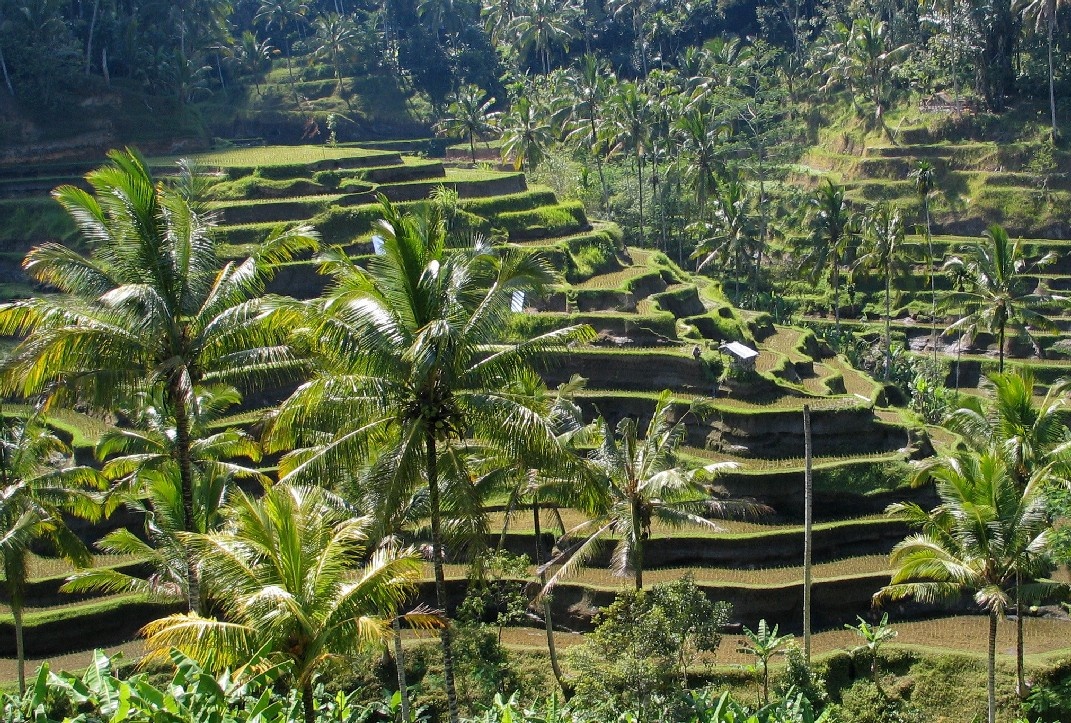
Subak irrigation system near Ubud in Bali
Bali (east of Java, about 1 hour and 20 minutes by air from Jakarta) is known as a place where traditions of art and culture predominate, where the village way of life based on their strong religious beliefs is still in place. But, it is also a place where modern sports such as diving, sailing, rafting and above all surfing have taken hold and a place where the ultimate luxuries of life: fine dining, spas and massage have reached the peak of perfection. Behind all of this is a single unseen premise; none of these practices, pursuits and pleasures are created as tourist industries in Bali, but are based on the talents, dedication and skills of the Balinese people in their normal course of life.
Bali is the best known prime tourist destination in Indonesia. Culturally and historically it is very different from the rest of Indonesia, especially in regard to its unique Hindu-animist religion. Inscriptions from the ninth and tenth centuries A.D. document the rise of Balinese kingdoms that later fell under Javanese control. In the sixteenth century, King Batu Renggong of Gelgel unified Bali. The social and religious order established during this time period continues to this day. More recently, tourist money has made Bali one of Indonesia's wealthiest regions but has also distorted its traditional culture. [Source: A. J. Abalahin,“Worldmark Encyclopedia of Cultures and Daily Life,” Cengage Learning, 2009]
Bali has consistently ranked as the No. 1 island in the world in the Travel and Leisure readers, ahead of places like Tasmania, the Great Barrier Reef islands and Maui. Lonely Planet’s Best of Travel has ranked Bali second place among the world’s Top Regions. Also known as the Land of the Gods, Bali appeals through its sheer natural beauty and enchants with its dramatic dances and colorful ceremonies, its arts and crafts, to its luxurious beach resorts and exciting night life. For this exotic island has much to offer, from inspirational spirituality to fine dining and meeting experiences, from world class surfing and diving to exhilarating treks in the wild. And everywhere you will find intricately carved temples.
Bali is home to beautiful beaches, striking volcanic scenery, terraced rice fields and 4.4 million people. Even after decades of popularity, Bali continues to amaze and attract a variety of visitors from around the globe: from those who come to surf the waves of Kuta, Uluwatu and Dreamland, to others who love the panoramic beauty of mountains and lakes at Batur, Kintamani, or Lake Beratan at Bedugul, to those who love shopping or spend endless days on the beach, to those enjoy the artistic, New Age scene amid lush surroundings around Ubud. Bali has some good diving spots and has hosted some big raves and surfing competitions.
Bali Discovery Tours, balidiscovery.com is a good commercial site. It has a hotel search function, travel tips and news, and specials deals. The government Bali Tourism Board site, balitourismboard.com, is pretty good too. Other websites include 1) Bali Tours, Bali-Tours.com; 2) Bali Tourism Authority, balitourismauthority.net; 3) Bali on Line at indo.com; 4) Bali.com, bali.com; 5) baliwww.com. Tourism Office: Bali Government Tourism Office Jl. S. Parman No. 1, Niti Mandala, Denpasar-Bali 80235, Phone (62-361) 222387, Fax (62-361) 226313, Website : tourism.baliprov.go.id/, Email: infotourism@baliprov.go.id
RELATED ARTICLES:
HISTORY OF BALI: ORIGIN, KINGDOMS, MASS ROYAL SUICIDES factsanddetails.com
MODERN HISTORY OF BALI: VOLCANIC ERUPTIONS, TERRORISM, RECOVERY factsanddetails.com
TOURISM IN BALI: CELEBRITIES, RESILIENCE AND ITS RISE FROM A 1930s SOCIALITE ARTIST COLONY factsanddetails.com
BALI BOMBING IN 2002 factsanddetails.com
NEGATIVE SIDE OF TOURISM IN BALI: OVERDEVELOPMENT, BAD BEHAVIOR DONALD TRUMP factsanddetails.com
ACTIVITIES IN BALI factsanddetails.com
DENPASAR AND KUTA factsanddetails.com
SANUR AND THE MAIN RESORT AREAS OF BALI factsanddetails.com
UBUD: SIGHTS, MONKEYS, FOOD factsanddetails.com
EAST BALI: MT. AGUNG AND BESALIK TEMPLE factsanddetails.com
NORTH BALI: MT BATUR AND SUBAK WATER TEMPLES factsanddetails.com
WEST BALI AND ITS NATIONAL PARK factsanddetails.com
BEACHES AND DIVING IN NORTH AND WEST BALI factsanddetails.com
Geography and Climate of Bali
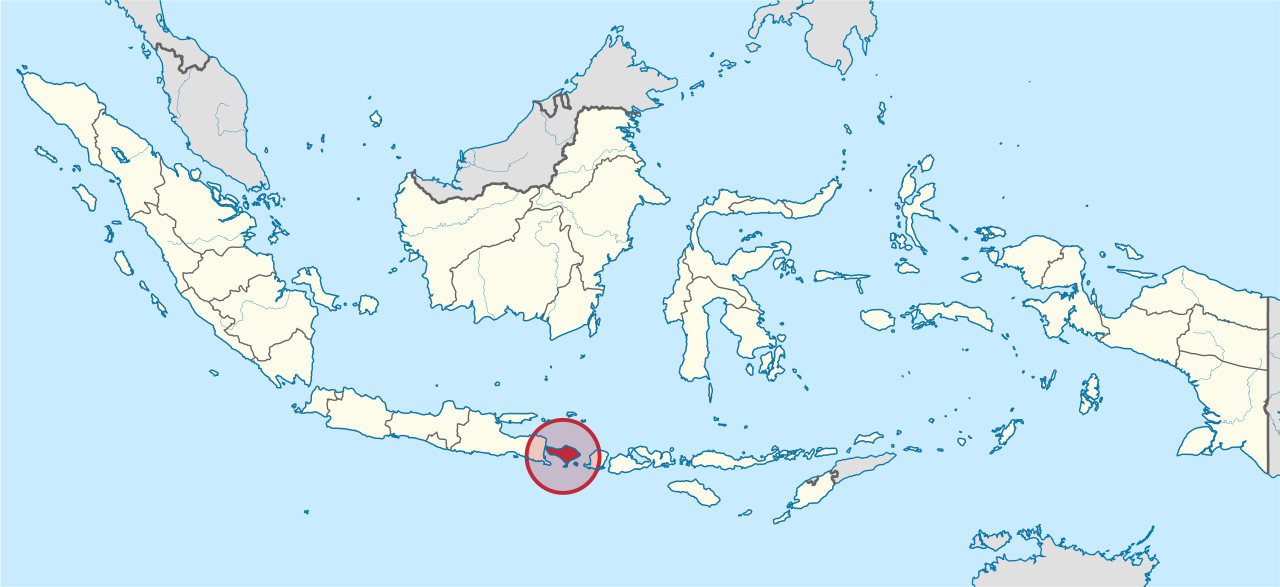
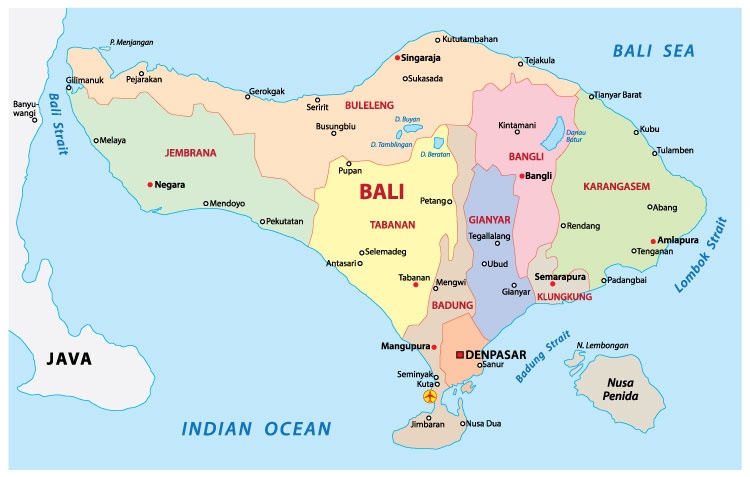
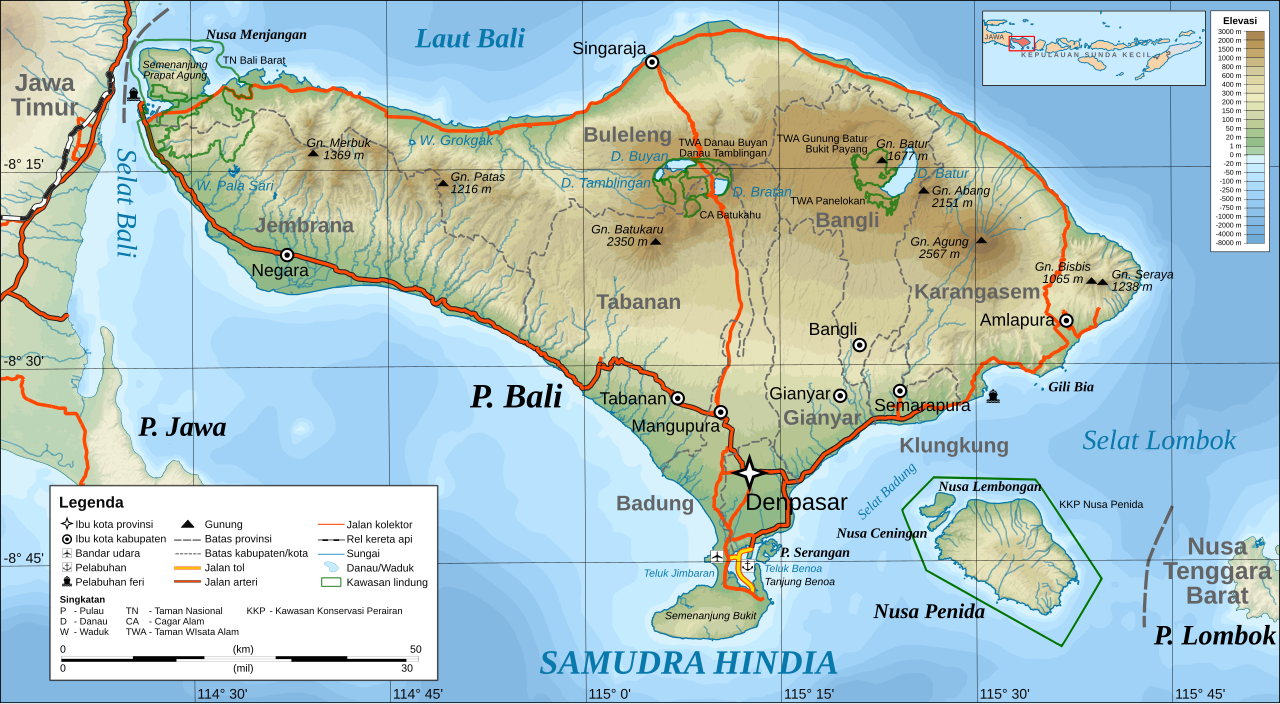
Bali is an Indonesian island located eight degrees south of the equator. The westernmost of the Lesser Sunda Islands, it is situated between Java to the west and Lombok to the east. It is an Indonesian province with the provincial capital at Denpasar towards the south of the island. Bali is a relatively small, diamond-shaped island. It covers only 5,580 square kilometers (2.155 square miles) — making it slightly larger than the state of Delaware — and measures 140 kilometers (85 miles) across from east to west, and 80 kilometers (50 miles) from north to south. No part of the island is more than 30 kilometers from the sea. The inhabited areas are mostly in the south and east. The landscape includes large volcanos and dense forests in the north and a coastal plain in the south. In between are steep ridges and ravines covered with "cascades of rice terraces" and rimmed by coconut palms, bamboo and banana trees. Most of the western part of the island is forest, where tigers used to live. Bali’s central mountains chain contains several peaks over 2000 meters and many active volcanoes. Mt. Agung volcano dominates the north part of the island. The volcanos produce nourishing volcanic soil and the mountains block clouds, bringing lots of rain.
Narrow straits separate Bali from Java to the west and Lombok to the east. A series of valleys, carved by swiftly flowing rivers, stretch south to the Indian Ocean. The island's southernmost tip is an arid limestone peninsula. The axis between the mountains and the sea dominates the Balinese sense of orientation. For example, tradition dictates that one should sleep with one's head facing kaja (the direction of the divine mountains) and one's feet facing kelod (the direction of the demonic sea). The soles of the feet should never face a person who deserves respect (in this case, the mountains). Depending on the location, kaja can mean "north" or "south."[Source: A. J. Abalahin,“Worldmark Encyclopedia of Cultures and Daily Life,” Cengage Learning, 2009 *]
Bali is located just 8 degrees south of the Equator. The climate is nearly the same the year round. The temperature averages around 28 degrees C and the same amount of rain falls nearly every month. Humidity rises during the day and drops of at night. The air temperature is most delightful in the cool mornings and evenings. On Bali, the rainy season is between October and March; the dry season between April and September. The high season for tourists is July and August. The temperatures this time of the year are slightly cooler than the rest of the year and there are refreshing breezes coming off the sea. The low season is in the winter when the weather can be a little muggy, hot and rainy.
Is Bali Really the Paradise as Claimed?
Denny Lee wrote in the New York Times: “Tucked below the equator on the Indian Ocean, the high temperature hovers around 85 degrees year round, and cools gradually as you move inland. Strolling along Kuta Beach on a recent evening, as the last whiskers of sunlight scorched the dusky sky, the air felt sultry and pacific, hugging the ground like an earthy blanket. The island is ringed by velvety beaches and marbled cliffs. Dewy jungles and black volcanic peaks form its center. Terraced rice patties, the color of fresh lime, are etched into the countryside like giant amphitheaters. The air is expansive, the vistas ageless. [Source: Denny Lee, New York Times, March 27, 2005]
Ask tourists why they are so enchanted by Bali two answers usually emerge. "This is one of the most beautiful places I've been to," a travel blogger at the Monkey Forest in Ubud told the New York Times. "It seems almost mystical and magical." But its not all paradise. Kuta Beach is very touristy; Denpasar is dirty and clogged with traffic like any other Indonesian city. Lee wrote: “On sunny afternoons, a crush of peddlers turn stretches of Kuta Beach into a seaside flea market. In quieter spots, sunbathers are accosted by an almost comical parade of hawkers selling sunglasses, box kites, tattoos, beer, jewelry and full-body massages — sometimes all of them in just half an hour. Street begging got so out of hand that the police had to institute a crackdown.”
Construction cranes on beaches, damaged coral reefs and floating trash in Bali’s turquoise water are among the effects that overdevelopment have had on Bali. The environmental costs of tourism in Bali have been mounting. Hundreds of hotels have placed heavy demands on Bali’s water supply, Wayan Suardana, head of the Bali branch of environmental group Walhi told Reuters, leaving farmers in the north—where rice and coffee plantations still operate—chronically short of water. Each year, about 700 hectares of land are converted for hotels, roads, housing, and villas for foreigners and wealthy Indonesians, according to Bali’s Environmental Agency. [Source: Olivia Rondonuwu, Reuters Life! August 12, 2011]
Bali Lifestyle and Brand
Denny Lee wrote in the New York Times: “ “Visitors speak wistfully about Bali's idiosyncratic culture. Unlike the rest of Indonesia, the world's most populous Muslim nation, most Balinese practice a form of Hinduism that blends elements of Buddhism and animism. They believe that gods are everywhere. And, in a way, they are. Sculptures depicting mythical battles loom over traffic circles like the Arc de Triomphe. Thousands of temples dot the island, their split gateways forming a kind of Escher-like portal into a cosmic world. Every morning, millions of boat-shaped banana leaves, stuffed with rice, fruits and flowers, are left on sidewalks like little gift baskets to the gods. [Source: Denny Lee, New York Times, March 27, 2005]
“A leisurely drive through the winding backcountry reveals a simple life steeped in atavistic rituals. Men bathe together in the crystalline rivers, soaking and relaxing in Bali's original spa. Women in floor-length skirts dry tapioca on the roadside, stirring the granules under the baking sun. Slaughtered chickens hang off the back of mopeds. Banyan trees sway. And every few hours, the ethereal tones of gamelan music echo across the lush hills, signaling the start of another temple ceremony. This reverence for Hindu customs may explain why decades of mass tourism has done little to dilute the island's charm. "Everyone smiles all the time," said Melinda Gavala, 28, a frequent visitor from Greece, as she watched the sun set on Seminyak Beach, an upscale area just north of Kuta. "Even when they're overcharging you, their smile is 100 percent authentic."
“But Bali's resilience is also a function of modern day P.R. As one of the world's best-known beach resorts, Bali never faded from tourists' imagination after the bombings. In fact, the Bali tourism board did little more than offer a few junkets for travel writers and tour operators, which most resort destinations do anyway. "The island succeeds in spite of itself," said Jack Daniels, president of Bali Discovery Tours, which runs a tourism news Web site. "Bali has tremendous brand equity. Even through the crisis, travel magazines kept naming Bali among the top island destinations."
Shopping in Bali
Bali is an island that produces great artists and artisans, where creativity exudes from every village. Painters, woodcarvers and dancers are experts, with artistic traditions handed down from generation to generation. There are are thousands of giftshops in Bali. Everywhere you go, from Denpasar to Ubud, you'll find many things you'd like to bring back home.
For best paintings visit at leisure the galleries at Ubud, and admire artists at work, before you decide which painting you like best. Most Balinese paintings go best with a Bali carved wooden frame. For fine woodcarvings, go to the village of Mas, where are the master woodcarvers. If you are looking for gold or silver jewelry, head to the village of Celuk. But if you are thinking of bringing home souvenirs for friends and relatives, your best bet is the souvenir market at Sukowati, where you may be overwhelmed by choice. For casual and chic summer wear the place to browse is Kuta, which has a large variety of boutiques and shops, selling everything from bright T-shirts, surf- wear, flip-flops creative trinkets, Bali coffe and aromatherapy oil.
Between Denpasar and Ubud are numerous towns and villages that sell crafts and often specialize n one craft. Among these are Batubulan, known for stone carving; Celuk, a silver and goldsmithing center; Sukawatio, known for its temple umbrellas, wind chimes and dyed palm baskets; Batuan, a famous painting center; and Mas, famous for its woodcarving. Many of Bali's master carvers still live here. Peliatan is the center of woodcarving, traditional music and dance. Woodcarvers make colorful flowers, fruits and trees. Batuan is also know for its dancing and wood panel carving.
Rosemarie John wrote in the Jakarta Post: “Some may opine that the markets in Ubud (Central Bali) are much more costly than those in Kuta or vice versa. Possibly true, if haggling is not one of your best skills. Only cash is accepted at these street bazaars but many handicraft stores accept credit cards as well. If in Kuta, visit the art market which has one end of its street located next to a small temple on Jl. Bakung Sari. It is holy ground in terms of beach wear, fabric sling bags, flip flops and trinkets. The Kuta market which also sits next to Kuta Square (designer labels stores) splits into two main lanes and spreads into tiny alleys on each side. Make sure to check the whole market out before settling for the kill. Some peddlers may even give you a far better discount as you venture further into the market. [Source: Rosemarie John, Jakarta Post, October 11, 2013]
“If you’re not one to haggle, a best stop for some fine Balinese crafts might be Daun. It’s a cosy gift shop located next to the Kuta market on Jl. Bakung Sari Kuta Blok E26-27. One can find a variety of home decorations from abstract art to traditional figurines and batik sarongs to ceremonial masks. Purchasing artwork at the bazaars isn’t altogether a bad choice but what they lack in authentic Balinese art can be found in many art studios in Sukawati or Ubud known to many as the heart and soul of the art world. Just before heading to Ubud, stopover at the Dewa Putu Toris Art Studio at Br. Tengah Bantuan, Sukawati. The studio run a by a father and son duo carries many painting styles including traditional Balinese and Kamasan style of painting. Also stop by the Sukawati art market located in the Gianyar district. It is situated on the main road and is considered the biggest in Bali having a wide range of clothes, temple umbrellas, leather puppets, wind chimes and jewellery selections.While in Ubud, visit the Ganesha Bookshop on the corner of Jl. Raya and Jl. Jembawan for new, used or out of print books. One can also find informative books on the island of Bali written by locals with tales and stories not found in books written by most traveling authors. Mythological wooden and lime stone carvings are in abundance in most craft stores around Ubud.
Balinese Food
Like the food of other regions in Indonesia, Balinese food is rice as the central dish served with small portions of spicy, pungent vegetables, fish or meat and served almost always with sambal or chili paste. Bali is one of a few of the regions in Indonesia whose majority of its people are non Muslims, thus eating pork is okay. Babi guling or roasted suckling pig is a specialty, as is bebek betutu, smoked stuffed duck wrapped in bamboo leaves. Authentic Balinese food can be found in many settings across the island. Warungs, or small local eateries, are ideal for affordable, traditional meals. Night markets offer a lively atmosphere and a wide selection of street foods, from fried rice and satay to local snacks. In the Jimbaran area you can sample seafood dishes while sitting on the beach. Visit this place in the evening, the cool atmosphere and caressing breeze will make your dining experience remarkable.
Balinese food is renowned for its vibrant flavors, aromatic spices, and reliance on fresh local ingredients such as rice, pork, chicken, seafood, and distinctive herbs. Signature dishes include Sate Lilit (minced meat satay) and Nasi Campur (mixed rice), and a wide variety of spicy sambals. Many dishes are cooked or wrapped in banana leaves, such as Pesan Be Pasih (seasoned fish). The island’s Hindu heritage strongly shapes its cuisine, making pork a common ingredient and giving Balinese food a character distinct from other regional Indonesian traditions. Well-known staples like Nasi Goreng (fried rice) are widely available, while traditional sweets such as Laklak add a local touch to desserts.
Nasi Campur offers a sampler-style meal, combining small portions of meats, vegetables, egg, and sambal on a bed of rice. Sate Lilit is made from minced fish, chicken, or pork blended with coconut and spices, wrapped around lemongrass sticks and grilled. Bebek Betutu consists of duck or chicken slow-cooked until tender in a rich spice paste. Popular across Indonesia but commonly found in Bali as well are Gado-Gado, a vegetable salad with peanut sauce, and Nasi Goreng or Mie Goreng, everyday favorites enjoyed at any time of day.
Balinese cuisine is defined by its bold use of spices and condiments. Chilies, turmeric, ginger, galangal, lemongrass, and shallots form the base of many dishes, creating layered and complex flavors. Sambal is essential at nearly every meal, with local varieties such as Sambal Bongkot, made from torch ginger flower, and Sambal Matah, a fresh mixture of raw shallots, chilies, and lemongrass. Rice remains the central staple, typically accompanied by seafood, pork, chicken, or vegetables, while coconut and pandan are widely used in both savory dishes and sweets, including Laklak pancakes.
See Separate Article: FOOD IN BALI: DISHES, ROASTED PIG, DRAGONFLIES factsanddetails.com
A Babi Guling Feast
No trip to Bali is complete without feasting on Babi guling, Balinese roasted suckling pig, David Farley of the BBC wrote: “The plate of pork in front of me” was “just sliced from a freshly roasted suckling pig. I took a bite and pointed my face toward the heavens. The pork was tender, juicy and imbued with garlic, ginger and turmeric that lingered on the palate. [Source: By David Farley, BBC, November 20, 2015]
In the past, a babi guling feast was usually reserved for big rites-of-passage celebrations: weddings and funerals, of course, but a baby’s third month blessing or a child’s first tooth filling also qualify as reasons to pig out. Today though, perhaps because mass tourism has transformed and commercialised Bali over the last few decades, casual open-air restaurants scattered throughout the island specialise in roast suckling pig.
Being in the courtyard at Putu Pande’s place was like being in an outdoor babi guling workshop. Various suckling pigs turned above fires. Two workers stuffed intestines — sausage casings — with meat and other bits. Pande’s son, Dodo, began taking me through the process of making babi, and I realised we were starting from the beginning when I saw one of the workers pull a five-month old pig from its pen, cut its throat and drain its blood into a bucket to use later for the sausage.
When the swine finally lay motionless, the rest of the crew got to work pouring hot water over it and scraping away its fur. Its stomach was cut open and its entrails were taken out. Dodo gave me a gruesome play by play: “There’s the stomach. There’s the heart. There’s the liver.” Finally, basa gede was stuffed inside, the stomach stitched up, the skin rubbed with turmeric and the mouth rammed with a long metal pole. It was ready to be cooked. As a worker hand-turned the spit above the fire, Dodo explained that this technique has hardly changed over the years. “Except for the metal pole — we used to use a wooden one — we’re still doing it like our ancestors did.”
A couple of hours later, an entire roasted pig was delivered to our table. Dodo opened the belly and deposited the spice mix into a bowl. Then he cracked off the golden brown skin, stripping it like chipped paint, shaved off some of the leg meat and slathered it in the spice mix. I put some pork on a piece of skin and ate it like cheese on a cracker. The juice of the meat, combined with the snap of the skin, was about one of the best things I’d ever eaten.
It got even better when he gave me some back meat, which was more tender and juicy than the leg. The belly and, finally, the most supple and luscious part of the pig — the cheek — followed. Soon enough, Dodo’s mother placed a large bowl of rice on the table. Same with the requisite long beans. We piled it all on our plates, along with more pork, and continued eating. After a few minutes, I finally looked up from my plate and realised that a silence had overcome the courtyard. Everyone — more than 10 people — was sitting around the table or on the ground with a plate of babi guling in front of them. They were all eating in silence — using their hands, as is the proclivity here — with a satisfied look on their faces.
Accommodation in Bali
Accommodations range from four-star hotels to simple guest houses and bungalows. Many beautiful resorts offer fine lodgings. Many of the starred hotels are located near the beach. Otherwise, they usually have their own private spots at certain beaches. You can find them easily at popular spots like Kuta or Sanur. If you're in a serene highland like Ubud, forget starred hotels. You're there to embrace the atmosphere. Just pick one of the small lodgings lining up the streets. And even the smallest one's ready to make you feel welcome.
During the 2007 Ubud Readers and Writers Festival, a man in a wheelchair checked in at a small inn on Monkey Forest. He had some difficulties in navigating through the stairs to his bungalow. He then left for the Festival. When he returned at night, the owner had already paved an ascending lane to his bungalow. That's a typical Balinese hospitality.
Denny Lee wrote in the New York Times; “Lodging choices range from $5 budget hostels with bunk beds and no air-conditioning to over-the-top suites fit for a sheik, starting at $3,000. For $100 to $150 a night, many places offer spas, courtyards and meandering pools. The Bali Hotels Associations, which represents the island's larger chains, has online links to its members at balihotelsassociation.com. [Source: Denny Lee, New York Times, March 27, 2005]
Here is a sampling of choices on the island: “Amanusa, Nusa Dua (62-361) 772-333, amanresorts.com. A minimalist temple to Balinese architecture, it rents 33 villas perched on a hillside overlooking the Indian Ocean. A private path leads to a secluded beach. Suites are $650 for a garden view, and $1,300 for one with a private pool.
“Cendana Resort and Spa, Monkey Forest Road, Ubud (62-361) 973-243, cendanaresort-spa.com. Close to art galleries and artisanal villages, the hotel is a homey base to explore Bali's culture. Doubles start at $70 for a room with air-conditioning.
“Hotel Padma, Padma 1, Legian (62-361) 752-111, hotelpadma.com. Just north of Kuta, the 405-room hotel features spacious rooms, a swim-up bar and several restaurants. Popular with young couples and wedding parties. Web rates start at $110 for a standard room.
“The Oberoi Bali, Seminyak (62-361) 730-361, oberoihotels.com. Right on the beach, the hotel offers a surprisingly tranquil setting not farfrom the bustle of Kuta. The 75 thatched lanais and villas start at $255, but Internet rates can be less.
“Villa Sasoon, Jalan Puri Bagus, Candi Dasa (62-363) 41511, villasasoon.com. The four two-bedroom pavilions offer a modern spin on traditional Balinese homes, with pebbled courtyards, open living rooms and outdoor showers. Rates are $250, including breakfast.
The Amandari Hotel in Ubud is a favorite of rock stars and fashion designers. Designed by Australian architect, Peter Muller, it has been declared the 5th nicest small hotel in the world in by Travel & Leisure. Amandari and Amankila hotels Bali have selected as the world's top two hotels in Condé Nast Traveler reader's poll. The Four Seasons Bali at Jimbaran Bay was ranked no. 6 in Travel and Leisure's list of the world's ten best hotels.
Transportation on Bali
There are many modes of transport in Bali. A variety of excellent half day, full day and overnight tour packages are available from your hotel desk or any of the numerous travel agents and tour operators which abound in Bali. Or you can find a car and driver who will also act as your guide. Whilst walking about, you will be barraged with constant questions of "Transport, transport?". Competition is tight and many drivers know several languages. Tell the driver your desired route and negotiate a fee.
Buses provide transport in the city and to many popular destinations. Bemos (Minvans) provide transport to the city and near by towns. To avoid being overcharged, observe what residents pay.Rental cars are available. Metered taxis and bemos (minivans) provide transport. Agree on fare prior to boarding.
On Bali, public transportation—usually Bemo minibuses—is a hassle and taxis are expensive for traveling long distances. There are special bus transportation systems for tourists but working out their schedules can be problematic.Transfers between bemo routes may be time consuming. Major bemo terminals: Batubulan (for central and eastern cities), Tegal (for southern and western cities) and Ubung (for northern and western cities).Ojeks (motorcyle taxis) are not recommended due to safety concerns.
For many the easiest way to get around is with a rented vehicle. The island is not very big, the roads are relatively well sign posted and the back roads are generally free of traffic. Cars in Bali can be hired by the hour or by the day. Most hotels and agents have a clear map of Bali, so it is easy to determine time, distance and mileage. Jeeps can be rented for $40 a day. Small Suzuki vehicles for as little as $25 a day. A jeep and driver cost around $75. Small motorcycles can be rented for $10 a day. Bicycles can also be rented. The fees for renting vehicles are considerably lower in Kuta and Ubud than at the airport.
Bali now has a fairly extensive network of roads. The roads around Denpasar, Kuta, Ubud, Sanur and Nusa Dua are quite busy. Many of places are filled with pushy hawkers and touts selling tours and trinkets. If you are driving yourself, remember to "hoot" your horn when going around curves on mountainous roads as it is very common to drive in the middle of the road here. There are a lot of one way roads in Bali. If you miss your turn off you may have to drive quite a distance before being able to turn back. Be alert!
An important virtue to have while on the road in Bali is patience! Although the road system in the heavily populated areas is quite reasonable (condition wise) in comparison to other developing countries, it can be heavily congested at peak periods. Ceremonial processions often take up the entire road so if you're caught behind a procession, enjoy the colorful experience. We highly recommend you fill up at any of the numerous government owned petrol stations. In more remote areas at stalls by the side of the road sell bottles of clear liquid. The quality may not be as good as at the petrol station and could cause damage to the rental car.
According to ASIRT: “Traffic is congested., Completed road safety improvement projects include: New traffic lights, road signs, road markings, guard rails, center lines on major road to the city and signs and road markings for all U-turns on Denpasar Bypass. Drivers and motorcyclists seldom stop for pedestrians. Raise hand and wave at oncoming motorists or cyclists and look confident that they will comply. Proceed only if drivers slow down or stop. Walking is not recommended due to traffic congestion and long distances between points interest. [Source: Association for Safe International Road Travel (ASIRT): PDF, 2008]
Getting to Bali by Air
With increasing number of direct flights from many parts of the world, getting to Bali is easy. Flights from Jakarta to Bali take about 1.5 hours, from Singapore and Perth (Australia) around 2.5 and 3 hours, from Hong Kong about 4.5 hours, and from Sydney/Melbourne about 5.5 to 6 hours on many national and international carriers. Just make sure that you look for "Denpasar (DPS)" instead of "Bali" in airline time tables. Denpasar is the capital of Bali. While the name of its international airport is Ngurah Rai.
Another means to reach the island is by ferry from Banyuwangi, located at the most eastern tip of East Java. It takes 30 to 45 minutes crossing from Banyuwangi to Ketapang on Bali. From Bali, you can also continue further by ferry to the island of Lombok, in West Nusa Tenggara . Take the ferry at Padang Bay with transit at Lembar seaport for a total of 4 hours journey. Bali has many travel agents to assist you with your holiday plans.
Most international visitors will fly to Bali directly. There are numerous direct flights from Europe, Australia and most Asian Countries. Connections are sometimes made via an Asian city such as Bangkok, Tokyo or Singapore. Bali is served by Garuda, Cathay Pacific, Singapore Airlines, Malaysia Airlines, Japan Airlines, All Nippon Airlines, Korean Air. Thai Airways, Air France, Air New Zealand, Air paradise, China Airlines, Eva Air, KLM, Lufthansa,
There are no direct flights between Bali and the United States. Singapore Airlines has daily connections via Singapore from New York City, Newark, Los Angeles, and San Francisco. Round-trip coach fares from Kennedy Airport (with a layover in Frankfurt) start at around $1,200. Flights from Newark start at $1,550. Cathay Pacific flies to Bali via Hong Kong from New York, Los Angeles and San Francisco. Web fares for mid-April start at $923 from Los Angeles and $1,150 from J.F.K. Other airlines flying from New York to Bali include Korean Air (through Seoul) and Japan Airlines (via Tokyo or Osaka).
Most visitors coming to Bali will arrive at Ngurah Rai International Airport (IATA: DPS), also known as Denpasar International Airport. The airport does not meet international security standards and the U.S. State Department has issued warning about it.. Despite this misleading name, the airport is actually located in Tuban between Kuta and Jimbaran, roughly 15 kilometers from Denpasar or about 30 minutes drive. Acting as a main entrance to Bali, the airport is the second busiest international airport in Indonesia, after Jakarta's Sukarno-Hatta International Airport.
Ngurah Rai International Airport connects Bali to most of Indonesian major cities and some of the major cities of the world. More information on domestic and international flights to and from Ngurah Rai International Airport can be found at ngurahrai-airport.co.id. Buses and airport taxis provide transport to the city. Taxis are metered; ask driver to use the meter.
Getting to Bali by Ferry and Bus
Frequent, sometimes several a day, domestic flights to and from major cities, and some smaller ones too, operate within Indonesia Bali acts as hub of sort for many destinations in eastern Indonesia.
There is also regular passenger ferries from Java and Lombok. Cruise ship stop by occasionally. You can travel by car or bus — or bicycle — to and from Java, Lombok via ferries.. The ferry between Bnayuwangi/Ketapang harbor in East Java and Gilimanuk in Bali runs frequently around the clock. Boats between Bali and Lombok leave from Padangbai and Pelabuhan Benoa. Those from Padangbai leave every hour. A fast boat leaves once a day in the morning.
Denpasar is centrally located and easily reached by car or taxi from the main tourist regions of south Bali. A trip from Kuta, Legian and Seminyak will take 20 to 30 minutes depending on traffic. Sanur is just 15 minutes to the east and Ubud about 30 minutes to the north. Tabanan is about 40 minutes to the northwest. A pre-paid taxi from the airport will cost between Rp 70,000 and 100,000, depending on exactly where in Denpasar you are heading to.
Ubung Bus Station (main bus station) is in the northwestern section of the city. It is also a bemo (public minibuses transportation) terminal. Aside from connecting many cities in Bali, Ubung is also the main bus hub of Southern Bali to Java. A bus to and from Surabaya, the capital of East Java will cost about IDR120.000 including the ferry trip between Banyuwangi and Gilimanuk, mineral water and a meal.
Although there is no train station nor any railroad tracks in Bali, you can still use train as a transportation option to Denpasar. Through the Inter-Transportation Modes Ticket (Titam/Tiket Terpadu Antar Moda) You can buy the so-called "train tickets" to and from Surabaya, including a bus (air-conditioned) to Banyuwangi, and the ferry between Gilimanuk and Ketapang, and then a train from Banyuwangi to Surabaya. More information at indo.com/ground_transport/train_old/deparinfo.html
Image Sources: Wikimedia Commons, Indonesia Tourism website
Text Sources: Indonesia Tourism website (indonesia.travel), Indonesia government websites, UNESCO, Wikipedia, Lonely Planet guides, New York Times, Washington Post, Los Angeles Times, National Geographic, The New Yorker, Bloomberg, Reuters, Associated Press, AFP, Japan News, Yomiuri Shimbun and various books and other publications.
Last updated in January 2026