
BALINESE FOOD
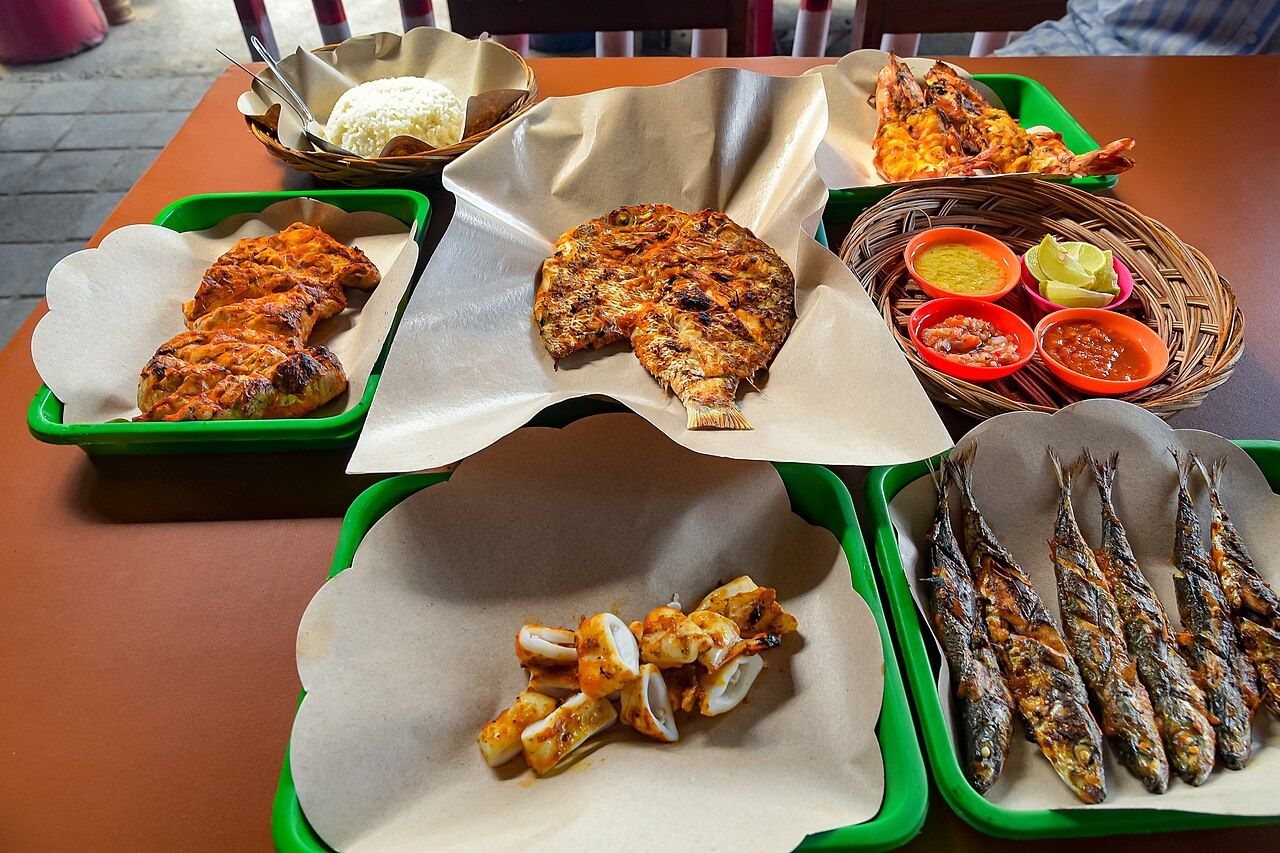
Like the food of other regions in Indonesia, Balinese food is rice as the central dish served with small portions of spicy, pungent vegetables, fish or meat and served almost always with sambal or chili paste. Bali is one of a few of the regions in Indonesia whose majority of its people are non Muslims, thus eating pork is okay. Babi guling or roasted suckling pig is a specialty, as is bebek betutu, smoked stuffed duck wrapped in bamboo leaves. Authentic Balinese food can be found in many settings across the island. Warungs, or small local eateries, are ideal for affordable, traditional meals. Night markets offer a lively atmosphere and a wide selection of street foods, from fried rice and satay to local snacks.
The Balinese typically eat on their own, quickly, and at any time. They often snack frequently. Everyday food is made up of rice and vegetable side dishes, sometimes with a bit of chicken, fish, tofu (bean curd), or tempeh (fermented bean curd), and seasoned with chili sauce (sambal) made fresh every day. Many dishes require basa genep, a standard spice mixture composed of sea salt, pepper, chili, garlic, shrimp paste, ginger, and other ingredients. For special celebrations, men prepare ebat, chopped pig, or turtle meat mixed with spices, grated coconut, and slices of turtle cartilage or unripe mango. [Source: “Junior Worldmark Encyclopedia of World Cultures,” The Gale Group, Inc., 1999 /=]
Typical dishes popular with tourists include Sate Lilit (minced meat satay) and Nasi Campur (mixed rice), and a wide variety of spicy sambals. Many dishes are cooked or wrapped in banana leaves, such as Pesan Be Pasih (seasoned fish). Well-known Indonesian staples like Nasi Goreng (fried rice) are widely available, while traditional sweets such as Laklak add a local touch to desserts. Sate Lilit is made from minced fish, chicken, or pork blended with coconut and spices, wrapped around lemongrass sticks and grilled. Bebek Betutu consists of duck or chicken slow-cooked until tender in a rich spice paste. Popular across Indonesia but commonly found in Bali as well are Gado-Gado, a vegetable salad with peanut sauce, and Nasi Goreng or Mie Goreng, everyday favorites enjoyed at any time of day.
RELATED ARTICLES:
LIFE IN BALI: VILLAGES, FOOD, CLOTHES, WORK, AGRICULTURE factsanddetails.com
BALINESE: LANGUAGE, CUSTOMS, BEHAVIOR factsanddetails.com
BALINESE SOCIETY: GROUPS, CASTE, THE SUBAK SYSTEM factsanddetails.com
BALINESE FAMILY: MARRIAGE, WOMEN, RITES OF PASSAGE factsanddetails.com
BALINESE RELIGION: HINDUISM, SPIRITS, TEMPLE LIFE, PRIESTS factsanddetails.com
FUNERALS AND DEATH IN BALI factsanddetails.com
BALINESE CALENDAR factsanddetails.com
BALINESE HOLIDAYS, FESTIVALS, RITUALS, CEREMONIES AND OFFERINGS factsanddetails.com
BALINESE CULTURE AND ARTS factsanddetails.com
BALI: GEOGRAPHY, LIFESTYLE, REPUTATION, GETTING THERE factsanddetails.com
HISTORY OF BALI: ORIGIN, KINGDOMS, MASS ROYAL SUICIDES factsanddetails.com
MODERN HISTORY OF BALI: VOLCANIC ERUPTIONS, TERRORISM, RECOVERY factsanddetails.com
TOURISM IN BALI: CELEBRITIES, RESILIENCE AND ITS RISE FROM A 1930s SOCIALITE ARTIST COLONY factsanddetails.com
NEGATIVE SIDE OF TOURISM IN BALI: OVERDEVELOPMENT, BAD BEHAVIOR DONALD TRUMP factsanddetails.com
Balinese Cuisine
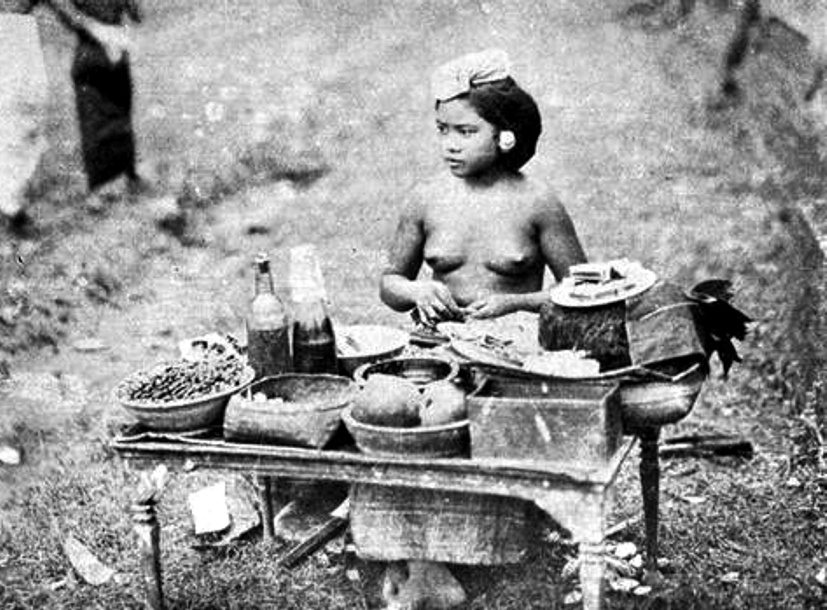
While Babi Guling is often the most famous dish associated with Bali—and versions like those served at Ibu Oka are widely celebrated—it represents only a small part of the island’s rich culinary tradition. At the pinnacle of Balinese cuisine are dishes like Ayam Betutu and Bebek Betutu. In these dishes, a whole chicken or duck is coated and stuffed with base genep, a complex blend of traditional herbs and spices. The meat is then wrapped in banana leaves and slow-cooked for hours in embers made from rice husks and coffee wood. This lengthy process produces exceptionally tender meat infused with deep, aromatic flavors—intense, rich, and unmistakably Balinese. [Source: I Wayan Juniartha, Jakarta Post, April 4, 2008]
The combination of slow cooking, intricate spice mixtures, and bold taste has made betutu one of the finest expressions of Balinese gastronomy. In tourist hubs such as Kuta, Legian, and Seminyak, a few well-known establishments—including Warung Made, Batan Waru, and Kunyit Restaurant— are good places to sample traditional dishes.
In Ubud, the selection is broader, with places like Casa Luna, Indus, Nomad, and Warung Enak offering Balinese cuisine, often with milder flavors adapted for visitors. For a more authentic and robust taste, locals recommend warungs such as Warung Wardhani, Warung Satria, Warung Kedewatan, and Warung Teges. Other notable spots include Warung Tresni, known for its comforting chicken porridge, and Warung Mak Beng, famous for its simple yet unforgettable fried fish with intensely spicy sambal.
To truly experience the diversity of Balinese food, visitors should explore a Pasar Senggol Gianyar (night market). Here, dozens of stalls line narrow lanes, offering a wide array of dishes such as Srombotan, Urutan, Oret, Lawar, Komoh, and of course, betutu. Sweet treats and traditional cakes are also abundant, their sugary aromas blending with the scent of spices to create a uniquely vibrant atmosphere. For those unable to explore in person, books like Fragrant Rice by Janet De Neefe—who founded Casa Luna—offer a rich introduction to the island’s food culture.
Balinese Dishes
Ares (Jukut Ares) is a spiced soup made from finely chopped banana trunk, often cooked with pork ribs or duck, giving it a rich, earthy flavor.
Be Guling is a whole roasted suckling pig seasoned with traditional spices, commonly prepared for ceremonies and festive occasions.
Bebek Betutu is duck (or sometimes chicken) slow-cooked with spices, wrapped in banana leaves, and steamed or roasted for a tender, aromatic dish.
Brengkes (Tum) is a steamed mixture of minced meat, coconut, spices, and herbs wrapped in banana leaves, producing a fragrant and moist dish.
Jukut Urab is a vegetable salad mixed with spiced grated coconut dressing, slightly sweet and suitable for vegetarians.
Komoh is a thick, traditional soup made from meat and sometimes blood, typically prepared for special ceremonies. [Source: Bali Tourism Board; Bali Tourism Information 2008 book published by Bali Government Tourism Office]
Lemped (Pesan) is fish wrapped in banana leaves and grilled, often served with spicy sambal for added flavor.
Sate is grilled skewered meat, widely popular in Bali, with many variations using pork, chicken, beef, or fish and different spice blends.
Urutan is a traditional Balinese sausage made from spiced meat stuffed into intestines, then fried or dried before cooking.
Bantal is a sweet snack of glutinous rice filled with coconut and sugar or beans, wrapped in leaves and steamed.
Batun Bedil are small rice flour dumplings served with grated coconut and melted palm sugar, offering a soft and sweet treat.
Bubuh Sumsum is a smooth rice flour porridge flavored with pandan and topped with coconut and palm sugar syrup.
Bubuh Injin is a sweet black sticky rice porridge cooked with coconut milk, often served with jackfruit.
Bulung is a seaweed-based dessert or salad, lightly sweetened and refreshing.
Dodol is a sticky, caramel-like sweet made from glutinous rice flour and palm sugar, often wrapped in corn husks.
Godoh are fried bananas coated in batter, typically enjoyed as a snack with tea or coffee.
Iwel is a soft cake made from black sticky rice, coconut, and palm sugar, often prepared for ceremonies.
Jaja Uli is a steamed and pounded sticky rice cake mixed with coconut and sugar, commonly served during festivals.
Klepon are small rice flour balls filled with palm sugar that burst when bitten, coated in grated coconut.
Laklak are small rice flour pancakes served with coconut and palm sugar syrup, best eaten warm.
Lepet Bugis are banana leaf–wrapped sticky rice dumplings filled with sweet coconut and palm sugar.
Satuh is a dry, sweet cake made from rice flour and sugar, often eaten with water or tea.
Sumping (Nagasari) is a soft steamed cake made from rice flour, coconut milk, and banana, wrapped in banana leaves.
Sambal Matah is a raw Balinese chili relish made with fresh chilies, shallots, coconut oil, and lime, ideal with grilled dishes.
Sambal Sere is a spicy sambal made from fried shallots, garlic, chili, and shrimp paste, rich and aromatic.
Kerupuk Melinjo are crispy crackers made from melinjo nuts, slightly bitter and often served with chili or sugar.
Babi Guling — Balinese Roast Suckling Pig
David Farley of the BBC wrote: Babi guling — which directly translates as “turning pig” as it’s roasted on a hand-turned spit over an open fire — is an unlikely find in Indonesia, a country that has the largest Muslim majority population in the world. But Bali is something of an anomaly: much of the population practices an off-shoot of Hinduism that’s been combined with local spiritual traditions, which means that pork — normally verboten in Muslim countries — is fair game here. In fact, eating babi guling in Bali is perhaps the country’s most quintessential dining experience. [Source: David Farley, BBC, November 20, 2015]
Ask anyone where to eat babi guling in Ubud and they’ll point you in the direction of Ibu Oka (Jalan Tegal Sari No. 2; 62-3-61-97-6345), a famed babi guling spot that many claim sets the bar for the dish. Here, I met up with Chris Salans, a Franco-American chef who runs the kitchen at Ubud’s acclaimed restaurants Mozaic and Spice. He’s lived in Bali for 20 years and knows a thing or two about babi guling.
With heaping plates of babi in front of us, Salans explained the various parts that make up the dish: “The key to a good babi guling”, he said, “is that it shouldn’t just be all about the meat. There should be a good veg” — in this case, spice-spiked long beans — “as well as fluffy rice, tender meat and a piece or two of super crispy skin. “Oh yeah,” he added, “there should be a spice mix that pops in your mouth.”
That spice mix is called basa gede, literally meaning “big spice mix”, and the name doesn’t exaggerate. It consists of shallots, garlic, ginger, ginger-like galangal, kencur (aka “lesser galangal”), turmeric, macadamia-like candle nut, bird’s eye chilli, coriander, black peppercorn, salam leaves (an Indonesian bay leaf) and salt, plus a shrimp paste mixed in. Like salt and pepper to the Balinese, it infiltrates nearly every dish on this 111km-long, 152km-wide island.
It’s impossible to make babi guling at home unless you cook an entire pig. You can’t selectively buy a piece of pork from a supermarket and hope it will turn out like true Balinese babi guling, which is why most people get it small restaurants — including favourites such as Candra in Denpasar (Jl Teuku Umar, Denpasar; 62-3-61-22-1278) and Dobel in Nusa Dua (Jalan Srikandi No 9, Nusa Dua; 62-3-61-77-1633). Or, they go to people like Putu Pande, who has spent the last decade making babi guling in his back courtyard for various restaurants and private celebrations.
Sharing Coffee and a Meal with a Balinese Family
On a visit the home and family of a Balinese woman named Ketut, Mark Eveleigh of the BBC wrote: It is virtually impossible to visit without drinking a glass of the kopi that was harvested locally and roasted at a house just down the road. And why would you refuse? Ketut’s sweet, strong, black coffee is some of the best in Bali and is such a delicious caffeine- and sugar-rush that you must force yourself to stop before you reach the half-inch of grainy mud at the bottom of the glass. Long before you’ve reached that stage, Nenek [the grandmother in the family] will have emerged again from the kitchen with a little plate of sumpit (rice-flour dumplings steamed in banana leaves) or bantal (rice, groundnuts and banana steamed in young palm leaves). If there are no sweet snacks, there will, at least, be some freshly harvested pisang emas. These so-called ‘gold bananas’ are the most deliciously sweet bananas in the world. [Source: Mark Eveleigh, BBC, June 21, 2018]
Sudana [Ketut husband] joins us for coffee and we chat about the ever-changing conditions of the rice paddies — a perennial preoccupation in rural Bali. Nenek sits nearby, silently but contentedly occupied with her chores. It’s said that in rural Bali that more than half of a family’s income is spent on the endless cycle of temple ceremonies, and both Nenek and Ketut seem to fill every spare minute with preparing the little offerings that are the spiritual bread and butter of the ‘Island of the Gods’.
Nenek, occasionally smiling at us, staples intricate little leaf saucers together using splinters of palm stem. She’s so accustomed to the work that she barely needs to look. These saucers will often be used to present coffee to the spirits that act as temple guardians, to keep them alert for the demons that haunt the beaches. At other times, she might be busy weaving ketupat, the tiny latticework baskets that look like Balinese Rubik’s Cubes. They’re so complicated that I’ve never known a foreigner to succeed in making one, yet both Ketut and Nenek are able to complete one in less than a minute. (Ketut’s record by my stopwatch was 28 seconds.) These ketupat are reserved for bigger ceremonies. They’re half filled with rice and boiled for several hours so that the rice swells into a solid block. It’s unusual if a week goes by without a large ceremony somewhere in the immediate neighbourhood.
It’s late afternoon by now, and Sudana, with typical Balinese hospitality, will almost certainly invite you to stay for dinner. Ketut might have prepared her deliciously spicy nasi goreng (fried rice), and there will be some vegetables in sauce. There might very likely be some sea-fish satays, barbecued using a clever invention that avoids the endlessly finicky turning of satay sticks: instead, a whole bunch of sticks are impaled in a hunk of banana tree so Sudana can simply turn the entire batch all in one go. There might be some shreds of chicken in sauce if there’s been a ceremony in the street lately, but that’s the only time meat is likely to be on the menu.
Fridges are a relatively recent arrival here so the community still has the habit of sharing among the neighbours. Ketut will offer you a fork and spoon to eat with, but a beaming smile is sure to break out on Sudana’s face if you decide to ‘go local’ and eat with your hand: “Lebih enak!” he chortles happily — more delicious that way.
Strange Foods of Bali
Deep-fried dragonflies are popular on Bali as a crunchy snack. Children and adults catch the insects and deep-fry them, creating a simple but protein-rich treat. [Source: manonthelam.com, November 4, 2012]
Sago worms are large, maggot-like larvae that are considered a delicacy. They have a soft, pulpy texture and are typically roasted or added to stews for a rich, earthy flavor.
Bats are prepared in several ways, most commonly grilled or deep-fried and eaten whole, including the bones. They can also be skinned, chopped, and cooked in soups or stews for a hearty dish.
Buah keluak is the dark seed of the kepayang tree, often mistaken for a nut. It is highly toxic when raw. After careful preparation, it becomes a prized ingredient in curries, valued for its deep, complex flavor and sometimes called the “truffle of Asia.”
Cobra blood is served as a drink in Bali. Warm cobra blood from a freshly-killed snake is believed by some to have medicinal and aphrodisiac properties. It is often consumed as a bold and unusual way to end a meal.
Some satay stalls in Bali marked “RW” sell dog meat, often without tourists’ knowledge. An investigation by an animal welfare group found that dogs—both stray and owned—are captured and killed using cruel methods, sometimes involving poison such as cyanide. Vendors may mislead customers about the meat’s origin. Beyond animal cruelty, the trade poses serious health risks. Poison used to kill dogs can remain in the meat, potentially causing illness or even death. The meat may also be contaminated with harmful bacteria, and the movement of dogs from rabies-affected areas raises further public health concerns.Although eating dog meat is not illegal in Bali, many aspects of the trade violate laws related to animal welfare and disease control. Activists and organizations are working with authorities to stop the practice, citing both ethical concerns and risks to human health. [Source: Indra Harsaputra, The Jakarta Post, November 17, 2012]
Dragonflies Eaten as Food in Bali and Lombok
Dragonflies (darners: Anax spp.; skimmers: Crocothemis spp., Neurothemis spp.) have long been eaten in parts of Indonesia. Burr (1939) credited Alfred Russel Wallace with noting that people on Lombok caught dragonflies using twigs coated with birdlime: “The bodies are torn off and fried with onions and preserved shrimps. It sound a queer blend, but is considered a great delicacy.”
In Bali, during the rice harvest, women and children traditionally caught adult dragonflies using long reed wands coated with sticky gum (1951). The insects were lured to land on the wands or caught mid-air, then fried and eaten.
By 1995, dragonflies (locally called chapung) were still widely consumed in Bali, although their numbers had declined due to pesticide use. Larger species—especially those in the genera Anax, Crocothemis, and Neurothemis—were most prized. Various capture techniques were used, including sticky latex from the jackfruit tree (Artocarpus heterophyllus) or frangipani (Plumeria sp.). One method involved a device called a “ngoneng,” a stick with a spinning ball of latex at the tip; dragonflies, mistaking it for prey, would strike and become stuck.
Preparation methods ranged from simple grilling to more elaborate cooking. Grilled dragonflies were described as having “a carbonized crispy quality with a subtle, fat flavor.” Other recipes included boiling them with ginger, garlic, shallots, and chili in coconut milk, or cooking them with fresh coconut wrapped in banana leaves and steamed or roasted. Dragonfly nymphs were also eaten and were “supposed to taste better because they are softer.”
According to Pemberton (1995), dragonflies were not a major food source but were often caught as much for sport as for consumption: “Given the ingenuity and fun involved in the capture of dragonflies, the customs seem to relate as much to sport as to food.” He added that “The many Asian customs relating to dragonflies and other insects reflect a more positive attitude toward insects than generally occurs in the West.”
Image Sources: Wikimedia Commons, Indonesia Tourism website
Text Sources: “Encyclopedia of World Cultures Volume 5: East/Southeast Asia:” edited by Paul Hockings, 1993; Wikipedia; National Geographic, Live Science, Metropolitan Museum of Art, Natural History magazine, New York Times, Washington Post, Los Angeles Times, Smithsonian magazine, Encyclopedia.com, Library of Congress, The Conversation, The New Yorker, Time, BBC, CNN, Reuters, Associated Press, AFP, Lonely Planet Guides, Google AI, The Guardian and various websites, books and other publications.
Last updated January 2026