
DUTERTE AS MAYOR OF DAVAO
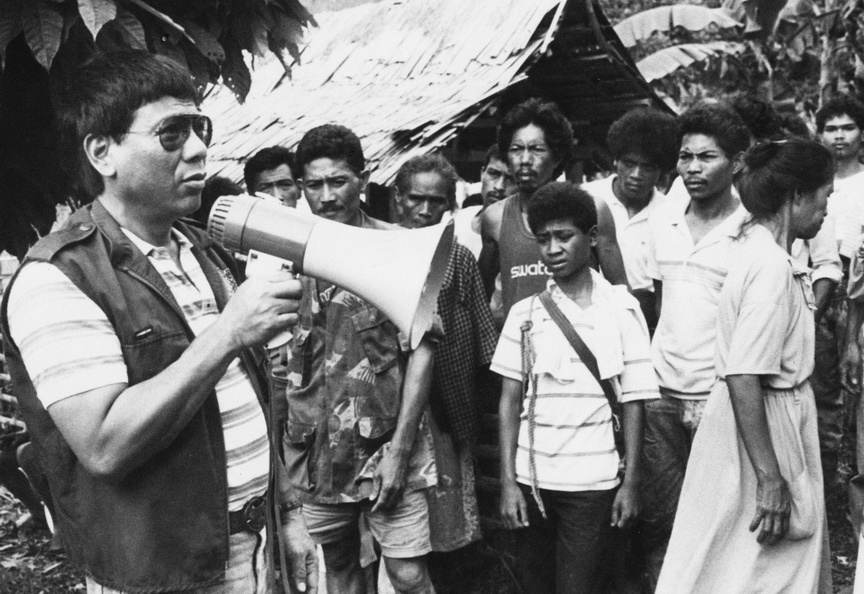
Duterte become mayor of Davao in 1988. After the 1986 People Power Revolution that removed Ferdinand Marcos from power, Rodrigo Duterte was appointed officer-in-charge vice mayor of Davao City by Corazon Aquino. In the 1988 local elections, he ran for mayor under the local alliance Lakas ng Dabaw. The new Cory Aquino government initially asked Duterte’s mother to be vice mayor of Davao. She recommended her son instead. Carlos Zarate, a local reporter at the time, told The New Yorker Duterte was the preferred candidate of Marcos loyalists deposed during the revolution. "That was a very peculiar situation," Zarate said. "He was the candidate of some pro-Marcos guys, yet he was also close to the left." Duterte campaigned on a law-and-order platform and won, narrowly defeating Zafiro Respicio. [Source: Wikipedia; Adrian Chen, The New Yorker, November 21, 2016]
As mayor, Duterte sought to unify Davao City’s diverse tribes and political factions. He appointed deputy mayors representing administrative districts as well as Lumad and Moro communities, a practice later adopted by other Philippine cities. In 1990, he joined the Nacionalista Party at the urging of Juan Ponce Enrile. He retained the mayoralty in 1992 and drew attention in 1995 after protesting the execution of Flor Contemplacion in Singapore, an incident that sparked controversy.
Term-limited in 1998, Duterte ran for and won a seat as congressman for Davao City’s 1st district under Laban ng Makabayang Masang Pilipino. In the House of Representatives, he served on several committees and authored dozens of measures, though he later expressed dissatisfaction with legislative work. Duterte attempted to resign from Congress in 1999 following allegations involving his son, but his resignation was declined by Manny Villar and Joseph Estrada. After a brief diplomatic trip abroad and a reported airport incident in the United States, he chose not to return there. In 2001, Duterte was elected mayor again, defeating Benjamin de Guzman. He secured reelection in 2004 and 2007 with strong mandates. In 2010, Duterte was elected vice mayor while his daughter Sara became mayor. He returned as mayor in 2013, running unopposed, and oversaw relief efforts for victims of Typhoon Haiyan and major earthquakes in the Visayas.
RELATED ARTICLES:
RODRIGO DUTERTE: HIS LIFE, FAMILY, PERSONALITY AND OUTRAGEOUS STATEMENTS factsanddetails.com
RODRIGO DUTERTE AS PRESIDENT factsanddetails.com
DUTERTE’S WAR ON DRUGS: DEATHS, TACTICS, RHETORIC, FAILURES factsanddetails.com
VICTIMS AND KILLERS IN DUTERTE’S WAR ON DRUGS: factsanddetails.com
ILLEGAL DRUG USE IN THE PHILIPPINES: MAINLY CANNABIS AND METH factsanddetails.com
ILLEGAL DRUG TRADE IN THE PHILIPPINES factsanddetails.com
POLITICAL COMEBACK OF THE MARCOSES factsanddetails.com
FERDINAND “BONGBONG” MARCOS factsanddetails.com
2022 PHILIPPINE ELECTIONS factsanddetails.com
GLORIA MACAPAGAL-ARROYO — PHILIPPINES PRESIDENT 2001-2010 — HER LIFE, CAREER AND PROBLEMS factsanddetails.com
MAGUINDANAO MASSACRE: EVENTS, KILLERS, POLITICS, TRIAL factsanddetails.com
BENIGNO AQUINO III — PHILIPPINES PRESIDENT 2010-201 — HIS LIFE, CAREER, ANTI-CORRUPTION FIGHT factsanddetails.com
How Duterte Changed and Improved Davao
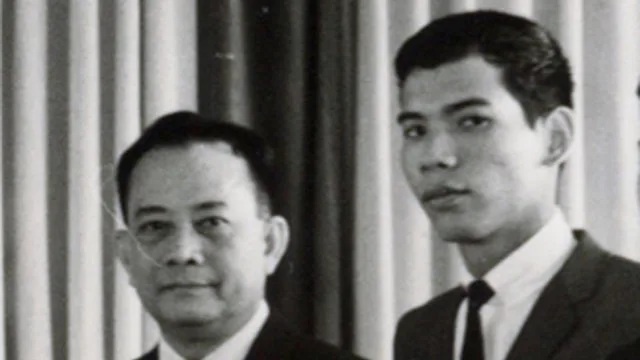
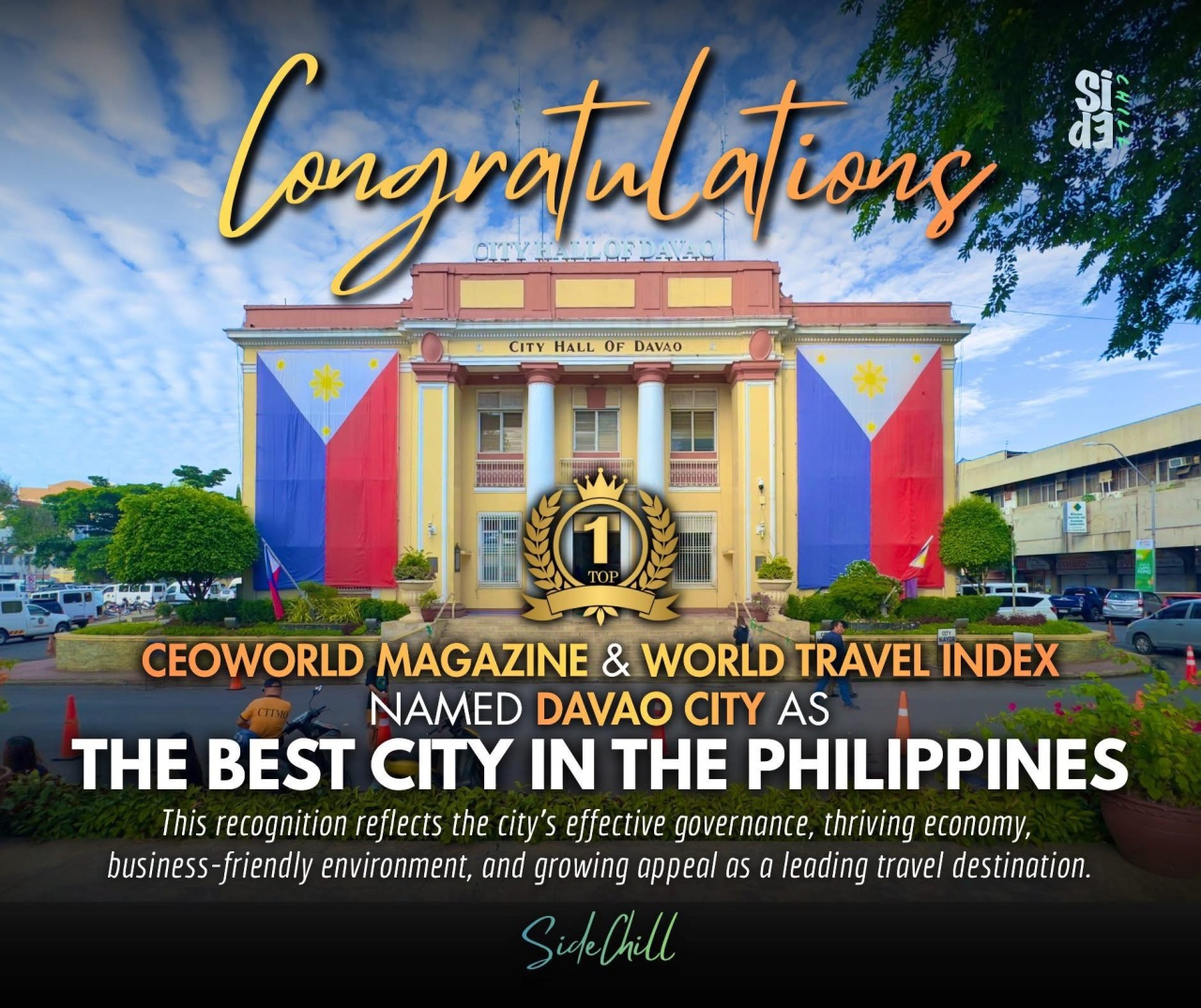
During Duterte's tenure, Davao City experienced economic growth and a sharp decline in crime, earning recognition as one of the safest cities in the Philippines. It received multiple awards as the “Most Child-Friendly City” in its category. Duterte supported social welfare initiatives, including the Women Development Code, which promoted women’s rights, and banned swimsuit competitions in beauty pageants. He also backed the establishment of a Gawad Kalinga Village inside a Davao jail to provide improved housing for female inmates. In 2003, he formally established Davao City’s Chinatown along Magsaysay Street, the first in Mindanao. [Source: Wikipedia]
Duterte built his reputation fighting some of the Philippines' biggest problems — crime, militancy and corruption — in Davao during his 22-year term as mayor. According to the Los Angeles Times when Duterte became mayor of Davao in 1988, the city was riven by a communist insurgency, with guerrillas raging against the abuses of Marcos’ military. Soldiers, vigilantes and communist insurgents shot and hacked one another to death on the streets, often in broad daylight, often with no repercussions. [Source: Jonathan Kaiman, Los Angeles Times, October 10, 2016]
Adrian Chen wrote in The New Yorker: Davao was one of the most violent cities in the Philippines. It was there that Communist rebels, after years of waging war in the countryside, first experimented with urban warfare. The New People’s Army was firmly entrenched in the slums, where it drew support from a population fed up with corrupt police and an abusive military. N.P.A. “sparrow squads” assassinated police officers and government officials; in turn, a government-backed vigilante group known as Alsa Masa, or Masses Arise, murdered Communists. Criminal gangs kidnapped prominent members of the business community, targeting them for ransom. The Bankerohan Bridge, over the Davao River, became known as a dumping place for bodies. If a victim had been dispatched with a single bullet, journalists would attribute the killing to N.P.A. assassins. [Source: Adrian Chen, The New Yorker, November 21, 2016]
By most accounts, Duterte was highly effective. He drove out the communist insurgency, using both the carrot and the stick (he gave some former insurgents government jobs). Duterte took over the kidnapping investigations, working closely with REACT, a network of businessmen.
They developed a rudimentary tracking system: when a kidnapper used a pay phone to make a ransom call, REACT members were alerted by C.B. radio. They would sound their car horns in distinctive patterns, according to which neighborhood they were stationed in, and, based on the honking in the background, investigators could get a rough idea of where the kidnappers were calling from. After Duterte solved a couple of high-profile cases, the number of kidnappings decreased.
In Davao, Duterte, known as Digong, is more popular than ever. When I visited in September, a few months after the election, civic groups, nurses, and local politicians had hung congratulatory banners from the concrete buildings that line the major streets. A barbecued-chicken restaurant was offering a discount in honor of Duterte’s election. His house, a modest two-story green building, has become a tourist attraction; a cardboard cutout of the President stood in the driveway, and, a few houses down the block, a teen-age boy sold Duterte key chains and mugs to tourists.
Residents of Davao credit Duterte with bringing prosperity to their city. A self-described socialist, Duterte nonetheless championed pro-business policies and employed market-oriented officials in the city government. His administration lured investors with tax breaks and incentives. There was a seventy-two-hour deadline on the processing of business permits, after which any delay would have to be explained to Duterte. A board made up of government officials and business leaders aggressively courted investors in Manila and abroad, resulting in a growing outsourcing industry and the construction of high-rise condominiums and malls. In 2014, Davao’s economy grew 9.4 per cent, a rate higher than that of any other region. As President, Duterte has promised to implement the “Davao model” nationwide.
Duterte’s Law-and-Order Policies in Davao
Duterte implemented strict law-and-order policies, including limits on alcohol sales, reduced speed limits, anti-smoking regulations, and a firecracker ban. He expanded emergency response services, strengthened police mobility, and required commercial establishments to install high-definition CCTV cameras. In 2015, Duterte drew criticism after confronting a tourist who violated Davao’s anti-smoking ordinance, with the Commission on Human Rights among those condemning his actions. His tough rhetoric on crime further defined his leadership style. [Source: Wikipedia]
Duterte banned smoking, imposed a curfew for minors, and restricted alcohol sales after dark. He launched nongovernment organizations for women’s rights and poverty alleviation, and adopted liberal policies toward gays and minority groups. Davao had a population of around 1.8 million in 2020.
According to the Washington Post: By Philippines standards it is an orderly place. A curfew keeps unaccompanied minors off the streets after 10:00pm. The sale of liquor after 2:00am is prohibited. And, as that unlucky tourist learned, you may smoke only in designated places — or else. Around town, banners remind people whom to thank for city rules. “President Duterte: Thank you for making Davao City smoke-free,” reads an apparent favorite.One time, when a tourist ignored no-smoking rules, our mayor stormed a restaurant with a revolver and forced him to eat the cigarette butt. . [Source: Emily Rauhala, Washington Post, September 28, 2016]
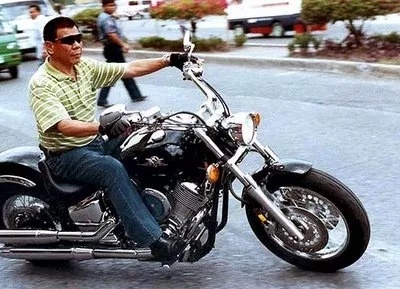
Duterte was known for patrolling the streets on a Harley Davidson. As of the mid 2010s, Davao had a central 911 system, and new police vehicles could seen around the city. Absurdly low speed limit of about 20 miles per hour were strictly enforced. Residents viewed such disciplinary measures as an indication of Duterte’s strong political will. A local businessman recounted with admiration how he once tried to talk his way out of a ticket for smoking. The police officer said he had to give him a ticket because he didn't want to make the mayor angry. [Source: Adrian Chen, The New Yorker, November 21, 2016]
Duterte’s Davao Death Squad”
Duterte was repeatedly linked by groups such as Amnesty International and Human Rights Watch to alleged extrajudicial killings carried out by the Davao Death Squad. Human Rights Watch said he either oversaw or condoned “death squads”—armed vigilante gangs that killed more than 1,000 suspected criminals, many of whom were young and poor. He claims that his city is now one of the safest in the country, offering a refuge of security in the conflict-ridden southern region of Mindanao. While alternately denying and appearing to justify the killings, he later admitted in 2023 that intelligence funds were used to support such operations during his time as mayor. [Source: Jonathan Kaiman and Sunshine de Leon, Los Angeles Times, May 8, 2016]
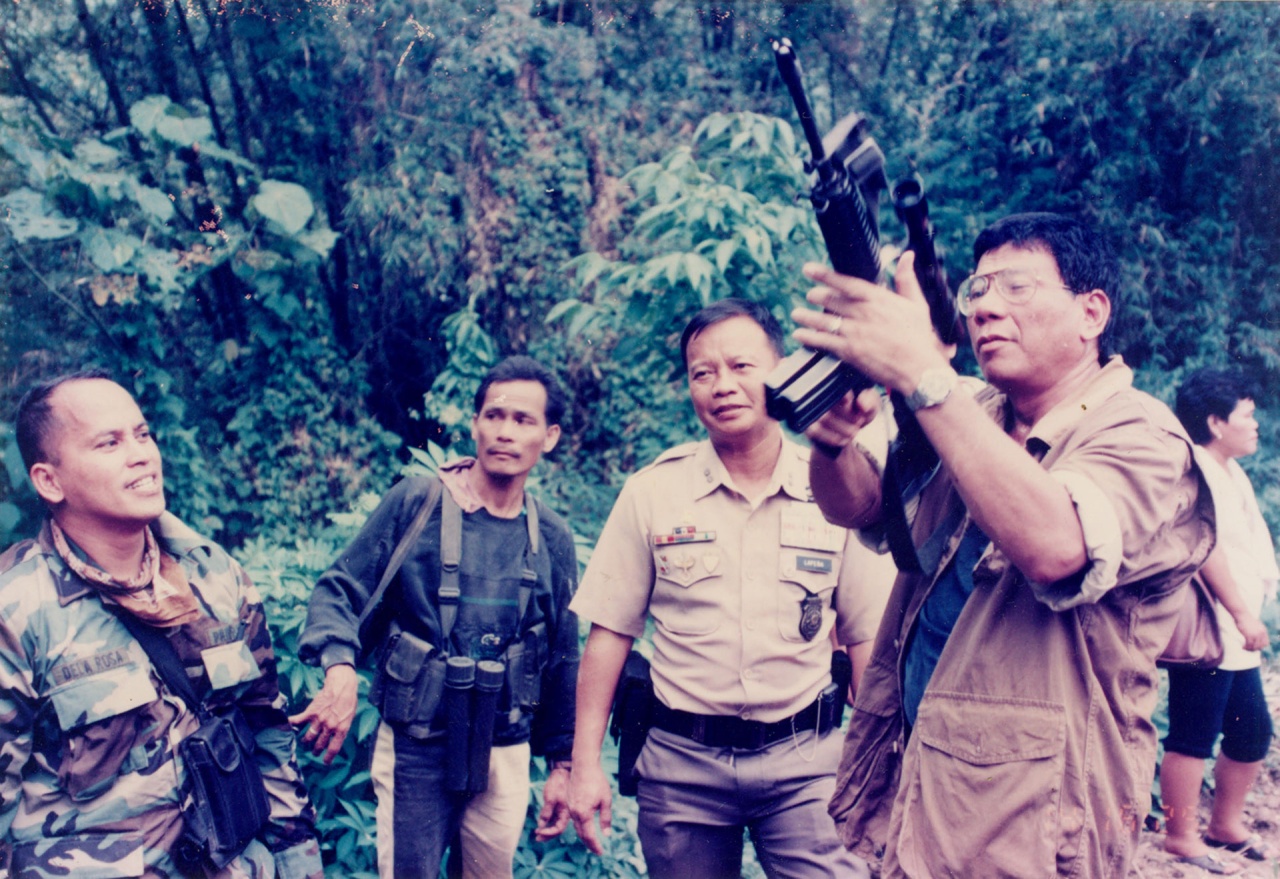
Duterte attacked crime in “Murder City” by attacking and killing criminals. “Am I the death squad,” he asked rhetorically on a TV talk show. “That is true.” Ranking Davao the world’s “ninth safest city” in a speech, he said, “How do you think I did it? How did I reach that title among the world’s safest cities? Kill them all.” In 1989, he was in his second year as mayor of Davao, soldiers attacked rioting prisoners in the local prison as they held the Australian woman and four others as hostages. Prisoners had raped, knifed and shot her and killed the other hostages before the soldiers killed 15 of the prisoners. [Source: Donald Kirk, Forbes, April 24, 2016]
Adrian Chen wrote in The New Yorker: In 1996, in a press conference, Duterte announced a crackdown on petty crime. According to a journalist named Editha Caduaya, soon afterward, seven alleged criminals—drug dealers and purse snatchers—were killed in one day. Some of the bodies were dumped, along with a cardboard sign that read “Solugoón Sa Katawhan” (“Servant of the People”). Between 1998 and 2009, Human Rights Watch reported a total of eight hundred and fourteen killings, mostly of teen-agers, street kids who were small-time drug dealers or petty thieves. The killings were attributed to a shadowy vigilante group called the Davao Death Squad (D.D.S.) . [Source: Adrian Chen, The New Yorker, November 21, 2016]
For a death squad, the D.D.S. has a surprisingly good reputation. “The killings had the support or backing of the middle classes,” a journalist in Davao told me. “They said that it makes the city safe.” Another resident said, “The general sense is, if you don’t do anything bad, you don’t have anything to fear. It’s become like the bogeyman that you tell the kids about.” In 2012, a local television channel polled its viewers on their preferred response to a crime wave that was sweeping the city; sixty-seven per cent suggested reviving the D.D.S.
How Duterte’s Davao Death Squad's Operated
According to a Human Rights Watch report most of the death squad killers were either former communist insurgents who surrendered to the government, or individuals who joined the death squads to avoid being targeted by the group. Their handlers, called amos (bosses), were usually police officers or ex-police officers. They provided the gunmen with training, weapons, ammunition, motorcycles, and information on the targets. Death squad members often carried .45-caliber handguns, a weapon commonly used by police but usually too expensive for gang members and common criminals. After the killings, the police were tipped off, ensuring that officers would respond slowly and enabling the death squad members to escape the crime scene. [Source: Phelim Kine, Foreign Policy, May 16, 2016]
The Human Rights Watch report said the D.D.S. often worked in a style known in the Philippines as "riding in tandem": two men on a motorcycle approach a target, shoot him with a handgun, and flee. D.D.S. members told Human Rights Watch that they worked off a list provided by police officers and were paid between five thousand and fifty thousand pesos (between $104 and $1,041 USD) per target. One member said that the police had established a bidding process to select hit men from various cells. "If several cells want the job, they discuss which cell can do it better," he said. [Source: Adrian Chen, The New Yorker, November 21, 2016]
Davao Death Squad member Edgar Matobato told a senate hearing said that the squad had as many as five hundred members. He said that he had personally killed fifty people, either kidnapping a victim before garrotting him in a van or shooting him in the street. The D.D.S. would then chop the victim into pieces and bury him in a quarry owned by one of Duterte’s political allies. One man was fed to a crocodile in 2007. Matobato said the killings started in 1988 and continued to 2013, when he tried to leave the death squad. His associates then attempted to implicate him criminally in one killing. [Source: Oliver Holmes, Agencies, The Guardian, September 15, 2016]
The victims included petty criminals and younng thugs. “Our job was to kill criminals, rapists, [drug] pushers and snatchers. That’s what we did. We killed people almost on a daily basis,” he added. He said some victims were dropped into the sea with their stomachs cut open so the fish would eat them. “They were killed like chickens,” he said. Matobato said he had also killed and chopped up a suspected foreign terrorist who he said was buried in a quarry in 2002. Matobato entered a government witness-protection program but left when Duterte became president, fearing he would be targeted. The hearing was at one point halted briefly so senators could discuss how to provide Matobato safety following his statement.
Duterte Involvement with the Davao Death Squad: Helicopters and Uzis
Duterte frequently spoke approvingly of the killings and intimated that he had a hand in the D.D.S. When Caduaya asked him about his role, he told her, “I am a lawyer and I will not do the extra-judicial thing, but I will clean the city for my people to live in peace.” Caduaya told me, “We know he is there, but you cannot see him.” A 2009 U.S. diplomatic cable released by WikiLeaks reported that Duterte had “all but admitted his role” in the D.D.S. to the Commission on Human Rights. When the commission’s regional director pleaded with Duterte to stop the killings, he reportedly responded, “I’m not done yet.” [Source: Adrian Chen, The New Yorker, November 21, 2016]
Matobato said that Duterte was intimately involved in the death squad’s operation and victims included opponents of Duterte’s family. According to Matobato, Duterte had ordered the killings of a local radio host; and the romantic rival of his son Paolo; his sister Jocellyn’s alleged lover, a dance instructor. A billionaire hotelier from central Cebu province who was killed in 2014 because he had a feud with Duterte’s son over a woman. The local radio host, Jun Pala, was a Duterte critic who was killed by motorcycle-riding gunmen while walking home in 2003. [Source: Oliver Holmes, Agencies, The Guardian, September 15, 2016]
“I didn’t kill anyone unless ordered by Charlie Mike,” he said, using the vigilante squad’s code name for Duterte. Matobato said he also was part of a group that in 1993 were stopped on a road by an agent from the justice department’s National Bureau of Investigation, leading to a shootout. Duterte arrived at the scene, Matobato said, and killed the man. “Mayor Duterte was the one who finished him off. Jamisola [the justice department official] was still alive when he [Duterte] arrived. He emptied two Uzi magazines on him.” Duterte has said he does not know Matobato, and referred to his testimony as “perjury.”
Matobato said Duterte personally ordered many of the killings. Once, he threw a grenade at a mosque, in retribution for a cathedral bombing. In 2015, Duterte admitted killing at least three men suspected of kidnapping and rape in Davao. In 2016, while president, he told a group of businessmen: "In Davao I used to do it personally. Just to show to the guys [police] that if I can do it why can't you...And I'd go around in Davao with a motorcycle, with a big bike around, and I would just patrol the streets, looking for trouble also. I was really looking for a confrontation so I could kill." But just hours before Duterte's said that he insisted "I am not a killer", in a speech for The Outstanding Filipino Awards 2016. [Source: BBC, AFP, December 14, 2016]
In December 2016, Duterte said that while mayor of Davao he dropped a kidnapping suspect from a helicopter. “If you are corrupt I will fetch you with a helicopter and I will throw you out on the way to Manila,” Duterte said. “I have done that before, why should I not do it again?” The Philippine Star reported he recalled telling the helicopter pilot to fly at a specific altitude — so the splatter of the body wouldn’t cause a ruckus on the ground — and victim was a member of a group of kidnapping suspects who allegedly abused a victim even after receiving their requested ransom. He also . [Source: Fox, News December 28, 2016]
Victims of Duterte Death Squads
Adrian Chen wrote in The New Yorker: It is difficult to find a resident of Davao who is willing to speak out against the death squads. One day I visited Clarita Alia, a sixty-two-year-old vegetable vender, who became a strident critic of Duterte after her four teen-age sons were killed within six years. She lives in a one-room shack on a narrow street in Bankerohan, the site of the largest market in Davao. An ancient television sat on a plastic barrel, and bedding and clothes were stacked along one wall. Alia sat cross-legged on a wooden bed frame with no mattress; next to her, her daughter played with her three-year-old granddaughter. When I asked Alia what she thought of Duterte, she said, “He is a demon.” [Source: Adrian Chen, The New Yorker, November 21, 2016]
Speaking in Bisaya, the regional language, she explained that her trouble began in July, 2001, when police came to her home to arrest her eighteen-year-old-son, Richard, for an alleged rape. They had no warrant, so she sent them away. One of the officers told her that if she didn’t allow them to arrest Richard all of her sons would be killed. On July 17th, Richard was stabbed to death. Less than three months later, her son Christopher was also stabbed to death. Bobby was killed in 2002, Fernando in 2007. “I have heartaches even now,” she told me, starting to cry. “Every interview, I keep crying. If they were still alive, they could help me make a living.”
The Alia boys were troublesome street kids, typical targets of the D.D.S. The police told Alia that her sons had been killed in gang wars, but they never produced suspects. I asked Alia who she believed was responsible. “Who but Digong?” she replied.
Before Richard was killed, he sought help from Tambayan, a nongovernmental organization that provides aid to Davao’s street children. As more children turned up dead, Tambayan began to agitate for Duterte to stop the killings. The group organized mothers who had lost children to the killings and staged a protest outside city hall. In 2002, Tambayan invited Duterte to a forum of twenty mothers, but he didn’t show up. Duterte does not hide his disdain for victims of the D.D.S. “I’m more interested in solving crimes against innocent people,” he told a reporter from the Washington Post, in 2003. “I’m not at all interested in the killings of criminals, especially people involved with drugs.”
Alia had written a letter that she intended to read to Duterte at the forum. She keeps it in a plastic folder along with news clippings of her interviews. She handed me the creased and yellowed paper, which read, “If a child has committed a crime, it is not necessary that his life should be lost. They don’t deserve to die, because they can change. . . . Where is the justice? Is it only for the rich?”
Alia tries to persuade other mothers to speak up. Some are afraid, she said; others seem resigned to the fact that this was the fate of children who stepped out of line in Duterte’s Davao. “There are mothers who approach me who also cry, but then fall silent,” she said. “I asked them, ‘What if your child is innocent?’ And they just fall silent.”
Image Sources: Wikimedia Commons
Text Sources: Wikipedia, New York Times, Washington Post, Los Angeles Times, Smithsonian magazine, Encyclopedia.com, Times of London, Library of Congress, The Conversation, The New Yorker, Time, BBC, CNN, Reuters, Associated Press, AFP, Lonely Planet Guides, Google AI, The Guardian and various websites, books and other publications.
Last updated February 2026