
RETURN OF THE MARCOSES
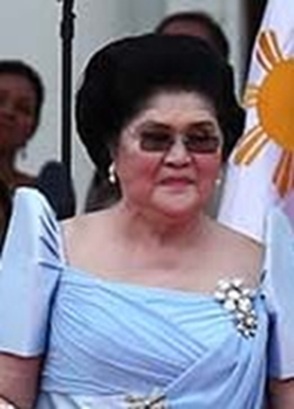
Former Philippines President Ferdinand Marcos was forced from power by a largely peaceful EDSA ("People Power") uprising in 1986. They were whisked from the Philippines' presidential palace by helicopter, flown out of the Philippines aboard a U.S. Air Force aircraft and initially stayed at Hickam Air Force Base in Hawaii before eventually settling more permanently in Honolulu. Soon after arriving in Hawaii, Bongbong tried to withdraw $200 million from a secret family account with Credit Suisse in Switzerland. The move led to the freezing of the account, drawing further scrutiny to the family’s alleged overseas assets.
Marcos Sr. died in exile in Hawaii in 1989 without admitting any wrongdoing. This included accusations that he, his family, and his allies amassed an estimated $5 billion to $10 billion while he was in power. In 1991, his wife Imelda Marcos and their children were allowed to return to the Philippines.
Allowing the family to return from exile after the senior Marcos died was an act of "extraordinary generosity", David Chaikin, a researcher at the University of Sydney, told Reuters "This was the beginning of the Marcos family clawing their way to power," he said. [Source: Karen Lema and Tom Allard, Reuters,May 10, 2022]
Marcos Jr. — Bongbong — and his mother, Imelda, quickly returned to politics, rebuilding their networks as they fought numerous cases to regain the family's wealth. Despite the small salaries Marcos Sr. and Imelda Marcos earned during his presidency, the family maintains that their fortune was legitimately obtained.
RELATED ARTICLES:
FERDINAND “BONGBONG” MARCOS factsanddetails.com
2022 PHILIPPINE ELECTIONS factsanddetails.com
IMELDA MARCOS AFTER FERDINAND'S DEATH: FASHION, POLITICS, PAINTINGS, LAWSUITS factsanddetails.com
IMELDA MARCOS: HER LIFE, LIFESTYLE, ASSASSINATION ATTEMPT factsanddetails.com
RODRIGO DUTERTE: HIS LIFE, FAMILY, PERSONALITY AND OUTRAGEOUS STATMENTS factsanddetails.com
RODRIGO DUTERTE AS PRESIDENT factsanddetails.com
DUTERTE’S WAR ON DRUGS: DEATHS, TACTICS, RHETORIC, FAILURES factsanddetails.com
FERDINAND MARCOS: HIS LIFE, LIES, EDUCATION, WAR RECORD, POLITICAL RISE factsanddetails.com
FERDINAND MARCOS AS PRESIDENT: EARLY PROMISE, RESISTANCE, WASTE factsanddetails.com
MARTIAL LAW YEARS UNDER FERDINAND MARCOS factsanddetails.com
MARCOS’S PLUNDER AND WEALTH factsanddetails.com
MARCOS AFTER HIS DEATH: HIS EMBALMED BODY AND EFFORT TO GIVE HIM A HERO’S BURIAL factsanddetails.com
Imelda's Political Career after Ferdinand’s Death
In January 1992, Imelda Marcos declared her candidacy in the upcoming presidential election. That same month, she was arrested for failing to post bail in connection with charges that she had illegally maintained Swiss bank accounts, though she was later released. Legal proceedings against her continued amid intense public scrutiny. [Source: Worldmark Encyclopedia of Nations, Thomson Gale, 2007]
In May 1995, Imelda Marcos won a seat in the lower house of the Philippine legislature, representing her home province of Leyte in central Philippines. A Supreme Court decision allowed her to take her seat in Congress. The court voted 8-5 in her favor after the Election Commission denied her the seat on a technicality. Leyte had fared well under her husband's rule, with generous government spending on roads, schools and power plants. Imelda served in Congress in Leyte from 1995 to 1998.
Imelda twice ran for president twice and lost by huge margins. She fared poorly when she contested the presidency in 1992, when former general Fidel Ramos won.She entered the presidential election in 1998, drew only a handful of supporters, and then withdrew. She 'gave' the votes she garnered to the winner, Joseph Estrada, who in June 1998 asked the courts to give Imelda a presidential pardon; later that year the Supreme Court acquitted Marcos of corruption charges.
Imelda and Ferdinand Marcos’s Children

Imelda Marcos has three biological children—Imee, Bongbong, and Irene—and one adopted daughter, Aimee, who have played prominent roles in Philippine politics and society. They are key figures in the resurgence of the Marcos family's political influence, with Bongbong becoming President of the Philippines in 2022
Maria Imelda "Imee" Marcos (born 1955) is The eldest child, she is a politician who has served as Governor of Ilocos Norte, a Representative, and became a Senator in 2019.
Ferdinand "Bongbong" Marcos Jr. (born 1957) is the only son and second child. He is the President of the Philippines (from 2022 to 2029). He previously served as Governor, Representative, and Senator.
Irene Marcos-Araneta (born 1960) is the youngest biological child. Sshe is a socialite and has generally maintained a lower political profile compared to her siblings, though she is active in family affairs.
Aimee Marcos (born 1979) is the adopted daughter of Ferdinand and Imelda. She is a musician and has stayed largely away from politics, living a more private life.
Before he met Imelda, Ferdinand Marcos lived with his common-law wife, Carmen Ortega, a 19-year-old Ilocana mestiza and 1949 Miss Press Photography winner, and lived at 204 Ortega Street in San Juan for about two years. In August 1953, the couple's engagement was announced in Manila newspapers. They had three children. Not much is known about what happened to Ortega and their children.
Marcos subsequently to Catholicism to marry Imelda Trinidad Romualdez on April 17, 1954, just 11 days after they first met. Marcos's fourth child with Ortega was born after his marriage to Imelda. Marcos and Imelda later adopted a daughter, Aimee. Marcos had an affair with American actress Dovie Beams from 1968 to 1970. According to reports by the Sydney Morning Herald, Marcos also had an affair with former Playboy model Evelin Hegyesi around 1970 and fathered a daughter with her named Analisa Josefa. [Source: Wikipedia]
Political Career of Imelda's Children
The Marcos family’s political influence had been resurging. Although Ferdinand “Bongbong” Marcos Jr. lost the 2016 vice-presidential race, Imee Marcos won a Senate seat in 2019, and other relatives held elective posts in their northern stronghold. In 2022 Bongbong became the Philippines’s 17th President.
Imelda’s son Ferdinand “Bong Bong” Marcos lost badly in his bid for a Senate seat in 1995 at the age of 38, partly because Corazon Aquino led a campaign against him called Never Again. He ran for governor in northern Ilocos Norte Province in 1998 and won. Maria Imelda "Imee" Marcos, daughter of Ferdinand and Imleda, won a congressional seat in the 1998 election. She has been very outspoken and regarded as a skillful politician. In the early 2000s, she was a vocal critic of U.S. President George Bush. She caused a big scandal when her father was president by running off with professional golfer Tommy Manotoc.
Imelda and her children family has used their old political strongholds in the far north and central islands to claw its way back to political influence. In 2010, Imelda was asked why she was running again for political office—this time for a congressional set in Ilocos Norte province, her husband’s old constituency, she replied, "I am campaigning to be a mother who not only serves but also loves.” [Source: Blaine Harden, Washington Post, April 22, 2010]
During the campaign season for the 2010 election Associated Press and The Guardian reported: “Imelda Marcos, former first lady of the Philippines, has begun a campaign for a congressional seat that she hopes will allow her to bury her husband in a heroes' cemetery and clear his sullied name. Emerging from more than a decade of political obscurity, Marcos strode back with a vengeance. She led journalists at daybreak to the mausoleum of her husband, Ferdinand Marcos,in Ilocos Norte province, his northern stronghold. Kissing his glass coffin, she said: "This is one of our major injustices." She then went to church and rode on a lorry festooned with balloons and posters as thousands cheered her along the way. She was flanked by her daughter Imee, who is running for governor in Ilocos Norte, a tobacco-growing region about 250 miles (400km) north of Manila. Imelda's son, Ferdinand Marcos Jr, is seeking a senate seat. [Source: Associated Press, Guardian, March 26, 2010]
Marcos said she will continue her campaign to have her husband buried in the national heroes' cemetery in Manila if she wins. His burial there has been opposed by officials amid public outrage after Marcos – accused of corruption, political repression and widespread human rights abuses – was ousted in a 1986 revolt and died in exile in Hawaii three years later. Imelda said: "My ambition is to serve without end and to love without end."
Marcos Family Wins Big in 2010 Elections
In May 2010, Imelda won a seat in the House of Representatives in province of Ilocos Norte, her husband’s old stomping ground, in the same election in Corazon Aquino’s son Benigno "Noynoy" Aquino III was elected president. reported: “It's a fresh taste of power for the former first lady, 80, Marcos won a seat representing the province of Ilocos Norte in the 269-member House of Representatives with 109,571 votes. Mariano Nalupta, a former ally, took to 27,359 votes. [Source: Agence France-Presse, May 11, 2010 ***]
“Imelda’s eldest child Imee, 56, won as provincial governor with 196,160 votes. Her only son Ferdinand "Bongbong" Marcos Jr., 52, appeared headed for the 24-seat Senate, placing seventh in the race for 12 vacant seats, according to partial official returns of Monday's national elections. The clan has won various positions since the 1990s after returning from exile but the Marcos heirs have never before managed a position as high as the nationally-elected senate. ***
“Imelda pointed to her experience as a key member of her husband's government, both as housing minister and governor of the Manila capital region, as proof she was worthy of public office. And age was no issue, she insisted. "It is true that I am 80 years old, but I can also be a grandmother for our country." Emmanuel Amistad, executive director of human rights group Task Force Detainees, said the victory showed how quickly Filipinos forget their past. "Filipinos have a short memory and they have forgotten the abuses of the father. There is an entirely new generation now and a lot of the youth do not know the experiences of martial law," he said. ***
“Rommel Banlaoi, director of the Philippine Institute for Peace, Violence and Terrorism Research, said the political revival of the Marcos family was just another symptom of the country's personality-oriented politics. "In the Philippines, we vote in terms of personality, not in terms of track records. The Marcoses ring a very loud bell in politics," he told AFP.” ***
In 2014, at 85, Imelda Plotting How Her Family Can Reclaim the Philippine Presidency
In July 2014, Imelda Marcos celebrated her 85th birthday while signaling hopes of a political resurgence and a possible return to Malacañang Palace. Dressed in a flowing red gown and diamond rings, the self-described “poverty-stricken” former first lady was serenaded by supporters as she emerged from her private quarters at the Marcos family mansion in Batac, Ilocos Norte. “My only wish is for God to give me a little more strength to prolong my life,” she told reporters. Reflecting on her past, she said she had experienced “the best, best, best and the worst, worst, worst” in life, but insisted she was not ready to retire. “I still have a vision and hope to bring more help to the Filipino people,” she said in a wide-ranging, sometimes rambling interview. [Source: Teodoro Aljibe, AFP July 3, 2014]
Imelda had won a second term in 2013 as congresswoman for Ilocos Norte, the same year her son Ferdinand Marcos Jr. was elected senator and began hinting at a possible 2016 presidential bid. Her eldest daughter, Imee Marcos, served as provincial governor. Imelda said her son was “qualified” to run for president in 2016, when then-President Benigno Aquino III — the son of the Marcos family’s chief political rivals — was set to complete his term. “(Returning to) Malacañang would be a great help” in advancing her projects, she said, referring to the presidential palace.
Earlier that day, a regal but visibly weary Imelda had kissed the glass coffin of her late husband, Ferdinand Marcos, whose preserved remains lay in an air-conditioned crypt at the family compound — a site that had become a macabre tourist attraction.
Calling herself the “mother of world peace,” she also criticized plans by the Aquino administration to auction off her jewelry collection. She accused the late Corazon Aquino of persecuting the Marcos family after they were ousted. “Her first act was to confiscate and sequester all Marcos wealth even before we were tried, and that was illegal,” Imelda said. She added that she would prefer the jewels be placed on public display “because I want the Filipinos to know what is world-class and see that.” She did not elaborate on her health, though she had been hospitalized the previous year for extreme fatigue before recovering.
“The Kingmaker” Showcases Imelda’s Desire to Create a Dynasty
“The Kingmaker is an Emmy-nominated Showtime documentary, directed by Lauren Greenfield, about Imelda’s effort to build a political dynasty. Greenfield told Deadline. “I was just so fascinated by her comeback story after the things we all remembered, which was fleeing the Philippines and leaving in the palace 3,000 pairs of shoes. I wanted to go over and see what had become of her.[Source: Matthew Carey, Deadline, June 16, 2020]
She returned to the Philippines in 1991 with her children, including daughter Imee Marcos and son Ferdinand Marcos Jr., known as Bongbong, and began working to restore the Marcos family’s political influence. “When I began the project I thought of her more as this empress dowager,” Greenfield said. “As the project progressed it became clear that she was interested in getting back into power for her family. That started to become a reality even though it seemed like nothing like that could happen when I began.”
The film followed Bongbong’s 2015 vice-presidential campaign, which he narrowly lost to Leni Robredo, a result he continued long after the election was ove. The Kingmaker also revealed the behind-the-scenes role the Marcos family played in helping Rodrigo Duterte win the presidency in 2016. “Definitely I think that was the big breaking news piece of the film, was making clear that alliance between Duterte and the Marcoses,” Greenfield said, “and the fact that the Marcoses had financed the campaign.”
Duterte even stated he would step aside for Bongbong should Ferdinand Jr. prevail in his legal challenge. In Greenfield’s view, the bond between Duterte and the Marcos family went deeper. “Duterte has made no secret that he admired [President Ferdinand] Marcos,” she noted. “I think the appeal of the strongman is something [shared] with the Marcos regime and with Duterte. They both have trampled on democratic institutions, whether it is an independent judiciary, a free press, the independence of congress, squelching the opposition. That, I think, has been really the shocking part of what happens with the rise of Duterte.”
The Kingmaker received a theatrical release in the United States before premiering on Showtime. Initially, Greenfield doubted it would ever screen in the Philippines. “We didn’t think we could ever show it there,” she admitted. Eventually, invitations came from the University of the Philippines and the Cultural Center of the Philippines, the latter ironically one of Imelda’s grand projects as first lady.
The screening at the Cultural Center drew an emotional response. “I was at Sundance, so I couldn’t go,” Greenfield said. “But I came in on a Skype Q&A… During the credits, people started spontaneously chanting, ‘Never again, never again.’ At the Q&A there were survivors of torture [during the Marcos regime] and there were tears… The minority leader in the senate was there and he said it was a history lesson every Filipino young person needed. It was just an amazing response.” Some torture survivors from the martial law era appeared in the documentary. “Those testimonies,” Greenfield said, “were really important for the film and important for the audience.”
Viewers drew parallels between the Marcos political dynasty and other global examples of family-based power. Greenfield emphasized the dangers of entrenched dynasties. “I think political dynasty is huge in the Philippines and that was certainly one of the lessons in the film,” she said. Referring to Robredo’s remarks, she added, “I think Leni Robredo really nailed it when she made the connection with inbreeding and the danger of inbreeding and political dynasty for democracy and for good leadership and independent leadership. That was a big part of my wanting to weave together the inbreeding in the Animal Island.”
Ultimately, Greenfield saw the story as part of a broader global trend. “By the end of the filming, with Duterte becoming elected, it was really history coming full circle, and a cautionary tale about how easy it is to go back to something like dictatorship, and really the fragility of democracy; that we’re one election away from losing the values that we think synonymous with our way of living,” she said. “But I think what’s happened in the Philippines and what happens in The Kingmaker story has [relevance to] the rise of authoritarianism in Europe and the Trumpian era.”
Bongbong Becomes President with a Win in the 2022 Election
In 2022, Bongbong Marcos ran for president under the Partido Federal ng Pilipinas and won by a landslide, securing nearly 59 percent of the vote. He skipped most presidential debates during the campaign. Although then-President Rodrigo Duterte had criticized him as a “weak leader,” Duterte’s daughter, Sara Duterte, ran as his vice-presidential partner under the UniTeam alliance, contributing to their decisive victory. His margin was the largest since 1981, when his father won amid an opposition boycott. Critics and fact-checkers accused his campaign of promoting historical revisionism aimed at rehabilitating the Marcos name and attacking opponents. [Source: Wikipedia]
During the 2022 campaign when he was 64 Bongbong defended his father’s legacy and consistently refused to apologize for or acknowledge the human rights abuses and alleged plunder committed during the dictatorship of Ferdinand Marcos. Married to a lawyer with whom he has three sons, he largely avoided major controversies during the campaign, including questions about a past tax conviction and the Marcos family’s unpaid estate tax liabilities. [Source: Associated Press, May 8, 2022; Martin Petty, Reuters, May 5, 2022]
Marcos centered his campaign on a message of national unity and denied allegations that he funded a long-running social media effort using online trolls to attack opponents and rehabilitate the Marcos family’s image, challenging critics to “show me one.” Critics argued that a Marcos victory would mark the Marcos family’s ultimate effort to rehabilitate its image and reshape narratives about authoritarian rule, corruption and extravagance. In interviews he openly praised his late father, for his “genius” and leadership.
There was some speculation that Imelda Marcos would move back into into Malacañang Palace to live there with her son "Bongbong" after he won the 2022 Philippine presidential election. While she visited the palace for his inauguration and celebrated her 93rd birthday there in July 2022, reports indicate she did not take up residence in the official presidential palace, which she and her family were forced out of in 1986. Bongbong Marcos himself reportedly does live in the main palace building. [Source: Google AI]
See Separate Article: 2022 PHILIPPINE ELECTIONS factsanddetails.com
How the Marcos Have Staged Their Comeback
Although the Marcos family was forced into exile during the “people power” revolt, it remained among the wealthiest and most influential families in Philippine politics. Political analysts said Bongbong’s campaign got the presidency had benefited from a decades-long public relations effort aimed at reshaping public perceptions of the Marcoses, who had been accused of living lavishly while presiding over one of Asia’s most notorious kleptocracies. [Source: Reuters, April 26, 2022]
Part of their strategy has been to recast the Marcos era as a “golden age” marked by stability, security, and major infrastructure projects. At the same time, they have consistently denied large-scale wrongdoing, pushing back against numerous court cases and investigations aimed at recovering allegedly stolen wealth. [Source: Karl Malakunas, Cecil Morella, AFP, April 18, 2016 ^]
Another key factor in the family’s revival has been its enduring network of political allies, many of whom remained influential even after the revolution. In addition, some younger voters disillusioned with contemporary politics have shown openness to the Marcos narrative of a past “golden age.”
“About 10 percent of the population hates the Marcos family,” Patrick Tumale, a Davao-based political analyst, told the Daily Beast. “Lots of posts from social media have been showing how cruel and corrupt Ferdinand Marcos was during his administration. The reason for that is to spread hate for the Marcos family so no Marcos can be president again.” In the battle for hearts, minds and votes, however, Bongbong’s people have fought back with a tidal wave of claims of Marcos’s “achievements,” said Tumale. “Facebook and other social media sites have been flooded by posts about how good the country was when Ferdinand Marcos was the president. Support from the younger generation has started growing as well.”[Source: Donald Kirk, Daily Beast, January 3, 2022]
Carlos Conde, senior researcher in the Philippines for Human Rights Watch, told The Daily Beast.“Bongbong has capitalized on his family’s years and years of revising history and deodorizing the Marcos name, “ Conde explained. He’s “now aided in no small measure by social media like Facebook. The disinformation is staggering.”
Image Sources: Wikimedia Commons
Text Sources: Library of Congress, Philippines Department of Tourism, Philippines government websites, Encyclopedia.com, New York Times, Washington Post, Los Angeles Times, Wikipedia, “Encyclopedia of World Cultures Volume 5: East/Southeast Asia:” edited by Paul Hockings, 1993, UNESCO, National Commission for Culture and the Arts (NCCA) the official government agency for culture in the Philippines), Lonely Planet Guides, The Guardian, National Geographic, Smithsonian magazine, The New Yorker, Time, The Conversation, BBC, CNN, Reuters, Associated Press, AFP, Google AI, and various websites, books and other publications.
Last updated February 2026